
The Role of Ideology and Collective Belief in Constructing Early Monumental Sites

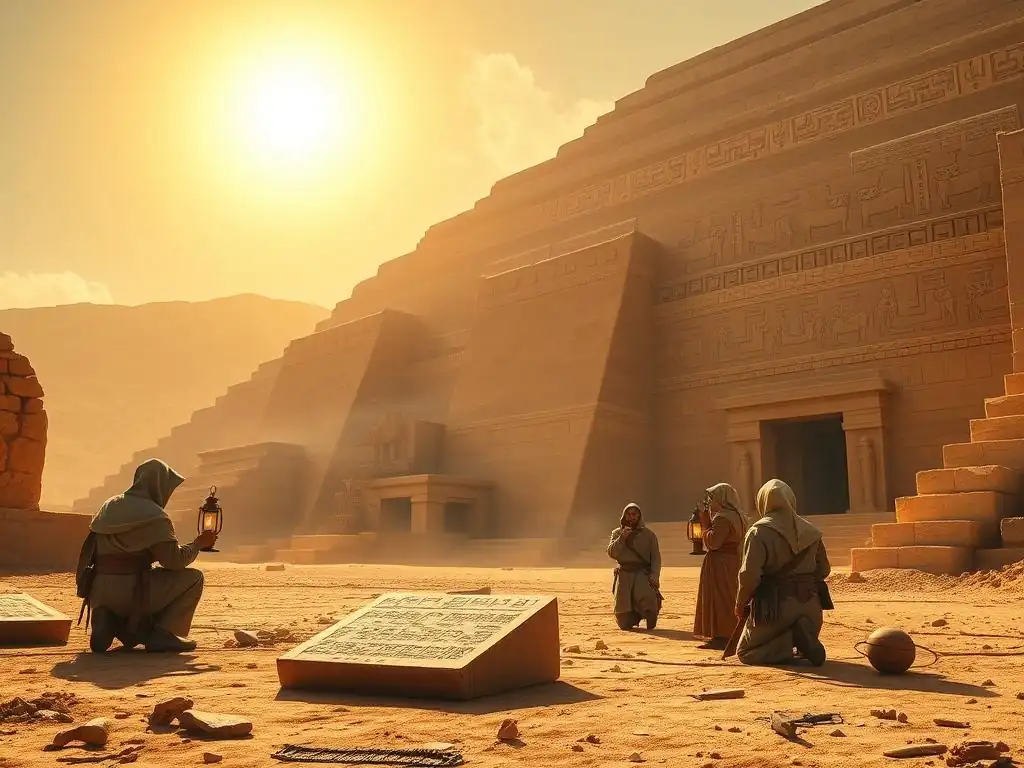
Welcome to ArchaeologyHub.org, your gateway to the past.
Ever wondered how ancient civilizations, armed with seemingly primitive tools, erected colossal monuments that continue to inspire awe today? Delve into our latest exploration of "The Role of Ideology and Collective Belief in Constructing Early Monumental Sites," where we unearth the surprising influence of shared beliefs and early monument ideology construction methods on these incredible feats of engineering. Prepare to uncover the secrets hidden within the stones and discover how ideology shaped the very landscape of our ancestors. What drove them to such extraordinary efforts? Read on to find out...
- Introduction: Ideology and the Dawn of Monumental Architecture
- Defining Early Monument Ideology Construction Methods
- The Power of Collective Belief in Monumental Site Development
- Case Study: Göbekli Tepe and the Embodiment of Early Monumental Ideology
- Other Near Eastern Examples of Ideology Driving Monument Construction
- The Relationship Between Ideology, Social Hierarchy, and Monumental Construction
- Construction Techniques and the Manifestation of Ideology
- Interpreting Early Monument Ideology: Challenges and Methodologies
- The Legacy of Early Monumental Ideology
- Conclusion: Ideology as a Catalyst for Early Monumental Architecture
-
Frequently Asked Questions
- How did ideology influence the selection of locations for early monumental sites?
- What construction methods were employed in early monumental sites, and how did collective belief contribute to their success?
- How did the display of power through monumental sites reinforce the dominant ideology?
- Can archaeological evidence reveal the specific ideologies that drove the construction of early monuments?
- What role did ritual and ceremony play in the construction and maintenance of early monumental sites?
- Final Reflection: Echoes of Belief in Stone
- Unearth Your Inner Explorer: Join the Monumental Journey!
Introduction: Ideology and the Dawn of Monumental Architecture
Exploring the Nexus of Belief Systems and Monumental Construction in Early Societies
The emergence of monumental architecture marks a profound shift in human history, signaling not just technological advancements but also a significant evolution in social organization and collective thought. Long before the rise of states or widespread agriculture, early societies invested immense resources and labor into constructing structures that transcended purely utilitarian functions.
These early monumental sites, from megalithic circles to elaborate ceremonial complexes, were often physical manifestations of deeply held belief systems, cosmological understandings, and shared spiritual practices. The very act of their creation required a unifying vision, suggesting that ideology served as a powerful catalyst for these ambitious undertakings.
Understanding these early constructions necessitates delving into the abstract realm of belief, myth, and ritual that underpinned them. The scale and permanence of these structures indicate a deliberate, long-term commitment that could only be sustained by a collective buy-in to a shared purpose, often beyond immediate subsistence needs. This intimate connection between abstract belief and concrete construction methods forms the core of "Early monument ideology construction methods," revealing how ancient worldviews shaped the physical landscape.
ArchaeologyHub.org: Unveiling the Ideological Foundations of Ancient Sites
ArchaeologyHub.org is dedicated to exploring the intricate relationships between ancient societies, their material culture, and the underlying belief systems that shaped their world. This article contributes to our extensive digital encyclopedia by focusing specifically on how ideology and collective belief were not merely incidental to but fundamental drivers of early monumental construction. We aim to provide detailed analyses of how ideological frameworks influenced the design, location, and purpose of ancient monumental structures, particularly in the Near East.
Our exploration will unveil how these structures were not just engineering feats but also profound cultural statements, embodying the very essence of "Early monument ideology construction methods." By examining specific case studies and archaeological evidence, we seek to illuminate the complex interplay between human ingenuity, social organization, and the powerful, often sacred, ideas that inspired humanity's first grand architectural endeavors.
Defining Early Monument Ideology Construction Methods
What Constitutes Monumental Construction in Archaeological Contexts?
In archaeological contexts, monumental construction refers to structures or complexes that required a significant investment of labor, resources, and time, going beyond the immediate needs of subsistence or basic shelter. These are typically large-scale, permanent installations whose primary function is often non-residential, serving instead as public, ceremonial, or symbolic spaces. Characteristics include impressive size, careful planning, specialized craftsmanship, and often, a symbolic or ritualistic purpose that sets them apart from ordinary dwellings or utilitarian structures.
Examples range from the massive earthworks and megalithic alignments of Europe to the earliest stone sanctuaries of the Near East. These structures signify a collective effort that would have been impossible without a shared vision and purpose. The construction methods employed, though seemingly simple by modern standards, represented significant technological and organizational achievements for their time, consistently reflecting the "Early monument ideology construction methods" that informed their creation.
Identifying Ideological Signatures in Early Monumental Sites: Key Indicators
Identifying ideological signatures in early monumental sites is a complex task for archaeologists, as belief systems rarely leave direct material traces. However, several key indicators provide strong inferential evidence. These include the site's layout and orientation (e.g., astronomical alignments, cardinal directions), recurrent iconography (symbols, animal motifs, anthropomorphic figures), and the presence of non-utilitarian features (e.g., elaborate carvings, ritual deposits, specialized architectural forms). For instance, the deliberate burial of structures, as seen at Göbekli Tepe, strongly suggests a ritualistic or ideological motivation rather than mere abandonment.
Furthermore, the scale of effort invested, particularly in pre-agricultural or early agricultural societies with limited surpluses, implies a powerful underlying motivation beyond practical necessity. The careful selection of materials, the precision of construction, and the spatial organization of different elements within a site all contribute to understanding the "Early monument ideology construction methods" as reflections of deeply ingrained cultural and spiritual beliefs.
The Power of Collective Belief in Monumental Site Development
The construction of early monumental sites demanded an unprecedented level of social coordination and collective labor, far exceeding what was needed for daily survival. This was not simply a matter of individual effort but required the mobilization of dozens, if not hundreds, of individuals over extended periods, sometimes spanning generations. Such large-scale cooperation implies a robust social dynamic, often facilitated by emerging forms of leadership, whether charismatic, ritualistic, or based on specialized knowledge. The shared vision for the monument, often rooted in a common belief system, served as the glue that bound these diverse efforts together.
These projects could also serve as arenas for social integration, bringing together different kin groups or communities for a common purpose. The act of construction itself might have been a ritual, reinforcing social bonds and collective identity. The "Early monument ideology construction methods" thus became a powerful mechanism for shaping and solidifying social structures, demonstrating the capacity of early societies to organize for monumental goals.
Shared rituals and beliefs played a pivotal role in mobilizing the vast labor and resources necessary for early monumental construction. In societies without coercive state power, adherence to a common belief system provided the essential motivation for voluntary participation in arduous tasks.
Rituals, such as communal feasting or ceremonies performed at the construction site, could reinforce the sacred purpose of the monument, solidify group cohesion, and ensure continued commitment. For example, the discovery of large quantities of animal bones at Göbekli Tepe suggests extensive feasting, likely integral to the construction process and the fostering of a shared sense of purpose.
Moreover, the belief in supernatural aid, ancestral blessings, or the promise of communal well-being could incentivize individuals to contribute their labor and scarce resources, such as specialized tools or raw materials. This ideological foundation enabled the sustained effort required for projects that might take years or decades to complete, showcasing how "Early monument ideology construction methods" were intrinsically linked to a community's spiritual and social fabric.
Case Study: Göbekli Tepe and the Embodiment of Early Monumental Ideology
Göbekli Tepe: A Unique Example of Pre-Pottery Neolithic Monumentality
Göbekli Tepe, located in southeastern Turkey, stands as a truly unique and groundbreaking example of Pre-Pottery Neolithic monumental construction. Dating back to roughly 9600-8200 BCE, it predates the widespread adoption of agriculture and pottery, challenging previous assumptions about the development of complex societies. The site comprises multiple large, circular and oval enclosures, partially excavated, with massive T-shaped pillars, some reaching over 5 meters in height and weighing up to 20 tons. These pillars are carved with elaborate animal reliefs and abstract symbols.
What makes Göbekli Tepe particularly remarkable is the apparent absence of any permanent residential structures; it appears to have been a purely ceremonial or ritual complex. This suggests that the impetus for its construction was primarily ideological and spiritual, marking a pivotal moment in the history of "Early monument ideology construction methods" where belief systems directly drove monumental architectural innovation.
Analyzing the Symbolism and Iconography of Göbekli Tepe's Pillars
The T-shaped pillars of Göbekli Tepe are adorned with a rich and varied iconography, predominantly featuring wild animals such as foxes, snakes, boars, birds (especially vultures), spiders, and scorpions. These animals are often depicted in dynamic poses, sometimes in combination with abstract symbols or stylized anthropomorphic features. Two central, larger pillars in each enclosure often appear to represent stylized human figures, indicated by carved arms, hands, and loincloths.
This complex array of symbols is not merely decorative but almost certainly represents a sophisticated cosmological system, mythical narratives, or spirit beings central to the beliefs of the people who built the site. The repetition of certain motifs across different enclosures suggests a shared symbolic language and a common understanding of their meaning, providing crucial insights into the "Early monument ideology construction methods" and the profound spiritual world they sought to embody.
The Ideological Drivers Behind Göbekli Tepe's Construction and Purpose
The immense scale of Göbekli Tepe's construction, coupled with its non-utilitarian nature, strongly points to profound ideological and spiritual motivations as its primary drivers. Scholars hypothesize that the desire to create and maintain such a sacred space spurred the development of more complex social organization, the coordination of large labor forces, and potentially even the initial steps towards agriculture to feed these gatherings. It is believed that the site served as a central meeting place for various hunter-gatherer groups, united by a common cult or belief system.
The purpose of Göbekli Tepe likely revolved around communal gatherings, elaborate rituals, or ceremonies related to ancestor veneration, a cult of the dead, or an animistic worldview deeply connected to the animal kingdom. The "Early monument ideology construction methods" at Göbekli Tepe were thus a direct consequence of a powerful collective belief, demonstrating how shared spiritual convictions could mobilize entire communities for monumental undertakings.
Göbekli Tepe as a Sanctuary: Understanding its Ritualistic Use
Evidence from Göbekli Tepe strongly supports its interpretation as a sanctuary or ritual center. The absence of domestic architecture, combined with the presence of large quantities of animal bones (primarily from wild species like gazelle and aurochs), indicates extensive feasting activities. These feasts were likely integral to the rituals performed at the site, reinforcing community bonds and shared beliefs. The different enclosures might have served distinct ritual purposes or been associated with various groups.
Perhaps one of the most compelling aspects of Göbekli Tepe's ritualistic use is the deliberate backfilling and burial of its enclosures over time. Each complex appears to have been intentionally covered with earth and debris after a period of use, only for new, often larger, enclosures to be built nearby. This act of ritualistic termination or preservation further underscores the profound ideological connection the builders had with the site, making it a prime example of how "Early monument ideology construction methods" were intertwined with the sacred life cycle of the monument itself.
Other Near Eastern Examples of Ideology Driving Monument Construction
Çatalhöyük: Uncovering the Ideological Context
Çatalhöyük, a vast Neolithic settlement in central Anatolia (c. 7500-5700 BCE), presents another compelling case where ideology profoundly influenced architectural design and daily life. Unlike Göbekli Tepe, Çatalhöyük was a densely packed residential site, famous for its mud-brick houses built without streets, accessed via ladders through roof openings. Yet, within this domestic sphere, strong ideological elements are evident. Many houses featured elaborate plastered walls with murals depicting geometric patterns, hunting scenes, or even a possible representation of a volcanic eruption (Hasan Dağ).
Furthermore, the recurring presence of bull bucrania (plastered bull skulls), plastered human skulls, and anthropomorphic figurines (like the 'Seated Woman of Çatalhöyük') within the houses points to a rich cultic life, ancestor veneration, and a unique concept of domestic space intertwined with belief. The "Early monument ideology construction methods" here were not about building grand external structures, but about infusing every dwelling with symbolic meaning, transforming residential units into microcosms of their shared worldview.
Jericho: The Influence of Belief Systems on Architectural Design
The Pre-Pottery Neolithic settlement of Jericho (Tell es-Sultan, c. 9000-7000 BCE) is renowned for its massive stone wall and tower, dating to the PPN A period. While often interpreted as defensive structures, their sheer scale and the immense labor required for their construction suggest that their purpose extended beyond mere military protection. The wall was approximately 3.6 meters high and 1.8 meters thick, while the tower stood about 8.5 meters tall with an internal staircase.
Ideological interpretations propose that these structures might have served as powerful symbolic markers of communal identity, status, or even cosmological boundaries, reflecting a deeply ingrained collective belief system. The presence of plastered human skulls at Jericho, similar to those found at Çatalhöyük, indicates a strong emphasis on ancestor veneration, which could have been a unifying ideological force. Thus, "Early monument ideology construction methods" at Jericho were possibly driven by a desire to visually represent the community's power and cohesion, both to outsiders and within their own belief system.
Ideologies played a crucial role in shaping and reinforcing social structures during periods of monumental construction. Shared belief systems could provide the necessary justification for social stratification, allowing certain individuals or groups to emerge as leaders capable of mobilizing and directing large labor forces.
Whether through claims of divine connection, specialized ritual knowledge, or superior organizational skills, these emergent elites could leverage ideology to command the collective effort required for monumental projects. Conversely, the successful completion of a monumental site could then validate and further entrench these developing social hierarchies, demonstrating the efficacy of the "Early monument ideology construction methods" under their guidance.
The very process of monumental construction could also act as a crucible for new social arrangements. The need for specialized labor, resource management, and long-term planning might have fostered the development of new roles and responsibilities within a community, from skilled artisans to project managers. These roles, initially practical, could gradually acquire symbolic or ritualistic significance, thereby contributing to the stratification of society.
From an archaeological perspective, monumental sites often served as enduring expressions of power and authority. Once constructed, their imposing presence would awe and inspire, physically embodying the established social order or the dominant belief system. The scale and permanence of these structures communicated a clear message about the strength and cohesion of the community, and often, the authority of its leaders or ruling groups. For instance, the sheer effort required to build sites like Göbekli Tepe or the Jericho Tower would have underscored the organizational capacity and influence of those who orchestrated such endeavors.
Control over access to these sites, the design of their spaces, and the performance of rituals within them could be tightly managed by elites or specific ritual specialists, further solidifying their position. These monuments became arenas where power was displayed, legitimized, and reinforced through communal ritual and shared experience. Understanding "Early monument ideology construction methods" therefore involves recognizing how these physical structures became central to the negotiation and assertion of social and spiritual authority in ancient societies.
Construction Techniques and the Manifestation of Ideology
Early Monument Construction Methods: Technological and Conceptual Aspects
The "Early monument ideology construction methods" were a fascinating blend of rudimentary technology and ingenious conceptual understanding. Lacking metal tools or domesticated animals for heavy lifting, early builders relied on simple implements made of stone, bone, and wood. Techniques involved quarrying massive stones using wedges and hammers, transporting them over considerable distances using rollers or sledges, and erecting them with ropes, levers, and earthen ramps. The precision seen in some megalithic alignments suggests a sophisticated understanding of geometry and astronomy.
Crucially, the choice of materials, the orientation of structures, and even the specific forms of construction often carried deep ideological significance. A particular type of stone might have been considered sacred, or an alignment with a celestial body might have been essential for ritual purposes. Thus, the technical aspects of construction were not merely practical but were deeply intertwined with the prevailing belief systems, making the methods themselves a manifestation of ideology.
The Interplay of Engineering, Ideology, and Collective Effort in Ancient Monument Creation
The creation of ancient monuments was a remarkable interplay of engineering prowess, guiding ideology, and sustained collective effort. The practical challenges of moving and shaping multi-ton stones, or constructing vast earthworks, demanded innovative solutions and meticulous planning. Yet, this engineering was almost always in service of a greater, often sacred, purpose. The ideological framework provided the conceptual blueprint, dictating the monument's form, scale, and symbolic elements.
The organization of labor, the division of tasks, and the persistence required over extended periods – sometimes decades or even centuries – were sustained by the overarching ideological goal. The monuments stand as enduring testaments to how "Early monument ideology construction methods" were not just about mastering physical forces, but about harnessing human will and cooperation through the power of shared belief. The impressive feats of ancient builders were thus a direct reflection of their profound spiritual and social convictions.
Interpreting Early Monument Ideology: Challenges and Methodologies
The Difficulties of Reconstructing Ancient Belief Systems from Archaeological Evidence
Reconstructing ancient belief systems from archaeological evidence presents significant challenges. Ideology is abstract, intangible, and often leaves no direct material trace. Archaeologists must rely on inference, interpreting patterns in material culture—such as iconography, burial practices, and site layout—to piece together aspects of ancient worldviews. However, these interpretations are inherently subjective and can be ambiguous, open to multiple possibilities. The absence of written records for most early monumental periods further complicates the task, as we lack direct accounts of myths, rituals, or philosophical concepts.
Moreover, archaeologists must guard against imposing modern conceptual frameworks or religious biases onto ancient minds, striving instead to understand beliefs on their own terms. Preservation bias also plays a role, as organic materials like textiles, wood carvings, or perishable ritual objects, which might have held significant ideological meaning, rarely survive the passage of millennia. This makes the precise understanding of "Early monument ideology construction methods" a complex and ongoing endeavor.
Methodological Approaches to Analyzing Ideological Influences on Monumental Sites
Despite the challenges, archaeologists employ a range of methodological approaches to analyze ideological influences on monumental sites. Contextual analysis is paramount, examining what artifacts are found where, in what association, and how they relate to architectural features. Comparative archaeology, looking for recurring patterns across different sites or cultural regions, can help identify widespread ideological tropes. Iconographic analysis meticulously deciphers the meaning of symbols and images, often drawing on ethnographic parallels from contemporary traditional societies (ethnoarchaeology).
Furthermore, interdisciplinary approaches, integrating insights from anthropology, cognitive science, and art history, enrich interpretations. By combining these methods, archaeologists can build more nuanced models of ancient belief systems, moving beyond mere description to understand how "Early monument ideology construction methods" were infused with cultural meaning and purpose. This holistic approach is crucial for teasing out the abstract from the concrete.
The Legacy of Early Monumental Ideology
The Enduring Impact of Belief Systems on Subsequent Architectural Traditions
The "Early monument ideology construction methods" laid profound foundations for subsequent architectural traditions, demonstrating the enduring impact of belief systems on human creativity and organization. The fundamental idea of building to honor deities, commemorate ancestors, mark cosmological alignments, or express communal identity, which emerged in the Neolithic, persisted and evolved through successive civilizations. From the ziggurats of Mesopotamia to the pyramids of Egypt, and later the temples of Greece and Rome, and the cathedrals of medieval Europe, the impulse to create monumental structures often stemmed from a deep spiritual or ideological conviction.
These later architectural marvels often refined and elaborated upon the principles established by their earliest predecessors, showcasing continuity in the use of grand scale, symbolic forms, and public spaces to convey meaning. The legacy of early monumental ideology is thus visible in the very fabric of human architectural history, reflecting humanity's continuous quest to embody its deepest beliefs in stone and earth.
Understanding the Roots of Monumental Construction and its Significance for Human History
Understanding the roots of monumental construction is crucial for comprehending the trajectory of human history. These early sites are not merely impressive feats of engineering; they are windows into the minds and societies of ancient peoples, revealing their values, fears, aspirations, and their capacity for collective action. They demonstrate how, even in societies without centralized political power or advanced technology, shared belief systems could mobilize vast resources and labor, leading to unprecedented levels of social complexity and organization.
The study of "Early monument ideology construction methods" illuminates how the desire to express and reinforce collective beliefs led to the creation of enduring symbols of identity and purpose. These monuments represent a pivotal moment when humans began to consciously shape their environment in profound ways, not just for survival, but for meaning, laying the groundwork for the development of organized religion, social hierarchies, and the very concept of a shared cultural heritage that defines humanity.
Conclusion: Ideology as a Catalyst for Early Monumental Architecture
Reaffirming the Central Role of Ideology in Understanding Ancient Societies
The evidence from sites like Göbekli Tepe, Çatalhöyük, and Jericho overwhelmingly reaffirms the central role of ideology and collective belief as a primary catalyst for early monumental architecture. These ambitious projects were not merely practical responses to environmental or social pressures but were profound expressions of shared worldviews, spiritual convictions, and communal identities. The ability of early societies to conceive, plan, and execute such massive undertakings speaks volumes about the unifying power of common purpose, often rooted in sacred or cosmological beliefs.
The "Early monument ideology construction methods" were thus intrinsically linked to the very fabric of ancient societal organization, providing the motivation, the social cohesion, and the conceptual framework necessary for these enduring testaments to human ingenuity and faith. Understanding these ideological underpinnings is essential for a holistic appreciation of how ancient cultures perceived and interacted with their world.
Future Directions in Research on Early Monument Ideology Construction Methods
Future research on "Early monument ideology construction methods" promises to delve even deeper into the complex interplay between belief, social organization, and technological innovation. Ongoing excavations at sites like Karahan Tepe, another monumental Pre-Pottery Neolithic site in southeastern Turkey, continue to uncover new evidence that refines our understanding of these early ritual centers. Advancements in analytical techniques, such as remote sensing, archaeogenetics, and biomolecular studies, offer unprecedented opportunities to reconstruct ancient environments, dietary practices, and even population movements, providing richer contexts for interpreting ideological motivations.
Further comparative studies across different geographic regions and time periods will also be crucial for identifying universal patterns and unique variations in how belief systems drove monumental construction. By integrating these diverse lines of inquiry, archaeologists will continue to unravel the profound and multifaceted role of ideology in shaping the physical and cultural landscapes of our earliest ancestors.
Frequently Asked Questions
How did ideology influence the selection of locations for early monumental sites?
Early monument locations were often chosen based on pre-existing sacred landscapes or because they held symbolic significance within a specific cultural ideology. This allowed for the manifestation of power and reinforced collective beliefs.
What construction methods were employed in early monumental sites, and how did collective belief contribute to their success?
Early monument construction relied on basic tools, human labor, and ingenious techniques like ramps and levers. Collective belief fueled the necessary labor force and ensured the project's completion despite its scale.
How did the display of power through monumental sites reinforce the dominant ideology?
Monumental sites acted as visual representations of power, solidifying the ruling elite's authority. The sheer scale and complexity served as tangible evidence of their control and legitimacy within the ideology.
Can archaeological evidence reveal the specific ideologies that drove the construction of early monuments?
Yes, archaeological evidence like artifact placement, architectural design, and funerary practices can provide insights into the prevailing ideologies. These are interpreted through contextual analysis and comparative studies.
What role did ritual and ceremony play in the construction and maintenance of early monumental sites?
Ritual and ceremony were integral, often involving dedicatory rites, offerings, and communal feasts. These practices reinforced the sacred nature of the site and strengthened collective belief in the underlying ideology.
Final Reflection: Echoes of Belief in Stone
The exploration of early monument ideology construction methods reveals more than just ancient building techniques; it illuminates the enduring power of shared belief systems to shape our physical world. The monuments we've discussed stand as tangible testaments to the profound influence of ideology, demonstrating how collective faith can mobilize communities and leave indelible marks on the landscape, a principle that resonates deeply even in our modern, seemingly secular, societies.
This journey into the past underscores how ideology, far from being a relic of history, remains a potent force in shaping our present and future. The very act of constructing these monuments was a performance of belief, a visible manifestation of a shared worldview. Architecture begins where engineering ends,
said Walter Gropius, and in the context of early monuments, this rings especially true; the engineering was merely the vehicle, the ideology the true architect.
As we conclude, consider the monuments we are building today, not just of stone and steel, but of ideas and actions. What beliefs are we enshrining? What legacy are we leaving? Let us strive to build monuments worthy of the future, founded on principles of understanding, empathy, and a shared commitment to a better world, ensuring that our own "early monument ideology construction methods" reflect the best of humanity.
Unearth Your Inner Explorer: Join the Monumental Journey!
Thanks for delving into the fascinating world of early monumental sites and the powerful role of ideology and collective belief! Now, it’s time to take that knowledge and turn it into action.
Here's how you can continue your exploration:
- Dig deeper: Research a specific monumental site discussed in the article and share a surprising fact about its construction or ideological significance in the comments section.
- Share your insights! Discuss the article with friends or colleagues and explore if similar collective beliefs exist in modern society.
- Visit a local archaeological museum or historical site to experience the tangible remains of past ideologies.
What existing modern structure do you think will be considered monumental in 1000 years and why?