
Zoroastrian Fire Temples in Sogdiana: Archaeological Evidence from Samarkand and Panjakent

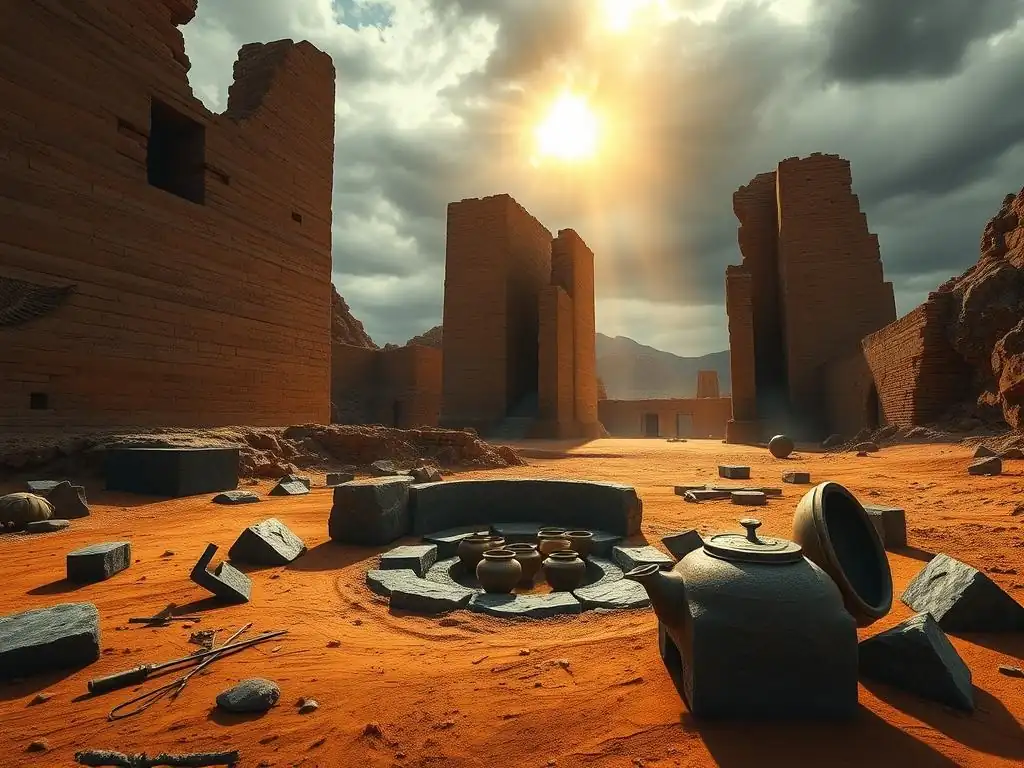
Welcome to ArchaeologyHub.org!
Delve into the past and uncover the secrets of ancient civilizations. This week, we journey to Sogdiana, a land where cultures collided and empires rose and fell. Are you ready to explore the fascinating archaeological evidence surrounding Zoroastrian fire temples in Sogdiana, particularly in the vibrant cities of Samarkand and Panjakent? Prepare to ignite your curiosity and discover the rituals and beliefs that shaped this pivotal region. Let the exploration begin...
- Introduction: Unveiling Zoroastrianism in Sogdiana Through Archaeological Discovery
- Zoroastrianism and its Expansion into Central Asia: A Historical Overview
-
Archaeological Evidence of Zoroastrian Fire Temples in Samarkand (Afrasiab)
- Afrasiab (Ancient Samarkand): A Major Urban Center in Sogdiana
- Excavations at Afrasiab: Locating Potential Zoroastrian Religious Sites
- Identifying Architectural Features of Fire Temples: Central Hearths, Columned Halls, Elevated Platforms
- Artifact Analysis: Ceramic Braziers, Zoomorphic Figurines, Ash Deposits Suggestive of Zoroastrian Rituals
- Interpreting the Archaeological Record: Reconstructing Zoroastrian Practices in Samarkand
-
Zoroastrian Fire Temples in Panjakent: Insights from Archaeological Excavations
- Panjakent: A Well-Preserved Sogdian City with Rich Archaeological Heritage
- The Discovery and Excavation of Fire Temples in Panjakent
- Architectural Analysis of Panjakent's Fire Temples: Fortified Structures, Inner Sanctums, Rectangular Layouts
- Ritual Spaces and Features: Altars with Fire Residue, Offering Tables, Purification Basins
- The Iconography and Symbolism of Zoroastrian Beliefs: Depictions of Deities, Sacred Animals, Fire Altars
- Comparative Analysis: Samarkand and Panjakent Zoroastrian Fire Temples
- The Decline of Zoroastrianism in Sogdiana: Archaeological Indicators
- Conclusion: The Enduring Legacy of Zoroastrian Fire Temples in Sogdiana
-
Frequently Asked Questions
- What archaeological evidence supports the existence of Zoroastrian fire temples in Sogdiana?
- Where exactly in Sogdiana have Zoroastrian fire temples been identified?
- What is the significance of finding Zoroastrian fire temples in Sogdiana?
- What architectural features are characteristic of Zoroastrian fire temples in Sogdiana?
- How do these fire temples relate to the broader history of Zoroastrianism?
- Final Reflection: Embers of Faith, Echoes of Time
- Ignite Your Curiosity: Delve Deeper into Zoroastrian Mysteries!
Introduction: Unveiling Zoroastrianism in Sogdiana Through Archaeological Discovery
Sogdiana: A Crossroads of Cultures and Religions in Ancient Central Asia
Sogdiana, an ancient civilization flourishing in present-day Uzbekistan and Tajikistan, served as a pivotal crossroads along the Silk Road from the 4th century BCE to the 8th century CE. Its strategic geographical position, encompassing fertile oases like the Zeravshan and Kashkadarya valleys, enabled it to become a vibrant nexus of trade, connecting the empires of China, India, Persia, and the Mediterranean. Sogdian merchants, renowned for their entrepreneurial spirit and linguistic prowess, established extensive trade networks, facilitating not only the exchange of goods but also the flow of ideas, technologies, and religious beliefs across vast distances.
This dynamic environment fostered an extraordinary cultural and religious pluralism. Alongside indigenous traditions, major world religions such as Buddhism, Manichaeism, Nestorian Christianity, and Zoroastrianism found adherents and established communities within Sogdiana. The Sogdians, while maintaining their distinct identity, often integrated foreign elements into their own cultural fabric, creating a unique syncretic blend. Understanding the archaeological footprint of these diverse faiths, particularly Zoroastrian fire temples Sogdiana, is crucial for reconstructing the complex social and spiritual landscape of this ancient region.
The Significance of Fire Temples in Zoroastrian Religious Practice
In Zoroastrianism, fire holds a profound symbolic and ritualistic significance, representing Asha (truth, order, righteousness) and the divine presence of Ahura Mazda, the Wise Lord. The perpetual maintenance of a sacred fire within a dedicated temple is central to Zoroastrian worship, symbolizing the eternal light, purity, and creative energy of the divine. These fire temples, known as Atashkadeh or Dar-e Mehr, are not merely places of congregation but consecrated spaces where priests (Magi) perform intricate rituals, most notably the Yasna ceremony, which involves offerings and prayers to maintain cosmic order and purity.
The structure and grade of the sacred fire determine the type of temple. The highest grade, the Atash Behram (Victorious Fire), requires 16 different types of fire, while the Atash Adaran (Fire of Fires) combines four fires from different professions, and the Atash Dadgah (Appointed Fire) is typically a household fire.
The archaeological discovery of structures designed to house and maintain such fires provides direct evidence of Zoroastrian presence and practice. These sites are invaluable for understanding the architectural adaptations and ritualistic nuances of Zoroastrian fire temples Sogdiana, offering tangible links to the beliefs and devotional lives of their ancient adherents.
Archaeological Focus: Samarkand and Panjakent as Key Sites of Investigation
Samarkand (ancient Afrasiab) and Panjakent stand as two of the most significant archaeological sites in Sogdiana, offering unparalleled insights into its urban development, artistic achievements, and religious life. Samarkand, as the capital of Sogdiana, was a sprawling metropolis with a long history of continuous occupation, presenting a complex stratigraphic record. Panjakent, on the other hand, a smaller but remarkably well-preserved city, was abandoned in the 8th century CE, leaving its pre-Islamic layers largely undisturbed and providing exceptionally clear evidence of Zoroastrian religious structures.
This article specifically synthesizes archaeological findings from these two pivotal locations to illuminate the presence and characteristics of Zoroastrian fire temples Sogdiana. By examining the architectural remnants, artifact assemblages, and iconographic evidence unearthed at Afrasiab and Panjakent, we aim to reconstruct the forms, functions, and ritualistic aspects of Zoroastrian worship in this vital Central Asian region. The comparative analysis of these sites will highlight both commonalities in Zoroastrian practice and regional adaptations that reflect the unique cultural tapestry of Sogdiana.
Zoroastrianism and its Expansion into Central Asia: A Historical Overview
The Origins and Core Beliefs of Zoroastrianism
Zoroastrianism, one of the world's oldest monotheistic (or dualistic monotheistic) religions, originated in ancient Iran. Its prophet, Zarathushtra (Zoroaster), is traditionally dated to the 6th century BCE, although some scholarly opinions place him as early as the 10th-12th centuries BCE. The core of Zoroastrian theology revolves around the veneration of Ahura Mazda, the uncreated God, who embodies wisdom, goodness, and creativity. This benevolent deity is engaged in a cosmic struggle against Angra Mainyu (Ahriman), the destructive spirit, representing falsehood and disorder.
Adherents are encouraged to choose between these two opposing forces through their thoughts, words, and deeds, emphasizing the importance of free will and ethical conduct. Key tenets include the belief in a final judgment, the ultimate triumph of good over evil, and the reverence for purity, particularly in relation to natural elements like fire, water, earth, and air. This reverence for fire, seen as the light of Ahura Mazda, is fundamental to Zoroastrian ritual and explains the central role of dedicated fire temples in their worship, making the study of Zoroastrian fire temples Sogdiana particularly insightful.
The Spread of Zoroastrianism Along the Silk Road
The expansion of Zoroastrianism beyond its Iranian heartland was significantly propelled by imperial patronage and extensive trade networks. During the Achaemenid Empire (c. 550–330 BCE), Zoroastrianism gained prominence, though it was under the later Parthian (c. 247 BCE – 224 CE) and especially the Sasanian Empires (224–651 CE) that it became the official state religion, leading to its widespread dissemination. Sasanian expansion into Central Asia facilitated the establishment of Zoroastrian communities and institutions in regions like Sogdiana.
Crucially, Sogdian merchants played a vital, albeit indirect, role in this diffusion. As masters of the Silk Road trade, they traveled extensively, establishing mercantile colonies and trading posts from China to the Black Sea. While primarily driven by commerce, these merchants also acted as cultural conduits, adopting and transmitting various religious ideas and practices. Many Sogdians embraced Zoroastrianism, integrating it into their daily lives and establishing shrines and temples in their cities and trading hubs, thus contributing significantly to the proliferation of Zoroastrian fire temples Sogdiana and beyond.
Zoroastrian Influence in Sogdiana: Cultural and Religious Syncretism
The form of Zoroastrianism that flourished in Sogdiana was not a mere replication of its Persian counterpart but a vibrant, syncretic adaptation that integrated local traditions and deities. While adhering to core Zoroastrian principles, Sogdian religious practices often incorporated elements from indigenous Central Asian beliefs, creating a distinctive regional expression of the faith. This blending is evident in the archaeological record, particularly in the iconography and architectural styles of religious structures.
For instance, the Sogdian pantheon, which included goddesses like Nana (a local version of Anahita) and deities such as Veshparkar (a god associated with wind and war, possibly linked to Vayu/Vata), often appeared alongside or were assimilated into Zoroastrian cosmic narratives. Murals and artifacts from Sogdian sites depict a rich array of figures, some clearly Zoroastrian in origin, others reflecting local mythological or heroic traditions.
This cultural and religious syncretism highlights the dynamic nature of faith along the Silk Road, where Zoroastrian fire temples Sogdiana served not only as places of orthodox worship but also as centers for a uniquely Sogdian interpretation of the religion.
Archaeological Evidence of Zoroastrian Fire Temples in Samarkand (Afrasiab)
Afrasiab (Ancient Samarkand): A Major Urban Center in Sogdiana
Afrasiab, the ancient site of Samarkand, located on a plateau overlooking the Zeravshan River, was one of the largest and most influential urban centers in Sogdiana. Its strategic position on the main branch of the Silk Road ensured its prosperity and continuous occupation from approximately the 6th century BCE until its destruction by the Mongols in the early 13th century CE.
During the Sogdian period, particularly from the 5th to the 8th centuries CE, Afrasiab boasted impressive fortifications, a sophisticated urban plan, and monumental public and private structures, reflecting its status as the capital and a hub of commerce and culture.
Archaeological excavations at Afrasiab, initiated in the late 19th century and continuing to the present day, have uncovered vast residential quarters, defensive walls, palaces, and various religious edifices. These extensive findings provide a rich, albeit complex, stratigraphic record of over a millennium of urban life. The sheer scale and continuous habitation of Afrasiab mean that identifying specific Zoroastrian fire temples Sogdiana can be challenging due to later overlays and reuse of structures, but persistent archaeological efforts have yielded significant clues about its religious landscape.
Excavations at Afrasiab: Locating Potential Zoroastrian Religious Sites
Identifying definitive Zoroastrian fire temples within the dense urban fabric of Afrasiab requires careful interpretation of archaeological data, as the site also hosted Buddhist, Christian, and Manichaean communities. Unlike the distinct, well-preserved temples of Panjakent, religious structures in Afrasiab were often integrated into larger architectural complexes or underwent significant transformations over centuries. However, excavations have revealed several areas with strong indicators of Zoroastrian cultic activity, primarily dating to the 6th-7th centuries CE.
One key area of investigation has been the central mound and certain quadrants (e.g., Quadrant I, Quadrant IV) where large, multi-roomed buildings with specific features have been unearthed. While not always freestanding temples, some structures within these complexes exhibit characteristics consistent with Zoroastrian cultic spaces. The presence of monumental structures with internal courtyards and specialized rooms for fire maintenance, often within aristocratic residences or public buildings, suggests that Zoroastrian worship was deeply embedded within the city's elite and public life.
Identifying Architectural Features of Fire Temples: Central Hearths, Columned Halls, Elevated Platforms
The most crucial architectural identifier for a Zoroastrian fire temple is the presence of a central hearth or atashgah (fire altar). In Afrasiab, archaeologists have discovered remnants of stone or baked brick structures designed for sustained burning, often located in the center of a dedicated room or hall. These hearths sometimes feature channels for ash removal, indicating continuous use and ritual maintenance of the sacred fire. The dimensions and construction of these hearths distinguish them from ordinary domestic fireplaces.
Accompanying these central hearths, excavations have revealed evidence of associated architectural elements. Large, sometimes columned, halls or chambers surrounding the fire sanctuary suggest spaces for congregational worship or priestly rituals. Elevated platforms, often found near the hearths, could have served as altars for offerings or as pedestals for the sacred fire itself. The deliberate design of these spaces, focused around a central, ritually maintained fire, provides compelling evidence for the presence of Zoroastrian cultic activity within these structures, indicative of Zoroastrian fire temples Sogdiana.
Artifact Analysis: Ceramic Braziers, Zoomorphic Figurines, Ash Deposits Suggestive of Zoroastrian Rituals
Beyond architectural features, the analysis of artifacts recovered from these potential cultic sites in Afrasiab provides further corroboration of Zoroastrian practices. Ceramic braziers, often tripod-shaped and distinct from utilitarian cooking vessels, are frequently found. These would have been used for burning incense or for maintaining smaller, portable fires during specific rituals. Their presence in defined cultic contexts strongly suggests a ritualistic function related to fire.
Furthermore, archaeologists have unearthed small zoomorphic figurines, typically made of clay or terracotta, depicting animals such as horses, camels, or birds. These are interpreted as votive offerings or cultic symbols used within Zoroastrian or related local religious ceremonies.
Most importantly, the identification of significant ash deposits within the excavated hearths, particularly clean ash (derived from specific fuels like wood, rather than mixed refuse), offers direct chemical evidence of sustained ritual burning. Micro-analysis of these ash layers can even provide insights into the types of wood used and the intensity of the fires, further solidifying the identification of Zoroastrian fire temples Sogdiana.
Interpreting the Archaeological Record: Reconstructing Zoroastrian Practices in Samarkand
Interpreting the archaeological record at Afrasiab requires a nuanced approach, given the site's multi-religious history. The combination of architectural evidence (central hearths, specific room layouts), diagnostic artifacts (braziers, figurines), and chemical analysis of ash deposits allows archaeologists to reconstruct aspects of Zoroastrian ritual practices in Samarkand. The presence of dedicated fire altars suggests the performance of ceremonies akin to the Yasna, where fire was venerated and offerings made.
While some structures might not fit the classical Sasanian "fire temple" typology, their features indicate a strong Zoroastrian cultic function, possibly reflecting local adaptations or a more domestic/private form of worship alongside public temples. For example, some cultic spaces appear to be integrated within elite residential complexes, suggesting that wealthy families maintained their own sacred fires. This integration highlights a localized and perhaps less formalized expression of Zoroastrian fire temples Sogdiana, showcasing the religion's flexibility and its deep rooting within the social fabric of ancient Samarkand.
Zoroastrian Fire Temples in Panjakent: Insights from Archaeological Excavations

Panjakent: A Well-Preserved Sogdian City with Rich Archaeological Heritage
Panjakent, located in modern-day Tajikistan, is an exceptionally well-preserved archaeological site that offers an unparalleled window into Sogdian urbanism and religious life. Flourishing from the 5th to the 8th centuries CE, Panjakent was a prosperous city, known for its rich merchant class and vibrant artistic traditions. Its abrupt abandonment around 722 CE, following the Arab conquest, meant that subsequent Islamic rebuilding did not extensively disturb the underlying Sogdian layers, preserving its pre-Islamic architecture and art in remarkable detail.
The archaeological work at Panjakent, primarily conducted by Soviet and later Russian-Tajik expeditions since the 1940s, has systematically uncovered large portions of the city. This includes extensive residential quarters, a citadel, fortifications, and, crucially, several distinct religious complexes. The extraordinary preservation of Panjakent's structures, including its iconic painted murals, provides direct and clear evidence of Zoroastrian fire temples Sogdiana, making it a cornerstone for understanding the religion's presence and practice in Central Asia.
The Discovery and Excavation of Fire Temples in Panjakent
The systematic excavations at Panjakent have led to the discovery of multiple distinct religious complexes, particularly within the city's residential and administrative areas. These complexes, often referred to as "Temples," were identified early in the excavation process due to their unique architectural layouts and the presence of specific cultic features. The most prominent examples are Temple I (dating from approximately the late 5th to mid-6th century CE) and Temple II (active from the late 6th to early 8th century CE), both of which have been thoroughly investigated.
These discoveries were pivotal because they provided clear, unambiguous evidence of structures dedicated to fire worship, a rarity in Central Asian archaeology outside of Iran. The meticulous documentation of these sites has allowed scholars to reconstruct the architectural evolution and ritualistic functions of these Zoroastrian fire temples Sogdiana with a high degree of certainty. The continuity of occupation and ritual activity in these temples, spanning several centuries, underscores the enduring presence of Zoroastrianism in Panjakent prior to the Islamic conquests.
Architectural Analysis of Panjakent's Fire Temples: Fortified Structures, Inner Sanctums, Rectangular Layouts
The fire temples of Panjakent exhibit a distinctive architectural style, often characterized by a rectangular layout within a larger fortified compound. A typical temple design includes an entrance antechamber, leading into a larger hall, which then provides access to a secluded inner sanctum. These structures were typically built with mud brick on stone foundations, often featuring plastered and painted walls. The overall design emphasizes a progression from public to sacred spaces, culminating in the most holy area.
The naos, or inner sanctum, is the most critical component. These small, often dark, and deliberately isolated rooms housed the sacred fire altar. For instance, Temple II features two distinct fire chambers, possibly indicating the maintenance of different grades of fire or separate ritual functions. The careful construction and placement of these inner sanctums underscore the reverence for the sacred fire and the need to protect its purity, making these clear examples of Zoroastrian fire temples Sogdiana.
Ritual Spaces and Features: Altars with Fire Residue, Offering Tables, Purification Basins
Within Panjakent's fire temples, archaeologists have identified a range of specific ritual features that confirm their Zoroastrian function. Central altars, typically constructed from stone or baked brick, show clear evidence of sustained burning, with layers of charcoal and ash accumulated over centuries of use. These altars vary in size and form but consistently served as the focal point for the sacred fire.
Adjacent to these fire altars, flat stone tables or low platforms have been discovered, interpreted as offering tables where priests would place food, libations, or other ritual items. The presence of small basins, sometimes lined with waterproof plaster, suggests their use for purification rituals (ablutions) performed by priests or worshippers before approaching the sacred fire. These specific features, meticulously excavated and analyzed, provide compelling evidence for the complex and prescribed rituals carried out within these Zoroastrian fire temples Sogdiana.
The Iconography and Symbolism of Zoroastrian Beliefs: Depictions of Deities, Sacred Animals, Fire Altars
Panjakent is renowned for its vibrant mural paintings, many of which adorned the walls of its temples and elite residences. While direct depictions of Ahura Mazda are rare, the iconography found within the fire temples and associated buildings often alludes to Zoroastrian beliefs, heroic sagas, and the broader Sogdian pantheon. These murals provide invaluable insights into the visual culture and religious syncretism of the period.
Examples include depictions of the fravashi (a guardian spirit in Zoroastrianism, often represented as a winged disc with a human torso), sacred animals like the senmurv (a mythical bird-dog creature, common in Sasanian and Sogdian art), and scenes that likely illustrate episodes from the Avesta or local heroic epics. Crucially, stylized fire altars, sometimes attended by robed priests, are depicted in several murals, explicitly reinforcing the religious function of these structures. This rich visual evidence from Panjakent's Zoroastrian fire temples Sogdiana offers a unique glimpse into the symbolic world of Sogdian Zoroastrianism.
Comparative Analysis: Samarkand and Panjakent Zoroastrian Fire Temples
Commonalities in Architectural Design and Ritual Practices
Despite their differing scales and states of preservation, the archaeological evidence from Samarkand (Afrasiab) and Panjakent reveals significant commonalities in the architectural design and ritual practices associated with Zoroastrian fire temples Sogdiana. Both sites demonstrate the central importance of a dedicated fire altar or hearth as the focal point of worship. Whether in a secluded inner sanctum (Panjakent) or a prominent hall within a larger complex (Afrasiab), the sustained maintenance and veneration of sacred fire were paramount.
Furthermore, both sites show evidence of associated ritual spaces, such as areas for offerings or purification. The consistent presence of ceramic braziers and specific ash deposits in cultic contexts at both locations points to shared ritualistic elements, such as the burning of incense and the performance of ceremonies involving fire. These commonalities suggest a broadly consistent understanding of Zoroastrian practice across Sogdiana, even amidst regional variations in architectural expression.
Regional Variations: Building Materials, Decorative Motifs, Specific Ritual Offerings
While core elements remained consistent, notable regional variations distinguish the Zoroastrian fire temples Sogdiana found in Samarkand and Panjakent. Panjakent's temples, being better preserved, often showcase more elaborate and extensive mural decorations, providing a richer visual narrative of Sogdian Zoroastrianism. Their architectural layouts often feature clearly defined, secluded inner sanctums, emphasizing the sanctity and privacy of the fire chamber.
In contrast, the evidence from Samarkand (Afrasiab) suggests a greater integration of cultic spaces within larger urban or residential complexes, possibly reflecting its status as a major administrative and mercantile hub where religious practice might have been more diffused or adapted to existing urban structures. Differences in building materials might also be observed, influenced by local resource availability and construction techniques. While ceramic braziers are common to both, subtle variations in the types of votive offerings or specific iconography could reflect local artistic schools or minor ritual adaptations within the broader Zoroastrian tradition of Sogdiana.
The Role of Local Traditions in Shaping Zoroastrianism in Sogdiana
The comparative analysis of Zoroastrian fire temples Sogdiana from Samarkand and Panjakent strongly underscores the significant role of local traditions in shaping the expression of Zoroastrianism in Central Asia. The religion, while maintaining its fundamental tenets, was not imported as a rigid, monolithic system but rather adapted and integrated into the existing cultural and religious landscape of Sogdiana. This syncretism is evident in the blend of Iranian and indigenous Sogdian artistic styles and mythological themes observed in temple murals.
The archaeological record demonstrates a dynamic religious environment where core Zoroastrian beliefs coexisted and interacted with local deities and heroic narratives, enriching the spiritual lives of the Sogdians. This localized form of Zoroastrianism, with its unique architectural and iconographic features, highlights the adaptability of the faith and its capacity to resonate with diverse communities. The Sogdian fire temples thus offer a crucial case study for understanding religious diffusion and cultural synthesis along the ancient Silk Road.
The Decline of Zoroastrianism in Sogdiana: Archaeological Indicators
The Arrival of Islam and its Impact on Zoroastrian Communities
The arrival of Islam in Transoxiana, beginning with the Arab conquests in the early 8th century CE, marked a profound turning point for the pre-Islamic religious landscape of Sogdiana, including its thriving Zoroastrian communities. While the initial phase of conquest did not immediately enforce mass conversions, the establishment of a new political and religious order gradually led to the decline of indigenous and imported pre-Islamic faiths. The fall of cities like Panjakent to Arab forces around 722 CE directly impacted the continuity of Zoroastrian worship.
Over time, various mechanisms contributed to this decline. Economic incentives for conversion, such as exemption from the jizya (poll tax levied on non-Muslims), played a significant role. Furthermore, the shift in political patronage and the gradual Islamization of urban centers led to the marginalization of non-Muslim institutions. The once-prominent Zoroastrian fire temples Sogdiana faced increasing pressure, either through abandonment, conversion, or the gradual attrition of their congregations.
Evidence of Abandonment or Conversion of Fire Temples
Archaeological evidence from Sogdiana provides direct indicators of the decline of Zoroastrianism. In Panjakent, the abrupt abandonment of the city following the Arab campaigns in the early 8th century CE resulted in the cessation of ritual activity in its fire temples. Excavations show structures left to decay, with roofs collapsing, altars no longer maintained, and no signs of subsequent pre-Islamic activity. This provides a clear archaeological timestamp for the end of active Zoroastrian worship in this particular urban center.
In continuously inhabited cities like Samarkand (Afrasiab), the evidence is more complex. While direct conversion of a specific Zoroastrian fire temple into a mosque is rare and difficult to prove definitively, the reuse of building materials, the superimposition of Islamic structures over earlier layers, and the general absence of new Zoroastrian constructions after the 8th century suggest a gradual decline. Some cultic spaces may have been repurposed for secular use, or their materials simply scavenged for new constructions, reflecting the diminishing presence and influence of Zoroastrian communities in Samarkand.
The Preservation and Destruction of Zoroastrian Heritage in Sogdiana
The fate of Zoroastrian heritage in Sogdiana varied significantly based on the historical trajectory of individual sites. Panjakent stands as a unique case of remarkable preservation. Its sudden abandonment meant that its Zoroastrian fire temples and their elaborate murals were effectively "frozen" in time beneath layers of windblown sand and collapsed debris. This allowed for the recovery of extraordinarily detailed architectural and artistic evidence, offering an unparalleled glimpse into Sogdian Zoroastrianism.
Conversely, sites like Afrasiab, which experienced continuous habitation and subsequent urban development under Islamic rule, suffered more extensive destruction and alteration of their earlier layers. Constant rebuilding and adaptation meant that pre-Islamic structures were often leveled, their materials reused, or their functions changed. This makes the identification and interpretation of Zoroastrian fire temples Sogdiana at such sites more challenging, requiring meticulous stratigraphic analysis and careful interpretation of fragmented evidence. The varying levels of preservation highlight the complex interplay of historical events and archaeological outcomes.
Conclusion: The Enduring Legacy of Zoroastrian Fire Temples in Sogdiana
Summarizing the Archaeological Evidence from Samarkand and Panjakent
The archaeological investigations at Samarkand (Afrasiab) and Panjakent have provided indispensable insights into the presence and characteristics of Zoroastrian fire temples Sogdiana. Panjakent offers a uniquely well-preserved record, with clearly identifiable temple complexes, intricate murals, and detailed ritual features, allowing for a comprehensive understanding of Zoroastrian religious life in a Sogdian city. Samarkand, despite its complex urban stratigraphy, reveals evidence of cultic spaces with central hearths and associated artifacts, indicating that Zoroastrian worship was deeply embedded within its elite and public spheres.
Collectively, the findings from both sites confirm the widespread adoption and flourishing of Zoroastrianism in Sogdiana from the 5th to the 8th centuries CE. They illustrate that while core Zoroastrian tenets were maintained, the religion underwent significant local adaptations in terms of architectural design, artistic expression, and possibly ritual nuances. These archaeological discoveries are crucial for reconstructing the vibrant religious pluralism that characterized the ancient Silk Road.
The Importance of Sogdian Fire Temples for Understanding Zoroastrianism's History
The Zoroastrian fire temples Sogdiana hold immense importance for a comprehensive understanding of Zoroastrianism's historical development beyond its Iranian heartland. They demonstrate the religion's adaptability and resilience as it spread across diverse cultural and geographical landscapes. The Sogdian evidence showcases a distinct Central Asian expression of Zoroastrianism, characterized by its unique syncretic blend with indigenous traditions and its rich artistic manifestations.
These sites challenge a monolithic view of Zoroastrianism, highlighting how a major world religion could integrate local customs and beliefs while retaining its fundamental principles. They provide a tangible link to the devotional lives of ancient Sogdians and underscore the significant role of Central Asia as a crucible of religious and cultural exchange before the advent of Islam. The archaeological record from these fire temples thus enriches our global understanding of Zoroastrianism's dynamic and multifaceted history.
Future Research Directions: Isotopic Analysis of Fire Residue, Comparative Studies with Other Central Asian Sites.
Future archaeological and scientific research can further deepen our understanding of Zoroastrian fire temples Sogdiana. Advanced analytical techniques, such as isotopic analysis of fire residues (charcoal and ash) recovered from hearths, could provide precise information about the types of fuels used, potentially revealing specific ritual practices, economic conditions, or environmental contexts. Such data could offer unprecedented insights into the daily maintenance of the sacred fires and the resources dedicated to their upkeep.
Furthermore, comparative studies with other Central Asian sites that exhibit Zoroastrian or related cultic evidence, such as those in Khorezm or the Fergana Valley, would be invaluable. By broadening the geographical scope of analysis, researchers could identify wider regional patterns in architectural design, ritual practice, and iconographic expression. This expanded comparative framework would allow for a more nuanced understanding of the variations and commonalities within Zoroastrianism across Central Asia, further enriching our knowledge of this ancient and enduring faith.
Frequently Asked Questions
What archaeological evidence supports the existence of Zoroastrian fire temples in Sogdiana?
Archaeological excavations in Samarkand and Panjakent have uncovered structures with altars, ash deposits, and architectural features consistent with Zoroastrian fire temples described in historical texts. These findings provide tangible proof of Zoroastrian religious practices in the region.
Where exactly in Sogdiana have Zoroastrian fire temples been identified?
Specific sites include locations near Samarkand and within the ancient city of Panjakent, now located in modern-day Tajikistan. Excavations at these sites have revealed structures that are interpreted as fire temples.
What is the significance of finding Zoroastrian fire temples in Sogdiana?
The discovery confirms the spread and influence of Zoroastrianism beyond its traditional Persian heartland. This evidence contributes to our understanding of religious and cultural interactions in Central Asia during ancient times.
What architectural features are characteristic of Zoroastrian fire temples in Sogdiana?
Common features include square or rectangular structures, raised platforms or altars for maintaining the sacred fire, and sometimes enclosing walls. The structures are often oriented to align with specific cardinal directions.
How do these fire temples relate to the broader history of Zoroastrianism?
These finds demonstrate Zoroastrianism's adaptability and widespread adoption across different regions and cultures. The temples are a testament to the religion's presence and impact in Sogdiana, a crucial Silk Road hub.
Final Reflection: Embers of Faith, Echoes of Time
The archaeological evidence unearthed in Samarkand and Panjakent, as detailed in this exploration of Zoroastrian fire temples in Sogdiana, serves as a potent reminder of the enduring power of belief. These remnants of ancient sacred spaces speak volumes about the resilience of Zoroastrianism and its profound influence on the cultural landscape of Central Asia. The flickering flames that once burned within these temples may be extinguished, but their symbolic light continues to illuminate our understanding of the past and its connection to the present.
The discovery and study of these fire temples have not only enriched our historical knowledge but have also fostered a deeper appreciation for the cultural tapestry woven by Zoroastrianism across Sogdiana. Witnessing the tangible remnants of this ancient faith allows us to connect with the spiritual lives of those who came before us, reminding us of the shared human experience of seeking meaning and purpose. The best and most beautiful things in the world cannot be seen or even touched - they must be felt with the heart.
- Helen Keller. This quote resonates deeply when contemplating the intangible legacy of faith that these archaeological sites represent.
As we conclude this journey through the ruins of Sogdian fire temples, let us carry forward the lessons learned from these ancient embers. Consider the enduring power of belief, the importance of cultural preservation, and the interconnectedness of past and present. How can we, in our own lives, kindle the flames of understanding and respect for diverse cultures and beliefs, ensuring that the echoes of the past continue to inspire a brighter future? Let the spirit of inquiry and reverence guide us as we continue to explore the rich tapestry of human history.
Ignite Your Curiosity: Delve Deeper into Zoroastrian Mysteries!
Thank you for exploring the fascinating world of Zoroastrian fire temples in Sogdiana. We hope you found this journey through archaeological discoveries enlightening. Now, let's keep the flame of knowledge burning bright!
Here are some ways you can take your exploration further:
- Embark on your own research journey: Explore academic databases for more in-depth studies on Zoroastrianism in Central Asia and share your discoveries with fellow enthusiasts.
- Connect with local cultural heritage organizations: Discover if there are related exhibitions or educational programs in your area to deepen your understanding of ancient cultures.
- Share this article with friends and fellow history buffs! Help spread awareness of the rich archaeological heritage of Sogdiana.
What aspect of Sogdian Zoroastrianism most sparked your interest, and how might it reshape our understanding of ancient religious practices?