
Pitcairn Islands: Polynesian Settlement and Subsequent Abandonment

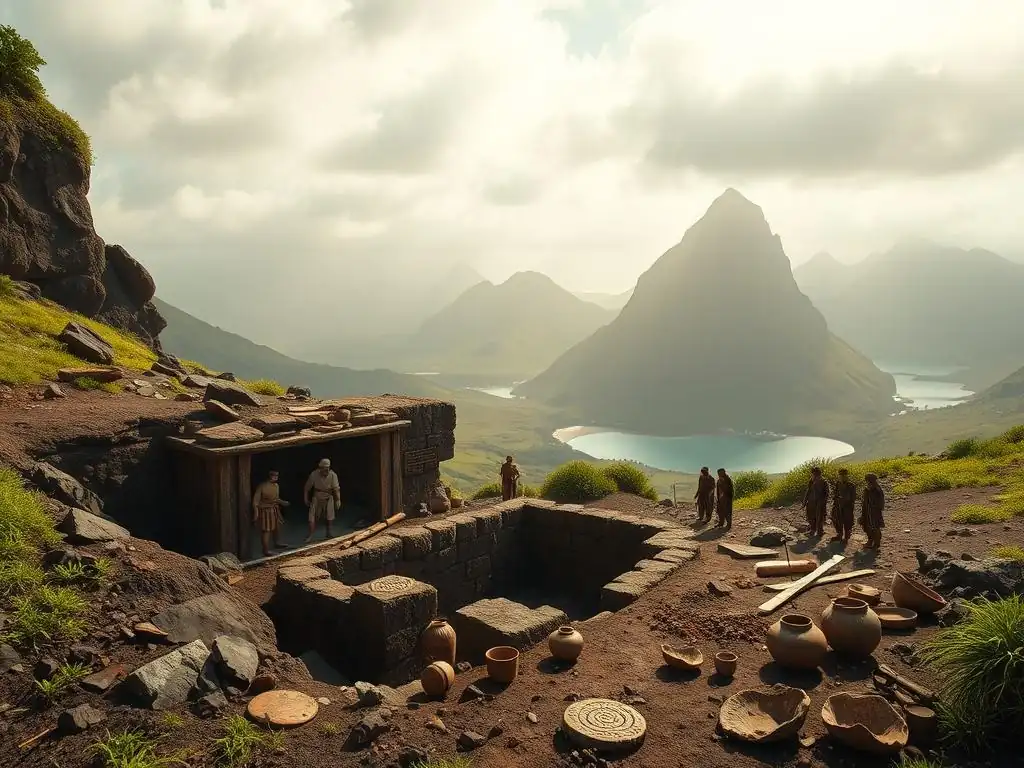
Welcome to ArchaeologyHub.org, your gateway to unraveling the past. Delve into the mysteries surrounding the Pitcairn Islands, where a fascinating Polynesian settlement once thrived before being mysteriously abandoned. What secrets do these remote islands hold about ancient voyages and lost civilizations? Explore our in-depth analysis of the Pitcairn Islands Polynesian settlement history and uncover the evidence that paints a vivid picture of its rise and fall. Prepare to embark on a journey of discovery – the story awaits!
- Henderson Island: Unraveling the Polynesian Settlement and Subsequent Abandonment
- Introduction: The Enigmatic History of Polynesian Settlement on Henderson
- Early Polynesian Exploration and Settlement of Henderson Island
- The Rise and Fall of Polynesian Society on Henderson
- The Abandonment of Henderson: Theories and Evidence
- Post-Polynesian Era: The Island's Isolation and Subsequent Encounters
- Archaeological Research on Henderson: Unveiling the Polynesian Past
- Henderson's Legacy: Understanding Polynesian Resilience and Adaptation
- Conclusion: Reconstructing the Henderson Island Polynesian Settlement History
-
Frequently Asked Questions
- What is the main focus of ArchaeologyHub.org regarding the Pitcairn Islands?
- When did Polynesian people first settle the Pitcairn Islands, according to archaeological evidence?
- What factors might have contributed to the abandonment of the Pitcairn Islands by the Polynesian settlers?
- What types of artifacts have been discovered on the Pitcairn Islands that shed light on the Polynesian settlement?
- How does ArchaeologyHub.org organize information about the Pitcairn Islands within its broader historical context?
- Final Reflection: Echoes of Resilience on Pitcairn
- Unearth Your Own Archaeological Journey!
Henderson Island: Unraveling the Polynesian Settlement and Subsequent Abandonment
Introduction: The Enigmatic History of Polynesian Settlement on Henderson
The Significance of Henderson Island in Polynesian Voyaging
Henderson Island, a remote and uninhabited raised coral atoll in the southeastern Pacific, stands as a profound testament to the extraordinary navigational capabilities of ancient Polynesians. As one of the four islands in the Pitcairn group, its extreme isolation, located approximately 190 kilometers northeast of Pitcairn Island itself, places it at the very edge of the Polynesian expansion into the Pacific Triangle.
Its UNESCO World Heritage status, granted in 1988, not only recognizes its unique ecological value but also its untouched archaeological landscape, offering unparalleled insights into the frontiers of Polynesian settlement and the delicate balance between human habitation and island sustainability.
The island’s history of human occupation, though relatively brief, is crucial for understanding the broader narrative of Pitcairn Islands Polynesian settlement history. It provides a unique case study of a Polynesian society pushing the limits of island colonization, demonstrating both remarkable adaptive strategies and the ultimate vulnerability of small island ecosystems. The eventual abandonment of Henderson offers critical lessons about resource management, climate variability, and the interconnectedness of island communities, making it an invaluable site for archaeological and environmental research.
Archaeological Research on Henderson Island: Documenting Henderson's Past
Systematic archaeological investigations on Henderson Island began in earnest in the late 20th century, notably with the 1991-92 expedition led by Marshall Weisler, building upon earlier reconnaissance surveys. These pioneering efforts aimed to meticulously document the extent and nature of Polynesian occupation, which had left behind a wealth of surface and subsurface archaeological features. The remoteness of the island, accessible only by sea and requiring extensive logistical planning, presented significant challenges, yet it also ensured the remarkable preservation of sites due to minimal modern disturbance.
Archaeologists have focused on identifying habitation sites, rock shelters, adze manufacturing areas, and midden deposits (ancient refuse heaps). Through careful excavation and analysis, researchers have been able to reconstruct daily life, subsistence patterns, and the material culture of Henderson’s ancient inhabitants. This detailed archaeological record is fundamental to piecing together the complex Pitcairn Islands Polynesian settlement history, providing tangible evidence of human interaction with this isolated environment over several centuries.
Early Polynesian Exploration and Settlement of Henderson Island
The discovery of Henderson Island by Polynesians was an extraordinary feat of open-ocean navigation, emblematic of the voyaging traditions that populated the vast Pacific. Polynesian navigators, likely originating from central East Polynesia (such as the Marquesas or Mangareva), employed sophisticated knowledge of celestial navigation, swell patterns, prevailing winds, and bird migration to traverse immense distances. While some discoveries might have been accidental drift voyages, the sustained presence on Henderson suggests intentional exploration and the ability to return to and locate such a small landmass in the vast ocean.
The precise timing of Henderson's discovery remains a subject of ongoing research, but archaeological evidence suggests initial forays occurred within the broader period of East Polynesian expansion, roughly between 800 and 1000 AD. These early voyages were driven by a combination of factors, including population pressures, resource scarcity on source islands, and a deep-seated cultural imperative for exploration. The successful discovery and subsequent settlement of Henderson underscore the unparalleled maritime prowess that defines Pitcairn Islands Polynesian settlement history.
Archaeological Evidence: Uncovering Early Polynesian Life on Henderson
Early Polynesian life on Henderson Island was characterized by an adaptation to its unique, yet limited, resources. Archaeological excavations have revealed a series of habitation sites, primarily concentrated along the northern and eastern coasts where access to the sea was easier and freshwater sources (often brackish cave pools or seeps) were available. These sites typically consist of shallow depressions indicating former dwellings, associated with hearths and extensive midden deposits that provide direct insight into their diet and material culture.
The artifacts recovered illustrate a subsistence strategy heavily reliant on marine and avian resources. Shellfish, particularly giant clams (Tridacna gigas), and a wide variety of fish species, evidenced by numerous fishhooks crafted from pearl shell, formed a significant part of their diet.
Seabirds, including petrels, boobies, and frigatebirds, were also extensively hunted, as indicated by the presence of their bones in middens. The absence of large land animals meant a complete dependence on these oceanic and avian food sources, shaping the daily routines and resource management practices of the early inhabitants, a critical aspect of Pitcairn Islands Polynesian settlement history.
Radiocarbon Dating and Artifact Analysis: Establishing a Timeline
Radiocarbon dating has been instrumental in establishing a precise chronology for the Polynesian occupation of Henderson Island. Samples of charcoal from ancient hearths, along with marine shells and bones from midden deposits, have consistently yielded dates indicating initial settlement around 800 to 1000 AD.
The most intensive period of occupation appears to have occurred between approximately 1000 and 1450 AD, with evidence suggesting a decline and eventual abandonment by the 15th or 16th century. For instance, a hearth feature excavated in a rock shelter on the north coast provided a date of roughly 1250 AD, coinciding with the peak of activity.
Further insights into the timeline and external connections are provided by artifact analysis, particularly the sourcing of stone tools. A significant proportion of the adzes found on Henderson are made from basalt not native to the island but imported from Mangareva, located over 400 kilometers to the west. This presence of Mangarevan basalt adzes throughout the occupation sequence confirms a sustained, long-distance interaction network, underscoring the critical role of inter-island trade in the Pitcairn Islands Polynesian settlement history.
Settlement Patterns and Resource Utilization by Early Polynesians
Polynesian settlement patterns on Henderson Island reflect a strategic adaptation to the island's challenging topography and limited resources. Most archaeological sites are found on the narrow, accessible coastal terraces, particularly on the northern and eastern sides, which offered relatively flat ground and proximity to the most abundant food sources. Evidence suggests a mix of semi-permanent habitations and more temporary camps, possibly used for specific resource exploitation activities like bird hunting or shell gathering in different seasons.
The early Polynesians on Henderson developed sophisticated strategies for resource utilization. Beyond fish and seabirds, they exploited the island's limited terrestrial flora, though no evidence of cultivated crops like taro or breadfruit has been found, suggesting the soil was unsuitable or the timeframe too short for successful horticulture. The abundance of specific shell species in middens, such as Turbo setosus and Tridacna maxima, indicates a systematic approach to shellfish gathering. However, the archaeological record also hints at the eventual over-exploitation of some resources, setting the stage for later challenges.
The Rise and Fall of Polynesian Society on Henderson
While Henderson Island's small size and relatively short occupation period may suggest a simpler society compared to larger Polynesian chiefdoms, the archaeological record hints at a structured community. The presence of specialized tool production, particularly adze manufacturing (even if using imported stone), suggests a degree of craft specialization. Although no large-scale monumental architecture typical of some Polynesian cultures has been found, the organization of habitation sites and the presence of burials indicate established social norms and funerary practices.
The cultural development on Henderson was intrinsically linked to its environmental context and external connections. The need for efficient resource management and the coordination of long-distance voyaging to Mangareva would have necessitated a cohesive social structure, likely with some form of leadership. While direct evidence of specific ritual practices is limited, the careful interment of the deceased and the material culture recovered suggest a society with established customs and beliefs, contributing to the nuanced understanding of Pitcairn Islands Polynesian settlement history.
Environmental Factors: Resource Depletion and Climate Change Impacts
The environmental fragility of Henderson Island played a significant role in the trajectory of its Polynesian society. Despite its rich marine and avian resources, the island's terrestrial environment offered limited diversity, and its freshwater sources were scarce and often brackish. Over time, the sustained exploitation of easily accessible resources, particularly slow-reproducing seabirds like petrels and boobies, led to significant declines in their populations. Archaeological middens show a shift in diet over the centuries, with an increasing reliance on smaller, less desirable fish species and shellfish as prime resources became depleted, indicating clear environmental stress.
Furthermore, climate variability, specifically the impact of recurring El Niño-Southern Oscillation (ENSO) events, likely exacerbated these environmental pressures. Prolonged droughts associated with strong ENSO phases could have severely impacted freshwater availability, stressing the already limited terrestrial flora and potentially affecting marine productivity. This combination of human-induced resource depletion and natural climate fluctuations created an increasingly unsustainable environment for the island's inhabitants, a critical element in the decline of the Pitcairn Islands Polynesian settlement history on Henderson.
Inter-Island Contact and Trade Networks within the Pitcairn Group
The sustained existence of Polynesian society on Henderson Island was critically dependent on its inter-island connections, primarily with Mangareva. Henderson lacked high-quality basalt suitable for the production of durable adzes, essential tools for carpentry, canoe building, and other daily tasks. Archaeological evidence, notably the prevalence of Mangarevan basalt adzes across all occupation phases, unequivocally demonstrates a consistent trade network that supplied these vital tools to Henderson. This dependency highlights the strategic importance of external relations for the viability of small, resource-poor island communities.
This trade was likely not unidirectional; Henderson might have provided unique resources in return, such as specific types of shells, bird feathers, or other raw materials not readily available on Mangareva. The maintenance of this long-distance voyaging route and trade relationship was crucial for the long-term sustainability of the Henderson settlement. The health and stability of the Mangarevan society itself would therefore have had a direct impact on Henderson’s inhabitants, forming an interconnected system vital to the broader Pitcairn Islands Polynesian settlement history.
The Abandonment of Henderson: Theories and Evidence
Environmental Degradation as a Factor in Polynesian Departure
The archaeological record provides compelling evidence that environmental degradation played a significant role in the eventual abandonment of Henderson Island. Analysis of faunal remains in midden deposits shows a marked decline in the abundance of large, easily catchable seabirds and certain fish species over the centuries of occupation. For example, some species of petrels and shearwaters, initially abundant, become scarce or disappear from the later archaeological layers, indicating local extirpation due to overhunting. This trend suggests a clear pattern of resource depletion that would have made sustained living increasingly difficult.
The limited freshwater resources, coupled with the fragility of the island's terrestrial ecosystem, meant that the carrying capacity for a human population was inherently low. As the population grew, even modestly, the pressure on these finite resources would have intensified. The declining availability of essential food sources and potable water would have made life on Henderson progressively less viable, pushing the inhabitants towards the difficult decision of emigration.
While direct archaeological evidence for social or political instability on Henderson itself is scarce, it is a plausible contributing factor to the abandonment, likely exacerbated by resource scarcity. Increased competition for dwindling food resources and freshwater could have led to internal strife or a breakdown of social cohesion. The stress of living on an increasingly impoverished island might have manifested in social unrest, making the prospect of relocation more appealing or even necessary.
Furthermore, the fate of Henderson was intimately tied to that of Mangareva. Archaeological evidence suggests that Mangarevan society experienced its own period of environmental degradation, resource depletion, and potential social collapse during the 15th and 16th centuries, marked by deforestation and the abandonment of monumental structures. If Mangareva, the primary supplier of vital basalt tools and a potential destination for emigration, was facing its own crises, its ability to support or receive people from Henderson would have diminished significantly, leaving Henderson's inhabitants isolated and without a viable external lifeline.
The Role of Dependence on Mangareva in Island Abandonment
The critical dependency of Henderson Island on Mangareva for essential resources, particularly basalt adzes, is widely considered a primary factor in its abandonment. The cessation or severe disruption of this vital trade network, likely due to the decline of Mangarevan society itself, would have had catastrophic consequences for Henderson's inhabitants. Without a regular supply of high-quality stone tools, essential for daily tasks, canoe maintenance, and other necessary activities, the technological capacity and overall viability of the Henderson community would have been severely compromised.
It is hypothesized that as Mangareva's own environmental and social challenges mounted, its ability to sustain long-distance voyaging and trade diminished. This would have effectively isolated Henderson, cutting off its lifeline to external resources and potential refuge. Facing internal resource depletion, a fragile environment, and the loss of critical external support, the Polynesians on Henderson likely made the strategic decision to abandon the island, possibly attempting to return to Mangareva or seeking other, more sustainable landfalls within the broader Pitcairn Islands Polynesian settlement history.
Post-Polynesian Era: The Island's Isolation and Subsequent Encounters
The Absence of Polynesian Presence: A Period of Unknown History
Following the Polynesian abandonment sometime between the 15th and 17th centuries, Henderson Island entered a prolonged period of isolation, remaining uninhabited by humans for several centuries. This absence of human presence is a defining characteristic of its post-Polynesian era, effectively transforming the island into a pristine natural laboratory. The complete and final departure of its Polynesian inhabitants meant that their archaeological sites remained largely undisturbed, preserved by the island's remote location and the dense, difficult-to-penetrate vegetation.
This centuries-long period of human absence is crucial for understanding the island's ecological recovery and the preservation of its archaeological heritage. It created a unique time capsule, allowing researchers today to study the Polynesian occupation with an unprecedented level of detail and minimal confounding factors from later human activities. The island's silence during this time speaks volumes about the challenges of sustaining human life in such an extreme environment, a poignant chapter in the Pitcairn Islands Polynesian settlement history.
European Discovery and Subsequent Surveys
Henderson Island remained unknown to the Western world until January 1606, when it was sighted by Pedro Fernandes de Queirós, a Portuguese navigator in the service of Spain, who named it San Juan Bautista. However, this discovery remained largely unrecorded or forgotten. It was not until January 1819 that the island was definitively rediscovered by Captain Frederick North of the British East India Company ship Hercules, who named it Henderson Island after his ship's owner. Subsequent European visits were infrequent, often by whaling ships or explorers.
Early scientific surveys began in the late 19th and early 20th centuries, most notably by the Whitney South Sea Expedition in 1922. These initial surveys, primarily focused on ornithology and botany, also noted the presence of rudimentary archaeological remains, including shell middens and stone artifacts. These early observations, while not systematic excavations, laid the groundwork for future, more comprehensive archaeological investigations that would eventually unravel the full story of Pitcairn Islands Polynesian settlement history on Henderson.
Archaeological Research on Henderson: Unveiling the Polynesian Past
Ongoing Excavations and Discoveries on Henderson Island
Modern archaeological research on Henderson Island continues to expand our understanding of its Polynesian past. Building on earlier foundational work, recent expeditions employ advanced techniques in excavation, remote sensing, and environmental analysis. These ongoing efforts have led to the discovery of previously unrecorded sites, including additional rock shelters and open-air habitation areas, further enriching the archaeological map of the island. The meticulous recovery of artifacts, such as shell tools, fishing gear, and fragments of imported pottery, provides finer details about daily life and external connections.
New discoveries also include more nuanced evidence of resource exploitation, such as specific butchery marks on bone fragments or detailed analysis of mollusk species, which offer insights into resource management strategies and their potential failures. For example, recent investigations have refined the understanding of how the islanders adapted their diet as preferred species became scarce, showing a shift towards smaller fish and less desirable shellfish over time, thereby providing a clearer picture of the Pitcairn Islands Polynesian settlement history.
The Henderson Island Archaeological Project: Current Archaeological Efforts
The Henderson Island Archaeological Project (HIAP), and similar collaborative initiatives, represent the forefront of current archaeological efforts. These projects typically involve multidisciplinary teams of archaeologists, paleoenvironmental scientists, geologists, and conservators from various international institutions. Their aims extend beyond merely documenting sites to include a holistic reconstruction of human-environment interactions, climate change impacts, and the dynamics of island sustainability. The use of drone mapping, LiDAR (Light Detection and Ranging), and advanced laboratory analysis of organic residues are increasingly integrated into the research methodologies.
Current archaeological efforts on Henderson also focus on understanding the broader regional context within the Pitcairn group and the wider Polynesian Triangle. By comparing the archaeological record of Henderson with that of nearby Pitcairn Island and distant Mangareva, researchers can develop a more comprehensive narrative of inter-island relationships, trade networks, and shared cultural practices. This comparative approach is vital for fully appreciating the unique yet interconnected story of Pitcairn Islands Polynesian settlement history.
Challenges and Opportunities in Henderson Island Archaeology
Archaeological work on Henderson Island presents a unique set of challenges, primarily due to its extreme remoteness and the logistical complexities of accessing and working on a UNESCO World Heritage site. Transporting personnel, equipment, and supplies requires significant planning and resources, often involving chartered vessels. The island's rugged terrain, dense vegetation, limited freshwater, and exposure to tropical weather conditions further complicate fieldwork. Moreover, the imperative to preserve the island's pristine environment means all archaeological activities must adhere to strict conservation protocols, minimizing any potential impact.
Despite these challenges, Henderson offers unparalleled opportunities for archaeological research. Its long period of post-Polynesian isolation has resulted in exceptionally well-preserved sites, providing a snapshot of ancient Polynesian life largely undisturbed by subsequent human activity. This pristine state allows for the recovery of delicate organic materials and undisturbed stratigraphic sequences, offering a rare window into the detailed aspects of Pitcairn Islands Polynesian settlement history. Henderson serves as a critical natural laboratory for studying human adaptation, resilience, and the long-term consequences of resource management in isolated island ecosystems.
Henderson's Legacy: Understanding Polynesian Resilience and Adaptation
Lessons from Henderson: Insights into Polynesian Settlement Dynamics
The archaeological narrative of Henderson Island provides profound lessons about the dynamics of Polynesian settlement and the inherent limits of island ecosystems. It stands as a compelling case study of a society that pushed the boundaries of human habitation in the Pacific, ultimately reaching the ecological carrying capacity of a small, isolated atoll. The evidence of resource depletion, particularly the decline of easily accessible seabird and shellfish populations, serves as a stark reminder of the fragility of island environments when faced with sustained human exploitation.
However, the story of Henderson is not merely one of environmental collapse; it also highlights Polynesian resilience and adaptive strategies. The ability to establish a community on such a remote island, maintain long-distance trade networks with Mangareva for centuries, and ultimately make the strategic decision to abandon an unsustainable settlement demonstrates a remarkable capacity for adaptation and rational decision-making. The abandonment, rather than a failure, can be viewed as a successful, albeit difficult, adaptive response to changing environmental and social conditions, enriching the broader understanding of Pitcairn Islands Polynesian settlement history.
The Importance of Preserving Henderson's Archaeological Heritage
The archaeological heritage of Henderson Island is irreplaceable and of global significance, underscored by its UNESCO World Heritage status. The well-preserved sites, ranging from habitation areas to adze workshops and burial sites, offer a unique and largely undisturbed record of a Polynesian society at the farthest reaches of their eastward expansion. This pristine state provides unparalleled opportunities for future research using new technologies and methodologies, allowing for ever-deeper insights into ancient lifeways and human-environment interactions.
Therefore, the ongoing preservation of Henderson Island's archaeological sites is paramount. Efforts must continue to protect these fragile remains from natural erosion, climate change impacts, and any potential future human disturbance. By safeguarding this unique archaeological landscape, we ensure that the invaluable lessons from Henderson's Pitcairn Islands Polynesian settlement history continue to inform our understanding of human ingenuity, environmental sustainability, and the complex relationship between societies and their island homes.
Conclusion: Reconstructing the Henderson Island Polynesian Settlement History
Summarizing the Archaeological Narrative of Polynesian Henderson
The archaeological narrative of Henderson Island meticulously reconstructs a compelling chapter of Polynesian prehistory. From its initial discovery and settlement by intrepid voyagers around 800-1000 AD, to its centuries of occupation characterized by adaptation to a limited environment and crucial reliance on external trade with Mangareva, Henderson represents the extreme frontier of Polynesian expansion. The evidence points to a society that skillfully utilized marine and avian resources, yet eventually faced the challenges of resource depletion and potentially adverse climatic events.
The ultimate abandonment of Henderson, likely by the 15th or 16th century, was a complex interplay of environmental stress, internal societal dynamics, and the crucial breakdown of the vital trade network with Mangareva. This complete departure left behind an archaeological time capsule, offering invaluable insights into the limits of island sustainability and the resilience of Polynesian societies. Henderson’s story is a powerful testament to the intricate relationship between humans and their environment, a pivotal component of Pitcairn Islands Polynesian settlement history.
Future Directions in Research and Interpretation of Henderson's Past
Future archaeological research on Henderson Island holds immense potential for refining and expanding our understanding of its Polynesian past. Advanced paleoenvironmental studies, including detailed pollen analysis and microfossil examination, can provide more precise reconstructions of past vegetation and climate, offering clearer insights into environmental stressors. The application of cutting-edge analytical techniques, such as ancient DNA analysis on faunal remains, could reveal more about the species exploited and their population dynamics over time.
Furthermore, comparative studies with other abandoned Polynesian islands, like Easter Island or Pitcairn itself, will continue to illuminate broader patterns of island colonization, adaptation, and collapse across the Pacific. The integration of indigenous knowledge systems, where available from other Polynesian groups, could also offer new interpretive frameworks for understanding the cultural nuances of the Pitcairn Islands Polynesian settlement history. Continued interdisciplinary collaboration and the responsible application of new technologies will ensure that Henderson's unique legacy continues to yield profound insights into human-environment interactions in isolated island ecosystems.
Frequently Asked Questions
What is the main focus of ArchaeologyHub.org regarding the Pitcairn Islands?
ArchaeologyHub.org focuses on the Polynesian settlement of the Pitcairn Islands, its subsequent abandonment, and the archaeological evidence that supports this history.
When did Polynesian people first settle the Pitcairn Islands, according to archaeological evidence?
Archaeological evidence suggests the Pitcairn Islands were first settled by Polynesians around the 13th century AD, lasting for a few centuries.
What factors might have contributed to the abandonment of the Pitcairn Islands by the Polynesian settlers?
Possible factors include resource depletion, climate change, or disruptions in trade and communication with other Polynesian islands.
What types of artifacts have been discovered on the Pitcairn Islands that shed light on the Polynesian settlement?
Artifacts include stone tools, fishhooks, and remnants of dwellings, providing insights into the daily life and technology of the Polynesian inhabitants.
How does ArchaeologyHub.org organize information about the Pitcairn Islands within its broader historical context?
The information is organized by geographic region (Oceania) and time period, allowing users to explore the Pitcairn Islands' history in relation to other Polynesian settlements and relevant archaeological discoveries.
Okay, here's a final reflection designed to close your article on Pitcairn Islands Polynesian settlement and subsequent abandonment, optimized for emotional connection and reflection, and using the Markdown format you requested:
Final Reflection: Echoes of Resilience on Pitcairn
The story of Pitcairn Island, as we've explored, is more than just a historical account of Polynesian settlement and eventual abandonment; it's a powerful testament to the fragility and resilience of human connection to place. The echoes of those early voyagers, who navigated vast oceans to carve out a life on this remote speck of land, resonate even today, reminding us of the enduring human spirit and our inherent need for community and belonging.
The rise and fall of Polynesian society on Pitcairn serves as a poignant reminder of the complexities of cultural survival and the profound impact of isolation. It forces us to contemplate the delicate balance between environmental sustainability, social cohesion, and the enduring power of cultural memory. We are tied to the ocean. And when we go back to the sea, whether it is to sail or to watch it we are going back from whence we came.
- John F. Kennedy. This quote, though not directly about Pitcairn, encapsulates the deep connection between humanity and the sea, a connection that defined the lives of the early Polynesian settlers and continues to shape our understanding of their story.
As we close this chapter on Pitcairn's Polynesian past, let us carry forward a renewed appreciation for the interconnectedness of history, culture, and environment. Consider the lessons learned from their experience: the importance of preserving cultural heritage, fostering sustainable practices, and nurturing strong communities. Let the story of Pitcairn inspire you to reflect on your own connection to place, your responsibility to future generations, and the enduring power of the human spirit to adapt and overcome, even in the face of profound challenges.
Unearth Your Own Archaeological Journey!
Thank you for delving into the fascinating story of the Pitcairn Islands! We hope you've gained a new appreciation for the mysteries that archaeology can unveil. Now, let's translate that newfound knowledge into action:
- Embark on a virtual dig! Research a lesser-known archaeological site online and share your findings with a friend.
- Explore the hidden histories around you. Visit a local museum or historical society to connect with the past firsthand.
- Dare to imagine! Write a short story about what life might have been like for the early Polynesian settlers of Pitcairn.
What untold story from your own local history sparks your curiosity the most?