Unlocking the Past Through Hands-On Science: Experimental Archaeology
Experimental archaeology is the thrilling bridge between theory and tangible reality, allowing researchers to step into the shoes of ancient artisans, farmers, and builders. Instead of merely speculating about how a flint blade was knapped or a Roman kiln fired, this subcategory on ArchaeologyHub.org dives into the rigorous, replicative testing of those processes. By recreating ancient technologies with period-accurate materials and methods, we test hypotheses about functionality, wear patterns, and the social organization of labor. This is not just a hobbyist’s tinkering; it is a peer-reviewed scientific method that transforms guesswork into data. Join us as we examine the core techniques, landmark experiments, and modern innovations that make experimental archaeology a cornerstone of contemporary archaeological interpretation.
🔨 The Methodological Framework of Replication
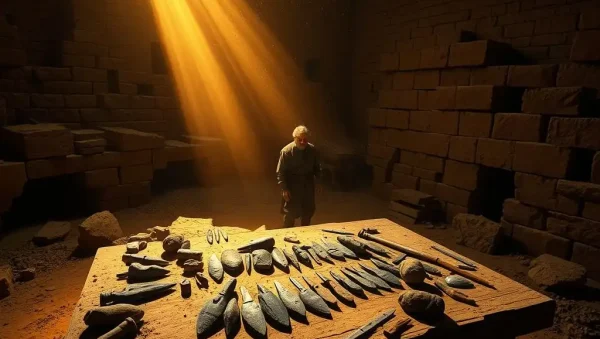
At its heart, experimental archaeology follows a strict scientific protocol, often called the “chaîne opératoire” (operational sequence). Researchers start with a clear research question—for example, “How long does it take to produce a Bronze Age sword using only stone tools?” They then design a controlled experiment with variables identified, replicas crafted, and outcomes measured. This process is iterative: failed attempts are as valuable as successes, refining our understanding of ancient skill levels and time budgets. Crucially, this methodology demands that materials (like obsidian, clay, or bog iron) are sourced and processed exactly as they would have been in antiquity, ensuring both environmental realism and reproducibility.
For the visitor, this section demystifies how archaeological conclusions are validated. You will learn about the importance of blind testing, ethnographic parallels, and statistical analysis within experimental design. We explore case studies—from flint knapping efficiency to the construction of Neolithic longhouses—to show how each experiment moves beyond simple anecdote. By controlling variables like tool angle, moisture, and hammer type, we can document the physical traces left on artifacts, which then become diagnostic markers for identifying ancient craft practices in the archaeological record. The result is a clearer, more evidence-based portrait of daily life in past societies.
🔥 Fire, Clay, and Metal: Replicating High-Temperature Industries
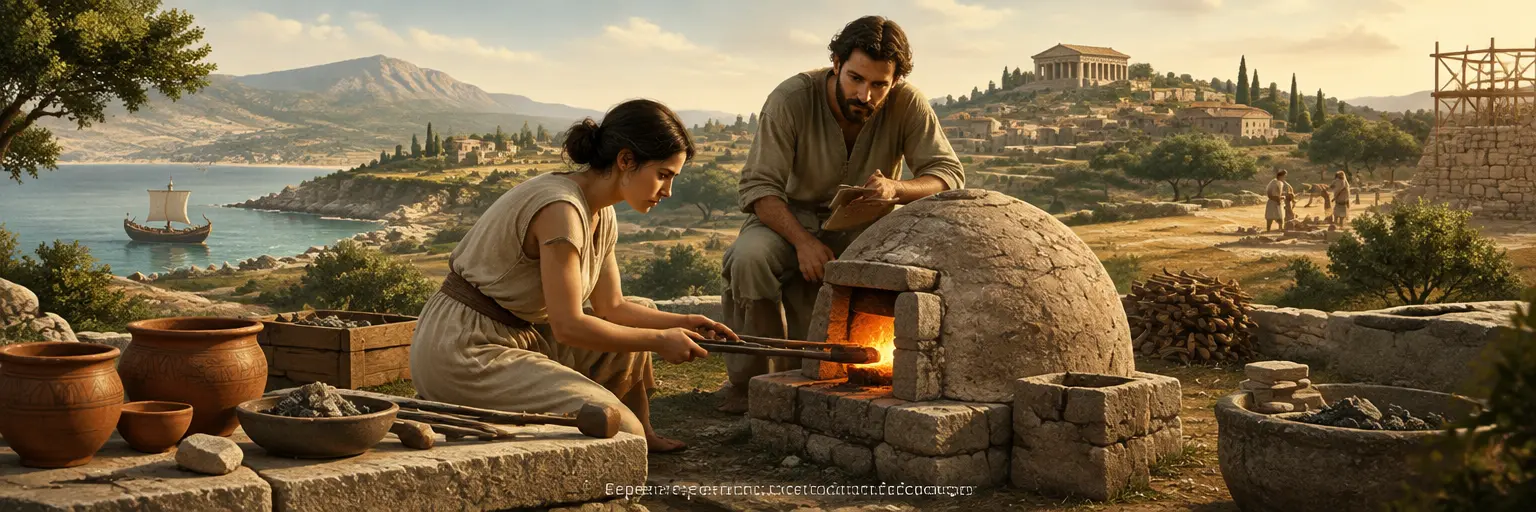
Perhaps the most spectacular experimental work involves pyrotechnology—the mastery of fire for ceramics, metallurgy, and glass. In this area, researchers rebuild ancient kilns, smelting furnaces, and forge hearths, then fire them using only organic fuels like charcoal or dung. The goal is to achieve the precise temperatures and atmospheres needed to transform raw clay into sturdy pottery or iron ore into workable metal. These experiments have revealed surprising insights, such as the exact gas flow rates required for bronze casting or the thermal shock tolerance of different ceramic fabrics, which directly inform our interpretation of ancient trade and technological diffusion.
Readers will discover how full-scale reconstructions—like a Roman bloomery furnace or a Chinese dragon kiln—generate real operational data. We measure fuel consumption, smelting duration, and the chemical composition of the final product, comparing them to ancient slag and metal residues found at excavation sites. This hands-on replication has solved long-standing debates, such as whether crucible steel was produced in early medieval South Asia, and has highlighted the sheer ingenuity of pre-industrial engineers. Expect detailed image galleries and step-by-step logs of these fiery experiments, offering a visceral sense of the heat, effort, and skill involved.
🪵 Wood, Stone, and Fiber: Craft Production and Everyday Tools
Not all experimental archaeology is high-tech; much of it focuses on the mundane yet vital crafts of daily existence. This subcategory covers the replication of stone axes, wooden plows, basketry, textiles, and leatherworking. For example, by felling a tree with a polished Neolithic axe, researchers can compare the wear marks on the replica to those on museum artifacts, confirming or refuting hypotheses about woodland clearance rates. Similarly, spinning yarn with a drop spindle and weaving on a warp-weighted loom tells us about the time investment and motor skills of ancient weavers, providing clues about household economies and specialization.
In this section, we emphasize the “use-wear” analysis that emerges from such experiments. By meticulously recording the micro-scratches, polishes, and breakage patterns on replicas after controlled tasks—like cutting meat, harvesting grain, or scraping hides—we create a reference library for interpreting ancient tool function. This is particularly crucial for ambiguous artifacts, such as enigmatic bone points or ground stone discs. We also explore the sensory and ergonomic aspects: how did a tool feel in the hand, and what does that imply about left-handedness or childhood training? These insights bring us closer to the daily rhythms and embodied knowledge of past communities.
🌾 Agriculture, Food, and Domesticity: Testing Ancient Diets
Experimental archaeology extends into the domestic sphere, focusing on food processing, storage, and cooking. This includes trials of pre-Columbian nixtamalization (alkaline processing of maize), Roman fish sauce (garum) fermentation, and ancient bread baking. By constructing clay ovens, grinding grain on saddle querns, and brewing mead or beer using primitive recipes, we not only validate ancient culinary texts but also measure the nutritional output and labor costs. These experiments feed directly into dietary reconstructions and help explain why certain foodways persisted for millennia, despite being labor-intensive.
Here, you will find practical comparisons between different processing techniques—for instance, boiling roots versus roasting them, or sourdough fermentation versus flatbreads. We analyze the residues left on cooking pots, such as phytoliths and fatty acids, to see if they match our experimental remains. This subcategory also addresses preservation methods, like smoking, salting, and pit storage, to estimate seasonal food security. By replicating ancient recipes, we gain a sensory appreciation for flavors and textures that are lost in modern analogies, making history tastefully tangible for a curious audience.
🏛️ Large-Scale Engineering and Monumental Construction
Some of the most audacious experimental projects involve moving and lifting massive stones, such as those used in Stonehenge, Egyptian pyramids, or Easter Island moai. This subcategory showcases modern attempts to replicate the transport of multi-ton megaliths using sledges, rollers, ramps, and lever systems, all without steel or power tools. These full-scale trials are not merely theatrics; they provide hard engineering data on manpower requirements, friction coefficients, and the feasibility of alleged ancient techniques. For example, recent experiments have shown that a small team can move a 20-ton stone on a wooden track with minimal lubrication, challenging older theories about needing armies of laborers.
We also cover the construction of entire structures, like medieval timber-framed halls, Roman baths, or Mesoamerican ball courts, to assess building timelines and structural integrity. These projects often involve volunteer labor and traditional joinery, offering insights into social cooperation and skill specialization. By instrumenting these replicas with load sensors and moisture gauges, we gather quantifiable evidence about decay rates, stress points, and maintenance needs, which is invaluable for heritage management. For the reader, this is a gripping narrative of ingenuity, calculation, and sheer human determination, revealing the ancient world’s engineering marvels as attainable achievements rather than miracles.
🔬 Modern Tools and Future Directions: Digital Experimental Archaeology
The future of experimental archaeology is increasingly digital, blending physical replication with computational modeling, 3D printing, and virtual reality. Researchers now 3D-print exact replicas of ancient tools to test them in a controlled laboratory setting, then create finite element analysis (FEA) models to simulate stress and wear without destroying originals. This hybrid approach accelerates our understanding of how artifacts functioned under specific biomechanical forces, such as the thrust of a spear or the torque of a hand drill. Additionally, motion capture and haptic feedback technologies allow us to study the ergonomics and learning curves of ancient crafts in unprecedented detail.
This section explores how open-source databases and collaborative online platforms are democratizing experimental data, allowing researchers worldwide to compare results. We discuss the potential of machine learning to predict tool use from micro-wear patterns, trained on vast datasets of experimental replicas. Moreover, we look at how virtual reconstructions of past environments can simulate trial-and-error experiments that would be impossible or unethical in the physical world, such as testing the impact of climate events on ancient farming. As you read, you will see that experimental archaeology is not a static discipline but a vibrant, evolving frontier that continuously refines our window into the past, embracing both tradition and innovation.
Frequently Asked Questions
How long does a typical experimental archaeology project take to complete?
A project’s duration varies greatly—from a single day for a small flint-knapping test to several years for constructing a full-scale medieval boat or building. Most controlled experiments, like firing a pot or smelting iron, take one to three weeks including preparation and analysis. However, large-scale projects often span months of planning, execution, and post-experiment documentation to ensure scientific rigor.
What is the biggest challenge in experimental archaeology?
The primary challenge is maintaining authenticity while controlling variables. Finding genuine ancient materials, like specific clay or bronze alloys, can be difficult and costly. Additionally, ensuring that results are not skewed by modern researcher bias is tough; often, multiple blind tests are needed. Environmental factors, such as weather, also make exact replication impossible, so results must be interpreted cautiously.
Can anyone participate in experimental archaeology, or is it only for professionals?
Both—visibility is high! Many universities and museums welcome volunteers for big reconstructions, such as building a Neolithic house or firing a replica kiln. Amateur flint knappers and traditional woodworkers often collaborate with professionals, providing practical skills. Check ArchaeologyHub.org’s event page for workshops, or contact local museums, as many offer hands-on “living history” programs open to the public.
How does experimental archaeology help in interpreting actual archaeological sites?
It provides direct, comparative data. For instance, if an experiment proves that a certain type of cut mark on bone matches a specific stone tool technique, archaeologists can then use that to interpret butchery practices at a dig site. It also gives quantitative estimates of labor, time, and resources, helping us understand site size, social structure, and trade networks.
Are there any famous mistakes or failed experiments that taught us something?
Absolutely! For example, early attempts to replicate ancient iron smelting often produced brittle, unusable metal, teaching us that modern ore sourcing was too pure and that ancient ores contained specific impurities that actually aided the process. Another famous “failure” was moving large stones on dry logs; it only succeeded when wetting the wooden tracks, leading to a theory about prehistoric water lubrication.