Archaeological Theory & History of Archaeology: Key Thinkers
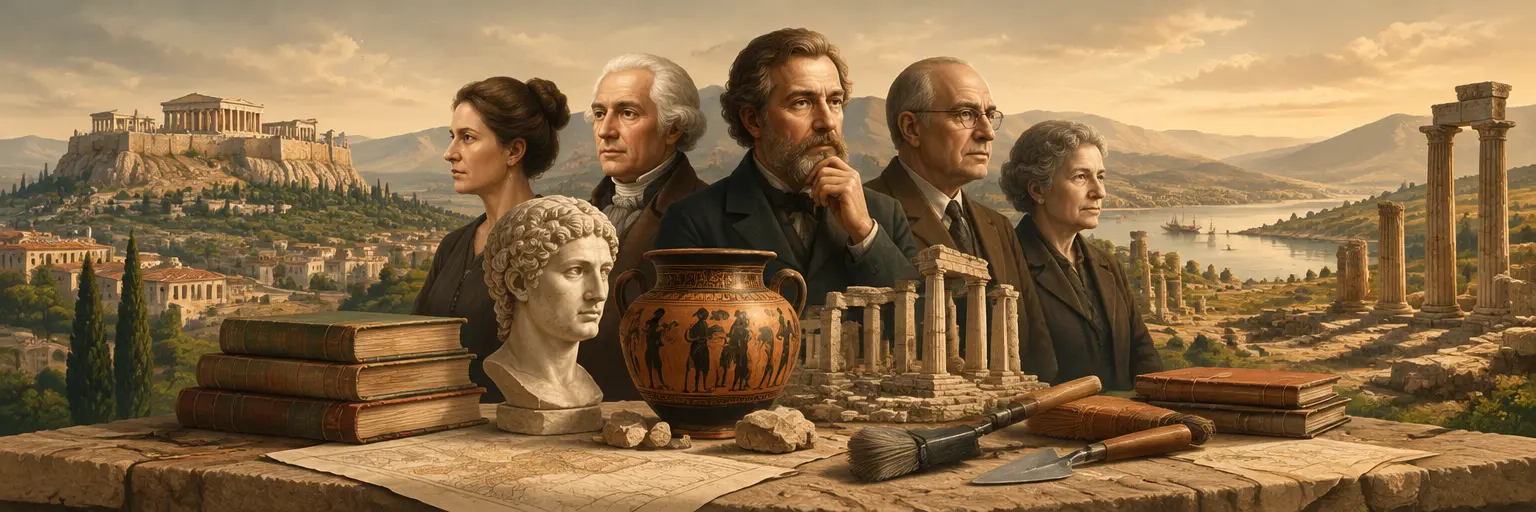
Welcome to ArchaeologyHub.org’s dedicated section on the intellectual giants who shaped how we study the past. From early antiquarians to modern processualists and post-processualists, this subcategory explores the foundational ideas, debates, and personalities that transformed archaeology into a rigorous science. Whether you are a student, enthusiast, or professional, you will find concise biographies, theoretical frameworks, and critical assessments of every major thinker in the discipline.
🏛️ The Pioneers: From Antiquarianism to Stratigraphy
This section covers the earliest figures who moved archaeology from treasure-hunting to systematic study. You will meet William Cunnington, Richard Colt Hoare, and the controversial Thomas Jefferson, whose 1784 excavation in Virginia used controlled trenching. Central to this group is Augustus Pitt Rivers, who championed meticulous stratigraphic recording and typological sequencing, arguing artifacts should be classified by form and context. Expect clear explanations of how these thinkers established the principle that context matters more than object beauty, a cornerstone that still guides excavation today.
Furthermore, you will learn about Jens Jacob Asmussen Worsaae, the Danish archaeologist who operationalized the Three-Age System (Stone, Bronze, Iron) using sealed burial contexts. His work proved that artifact types could date layers without written records. This historical deep-dive emphasizes how these pioneers developed field notebooks, section drawings, and seriation charts—tools you will recognize in modern digs. By studying their errors and successes, you gain a practical appreciation for why archaeological methodology evolved as it did, making this section essential for understanding the discipline’s empirical roots.
📜 Culture-Historical Archaeology: Defining Peoples and Migrations
Here we explore the dominant paradigm of the early 20th century, led by Gustaf Kossinna and refined by V. Gordon Childe. Kossinna’s nationalist approach equated archaeological cultures with ethnic groups, a controversial legacy that Childe transformed into a more dynamic, Marxist-inflected model. Childe’s concepts of the Neolithic Revolution and Urban Revolution remain foundational, linking material culture to social evolution. This section explains how culture-historical archaeologists used pottery typologies and burial rites to map migration patterns, trade routes, and diffusion of ideas across Europe and the Near East.
Additionally, you will examine critiques of this approach, such as its tendency to see culture as a static package rather than a fluid process. We highlight the work of Glyn Daniel and Stuart Piggott, who popularized archaeology for the public while maintaining rigorous academic standards. By the end, you will understand why culture-history fell out of favor—yet why its maps and chronologies still underpin regional frameworks. For anyone interpreting museum labels or site reports, this section is your key to decoding terms like “Beaker culture” or “Urnfield tradition.”
🔬 Processual Archaeology: The New Archaeology Revolution
This section focuses on the 1960s–1980s movement led by Lewis Binford, who demanded archaeology become more scientific, explicit, and anthropological. You will learn how Binford’s middle-range research linked modern behavior to archaeological remains through ethnoarchaeology and experimental archaeology. Key thinkers like David Clarke and Colin Renfrew introduced systems theory, quantitative methods, and multivariate statistics to model ancient societies. Expect explanations of core concepts such as adaptive systems, cultural ecology, and multilinear evolution, illustrated with case studies from hunter-gatherer campsites to early states.
Moreover, this section covers the rise of settlement archaeology, thanks to Kent Flannery’s work in Oaxaca and the regional surveys by Robert McC. Adams. You will see how processualists tested hypotheses about resource stress, population pressure, and trade networks using rigorous sampling and radiocarbon dating. The goal is to help you appreciate why “New Archaeology” shifted storytelling to hypothesis testing. We also address criticisms—such as overlooking gender, ideology, and individual agency—setting the stage for the post-processual response. This is essential reading for anyone curious about how archaeology became a nomothetic social science.
🌀 Post-Processualism and Interpretive Archaeology
Here we introduce the radical turn initiated by Ian Hodder and Michael Shanks, who challenged objectivity and embraced multiple interpretations. This section explores how post-processualists focused on meaning, symbolism, power, and the active role of material culture in shaping social identities. You will learn about Hodder’s ethnoarchaeology in Turkey, which showed that artifact styles function as active signs, not passive reflections of ethnicity. The approach incorporates feminist, Marxist, and hermeneutic perspectives, as seen in Margaret Conkey’s gendered archaeology and Christopher Tilley’s phenomenological studies of landscape.
Moreover, we cover methodological innovations like reflexive excavation, multivocality, and collaborative archaeology with indigenous communities. Thinkers such as Julian Thomas and Barbara Bender demonstrate how monuments and landscapes are experienced bodily, not just mapped. By engaging with these ideas, you will grasp why contemporary archaeology questions underlying assumptions and welcomes diverse voices. This section is crucial for understanding current debates on repatriation, heritage politics, and narrative writing in site reports. It encourages you to see artifacts not as static facts but as contested symbols with multiple pasts and futures.
🌍 Global and Decolonial Thinkers: Rethinking the Canon
This crucial section expands the narrative beyond Eurocentric thinkers, highlighting archaeologists from Africa, Asia, Latin America, and Indigenous communities. You will explore Cheikh Anta Diop’s Afrocentric claims on ancient Egypt, Peter Schmidt’s collaborative work with Tanzanian elders, and Ranajit Guha’s influence on subaltern archaeology. The focus is on how these scholars challenge colonial frameworks and center local knowledge systems. Learn about Marianne Gullestad’s Norwegian studies and Manuel Gándara’s Mexican critical theory, which integrate social justice into archaeological practice.
Furthermore, this section covers recent moves toward decolonial archaeology, led by figures like Yannis Hamilakis and Alfredo González-Ruibal, who critique nationalist and capitalist uses of the past. You will see how Indigenous archaeology, exemplified by Joe Watkins and Sonya Atalay, emphasizes community-based participatory research, oral traditions, and non-destructive methods. This segment provides a vital corrective to the classic canon, ensuring you understand archaeology as a global, pluralistic discipline. It prepares you to engage with contemporary ethical debates about ownership, representation, and who has the right to interpret the past.
Frequently Asked Questions
Who is considered the father of modern archaeology?
Many credit V. Gordon Childe as the father of modern archaeology for his systematic interpretations of prehistory, yet Augustus Pitt Rivers is often called the father of scientific excavation for his strict stratigraphic methods. Childe’s influential works like What Happened in History laid the theoretical groundwork, while Pitt Rivers pioneered fieldwork standards. In practice, the title depends on whether you prioritize theory or methodology.
What is the difference between processual and post-processual archaeology?
Processual archaeology, pioneered by Lewis Binford, emphasizes scientific hypothesis testing, ecological adaptation, and general laws. Post-processualism, led by Ian Hodder, argues that material culture is symbolic, meaning is multi-faceted, and interpretations are politically situated. Processualists seek objectivity; post-processualists embrace subjectivity and reflexivity. Most modern archaeology blends both, using rigorous data collection while acknowledging interpretive complexity.
Why is context so important in archaeology?
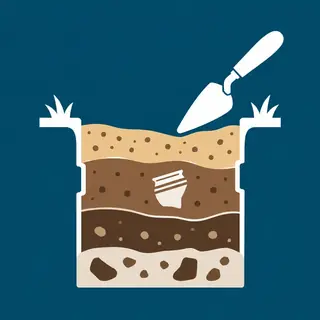
Context refers to an artifact’s spatial, stratigraphic, and associative position. Without context, an object’s age, function, and cultural meaning are lost. Pioneers like Pitt Rivers and Worsaae proved that sealed layers and associations allow dating and behavioral inference. Today, archaeologists record every artifact’s three-dimensional coordinates, ensuring that excavation remains a scientific process even when objects are removed.
How did archaeology evolve from antiquarianism to a science?
Antiquarians collected objects for curiosity, while Enlightenment-era thinkers began systematic classification. Christian Thomsen’s Three-Age System and Pitt Rivers’ typology established relative dating. The addition of stratigraphy, radiocarbon dating after 1949, and statistical methods in the 1960s made it a quantitative science. Post-processualism then added critical self-awareness, making archaeology both scientific and interpretive.
Can modern archaeology incorporate indigenous knowledge?
Absolutely. Decolonial and indigenous archaeologies actively integrate oral traditions, community input, and collaborative research. Scholars like Sonya Atalay use community-based participatory methods, where elders and descendants co-design research questions and interpret findings. This enriches interpretations and addresses historical power imbalances, making archaeology more ethical and accurate. Many heritage laws now require such collaboration for excavation permits.