Archaeobotany: Analyzing Plant Remains — Unearthing Ancient Diets and Environments
Welcome to ArchaeologyHub.org's dedicated guide on archaeobotany, the specialized discipline that reconstructs past human-plant interactions through the recovery and analysis of ancient plant remains. Within the broader category of *Core Concepts, Methods & Theories*, this subcategory explores how seeds, charcoal, pollen, and phytoliths serve as microscopic time capsules. By decoding these organic fragments, archaeologists reveal not only ancient diets and agricultural practices but also past climates, trade networks, and ritual behaviors. This page is your definitive resource for understanding the methods, breakthroughs, and interpretive frameworks that make plant remains a cornerstone of modern archaeological inquiry.
🌾 Key Analytical Techniques in Archaeobotany
Flotation, maceration, and sieving are the primary recovery methods used to separate plant remains from soil matrices. Flotation involves agitating sediment in water, allowing carbonized seeds and charcoal to float to the surface, while heavier debris sinks—a process essential for site-scale sampling. Maceration uses chemical or enzymatic treatments to disaggregate clays, preserving delicate structures. Sieving, paired with mesh sizes down to 0.5 mm, ensures retrieval of microremains. Each technique demands rigorous field protocols to avoid contamination, and mastering them is vital for producing statistically valid datasets that underpin paleoethnobotanical interpretations.
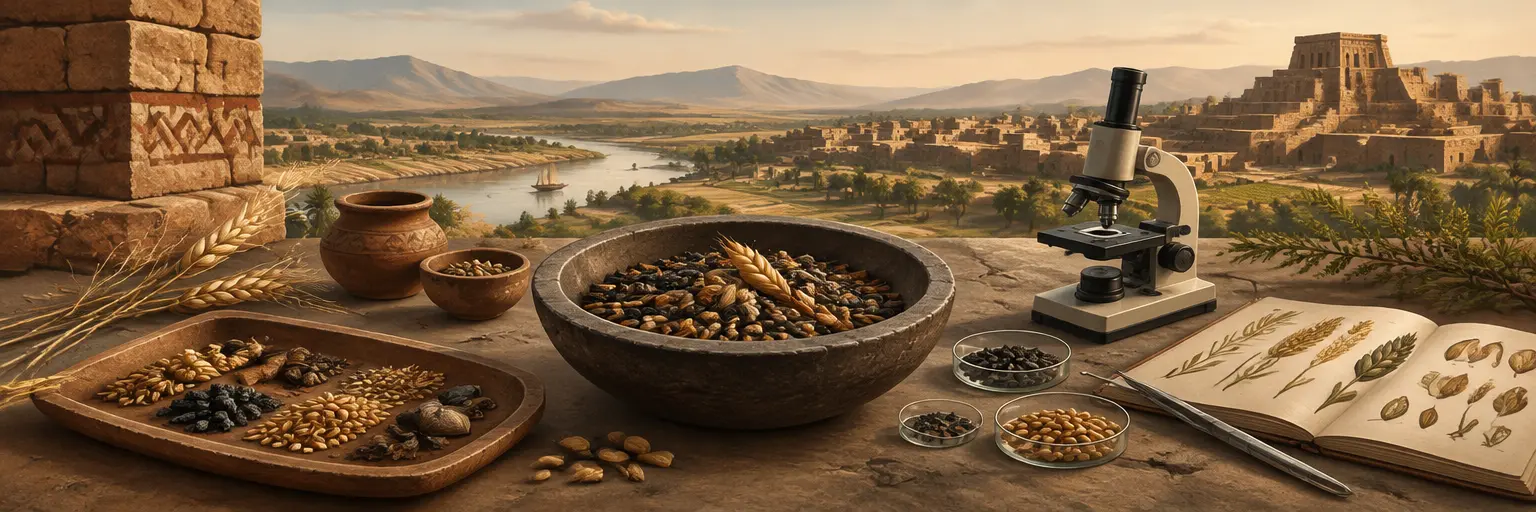
Beyond recovery, identification relies on comparative reference collections and high-powered microscopy. Seed morphology, surface texture, and cellular patterns are matched against modern specimens, while charcoal anatomy reveals wood taxa through transverse, radial, and tangential sections. Phytolith extraction—silica bodies from plant cells—requires specialized slide preparation and counting, offering resilience even in acidic soils. These analytical pipelines transform raw soil into quantifiable evidence, enabling researchers to map spatial distributions of plant use across households, storage pits, and hearths.
🌱 Reconstructing Ancient Agriculture and Domestication
Archaeobotanical data are central to tracing the origins of agriculture, known as the Neolithic Revolution. Domesticated crop assemblages—such as emmer wheat, barley, lentils, and flax—are identified by morphological shifts like larger seed size, loss of brittle rachis, and synchronized germination. Chronological sequences of these traits across sites like Çatalhöyük or Jericho reveal gradual or punctuated domestication pathways. Moreover, weed assemblages accompanying crops act as ecological indicators, showing field-management practices like irrigation, fallowing, or hoeing, which inform on labor organization and land tenure systems.
Regional comparisons of crop spectra illuminate intercontinental exchange networks—for example, the spread of millet from East Asia or maize from Mesoamerica. Isotopic analysis of charred seeds (e.g., δ13C and δ15N) further refines understanding of water-stress and manuring regimes, directly linking agronomic choices to environmental constraints. By integrating archaeobotany with genetics, researchers now track ancient DNA in preserved seeds, revealing adaptive alleles that drove crop resilience—a frontier that continuously rewrites narratives of human ingenuity and ecological adaptation.
🌿 Paleoenvironmental Reconstruction via Plant Remains
Plant macroremains and microremains serve as proxies for past vegetation communities, offering windows into climate shifts and land-use transformations. Pollen analysis from lake sediments or archaeological contexts reconstructs forest clearance, savanna expansion, or anthropogenic burning. Non-pollen palynomorphs, including fungal spores, indicate grazing intensity or erosion phases. Meanwhile, wood charcoal from hearths reveals the availability of specific tree species, signaling selective harvesting or deforestation events. Such data are instrumental for testing hypotheses about societal responses to drought, sea-level change, or volcanic eruptions.
Phytoliths, particularly from grasses, are exceptionally durable and species-specific, making them ideal for tropical or arid regions where organic preservation is poor. Assemblage changes—from forest taxa to grass-dominant spectra—document agricultural expansion or pastoralism. Additionally, starch grains trapped in dental calculus or grinding stones provide direct evidence of consumed plant foods, bypassing the bias toward charred remains. These multi-proxy approaches allow archaeologists to model past ecosystems with high resolution, bridging palaeoclimatology and human behavioral ecology to answer questions about sustainability and resilience.
🏺 Archaeobotany in Ritual and Daily Life Contexts
Plant remains are not merely dietary indicators; they also illuminate symbolic and ritual practices. Charred offerings of cereals, legumes, or narcotic plants (e.g., poppy, cannabis) in burials, temples, or votive deposits reveal ceremonial cuisines and psychotropic traditions. Specialized storage containers or caches of exotic spices—like black pepper or cardamom—signal long-distance trade and status differentiation. At domestic sites, the spatial distribution of seeds can identify culinary processing zones, waste middens, or foddering areas, thereby reconstructing household labor divisions and culinary traditions.
Ethnobotanical analogies enrich these interpretations, comparing ancient uses to documented traditions among indigenous communities. For instance, the presence of certain wild grasses might indicate thatching, basketry, or medicinal preparation rather than food. The incorporation of plant iconography in ceramics or murals often mirrors archaeobotanical evidence, validating symbolic meanings. By contextualizing plant assemblages within feature types—graves, hearths, abandonment layers—researchers distinguish mundane versus special deposition, offering nuanced insights into belief systems, social memory, and place-making.
🔬 Taphonomy and Preservation Biases
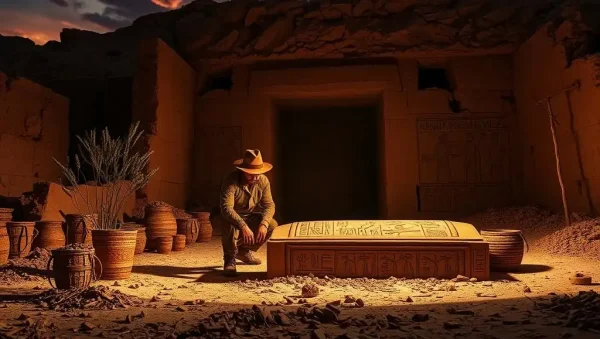
Understanding taphonomic processes—how plant remains are deposited, altered, or destroyed—is paramount to avoid misinterpretation. Charred seeds survive best under reducing conditions; aerobic, wet, or acidic soils cause decay, leading to underrepresentation of certain taxa. Waterlogged sites, like lakeside settlements, preserve uncarbonized seeds, fruits, and wood via anoxia, yielding exceptional organic detail. Desiccated environments, such as Egyptian tombs, offer dry preservation but with desiccation-induced brittleness. Each context biases the assemblage, so quantitative interpretation must account for differential preservation and recovery probabilities.
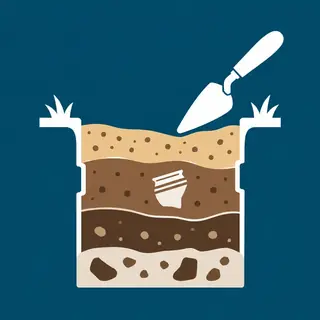
Post-depositional mixing—via bioturbation (worms, roots), ploughing, or excavation errors—can contaminate samples with modern or intrusive materials. AMS radiocarbon dating of individual charred seeds is thus essential for chronological control, yet small sample sizes require careful pretreatment. Also, charring experiments demonstrate that seed morphometry changes with temperature, so cooking or incidental burning can alter diagnostic features. Rigorous sampling strategies, including systematic column sampling and control off-site samples, mitigate these biases, ensuring that archaeobotanical interpretations are robust, replicable, and informed by a clear understanding of formation processes.
📊 Quantitative and Statistical Methods in Archaeobotany
Modern archaeobotany increasingly relies on multivariate statistics to discern patterns in large datasets. Ubiquity analysis, which measures the percentage of samples containing a taxon, provides a presence/absence measure that is robust against taphonomic variability. Density measurements (seeds per liter of sediment) allow comparisons of deposition intensity across features. Principal component analysis (PCA) or correspondence analysis (CA) group samples by taxa composition, revealing functional zones—cooking, storage, or ceremonial—based on plant assemblages. These tools move beyond subjective descriptions to hypothesis testing, such as whether elite residences had diverse crop arrays compared to commoner households.
Bayesian modeling integrates radiocarbon dates with stratigraphic information to construct high-resolution chronologies of plant usage, identifying rapid shifts or gradual transitions. Geographic information systems (GIS) map plant remains across sites, linking to soil properties, proximity to water, or artifact distributions. Also, network analysis traces the co-occurrence of exotic species among localities, charting trade routes. By merging archaeobotanical data with zooarchaeology, lithics, and ceramics, researchers build complex socio-environmental models, contributing to a holistic understanding of ancient lifeways and long-term human-environment dynamics.
Frequently Asked Questions
What is the difference between archaeobotany and paleoethnobotany?
Archaeobotany focuses on the recovery and identification of plant remains from archaeological sites, emphasizing botanical taxonomy and taphonomy. Paleoethnobotany is a broader subfield that integrates archaeobotanical data with cultural interpretations—human behavior, diet, economy, and environment. In practice, the terms are often used interchangeably, but paleoethnobotany addresses the human-plant relationship explicitly, while archaeobotany remains method-centric.
How are plant remains preserved in archaeological sites?
Most preservation occurs via carbonization (charring), which prevents microbial decay. Waterlogging creates anoxic conditions that preserve uncarbonized seeds, wood, and pollen. Desiccation in arid zones preserves organic matter without charring. Additionally, mineralized remains (calcium phosphate replacement) and phytoliths (silica bodies) survive even in acidic soils. Each mode biases the assemblage, so interpretation requires knowledge of site-specific preservation contexts.
Can archaeobotanical evidence prove what ancient people actually ate?
Yes, but with caution. Charred seeds, starch grains in dental calculus, and food residues in pots directly indicate consumed plants. However, preservation biases mean absence is not evidence of non-use. Combining multiple proxies—coprolites, isotopic signatures from human bone, and grinding stone residues—increases confidence. Also, taphonomic experiments help estimate original quantities, allowing more accurate dietary reconstruction.
What kinds of laboratory equipment are essential for archaeobotany?
Essential tools include flotation machines or buckets with fine mesh sieves, stereomicroscopes, and compound microscopes for detailed identification. Reference collections of modern seeds and wood cross-sections are critical. For advanced work, scanning electron microscopes (SEM) help examine micromorphology, while mass spectrometers for isotopic or ancient DNA analyses require specialized facilities. Simple soil processing also uses heavy-liquid separation (e.g., sodium polytungstate) for density-based extraction.
How does archaeobotany contribute to understanding climate change?
Plant remains act as paleoclimate proxies—for instance, shifts in tree taxa indicate temperature or precipitation changes. Weed species imply water management, while crop isotopes (δ13C) reveal drought stress. Pollen sequences from off-site contexts track vegetation shifts. Combined with sediment cores, archaeobotany provides long-term ecological baselines, showing how past societies adapted or collapsed under environmental stress, offering lessons for contemporary resilience planning.