
Uluburun's Treasure Trove: Cataloging the Raw Materials and Finished Goods


Welcome to ArchaeologyHub.org!
Dive into the fascinating world of the past. Uncover the secrets held within the sands of time and the depths of the sea. Our digital encyclopedia is your gateway to exploring ancient civilizations, one artifact and historical site at a time. Ready to embark on a journey to the Bronze Age? Our detailed analysis of the Uluburun shipwreck materials awaits, offering unparalleled insights into trade, technology, and life in the Late Bronze Age Mediterranean. Explore the meticulous cataloging of raw materials and finished goods recovered from this incredible underwater time capsule and prepare to be amazed!
- Introduction to the Uluburun Shipwreck and its Significance
-
Detailed Inventory of Raw Materials Aboard the Uluburun Shipwreck
- Copper Ingots: Forms, Sources, and Uluburun's Copper Trade
- Tin Ingots: Exploring the Tin Supply Chain in the Late Bronze Age
- Glass Ingots: Composition and Significance in Ancient Glass Production
- Elephant Ivory and Hippopotamus Ivory: Tracing the Ivory Trade Networks
- Ebony Wood: Origin and Use in Luxurious Goods
- Terebinth Resin: Chemical Composition and Potential Uses
-
Finished Goods Discovered on the Uluburun Shipwreck
- Pottery Vessels: Types, Origins, and Functions on Board
- Weapons and Tools: Bronze Swords, Axes, and Agricultural Implements
- Jewelry and Adornments: Gold Pendants, Beads, and Scarabs
- Weights and Measures: Standardizing Trade in the Bronze Age
- Mycenaean Pottery: Evidence of Mycenaean Trade Relations
- Egyptian Scarab: The Significance of Amenhotep III's Cartouche
-
Uluburun Shipwreck Materials Analysis: Techniques and Findings
- Metallurgical Analysis of Bronze Objects: Composition and Manufacturing Techniques
- Ceramic Provenance Studies: Identifying the Origins of Pottery
- Dendrochronological Analysis of Wooden Artifacts: Dating the Shipwreck
- Isotopic Analysis of Raw Materials: Tracing Sources and Trade Routes
- X-ray Fluorescence Analysis of Glass: Determining Elemental Composition
- Uluburun Shipwreck Materials Analysis: Implications for Understanding Late Bronze Age Trade
- Conclusion: The Enduring Legacy of the Uluburun Shipwreck
-
Frequently Asked Questions
- How did the Uluburun shipwreck contribute to our understanding of Bronze Age trade?
- What types of raw materials were discovered on the Uluburun shipwreck?
- What finished goods were found on board the Uluburun shipwreck?
- What analytical techniques are used to study the materials recovered from the Uluburun shipwreck?
- Why is the Uluburun shipwreck considered so important for archaeology?
- Final Reflection: Echoes of Ancient Exchange
- Unearth Your Inner Archaeologist: Delve Deeper!
Introduction to the Uluburun Shipwreck and its Significance
ArchaeologyHub.org: Unveiling the Secrets of Uluburun
ArchaeologyHub.org serves as a comprehensive digital repository, dedicated to illuminating pivotal archaeological discoveries, and the Uluburun shipwreck stands as a cornerstone of this endeavor. Through meticulous documentation and interpretive analysis, this platform provides an unparalleled resource for understanding one of the Late Bronze Age's most astonishing finds. By aggregating detailed timelines, artifact profiles, and scholarly interpretations, ArchaeologyHub.org enables researchers and enthusiasts alike to delve deep into the intricate narrative preserved within the Uluburun cargo.
Our commitment extends to presenting the complex data derived from Uluburun shipwreck materials analysis in an accessible yet rigorous format. This includes precise information on the origin of raw materials, the craftsmanship evident in finished goods, and the expansive trade networks that characterized the Eastern Mediterranean over three millennia ago. The site continually updates its content, reflecting the ongoing research and conservation efforts that continue to unlock the secrets held by this extraordinary maritime site.
The Uluburun Shipwreck: A Bronze Age Time Capsule
Discovered by a local sponge diver, Mehmet Çakir, in 1982 off the coast of Kaş, Turkey, the Uluburun shipwreck represents an unparalleled archaeological discovery. Lying at a depth of 44 to 52 meters, the vessel and its cargo remained remarkably preserved, offering an intact snapshot of Late Bronze Age maritime commerce. Subsequent excavations, conducted by the Institute of Nautical Archaeology (INA) under the direction of George F. Bass and Cemal Pulak from 1984 to 1994, meticulously recovered over 18,000 artifacts from the seabed.
Radiocarbon dating places the shipwreck around 1300 BCE, making it contemporary with the Amarna Period in Egypt and a pivotal moment in the Bronze Age collapse. The ship, likely a Canaanite vessel, was laden with an astonishing array of goods from at least seven different cultures, making it a true "time capsule" of the international trade system of the era. Its cargo, ranging from raw materials destined for workshops to luxury finished goods, provides direct evidence of the scale and complexity of economic and cultural exchange across the Eastern Mediterranean.
Importance of Uluburun Shipwreck Materials Analysis for Archaeological Understanding
The systematic Uluburun shipwreck materials analysis has been indispensable for reconstructing the intricate economic, technological, and cultural landscape of the Late Bronze Age. By employing a diverse suite of scientific techniques, archaeologists and conservators have been able to identify the precise composition, provenance, and manufacturing processes of the artifacts. This detailed examination goes beyond mere cataloging; it provides concrete data on the geographic origins of goods, revealing the extensive reach of ancient trade routes that connected distant empires and kingdoms.
Furthermore, Uluburun shipwreck materials analysis offers critical insights into the technological capabilities of Bronze Age societies. The study of metallurgical alloys, glass production, and ceramic fabrication techniques found on board illuminates the advanced craftsmanship and specialized knowledge possessed by artisans of the period. This scientific scrutiny allows researchers to confirm or challenge existing theories about ancient trade, diplomacy, and the flow of innovations, thereby enriching our understanding of this dynamic period in human history.
Detailed Inventory of Raw Materials Aboard the Uluburun Shipwreck
Copper Ingots: Forms, Sources, and Uluburun's Copper Trade
The Uluburun shipwreck carried an astonishing quantity of raw copper, totaling over 10 tons, primarily in the distinctive "oxhide" ingot shape. These ingots, weighing between 20-30 kg each and resembling stretched animal hides, were stacked in four rows across the hull. A smaller quantity of bun-shaped ingots was also found. This massive consignment of copper was clearly intended for widespread redistribution and metallurgical production across the Mediterranean.
Lead isotope analysis performed on samples from these ingots has conclusively traced their origin to Cyprus, specifically to copper mining regions such as Apliki and Enkomi. This finding provides direct archaeological evidence supporting textual records, like the Amarna letters, which refer to copper shipments from Alashiya (identified with Cyprus) to Egypt and other Near Eastern powers. The Uluburun cargo thus vividly illustrates Cyprus's central role as a major supplier of copper in the Late Bronze Age international trade network, underscoring the material basis for the era's widespread bronze production.
Tin Ingots: Exploring the Tin Supply Chain in the Late Bronze Age
Accompanying the immense quantity of copper were approximately one ton of tin ingots, crucial for the production of bronze. These ingots were found in various forms, including oxhide, bun, and pillow-shaped varieties. The ratio of tin to copper on board, roughly 1:10, perfectly matches the ideal proportion for creating high-quality bronze alloy (typically 90% copper and 10% tin). This meticulous arrangement suggests a deliberate consignment for large-scale bronze manufacturing.
Unlike copper, the precise geological source of the tin remains a subject of ongoing research, as lead isotope analysis for tin is more complex. While some hypotheses point to sources as distant as Afghanistan (via Mesopotamia) or even Cornwall in Britain (via central European networks), no definitive source has been identified for the Uluburun tin specifically. This ambiguity highlights the complex and often obscure nature of the Late Bronze Age tin supply chain, a critical component for the Bronze Age economy given tin's relative scarcity compared to copper.
Glass Ingots: Composition and Significance in Ancient Glass Production
The Uluburun shipwreck yielded approximately 175 ingots of raw glass, making it the largest known cache of unworked glass from the Bronze Age. These ingots were primarily disk-shaped, with a diameter of around 15 cm and weighing between 2 and 4 kg each. The colors of the glass were remarkably vibrant, predominantly cobalt blue, turquoise, purple, and amber, indicating sophisticated coloring techniques. These raw glass ingots were intended for remelting and crafting into luxury items such as vessels, beads, and inlays.
Chemical analysis, particularly X-ray fluorescence (XRF), has revealed that the Uluburun glass is primarily a soda-lime-silica glass, with trace elements pointing to origins in Egypt or the Near East, specifically Mesopotamia. The presence of cobalt blue glass, for instance, often indicates a Near Eastern origin for the cobalt pigment itself. This discovery provides invaluable insight into the early stages of glass manufacturing, demonstrating that raw glass was a significant commodity traded across vast distances, enabling the widespread production of highly prized glass objects throughout the Mediterranean world.
Elephant Ivory and Hippopotamus Ivory: Tracing the Ivory Trade Networks
Among the exotic raw materials found on the Uluburun shipwreck were significant quantities of ivory, comprising both elephant tusks and hippopotamus teeth. The cargo included at least 10 complete or nearly complete elephant tusks, some weighing over 10 kg, alongside sections of tusks and numerous hippopotamus incisors. This substantial collection of ivory underscores its immense value as a luxury raw material in the Late Bronze Age, prized for its workability and aesthetic appeal in crafting exquisite objects.
Scientific analysis, including strontium isotope analysis and morphological studies, has helped differentiate the origins of the ivory. The elephant tusks are believed to be from African elephants, likely transported via Egypt, while the hippopotamus ivory almost certainly originated from the Levant, where hippopotamus populations existed in riverine environments. The presence of both types of ivory on the same vessel highlights the complex and multi-directional trade networks that supplied elite workshops across the Eastern Mediterranean with these valuable and exotic commodities for the production of high-status goods.
Ebony Wood: Origin and Use in Luxurious Goods
The Uluburun shipwreck also carried logs or planks of what has been identified as African blackwood ( Dalbergia melanoxylon), commonly referred to as ebony. This dense, dark wood was highly prized in ancient times for its durability, fine grain, and lustrous finish, making it a favored material for crafting luxury furniture, inlays, and small decorative objects. Its presence on the ship signifies its status as a valuable commodity, imported from distant lands.
The origin of this ebony is unequivocally sub-Saharan Africa, from regions such as Sudan or Ethiopia. Its transportation to the Mediterranean would have involved complex overland and riverine routes, likely through Egypt, before being loaded onto the ship. The inclusion of ebony in the Uluburun cargo underscores the demand for exotic, high-value materials from the fringes of the known world, illustrating the extensive reach of Bronze Age trade networks that stretched deep into the African continent to procure such rare and coveted resources.
Terebinth Resin: Chemical Composition and Potential Uses
A significant quantity of terebinth resin was found aboard the Uluburun ship, contained within approximately 140 large Canaanite jars. This resin, solidified and preserved over millennia, represents one of the largest known caches of this material from the Bronze Age. Its presence in such bulk suggests a substantial commercial purpose, indicating its importance in the ancient economy.
Chemical analysis, specifically gas chromatography-mass spectrometry (GC-MS), has identified the resin as derived from the Pistacia terebinthus tree, a species native to the Eastern Mediterranean, particularly Syria-Palestine. While its precise uses are debated, terebinth resin was known in ancient texts and archaeological contexts for various applications, including as an ingredient in perfumes, incense, medicines, and possibly as a waterproofing agent for ships or pottery. The Uluburun discovery provides tangible evidence of a thriving trade in this aromatic and versatile natural product.
Finished Goods Discovered on the Uluburun Shipwreck
Pottery Vessels: Types, Origins, and Functions on Board
The Uluburun shipwreck contained hundreds of pottery vessels, representing a remarkable diversity of types and origins, reflecting the ship's international itinerary and cargo. The most numerous were large Canaanite jars, estimated to be around 149 units, primarily used for transporting bulk commodities like olive oil, wine, and the aforementioned terebinth resin. These jars, often with distinctive pointed bases, were a staple of Late Bronze Age maritime trade.
In addition to the utilitarian Canaanite jars, the cargo included fine Mycenaean pottery, such as stirrup jars, kylikes, and kraters, often decorated with marine or geometric motifs. These Mycenaean vessels, confirmed by ceramic provenance studies to originate from mainland Greece, likely contained perfumed oils or other high-value liquids. Cypriot wares, including Base-Ring and White Slip bowls, were also present, further demonstrating the extensive network of trade that facilitated the movement of both everyday goods and luxury items across the Eastern Mediterranean.
Weapons and Tools: Bronze Swords, Axes, and Agricultural Implements
The Uluburun cargo included a substantial collection of bronze weapons and tools, offering insights into military technology, craftsmanship, and daily life in the Late Bronze Age. Among the weapons were several swords, including at least one Mycenaean-type sword and various Near Eastern daggers, along with spearheads and axe heads. The presence of these items suggests a military or aristocratic aspect to the cargo, perhaps intended for trade, tribute, or personal use by high-status individuals.
Beyond weaponry, the ship carried a range of bronze tools essential for various crafts and agriculture. These included chisels, hammers, awls, and a significant number of bronze sickles. The sickles, in particular, indicate that agricultural implements were also part of the international trade, perhaps destined for regions requiring new tools or as part of broader economic exchanges. The meticulous Uluburun shipwreck materials analysis of these items, including their metallurgical composition, reveals sophisticated bronze-working techniques and standardized production methods across different regions.
Jewelry and Adornments: Gold Pendants, Beads, and Scarabs
The Uluburun shipwreck yielded an impressive collection of jewelry and personal adornments, highlighting the demand for luxury items and the artistic sophistication of the era. Over 150 gold items were recovered, including a stunning gold chalice, various pendants, and a large number of beads made from gold, faience, carnelian, agate, and quartz. These pieces demonstrate a blend of Egyptian, Mycenaean, and Near Eastern artistic styles, reflecting the cultural amalgamation facilitated by trade.
Among the most significant finds were numerous scarabs and scaraboids, small beetle-shaped amulets often inscribed with hieroglyphs or decorative patterns. These served as seals or protective charms. The diversity of jewelry, from elaborate gold pieces to simpler bead necklaces, underscores the varied social strata of consumers in the Late Bronze Age and the widespread desire for personal ornamentation. The meticulous Uluburun shipwreck materials analysis of these precious items provides invaluable data on ancient craftsmanship and the movement of luxury goods.
Weights and Measures: Standardizing Trade in the Bronze Age
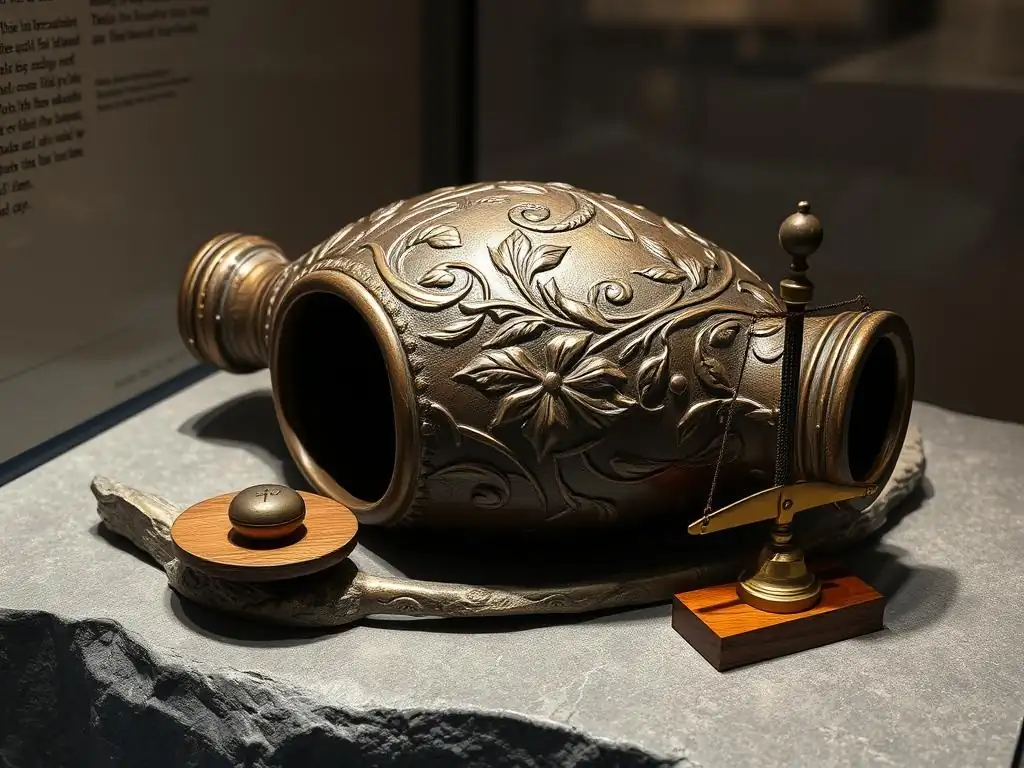
A crucial component of the Uluburun cargo for understanding Bronze Age commerce was the discovery of over 120 weights. These weights, made primarily from hematite, lead, and bronze, varied in shape, including spool-shaped, disc-shaped, and zoomorphic forms (e.g., in the shape of a duck or a lion). Their presence indicates a sophisticated system of standardized measurements essential for facilitating fair and accurate trade transactions across different cultural and political entities.
Analysis of these weights has shown that they conform to several distinct weight systems known from the Late Bronze Age, including those used in the Near East (Syro-Palestinian and Mesopotamian systems), Egypt, and the Aegean (Mycenaean system). This multiplicity of systems on a single vessel highlights the multicultural nature of the trade being conducted and the need for merchants to navigate various standards. The weights serve as tangible proof of the sophisticated economic infrastructure that underpinned the extensive maritime trade evidenced by the Uluburun shipwreck materials analysis.
Mycenaean Pottery: Evidence of Mycenaean Trade Relations
The significant quantity of Mycenaean pottery found on the Uluburun shipwreck provides compelling evidence of Mycenaean involvement in the extensive Late Bronze Age trade network. Among the most common forms were "stirrup jars," distinctive vessels with false necks and two vertical handles, primarily used for transporting olive oil and perfumed oils. These jars, identifiable by their characteristic fabric and decorative motifs, originated from various Mycenaean centers on mainland Greece, including the Argolid region.
In addition to stirrup jars, other Mycenaean vessel types, such as kylikes (drinking cups) and kraters (mixing bowls), were also recovered. The presence of these high-quality, often decorated, ceramic wares indicates that Mycenaean goods were not only consumed domestically but were also valuable commodities for export. The Uluburun shipwreck materials analysis of this pottery, including ceramic provenance studies, has greatly enhanced our understanding of the scale and direction of Mycenaean maritime trade, confirming their active participation in the complex economic exchanges of the Eastern Mediterranean.
Egyptian Scarab: The Significance of Amenhotep III's Cartouche
Among the most historically significant artifacts recovered from the Uluburun shipwreck is a large, gold-mounted Egyptian scarab. This particular scarab bears the cartouche of Nefertiti and the prenomen of Pharaoh Amenhotep III, "Nebmaatre," who ruled Egypt from approximately 1390 to 1353 BCE. The presence of an artifact directly linked to such a prominent pharaoh provides a crucial chronological anchor for dating the shipwreck and offers insights into high-level diplomatic or royal trade connections.
The scarab, likely made of steatite or faience before being encased in gold, was not merely a personal adornment but also served as a powerful amulet or official seal, symbolizing royal authority and protection. Its inclusion in the cargo suggests either a direct royal consignment, perhaps as a gift or tribute, or its high value as a collectors' item within the elite trade circuit. The Uluburun shipwreck materials analysis of this rare piece underscores the far-reaching influence of Egyptian culture and its deep integration into the Eastern Mediterranean's prestigious exchange networks.
Uluburun Shipwreck Materials Analysis: Techniques and Findings
Metallurgical Analysis of Bronze Objects: Composition and Manufacturing Techniques
Metallurgical analysis has been a cornerstone of Uluburun shipwreck materials analysis, providing profound insights into Bronze Age metalworking. Techniques such as X-ray Fluorescence (XRF), Inductively Coupled Plasma Mass Spectrometry (ICP-MS), and lead isotope analysis were applied to the copper and tin ingots, as well as the numerous bronze tools and weapons. These analyses revealed that the bronze objects were typically an alloy of approximately 90% copper and 10% tin, a standardized ratio for high-quality bronze.
The findings demonstrated sophisticated manufacturing techniques, including casting, hammering, and annealing, indicating a high level of metallurgical skill. For instance, the copper ingots were found to be remarkably pure, suggesting efficient smelting processes. The Uluburun shipwreck materials analysis of the bronze artifacts has illuminated the technological capabilities of different regional workshops, showcasing a widespread understanding of alloying for desired properties like hardness and durability, crucial for the production of effective tools and weapons.
Ceramic Provenance Studies: Identifying the Origins of Pottery
Ceramic provenance studies played a vital role in determining the geographical origins of the vast array of pottery vessels on board the Uluburun ship. Techniques such as Neutron Activation Analysis (NAA) and petrography were employed to analyze the elemental composition and mineralogical characteristics of the clay fabrics. NAA, by measuring trace elements unique to specific clay sources, allowed researchers to match the pottery to known production centers.
These studies confirmed that the pottery originated from a diverse range of regions, including Mycenaean Greece, Cyprus, the Levant (Canaanite jars), and Egypt. For example, specific elemental profiles identified Mycenaean stirrup jars as originating from the Argolid. This detailed Uluburun shipwreck materials analysis of the ceramics provided tangible evidence for the extensive and complex trade routes connecting these disparate regions, illustrating the movement of both everyday commodities and specialized goods across the Eastern Mediterranean.
Dendrochronological Analysis of Wooden Artifacts: Dating the Shipwreck
Dendrochronological analysis, or tree-ring dating, was attempted on the wooden remains of the ship's hull and other wooden artifacts, although complete sequences were challenging to obtain due to the wood's condition. This technique involves comparing the unique patterns of tree-ring widths from archaeological wood samples to established master chronologies of tree-ring growth in specific regions. By matching these patterns, a precise felling date for the timber can often be determined.
While a definitive felling date for the entire ship proved difficult, analysis of some wooden elements, particularly the hull planking, suggested a construction date in the mid-14th century BCE, with some timber potentially being older or used for repairs. This Uluburun shipwreck materials analysis, combined with radiocarbon dating and the Amenhotep III scarab, helped to refine the overall chronology of the wreck event to circa 1300 BCE. Dendrochronology offers one of the most precise dating methods available for organic materials, contributing significantly to contextualizing the Uluburun cargo within the Late Bronze Age.
Isotopic Analysis of Raw Materials: Tracing Sources and Trade Routes
Isotopic analysis, particularly lead isotope analysis for metals and strontium isotope analysis for organic materials like ivory, has been instrumental in tracing the geological and geographical origins of the Uluburun raw materials. Lead isotope ratios in copper and tin ingots are unique to specific ore deposits, allowing researchers to pinpoint the mines from which the metals were extracted. This technique conclusively identified Cyprus as the primary source for the vast majority of the copper ingots.
Strontium isotope analysis, applied to the ivory, provided insights into the diet and environment of the animals, helping to distinguish between African and Near Eastern origins for the elephant and hippopotamus ivory, respectively. This sophisticated Uluburun shipwreck materials analysis has revolutionized our understanding of ancient supply chains, demonstrating the ability to track raw commodities from their point of extraction to their final destination, thereby reconstructing the complex, long-distance trade routes that crisscrossed the Bronze Age world.
X-ray Fluorescence Analysis of Glass: Determining Elemental Composition
X-ray Fluorescence (XRF) analysis was a key technique employed in the Uluburun shipwreck materials analysis of the glass ingots and finished glass objects. XRF is a non-destructive analytical method that determines the elemental composition of a material by bombarding it with X-rays and analyzing the resulting secondary X-rays emitted by the sample. This allowed researchers to identify the major components (e.g., silica, soda, lime) and trace elements (e.g., cobalt, copper, manganese, iron) present in the glass.
The findings from XRF analysis revealed consistent elemental profiles for the glass, indicating standardized manufacturing practices. The presence of specific colorants, such as cobalt for blue glass, often pointed to particular regions of origin, with strong evidence suggesting production centers in Egypt or Mesopotamia. This detailed Uluburun shipwreck materials analysis of the glass not only illuminated ancient glassmaking technology but also provided crucial data for understanding the trade in raw glass and its distribution across the Eastern Mediterranean for the creation of luxury goods.
Uluburun Shipwreck Materials Analysis: Implications for Understanding Late Bronze Age Trade
The Uluburun Shipwreck and its Role in the Eastern Mediterranean Trade Network
The Uluburun shipwreck, with its extraordinarily diverse cargo, serves as a monumental testament to the complexity and scale of the Eastern Mediterranean trade network in the Late Bronze Age. The ship's route, likely traveling counter-clockwise from the Levant, along the Anatolian coast, and possibly towards the Aegean, connected major geopolitical entities: Egypt, Mycenaean Greece, Cyprus, the Hittite Empire, and various Levantine city-states. The presence of goods from at least seven distinct cultures on a single vessel underscores the interconnectedness of this ancient world.
The Uluburun shipwreck materials analysis has painted a vivid picture of a highly organized and bustling maritime economy. It reveals that not only luxury goods but also significant quantities of raw materials were transported across vast distances to fuel the industries and demands of the major powers. This extensive network facilitated the exchange of goods, ideas, and technologies, making the Uluburun wreck a prime archaeological example of globalization in antiquity.
Insights into Bronze Age Technological Capabilities from Uluburun Artifacts
The meticulous Uluburun shipwreck materials analysis of the artifacts has provided unprecedented insights into the advanced technological capabilities of Bronze Age societies. The sheer volume and quality of the copper and tin ingots demonstrate sophisticated mining and smelting operations capable of producing metals on an industrial scale. The metallurgical analysis of the bronze objects reveals a deep understanding of alloying, casting, and finishing techniques, producing durable tools and intricate weapons.
Furthermore, the raw glass ingots and finished glass objects showcase advanced glassmaking technology, including precise control over colorants and manufacturing processes. The ship's construction itself, utilizing mortise-and-tenon joints, reflects sophisticated shipbuilding techniques. The standardized weights further highlight a high degree of economic organization and the implementation of precise measurement systems. These findings collectively demonstrate that Bronze Age societies possessed remarkable technological prowess, far beyond what was once imagined.
Uluburun's Cargo: A Reflection of Cultural Exchange and Diplomatic Relations
The diverse origins and types of goods found in the Uluburun cargo offer compelling evidence of extensive cultural exchange and, potentially, high-level diplomatic relations in the Late Bronze Age. The blend of Egyptian, Mycenaean, Near Eastern, and Cypriot artifacts on a single vessel suggests a fluid movement of goods that transcended political boundaries. The presence of the Amenhotep III scarab, a symbol of Egyptian royalty, is particularly indicative of official or elite-level exchanges, possibly as royal gifts or tribute.
Beyond mere trade, the artifacts reflect a fascinating interplay of artistic styles and cultural influences. For example, the gold and faience jewelry incorporates elements from multiple traditions, indicating a shared aesthetic among the elites of the Eastern Mediterranean. The Uluburun shipwreck materials analysis thus provides tangible proof of how material culture facilitated not only economic transactions but also the exchange of ideas, artistic motifs, and diplomatic gestures between the powerful kingdoms and city-states of the era.
Uluburun's Cargo: Shedding Light on Ritual Practices
While primarily a merchant vessel, the Uluburun shipwreck's cargo also contains items that offer intriguing glimpses into the ritual practices and personal beliefs of the Late Bronze Age. The presence of a gold chalice, for instance, a finely crafted vessel, could suggest its use in libations or other ceremonial contexts, either on board the ship itself or as part of a consignment for religious purposes. Similarly, certain figurines or amulets, such as the numerous scarabs, often held apotropaic (protective) or religious significance for their owners.
The large quantity of terebinth resin, while having practical applications, was also known for its use as incense in religious ceremonies across the Near East. Its aromatic properties would have made it valuable in offerings or purification rituals. The Uluburun shipwreck materials analysis of these specific items, though often speculative regarding their precise ritual function, opens avenues for understanding the spiritual dimensions of Bronze Age life and the potential movement of sacred or ceremonial objects within the extensive trade networks.
Conclusion: The Enduring Legacy of the Uluburun Shipwreck
Summarizing Key Findings from the Uluburun Shipwreck Materials Analysis
The Uluburun shipwreck materials analysis has yielded an unparalleled wealth of information, fundamentally reshaping our understanding of the Late Bronze Age. Through multidisciplinary scientific techniques, researchers have precisely identified the provenance of over 10 tons of copper from Cyprus, a ton of tin, and significant quantities of glass ingots from Egypt or Mesopotamia. The analysis also confirmed the African origin of elephant ivory and Levantine origin of hippopotamus ivory, alongside exotic ebony wood from sub-Saharan Africa.
Furthermore, the detailed examination of finished goods revealed a cosmopolitan cargo, including Mycenaean, Canaanite, Cypriot, and Egyptian pottery, sophisticated bronze weapons and tools, and exquisite gold and faience jewelry. The presence of standardized weights from multiple systems and the Amenhotep III scarab underscored the complexity of trade and high-level diplomatic ties. This comprehensive Uluburun shipwreck materials analysis has provided a unique, direct snapshot of the interconnected economic, technological, and cultural landscape of the 14th century BCE.
The Uluburun Shipwreck: A Vital Resource for Reconstructing Bronze Age History
The Uluburun shipwreck stands as an indispensable archaeological resource for reconstructing the intricate tapestry of Bronze Age history. Before its discovery, much of our knowledge about Late Bronze Age trade relied on textual sources like the Amarna letters or fragmentary archaeological evidence. The Uluburun cargo, however, provides direct, tangible proof of the scale, diversity, and organization of maritime commerce, confirming the existence of a truly international economic system.
It has allowed scholars to map extensive trade routes, understand the flow of raw materials and finished goods, and gain profound insights into the technological prowess of the era. The meticulous Uluburun shipwreck materials analysis has transformed theoretical models into concrete realities, demonstrating how interconnected the ancient world truly was and offering a unique window into the daily realities of long-distance trade and the cultural exchanges that accompanied it.
Future Research Directions for Uluburun Shipwreck Materials Analysis
Despite decades of intensive study, the Uluburun shipwreck continues to offer avenues for future research, particularly through the application of increasingly sophisticated analytical techniques. Further refinement of isotopic analysis, including new methods for tin provenance, could definitively pinpoint the sources of critical raw materials, resolving long-standing archaeological debates. The application of ancient DNA analysis to organic remains, such as the resin or wood, could provide more specific botanical or zoological data.
Ongoing Uluburun shipwreck materials analysis could also focus on integrating the material evidence even more closely with textual sources from the period, such as cuneiform tablets, to build a more holistic picture of Bronze Age economic and political systems. Moreover, continued efforts in conservation science will ensure the long-term preservation of this invaluable collection, allowing future generations of researchers to explore new questions and employ novel methodologies to unlock even more of the Uluburun shipwreck's enduring secrets.
Frequently Asked Questions
How did the Uluburun shipwreck contribute to our understanding of Bronze Age trade?
The Uluburun shipwreck provided extensive evidence of Bronze Age trade networks. The diverse cargo revealed the exchange of raw materials and finished goods across the Mediterranean.
What types of raw materials were discovered on the Uluburun shipwreck?
The shipwreck contained a wide variety of raw materials, including copper ingots, tin ingots, glass ingots, and ivory. These materials originated from various regions and were destined for different destinations.
What finished goods were found on board the Uluburun shipwreck?
Finished goods included items like jewelry, weapons, pottery, and luxury items. These objects showcase the skill of artisans and the cultural exchange during the Late Bronze Age.
What analytical techniques are used to study the materials recovered from the Uluburun shipwreck?
Materials analysis involves techniques such as chemical analysis, metallurgy, and isotope analysis. These methods help determine the origin, composition, and manufacturing processes of the artifacts.
Why is the Uluburun shipwreck considered so important for archaeology?
The Uluburun shipwreck is significant because it offers a snapshot of maritime trade and cultural connections in the Late Bronze Age. It is exceptionally well-preserved and provides a wealth of information about ancient civilizations.
Okay, here's a final reflection crafted to fit your article "Uluburun's Treasure Trove: Cataloging the Raw Materials and Finished Goods," optimized for the keyword "Uluburun shipwreck materials analysis," and following the structure you provided:
Final Reflection: Echoes of Ancient Exchange
The meticulous Uluburun shipwreck materials analysis detailed in this article transcends mere archaeological cataloging; it offers a vibrant snapshot of a Bronze Age world interconnected by trade and driven by the pursuit of resources. The sheer diversity of raw materials and finished goods recovered speaks volumes about the sophisticated maritime networks that flourished millennia ago, a testament to human ingenuity and the enduring allure of distant lands.
This exploration into the Uluburun's cargo profoundly underscores the enduring human drive to connect, to exchange, and to build bridges across cultures and continents. The artifacts, silent witnesses to a bygone era, whisper tales of ambition, craftsmanship, and the inherent risks of seafaring trade. The sea unites. Lands it divides.
This ancient proverb resonates deeply when considering the Uluburun, a vessel lost to the waves, yet forever connecting us to the vibrant tapestry of the Bronze Age.
As we conclude this journey through the Uluburun's treasure trove, let us consider the lessons embedded within its fragmented cargo. The pursuit of knowledge, the dedication to meticulous analysis, and the appreciation for the interconnectedness of human history are all legacies we can embrace. Reflect on the intricate web of exchange that sustained the Bronze Age, and consider how you, too, can contribute to building bridges of understanding and collaboration in our own complex world.
Unearth Your Inner Archaeologist: Delve Deeper!
Thanks for exploring the fascinating world of Uluburun with us! We hope you enjoyed uncovering the mysteries hidden within this ancient shipwreck. Now, it's time to take your curiosity further and contribute to our understanding of the Bronze Age.
- Catalog your own "finds"! Think about the everyday objects you use - where do the raw materials come from, and how are they transformed?
- Share this article with fellow history enthusiasts and spark a conversation about the importance of archaeological discoveries.
- Visit your local museum and see if they have any artifacts from the Bronze Age – what details can you observe firsthand?
What "raw material to finished good" transformation most surprises you, and why?