
Greek Historians on Babylon: Corroborating Herodotus and Ctesias with Archaeological Findings

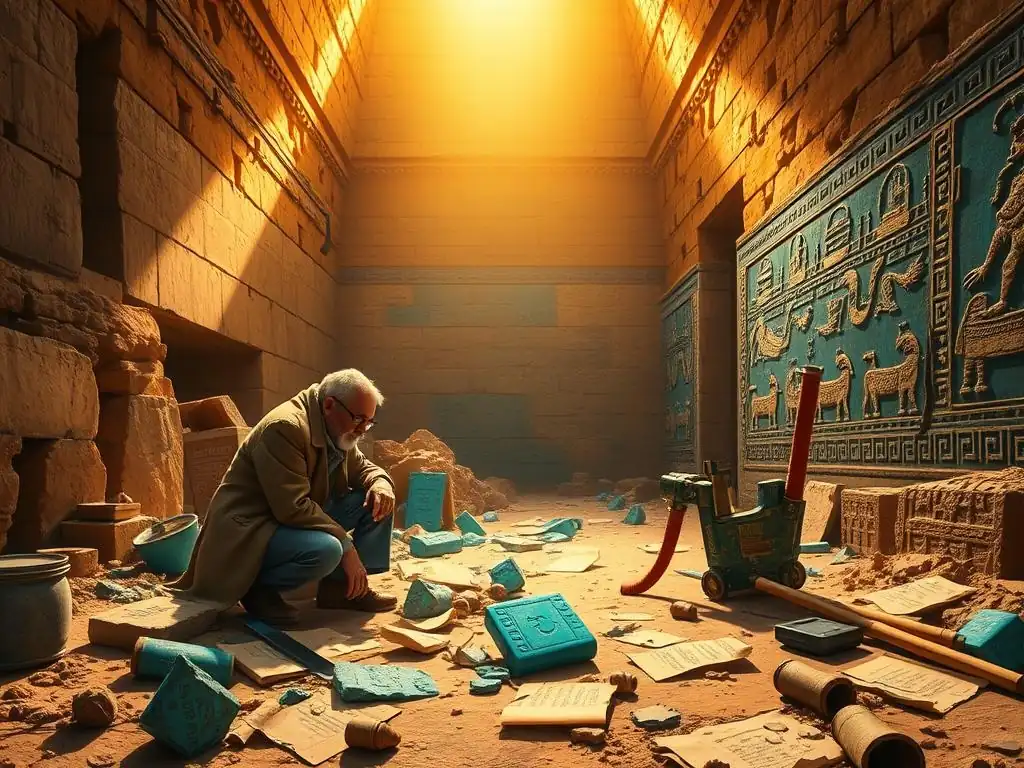
Welcome to ArchaeologyHub.org, your portal to uncovering the past! Delve into the mysteries of ancient civilizations as we embark on a journey to bridge the gap between historical accounts and tangible discoveries. Ever wondered how the writings of Babylon archaeological historians like Herodotus hold up against the evidence unearthed by modern excavations? Explore our latest article to find out, and prepare to have your perceptions of ancient history challenged. What secrets will be revealed?
- Introduction: Re-evaluating Ancient Accounts of Babylon
- Herodotus's Description of Babylon: Fact vs. Fiction
- Ctesias's Perspective on Babylon: A Contrasting Narrative
- Archaeological Evidence and Babylonian Historical Verification
- Comparing Herodotus and Ctesias: A Comparative Analysis of Historical Accounts
- Case Studies: Archaeological Discoveries Validating Greek Historical Texts
- The Limitations of Greek Historical Sources on Babylon
- Conclusion: Integrating Greek Historical Narratives with Archaeological Data for a Comprehensive Understanding of Babylon
-
Frequently Asked Questions
- How reliable are the accounts of Babylon provided by Herodotus, considering the limited means of travel and communication in his time?
- What specific archaeological findings support or challenge the descriptions of Babylonian architecture and urban planning offered by Greek historians like Herodotus and Ctesias?
- To what extent do inscriptions and cuneiform tablets discovered in Babylon corroborate or contradict the historical narratives presented by Herodotus and Ctesias?
- What were some of the significant differences in perspective between the Greek historians and the Babylonians themselves when it came to documenting their history and culture?
- How has modern archaeology changed our understanding of Babylon compared to the descriptions provided by ancient Greek historians like Herodotus?
- Final Reflection: Echoes of Babylon's Enduring Legacy
- Unearth Babylon's Secrets: Start Your Exploration Now!
Introduction: Re-evaluating Ancient Accounts of Babylon
The Enduring Fascination with Babylon: A Historical Overview
Babylon, an ancient city-state of Mesopotamia located on the Euphrates River in modern-day Iraq, has captivated the human imagination for millennia. Rising to prominence under Hammurabi in the Old Babylonian period (c. 18th century BCE) and reaching its zenith during the Neo-Babylonian Empire (626–539 BCE) under rulers like Nebuchadnezzar II, it became synonymous with immense wealth, monumental architecture, and advanced civilization. Its legendary status, fueled by biblical narratives and classical Greek accounts, has ensured its enduring allure, inspiring centuries of historical inquiry and archaeological exploration.
The city's grandeur, from its colossal walls to its famous ziggurat and potential Hanging Gardens, made it a wonder of the ancient world. This reputation drew the attention of early Greek chroniclers who sought to document its history and marvels, providing some of the earliest non-Babylonian perspectives on this powerful Mesopotamian empire. Understanding their accounts, therefore, is crucial for a comprehensive picture of Babylon, especially when juxtaposed with modern archaeological findings.
Herodotus and Ctesias: Key Greek Sources on Babylonian History
Among the most significant Greek historians to describe Babylon are Herodotus of Halicarnassus (c. 484–425 BCE) and Ctesias of Cnidus (5th-4th century BCE). Herodotus, often hailed as the "Father of History," included extensive observations on Babylon in his Histories, particularly in Book I, detailing its physical layout, customs, and the story of its conquest by Cyrus the Great. His work, while invaluable, has been subject to scholarly debate regarding its accuracy and potential for exaggeration.
Ctesias, a physician at the Persian court of Artaxerxes II, composed Persica, a history of Assyria and Persia that also touched upon Babylonian events. His narrative, preserved largely through later epitomes, often presents a more fantastical and less historically grounded version of events compared to Herodotus, focusing on legendary figures like Queen Semiramis. Despite their differing approaches and varying degrees of reliability, both Herodotus and Ctesias offer unique insights into how ancient Greeks perceived and understood Babylon, making them indispensable sources for Babylon archaeological historians Herodotus and Ctesias study.
The British Museum: Contextualizing Babylonian History within a Global Archaeological Framework
The British Museum stands as a global center for the study of ancient Mesopotamia, housing an unparalleled collection of artifacts from Babylon. Its holdings include crucial pieces such as the Cyrus Cylinder, a clay cylinder describing Cyrus's conquest of Babylon and his policies, and numerous cuneiform tablets detailing the reigns of Neo-Babylonian kings like Nebuchadnezzar II and Nabonidus. These artifacts provide primary source material directly from Babylon itself, offering critical context and often serving as direct counterpoints or corroborations to the narratives of Greek historians.
The museum's extensive collection allows researchers and the public to engage directly with the material culture of Babylon, grounding the ancient Greek accounts in tangible archaeological evidence. For Babylon archaeological historians Herodotus and Ctesias are vital, but their narratives gain immense depth and critical evaluation through the lens of objects preserved in institutions like the British Museum, which facilitate a global archaeological framework for understanding ancient civilizations.
Herodotus's Description of Babylon: Fact vs. Fiction
Herodotus's Babylon: Monumental Architecture and City Layout
Herodotus provides one of the most detailed ancient Greek descriptions of Babylon, emphasizing its colossal scale and impressive engineering. In his Histories (Book I, 178-183), he describes the city as a perfect square, measuring 120 stadia (approximately 22 kilometers or 14 miles) on each side, enclosed by a massive double wall.
He claims these walls were 50 royal cubits (around 25 meters or 82 feet) wide and 200 royal cubits (around 100 meters or 330 feet) high, topped with watchtowers and featuring 100 bronze gates. The Euphrates River, he states, divided the city, with a bridge connecting the two halves and a tunnel running beneath the river.
He also details the city's internal structure, with streets laid out in a grid pattern and two main centers: the royal palace and the great temple of Bel (identified with the Esagila temple and its ziggurat, Etemenanki). Herodotus's account paints a picture of unparalleled urban grandeur, suggesting a city far exceeding the scale of any other known ancient metropolis, a testament to the power and wealth of the Neo-Babylonian Empire.
Critiques of Herodotus's Account: Exaggeration or Accurate Depiction?
While Herodotus's descriptions offer invaluable insight, they have long been a subject of critical scrutiny by modern scholars and archaeologists, particularly concerning his reported dimensions. The sheer scale of the city and its walls, as described, would have required an immense amount of labor and resources that seem improbable even for a powerful empire. For instance, the stated wall height of 100 meters would dwarf even modern skyscrapers and significantly exceed the known capabilities of ancient construction.
Archaeological excavations, particularly those conducted by Robert Koldewey from 1899 to 1917, have revealed a city much smaller than Herodotus's figures suggest. The outer walls, while impressive, enclosed an area of approximately 10 square kilometers (about 4 square miles), significantly less than the 484 square kilometers implied by Herodotus's 22 km x 22 km estimate. This discrepancy leads many scholars to conclude that Herodotus either exaggerated for dramatic effect, relied on unreliable informants, or misinterpreted information, possibly confusing the outer defensive system with a much larger imagined perimeter.
Archaeological Evidence Supporting Herodotus's Claims
Despite the acknowledged exaggerations, archaeological findings have indeed corroborated several key aspects of Herodotus's account, providing valuable support for his status as a foundational source for Babylon archaeological historians Herodotus continue to study. Koldewey's excavations uncovered evidence of Babylon's sophisticated defensive system, including an inner wall and an outer wall (Nimitti-Enlil and Imgur-Enlil), albeit not matching Herodotus's fantastical dimensions. The inner wall, for example, was found to be approximately 6.5 meters thick, with an additional 3.25-meter outer wall and a moat.
Furthermore, the discovery and reconstruction of the Ishtar Gate, with its grand Processional Way, vividly confirm Herodotus's descriptions of monumental entrances and impressive public thoroughfares. The foundations of the Etemenanki ziggurat, which Herodotus referred to as the "temple of Bel" and described as a massive tower, have also been identified, validating the existence of a central, towering structure in the city. These discoveries demonstrate that while Herodotus's numbers might be inflated, his overall depiction of Babylon as a city of unparalleled monumental architecture and intricate urban planning was fundamentally accurate.
Ctesias's Perspective on Babylon: A Contrasting Narrative
Ctesias's "Persica" and its Depiction of Babylonian Royal History
Ctesias of Cnidus, a contemporary of Herodotus, presented a markedly different account of Babylonian history in his multi-volume work, Persica. Unlike Herodotus, who often focused on verifiable events and ethnographic details, Ctesias's narrative frequently delved into the legendary and the sensational. He introduced a lengthy and often fantastical list of Assyrian and Babylonian kings, many of whom lack corroboration in cuneiform records. A central figure in his Babylonian narrative is the semi-mythical Queen Semiramis, whom he credits with building much of Babylon, including its massive walls and the Hanging Gardens.
Ctesias's work, largely preserved through the summaries of later authors like Diodorus Siculus, portrays a more romanticized and dramatic version of history, possibly influenced by Persian courtly tales or a desire to entertain. His emphasis on heroic figures and grand exploits often overshadows the meticulous historical reporting found in other ancient sources, making his contributions to Babylon archaeological historians Herodotus might consider more grounded, a subject of considerable debate.
Discrepancies Between Ctesias and Herodotus: Analyzing the Differences
The accounts of Ctesias and Herodotus diverge significantly on several key points concerning Babylon. Herodotus attributes the construction of Babylon's defenses and hydraulic engineering to Queen Nitocris (possibly a reference to a queen during Nebuchadnezzar II's time or his mother), focusing on historical figures. Ctesias, however, assigns these monumental works to the legendary Queen Semiramis, a figure whose historical existence is not supported by Mesopotamian records. This fundamental difference highlights Ctesias's reliance on mythologized traditions rather than historical fact.
Furthermore, their chronologies and king lists for Babylon rarely align. Herodotus mentions historical rulers relevant to the fall of Babylon, such as Labynetus (Nabonidus) and Cyrus, while Ctesias presents a succession of kings that often bears little resemblance to the actual Neo-Babylonian dynasty as known from cuneiform tablets. These discrepancies underscore the challenge of reconciling classical Greek narratives with each other and with archaeological findings, particularly when dealing with Ctesias's often embellished history.
Identifying Potential Sources and Biases in Ctesias's Work
Ctesias's unique perspective on Babylonian history likely stemmed from his privileged position as a physician at the Persian court. While he claimed to have access to royal archives and "Persian skin-rolls," the nature of these sources and his interpretation of them remain debated. It is plausible that he drew upon Persian oral traditions, popular tales, or even deliberately fabricated details to create a more engaging narrative for his Greek audience or to flatter his Persian patrons.
His bias might have been towards presenting a more heroic or dramatic version of events, contrasting with Herodotus's more investigative, albeit sometimes credulous, approach. The absence of Semiramis in Mesopotamian records as a major builder of Babylon, combined with the fantastical elements in his narratives, suggests that Ctesias prioritized storytelling over strict historical accuracy. This makes his Persica a less reliable source for precise historical details but a fascinating window into the legendary traditions circulating in the Persian Empire regarding its conquered territories.
Archaeological Evidence and Babylonian Historical Verification
The Ishtar Gate: A Testament to Babylonian Architectural Prowess (Corroborating Herodotus)
One of the most striking archaeological discoveries that directly corroborates Herodotus's descriptions of Babylon's monumental grandeur is the Ishtar Gate. Excavated by Robert Koldewey's German archaeological team between 1902 and 1914, and now partially reconstructed in the Pergamon Museum in Berlin, this magnificent gate was the eighth and most important entrance into the inner city of Babylon. Dating to the reign of Nebuchadnezzar II (c. 605–562 BCE), the gate was part of the grand Processional Way, a sacred route leading to the Etemenanki ziggurat and the Esagila temple.
The gate's construction of glazed bricks, adorned with vibrant blue, yellow, and white, features reliefs of fierce lions, the bull-like aurochs, and the dragon-like mushhushshu, symbolic animals associated with the gods Ishtar and Marduk. Its imposing size and elaborate decoration provide tangible proof of the sophisticated architectural prowess and the aesthetic sensibilities of the Neo-Babylonian Empire.
This discovery strongly supports Herodotus's general portrayal of Babylon as a city of immense and impressive structures, even if his specific numerical dimensions for the city walls were exaggerated. It stands as a powerful piece of evidence for Babylon archaeological historians Herodotus have long relied upon.
The Hanging Gardens of Babylon: Searching for Archaeological Confirmation
The legendary Hanging Gardens of Babylon, one of the Seven Wonders of the Ancient World, are mentioned by both Herodotus and Ctesias (though Ctesias attributes their construction to Semiramis). Descriptions depict a terraced garden structure, irrigated by an ingenious system, creating an oasis of lush greenery in the arid Mesopotamian landscape. However, despite extensive archaeological investigations at Babylon, definitive physical evidence for these gardens has remained elusive.
Robert Koldewey, during his excavations, believed he found the foundations of the gardens near the southern palace of Nebuchadnezzar II, identifying a series of vaulted chambers that he interpreted as supporting structures. Yet, this identification remains highly debated among scholars, with many suggesting the structures were merely storerooms or part of the palace's foundations.
Alternative theories propose that the gardens were not located in Babylon at all, but rather in the Assyrian city of Nineveh, built by King Sennacherib, or that the legend itself is a conflation of various impressive irrigation projects in Mesopotamia. The lack of conclusive archaeological proof makes the Hanging Gardens a persistent enigma, challenging the direct corroboration of classical accounts on this specific wonder.
Babylonian Cuneiform Texts: Providing Alternative Historical Perspectives
While Greek historians offer external perspectives, Babylonian cuneiform texts provide invaluable internal accounts, serving as primary sources that can directly verify, challenge, or elaborate upon classical narratives. Discovered in vast quantities across Mesopotamia, these clay tablets record everything from royal inscriptions and chronicles to administrative documents, legal codes, and private letters. For instance, the Babylonian Chronicles, a series of cuneiform tablets, provide a detailed, year-by-year account of key historical events during the Neo-Babylonian period, including the reigns of kings like Nebuchadnezzar II and Nabonidus, and the fall of Babylon to Cyrus the Great.
The Nabonidus Chronicle, housed in the British Museum, offers a contemporary Babylonian perspective on the Persian conquest in 539 BCE, detailing Cyrus's entry into the city without battle, which differs from Herodotus's more dramatic account of a siege and the diversion of the Euphrates. The Cyrus Cylinder further elaborates on Cyrus's policies of religious tolerance and the return of deported peoples. These cuneiform records are indispensable for Babylon archaeological historians Herodotus and Ctesias study, as they offer the most direct and often most accurate historical data, allowing for a critical evaluation of the Greek narratives against indigenous sources.
Comparing Herodotus and Ctesias: A Comparative Analysis of Historical Accounts
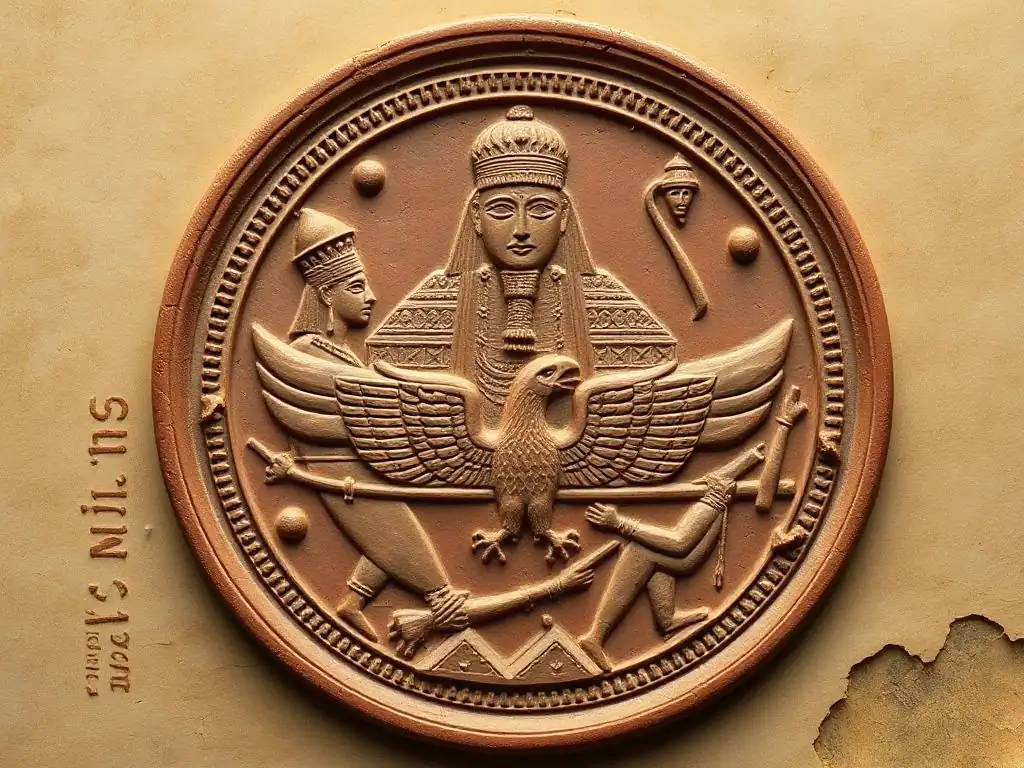
Contrasting Accounts of Babylonian Kings: Nabonidus and Nebuchadnezzar II
Herodotus's account of Babylonian kings, though sometimes vague or slightly inaccurate in naming conventions (e.g., "Labynetus" for Nabonidus), generally aligns with the known historical succession leading up to the Persian conquest. He describes the events surrounding the fall of Babylon, implicitly referencing the final Neo-Babylonian king Nabonidus and his son Belshazzar (though not by name for Belshazzar). His narrative focuses on the strategic cunning of Cyrus the Great in diverting the Euphrates to enter the city, a detail that, while debated by archaeologists, reflects a historical sequence.
In stark contrast, Ctesias's king list for Babylon is largely uncorroborated by archaeological and cuneiform evidence. He omits major historical figures like Nebuchadnezzar II, the empire's greatest builder, and often includes legendary rulers or significantly distorts the reigns of actual historical figures.
His emphasis on figures like Semiramis as the primary builders of Babylon directly contradicts the extensive building inscriptions of Nebuchadnezzar II found throughout the city. This fundamental disagreement in royal succession and attributing major achievements highlights Ctesias's departure from historical accuracy in favor of a more mythologized narrative, making him a less reliable source for factual chronology compared to Herodotus.
Herodotus, known for his ethnographic interests, provides several colorful, albeit controversial, descriptions of Babylonian society and customs. He details the unique "marriage market," where eligible women were auctioned off, with the beautiful ones generating dowries for the less attractive, ensuring all women found husbands.
He also recounts the practice of ritual prostitution at the temple of Aphrodite (Ishtar), where every woman was required to sit in the temple enclosure once in her life and have intercourse with a foreigner. While these accounts are widely debated by modern scholars, often seen as misunderstandings or misrepresentations of complex cultic practices, they offer a rare glimpse into a Greek perception of Babylonian social norms.
Ctesias, on the other hand, provides far fewer details on daily Babylonian life or social structures. His Persica largely focuses on royal intrigues, military campaigns, and grand constructions, with little attention paid to the nuances of Babylonian society, customs, or the lives of ordinary people. This difference reflects their distinct historical methodologies: Herodotus's broader ethnographic curiosity versus Ctesias's more narrowly focused, often sensationalized, chronicle of rulers and their exploits. Archaeological findings, such as house plans and burial practices, can provide some context for social structures, but rarely confirm the specific, controversial customs described by Herodotus.
Assessing the Reliability of Each Historian: Strengths and Weaknesses
When assessing the reliability of Herodotus and Ctesias as sources for Babylonian history, a clear distinction emerges. Herodotus's strengths lie in his investigative approach, his attempts to gather information from various sources (including, arguably, eyewitnesses or travelers to Babylon), and his generally more grounded historical narratives, despite his tendency for exaggeration in numbers. His accounts, while containing inaccuracies, often align with major historical events confirmed by archaeology and cuneiform texts, particularly regarding the fall of Babylon. His weaknesses include reliance on hearsay, potential for cultural bias, and the aforementioned numerical exaggerations, which necessitate critical evaluation.
Ctesias's reliability is significantly lower for factual historical details. His strengths, if any, might be in preserving some Persian court traditions or legendary tales that influenced later perceptions of the Near East. However, his weaknesses are substantial: a clear disregard for chronological accuracy, the invention of legendary figures as historical agents, and significant discrepancies with established historical and archaeological records. His work is more akin to a historical romance than a rigorous historical account, making him a problematic source for Babylon archaeological historians Herodotus would consider a peer in accuracy.
Case Studies: Archaeological Discoveries Validating Greek Historical Texts
Case Study 1: The Etemenanki Ziggurat and Herodotus's Tower Description
Herodotus famously described a colossal "temple of Bel" in Babylon, which he characterized as a massive solid tower with a second tower rising from it, and so on, reaching eight towers in all, with a spiral ascent on the outside. This description strongly aligns with the concept of a Mesopotamian ziggurat, a stepped temple tower. Archaeological excavations at Babylon, particularly those led by Robert Koldewey in the early 20th century, uncovered the massive foundations of the Etemenanki ziggurat, located within the temple complex of Esagila, dedicated to the supreme god Marduk.
The Etemenanki's base measured approximately 91 meters by 91 meters (around 300 feet by 300 feet), a truly monumental scale. While the full height and number of stages are debated due to its destruction, its colossal dimensions and central location in the city correspond remarkably well with Herodotus's account of a towering structure that would have dominated the Babylonian skyline. This discovery provides compelling archaeological validation for Herodotus's general description of Babylon's most prominent religious edifice, reinforcing his value for Babylon archaeological historians Herodotus have identified as a key historical witness.
Case Study 2: Babylonian Irrigation Systems and Ctesias's Account of Agriculture
While Ctesias's specific claims about Queen Semiramis building the Hanging Gardens are not directly substantiated by archaeology, his broader implications about Babylon's agricultural productivity and the necessity of extensive irrigation systems are well-supported by archaeological and textual evidence. Mesopotamia, situated between the Tigris and Euphrates rivers, was known as the "Fertile Crescent" precisely because of its sophisticated water management.
Archaeological surveys and cuneiform texts reveal the existence of a vast network of canals, dykes, and reservoirs that channeled water from the Euphrates for agricultural purposes. These systems allowed for multiple harvests per year, supporting a large population and contributing to Babylon's immense wealth. While Ctesias's attribution of the gardens to a legendary queen is unproven, the underlying reality of Babylon's advanced agricultural infrastructure and its reliance on intricate irrigation aligns with the general impression of a highly developed and productive society, capable of sustaining such magnificent feats as the Hanging Gardens, whether they were in Babylon or not.
Case Study 3: The Cyrus Cylinder and Its Implications for Understanding Babylonian Policy
The Cyrus Cylinder, discovered in 1879 during excavations in Babylon and now a prized possession of the British Museum, is a pivotal archaeological artifact that sheds light on the Persian conquest of Babylon in 539 BCE. This clay cylinder, inscribed in Akkadian cuneiform, details Cyrus the Great's victory over Nabonidus, his entry into Babylon, and his policy of returning deported peoples to their homelands and restoring their cults. It presents Cyrus as a liberator, divinely chosen by Marduk, the chief god of Babylon.
This primary source offers a direct Babylonian perspective on the events, allowing for a critical comparison with the Greek historical texts. While Herodotus mentions Cyrus's conquest and his strategic diversion of the Euphrates, the Cylinder provides a nuanced view of Persian policy, emphasizing peaceful takeover and religious tolerance rather than a violent siege.
Ctesias, on the other hand, largely ignores this crucial historical event or presents a highly distorted version. The Cyrus Cylinder not only confirms the historical reality of the Persian conquest but also enriches our understanding of the political and ideological climate of the time, serving as a powerful tool for Babylon archaeological historians Herodotus and Ctesias are studied alongside.
The Limitations of Greek Historical Sources on Babylon
The Problem of Secondhand Accounts: Distance and Time
A significant limitation of both Herodotus's and Ctesias's accounts of Babylon stems from their temporal and geographical distance from the peak of the Neo-Babylonian Empire. Babylon fell to the Persians in 539 BCE, while Herodotus wrote his Histories in the mid-5th century BCE, and Ctesias served at the Persian court in the late 5th and early 4th centuries BCE. This means neither historian was a direct contemporary of the empire's zenith or its initial conquest by Cyrus. Their information, therefore, would have been derived from secondhand accounts, oral traditions, interpreters, or possibly distorted written sources.
The reliance on such indirect information inevitably introduced inaccuracies, misunderstandings, and embellishments. For instance, the exact dimensions of Babylon's walls might have been exaggerated through retelling over generations, or customs might have been misunderstood due to linguistic and cultural barriers. The challenge for modern Babylon archaeological historians Herodotus and Ctesias analyze is to sift through these layers of interpretation to discern what might be historically accurate versus what is a product of transmission and cultural filter.
The Influence of Greek Cultural Perceptions on Babylonian History
Greek historians, like all chroniclers, were products of their own cultural contexts, and their perceptions undoubtedly influenced their portrayals of Babylon. Greek ethnocentric views could lead to misinterpretations of foreign customs or an emphasis on aspects that resonated with or shocked a Greek audience. For example, Herodotus's descriptions of Babylonian social practices, such as the "marriage market" or ritual prostitution, are often viewed by modern scholars as either exaggerated or a misunderstanding of complex Mesopotamian social and religious practices, filtered through a Greek moral lens.
Furthermore, Greek historical writing often served didactic or entertaining purposes, not merely objective reporting. The desire to tell a compelling story, to illustrate moral lessons, or to highlight the exotic nature of foreign lands could lead to embellishment or selective reporting. Ctesias, in particular, seems to have prioritized dramatic narrative over strict factual accuracy, incorporating legendary figures and fantastical elements that appealed to a Greek audience's taste for epic tales, rather than providing a sober historical account of Babylon archaeological historians Herodotus sought to document.
Acknowledging the Gaps in Our Knowledge: Future Archaeological Research
Despite over a century of intensive archaeological work at Babylon, significant gaps in our knowledge persist, highlighting the limitations not only of ancient Greek sources but also of modern understanding. Large portions of the ancient city remain unexcavated, buried under modern settlements, agricultural land, or simply awaiting future expeditions. Challenges such as political instability in Iraq, the sheer scale of the site, and the destructive impact of various historical periods (including Saddam Hussein's reconstruction efforts) impede comprehensive archaeological exploration.
Acknowledging these gaps is crucial. New discoveries could still emerge that either corroborate previously unverified claims from Greek historians or fundamentally challenge existing interpretations. For instance, a definitive discovery of the Hanging Gardens or further insights into specific social structures could reshape our understanding of classical accounts. The ongoing process of excavation, survey, and re-evaluation of existing data means that the story of Babylon, and how it aligns with the narratives of Babylon archaeological historians Herodotus and Ctesias, is still being written.
Conclusion: Integrating Greek Historical Narratives with Archaeological Data for a Comprehensive Understanding of Babylon
The Importance of Interdisciplinary Approaches to Babylonian History
A comprehensive understanding of Babylon, one of the most influential cities of the ancient world, necessitates an interdisciplinary approach that critically integrates ancient Greek historical narratives with archaeological findings and indigenous cuneiform texts. Relying solely on Herodotus or Ctesias would provide a fragmented and often distorted picture, prone to exaggeration and cultural bias. Similarly, archaeology alone, while providing tangible evidence, cannot fully interpret the political, social, and cultural nuances without textual context.
By juxtaposing the accounts of Babylon archaeological historians Herodotus and Ctesias with the material culture uncovered through excavation and the primary source data from cuneiform tablets, scholars can construct a more nuanced and accurate historical narrative. This allows for the verification of monumental structures like the Ishtar Gate and Etemenanki, the critical evaluation of legendary tales like the Hanging Gardens, and a deeper understanding of events like the Persian conquest through multiple perspectives. This integrated methodology is essential for moving beyond simplistic narratives to a rich, multifaceted understanding of ancient Babylon.
Future Directions in Babylonian Archaeological Research and Historical Interpretation
The study of Babylon remains a dynamic field, with significant potential for future archaeological research and evolving historical interpretations. Ongoing efforts to preserve and study the site of Babylon, despite significant challenges, promise new insights. Advances in remote sensing technologies, such as satellite imagery and geophysical surveys, can help identify unexcavated areas and inform future digs without destructive excavation. Furthermore, the continued decipherment and analysis of cuneiform tablets, many of which still await full publication and study, will undoubtedly shed more light on aspects of Babylonian life, religion, and politics that remain obscure.
Future research will continue to refine our understanding of how Greek accounts align with or diverge from the archaeological record, fostering a more precise evaluation of their historical value. The interplay between textual analysis and material evidence will continue to be a cornerstone for Babylon archaeological historians Herodotus and Ctesias study, ensuring that our understanding of this magnificent ancient city evolves with each new discovery.
The British Museum: Continuing to Uncover the Mysteries of Ancient Babylon
The British Museum plays an indispensable role in the ongoing endeavor to uncover the mysteries of ancient Babylon. As a major repository of Babylonian artifacts, including monumental sculptures, intricate reliefs, and thousands of cuneiform tablets, it serves as a global hub for research, conservation, and public engagement with Mesopotamian history. The Museum's collections provide the tangible links that allow scholars and the public to connect the literary descriptions of Greek historians with the physical reality of ancient Babylon.
Through its extensive exhibitions, research initiatives, and collaborative projects with institutions worldwide, the British Museum continues to facilitate the critical examination of how ancient narratives, particularly those from Babylon archaeological historians Herodotus and Ctesias, are corroborated, challenged, or illuminated by the archaeological record. It stands as a testament to the enduring power of ancient history and the vital role of archaeological institutions in preserving and interpreting the human past.
Frequently Asked Questions
How reliable are the accounts of Babylon provided by Herodotus, considering the limited means of travel and communication in his time?
Herodotus' accounts of Babylon are considered valuable but require careful evaluation. While he offers rich detail, archaeological evidence suggests some embellishment. Historians use corroborating evidence to assess his reliability.
What specific archaeological findings support or challenge the descriptions of Babylonian architecture and urban planning offered by Greek historians like Herodotus and Ctesias?
Archaeological excavations have confirmed the existence of monumental structures described by Greek historians, such as the Ishtar Gate and Hanging Gardens. However, the exact scale and layout of some features remain subjects of debate and further archaeological investigation.
To what extent do inscriptions and cuneiform tablets discovered in Babylon corroborate or contradict the historical narratives presented by Herodotus and Ctesias?
Cuneiform tablets provide primary source data from the Babylonian perspective, offering insights into their culture, politics, and daily life. Comparing these with Greek accounts helps to identify biases and improve historical accuracy.
What were some of the significant differences in perspective between the Greek historians and the Babylonians themselves when it came to documenting their history and culture?
Greek historians often viewed Babylonian culture through a Hellenic lens, potentially leading to misinterpretations or oversimplifications. Babylonian records focus on royal achievements and religious practices, offering a different narrative.
How has modern archaeology changed our understanding of Babylon compared to the descriptions provided by ancient Greek historians like Herodotus?
Modern archaeology provides tangible evidence through excavation and analysis, allowing for a more nuanced understanding of Babylonian society. It supplements and sometimes corrects the accounts of Greek historians, who relied on hearsay and limited observation.
Final Reflection: Echoes of Babylon's Enduring Legacy
The exploration of Babylon through the lenses of Greek historians, particularly Herodotus and Ctesias, gains profound relevance today as we grapple with the complexities of interpreting historical narratives alongside tangible archaeological evidence. The discrepancies and corroborations we've uncovered highlight the enduring challenge of piecing together the past, reminding us that historical truth is often a mosaic, constructed from fragmented accounts and unearthed artifacts. This ongoing process of re-evaluation is crucial for understanding not only ancient civilizations but also the very nature of historical inquiry itself.
The allure of Babylon, a city shrouded in myth and grandeur, continues to captivate our imaginations. The persistent fascination with this ancient metropolis underscores the enduring power of human ambition, innovation, and, ultimately, the ephemeral nature of even the most formidable empires. The archaeological record, while providing invaluable insights, also reminds us of the limitations of our knowledge. History is a relentless master. It has no present, only the past rushing into the future. To try to hold it back, to slow it down, is to be torn apart.
- John F. Kennedy. This quote encapsulates the urgency and importance of understanding the past, even when the picture is incomplete.
As we conclude this journey through the writings of Greek historians and the discoveries of modern archaeology, I invite you to consider the lessons Babylon imparts. What can we learn from the rise and fall of this magnificent city? How can we apply the critical thinking skills we've employed in analyzing historical accounts to our own understanding of the world? Let the echoes of Babylon resonate within you, inspiring a deeper appreciation for the complexities of history and a commitment to seeking truth with both skepticism and open-mindedness.
Unearth Babylon's Secrets: Start Your Exploration Now!
Thank you for delving into the fascinating world of Babylon and its historians! We hope you’ve gained a deeper appreciation for the interplay between ancient texts and modern archaeological discoveries. Ready to continue your journey?
Here are a few paths you can take to further explore the wonders of Babylon:
- Visit a museum: Find a museum near you with a Mesopotamian collection and witness the artifacts firsthand, allowing the tangible history to solidify your understanding.
- Join our community: Share this article on your favorite social media platforms to spark conversations about the captivating history of Babylon. Use the hashtag #BabylonUncovered.
- Research a less famous historian: Explore the writings of Berossus, a Babylonian priest and writer, and see how his account compares with those of the Greek historians.
What aspect of Babylon's history intrigues you the most, and what will you explore next?