
The Mandate of Heaven: Its Role in Shaping Chinese Political Culture


Welcome to ArchaeologyHub.org, your gateway to the past!
Ever wondered how ancient beliefs shaped the course of empires? Delve into our comprehensive exploration of civilizations and cultures, beginning with a fascinating look at "The Mandate of Heaven: Its Role in Shaping Chinese Political Culture." Uncover the intricate connection between divine legitimacy and dynastic power in China, and prepare to be captivated by the profound impact this concept had on history. This is just the beginning – explore our vast archive of archaeological discoveries, excavation techniques, and historical sites to further unlock the secrets of the past!
- Introduction to the Mandate of Heaven and its Influence on Chinese Political Thought
- Origins and Development of the Mandate of Heaven in Ancient China
- Key Principles and Characteristics of the Mandate of Heaven
- The Mandate of Heaven and its Impact on Chinese Dynastic Cycles
- The Mandate of Heaven and its Influence on Chinese Emperors and Governance
- The Mandate of Heaven and Rebellions Throughout Chinese History
- The Mandate of Heaven in Archaeological Evidence and Historical Texts
- The Mandate of Heaven: A Legacy in Modern Chinese Political Culture
- Conclusion: The Significance of the Mandate of Heaven in Shaping Chinese Political Culture and History
- Frequently Asked Questions
- Final Reflection: Echoes of the Mandate in Modern China
- Uncover the Secrets of Dynastic Power!
Introduction to the Mandate of Heaven and its Influence on Chinese Political Thought
Understanding the Historical Context of the Mandate of Heaven
The Mandate of Heaven (Tianming) emerged as a foundational concept in ancient Chinese political thought during a period of profound transition and upheaval, specifically with the rise of the Zhou Dynasty (c. 1046–256 BCE). This doctrine provided a powerful justification for the Zhou's overthrow of the preceding Shang Dynasty, shifting the basis of legitimate rule from purely hereditary or divine lineage to a moral and performance-based system. It served as a critical departure, introducing a mechanism for dynastic change that was both religiously sanctioned and ideologically coherent.
This concept profoundly shaped the unique characteristics of Chinese political culture for over two millennia. It established that a ruler's right to govern was not absolute but contingent upon their virtuous conduct, their ability to maintain societal harmony, and their commitment to the welfare of their people. This conditional nature of power became a defining feature, influencing how emperors ruled and how their subjects perceived their authority.
The Mandate of Heaven as a Core Tenet of Chinese Political Legitimacy
More than just a religious belief, the Mandate of Heaven developed into a sophisticated political doctrine that underpinned imperial authority. It posited that Heaven, an impersonal cosmic force, bestowed the right to rule upon a virtuous individual or dynasty. This divine approval was considered the ultimate source of imperial legitimacy within Chinese political culture, granting the emperor immense power and prestige.
Crucially, the Mandate also provided a rationale for rebellion and dynastic succession. If a ruler became tyrannical, corrupt, or incompetent, leading to widespread suffering, natural disasters, or chaos, it was believed that Heaven had withdrawn its mandate. This withdrawal justified the rise of a new, virtuous leader who could claim the Mandate and establish a new dynasty, thereby legitimizing the cyclical pattern of power transitions in Chinese history.
Origins and Development of the Mandate of Heaven in Ancient China
The Zhou Dynasty and the Justification of Power through the Mandate of Heaven
The concept of the Mandate of Heaven was first articulated by the Zhou Dynasty to justify their conquest of the Shang Dynasty around 1046 BCE. The Shang rulers had claimed their authority through their connection to ancestral spirits and the supreme deity Di. To legitimize their usurpation, the Zhou, particularly figures like the Duke of Zhou, propagated the idea that the Shang's final king, Di Xin, had become a depraved and oppressive ruler, thereby losing Heaven's favor.
This narrative, meticulously crafted and disseminated through texts like the Shujing (Book of Documents), asserted that Heaven's will was not arbitrary but based on the ruler's virtue ( de). The Zhou claimed that because the Shang had forfeited their moral right to rule through wickedness, Heaven had transferred its Mandate to the virtuous Zhou house. This revolutionary idea fundamentally transformed the basis of legitimacy in Chinese political culture from a static claim of bloodline to a dynamic one of moral governance.
From Divine Right to a System of Moral Governance: Evolution of the Concept
Unlike Western concepts of divine right, which often implied an unconditional grant of power, the Mandate of Heaven emphasized the conditional nature of divine approval. A ruler was not divinely appointed unconditionally; their reign was contingent on their performance and moral uprightness. This inherent accountability distinguished the Mandate of Heaven and fostered a unique sense of responsibility in Chinese rulers.
Over centuries, especially with the rise of Confucianism during and after the Han Dynasty, the Mandate of Heaven became deeply intertwined with ideals of benevolent rule, social harmony, and the welfare of the common people. This evolution solidified its role in shaping Chinese political culture, transforming it from a mere justification for conquest into a comprehensive framework that demanded ethical leadership and service to the populace.
Key Principles and Characteristics of the Mandate of Heaven
Defining the "Tianming": Divine Approval and the Ruler's Virtue
The "Tianming" or Heaven's Mandate was not a static, inherited right but a dynamic approval bestowed upon a ruler based on their virtue ( de). This virtue encompassed a ruler's moral character, their ability to govern justly, and their unwavering commitment to the welfare of their people. If these qualities waned, particularly through tyranny or negligence, it was believed that Heaven's favor would diminish, signaling a potential withdrawal of the Mandate.
Heaven itself was conceived as an impersonal, cosmic force, distinct from a personal deity. It manifested its will through natural phenomena and the overall state of society. A prosperous, harmonious, and stable society was interpreted as clear evidence of Heaven's approval, while widespread suffering, chaos, or natural calamities were seen as direct indicators of its displeasure, directly impacting the perceived legitimacy of the existing Chinese political culture.
The belief system surrounding the Mandate of Heaven clearly defined the signs indicating Heaven's withdrawal of its favor from a ruling dynasty. These often included severe natural disasters such as prolonged droughts, devastating floods (like the frequent and destructive inundations of the Yellow River), widespread famines (for example, the Great Famine of 1333-1337 during the late Yuan Dynasty which reportedly caused millions of deaths), and significant earthquakes.
Beyond ecological calamities, widespread social unrest, banditry, and rampant corruption within the government were also interpreted as clear evidence of a lost mandate. The numerous peasant uprisings that plagued the late Han Dynasty, culminating in the massive Yellow Turban Rebellion of 184 CE, were widely perceived as undeniable proof that the Han emperor had failed to maintain Heaven's favor, thus undermining the very foundation of Chinese political culture.
The Cyclical Nature of Dynasties and the Mandate's Transfer
The Mandate of Heaven served as the ideological bedrock for the cyclical pattern of Chinese dynastic history. A new dynasty would rise, claiming to have received the Mandate by successfully overthrowing a corrupt or incompetent predecessor. This new regime would typically usher in a period of peace, prosperity, and effective governance, often remembered as a "golden age" of stability and progress.
However, over generations, the ruling dynasty might become decadent, oppressive, or ineffective, leading to a decline in its moral standing. This decline would manifest in the aforementioned indicators of a lost mandate – natural disasters, social unrest, and corruption – eventually leading to widespread rebellion and the emergence of a new claimant. This new leader, by establishing a new dynasty, would then perpetuate the cycle, reinforcing the Mandate's role in shaping Chinese political culture.
The Mandate of Heaven and its Impact on Chinese Dynastic Cycles
How the Mandate of Heaven Shaped the Rise and Fall of Chinese Dynasties
The Mandate of Heaven provided both the ultimate justification for a new dynasty's ascent to power and the compelling rationale for the collapse of an old one. It offered a coherent, widely accepted narrative for why a dynasty, once seemingly all-powerful, could lose its authority and be replaced. This made it a central explanatory principle in understanding the ebb and flow of Chinese historical power dynamics.
This framework instilled a crucial degree of accountability in rulers. While emperors wielded absolute power, they were theoretically bound by the expectation of virtuous governance. The pervasive fear of losing the Mandate, evidenced by social unrest, widespread suffering, or natural calamities, served as a powerful motivator for rulers to maintain stability, prosperity, and moral integrity within their Chinese political culture.
Examples of Dynastic Transitions Justified by the Loss of the Mandate
Across Chinese history, countless dynastic transitions were framed and justified through the lens of the Mandate of Heaven. Beyond the foundational Zhou-Shang transition, the concept was invoked repeatedly: the Han Dynasty's rise after the short-lived and brutal Qin Dynasty, the Tang's establishment following the Sui Dynasty's collapse, and the Ming's overthrow of the Yuan Dynasty are just a few prominent examples. Each new regime meticulously presented itself as the virtuous successor, chosen by Heaven to rectify the failings of its predecessor.
This consistent application of the Mandate of Heaven for over two millennia demonstrates its profound embedding in Chinese historical consciousness. Even when a new dynasty was established primarily through military conquest, its legitimacy was invariably articulated within the narrative of the previous dynasty's moral failings and subsequent loss of Heaven's favor, solidifying its central place in Chinese political culture.
The Fall of the Shang Dynasty: Tyranny and Justification for Zhou Conquest
The narrative surrounding the fall of the Shang Dynasty provides the archetypal example of the Mandate of Heaven in action. The Zhou portrayed the last Shang king, Di Xin, as a tyrannical and depraved ruler who neglected his duties to the people and indulged in excessive pleasure. Accounts in the Book of Documents describe his cruelty, including the invention of the "Roasting Pillar" torture and his reliance on corrupt officials, leading to widespread suffering and discontent.
The Zhou, under the leadership of King Wu, launched their conquest, famously culminating in the Battle of Muye around 1046 BCE. The Zhou declared that Heaven had withdrawn its Mandate from the Shang due to Di Xin's wickedness and bestowed it upon the virtuous Zhou house. This compelling narrative not only justified the Zhou's victory but also established the enduring ideological blueprint for legitimate dynastic change in Chinese political culture.
The Rise of the Ming Dynasty: Overthrow of the Yuan and Restoration of Han Rule
The transition from the Mongol-led Yuan Dynasty to the native Han Chinese Ming Dynasty in the mid-14th century offers another compelling example of the Mandate of Heaven at work. By this period, the Yuan Dynasty was plagued by severe corruption, rampant inflation (due to excessive issuance of paper currency), and devastating natural disasters, including a series of catastrophic Yellow River floods in the 1340s. These afflictions were widely interpreted as clear signs of a lost Mandate.
Numerous peasant rebellions erupted across the empire, most notably the Red Turban Rebellions. Zhu Yuanzhang, a former peasant and Buddhist monk, emerged as a leading figure among the rebels, unifying various factions. In 1368, he successfully overthrew the Yuan, established the Ming Dynasty, and proclaimed that Heaven had withdrawn its Mandate from the alien Yuan and granted it to him, thereby restoring Han Chinese rule and ushering in a new era in Chinese political culture.
The Mandate of Heaven and its Influence on Chinese Emperors and Governance
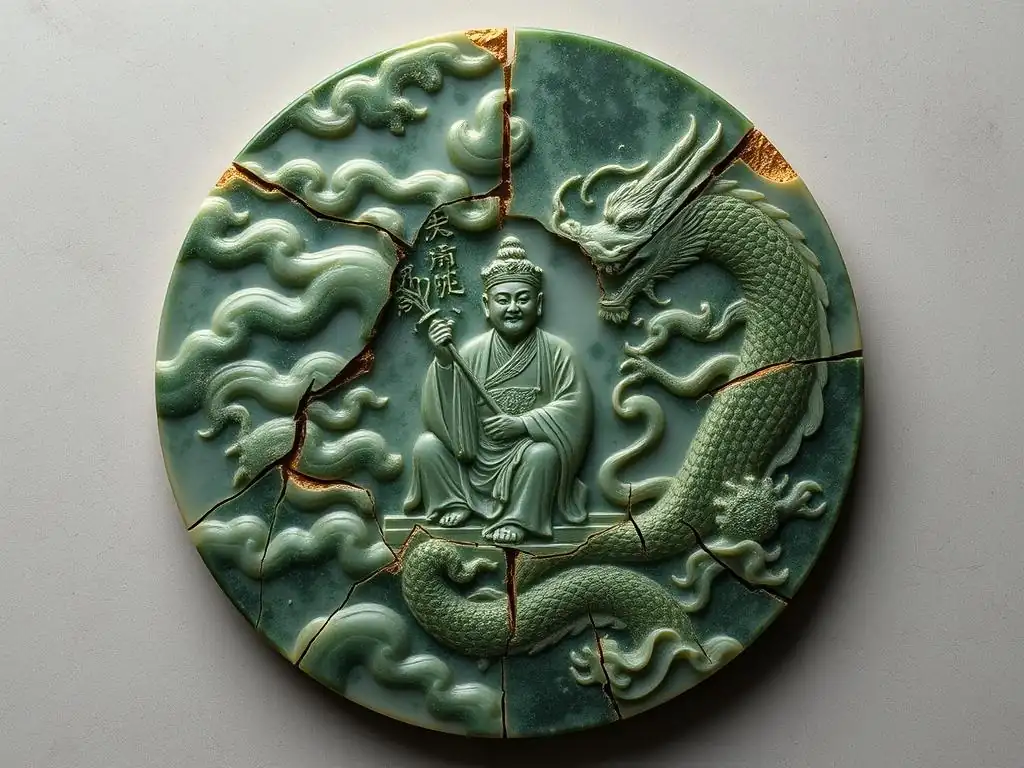
The Emperor's Responsibilities Under the Mandate of Heaven
Under the Mandate of Heaven, the emperor, often referred to as the "Son of Heaven," bore immense responsibilities. He was seen as the crucial link between the celestial realm and the earthly one, and his primary duty was to ensure the well-being of his people, maintain social order, and govern with unwavering benevolence and wisdom. Failure to uphold these responsibilities, resulting in chaos or suffering, could lead to the ultimate penalty: the loss of the Mandate.
This implied a continuous active role in governance. Emperors were expected to diligently promote agriculture, manage vital infrastructure projects like canals and granaries, administer justice fairly, and ensure a stable economy. The emperor's personal conduct and moral example were also considered paramount, as they directly reflected on the dynasty's overall virtue and its continuing right to govern the Chinese political culture.
Maintaining Harmony and Order: The Emperor as a Mediator Between Heaven and Earth
The emperor's role extended beyond mere temporal governance to include significant ceremonial and spiritual duties. He performed elaborate rituals and sacrifices to Heaven, most famously at the Temple of Heaven in Beijing, to ensure favorable harvests, prevent natural calamities, and maintain cosmic harmony. These rituals were not merely symbolic but were believed to be essential for preserving the delicate balance between the human and natural worlds.
The belief in the emperor as a direct mediator reinforced the idea that his governance had profound cosmic implications. A well-ordered, prosperous society, free from widespread chaos and natural calamities, was considered tangible proof of his successful mediation and continued divine approval. This sacred duty further strengthened his authority and legitimacy within Chinese political culture.
The Role of Confucianism in Reinforcing the Mandate of Heaven
The relationship between the Mandate of Heaven and Confucianism, particularly from the Han Dynasty onwards, was deeply symbiotic. Confucian principles such as ren (benevolence), li (propriety), and yi (righteousness) provided the essential ethical framework for the virtuous ruler envisioned by the Mandate. The Confucian emphasis on filial piety, loyalty to authority, and the importance of a moral example from the top also significantly bolstered dynastic rule.
Confucian scholars, who often served as imperial advisors and bureaucrats, played a crucial role in interpreting and upholding the Mandate. They educated future emperors on their moral duties, drafted policies aligned with Confucian ideals, and provided the intellectual justification for dynastic changes, ensuring that the Mandate of Heaven remained a central pillar of Chinese political culture and imperial governance.
The Mandate of Heaven and Rebellions Throughout Chinese History
Uprisings and Revolts Justified by the Claim of a Lost Mandate
While the Mandate of Heaven legitimized imperial rule, it also paradoxically provided a powerful ideological tool for rebellion. When a dynasty was widely perceived to have lost the Mandate, often evidenced by widespread suffering, pervasive corruption, or governmental incompetence, it legitimized popular uprisings as Heaven's instrument for change. This concept transformed acts of rebellion into righteous acts of cosmic rectification.
Leaders of these rebellions frequently invoked the Mandate of Heaven, presenting themselves as agents of Heaven's will, destined to overthrow the corrupt regime and establish a new, virtuous one. This narrative proved incredibly effective in galvanizing widespread support among the populace, who saw these uprisings not as treason but as legitimate and necessary acts within the framework of Chinese political culture.
The Taiping Rebellion: A Challenge to Qing Dynasty Legitimacy
The Taiping Rebellion (1850-1864), one of the bloodiest conflicts in human history, represents a stark challenge to the Qing Dynasty's Mandate. Led by Hong Xiuquan, who claimed to be the younger brother of Jesus Christ and to have received a new Mandate from God (interpreted as Heaven), the rebellion was fueled by widespread dissatisfaction with Qing rule, exacerbated by devastating natural disasters, economic hardship, and the humiliation of the Opium Wars.
The Taiping movement, with its blend of Christian ideology and traditional Chinese millenarianism, explicitly declared that the Qing emperors had lost the Mandate due to their corruption and their failure to protect the people. The rebellion's immense devastation, resulting in an estimated 20-30 million deaths, profoundly shook the foundations of Qing rule and demonstrated the enduring power of the Mandate of Heaven concept in shaping challenges to Chinese political culture.
The Yellow Turban Rebellion: A Han Dynasty Uprising Fueled by Famine and Corruption
The Yellow Turban Rebellion (184 CE) during the late Eastern Han Dynasty stands as another monumental peasant uprising directly challenging imperial legitimacy. This massive revolt was a direct response to widespread famine, devastating floods (such as the Yellow River flood of 170 CE), and the perceived corruption and weakness of the imperial court. The rebels, led by Zhang Jiao, wore distinctive yellow turbans, symbolizing earth and a new age, and promised a "Great Peace" (Taiping).
The rebellion's potent slogan, "The Blue Heaven is dead; the Yellow Heaven will soon rise," explicitly invoked the idea of a dynastic change, signaling the Han's loss of the Mandate of Heaven. Although eventually suppressed after years of brutal fighting, the Yellow Turban Rebellion severely weakened the Han central government, contributing significantly to its eventual fragmentation and collapse, illustrating how the concept played a pivotal role in the erosion of Chinese political culture.
The Mandate of Heaven in Archaeological Evidence and Historical Texts
Archaeological Findings Supporting the Concept of Divine Legitimacy in Early China
While direct archaeological proof of "Heaven's Mandate" as an abstract concept is inherently difficult, numerous findings support the elaborate rituals and beliefs surrounding divine legitimacy in early Chinese states. For instance, the vast bronze ritual vessels discovered at Shang and Zhou sites, such as the monumental Houmuwu Ding (the largest ancient bronze vessel, found at Anyang, a Shang capital), were used in elaborate ancestral worship and sacrifices to deities, underscoring the deep connection between rulers and the divine realm.
The meticulous planning and construction of royal tombs and ceremonial sites, like the early Zhou capital of Feng-Hao, further suggest a profound belief in the ruler's cosmic role and connection to higher powers. The presence of oracle bones from the Shang Dynasty, used for divination by kings to communicate with ancestors and deities, provides tangible evidence of the early roots of divine legitimation practices that paved the way for the more formalized Mandate of Heaven in Chinese political culture.
Examining Primary Sources: Records of Natural Disasters and Political Upheaval
Historical texts from ancient China frequently record natural disasters and periods of social unrest, often explicitly linking them to the ruler's virtue or lack thereof. For example, the Annals of Bamboo Books, a chronicle of ancient China, details various celestial phenomena and natural calamities alongside accounts of dynastic changes. These records were not merely objective observations but were imbued with profound political significance, interpreted as Heaven's judgments.
The comprehensive official dynastic histories, compiled by subsequent dynasties (such as the monumental Records of the Grand Historian by Sima Qian), meticulously documented periods of famine, floods, and rebellions. These events were invariably framed as indicators of the preceding dynasty's decline and ultimate loss of the Mandate. This consistent narrative across diverse primary sources highlights the concept's pervasive influence on the recording and interpretation of Chinese political culture and history.
Interpreting Ancient Texts: The "Book of Documents" and its Depiction of the Mandate
The Shujing (Book of Documents or Classic of History) stands as arguably the most crucial ancient text for understanding the foundational articulation of the Mandate of Heaven. It contains speeches and pronouncements attributed to early Zhou kings, particularly King Wu and his brother the Duke of Zhou, where they explicitly articulate the concept as a justification for their overthrow of the Shang Dynasty. Key sections like the "Announcement to Kang" and "The Great Announcement" are prime examples of this ideological framing.
These texts not only detail the Shang's alleged moral failings and wickedness but also establish the fundamental criteria for virtuous rule: reverence for Heaven, diligent care for the people, and strict adherence to moral principles. The Shujing thus served as a foundational document, shaping the discourse around legitimate governance and the conditional nature of power within Chinese political culture for over two millennia.
The Mandate of Heaven: A Legacy in Modern Chinese Political Culture
The Enduring Influence of the Mandate of Heaven on Chinese Political Values
While the explicit concept of an emperor receiving a divine mandate is no longer literal in modern China, its underlying principles continue to resonate deeply within contemporary Chinese political culture. The idea that a government's legitimacy is intrinsically tied to its ability to deliver stability, prosperity, and order for its people remains a powerful, albeit often implicit, expectation.
The emphasis on collective harmony, social stability, and the welfare of the populace as key indicators of successful governance can be directly traced back to the Mandate's core tenets. The deeply ingrained expectation that leaders should be morally upright, capable, and committed to ensuring the nation's well-being is a subtle but persistent legacy of the Mandate of Heaven, shaping public perceptions of authority.
Modern Interpretations: The Communist Party's Claim to Legitimacy Through Economic Development
The Communist Party of China (CPC) does not explicitly invoke the Mandate of Heaven, yet its claim to legitimacy shares significant conceptual parallels. After the tumultuous 20th century, the CPC gained and has maintained power largely by promising and delivering unprecedented stability and rapid economic prosperity, lifting hundreds of millions out of poverty (e.g., over 800 million people since 1978, according to World Bank data). This "performance legitimacy" strongly echoes the Mandate's emphasis on tangible results for the people.
When faced with national challenges, such as the SARS epidemic in 2003 or the more recent COVID-19 pandemic, the Party's ability to effectively control crises and maintain social order becomes paramount for its perceived legitimacy. Conversely, instances of widespread corruption or significant social unrest are often viewed by the populace as challenges to the Party's "mandate" to govern, reflecting a modern, secularized reinterpretation of the ancient principle within Chinese political culture.
The Concept of "Good Governance" as a Modern Reflection of the Mandate
The modern concept of "good governance" in China, encompassing elements like effective administration, vigorous anti-corruption efforts, and responsiveness to public needs, can be seen as a secularized, contemporary reflection of the Mandate of Heaven's core principles. The government's continuous efforts to improve living standards, combat environmental pollution, and ensure social equity are implicitly aimed at demonstrating its continued fitness to rule and its commitment to the people's welfare.
Public opinion, though not expressed through democratic elections, still serves as a crucial barometer of the government's performance. Significant public dissatisfaction, if widespread and sustained, can pose a tangible threat to the Party's legitimacy, much like widespread unrest signaled a lost Mandate in imperial times. This ongoing pursuit of "good governance" underscores the deep-seated historical expectations within Chinese political culture regarding its rulers.
Conclusion: The Significance of the Mandate of Heaven in Shaping Chinese Political Culture and History
The Mandate of Heaven as a Unique Contribution to Political Thought
The Mandate of Heaven stands as a profoundly original and enduring contribution to political philosophy, distinct from Western notions of divine right or social contract theory. It provided a flexible yet powerful framework for understanding political power, its acquisition, and its loss, grounding legitimacy firmly in moral conduct and demonstrable performance rather than pure heredity or brute force.
Its emphasis on the ruler's virtue and accountability to a higher cosmic order, manifested through the welfare and harmony of the people, fostered a truly unique dynamic in Chinese political culture. This concept allowed for both remarkable stability through an accepted mechanism of dynastic succession and justified rebellion against tyrannical rule, shaping the very fabric of Chinese history for millennia.
The Lasting Impact on Conceptions of Rulership and Legitimacy in China
The Mandate of Heaven's pervasive and long-lasting influence cannot be overstated. For over two millennia, it served as the paramount ideological foundation for virtually every major Chinese dynasty, dictating the terms of their ascent, their governance, and their eventual decline. It provided a coherent and widely accepted narrative that legitimized political authority and explained its often dramatic shifts.
Even in the post-imperial era, the fundamental principles embedded within the Mandate—the expectation of a government that ensures stability, prosperity, and social harmony—continue to inform the underlying expectations of legitimacy in Chinese political culture. The Mandate of Heaven, therefore, remains an indispensable lens through which to understand China's historical trajectory and its contemporary political dynamics.
Frequently Asked Questions
What is the Mandate of Heaven?
The Mandate of Heaven is a Chinese political and religious doctrine used to justify the rule of the emperor. It held that rulers were granted the right to rule by divine authority, but only as long as they ruled justly and effectively. Loss of the Mandate resulted in upheaval and a new dynasty.
How did the Mandate of Heaven shape Chinese political culture?
The Mandate of Heaven deeply influenced Chinese political culture by establishing a framework for legitimate authority and dynastic cycles. It emphasized the emperor's responsibility to govern with benevolence and justice, fostering a culture of accountability and moral governance.
What signs would indicate a ruler had lost the Mandate of Heaven?
Signs of a ruler losing the Mandate of Heaven included natural disasters like famines and floods, peasant rebellions, and military defeats. These were interpreted as evidence of the emperor's moral failings and loss of divine favor.
How did the Mandate of Heaven influence the rise and fall of dynasties?
The Mandate of Heaven provided a justification for both the establishment and overthrow of dynasties. Successful rebellions were seen as proof that the previous dynasty had lost the Mandate, allowing the new dynasty to claim legitimate rule.
Is the Mandate of Heaven still relevant in modern China?
While the concept of a divine mandate no longer holds sway, the idea of rulers being accountable to the people has lingering effects. The Chinese Communist Party emphasizes economic prosperity and social stability as justification for its continued rule, echoing the core principles of the Mandate of Heaven.
Final Reflection: Echoes of the Mandate in Modern China
The concept of the Mandate of Heaven, though ancient, isn't merely a historical relic; it continues to resonate within contemporary Chinese political discourse and societal expectations. The enduring belief that rulers must maintain legitimacy through just governance and societal well-being, a core tenet of the Mandate, subtly shapes perceptions of leadership and accountability even today.
This historical framework profoundly influences how Chinese citizens view their government, fostering a deep-seated expectation of competent and benevolent rule. The enduring power of this concept highlights the intricate link between China's past and its present, reminding us that history is not simply a collection of dates and events, but a living force that shapes our understanding of the world. A leader is best when people barely know he exists, when his work is done, his aim fulfilled, they will say: we did it ourselves.
- Lao Tzu, reflecting the ideal of a ruler who governs with wisdom and allows the people to flourish.
As we conclude this exploration of the Mandate of Heaven, let us consider its implications for our own understanding of leadership and governance. Reflect on the principles of accountability, justice, and societal well-being that underpinned this ancient concept. How can we, in our own lives and communities, strive to create a world where leadership is truly earned through service and dedication to the common good, ensuring that the "Mandate" is always held by those who deserve it?
Uncover the Secrets of Dynastic Power!
Thank you for exploring the fascinating world of the Mandate of Heaven and its profound influence on Chinese political thought. Now that you understand its significance, take your exploration further!
- Delve deeper by researching specific dynasties and how their rulers either upheld or lost the Mandate of Heaven – focus on examples like the Tang Dynasty's decline or the rise of the Ming!
- Share this article with friends or colleagues interested in history, political science, or archaeology to spark a conversation about the nature of legitimacy in leadership.
- Visit a local museum or cultural center to view artifacts from dynasties influenced by the Mandate of Heaven, connecting with history in a tangible way.
What aspects of the Mandate of Heaven do you think are most relevant to modern political systems, and why?