
Greek BlackFigure and RedFigure Vase Painting: A Technological Study

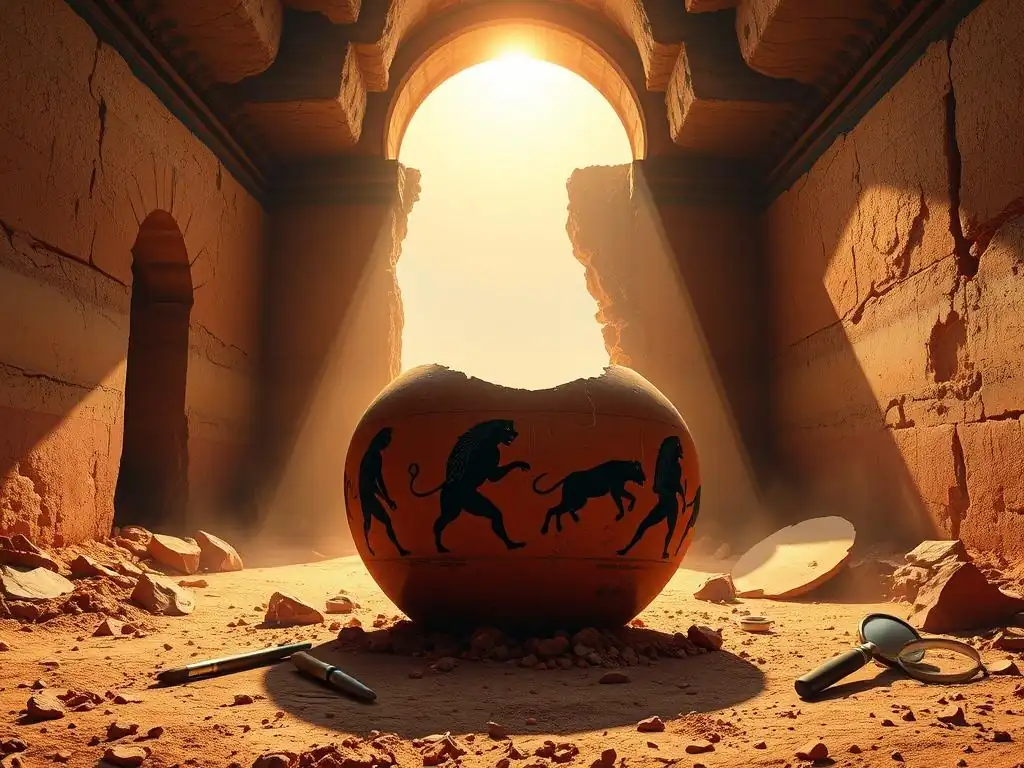
Welcome to ArchaeologyHub.org, your gateway to unraveling the mysteries of the past. Delve into the fascinating world of ancient craftsmanship, starting with our exploration of Ancient Greek vase painting techniques. How did artisans achieve such intricate detail and lasting beauty? Prepare to be amazed as we uncover the secrets behind these iconic works of art and reveal the technological innovations that shaped them. Continue reading to embark on a journey through time and discover the artistry of the ancient Greeks...
- Introduction: Unveiling Ancient Greek Vase Painting Techniques
- The Black-Figure Technique: A Detailed Examination
- The Red-Figure Technique: Innovation and Refinement
- Comparative Analysis: Black-Figure vs. Red-Figure Techniques
- Materials and Tools Used in Ancient Greek Vase Painting
- Case Studies: Examining Specific Vases and Workshops
- The Legacy of Ancient Greek Vase Painting Techniques
- Conclusion: The Technological Marvel of Ancient Greek Vase Painting
-
Frequently Asked Questions
- What are the two primary styles of Ancient Greek vase painting discussed on ArchaeologyHub.org?
- How does ArchaeologyHub.org describe the Black-Figure technique in "Greek BlackFigure and RedFigure Vase Painting: A Technological Study"?
- What role does the firing process play in achieving the final colors of Ancient Greek vases, according to ArchaeologyHub.org?
- According to ArchaeologyHub.org, what are some key differences in the level of detail achievable with Black-Figure versus Red-Figure techniques?
- How does ArchaeologyHub.org categorize the information about Ancient Greek vase painting within its broader organizational structure?
- Final Reflection: Enduring Artistry in Clay
- Unearth Your Inner Archaeologist!
Introduction: Unveiling Ancient Greek Vase Painting Techniques
The Significance of Vase Painting in Ancient Greece
Ancient Greek vase painting represents far more than mere decorative art; it served as a vital medium for storytelling, social commentary, and a tangible link to daily life, rituals, and mythology. Thousands of surviving vases, ranging from monumental kraters to delicate lekythoi, offer an unparalleled window into the Hellenic world from roughly the 8th to the 3rd century BC.
These vessels were not only utilitarian objects for storage, drinking, and pouring but also significant grave markers, dedicatory offerings in sanctuaries, and valuable trade goods exchanged across the Mediterranean. The sheer volume of recovered fragments and intact pieces, estimated to be in the hundreds of thousands from Attic workshops alone, underscores their pervasive presence and cultural importance.
Beyond their narrative and functional roles, these artifacts stand as a testament to the remarkable technological prowess of ancient Greek artisans. The sophisticated understanding of clay properties, slip composition, and atmospheric kiln control required to produce the iconic black and red finishes demonstrates an advanced level of ceramic engineering for the era. The evolution of ancient Greek vase painting techniques, particularly the shift from Black-Figure to Red-Figure, reflects a continuous drive for innovation and artistic expression, pushing the boundaries of what was achievable with available materials and tools.
Scope of this Technological Study: Black-Figure and Red-Figure
This technological study focuses specifically on two dominant and chronologically successive styles of Attic vase painting: Black-Figure and Red-Figure. The Black-Figure style, prevalent from roughly 620 BC to 480 BC, is characterized by silhouetted figures painted in black slip on the natural reddish-orange clay ground, with details incised through the black and sometimes augmented with added white or purple pigments. Its origins lie in Corinthian pottery, but it reached its zenith in Athens, defining the look of Greek pottery for over a century.
The Red-Figure style, which emerged around 530 BC and flourished well into the 4th century BC, represents a revolutionary inversion of the Black-Figure method. Here, the figures are left in the natural red color of the clay, while the background is filled in with black slip.
Details within the figures are then rendered with fine brushwork using diluted slip, allowing for unprecedented naturalism and anatomical precision. This study will delve into the distinct materials, preparation methods, application processes, and firing techniques that underpin these two pivotal ancient Greek vase painting techniques, highlighting the technological advancements and refinements that defined each era.
The Black-Figure Technique: A Detailed Examination
Preparing the Clay: Essential Steps in Black-Figure Pottery
The foundation of any successful ceramic piece, including Black-Figure pottery, lay in the meticulous preparation of the clay. Potters primarily utilized local Attic clay, renowned for its excellent plasticity and high iron oxide content, which was crucial for achieving the characteristic reddish-orange body color after firing. Raw clay dug from deposits, such as those near the Kerameikos district of Athens, often contained impurities like pebbles, organic matter, and coarser particles.
To refine it, the clay underwent a process known as levigation. This involved repeatedly suspending the clay in large vats of water, allowing heavier impurities to settle, and then siphoning off the finer clay suspension. This process could be repeated multiple times, sometimes over several days, ensuring a remarkably fine and homogeneous material.
After levigation, the refined clay slurry was left to dry to a workable consistency, often on drying beds or in shallow pits. It was then subjected to thorough wedging or kneading.
This manual process served two critical purposes: it removed any remaining air bubbles, which could cause explosions during firing, and it further homogenized the clay, distributing moisture evenly and aligning the clay particles. The resulting fine, plastic clay was essential not only for throwing thin-walled vessels on the potter's wheel but also for ensuring that the applied black slip adhered smoothly and consistently, a fundamental aspect of these ancient Greek vase painting techniques.
Applying the Slip: Achieving the Black Gloss
Once the vase was shaped and dried to a leather-hard state (partially dry but still pliable), the distinctive black "slip" was applied. This slip was not a true glaze in the modern sense but rather a highly refined suspension of the same local clay used for the vessel body, albeit with an even finer particle size and a specific iron oxide composition.
This colloidal suspension was carefully prepared, often by decanting the finest particles from a dilute clay-water mixture, sometimes with the addition of small amounts of alkali (like potash or soda) to improve its flow properties and aid in vitrification.
The slip was typically applied by dipping the entire vessel or by careful brushing, ensuring an even and uniform coating over the areas intended to be black. The success of the final black gloss hinged on the consistency and thickness of this slip. If too thick, it might peel or crack during firing; if too thin, it would not achieve the desired lustrous black finish. The precision in preparing and applying this slip was a key technological element, demonstrating the potters' deep understanding of material science within the context of ancient Greek vase painting techniques.
Incision and Detailing in Black-Figure Vases
After the black slip was applied and allowed to dry to a firm, leather-hard consistency, the painstaking process of incision began. Artists used sharp tools, such as bronze styli or pointed bone implements, to scratch through the black slip, revealing the underlying reddish clay body.
This technique was employed to render all internal details of the figures, including anatomical features like musculature and facial expressions, as well as intricate patterns on clothing, armor, and accessories. The precision of these incised lines, often remarkably fine, required immense skill and a steady hand, as any mistake could not be easily corrected without re-slipping the entire area.
In addition to incision, Black-Figure painters frequently employed "added colors" to enhance their compositions. Opaque white pigment, likely derived from kaolin or calcium carbonate, was commonly used for female flesh, white hair, or specific details like animal fur or architectural elements. A rich red or purple pigment, often made from hematite or ochre, was applied for garments, beards, or other decorative accents.
These added colors were applied as a thick paint before firing and, unlike the black slip, did not vitrify, remaining matte or slightly textured. This layering of techniques—slip application, incision, and added polychromy—showcases the complex repertoire of ancient Greek vase painting techniques.
Firing Process: The Key to Black-Figure Color Transformation
The most critical and technologically sophisticated aspect of Black-Figure pottery production was the firing process, which involved a precise three-stage atmospheric control within the kiln. Ancient Greek kilns were typically updraft kilns, often built into hillsides, with a lower firebox separated from an upper pottery chamber by a perforated floor. The firing process began with the oxidizing stage (around 800-900°C), where ample oxygen was allowed into the kiln. During this stage, the iron oxides in both the clay body and the slip reacted with oxygen, causing the entire vase to turn a reddish-brown color.
Next came the reducing stage (reaching peak temperatures of 900-950°C). Potters would seal the air vents and introduce green wood or other organic material into the firebox, creating a smoky, oxygen-deprived atmosphere rich in carbon monoxide. In this reducing environment, the iron oxides in both the clay and the slip turned black. Crucially, at these higher temperatures, the finely prepared slip vitrified, forming a dense, non-porous layer.
Finally, the re-oxidizing stage occurred during cooling. Oxygen was slowly reintroduced into the kiln. While the vitrified slip remained black and impervious, the un-slipped areas of the clay body, being more porous, re-oxidized and reverted to their characteristic reddish-orange color. This intricate control over temperature and atmosphere was a hallmark of ancient Greek vase painting techniques, a true marvel of ancient pyrotechnology.
The Red-Figure Technique: Innovation and Refinement
The Invention of Red-Figure: A Revolutionary Approach to Vase Painting
The invention of the Red-Figure technique, traditionally attributed to the Andokides Painter around 530 BC in Athens, marked a profound turning point in ancient Greek vase painting techniques. This innovation did not arise from a complete abandonment of Black-Figure methods but rather an inversion of its core principle. Instead of painting figures in black silhouette, the Red-Figure technique allowed the figures themselves to remain the natural reddish-orange color of the fired clay, while the background and surrounding areas were filled in with the characteristic black slip. This fundamental shift immediately offered greater artistic flexibility and expressive potential.
The primary motivation behind this revolutionary approach was likely the desire for enhanced naturalism and anatomical detail. Incision, while effective for Black-Figure, inherently limited the fluidity and subtlety of lines, making realistic depiction of musculature, drapery folds, and foreshortening challenging. By allowing the artist to "draw" directly onto the red clay surface with a brush, the Red-Figure technique opened up new possibilities for rendering volume, depth, and dynamic movement, pushing the boundaries of realism in ancient Greek vase painting techniques and setting the stage for the classical art of the 5th century BC.
Negative Painting: Defining Figures in Red
The core technological innovation of Red-Figure lay in its "negative painting" approach. Instead of applying black slip to create the figures, the painter meticulously outlined the figures on the leather-hard clay surface. Once the figures were defined, the artist then carefully filled in the entire surrounding background with the black slip, leaving the figures in reserve, showcasing the natural red color of the clay body. This required a paradigm shift in the painter's artistic process; they were no longer drawing the positive space of the figures but rather defining the negative space around them.
The outlines themselves were often executed with a "relief line" – a slightly thicker application of the black slip, which, after firing, would stand out faintly in relief and provide a crisp, sharp edge to the figures. This allowed for unparalleled precision in defining contours.
The skill in painting the background evenly and cleanly, without encroaching on the carefully reserved red figures, was paramount. This method fundamentally transformed how figures interacted with their ground, offering a sense of figures emerging from a dark space rather than being mere silhouettes, a significant leap in the visual language of ancient Greek vase painting techniques.
Diluted Glaze and Fine Details in Red-Figure
One of the most significant advancements offered by the Red-Figure technique was the ability to render intricate internal details within the red figures themselves using a diluted form of the black slip. This "diluted glaze" (often referred to as thinned slip), when applied with a fine brush, fired to a range of colors from golden-brown to light reddish-brown, depending on its dilution and the firing conditions. This allowed painters to depict subtle anatomical features like pectorals, abdominal muscles, and fine hair strands, as well as the delicate folds and textures of drapery, with unprecedented precision and fluidity.
The use of varying dilutions of slip allowed for a rudimentary form of shading and modeling, giving the figures a greater sense of volume and three-dimensionality than was possible with the flat, incised lines of Black-Figure. This brushwork, akin to drawing with ink, enabled artists to capture expressions, gestures, and the nuances of human and mythological forms with far greater realism. The mastery of applying these delicate lines and washes, often with a consistent hand across large surfaces, showcases the high level of technical skill achieved in these ancient Greek vase painting techniques.
Controlling the Firing Atmosphere for Red-Figure Vases
Despite the revolutionary change in painting style, the Red-Figure technique relied on the same sophisticated three-stage firing process developed for Black-Figure pottery. The success of both styles depended on the precise control of the kiln atmosphere and temperature. The initial oxidizing stage heated the kiln to around 800-900°C, ensuring that all iron oxides in both the clay body and the applied slip turned red. This prepared the materials for the subsequent chemical transformations.
The crucial reducing stage followed, with temperatures peaking around 900-950°C. By cutting off oxygen supply and introducing carbonaceous material (like green wood), the kiln atmosphere became rich in carbon monoxide. In this environment, the iron oxides in the black slip converted to black iron oxide (magnetite), and the slip vitrified, becoming non-porous and permanently black. The un-slipped red areas of the vase also turned black temporarily, but because they were not vitrified, they remained porous.
In the final re-oxidizing stage, as the kiln cooled, oxygen was gradually reintroduced. The porous, un-slipped areas of the vase re-oxidized, reverting to their vibrant reddish-orange color, while the vitrified black slip remained stable. This precise atmospheric manipulation was the technological cornerstone of both ancient Greek vase painting techniques.
Comparative Analysis: Black-Figure vs. Red-Figure Techniques
Contrasting Approaches: Figure-Ground Relationship
The most immediate and visually striking difference between Black-Figure and Red-Figure ancient Greek vase painting techniques lies in their fundamental approach to the figure-ground relationship. In Black-Figure, figures are rendered as solid black silhouettes against the natural reddish-orange clay background. Details within these figures are created by incising lines through the black slip, revealing the underlying red clay. This method inherently produces a more graphic, two-dimensional, and often static appearance, where figures stand out as stark, dark shapes.
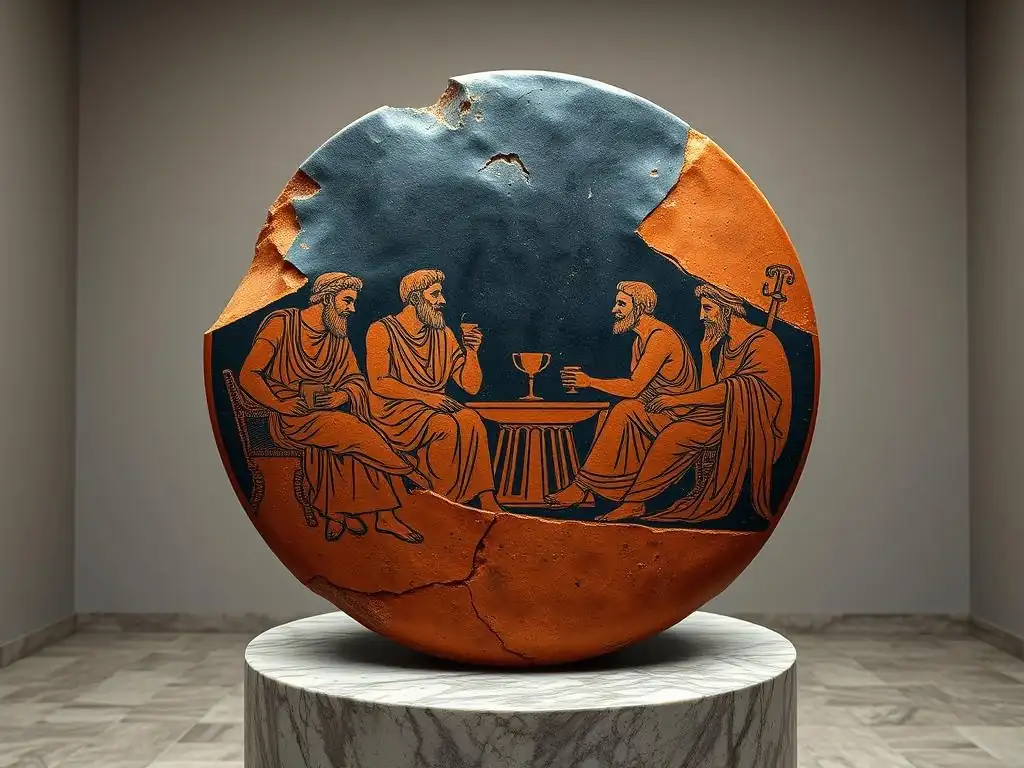
Conversely, Red-Figure reverses this dynamic: the figures are left in the reddish-orange color of the clay, while the background is painted solid black. Details within the figures are then rendered with fine brushwork using diluted slip, which fires to a range of golden-brown to lighter red tones. This inversion creates a sense of figures emerging from a dark space, offering greater depth and allowing for a more naturalistic and dynamic portrayal. The Red-Figure technique allowed for a more organic integration of figures with their environment, moving away from the purely silhouetted forms.
Detail and Realism: A Technological Comparison
Technologically, the capacity for detail and realism significantly diverged between the two ancient Greek vase painting techniques. Black-Figure relied on incision, a subtractive process that limited the subtlety and fluidity of lines. While incredibly precise incisions were achieved by master painters, creating fine anatomical details, varying line thickness, or depicting complex musculature was challenging. Added white and purple colors were opaque and flat, offering limited modeling. The overall effect was one of clear, defined outlines but minimal interior volume.
Red-Figure, on the other hand, allowed for an unprecedented level of precision and naturalism through its additive painting process. The use of a fine brush and diluted slip enabled painters to draw directly onto the figures, creating delicate lines for hair, musculature, and drapery folds.
The "relief line" provided crisp contours, while varying dilutions of slip allowed for a rudimentary form of shading, giving figures a more three-dimensional appearance. This shift from scratching to painting directly onto the surface unlocked new possibilities for anatomical accuracy, foreshortening, and emotional expression, marking a significant leap in the realism achievable through ancient Greek vase painting techniques.
Time and Labor: Efficiency Considerations
While both Black-Figure and Red-Figure ancient Greek vase painting techniques were labor-intensive, their efficiency considerations differed. Black-Figure, with its reliance on incision for all internal details, demanded a steady hand and meticulous precision. The process of incising hundreds of lines on a single figure, followed by the application of added colors, was time-consuming. Any mistake in incision was difficult to rectify without re-slipping and re-incising the entire area, potentially increasing production time and material waste.
Red-Figure, while requiring a high degree of artistic skill in drawing and brush control, potentially streamlined some aspects of the detailing process. Once the main contours were established and the background filled, the interior details could be applied more fluidly with a brush, perhaps more quickly than precise incision. The ability to vary line thickness and create subtle shading with diluted slip might have allowed for a more efficient rendering of complex forms. However, the initial outlining and careful painting of the background in Red-Figure still demanded considerable time and expertise, especially for large or intricate compositions.
The Evolution from Black-Figure to Red-Figure
The evolution from Black-Figure to Red-Figure was not an abrupt replacement but a gradual transition, with both ancient Greek vase painting techniques coexisting for several decades, particularly in the late 6th century BC. Some workshops, like that of Nikosthenes, produced both styles simultaneously, and painters known as "Bilingual Painters" (e.g., the Andokides Painter) experimented with both methods on the same vase. This period of overlap suggests a conscious artistic and technological exploration rather than a sudden shift.
The eventual dominance of Red-Figure by the early 5th century BC was driven by its superior artistic flexibility and capacity for realism. As Greek art moved towards greater naturalism in sculpture and monumental painting, Red-Figure provided the ceramic medium with the tools to keep pace. Its ability to depict figures with greater anatomical accuracy, depth, and emotional nuance made it the preferred technique for expressing the evolving artistic ideals of the Classical period. This technological progression in ancient Greek vase painting techniques profoundly shaped the visual culture of ancient Greece.
Materials and Tools Used in Ancient Greek Vase Painting
Clay Sources and Preparation Methods
The raw material for all ancient Greek pottery was clay, primarily sourced locally. For Attic pottery, the distinctive reddish-orange hue of the fired vessels came from the iron-rich clays found around Athens, particularly in areas like the Ceramicus. This clay possessed excellent plasticity, making it ideal for throwing on the potter's wheel, and its specific mineral composition, rich in illite and kaolinite, was crucial for its behavior during the complex three-stage firing process. The quality and purity of this clay directly influenced the success of the ancient Greek vase painting techniques.
Before use, the raw clay underwent extensive preparation to remove impurities and achieve a consistent texture. This involved digging the clay from deposits, allowing it to weather, and then processing it through levigation. In this multi-step process, the clay was repeatedly mixed with water in large settling tanks, allowing coarser particles, stones, and organic matter to sink, while the finer clay particles remained suspended.
The top layer of fine clay slurry was then decanted into another tank, a process that could be repeated several times. Finally, the refined clay was allowed to dry to a workable consistency and then meticulously wedged or kneaded to remove air bubbles and ensure homogeneity, a labor-intensive but essential step for high-quality ancient Greek vase painting.
Pigments and Slips: Composition and Application
The signature "black glaze" or slip in ancient Greek vase painting was not a true glaze in the modern sense (which contains glass-forming agents) but a highly refined, colloidal suspension of the same iron-rich clay used for the vessel body. Its unique properties allowed it to vitrify and turn black under specific firing conditions, while the main body remained porous and red. This slip was prepared by further levigating the clay, separating the finest particles, and sometimes adding deflocculants like wood ash or urine to enhance its fluidity and aid in vitrification at relatively low temperatures (around 900-950°C).
For added colors, specific mineral pigments were employed. White pigment was typically derived from kaolin (a white clay mineral) or calcium carbonate (chalk or crushed limestone). Red or purple hues, frequently seen in Black-Figure, were usually made from iron oxides such as hematite or red ochre.
These pigments were ground into fine powders and mixed with water, possibly with a small amount of organic binder (like gum arabic or egg white), to create a paint-like consistency. Their application required careful layering and drying before firing, ensuring they adhered correctly and maintained their color through the heat, showcasing the nuanced understanding of materials in ancient Greek vase painting techniques.
Kiln Technology: Achieving Precise Firing Temperatures
The success of both Black-Figure and Red-Figure ancient Greek vase painting techniques hinged on the sophisticated control of kiln atmosphere and temperature, typically achieved in updraft kilns. These kilns consisted of two main chambers: a lower firebox where fuel (primarily wood, such as pine) was burned, and an upper pottery chamber where the vases were stacked. A perforated floor separated these chambers, allowing heat and gases to rise and circulate around the pottery. Kilns varied in size, from small domestic units to large workshop kilns capable of firing hundreds of vessels simultaneously.
Maintaining precise temperatures, often reaching 900-950°C, and controlling the oxygen levels within the kiln was a highly skilled operation. Potters manipulated vents and dampers to regulate airflow, transitioning between oxidizing (oxygen-rich), reducing (oxygen-deprived), and re-oxidizing (oxygen-reintroduced) atmospheres. This required an intimate knowledge of how the clay and slip reacted at different temperatures and atmospheric conditions. The consistent production of high-quality, perfectly colored vases over centuries speaks to the remarkable mastery of pyrotechnology by ancient Greek potters, a cornerstone of their ancient Greek vase painting techniques.
Brushes and Tools: Precision and Control
The creation of intricate designs in ancient Greek vase painting techniques required a range of specialized tools. For shaping the vessels, the potter's wheel was indispensable, allowing for the rapid and symmetrical creation of various forms. While the exact types of brushes used by ancient Greek painters are not preserved, it is widely believed they fashioned them from natural materials.
Fine animal hairs, such as those from squirrels, oxen, or even human hair, would have been bundled and inserted into reeds or thin wooden handles to create brushes capable of producing both broad washes and exceptionally fine lines. The ability to vary line thickness and achieve minute details, especially in Red-Figure, suggests a sophisticated array of brush sizes and tip configurations.
For Black-Figure, sharp, pointed instruments were crucial for incision. These could have been made from bronze, bone, or even hard wood, with very fine tips capable of scratching through the leather-hard black slip to reveal the red clay beneath.
Other tools likely included compasses for drawing perfect circles (e.g., for eyes or round shields), and possibly strings or straight edges for guiding long, straight lines. The remarkable consistency and precision evident in thousands of surviving vases attest to the skill of the artisans in crafting and wielding these essential tools, demonstrating the practical ingenuity behind ancient Greek vase painting techniques.
Case Studies: Examining Specific Vases and Workshops
The François Vase: A Masterpiece of Early Attic Black-Figure
The François Vase, a monumental volute krater dating to approximately 570-560 BC, stands as an unparalleled masterpiece of early Attic Black-Figure ancient Greek vase painting techniques. Signed by both the potter Ergotimos and the painter Kleitias, this approximately 66 cm high vessel is renowned for its extraordinary density of narrative decoration, featuring over 270 figures across six friezes on the body and handles. The vase depicts a comprehensive cycle of Greek myths, including the Calydonian Boar Hunt, the funeral games for Patroklos, and the wedding of Peleus and Thetis, serving as a visual encyclopedia of heroic narratives.
Technologically, the François Vase showcases the zenith of Black-Figure craftsmanship. Kleitias's painting is characterized by its meticulous incision, with every muscle, hair, and pattern precisely delineated. The extensive use of added white for female flesh and added purple-red for garments and details demonstrates a sophisticated understanding of how these supplementary colors would interact with the black slip and red clay during firing. The sheer scale of the decoration, combined with the intricate detail and consistent quality of the incised lines, highlights the immense skill and patience required for this labor-intensive application of ancient Greek vase painting techniques.
The Euphronios Krater: Innovation in Red-Figure Painting
The Euphronios Krater, specifically a calyx krater dating to around 510 BC, is a prime example of the revolutionary potential of Red-Figure ancient Greek vase painting techniques. Signed by the painter Euphronios, it is celebrated for its depiction of "Sleep and Death carrying Sarpedon" on one side and a scene of Athenian youths arming on the other. This vase is often cited as a pinnacle of early Red-Figure, showcasing the newfound artistic freedoms and anatomical realism offered by the technique.
Technologically, the Euphronios Krater exemplifies the innovative use of the relief line and diluted slip. Euphronios masterfully employed the relief line for the contours of his figures, giving them a crisp, almost sculptural definition that stands out against the black background.
More impressively, he utilized varying dilutions of the black slip to create subtle golden-brown washes and fine lines for internal details, such as the musculature of Sarpedon, the texture of hair, and the folds of drapery. This sophisticated brushwork allowed for a degree of anatomical accuracy and foreshortening previously unattainable in ancient Greek vase painting techniques, demonstrating a profound shift towards naturalism.
Workshop of Nikosthenes: Production and Style
The workshop of Nikosthenes, active in Athens primarily between approximately 540 and 510 BC, represents a fascinating case study in the transitional period between Black-Figure and Red-Figure ancient Greek vase painting techniques. Nikosthenes was primarily a potter, prolific in producing a wide range of vessel shapes, often signed. His workshop is particularly noted for its commercial success and its willingness to experiment with both traditional Attic forms and shapes adapted from foreign pottery, especially Etruscan bucchero ware, such as the distinctive "Nikosthenic amphora" with its flat ribbon handles.
Technologically, the Nikosthenes workshop produced a significant number of vases in both Black-Figure and the emerging Red-Figure style, sometimes even on the same vase in a "bilingual" format. This indicates a period of experimentation and adaptation within the workshop, exploring the potentials of both ancient Greek vase painting techniques to cater to varied markets and artistic preferences. While the painting quality from his workshop could vary, its sheer output and innovative forms underscore the commercial vitality and the practical application of diverse ancient Greek vase painting techniques in a thriving Athenian industry.
The Legacy of Ancient Greek Vase Painting Techniques
Influence on Later Artistic Traditions
The ancient Greek vase painting techniques exerted a profound and lasting influence on subsequent artistic traditions, both within Greece and beyond. The evolution from the graphic silhouettes of Black-Figure to the naturalistic depictions of Red-Figure laid crucial groundwork for later developments in Greek art, particularly in sculpture and monumental wall painting, of which only fragments or literary accounts survive. The mastery of human anatomy, foreshortening, and emotional expression achieved by Red-Figure painters directly informed the aesthetic principles of the Classical period, inspiring sculptors like Phidias and Praxiteles.
Beyond Greece, the visual language and narrative conventions established by Greek vase painters were widely admired and emulated. Etruscan and Roman art, for instance, frequently drew upon Greek mythological themes and artistic forms, absorbing aspects of their compositional principles and figure rendering. Even during the Renaissance, the rediscovery of classical art, including pottery, contributed to a renewed interest in ancient forms and narratives. The enduring impact of these ancient Greek vase painting techniques lies in their contribution to the Western artistic canon, shaping how figures were depicted and stories were told visually for centuries.
Modern Reconstructions and Experimental Archaeology
Modern reconstructions and experimental archaeology play a crucial role in deepening our understanding of ancient Greek vase painting techniques. Researchers and skilled potters meticulously attempt to replicate the entire ancient process, from sourcing and preparing the specific Attic clay to forming vessels on a traditional potter's wheel, preparing the slip, and executing the painting with reconstructed tools. These experiments are invaluable for understanding the practical challenges faced by ancient artisans, such as the precise consistency required for the slip, the drying times, and the dexterity needed for incision or fine brushwork.
Crucially, experimental firings in reconstructed ancient kilns allow researchers to precisely monitor and control the three-stage atmospheric process (oxidizing, reducing, re-oxidizing). By observing the chemical transformations of the iron oxides in the clay body and slip at different temperatures and oxygen levels, they gain direct insight into how the iconic black and red colors were achieved. These hands-on reconstructions provide empirical data that complements archaeological findings and textual sources, offering a tangible connection to the technological genius embedded in ancient Greek vase painting techniques.
Preserving and Studying Ancient Greek Vases Today
The preservation and ongoing study of ancient Greek vases represent a continuous effort by archaeologists, art historians, conservators, and scientists worldwide. These fragile ceramic artifacts are susceptible to degradation from environmental factors such as humidity fluctuations, temperature changes, and light exposure. Consequently, museums and archaeological institutions employ sophisticated climate control systems and specialized conservation treatments to stabilize and protect these invaluable remnants of the past. The meticulous cleaning, mending, and restoration of fragmented vessels allow for their display and continued analysis.
Current research in ancient Greek vase painting techniques is highly interdisciplinary, combining traditional art historical analysis with advanced scientific methods. Techniques like X-ray fluorescence (XRF), scanning electron microscopy (SEM), and Raman spectroscopy are used to analyze the chemical composition of clays, slips, and pigments, providing insights into raw material sources, workshop practices, and technological variations. This scientific scrutiny helps to differentiate genuine artifacts from forgeries, reveal previously unseen details, and refine our understanding of the sophisticated materials science and artistic processes that underpinned ancient Greek vase painting techniques.
Conclusion: The Technological Marvel of Ancient Greek Vase Painting
Summarizing Key Technological Aspects
The study of Black-Figure and Red-Figure ancient Greek vase painting techniques reveals a profound mastery of ceramic technology that was truly advanced for its time. At its core lay an intimate understanding of specific clay properties, particularly the iron-rich Attic clay, which allowed for its characteristic reddish hue and its unique response to firing.
The innovation of the black "glaze" – a highly refined clay slip capable of vitrifying and turning black under specific conditions – was a singular achievement. This slip, combined with the precise three-stage firing process (oxidizing, reducing, re-oxidizing) in sophisticated updraft kilns, enabled the potters to manipulate the color of their vessels with astonishing consistency and control.
The evolution from Black-Figure's incised details to Red-Figure's fluid brushwork and diluted slip demonstrates a continuous drive for refinement and artistic expression. This shift represented not just an aesthetic preference but a significant technological leap, allowing for unprecedented anatomical realism and narrative dynamism. From the meticulous preparation of the clay to the precise control of kiln atmospheres and the skillful use of specialized tools, every step in the production of these vases reflects a sophisticated blend of craftsmanship, material science, and artistic ingenuity, cementing their place as a technological marvel of the ancient world.
Future Research Directions in Vase Painting Analysis
Despite centuries of study, ancient Greek vase painting techniques continue to offer fertile ground for future research. One promising direction involves more detailed chemical analysis of clay sources and slip compositions, potentially utilizing advanced analytical techniques to pinpoint specific geological origins of clay and trace workshop networks with greater precision. Such studies could reveal subtle regional variations in technique or even identify individual potter's recipes for their black slip, shedding light on trade routes and technological diffusion.
Further experimental archaeology could focus on less understood aspects of the firing process, such as the exact temperatures and durations of each atmospheric stage within ancient kilns, or the precise methods used to introduce and remove oxygen. Replicating the specific tools used for very fine lines or delicate shading could also provide practical insights into the limits and possibilities of ancient brushwork.
Additionally, the integration of digital imaging and 3D modeling could offer new ways to analyze brushstrokes, relief lines, and the overall execution of designs, continually refining our understanding of the practical application and evolution of ancient Greek vase painting techniques.
Frequently Asked Questions
What are the two primary styles of Ancient Greek vase painting discussed on ArchaeologyHub.org?
The two primary styles are Black-Figure and Red-Figure. These techniques are differentiated by the color of the figures against the background. Black-Figure features black figures on a red background, while Red-Figure reverses this.
How does ArchaeologyHub.org describe the Black-Figure technique in "Greek BlackFigure and RedFigure Vase Painting: A Technological Study"?
ArchaeologyHub.org explains that the Black-Figure technique involves painting silhouettes in black slip, using incision to add detail to the figures. This slip vitrifies during firing, creating a distinct contrast with the orange-red clay.
What role does the firing process play in achieving the final colors of Ancient Greek vases, according to ArchaeologyHub.org?
The firing process is crucial for achieving the colors. A complex three-stage firing cycle, involving oxidation, reduction, and re-oxidation, determined the final red and black colors of the vase and slip, according to the article on ArchaeologyHub.org
According to ArchaeologyHub.org, what are some key differences in the level of detail achievable with Black-Figure versus Red-Figure techniques?
Red-Figure allowed for more detail and naturalism. It was achieved by drawing figures with a brush, rather than incising, on the red clay, allowing for greater nuance and anatomical accuracy.
How does ArchaeologyHub.org categorize the information about Ancient Greek vase painting within its broader organizational structure?
ArchaeologyHub.org organizes content by geographic regions and time periods. Therefore, information on Ancient Greek vase painting falls under the "Ancient Greece" geographic region and the relevant historical time periods.
Okay, here's a final reflection designed to close your article "Greek BlackFigure and RedFigure Vase Painting: A Technological Study," optimized for the keyword "Ancient Greek vase painting techniques," and following the structure you outlined:
Final Reflection: Enduring Artistry in Clay
The meticulous exploration of Ancient Greek vase painting techniques reveals not just the ingenuity of artisans long past, but also a profound understanding of materials and processes that continues to resonate with artists and historians today. The black-figure and red-figure styles, far from being mere decorative choices, represent a sophisticated mastery of kiln firing and surface treatment, a testament to the enduring power of human creativity to transform humble clay into objects of lasting beauty and historical significance.
The impact of these ancient techniques extends far beyond the archaeological record. The enduring appeal of Greek vase painting lies in its ability to tell stories, to capture moments of daily life and mythological grandeur with unparalleled skill. It serves as a constant reminder of the power of art to transcend time and connect us to the human experience across millennia. Art is not what you see, but what you make others see.
- Edgar Degas. This quote perfectly encapsulates the legacy of these ancient artisans, who, through their mastery of technique, continue to shape our understanding of their world.
As we conclude this journey into the world of Ancient Greek vase painting, let us not simply admire the finished product, but also appreciate the intricate processes and the dedicated craftsmanship that brought these masterpieces to life. Consider how the principles of innovation, experimentation, and meticulous execution, so evident in these ancient techniques, can inspire your own creative endeavors. Embrace the spirit of the ancient Greek vase painters, and strive to leave your own mark on the world, one carefully crafted creation at a time.
Unearth Your Inner Archaeologist!
Thank you for delving into the fascinating technology behind ancient Greek vase painting. We hope you've enjoyed uncovering the secrets behind these enduring works of art. Now, it's your turn to engage further!
Here are a few paths you can explore:
- Recreate a simplified version of the firing process using polymer clay and acrylic paints to understand the color transformation. This hands-on experience will bring the ancient technology to life!
- Share this article with fellow art enthusiasts or archaeology buffs. Inspire others to discover the ingenuity of ancient artisans.
- Visit your local museum and spend time observing Greek pottery. Pay close attention to the details discussed in the article and deepen your appreciation.
What aspect of ancient Greek vase painting technology sparked your curiosity the most, and what further questions do you have?