
The Gates of Nineveh: A Detailed Examination of the Mashki, Adad, and Halzi Gates

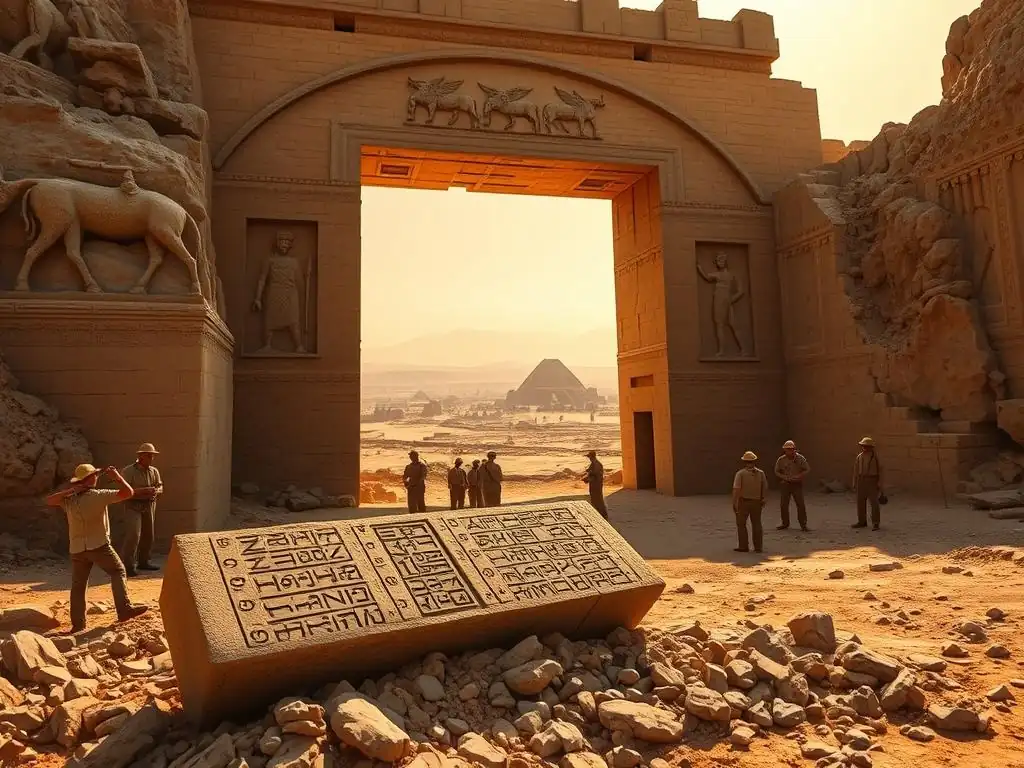
Welcome to ArchaeologyHub.org, your portal to the world of the past!
Delve into the fascinating world of ancient Mesopotamia with our in-depth exploration of Nineveh's gates archaeological significance. Beyond mere entrances, these monumental structures – the Mashki, Adad, and Halzi Gates – offer unparalleled insights into Assyrian power, artistry, and urban planning. What secrets do these imposing gateways hold about the rise and fall of a mighty empire? Uncover the answers within and begin your journey through the annals of history.
- Introduction: Unveiling the Archaeological Significance of Nineveh's Gates
- The Mashki Gate: Exploring the "Water Carriers" Gate
- The Adad Gate: Investigating the Gate Dedicated to the Storm God
- The Halzi Gate: A Look into the "Fortress" Gate
- Comparative Analysis: Mashki, Adad, and Halzi Gates
- Nineveh Gates Archaeological Significance: Preservation and Future Research
- Conclusion: The Enduring Importance of Nineveh's Gates
-
Frequently Asked Questions
- What is the archaeological significance of the Nineveh gates, particularly the Mashki, Adad, and Halzi Gates?
- How do the Nineveh gates contribute to our understanding of Neo-Assyrian military strategies?
- What types of artifacts have been discovered near or within the Nineveh gates?
- What can the Nineveh gates tell us about the artistic and architectural styles of the Neo-Assyrian period?
- How do the Nineveh gates help researchers reconstruct the urban layout and social organization of ancient Nineveh?
- Final Reflection: Echoes of Nineveh's Grandeur
- Unveil Nineveh's Secrets: Start Your Archaeological Journey!
Introduction: Unveiling the Archaeological Significance of Nineveh's Gates
Nineveh: A Center of Assyrian Power and its Fortifications
Nineveh, the magnificent capital of the Neo-Assyrian Empire, rose to prominence under kings like Sennacherib (704–681 BCE) and Ashurbanipal (668–627 BCE), becoming one of the largest and most influential cities of the ancient world. Estimates suggest the city proper covered an area of approximately 750 hectares (about 1,850 acres) and may have housed a population ranging from 100,000 to 120,000 people, making it a true metropolis. Its strategic location on the east bank of the Tigris River, at the crossroads of major trade routes, necessitated formidable defenses to protect its vast wealth and power.
The city's fortifications were legendary, comprising an intricate system of inner and outer walls. The outer wall, a colossal mudbrick structure, stretched for an impressive 12 kilometers (approximately 7.5 miles) around the city. This defensive perimeter was punctuated by numerous gates—at least fifteen major gates have been identified—and reinforced by thousands of defensive towers, each spaced at regular intervals, creating an almost impregnable barrier against invaders. These monumental defenses underscore the Nineveh gates archaeological significance, revealing the sophisticated military engineering of the Assyrians.
The Strategic Importance of City Gates in Ancient Mesopotamia
In ancient Mesopotamia, city gates were far more than simple entry and exit points; they were multifaceted hubs of activity and symbolic power. Architecturally, they were often the most impressive structures in a city, typically flanked by massive towers and featuring elaborate courtyards designed to funnel and control incoming traffic. Beyond their defensive function, these gates served as vital arteries for trade, facilitating the movement of goods, people, and ideas, and often becoming bustling marketplaces where commercial transactions took place.
Furthermore, city gates held significant administrative and social importance. They were often sites for legal proceedings, public announcements, and even religious rituals, serving as thresholds between the profane outside world and the sacred inner city. Their design, incorporating multiple layers of defense such as bent-axis approaches and double gatehouses, reflected a deep understanding of siege warfare, making them the most vulnerable yet most heavily fortified points in a city's defenses. The careful study of these structures is essential for understanding the Nineveh gates archaeological significance in urban planning and societal function.
Overview of the Mashki, Adad, and Halzi Gates
Among the many gates that pierced Nineveh's immense walls, the Mashki, Adad, and Halzi Gates stand out due to their distinct functions and archaeological insights. The Mashki Gate, often referred to as the "Water Carriers' Gate," was primarily functional, facilitating access to the Tigris River and playing a role in the city's sophisticated water management system. Its design was likely more utilitarian, reflecting its pragmatic purpose.
In contrast, the Adad Gate, dedicated to the Mesopotamian storm god Adad, likely held significant religious and ceremonial importance, possibly adorned with protective deities and inscriptions. The Halzi Gate, or "Fortress Gate," situated on the eastern side, was a critical military strongpoint, designed with robust defensive features to withstand direct assaults. Each of these gates, through their unique architectural styles, materials, and associated finds, contributes immensely to our understanding of the Nineveh gates archaeological significance, illuminating different facets of Assyrian life, belief, and military prowess.
The Mashki Gate: Exploring the "Water Carriers" Gate
Location and Archaeological Context of the Mashki Gate
The Mashki Gate, meaning "Water Carriers' Gate" in Akkadian, was strategically located on the northwestern side of ancient Nineveh, positioned to provide direct access to the Tigris River. Its name strongly suggests its primary function was related to the city's interaction with this vital waterway, likely facilitating the transport of water, goods, and possibly people directly from the river into the city. Early archaeological investigations, particularly those conducted in the 19th and 20th centuries, identified its remains, noting its relatively simpler structure compared to other more ceremonial gates.
Its context within the broader fortification system indicates a pragmatic design, prioritizing ease of access for essential resources over elaborate defensive or symbolic displays. The gate was part of the outer wall system, allowing for controlled entry from the riverine approaches. Proximity to the Tigris suggests it might have been connected to a quay or a landing area, essential for a city that relied heavily on river transport for both sustenance and commerce.
Architectural Features and Construction Techniques of the Mashki Gate
Archaeological evidence suggests the Mashki Gate featured a relatively straightforward architectural design, likely consisting of a single arched passageway, possibly flanked by smaller guard chambers rather than the massive multi-towered structures seen at other gates. The primary construction materials would have been sun-dried mudbricks, typical for large-scale Assyrian architecture, set upon foundations of dressed stone to provide stability against the elements and the weight of the superstructure. While much of its original structure has deteriorated due to time and exposure, remnants indicate a functional, robust build.
The engineering of the Mashki Gate would have focused on maintaining defensive integrity while allowing for the necessary flow of water-related traffic. This might have involved a slightly raised causeway or a reinforced path leading through the gate, designed to handle the frequent passage of individuals carrying water vessels or small carts. Unlike gates designed for grand processions, its features would have been optimized for efficiency and durability in a high-traffic, utilitarian role.
Significance of the Mashki Gate in Nineveh's Water Management
The Mashki Gate's name directly points to its crucial role in Nineveh's sophisticated water management system. While the city benefited from extensive aqueducts, such as Sennacherib's famous Jerwan Aqueduct, which brought fresh water from sources over 50 kilometers away, direct access to the Tigris was still vital for daily needs, irrigation of gardens, and possibly for industrial purposes. The gate would have served as a primary conduit for water carriers, ensuring a consistent supply for the city's vast population and the lush royal parks often associated with Nineveh.
This gate was integral to sustaining the metropolis, allowing for the regulated collection and distribution of water within the city walls. It also likely played a role in managing water levels or even as an outlet for excess water or drainage, demonstrating the Assyrians' mastery over hydrological engineering. The functional importance of the Mashki Gate highlights a critical aspect of the Nineveh gates archaeological significance: their role in supporting the daily life and infrastructure of a major ancient capital.
Artifacts Discovered Near the Mashki Gate: Insights into Daily Life
Excavations around the Mashki Gate have primarily yielded artifacts reflecting the mundane, yet essential, aspects of daily life in ancient Nineveh. Common finds include a profusion of pottery fragments, ranging from large storage jars that would have held water or provisions, to smaller domestic wares like bowls and cups, indicating constant human activity. Tools related to water collection, such as fragments of buckets or scoops, might also have been present, reinforcing the gate's specific function.
Unlike more ceremonial gates, the Mashki Gate typically lacks grand artistic reliefs or monumental inscriptions. The archaeological record here speaks more to the practical routines of ordinary citizens and laborers. Small personal items, such as beads or simple amulets, occasionally found, offer fleeting glimpses into the personal lives of those who traversed this essential gateway, providing valuable insights into the social fabric and economic activities centered around this vital point of access to the Tigris.
The Adad Gate: Investigating the Gate Dedicated to the Storm God
Identification and Historical References to the Adad Gate
The Adad Gate, named after the powerful Mesopotamian god of storms, rain, and fertility, was situated on the northern side of Nineveh, serving as a significant entry point. Its dedication to Adad, a deity whose temper could bring both life-giving rain and destructive floods, underscores the gate's profound religious and symbolic importance within the city's sacred geography. The naming conventions for Assyrian gates often reflected their orientation, their destination, or a prominent deity, and the Adad Gate clearly falls into the latter category, suggesting a connection to a specific cult or ritual path.
Historical references to the Adad Gate are primarily derived from Assyrian royal inscriptions and annals, which occasionally mention the construction or renovation of city gates as part of the king's grand building projects. While precise textual descriptions of the Adad Gate itself are scarce, its identification has been solidified through archaeological mapping and the general understanding of Nineveh's layout, where major gates often bore the names of significant deities or cities to which they led. This textual and material evidence confirms its identity and contributes to the overall Nineveh gates archaeological significance.
Detailed Analysis of the Adad Gate's Reliefs and Inscriptions
Like many monumental Assyrian gates, the Adad Gate would have been adorned with imposing decorative elements designed to both protect and impress. Archaeological fragments and comparative studies with other major gates at Nineveh and other Assyrian capitals (like Khorsabad) suggest the presence of colossal human-headed winged bulls, known as lamassu, guarding the entrance.
These mythical creatures served as powerful apotropaic guardians, believed to ward off evil and protect the city. Reliefs depicting protective genii, heroic figures, or even scenes related to Adad's benevolent or destructive powers might also have embellished its walls, though specific documented finds for the Adad Gate are limited due to its state of preservation.
Cuneiform inscriptions would have been an integral part of the gate's architecture, typically carved into the stone foundations or brickwork. These inscriptions often contained detailed accounts of the gate's construction, dedications to the patron deity Adad, and lengthy praises of the reigning monarch's piety and military achievements. Such texts not only provide invaluable historical data regarding the gate's patron and purpose but also offer profound insights into Assyrian royal ideology, religious beliefs, and artistic conventions, further highlighting the Nineveh gates archaeological significance.
The Adad Gate's Role in Religious Ceremonies and Processions
Given its dedication to the god Adad, it is highly probable that the Adad Gate played a significant role in religious ceremonies and public processions within Nineveh. Gates were often the starting or ending points for ritual parades, especially those involving the city's pantheon of gods. Processions seeking Adad's favor for abundant rains or protection from storms, or those celebrating successful harvests, might have passed through this gate, making it a sacred threshold and a focal point for communal religious life.
The gate's monumental scale and elaborate decoration would have served to enhance the solemnity and grandeur of such events, emphasizing the connection between the city, its king, and the divine. It might have also served as a gateway to a specific temple precinct dedicated to Adad within the city, guiding worshippers towards sacred spaces. This ceremonial function underlines the Adad Gate's contribution to the Nineveh gates archaeological significance, revealing the intertwining of religious belief with urban infrastructure.
Comparative Study: Adad Gate vs. Other Mesopotamian Temple Gates
Comparing the Adad Gate to other prominent Mesopotamian temple gates, such as the famous Ishtar Gate of Babylon or the various gates at Dur-Sharrukin (Khorsabad), reveals both commonalities and unique characteristics. Like its counterparts, the Adad Gate likely employed the iconic lamassu and protective reliefs, a standard feature of Neo-Assyrian and Neo-Babylonian monumental architecture, serving as powerful symbols of divine protection and royal authority. The use of glazed bricks, though more famously associated with Babylon, might also have been present in more elaborate sections of Assyrian gates, adding to their visual splendor.
However, each gate also possessed unique attributes influenced by its specific deity, royal patron, and historical context. While the Ishtar Gate features a magnificent array of animal reliefs (lions, mušḫuššu-dragons, bulls) rendered in vibrant glazed brick, the Adad Gate's iconography would have been tailored to Adad's attributes. Differences in scale, specific artistic styles, and the integration of specific royal narratives would distinguish it, yet all these gates collectively showcase the Mesopotamian tradition of monumental gateways as expressions of both religious devotion and imperial power, enriching our understanding of the Nineveh gates archaeological significance.
The Halzi Gate: A Look into the "Fortress" Gate
Excavation History and Findings at the Halzi Gate
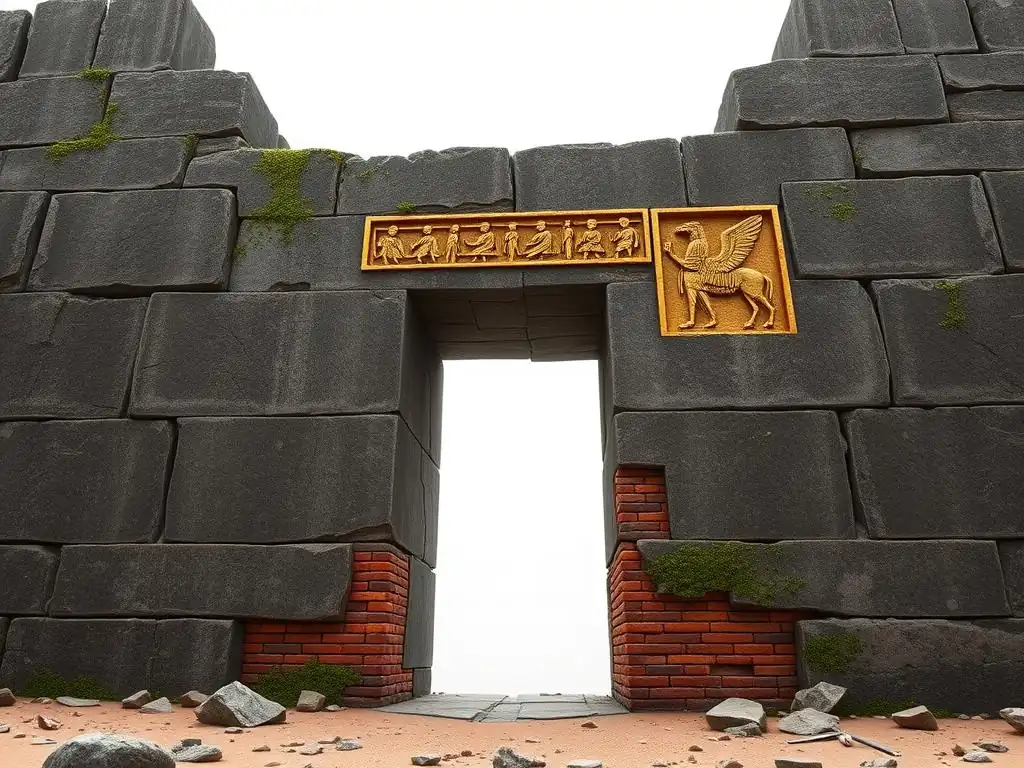
The Halzi Gate, translated as the "Fortress Gate," was situated on the eastern side of Nineveh, facing the open plains—a direction from which many military threats would traditionally approach. Its discovery and initial archaeological investigations were part of the extensive work conducted by early excavators like Austen Henry Layard in the mid-19th century, and later by subsequent Iraqi and international missions. These expeditions unearthed the formidable remains of what was clearly a gate designed for maximum defensive capability.
Specific findings at the Halzi Gate site have included remnants of its massive stone foundations, which supported a superstructure of mudbrick walls, likely reaching considerable heights. Archaeological layers have revealed evidence of significant destruction, potentially from the 612 BCE siege of Nineveh by the combined forces of Babylonians and Medes, including debris from collapsed structures and possibly even fragments of siege weaponry or defensive armaments. Such findings confirm its role as a key military strongpoint and contribute to the understanding of the Nineveh gates archaeological significance in warfare.
The Halzi Gate's Defensive Structures and Military Significance
The Halzi Gate exemplifies advanced Assyrian military engineering, featuring a complex array of defensive structures designed to deter and repel attackers. Its design likely incorporated a bent-axis approach, forcing any attacking force to make multiple turns within a confined courtyard, exposing their flanks to defenders positioned on the gate's towers and walls. This intricate layout created multiple killing zones, making a direct assault exceedingly perilous. The gate would have been flanked by massive, multi-story towers, providing elevated platforms for archers and slingers.
The gate's walls themselves would have been exceptionally thick, constructed to withstand prolonged battering from siege engines. Its strategic placement on the most exposed side of the city highlights its importance as a primary line of defense. The Halzi Gate served not only as a formidable obstacle but also as a controlled sally port for Assyrian forces, allowing them to launch counter-attacks or conduct maneuvers. Its robust design is a testament to the Assyrian Empire's preoccupation with military might and its practical application in protecting its capital.
Architectural Style and Reconstruction Efforts of the Halzi Gate
The architectural style of the Halzi Gate was primarily functional and imposing, reflecting its military purpose. While it may have lacked the elaborate reliefs and ceremonial grandeur of gates like the Adad Gate, its sheer scale and robust construction conveyed an undeniable sense of power and impregnability. The gate's foundations were typically constructed from large, precisely cut stone blocks, providing a durable base for the massive mudbrick superstructure. The gate passageway itself might have been vaulted, adding to its strength.
In recent decades, there have been efforts, sometimes controversial, to reconstruct or preserve elements of Nineveh's gates, including the Halzi Gate, to protect them from further deterioration and to make them more accessible for heritage tourism. These efforts, often undertaken by the Iraqi State Board of Antiquities and Heritage, aim to stabilize the remaining structures and provide a clearer visualization of their original monumental scale. The ongoing challenges of preserving such large ancient structures in a volatile region further underscore the Nineveh gates archaeological significance and the urgent need for conservation.
Halzi Gate as a Symbol of Assyrian Military Might
Beyond its practical defensive functions, the Halzi Gate stood as a powerful symbol of Assyrian military might and the king's unyielding resolve to protect his empire. Its colossal size and impregnable design were intended to project an image of invincibility, deterring potential enemies before they even considered an attack. For citizens of Nineveh, it represented security and the protective strength of their monarch.
This gate, along with the extensive city walls, was a tangible manifestation of the Assyrian imperial ideology, which heavily emphasized military prowess, conquest, and the subjugation of enemies. The very existence of such a formidable "fortress gate" communicated a clear message: Nineveh was an unassailable bastion of power. Thus, the Halzi Gate's archaeological significance extends beyond its architectural features to its role as a monumental piece of propaganda, embodying the core values of the Neo-Assyrian state.
Comparative Analysis: Mashki, Adad, and Halzi Gates
Similarities and Differences in Gate Construction and Design
While the Mashki, Adad, and Halzi Gates each served distinct purposes, they shared fundamental construction principles characteristic of monumental Assyrian architecture. All three gates were integral components of Nineveh's extensive defensive wall system, utilizing a common palette of primary building materials: massive stone foundations for durability and stability, topped by sun-dried mudbrick superstructures, which allowed for rapid and large-scale construction. They all functioned as controlled access points, regulating the flow of people and goods into and out of the city, and contributing to the overall Nineveh gates archaeological significance.
However, their differences in design and scale clearly reflect their specialized functions. The Mashki Gate was likely the most utilitarian, possibly a simpler archway prioritizing practical access to the Tigris, with minimal decorative elements. The Adad Gate, dedicated to a deity, would have been more elaborate, featuring monumental lamassu sculptures and intricate reliefs, reflecting its ceremonial and religious importance. The Halzi Gate, designed as a primary military strongpoint, emphasized robust defensive features such as multiple gatehouses, thick walls, and a complex bent-axis approach, prioritizing impregnability over artistic flair.
The Gates as Reflections of Assyrian Ideology and Power
The distinct characteristics of the Mashki, Adad, and Halzi Gates collectively offer a multifaceted reflection of Assyrian ideology and imperial power. The Halzi Gate, with its formidable defensive structures, embodies the sheer military might and strategic prowess that defined the Neo-Assyrian Empire, demonstrating its capacity for both defense and conquest. It physically manifested the king's ability to protect his capital and project power.
The Adad Gate, adorned with protective deities and royal inscriptions, speaks to the profound religious piety of the Assyrians and the king's divinely sanctioned authority. It highlights the belief that the empire's strength was not only military but also derived from divine favor and protection.
Meanwhile, the Mashki Gate, though less grand, points to the sophisticated logistical and administrative capabilities required to sustain a vast urban center, showcasing the empire's organizational efficiency in managing vital resources like water. Together, these gates illustrate the comprehensive nature of Assyrian power, encompassing military, religious, and administrative dimensions, thereby cementing their immense Nineveh gates archaeological significance.
The Gates' Contribution to Nineveh's Urban Planning
The strategic placement and specialized design of the Mashki, Adad, and Halzi Gates were crucial elements in Nineveh's sophisticated urban planning. The Mashki Gate's location facilitated efficient access to the Tigris, essential for the city's water supply and river-based trade, influencing the layout of adjacent residential or commercial areas that relied on river transport. Its presence highlights a deliberate integration of environmental features into urban design.
The Adad Gate, positioned on the northern side, likely served as a ceremonial entrance, possibly directing traffic towards significant religious precincts or royal palaces within the city, influencing internal pathways and the spatial organization of sacred and administrative zones. The Halzi Gate, on the eastern plain, controlled a major land route, managing the flow of armies, merchants, and diplomatic envoys, and shaping the city's interaction with its external territories.
Each gate, therefore, was not an isolated structure but an integrated component of a meticulously planned urban system that managed movement, defense, and the symbolic representation of imperial power, further enhancing the Nineveh gates archaeological significance in urban studies.
Nineveh Gates Archaeological Significance: Preservation and Future Research
Challenges in Preserving the Nineveh Gates
The preservation of the Nineveh gates presents immense challenges, primarily due to their construction materials and the geopolitical instability of the region. The extensive use of sun-dried mudbrick, while efficient for ancient large-scale construction, renders the structures highly vulnerable to natural erosion from rain, wind, and temperature fluctuations. Water infiltration, in particular, can rapidly degrade mudbrick, leading to structural collapse. Furthermore, the sheer scale of the gates and walls makes comprehensive protective measures logistically and financially demanding.
Beyond natural decay, human impact poses significant threats. Urban encroachment from modern Mosul has led to the loss of archaeological context in some areas. More critically, recent conflicts in Iraq have resulted in deliberate destruction by extremist groups, most notably the partial demolition of the Nergal Gate by ISIS in 2016, and significant damage to other sections of the walls. These deliberate acts of cultural vandalism underscore the fragility of these irreplaceable heritage sites and the ongoing struggle for their protection, which is central to understanding the Nineveh gates archaeological significance in contemporary times.
Ongoing Archaeological Investigations and Future Research Directions
Despite the challenges, archaeological investigations at Nineveh continue, often through collaborative efforts between the Iraqi State Board of Antiquities and Heritage and international missions, such as those from Italy and the UK. Modern archaeological methods are increasingly being employed, including remote sensing techniques like LIDAR and satellite imagery, which allow for detailed mapping of the surviving structures and the identification of previously unexcavated areas without intrusive digging. This technology is crucial for monitoring the condition of the gates and planning conservation strategies.
Future research directions for the Nineveh gates include more precise dating techniques to refine their construction phases, detailed architectural surveys to create comprehensive 3D models, and micro-archaeological analysis of the areas immediately surrounding the gates. Such studies could reveal more about daily life, trade activities, and even specific events that occurred at these critical junctures. Further exploration of potential subterranean passages or drainage systems associated with the gates could also yield new insights. These ongoing efforts are vital for fully grasping the Nineveh gates archaeological significance and ensuring their legacy.
The Gates of Nineveh: A Legacy of Ancient Engineering and Art
The gates of Nineveh stand as enduring testaments to the extraordinary engineering prowess, architectural ambition, and artistic sophistication of the Neo-Assyrian Empire. Their monumental scale, evidenced by the 12-kilometer outer wall and the robust construction of individual gates, reflects a mastery of large-scale civil engineering that allowed for the creation of one of the ancient world's most fortified cities. The intricate design of gates like the Halzi, with its multi-layered defenses, showcases a profound understanding of military strategy and siegecraft.
Beyond their functional aspects, gates such as the Adad Gate also served as canvases for Assyrian art, adorned with protective lamassu and narrative reliefs that communicated royal power, divine protection, and ideological messages. These structures are not merely ruins; they are primary sources of information, offering invaluable insights into Assyrian urban planning, military capabilities, religious beliefs, and the very fabric of their imperial society. Their study continues to enrich our understanding of a civilization that profoundly shaped the ancient Near East, solidifying their profound Nineveh gates archaeological significance.
Conclusion: The Enduring Importance of Nineveh's Gates
Summarizing the Archaeological Significance of the Mashki, Adad, and Halzi Gates
The detailed examination of the Mashki, Adad, and Halzi Gates reveals their distinct yet interconnected contributions to the grandeur and functionality of ancient Nineveh. The Mashki Gate highlights the city's sophisticated water management and the daily logistics of sustaining a vast urban population, offering a glimpse into the mundane yet essential aspects of life. The Adad Gate underscores the profound religious and ceremonial dimensions of Assyrian society, serving as a threshold imbued with sacred meaning and adorned with protective symbolism.
Conversely, the Halzi Gate stands as a powerful symbol of Assyrian military might and strategic defensive engineering, designed to withstand the most formidable assaults. Individually, each gate provides unique insights; collectively, they illustrate the multifaceted nature of Assyrian imperial power, encompassing administrative efficiency, religious devotion, and unparalleled military strength. Their study is thus critical for appreciating the comprehensive Nineveh gates archaeological significance.
The Gates as Key Elements in Understanding Ancient Nineveh and Assyrian Civilization
The gates of Nineveh are far more than mere architectural remnants; they are vital archaeological records that serve as key elements in understanding the complex tapestry of ancient Nineveh and the broader Assyrian civilization. They speak volumes about the ingenuity of Assyrian engineers, who could construct such massive and durable fortifications, and about the artistic skill of the artisans who adorned them. Beyond their physical form, the gates encapsulate the strategic thinking, religious beliefs, and daily routines of a powerful empire.
By analyzing their design, location, and associated artifacts, archaeologists can reconstruct aspects of Nineveh's urban planning, trade networks, military strategies, and even its social hierarchy. These structures provide tangible evidence of how the Assyrians managed their resources, protected their capital, and projected their imperial ideology to both their subjects and their enemies. The enduring importance of the Nineveh gates archaeological significance lies in their ability to provide direct, material insights into the character of one of history's most formidable empires.
Further Exploration of the Nineveh Gates in Archaeological Studies
Despite extensive archaeological work spanning over a century and a half, the Nineveh gates continue to be subjects of active research and hold immense potential for future discoveries. Ongoing investigations, often employing cutting-edge technologies like remote sensing, promise to reveal more nuanced details about their construction, use, and the broader context of the city's defenses. Furthermore, continuous conservation efforts are paramount to mitigate the effects of natural decay and human-induced damage, ensuring these monumental structures survive for future generations.
The study of the Nineveh gates archaeological significance is not static; it is an evolving field that consistently yields new insights into ancient urbanism, military history, and the intersection of power, religion, and daily life in the Near East. As archaeological techniques advance and more areas of Nineveh become accessible for study, these majestic gateways will undoubtedly continue to unlock secrets of one of the ancient world's most awe-inspiring capitals, serving as powerful reminders of human ingenuity and the enduring legacy of ancient civilizations.
Frequently Asked Questions
What is the archaeological significance of the Nineveh gates, particularly the Mashki, Adad, and Halzi Gates?
The Nineveh gates hold significant archaeological importance because they provide direct evidence of the city's defensive architecture and urban planning during the Neo-Assyrian Empire. Their construction techniques and artistic details offer insights into the empire's engineering prowess and cultural values. Furthermore, they contribute to our understanding of trade and communication routes.
How do the Nineveh gates contribute to our understanding of Neo-Assyrian military strategies?
The Nineveh gates, such as the Mashki, Adad, and Halzi Gates, reveal the sophisticated defensive systems employed by the Neo-Assyrians. Their construction, including massive walls and fortified entry points, demonstrates a clear understanding of siege warfare and defensive tactics. Their location also shows strategic planning for controlling access points to the city.
What types of artifacts have been discovered near or within the Nineveh gates?
Discoveries near the gates often include fragments of pottery, cuneiform inscriptions, and architectural elements. These artifacts offer valuable clues about daily life, religious practices, and administrative activities within the city. Some finds may also relate to military equipment or trade goods.
What can the Nineveh gates tell us about the artistic and architectural styles of the Neo-Assyrian period?
The gates showcase the characteristic monumental scale and ornate relief carvings of Neo-Assyrian architecture. The intricate depictions of deities, mythical creatures, and royal processions on the gates provide insights into the religious beliefs and political ideologies of the time. The building materials and techniques also reveal the advanced engineering capabilities of the civilization.
By analyzing the location and function of the gates, archaeologists can reconstruct the street network and spatial organization of the city. The gates served as vital points of entry and exit, influencing the flow of people and goods within Nineveh. Their presence sheds light on the social hierarchy and administrative structure of the ancient urban center.
Final Reflection: Echoes of Nineveh's Grandeur
The detailed examination of the Mashki, Adad, and Halzi Gates of Nineveh underscores the enduring archaeological significance of these monumental structures and their profound impact on our understanding of ancient Assyrian civilization. These gates are not merely remnants of a bygone era; they are tangible links to a powerful empire, offering invaluable insights into its architectural prowess, religious beliefs, and military strategies.
The exploration of these gates has deeply resonated with me, highlighting the fragility and resilience of human history. These structures, once bustling gateways to a thriving metropolis, now stand as silent witnesses to the rise and fall of empires. Archaeology is the search for fact... not truth. If it's truth you're interested in, Dr. Tyree's philosophy class is right down the hall.
– Indiana Jones (a fictional archaeologist, but the sentiment rings true: archaeology unearths facts that lead us closer to understanding truth). This quote reminds us that while we strive to understand the past through tangible evidence, the true meaning lies in the stories these artifacts tell and the lessons they impart.
As we stand on the shoulders of those who came before us, let us reflect on the lessons learned from the Gates of Nineveh. Consider how the ambition and ingenuity of ancient civilizations continue to shape our world today. What echoes of Nineveh's grandeur can you find in your own life, and how can you use this knowledge to build a more enduring and meaningful future?
Unveil Nineveh's Secrets: Start Your Archaeological Journey!
Thank you for diving deep into the fascinating world of Nineveh's gates! We hope you've enjoyed uncovering the history and significance of these ancient entryways. Now, it's time to take your understanding even further and actively engage with this rich historical tapestry.
Here are some ways you can continue your archaeological adventure:
- Become an armchair archaeologist: Research current archaeological expeditions focused on Nineveh and follow their progress online. Contribute to their crowdfunding campaigns if you feel inspired!
- Share your newfound knowledge: Discuss the Mashki, Adad, and Halzi Gates with friends and family. Spark their curiosity by creating a mini-presentation showcasing your favorite facts.
- Explore related topics: Delve into the wider world of Assyrian art and architecture. Consider researching cuneiform writing or the reign of King Sennacherib to deepen your understanding.
Which gate's history resonated most with you, and what further questions do you have about Nineveh's past?