
Carved and Engraved Antler Staffs and Scepters: Symbols of Power or Ritual Objects?

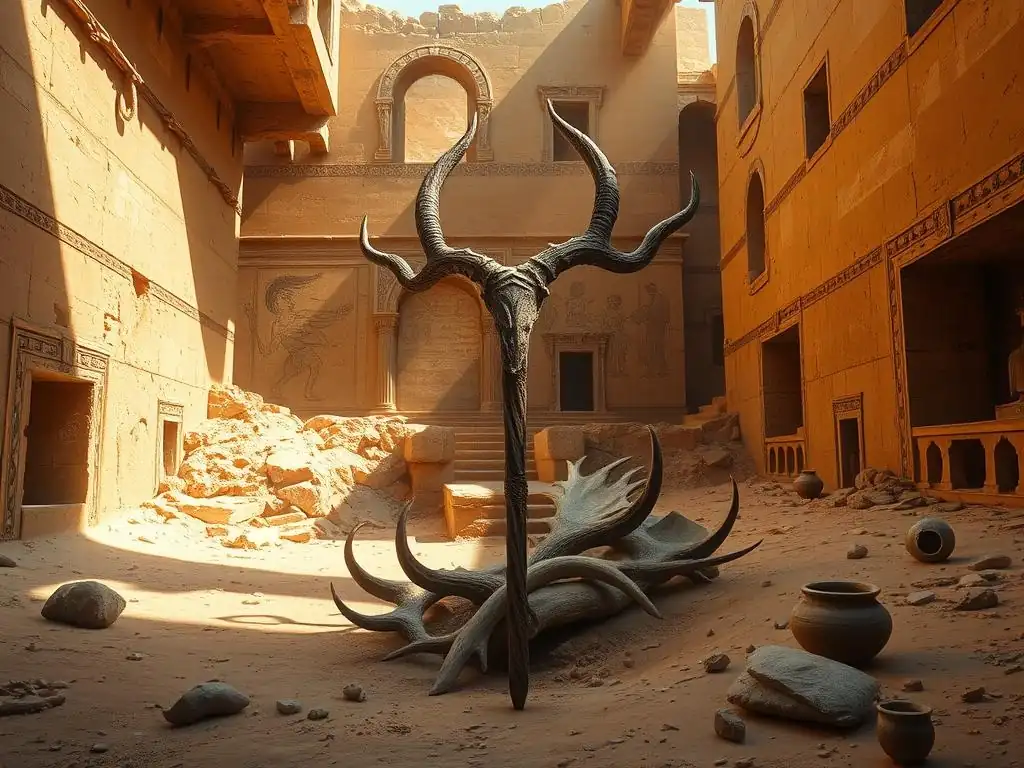
Welcome to ArchaeologyHub.org, your digital gateway to the ancient world. Ever wondered what secrets lie hidden within seemingly simple artifacts? Dive into our latest exploration of " Ancient antler staff symbolism," where we unravel the mysteries behind these intricately carved objects. Discover whether these staffs were potent symbols of authority, tools for sacred rituals, or something else entirely. Prepare to embark on a journey through time, and explore the fascinating world of material culture!
- Introduction: Unveiling the Enigmatic Antler Staffs of Antiquity
- Archaeological Context: Discovering Antler Staffs Across Time and Cultures
- Material Analysis: The Significance of Antler as a Medium
- Decorative Motifs and Iconography on Antler Staffs
- Antler Staffs as Symbols of Authority and Status
- Ritualistic Interpretations: Antler Staffs in Shamanic and Religious Practices
- Case Studies: Examining Specific Examples of Carved Antler Staffs
- Experimental Archaeology: Replicating and Studying Antler Staff Production Techniques
- The Role of Antler Staffs in Ancient Social Structures
- Alternative Interpretations: Beyond Power and Ritual
- The Preservation and Conservation of Ancient Antler Artifacts
- Conclusion: Deciphering the Enduring Mystery of Ancient Antler Staff Symbolism
-
Frequently Asked Questions
- What is the primary focus of archaeological studies regarding ancient antler staffs?
- Where have carved and engraved antler staffs been predominantly discovered?
- What types of engravings are typically found on ancient antler staffs?
- Can the discovery location of an antler staff help determine its potential use?
- How does ArchaeologyHub.org contribute to the understanding of antler staff symbolism?
- Final Reflection: Echoes of Ancient Authority
- Unearth Your Own Discoveries!
Introduction: Unveiling the Enigmatic Antler Staffs of Antiquity
Throughout the archaeological record, objects crafted from animal bone and antler frequently appear, offering profound insights into the lives and beliefs of ancient peoples. Among these, the enigmatic antler staffs and scepters stand out, characterized by their intricate carvings and often perplexing contexts of discovery. These artifacts, found across vast geographical areas and spanning millennia, challenge archaeologists to decipher their true purpose: were they potent symbols of earthly authority, revered instruments of spiritual practice, or perhaps something more multifaceted?
The debate surrounding the function of these ancient antler staffs highlights the complexities inherent in interpreting prehistoric material culture. While some scholars propose they served as badges of rank or leadership, akin to modern scepters, others argue for their role in shamanic rituals, connecting individuals to the natural world and its spiritual dimensions. This article delves into the archaeological evidence, material properties, and decorative motifs of these fascinating objects, seeking to unravel the rich tapestry of ancient antler staff symbolism and their profound significance in human prehistory.
Archaeological Context: Discovering Antler Staffs Across Time and Cultures
Geographic Distribution of Ancient Antler Staff Finds
Ancient antler staffs have been unearthed across a remarkably wide geographic expanse, indicating their widespread importance in various prehistoric societies. In Europe, a significant concentration of these artifacts, particularly the so-called "bâtons de commandement," derives from Upper Paleolithic sites, predominantly in France and Spain, with notable examples from locations such as the Dordogne region and the Cantabrian coast. Further east, in regions like Siberia and parts of North America, similar objects crafted from antler or bone suggest parallel cultural developments, albeit with distinct stylistic differences.
Beyond the Paleolithic, antler staffs continue to appear in Mesolithic and Neolithic contexts, though often with variations in form and decoration. For instance, the famous Star Carr site in Yorkshire, England, yielded unique antler headdresses, which, while not traditional staffs, share a profound connection to ancient antler staff symbolism and ritualistic use. In the Near East, some early Neolithic sites have also produced bone and antler artifacts that may have served ceremonial or symbolic roles, extending the distribution of these enigmatic objects beyond traditional European hunting-gathering societies into early agricultural communities.
Chronological Overview of Antler Staff Usage in Prehistory
The earliest known examples of elaborately carved antler staffs date back to the Middle and Upper Paleolithic periods, roughly spanning from 40,000 to 10,000 years ago. During the Magdalenian period (circa 17,000 to 12,000 years ago), the production of these artifacts reached a peak, characterized by highly sophisticated engravings of animals like horses, bison, and deer, as well as abstract patterns. These objects are often found in habitation layers within caves and rock shelters, sometimes in association with other artistic expressions like cave paintings.
As human societies transitioned into the Mesolithic (circa 10,000 to 5,000 years ago) and Neolithic (circa 5,000 to 2,000 years ago), the forms and contexts of antler artifacts evolved. While the sheer abundance of highly decorated staffs from the Paleolithic lessened, antler continued to be a valued material for tools, ornaments, and potentially symbolic objects. The continuation of ancient antler staff symbolism into later periods, albeit in modified forms, underscores the enduring cultural significance of this material and the animal it represents, adapting to changing subsistence strategies and social structures.
Material Analysis: The Significance of Antler as a Medium
Properties of Antler: Durability, Availability, and Symbolic Association
Antler, a highly resilient and renewable resource, possessed several properties that made it an ideal medium for crafting enduring artifacts. Unlike bone, which forms part of a permanent skeletal structure, antlers are shed annually by male cervids (deer, reindeer, elk), making them a readily available and ethically obtainable raw material in regions where these animals thrived. Its dense, compact structure, particularly the outer cortical bone, provides exceptional strength and durability, allowing for intricate carving and engraving without significant risk of breakage during use or over time.
Beyond its practical attributes, antler held profound symbolic significance for ancient cultures. Its cyclical growth and shedding, mirroring the seasons, likely connected it to themes of renewal, fertility, and the life-death-rebirth cycle.
The animals themselves, such as the majestic red deer or the migratory reindeer, were often central to the subsistence and spiritual lives of prehistoric hunter-gatherers. Crafting an object from antler would therefore imbue it with the power and essence of the animal, making it a potent conduit for ancient antler staff symbolism related to hunting prowess, spiritual connection, or even a lineage's ancestral ties to the animal kingdom.
Antler Sourcing and Trade in Ancient Societies
The procurement of antler in ancient societies was multifaceted, ranging from opportunistic collection of shed antlers to targeted hunting of cervids. Evidence from archaeological sites suggests that large quantities of antler were often processed, indicating a deliberate and organized approach to resource management. For example, analysis of faunal remains at Magdalenian sites in southwestern France shows a clear preference for reindeer antler, which was abundant and provided long, straight sections ideal for crafting staffs and other tools.
While local sourcing was common, there is also compelling evidence for the movement of antler over considerable distances, suggesting established trade networks. The discovery of specific types of antler, such as those from reindeer, in areas where these animals were not indigenous during certain periods, points towards exchange systems. This exchange might have been driven by the desire for specific material qualities, or perhaps the finished ancient antler staff symbolism itself, indicating that these objects, or the raw materials for them, were valuable commodities exchanged between different groups, further elevating their status and importance.
Decorative Motifs and Iconography on Antler Staffs
Analysis of Carved Designs: Animals, Humans, and Abstract Patterns
The surfaces of many ancient antler staffs are adorned with a rich array of carved designs, offering a window into the artistic sensibilities and cognitive worlds of their creators. Zoomorphic representations are particularly common, featuring detailed depictions of animals such as horses, bison, mammoths, and various species of deer. These animal figures are often rendered with remarkable anatomical accuracy and dynamic poses, suggesting a deep observation and understanding of the natural world. Some carvings depict hunting scenes or animal interactions, hinting at narratives or mythological contexts.
Alongside animal motifs, some antler staffs feature anthropomorphic figures, though these are generally less common and often more stylized. Abstract patterns, including geometric designs like zigzags, chevrons, circles, and intricate meanders, also frequently appear. The combination of these diverse motifs on a single artifact suggests a complex layer of meaning, where the ancient antler staff symbolism might have been derived from the interplay between realistic animal depictions, human forms, and abstract representations of natural phenomena or cosmic order. The specific arrangement and repetition of these patterns could have conveyed specific messages or served as mnemonic devices.
Regional Variations in Antler Staff Decoration and Imagery
While certain themes, such as animal depictions, are widespread, distinct regional variations in antler staff decoration and imagery are discernible across different prehistoric cultures and periods. In the Upper Paleolithic of Western Europe, particularly the Magdalenian, the "bâtons de commandement" from sites like Le Mas d'Azil and La Madeleine are renowned for their exquisite and detailed engravings of horses, reindeer, and fish, often characterized by a naturalistic style and dynamic composition. These objects frequently incorporate perforations, which might have been functional or symbolic.
In contrast, antler artifacts from Mesolithic Northern Europe, such as the Star Carr headdresses, exhibit a different emphasis, focusing on the manipulation of the antler itself to resemble animal heads, often with minimal additional engraving. Similarly, artifacts from North American indigenous cultures, while also utilizing antler, often feature distinct artistic traditions, incorporating unique zoomorphic or geometric motifs reflective of local fauna and spiritual beliefs. These regional differences underscore that while the raw material was common, the ancient antler staff symbolism expressed through artistic embellishment was deeply rooted in specific cultural narratives and environmental contexts.
Evidence for Elite Use: Antler Staffs in Burials and Ceremonial Contexts
The archaeological context of many antler staff finds strongly suggests their association with individuals of high status or those holding significant roles within their communities. While direct evidence of "elite" burials from the Paleolithic is rare, some antler staffs have been discovered in contexts that imply special deposition or use. For example, the careful placement of decorated staffs within certain cave sites, sometimes in areas difficult to access, hints at their ceremonial significance rather than everyday utility.
In later periods, particularly the European Neolithic and Bronze Age, the evidence for status objects becomes more explicit, though antler staffs are less common than metal or polished stone artifacts. However, where antler artifacts appear in funerary contexts, such as certain Neolithic chiefdom burials in central Europe, they are often associated with other prestige goods, indicating their role as markers of social differentiation.
The inherent value of the raw material, combined with the significant skill and time required for their production, would have made these ancient antler staff symbolism objects accessible only to a select few, reinforcing their status as symbols of authority.
Comparative Analysis: Antler Staffs vs. Other Symbols of Power
To understand the potential role of antler staffs as symbols of power, it is useful to compare them with other known prestige artifacts from the prehistoric record. Polished stone axes, particularly those made from exotic or rare stones, often served as symbols of status and authority in Neolithic societies, indicating control over resources and labor. Similarly, the emergence of metal weaponry and ornaments in the Bronze Age clearly marked social hierarchies, with elaborate swords, daggers, and gold jewelry signifying elite status and military prowess.
While antler staffs might not possess the same overt practical utility as a polished axe or a metal sword, their intricate decoration and the effort invested in their creation align them with these other prestige goods. The ancient antler staff symbolism could have conveyed a different kind of power – one rooted in spiritual authority, ancestral connection, or deep knowledge of the natural world, rather than purely military or economic might. Their unique combination of natural material, artistic skill, and potential ritualistic association positioned them as distinct, yet equally potent, emblems of influence within their respective societies.
Ritualistic Interpretations: Antler Staffs in Shamanic and Religious Practices
Antler Staffs and Animistic Beliefs: Connecting with the Animal World
A compelling interpretation of ancient antler staff symbolism is their role within animistic belief systems and shamanic practices. In many indigenous cultures, antlers are seen as powerful conduits to the spirit world, embodying the strength, agility, and regenerative qualities of the animals from which they derive. The annual shedding and regrowth of antlers could have symbolized cyclical renewal, transformation, and a connection to the rhythms of nature, making them ideal objects for rituals aimed at ensuring successful hunts, fertility, or spiritual journeys.
The detailed animal engravings on many antler staffs, often depicting prey animals or powerful predators, further support this interpretation. Shamans or spiritual leaders might have used these staffs to invoke animal spirits, guide communal rituals, or even to enter altered states of consciousness. The act of holding and manipulating an object crafted from antler, adorned with images of the very creatures central to their survival and cosmology, would have reinforced a profound spiritual bond between humans and the animal world, essential for maintaining balance and prosperity in their environment.
Evidence for Ritual Use: Wear Patterns, Associated Artifacts, and Ethnographic Parallels
Archaeological evidence for ritual use of antler staffs is often indirect but compelling. Analysis of wear patterns on some artifacts, such as the "bâtons de commandement," occasionally reveals polish or abrasion not consistent with their proposed functional uses (e.g., shaft straighteners), suggesting repeated handling during ceremonial activities. The discovery of these staffs within specific, often remote or sacred, areas of caves, sometimes alongside other ritual paraphernalia like pigments or symbolic carvings, further strengthens the argument for their non-utilitarian, ritualistic purpose.
Ethnographic parallels from contemporary or historically documented indigenous societies provide valuable insights into potential ancient antler staff symbolism. Many cultures around the world utilize staffs, wands, and other hand-held objects in shamanic performances, healing ceremonies, and spiritual dances. These objects often incorporate animal parts, feathers, or symbolic carvings, serving as focal points for spiritual energy, mnemonic aids for chants, or extensions of the practitioner's power. While not direct proof, these parallels offer plausible models for understanding how ancient antler staffs might have functioned in similar ritual contexts, bridging the gap between archaeological finds and human behavior.
Case Studies: Examining Specific Examples of Carved Antler Staffs
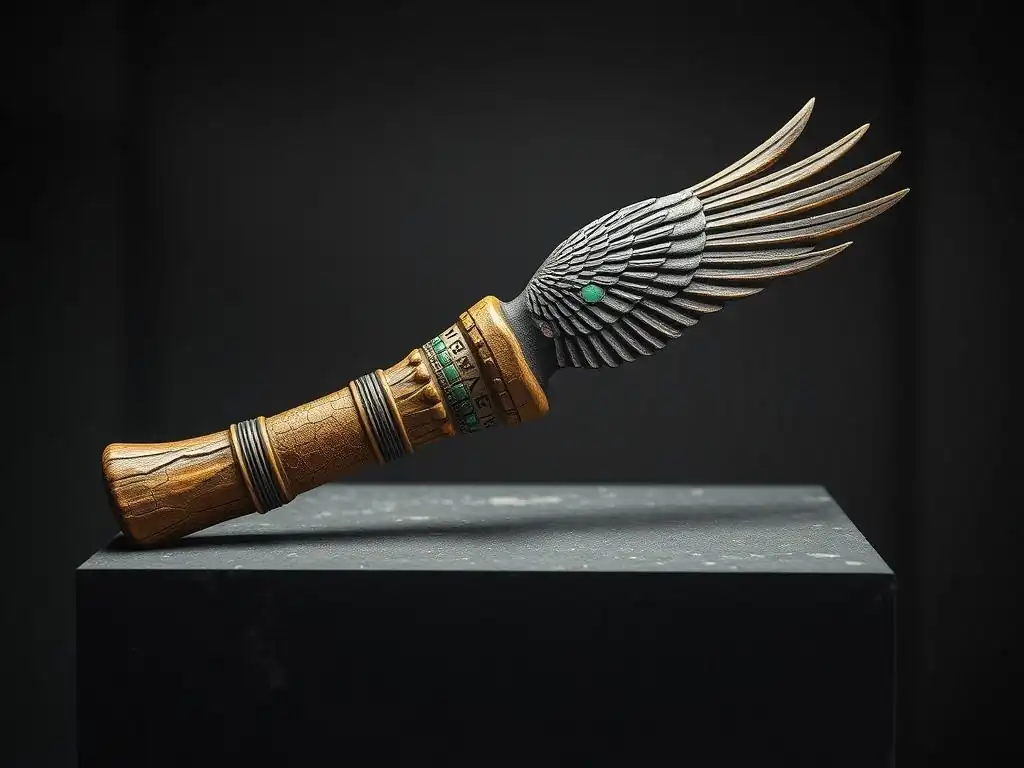
The Star Carr Antler Headdresses: A Detailed Analysis
One of the most remarkable examples of ancient antler staff symbolism in a ritual context comes from the Mesolithic site of Star Carr in North Yorkshire, England, dating to approximately 9,000 BCE. Here, archaeologists unearthed over 20 modified red deer skull caps, many with the antlers still attached and carefully trimmed, perforated, and smoothed. These artifacts, often referred to as "antler headdresses," were clearly not tools or weapons but rather appear to have been worn on the head, possibly secured by straps through the drilled holes.
The meticulous modification of these antlers, including the removal of bone to reduce weight and the shaping of the skull cap to fit a human head, indicates a significant investment of time and skill. Their interpretation as ritualistic headwear, possibly used in shamanic dances, hunting disguises, or ceremonial performances, is widely accepted. The headdresses would have allowed the wearer to embody or connect with the red deer, a crucial animal for subsistence and perhaps spiritual beliefs in Mesolithic Britain, exemplifying a tangible manifestation of ancient antler staff symbolism related to human-animal transformation and spiritual communion.
Comparison of Antler Staffs from Different Archaeological Contexts
Comparing the Star Carr headdresses with the Upper Paleolithic "bâtons de commandement" from sites like La Madeleine in France highlights the diversity of ancient antler staff symbolism and form across different periods and regions. The Magdalenian bâtons are typically straight or curved sections of reindeer antler, often perforated at one end, and intricately engraved with zoomorphic or geometric motifs.
Their function remains debated, with theories ranging from shaft straighteners to shamanic wands or clan symbols. Unlike the Star Carr headdresses, which are explicitly worn on the head, the bâtons are handheld objects, implying a different mode of interaction and display.
Another comparative example could be the bone and antler artifacts from early Neolithic sites in the Near East, such as Çatalhöyük, where carved bone points or "scepters" sometimes feature abstract patterns or simplified animal forms. While less elaborate than their European Paleolithic counterparts, these objects also hint at symbolic roles within emerging agricultural societies. This cross-cultural comparison underscores that while the material (antler) remained significant, the specific manifestations and interpretations of ancient antler staff symbolism evolved, reflecting the unique social, economic, and spiritual landscapes of diverse prehistoric communities.
Experimental Archaeology: Replicating and Studying Antler Staff Production Techniques
Recreating Ancient Carving Methods: Tools and Techniques
Experimental archaeology plays a crucial role in understanding the production of ancient antler staffs, offering insights into the tools, techniques, and skills required. Researchers have replicated the carving process using materials available to prehistoric artisans, such as flint burins, abrasive sandstone, and animal fats for polishing. The initial shaping of the antler often involved grooving and snapping techniques to detach sections from the main beam, followed by meticulous scraping and grinding to achieve the desired form.
For engraving, fine flint burins, essentially chisel-like tools with sharp edges, were used to incise lines and create detailed imagery. The precision and depth of some Paleolithic carvings suggest a high degree of manual dexterity and specialized knowledge of antler properties. Recreating these techniques has demonstrated that the production of an intricately carved antler staff was not a trivial task; it demanded significant time, patience, and a mastery of lithic technology, further emphasizing the value and ancient antler staff symbolism these objects held for their creators.
Assessing the Time and Skill Required to Produce Carved Antler Staffs
Through experimental archaeology, researchers have estimated that producing a single, elaborately carved antler staff could have taken dozens, if not hundreds, of hours of dedicated labor. For instance, replicating a Magdalenian "bâton de commandement" with complex engravings can require an experienced experimental archaeologist upwards of 50-100 hours of work, depending on the complexity of the design and the availability of suitable raw material. This time investment would have been substantial for a prehistoric individual or community, highlighting the intrinsic value placed on these artifacts.
The high level of craftsmanship evident in many ancient antler staffs also suggests the presence of skilled artisans, perhaps specialists within their communities. The consistent quality of engraving across multiple finds implies a shared artistic tradition and a transmission of technical knowledge across generations. This significant investment of time and specialized skill further elevates the ancient antler staff symbolism, suggesting they were not merely functional items but highly prized objects embodying cultural knowledge, artistic prowess, and potentially spiritual power.
The careful crafting and often elaborate decoration of ancient antler staffs strongly suggest their role as markers of social differentiation within prehistoric communities. In societies that lacked overt hierarchies or material wealth in the modern sense, the possession of such unique and skillfully made objects would have immediately set an individual apart. These staffs could have signified access to rare resources (e.g., specific types of antler), specialized knowledge (e.g., hunting expertise, ritual lore), or the ability to command the labor of skilled artisans.
Their presence might have indicated an individual's position as a leader, a shaman, a master hunter, or a storyteller. The visual communication inherent in the ancient antler staff symbolism would have served as a constant reminder of the bearer's status and influence, reinforcing social order and individual roles within the group. While direct evidence of rigid social stratification is scarce for the Paleolithic, these artifacts provide compelling insights into subtle yet significant distinctions in status and prestige.
The Connection Between Antler Staffs and Leadership Roles
While definitive proof linking antler staffs directly to specific leadership roles (e.g., "chiefs" or "kings") is challenging in prehistoric contexts, their association with individuals of apparent high standing suggests such a connection. In many traditional societies, leaders are often distinguished by specific regalia or symbolic objects that embody their authority. An antler staff, with its inherent connection to powerful animals and the natural world, would have been a fitting emblem for a leader whose role might have encompassed not only practical decision-making but also spiritual guidance and mediation.
The ancient antler staff symbolism could have conveyed a leader's ability to provide for the community through successful hunts, to interpret omens, or to maintain harmony with the spiritual realm. Whether held by a communal elder, a charismatic hunter, or a revered shaman, these staffs likely served as tangible representations of their unique capabilities and responsibilities, solidifying their position at the nexus of social, economic, and spiritual life within their group.
Alternative Interpretations: Beyond Power and Ritual
Antler Staffs as Functional Tools or Walking Sticks
While much of the focus on ancient antler staff symbolism centers on their ritual or status functions, it is also important to consider potential utilitarian roles. Some archaeologists propose that certain antler staffs, particularly those with a straight form and a perforation at one end, could have served as shaft straighteners for spears or arrows. The hole would allow a heated shaft to be bent and straightened by leverage, a practical application that aligns with the needs of hunter-gatherer societies.
Additionally, some antler staffs might have functioned as walking sticks or hiking aids, especially in challenging terrain. Their robust nature and ergonomic shape would make them suitable for this purpose. Even if primarily functional, the addition of intricate carvings would elevate them beyond mere tools, imbuing them with personal or group identity and perhaps a secondary layer of ancient antler staff symbolism related to travel, endurance, or the journey of life. The possibility of dual functionality – both practical and symbolic – should not be overlooked.
The Potential for Antler Staffs as Memory Aids or Narrative Devices
Another intriguing alternative interpretation is that ancient antler staffs served as mnemonic devices or narrative tools. The complex patterns and sequences of carved animals or abstract motifs could have functioned as visual aids for remembering stories, genealogies, migration routes, astronomical observations, or even complex ritual sequences. In oral cultures, such tangible objects often play a crucial role in the transmission and preservation of knowledge across generations.
For example, a staff depicting a series of animals might represent a seasonal hunting cycle or a specific myth involving those creatures. The ancient antler staff symbolism in this context would be less about power or direct ritual manipulation, and more about the embodiment of collective memory and cultural narratives. Holding and tracing the carvings on such a staff could have been an integral part of storytelling, teaching, or communal recollection, making these objects vital repositories of cultural heritage.
The Preservation and Conservation of Ancient Antler Artifacts
Challenges in Preserving Antler: Degradation and Damage
The preservation of ancient antler artifacts in the archaeological record presents significant challenges due to the organic nature of the material. Antler, primarily composed of calcium phosphate and collagen, is susceptible to various forms of degradation. In oxygen-rich and fluctuating environments, collagen can break down, leading to the fragmentation and disintegration of the artifact. Moisture fluctuations cause cycles of swelling and shrinking, which can lead to cracking and warping, particularly in drier conditions.
Biological agents such as bacteria, fungi, and insects also pose a constant threat, consuming the organic components of the antler. For example, in damp, anaerobic environments like bogs or waterlogged sites (e.g., Star Carr), antler can be remarkably well-preserved due to the absence of oxygen, but once excavated and exposed to air, rapid degradation can occur unless immediate conservation measures are taken. The inherent fragility of these ancient objects underscores the difficulty in recovering and studying the full spectrum of ancient antler staff symbolism.
Current Conservation Methods for Archaeological Antler Finds
Upon excavation, archaeological antler finds require immediate and specialized conservation to prevent rapid deterioration. The primary goal of conservation is to stabilize the material and prevent further degradation. For waterlogged antler, a common method involves slow drying combined with impregnation using polyethylene glycol (PEG), a water-soluble wax that replaces water within the cellular structure, preventing shrinkage and collapse. This process can take many months or even years, depending on the size and condition of the artifact.
For antler found in dry conditions, conservation often focuses on cleaning, consolidation with appropriate polymers, and ensuring stable environmental conditions for storage and display. Controlled humidity and temperature are critical in museum environments to prevent desiccation or rehydration. The meticulous work of conservators ensures that these fragile remnants of prehistoric life, which encapsulate rich ancient antler staff symbolism, can be studied by future generations and continue to inform our understanding of ancient cultures.
Conclusion: Deciphering the Enduring Mystery of Ancient Antler Staff Symbolism
Summarizing the Evidence: Power, Ritual, and Beyond
The archaeological study of carved and engraved antler staffs and scepters reveals a complex and multifaceted picture of their role in ancient societies. While often categorized as either symbols of power or ritual objects, the evidence suggests that their ancient antler staff symbolism was likely fluid and intertwined.
They appear to have functioned as markers of social status, distinguishing individuals with unique skills or roles, and as potent instruments in spiritual practices, connecting humans to the vital animal world and the unseen forces of nature. The significant investment in their material sourcing, artistic production, and careful deposition underscores their profound cultural value.
Beyond these primary interpretations, the possibility of their use as functional tools, mnemonic devices, or narrative aids adds further layers to their enigmatic nature. The regional and chronological variations in their form and decoration highlight the diverse ways in which different prehistoric communities integrated these objects into their distinct cultural frameworks. Ultimately, these antler artifacts stand as eloquent testaments to the sophisticated cognitive abilities, artistic prowess, and complex belief systems of our ancient ancestors, reflecting a deep engagement with their environment and its spiritual dimensions.
Future Research Directions: Unlocking Further Insights into Antler Staff Usage
Despite extensive research, many questions surrounding ancient antler staff symbolism remain. Future research directions could benefit from increasingly sophisticated analytical techniques, such as residue analysis, to identify traces of materials or substances that might have been applied to the staffs, offering clues about their use in specific rituals or their handling. Micro-wear analysis, utilizing advanced microscopy, could provide more definitive evidence of specific handling or contact patterns, helping to distinguish between functional and ceremonial wear.
Furthermore, continued interdisciplinary collaboration, integrating archaeological findings with ethnohistorical accounts and cognitive archaeology, can offer richer interpretive frameworks. The application of 3D scanning and digital modeling technologies can facilitate detailed comparative studies of forms and motifs across vast datasets, potentially revealing subtle patterns or shared symbolic codes that are not immediately apparent. By leveraging these advancements, archaeologists hope to unlock even deeper insights into the enduring mystery and profound significance of these remarkable antler artifacts in human prehistory.
Frequently Asked Questions
What is the primary focus of archaeological studies regarding ancient antler staffs?
Archaeological studies primarily focus on determining whether these staffs functioned as symbols of power for elites or served as ritual objects within ancient societies, examining their context and ornamentation.
Where have carved and engraved antler staffs been predominantly discovered?
These staffs have been discovered across various geographic regions, but are particularly prevalent in European archaeological sites, often associated with specific cultures and time periods.
What types of engravings are typically found on ancient antler staffs?
Engravings often depict animal motifs, geometric patterns, and occasionally human figures, offering valuable insights into the beliefs and artistic expression of the people who created them.
Can the discovery location of an antler staff help determine its potential use?
Yes, the context of discovery, such as whether it was found in a burial site, a domestic setting, or a ceremonial location, can provide crucial clues about its potential function.
How does ArchaeologyHub.org contribute to the understanding of antler staff symbolism?
ArchaeologyHub.org provides detailed artifact profiles, interpretive analyses, and organized historical content that help researchers and enthusiasts explore the diverse interpretations of ancient antler staff symbolism.
The journey through the intricate carvings and engravings of ancient antler staffs and scepters reveals more than just artistic skill; it unveils a profound connection to the very essence of power and ritual that continues to resonate in our understanding of early societies. These objects, once held with reverence, offer a tangible link to the beliefs and practices that shaped the world we inhabit today, reminding us that the symbols we create hold enduring significance.
The enduring fascination with these artifacts underscores humanity's innate desire to understand its past and the origins of authority. The symbolism etched into these antler staffs speaks volumes about the values and beliefs of those who wielded them, influencing not only their immediate communities but also leaving a lasting imprint on the cultural narratives that followed. Symbols control the world, far more than most people realize.
- Dan Brown, reminding us of the potent and often unseen influence of symbolic representation.
As we contemplate the legacy of these ancient antler staffs, let us consider the symbols we embrace in our own lives. What values do they represent? What stories do they tell? Embrace the power of reflection and strive to create symbols that inspire, uplift, and contribute to a future where authority is wielded with wisdom and respect.
Unearth Your Own Discoveries!
Thank you for delving into the fascinating world of antler staffs and scepters! We hope this glimpse into these intriguing artifacts has sparked your curiosity about ancient rituals and power symbols. Now, it's your turn to connect with this knowledge and share the wonder.
Here’s how you can take the next steps:
- Create your own artistic rendering of what you believe the carvings on these staffs represent. Share your vision and interpretation with others.
- Explore other archaeological discoveries in your local area. Perhaps you'll find something just as intriguing!
- Share this article with friends and family interested in history and archaeology. Let's spread the word and inspire more people to appreciate our shared past!
What overlooked object in your own community might hold clues to understanding a forgotten chapter of history?