
The Kartan Industry: Characterizing Early Stone Tools of Southern Australia

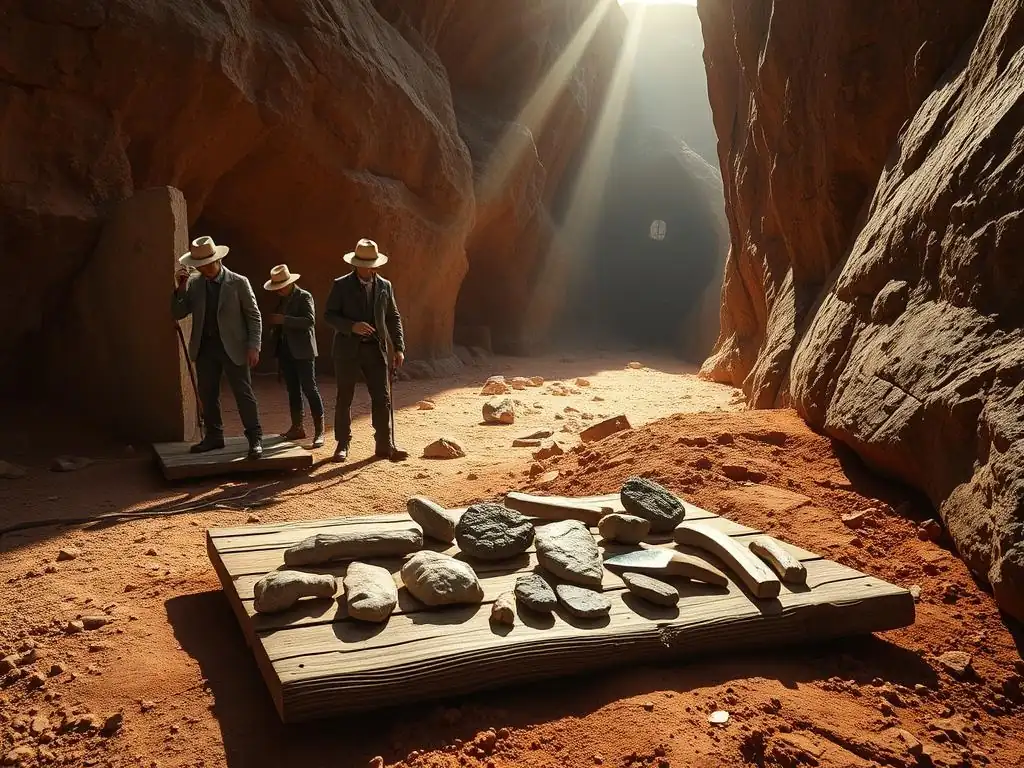
Welcome to ArchaeologyHub.org, your portal to unlocking the secrets of the past! Ever wondered how early humans adapted to the challenging landscapes of ancient Australia? Dive into our comprehensive analysis of the Kartan stone tools Australia, a fascinating glimpse into the ingenuity and resilience of its first inhabitants. Explore the tools, the techniques, and the stories they tell, and discover how this crucial industry shaped the cultural landscape of Southern Australia. Prepare to be amazed!
- Introduction to the Kartan Industry and its Significance in Australian Prehistory
- Geographic Distribution of Kartan Sites in Southern Australia
- Defining Characteristics of Kartan Stone Tools
- Dating the Kartan Industry: Establishing a Chronology
- The Kartan Industry in the Context of Australian Megafauna
- Technological Comparisons: Kartan vs. Other Early Australian Stone Tool Industries
- Interpretations of Kartan Tool Function and Use
- The Kartan Industry: Implications for Understanding Early Human Migration
- Current Research and Future Directions in Kartan Studies
- Conclusion: The Enduring Legacy of the Kartan Industry
-
Frequently Asked Questions
- What is the Kartan Industry, and where is it primarily found?
- What are some defining characteristics of Kartan stone tools?
- How does the Kartan Industry contribute to our understanding of early Australian settlement?
- How does the dating of Kartan stone tools compare to other early archaeological finds in Australia?
- What are some of the key sites where Kartan stone tools have been discovered?
- Final Reflection: Echoes of Innovation in Stone
- Unearth Your Inner Archaeologist: Continue the Discovery!
Introduction to the Kartan Industry and its Significance in Australian Prehistory
ArchaeologyHub.org's Focus on Oceanian & Australian Prehistory
ArchaeologyHub.org serves as a comprehensive digital encyclopedia, meticulously detailing archaeological discoveries, excavation techniques, and historical sites from across the globe. A significant focus of our platform is dedicated to Oceanian and Australian Prehistory, recognizing the unparalleled insights it offers into early human colonization and adaptation in one of the world's most ancient and isolated continents. Our commitment lies in providing detailed timelines, artifact profiles, and interpretive analyses that illuminate the deep past of Australia, from the earliest human arrivals to the development of complex cultural landscapes.
This dedicated section aims to provide scholars, students, and enthusiasts with an unparalleled resource for understanding the unique archaeological record of Australia. By meticulously documenting specific traditions, such as the Kartan Industry, ArchaeologyHub.org contributes to a deeper appreciation of the ingenuity and resilience of the continent's first inhabitants. Our content is structured to facilitate a vast taxonomy of in-depth historical knowledge, ensuring that every discovery, no matter how small, finds its place within the grand narrative of human history in this remarkable region.
Understanding the Kartan: A Key to Early Human Occupation in Southern Australia
The Kartan Industry represents one of the earliest and most distinctive stone tool traditions identified in southern Australia, offering crucial insights into the technological capabilities and adaptive strategies of the continent's initial inhabitants. Its widespread distribution and unique morphological characteristics make it a foundational archaeological culture for understanding the pioneering phase of human settlement. The study of Kartan tools provides a tangible link to the lifeways of early Australians, revealing how they exploited resources, moved across landscapes, and interacted with their environment during the Late Pleistocene.
Archaeological investigations into Kartan sites have been instrumental in pushing back the timeline of human presence in southern Australia, challenging earlier assumptions about the pace and patterns of continental colonization. These robust stone tools, often found in association with ancient landscapes, serve as direct evidence of the sophisticated adaptations developed by these early groups. Unlocking the secrets of the Kartan Industry is therefore not merely about cataloging artifacts, but about reconstructing the very fabric of early human existence in this vast and diverse land.
Kartan Stone Tools Australia: An Overview of the Industry
The Kartan Industry is primarily characterized by the production of large, often unifacially flaked core tools and substantial flakes, typically exhibiting minimal or crude retouch. These tools are generally robust and heavy, contrasting sharply with the smaller, more refined flake tool industries that emerged later in Australian prehistory. The raw materials preferred by Kartan knappers were predominantly coarse-grained, such as quartzite, chert, and sometimes silcrete, chosen for their durability and availability in the southern Australian landscape.
Chronologically, the Kartan Industry spans a considerable period, with evidence suggesting its presence from approximately 35,000 years Before Present (BP) in some inland contexts to around 16,000-11,000 BP in coastal regions like Kangaroo Island. This extensive temporal range indicates a long-lived and successful adaptation by the groups who produced Kartan stone tools Australia. Their distinctive form and widespread distribution make them a key marker for identifying early human occupation across a significant portion of the continent.
Geographic Distribution of Kartan Sites in Southern Australia
Key Kartan Archaeological Sites: Kangaroo Island, Lake Menindee, Keilor
Kangaroo Island, off the coast of South Australia, is considered the type-site for the Kartan Industry, where hundreds of surface scatters and some stratified deposits reveal the distinctive large core and flake tools. The earliest findings on the island, dating back perhaps 16,000 years BP, demonstrate a long-term occupation by people utilizing these characteristic implements. The island's isolation after sea-level rise preserved these assemblages, making them crucial for defining the industry.
Further inland, sites like Lake Menindee in western New South Wales have yielded Kartan-like assemblages, some associated with extinct megafauna remains, potentially dating back as early as 35,000 years BP. This association suggests a deep antiquity for such robust tool use in inland environments.
The Keilor archaeological complex near Melbourne, Victoria, also presents tools with some Kartan characteristics, found in contexts potentially dating to 31,000 years BP. While the Keilor tools are often debated in their precise Kartan classification, their early age and robust nature align with the broader technological trends of the period, contributing to our understanding of the distribution of Kartan stone tools Australia.
Environmental Context of Kartan Occupation: Pleistocene Landscapes
During the Late Pleistocene, when the Kartan Industry flourished, the Australian continent experienced significantly different environmental conditions than today. The Last Glacial Maximum (LGM), around 20,000 years BP, brought cooler and much drier climates, leading to vast expanses of grasslands, open woodlands, and reduced forest cover. Crucially, global sea levels were up to 120 meters lower, exposing extensive continental shelf areas that are now submerged. This created a much larger landmass, connecting Tasmania to the mainland and expanding the coastal plains of southern Australia.
These transformed landscapes influenced resource availability and human mobility. The presence of large-bodied megafauna, such as Diprotodon optatum and Genyornis newtoni, alongside the Kartan toolmakers, suggests an ecosystem teeming with large game. The lower sea levels meant that today's offshore islands, like Kangaroo Island, were accessible by land, facilitating the spread of human populations and their distinctive Kartan stone tools across a continuous southern land bridge. The adaptive strategies reflected in these tools were intrinsically linked to navigating and exploiting these vast, shifting Pleistocene environments.
Coastal and Inland Kartan Assemblages: Distribution Patterns
The distribution of Kartan sites reveals a remarkable adaptability of early Australian populations, with assemblages found in both former coastal and inland environments. On Kangaroo Island, the Kartan sites, now coastal due to rising sea levels, represent what would have been an accessible part of the mainland during the LGM, indicating the use of these tools in landscapes that included coastal plains and potentially marine resources. These sites are often dense surface scatters, testament to long-term occupation and extensive tool production.
Inland sites, such as those around the Willandra Lakes system (including Lake Menindee), demonstrate the presence of Kartan stone tools Australia deep within the continent's arid and semi-arid zones. This widespread pattern suggests that the robust toolkit was effective for a variety of tasks across diverse ecological niches, from the now-submerged coastal plains to the dry lakebeds and riverine systems of the interior. The ability of Kartan knappers to adapt their technology to different raw material availabilities and subsistence needs underlines the flexibility and success of this early industry.
Defining Characteristics of Kartan Stone Tools
Raw Material Selection and Sourcing in Kartan Tool Production
Kartan toolmakers primarily selected locally available, coarse-grained raw materials for their implements, with quartzite being the most commonly utilized stone across many sites. Other materials, such as chert, silcrete, and various volcanic rocks, were also employed depending on their geological availability within specific regions. The choice of these robust materials was crucial for producing the large, durable tools characteristic of the Kartan Industry, which were likely intended for heavy-duty tasks that required strength and resistance to breakage.
Evidence for raw material sourcing suggests a pragmatic approach to procurement. While most materials were obtained from immediate vicinities, such as river gravels, exposed bedrock, or beach cobbles, some instances indicate transport over short to moderate distances. For example, specific quartzite outcrops might have been favored sources, with tools or blanks carried several kilometers. This suggests a basic understanding of geological resources and a degree of planning in the acquisition of suitable stone for the manufacture of Kartan stone tools Australia.
Core Reduction Techniques in the Kartan Industry
The dominant core reduction technique in the Kartan Industry was primarily characterized by the detachment of large, robust flakes from prepared or unprepared cores using hard hammer percussion. This often involved direct striking of a core with a heavy hammerstone, resulting in broad, thick flakes with prominent bulbs of percussion and wide platforms. The primary goal was to produce substantial flakes that could be used as tools with minimal or no further modification, or to create durable core tools directly.
While some cores show evidence of limited preparation, such as the removal of a few preliminary flakes to create a striking platform, the overall approach was relatively expedient. The emphasis was on efficiency in producing large, functional blanks rather than intricate control over flake morphology. The resulting debitage often includes numerous large waste flakes, indicating a focus on maximizing the size and strength of the detached pieces, a hallmark of Kartan stone tools Australia.
Diagnostic Kartan Tool Types: Scrapers, Choppers, and Flake Tools
The Kartan Industry is typified by a relatively narrow range of diagnostic tool types, primarily comprising large scrapers, choppers, and robust flake tools. Scrapers are typically made on thick flakes or core fragments, featuring unifacially or bifacially retouched edges that suggest use for processing hides, wood, or plant materials. These tools often exhibit heavy-duty wear, consistent with tasks requiring significant force.
Choppers represent another key component, often fashioned from large pebbles or cores, with one or more edges flaked to create a crude but effective cutting or chopping implement. These heavy tools were likely used for tasks such as breaking bones, felling small trees, or processing large animal carcasses. Alongside these retouched forms, many large, unmodified or minimally modified flakes were also utilized as expedient cutting or scraping tools, demonstrating a pragmatic approach to tool use within the Kartan stone tools Australia assemblage.
Unifacial and Bifacial Tool Technologies
Within the Kartan Industry, both unifacial and bifacial flaking technologies are present, though unifacial modification is significantly more common. Unifacial tools are those where flakes have been removed from only one face of the artifact to create a working edge, leaving the opposite face largely unmodified. This technique is often seen on scrapers and some choppers, where a sturdy, sharp edge is created with relatively less effort.
Bifacial flaking, where flakes are removed from both faces of a tool, is less prevalent but can be observed on some larger choppers or handaxe-like forms. While these bifacial tools are not as refined or symmetrical as those found in later industries, their presence indicates a foundational understanding of shaping a tool by working both sides. The choice between unifacial and bifacial approaches likely depended on the specific raw material, the intended function of the tool, and the desired edge morphology for Kartan stone tools Australia.
Edge Grinding and Retouching Techniques
Edge grinding, while not a dominant feature, is a rare but significant characteristic observed on a small proportion of Kartan tools, particularly on the working edges of some choppers or large axes. This technique involves abrading or polishing the edge to create a sharper, more durable, or smoother finish. Its presence, even in limited instances, suggests a sophisticated understanding of tool modification beyond simple percussion flaking, possibly for specific tasks or to enhance tool longevity.
Retouching in the Kartan Industry is typically broad, invasive, and often expedient, reflecting the use of hard hammer percussion and the properties of the coarse-grained raw materials. The retouching was primarily aimed at creating or rejuvenating a functional working edge rather than achieving a precise or aesthetically uniform shape. This pragmatic approach to edge modification underscores the functional emphasis of Kartan stone tools Australia, designed for robustness and efficiency in demanding tasks.
Dating the Kartan Industry: Establishing a Chronology
Radiocarbon Dating of Kartan Sites: 16,000 to 35,000 Years BP
The chronology of the Kartan Industry has been established through a combination of absolute and relative dating techniques, with radiocarbon dating providing key insights into its antiquity. At sites like Lake Menindee in New South Wales, Kartan-like assemblages have been found in contexts dated by radiocarbon to as early as 35,000 years Before Present (BP), suggesting a very early presence of this robust technology in inland Australia. These dates are often associated with megafauna remains, hinting at potential human-megafauna interactions.
On Kangaroo Island, where the industry was first formally defined, radiocarbon dates from archaeological layers containing Kartan stone tools typically range from approximately 16,000 to 11,000 years BP. This indicates that while the industry has very deep roots, it also persisted into the terminal Pleistocene, showcasing its long-lived nature and adaptability across diverse environments and timeframes. These dates firmly place the Kartan Industry as one of the earliest widespread stone tool traditions in Australia.
Challenges in Dating Early Stone Tool Assemblages
Accurately dating early stone tool assemblages, particularly those as ancient as the Kartan, presents significant challenges. Many Kartan tools are found as surface scatters, often exposed by erosion or agricultural activity, which lack the crucial stratigraphic context necessary for precise dating. In such cases, the tools cannot be directly dated, and their age must be inferred from associated geological features or the dating of nearby, more securely stratified sites that contain similar assemblages.
Even in stratified contexts, issues such as the limited availability of datable organic material (e.g., charcoal, bone) in close association with the tools can hinder accurate radiocarbon dating. Furthermore, potential contamination of samples or post-depositional disturbance of archaeological layers can lead to ambiguous or misleading dates. These complexities necessitate a cautious and multi-faceted approach to chronology, often combining radiocarbon with other techniques like Optically Stimulated Luminescence (OSL) for sediments.
Relative Dating Methods Applied to Kartan Deposits
In situations where absolute dating methods are not feasible or yield inconclusive results, relative dating techniques play a crucial role in establishing the chronology of Kartan deposits. Stratigraphy, the study of geological layers, is a primary relative dating method. If Kartan stone tools Australia are consistently found within specific, older geological strata, beneath layers containing more recent artifact types, their relative antiquity can be inferred. This principle of superposition is fundamental to understanding the sequence of human occupation.
Typological comparisons also serve as a relative dating tool. The distinctive morphology of Kartan tools—their large size, robust nature, and characteristic flaking patterns—allows archaeologists to identify them even without direct dates. By comparing these forms to securely dated Kartan assemblages elsewhere, a relative age can be assigned. While less precise than absolute dating, these methods are vital for placing isolated finds or surface scatters within the broader chronological framework of Australian prehistory.
The Kartan Industry in the Context of Australian Megafauna
Evidence for Human-Megafauna Interactions in Kartan Sites
The relationship between the Kartan Industry and Australia's extinct megafauna is a subject of ongoing archaeological debate, yet compelling evidence suggests a degree of interaction. At sites such as Lake Menindee in New South Wales, Kartan-like stone tools have been found in the same stratigraphic layers as the skeletal remains of large extinct animals, including the enormous marsupial Diprotodon optatum and the giant flightless bird Genyornis newtoni. While direct cut marks on megafauna bones that conclusively link them to Kartan tools are rare, their contemporaneity in these deposits raises significant questions about human subsistence strategies.
The co-occurrence of Kartan stone tools Australia with megafauna suggests that these early human groups were present in landscapes where these large animals roamed. Whether this interaction involved active hunting, scavenging of natural deaths, or simply coexistence remains a key area of research. The robust nature of Kartan tools, particularly choppers and large scrapers, would have been suitable for processing the substantial carcasses of megafauna, hinting at a potential role in their exploitation.
The Role of Kartan Tools in Hunting or Processing Megafauna
The functional characteristics of Kartan tools lend themselves to activities associated with large game processing. The heavy choppers, often made from large river pebbles or cores, would have been effective for disarticulating joints, breaking open long bones for marrow extraction, or possibly even felling smaller trees to access resources. The large, sturdy scrapers could have been used for defleshing hides or processing tough plant materials, which might also be linked to activities around large animal carcasses.
While direct archaeological proof of megafauna hunting by Kartan populations remains elusive, the suitability of their toolkit for such tasks cannot be overlooked. The sheer scale and robust design of Kartan stone tools Australia imply their use in heavy-duty activities. The presence of these tools in locations where megafauna remains are abundant provides a circumstantial, yet powerful, argument for a functional relationship, whether through active predation, opportunistic scavenging, or a combination of both.
Environmental Changes and the Kartan Adaptation
The period of the Kartan Industry, spanning from the mid-Late Pleistocene to the terminal Pleistocene, was marked by significant environmental fluctuations, including the Last Glacial Maximum (LGM) around 20,000 years BP. These changes, particularly increasing aridity and colder temperatures, led to widespread ecosystem shifts and are often implicated in the extinction of Australian megafauna. The long persistence of the Kartan Industry through these climatic shifts suggests a remarkable adaptability on the part of its practitioners.
The ability of Kartan populations to sustain their distinctive technology and lifeways across a changing continent, from now-submerged coastal plains to arid inland regions, speaks to their resilience. Their stone tool technology, characterized by versatile, robust implements, likely supported a flexible subsistence strategy capable of adapting to fluctuating resource availability. The disappearance of megafauna, whether influenced by human activity, climate change, or both, would have necessitated further adaptive responses, yet the Kartan tradition endured for millennia, showcasing the deep adaptive capacity of early Australian populations.
Technological Comparisons: Kartan vs. Other Early Australian Stone Tool Industries

Comparing the Kartan with the Core Tool and Scraper Tradition Industry
The Kartan Industry stands in distinct contrast to another widespread early Australian stone tool tradition, often referred to as the Core Tool and Scraper Tradition (CTST). While both traditions are ancient and feature core tools and scrapers, their defining characteristics differ significantly. The Kartan Industry is notable for its large, robust core tools and broad, often minimally retouched flakes, frequently made on coarse-grained materials like quartzite. The emphasis is on heavy-duty, durable implements.
In contrast, the CTST is generally characterized by smaller, more varied flake tools, often made from finer-grained materials when available, and typically exhibiting more extensive and delicate retouching. While core tools are also present in CTST assemblages, they are generally less dominant than in the Kartan. The distinction lies not just in size, but also in the overall approach to raw material selection, core reduction strategies, and the degree of secondary modification, leading to visibly different assemblages of Kartan stone tools Australia versus CTST tools.
Examining Technological Similarities and Differences
Despite their distinct characteristics, some technological similarities exist between the Kartan Industry and other early Australian stone tool traditions. Both generally relied on locally available raw materials, and hard hammer percussion was the primary flaking technique for detaching flakes. The fundamental principles of stone knapping were shared across these early industries, reflecting common ancestral knowledge of tool production.
However, the differences are more pronounced and highlight distinct adaptive strategies or cultural preferences. The Kartan's emphasis on large, robust tools suggests a focus on heavy-duty processing tasks, potentially related to the exploitation of large animals or dense woody vegetation. The CTST, with its more varied and often smaller tools, might indicate a more diversified toolkit for a broader range of activities, or perhaps a different suite of environmental challenges. These technological divergences underscore the regional variations in early human adaptation across the Australian continent, even as the Kartan stone tools Australia maintain their unique identity.
Regional Variations in Early Stone Tool Technology
Early Australian stone tool technology was not monolithic, and regional variations, including those within the broader Kartan sphere, are evident. While the Kartan Industry has a recognizable signature of large, robust tools, their specific forms and raw material choices could vary depending on local geological resources and environmental contexts. For instance, the exact types of quartzite or chert used would differ from one region to another, influencing the final appearance of the tools.
These regional differences might reflect localized adaptations to specific resource availability, differing subsistence patterns, or the independent development of technological solutions by various groups of early settlers. The presence of Kartan-like tools across a wide geographic area suggests a shared technological foundation, but the nuances in execution and assemblage composition speak to the dynamic and diverse nature of early human occupation. Understanding these regional distinctions is crucial for appreciating the full complexity of early Kartan stone tools Australia and the broader tapestry of Australian prehistory.
Interpretations of Kartan Tool Function and Use
Use-Wear Analysis of Kartan Stone Tools
Use-wear analysis, the microscopic examination of the working edges of stone tools for characteristic polishes, striations, and micro-fractures, has provided invaluable insights into the actual functions of Kartan tools. This direct evidence moves beyond speculative interpretations based solely on tool morphology. Studies have revealed that many Kartan scrapers exhibit polishes consistent with processing hides, suggesting their use in preparing animal skins for clothing, shelters, or containers.
Furthermore, some large choppers and core tools show wear patterns indicative of heavy-duty tasks such as wood-working, including chopping, adzing, or scraping wood. Microscopic analysis can distinguish between the polish left by contact with wood, bone, or other materials. While complex, these studies confirm the robust nature of Kartan stone tools Australia and their suitability for tasks requiring significant force, reinforcing their role in the subsistence activities of early Australians.
Experimental Archaeology: Replicating Kartan Tool Production
Experimental archaeology plays a crucial role in understanding the manufacturing processes and functional capabilities of Kartan stone tools. Researchers replicate Kartan tools using similar raw materials (e.g., quartzite, chert cobbles) and techniques, primarily hard hammer percussion, to understand the effort, skill, and time involved in their production. These experiments provide practical insights into the sequence of flake removals, the types of platforms used, and the likely tools employed by Kartan knappers themselves.
Through replication, experimenters can assess the efficiency of Kartan core reduction strategies and the effectiveness of the resulting tools for various tasks. For example, using replicated choppers to break bones or chop wood can confirm their suitability for these heavy-duty functions, providing empirical data to support archaeological interpretations. This hands-on approach offers a deeper appreciation for the technological ingenuity and pragmatic approach embedded within the Kartan stone tools Australia.
Understanding the Adaptations of Early Australians Through Kartan Technology
The study of Kartan technology provides a profound window into the adaptive strategies of early Australians. The robust, versatile nature of Kartan tools suggests a generalized toolkit capable of supporting a broad spectrum of subsistence activities necessary for colonizing and thriving in diverse environments. From processing large animal carcasses to preparing plant foods and manufacturing wooden implements, these tools would have been indispensable.
The long persistence of the Kartan Industry across millennia and varied landscapes speaks volumes about its effectiveness. It reflects a pragmatic and successful adaptation to the challenges and opportunities presented by Late Pleistocene Australia. The ability of early populations to develop and sustain such a distinctive and functional technology, often utilizing locally available resources, underscores their resourcefulness and deep understanding of their environment. The Kartan stone tools Australia thus stand as a testament to the pioneering spirit and ingenuity of the continent's first inhabitants.
The Kartan Industry: Implications for Understanding Early Human Migration
The Kartan and the Initial Colonization of Australia
The antiquity and widespread distribution of the Kartan Industry provide critical evidence for understanding the initial colonization of the Australian continent. The presence of Kartan or Kartan-like tools at sites dating back to 35,000 years BP, and their continued use for many millennia across southern Australia, supports the narrative of a relatively rapid dispersal of early human populations after their arrival. These pioneering groups brought with them a core set of technological skills that allowed them to successfully adapt to a new and unpopulated landmass.
The Kartan Industry represents a tangible archaeological signature of these early waves of human migration. It demonstrates that the initial colonists possessed a robust and adaptable toolkit that facilitated their survival and expansion across diverse ecological zones. The very existence of Kartan stone tools Australia provides concrete proof of the technological capabilities of the first people to set foot on the continent, setting the stage for all subsequent Australian prehistory.
Kartan Technology and Early Human Adaptive Strategies
Kartan technology reflects a highly effective set of adaptive strategies employed by early human populations in Australia. The emphasis on large, versatile tools suggests a generalized approach to resource exploitation, crucial for colonizing new territories where specific resources might be unknown or seasonal. These tools would have been essential for tasks such as breaking down large game, processing tough plant materials, and manufacturing other implements from wood or bone.
The ability to produce durable tools from locally available, often coarse-grained, raw materials highlights a pragmatic and resource-efficient approach. This adaptability, manifested in their stone tool production, was a key factor in the successful establishment and persistence of these early groups across varied and challenging environments, from the now-submerged coastal plains to the arid interior. The Kartan stone tools Australia thus embody the ingenuity and resilience of the continent's first inhabitants.
Tracing the Origins and Spread of Kartan-like Industries
Tracing the precise origins of the Kartan technological tradition is complex, as it appears to be a unique Australian development, albeit rooted in broader early Homo sapiens tool traditions. While direct links to specific industries in Southeast Asia are difficult to establish, the initial colonists of Australia would have carried with them a basic knowledge of stone tool production. The Kartan's distinctiveness likely arose from adaptation to the specific raw materials and environmental challenges encountered on the continent.
Internally, the widespread presence of Kartan stone tools Australia, or similar robust core-and-flake technologies, across southern regions suggests either a rapid cultural diffusion from an initial point of entry or independent development in different areas based on shared needs and similar raw material availability. Understanding these patterns of spread and localized development is crucial for reconstructing the complex movements and cultural dynamics of early human populations across the vast Australian landmass.
Current Research and Future Directions in Kartan Studies
Ongoing Excavations and Discoveries in Kartan Sites
Current archaeological research continues to shed new light on the Kartan Industry through ongoing excavations and discoveries across southern Australia. Recent projects in areas like Kangaroo Island and various inland sites in South Australia and New South Wales are meticulously unearthing new stratigraphic layers containing Kartan assemblages. These efforts aim to refine the chronology of the industry, identify previously unrecognized site types, and gather more contextual data on the activities of Kartan populations.
These ongoing excavations are vital for moving beyond surface scatters to securely dated, stratified deposits, which can provide clearer associations with environmental data and organic remains. For example, finding Kartan stone tools Australia in undisturbed contexts with associated faunal or floral remains is crucial for understanding subsistence. Each new discovery contributes incrementally to a more comprehensive understanding of the Kartan's distribution, duration, and the lifeways it supported.
New Analytical Techniques for Studying Kartan Stone Tools
The study of Kartan stone tools is increasingly benefiting from the application of advanced analytical techniques, providing unprecedented detail and insight. Micro-CT scanning, for example, allows for non-destructive examination of a tool's internal structure, revealing details about flaking patterns and raw material properties that are not visible externally. Refined use-wear analysis, utilizing high-resolution microscopy and comparative reference collections, can provide more precise identifications of contact materials and specific tasks performed by the tools.
Furthermore, geochemical sourcing techniques, such as portable X-ray Fluorescence (pXRF), are being employed to analyze the elemental composition of stone tools and their raw material sources. This allows archaeologists to trace the movement of stone across landscapes, revealing patterns of mobility and resource procurement by Kartan populations. These cutting-edge methods are transforming our ability to reconstruct the technology, economy, and adaptive strategies of the people who created Kartan stone tools Australia.
The Importance of Preserving Kartan Archaeological Sites
The preservation of Kartan archaeological sites is of paramount importance for the future of Australian prehistory. These sites, whether extensive surface scatters or deeply buried stratified deposits, are irreplaceable repositories of information about the continent's earliest human inhabitants. They are vulnerable to a range of threats, including agricultural development, urban expansion, erosion, and illicit collection, which can permanently destroy invaluable archaeological data.
Conservation efforts involve mapping and documenting sites, implementing protective measures, and fostering public awareness about their significance. Responsible archaeological practice, including careful excavation and post-excavation analysis, ensures that the information contained within these sites is maximally recovered and interpreted before any potential loss. Protecting Kartan stone tools Australia and their archaeological contexts ensures that future generations can continue to learn from and appreciate this critical chapter in human history.
Conclusion: The Enduring Legacy of the Kartan Industry
Kartan Stone Tools Australia: A Summary of Key Findings
The Kartan Industry stands as a pivotal archaeological tradition in southern Australia, characterized by its distinctive large, robust core and flake tools, primarily fashioned from locally available coarse-grained materials like quartzite. Spanning a considerable period from potentially 35,000 years Before Present to around 16,000-11,000 years BP, it represents one of the continent's earliest and most enduring stone tool technologies. Its widespread distribution across both coastal and inland Pleistocene landscapes underscores the remarkable adaptability of the groups who produced these implements.
Key findings indicate that Kartan tools were likely used for heavy-duty tasks, including processing wood, hides, and potentially large animal carcasses, as suggested by use-wear analysis and associations with megafauna remains at sites like Lake Menindee. The technology reflects a pragmatic and efficient approach to tool production, designed for functionality rather than intricate aesthetics. The study of Kartan stone tools Australia provides fundamental insights into the technological capabilities and subsistence strategies of the continent's first inhabitants.
The Kartan's Contribution to Our Understanding of Early Australian History
The Kartan Industry has profoundly shaped our understanding of the initial peopling of Australia. Its antiquity and broad geographic reach demonstrate that technologically capable human groups rapidly colonized and adapted to the diverse environments of the continent soon after their arrival. The very existence of such a distinctive and long-lived technological tradition provides tangible evidence of the successful establishment of early human populations in a previously unpopulated landmass.
By offering a window into the daily lives, resource exploitation strategies, and environmental interactions of these pioneering communities, the Kartan Industry serves as a vital chapter in the broader narrative of human migration and adaptation. It highlights the ingenuity and resilience of early Australians in developing a toolkit that allowed them to thrive across fluctuating Pleistocene landscapes, leaving an enduring legacy that continues to inform our knowledge of the continent's deep past. The Kartan stone tools Australia are not merely artifacts, but direct links to our ancient ancestors.
Future Research Priorities for the Kartan Industry
Future research into the Kartan Industry should prioritize several key areas to further enhance our understanding. Firstly, more precise and widespread absolute dating of Kartan sites, particularly those currently known only from surface scatters, is crucial to refine the industry's chronology and understand its regional variations in duration. This may involve applying advanced dating techniques like OSL or new carbon dating methods to associated materials.
Secondly, expanded and more detailed use-wear analysis on larger assemblages of Kartan stone tools is needed to build a more comprehensive picture of their functional repertoire and the range of activities they supported. Finally, interdisciplinary approaches, combining archaeological findings with palaeoenvironmental studies, will be essential to fully contextualize the Kartan Industry within the dynamic environmental changes of Pleistocene Australia. Continued investigation of Kartan stone tools Australia promises to yield further insights into the remarkable story of early human occupation.
Frequently Asked Questions
What is the Kartan Industry, and where is it primarily found?
The Kartan Industry refers to a distinctive collection of early stone tools found primarily in Southern Australia. These tools represent some of the region's earliest archaeological evidence.
What are some defining characteristics of Kartan stone tools?
Kartan tools are generally characterized by their large size and simple design. Common examples include choppers, scrapers, and hammerstones, often made from locally available materials.
How does the Kartan Industry contribute to our understanding of early Australian settlement?
The Kartan Industry provides insights into the technological capabilities and adaptation strategies of the earliest inhabitants of Australia. It offers a glimpse into their way of life.
How does the dating of Kartan stone tools compare to other early archaeological finds in Australia?
Dating Kartan sites has been challenging, but estimates suggest they date back to at least 20,000 years ago, possibly even earlier, placing them among the oldest evidence of human occupation in Australia.
What are some of the key sites where Kartan stone tools have been discovered?
Significant Kartan assemblages have been found on Kangaroo Island, the Fleurieu Peninsula, and other locations in South Australia, providing valuable information about the distribution of this early industry.
Final Reflection: Echoes of Innovation in Stone
The journey through the Kartan industry, as we've explored, isn't just a look at ancient artifacts; it's a vital connection to the ingenuity of early Australians. Understanding the nuances of Kartan stone tools in Australia provides invaluable insights into the adaptability and resourcefulness of our ancestors, qualities that resonate profoundly in our own era of rapid technological advancement and environmental challenges. The lessons learned from these early tools are not confined to archaeology; they speak to the enduring human capacity for innovation in the face of adversity.
The impact of the Kartan industry extends far beyond the scientific community. It serves as a powerful reminder of the deep and enduring connection between Aboriginal Australians and their land, a connection that deserves our utmost respect and understanding. The study of these tools helps to reconstruct not just technological processes, but also the cultural and social landscapes of a time long past. We are part of the land, and the land is part of us.
- Aboriginal Elder. This poignant statement encapsulates the profound relationship that the Kartan people had with their environment, a relationship we must strive to understand and emulate in our own lives.
Now, as you reflect on the legacy of the Kartan industry, consider the ingenuity and resilience embedded within each stone tool. How can we, in our own lives, embrace a similar spirit of innovation and resourcefulness to address the challenges of today? Let us draw inspiration from the Kartan people, not just as subjects of archaeological study, but as exemplars of human adaptability and enduring connection to the land. Let their story inspire you to build a future that honors the past while embracing the possibilities of tomorrow.
Unearth Your Inner Archaeologist: Continue the Discovery!
Thank you for delving into the world of Kartan tools with us! We hope you found this exploration of early Southern Australian stone tools insightful and inspiring. Now, let’s put that newfound knowledge into action!
- Embark on Your Own Archaeological Quest: Visit your local museum or historical society to explore their collection of indigenous artifacts and learn more about the history of your region.
- Share your newfound knowledge: discuss this article with friends or family, spreading awareness about the fascinating world of the Kartan people.
- Dive Deeper:Research the geology of Southern Australia and identify potential sources of raw materials used in Kartan toolmaking.
What artifact or location sparked your curiosity the most, and what do you hope to uncover next in the world of archaeology?