
Late Cycladic Figurine Styles: Innovations in Dokathismata and Chalandriani Forms

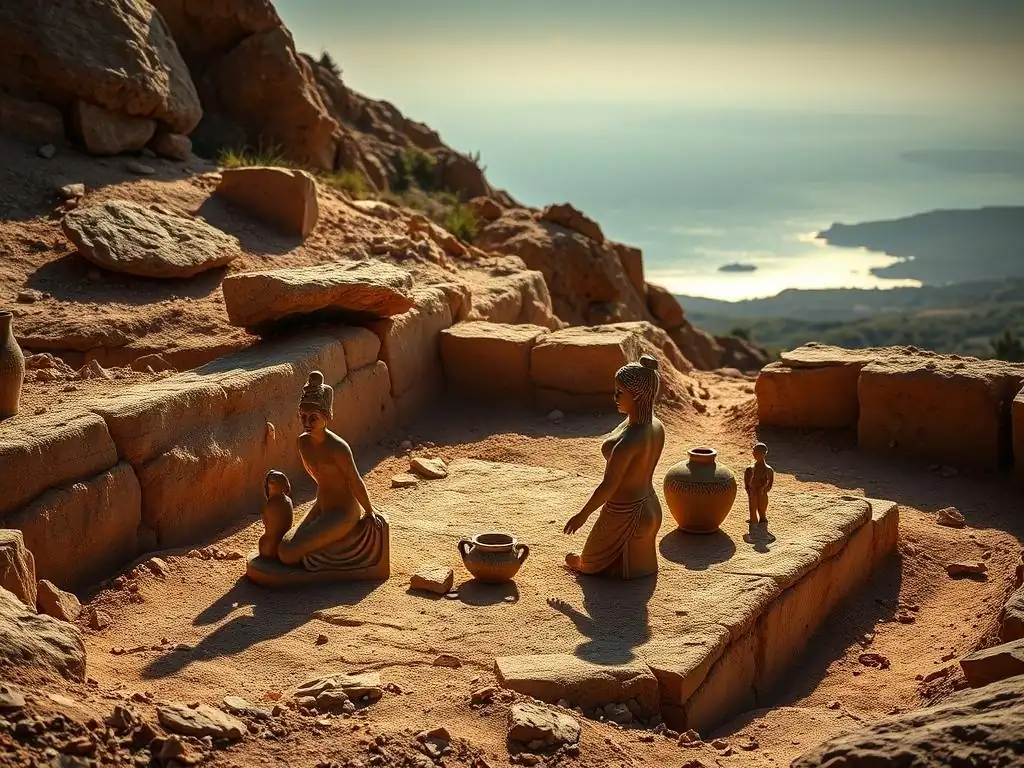
Welcome to ArchaeologyHub.org, your gateway to unlocking the secrets of the past! Ever wondered about the artistic evolution of ancient cultures? This article delves into a fascinating corner of the Bronze Age Aegean, exploring the captivating world of Late Cycladic figurine styles. Discover how innovative approaches to form and function distinguished the Dokathismata and Chalandriani types, and prepare to be amazed by the stories these ancient artifacts whisper. Intrigued? Read on to unravel the mysteries of these iconic creations and their place in Cycladic society.
- Introduction to Late Cycladic Figurines and Their Significance
- Understanding the Dokathismata Figurine Style
- Exploring the Chalandriani Figurine Style
- Dokathismata vs. Chalandriani: A Comparative Analysis of Late Cycladic Figurine Styles
- The Innovations of Late Cycladic Figurine Styles
- Interpreting the Meaning and Function of Late Cycladic Figurines
- The Legacy of Late Cycladic Figurine Styles
- Conclusion: The Enduring Appeal of Late Cycladic Art
-
Frequently Asked Questions
- What are the defining characteristics of Late Cycladic figurines, particularly concerning the Dokathismata and Chalandriani types?
- Where were Late Cycladic figurines typically discovered, and what does this suggest about their purpose?
- How did the Dokathismata and Chalandriani figurine styles differ from earlier Cycladic figurine styles?
- What materials were commonly used in the creation of Late Cycladic figurines?
- What is the significance of studying Late Cycladic figurine styles like Dokathismata and Chalandriani for understanding Cycladic culture?
- Final Reflection: Echoes of Cycladic Innovation
- Unearth Your Inner Archaeologist: Connect with the Past!
Introduction to Late Cycladic Figurines and Their Significance
The Broader Context of Aegean Art and Cycladic Sculpture
The art of the Cycladic Islands, particularly its distinctive marble sculpture, stands as a pivotal early expression within the broader tapestry of Aegean Bronze Age art. Flourishing primarily during the Early Bronze Age (circa 3200-2000 BCE), Cycladic sculpture predates and profoundly influences the more widely known Minoan and Mycenaean civilizations. These abstract, often minimalist human figures represent a unique artistic canon, characterized by geometric forms, serene poses, and a striking purity of line, setting them apart from contemporary artistic traditions in the Near East and Egypt.
The significant body of Cycladic marble figurines, ranging from a few centimeters to over a meter in height, provides invaluable insights into the spiritual, social, and aesthetic sensibilities of these ancient island communities. Their enduring appeal lies in their timeless abstraction, which continues to captivate modern audiences and scholars alike. Understanding the evolution of these Cycladic figurine styles is crucial for appreciating the foundational elements of Aegean artistic innovation.
Overview of Late Cycladic Culture and Artistic Expression
While the most iconic Cycladic figurine styles, such as the Spedos and Kapsala types, primarily belong to the Early Cycladic II period (circa 2800-2300 BCE), the Late Cycladic period (circa 1600-1100 BCE) witnessed significant cultural shifts, largely influenced by the burgeoning Minoan presence and later, Mycenaean expansion. This era saw a decline in the production of large-scale marble figurines, giving way to smaller, often terracotta or bronze figures, and a greater emphasis on painted pottery and fresco art, reflecting the changing socio-political landscape and increasing connectivity with Crete and mainland Greece.
Nevertheless, the legacy of earlier Cycladic figurine styles persisted, with certain forms and aesthetic principles subtly influencing later artistic expressions. The innovations developed during the Early Cycladic period, particularly in the Dokathismata and Chalandriani forms, laid the groundwork for a unique artistic identity that, while transformed, continued to resonate within the island cultures. The study of these earlier styles is essential for comprehending the complete trajectory of Late Cycladic figurine styles and their broader artistic context.
Understanding the Dokathismata Figurine Style
Characteristics of Dokathismata Figurines: A Detailed Examination
The Dokathismata style, prevalent during the Early Cycladic II period (roughly 2700-2300 BCE), represents a crucial phase in the evolution of Cycladic figurine styles, marking a transition towards more refined and standardized forms. These figurines are typically characterized by elongated necks, slender bodies, and elegantly folded arms positioned just below the breasts. The head is often triangular or subtly oval, with a prominent nose being the sole facial feature consistently rendered in relief; eyes, mouths, and hair were likely indicated with fugitive paint, traces of which are occasionally preserved.
The bodies are typically flat and plank-like, yet with a subtle three-dimensional quality, particularly around the shoulders and hips. Female figures often display small, conical breasts and a incised pubic triangle, while male figures are rare in this style. Sizes vary considerably, from small examples under 10 cm to impressive figures reaching over 60 cm, though the average is often between 20-40 cm. The marble surface is meticulously polished, achieving a smooth, lustrous finish that highlights the purity of the form.
Evolution and Chronology of the Dokathismata Type
The Dokathismata type emerged from earlier, more rudimentary Cycladic figurine styles like the Plastiras and Louros types, evolving towards greater abstraction and standardization. It represents a stylistic refinement within the Early Cycladic II sequence, succeeding the Spedos variety in some regions. This style is named after a cemetery site on Naxos where significant examples were first systematically excavated, providing crucial chronological data.
Its period of dominance was relatively short but highly influential, setting precedents for subsequent Cycladic figurine styles. Archaeological contexts, primarily graves at sites such as Dokathismata on Naxos and Agia Irini on Kea, consistently place these figures within the later phases of Early Cycladic II, indicating their widespread adoption across the Cycladic archipelago before the emergence of the more schematic Chalandriani type.
Although primarily an Early Cycladic II phenomenon, the Dokathismata Cycladic figurine styles offer profound insights into the ritualistic and social practices that likely continued to influence the Late Cycladic period. These figurines were almost exclusively found in burials, suggesting their primary function as grave goods, intended to accompany the deceased into the afterlife. Their presence implies a belief in an afterlife, possibly serving as effigies of the deceased, divine escorts, or fertility symbols ensuring rebirth.
The meticulous craftsmanship and the use of valuable Naxian or Parian marble suggest that these objects held significant value, potentially indicating the social status of the interred individual or their family. While large-scale marble figures became less common in the Late Cycladic figurine styles, the underlying spiritual and social functions associated with anthropomorphic representations likely evolved rather than disappeared, influencing the smaller, more diverse range of figures produced in later periods.
Exploring the Chalandriani Figurine Style
Distinguishing Features of Chalandriani Figurines: A Comprehensive Analysis
The Chalandriani style, primarily dating to the late Early Cycladic II and Early Cycladic III periods (roughly 2400-2200 BCE), represents a significant stylistic divergence from the Dokathismata type, leaning towards an even greater degree of abstraction and schematization. These Cycladic figurine styles are typically characterized by flattened, broader bodies, often with short, stumpy legs and a distinct, prominent triangular head that often lacks any facial features save for the occasional incised nose. The arms, if indicated, are typically incised lines rather than carved in relief, often crossing the chest in a simplified manner.
The overall form is more geometric and less anatomical than the Dokathismata figures. Sizes tend to be smaller, frequently ranging from 5 to 20 cm, though larger examples exist. While still carved from marble, the surface finish is generally less meticulously polished than the Dokathismata type, and incised details for the pubic triangle or other features are common. This simplification suggests a potential shift in production methods or a different aesthetic preference.
The Chalandriani Variant: Iconography and Symbolism
The extreme abstraction of the Chalandriani Cycladic figurine styles invites diverse interpretations regarding their iconography and symbolism. Unlike the more naturalistic, albeit stylized, Dokathismata forms, the Chalandriani figures are almost purely geometric, reducing the human form to its most essential lines and shapes. This simplification could symbolize a focus on the essence rather than the physical appearance, perhaps representing a shift in spiritual emphasis or a more universal, less individualized, representation of a deity or ancestor.
Some scholars suggest that their schematic nature might indicate a move towards more mass production, making them more accessible. Their frequent discovery in groups or caches might point to their use in communal rituals or as votive offerings, where individual detail was less important than the collective symbolic presence. The lack of detailed features makes specific iconographic identification challenging, allowing for broad interpretations such as fertility, protection, or ancestral veneration, themes that likely continued to be relevant in the development of Late Cycladic figurine styles.
Contextualizing Chalandriani Figurines within Late Cycladic Burials and Settlements
Chalandriani figurines are primarily associated with funerary contexts, notably from the extensive cemetery at Chalandriani on Syros, which gives the style its name. Their widespread presence in graves, often alongside multiple burials, reinforces their role as grave goods, similar to earlier Cycladic figurine styles. This suggests a continuity in funerary practices, where figures were interred with the deceased to serve a specific purpose in the afterlife.
While less common, some Chalandriani figures have been found in settlement contexts, albeit often in ritualistic deposits rather than everyday domestic settings. This suggests that their function extended beyond the grave, potentially encompassing domestic or communal cult practices, perhaps as household deities or protective amulets. The shift in their distribution and the sheer number of these figures found point to a changing social dynamic and possibly a broader participation in their production or use, laying foundations for the more varied and utilitarian objects seen in Late Cycladic figurine styles.
Dokathismata vs. Chalandriani: A Comparative Analysis of Late Cycladic Figurine Styles
Stylistic Differences: Form, Decoration, and Proportions
The Dokathismata and Chalandriani types represent two distinct, yet chronologically sequential, phases within the broader evolution of Cycladic figurine styles. The Dokathismata figures are characterized by their elongated, slender proportions, often standing tall with a distinct, slightly rounded head and clearly defined folded arms below the breasts. Their bodies are relatively thin but possess a subtle three-dimensional curve. Decoration is minimal, typically limited to an incised pubic triangle and sometimes painted eyes or hair.
In contrast, Chalandriani figures are markedly more schematic and flattened. Their heads are usually triangular, often without any facial features beyond a possible rudimentary nose. Arms are typically indicated by simple incised lines across the chest, and legs are short and stumpy, sometimes merging into a single block. The overall form is broader and less elongated than Dokathismata, with a focus on geometric simplicity over anatomical suggestion. This difference highlights a significant stylistic divergence within the Cycladic figurine styles tradition.
| Feature | Dokathismata Style | Chalandriani Style |
|---|---|---|
| Head Shape | Elongated, slightly oval or triangular, distinct nose | Prominent triangular, often featureless |
| Body Shape | Slender, elongated, subtle curves, plank-like | Broader, flattened, more schematic, stumpy legs |
| Arms | Clearly carved, folded below breasts | Incised lines across chest, or rudimentary stumps |
| Proportions | More elongated, often 1:3 head-to-body ratio | Shorter, wider, more compact, varied proportions |
| Surface | Highly polished, smooth | Less polished, often rougher, more incised details |
| Size Range | Often 20-60 cm, but varies | Generally smaller, often 5-20 cm |
Material and Techniques: Comparing Craftsmanship in Dokathismata and Chalandriani Figurines
Both Dokathismata and Chalandriani Cycladic figurine styles were predominantly carved from local Cycladic marble, primarily sourced from islands like Naxos and Paros, renowned for their high-quality, fine-grained stone. However, the craftsmanship and finishing techniques exhibit notable differences. Dokathismata figures showcase exceptional skill in marble carving, with artisans achieving a remarkably smooth, almost luminous surface through extensive polishing using abrasive materials like emery. The precision of their carving, particularly in defining the subtle curves and planes of the body, suggests a high degree of specialization and labor investment.
Chalandriani figures, while still demonstrating proficiency in marble working, often appear less refined in their finish. The surfaces are typically less polished, and the details are frequently rendered through simple incised lines rather than three-dimensional carving. This shift might indicate a change in production efficiency, possibly a move towards quicker, less labor-intensive methods, or a different aesthetic preference emphasizing schematic representation over anatomical detail. The tools used, such as obsidian blades for initial shaping and emery for finishing, remained largely consistent, but their application varied considerably between these two prominent Cycladic figurine styles.
Regional Variations and Distribution Patterns of the Two Figurine Styles
The distribution patterns of Dokathismata and Chalandriani Cycladic figurine styles offer insights into regional artistic centers and trade networks during the Early Bronze Age. Dokathismata figures are found across multiple Cycladic islands, with significant concentrations on Naxos, Amorgos, and Kea (e.g., Agia Irini). This wider distribution suggests either a highly influential central production hub or the dissemination of a widely adopted stylistic canon across the archipelago. The consistency in their high quality also points to skilled workshops.
In contrast, the Chalandriani style shows a strong concentration on Syros, particularly at the eponymous cemetery site. While examples are found elsewhere, their prevalence on Syros suggests a more localized development or a primary center of production on that island. This might indicate a shift towards more regionalized artistic expressions or the emergence of distinct local traditions. Understanding these distribution patterns is vital for tracing the cultural interactions and artistic influences that ultimately shaped the Late Cycladic figurine styles that followed.
The Innovations of Late Cycladic Figurine Styles
Technical Advancements in Late Cycladic Figurine Production
The evolution of Cycladic figurine styles from the Early to the Late Bronze Age is marked by a series of technical advancements, even if the peak of marble figurine production was in the Early Cycladic period. The mastery of marble carving, evident in types like Dokathismata, involved sophisticated methods for sourcing, shaping, and polishing the intractable stone.
Artisans utilized obsidian blades for initial roughing out, followed by the use of emery (a hard, abrasive stone found on Naxos) for grinding and polishing the surfaces to a remarkable sheen. This meticulous process was an innovation in itself, allowing for the creation of incredibly smooth and refined forms.
Later, the shift towards smaller, often more schematic figures, like the Chalandriani type, represented an innovation in efficiency and perhaps a broader accessibility. While less labor-intensive in their final polish, these figures still required considerable skill in abstraction and precise incision. The decline in large marble figures in the Late Cycladic period corresponded with an increase in terracotta and bronze figurines, showcasing a broader range of materials and techniques, including mold-making and casting, representing new technical horizons for Late Cycladic figurine styles.
The Role of Innovation in the Evolution of Cycladic Art
The innovations embodied by Cycladic figurine styles like Dokathismata and Chalandriani were pivotal in shaping the trajectory of Aegean art. The Dokathismata style's standardized proportions, elegant abstraction, and serene monumentality established a canonical form that influenced subsequent artistic expressions. This move towards a consistent, recognizable aesthetic was a significant artistic innovation for its time, creating a distinct Cycladic identity.
The Chalandriani style, by pushing the boundaries of schematization, demonstrated an innovative approach to abstracting the human form to its bare essentials. This radical simplification, while perhaps signaling a different cultural purpose, was an artistic statement in itself, exploring the power of line and form over detailed representation. These stylistic evolutions were not merely changes but deliberate innovations that reflected changing artistic sensibilities and perhaps societal needs, laying the conceptual groundwork for the Late Cycladic figurine styles and other art forms that followed.
Influence of Late Cycladic Figurines on Subsequent Aegean Art Forms: Minoan Influences
The profound artistic innovations of Early Cycladic marble figures, including the Dokathismata and Chalandriani types, had a demonstrable influence on subsequent Aegean art forms, particularly Minoan art. Early Minoan figurines, for instance, show clear stylistic parallels with Cycladic prototypes, adopting similar folded-arm poses and abstract forms. The elegant simplicity and mastery of line seen in Cycladic figurine styles resonated with Minoan artists who were developing their own distinctive aesthetic.
Furthermore, the general abstract principles and the emphasis on fluid lines and organic forms, initially perfected by Cycladic sculptors, can be traced in various aspects of Minoan art, from early Kamares ware pottery to some of the earliest seal stones. While Late Cycladic figurine styles themselves evolved under strong Minoan influence, the foundational artistic language established by earlier Cycladic sculptors remained an underlying current, proving the enduring impact of these initial innovations on the broader Aegean artistic landscape.
Interpreting the Meaning and Function of Late Cycladic Figurines
Symbolic Interpretations of Dokathismata and Chalandriani Figures
The symbolic interpretations of Cycladic figurine styles like Dokathismata and Chalandriani are central to understanding their significance within ancient society. While their precise meaning remains elusive, several theories prevail. A dominant interpretation posits them as representations of a Mother Goddess or fertility deity, given the frequent emphasis on female characteristics (breasts, pubic triangle) and their association with burial contexts, possibly symbolizing rebirth and the cycle of life.
Alternatively, they could represent ancestors, protective spirits, or companions for the deceased in the afterlife. The consistent folded-arm pose, whether in the elegant Dokathismata or the schematic Chalandriani, suggests a specific ritualistic gesture or state of being—perhaps prayer, reverence, or repose. The deliberate abstraction allows for multiple layers of meaning, enabling the figures to transcend specific identities and embody universal concepts relevant to the beliefs and rituals of the ancient Cycladic people, influencing the symbolic language of Late Cycladic figurine styles.
Examining the Purpose and Function of Figurines in Late Cycladic Rituals
The archaeological contexts in which Dokathismata and Chalandriani Cycladic figurine styles are found provide crucial clues to their purpose and function in ancient rituals. Their overwhelming presence in graves, often placed near the head or body of the deceased, strongly suggests a primary role as grave goods. This funerary function could encompass a range of purposes: serving as personal possessions, symbolic offerings to the underworld deities, or effigies to accompany and protect the deceased.
While less common, the occasional discovery of these figures in settlement sites, sometimes in ritual deposits, hints at a broader function beyond the funerary realm. They may have been used in domestic cults, communal ceremonies, or as votive offerings in shrines. The transition to more diverse materials and forms in Late Cycladic figurine styles suggests an evolution in ritual practices, potentially indicating a wider range of functions or a shift in the perceived power and use of anthropomorphic representations in cultic contexts.
The production and distribution of Cycladic figurine styles, particularly the Dokathismata and Chalandriani types, carried significant social and economic implications for the Early Cycladic communities. The reliance on high-quality marble, often sourced from specific islands like Naxos and Paros, implies a sophisticated network for quarrying, transporting, and distributing raw materials. The creation of these figures required specialized craftsmanship, indicating the presence of skilled artisans who likely held a respected position within society.
The variations in quality and finish between the Dokathismata (highly polished, refined) and Chalandriani (more schematic, less polished) types might also reflect different levels of economic investment or social access. High-quality Dokathismata figures could have been status symbols, commissioned by elites, while the more numerous Chalandriani figures might have been more widely available. The trade and exchange of these figures, whether as finished products or raw materials, contributed to the economic vitality and interconnectivity of the Cycladic islands, influencing the broader economic landscape that shaped Late Cycladic figurine styles.
The Legacy of Late Cycladic Figurine Styles
Preservation and Study of Late Cycladic Figurines
The preservation of Cycladic figurine styles, including the Dokathismata and Chalandriani forms, is a testament to the durability of marble and the burial practices of the ancient Cycladic people. However, a significant portion of known figures have been recovered through illicit excavations, complicating their provenance and archaeological context. This has posed considerable challenges for scholarly study, as understanding the exact find-spot and associated artifacts is crucial for accurate interpretation.
Modern archaeological methods, emphasizing meticulous excavation, detailed recording, and scientific analysis, are now providing invaluable data. Techniques such as isotopic analysis of marble can pinpoint the geological source of the stone, while residue analysis sometimes reveals traces of ancient paint or pigments, offering new insights into their original appearance. Ongoing research seeks to recontextualize existing collections and to establish robust methodologies for future discoveries of Late Cycladic figurine styles and their predecessors.
Exhibitions and Public Engagement with Cycladic Art
The enduring aesthetic appeal of Cycladic figurine styles has ensured their prominence in major museums worldwide, fostering widespread public engagement with this ancient art form. Institutions such as the Nicholas P. Goulandris Foundation Museum of Cycladic Art in Athens, the Metropolitan Museum of Art in New York, and the British Museum in London house extensive collections, allowing millions to appreciate their stark beauty and historical significance.
These exhibitions often highlight the abstract qualities of the figures, drawing parallels with modern art movements and showcasing their timeless design. Educational programs and publications further enhance public understanding, explaining the cultural context, the mysteries surrounding their function, and the profound impact these early Cycladic figurine styles had on the development of Aegean civilization. This public exposure is vital for appreciating the legacy of Late Cycladic figurine styles and their place in art history.
Future Research Directions in Late Cycladic Figurine Studies: Provenance Studies and Technological Analysis
Future research into Cycladic figurine styles, including the later manifestations, is poised to benefit significantly from advancements in scientific and digital technologies. Provenance studies, utilizing techniques like stable isotope analysis, will continue to refine our understanding of marble sources and trade networks, potentially revealing workshops and distribution patterns with greater precision. This can help to reconstruct ancient economic systems and artistic influences.
Technological analysis, such as 3D scanning and photogrammetry, offers new ways to study the forms, proportions, and tool marks on figurines without direct physical contact, creating highly accurate digital models for comparative analysis. Micro-CT scanning could even reveal internal structures or evidence of repair. Furthermore, interdisciplinary approaches, combining archaeological data with anthropological theories and cognitive science, may offer fresh perspectives on the symbolic meanings and ritualistic functions of Late Cycladic figurine styles and their earlier counterparts, pushing the boundaries of our understanding of ancient Aegean beliefs.
Conclusion: The Enduring Appeal of Late Cycladic Art
Summarizing the Key Characteristics of Dokathismata and Chalandriani Figurines
The Dokathismata and Chalandriani forms, while primarily rooted in the Early Cycladic II period, stand as pivotal examples of innovation within the broader spectrum of Cycladic figurine styles, demonstrating a remarkable evolution in artistic expression. Dokathismata figures captivate with their elegant elongation, slender forms, and meticulously polished surfaces, often featuring distinct folded arms and a prominent nose. They represent a refined abstraction, indicative of a sophisticated artistic canon.
In contrast, the Chalandriani figures showcase a bolder, more radical schematization, characterized by flattened, broader bodies, triangular heads devoid of most features, and arms indicated by simple incised lines. This stylistic shift highlights a deliberate move towards geometric simplicity, potentially reflecting changes in production, function, or symbolic meaning. Both types, despite their differences, underscore the innovative spirit of Cycladic sculptors and their enduring mastery of marble.
Reflecting on the Cultural Significance of Late Cycladic Figurine Styles in the Aegean Bronze Age
The study of Late Cycladic figurine styles, alongside their Early Cycladic predecessors like Dokathismata and Chalandriani, offers a profound window into the cultural, spiritual, and artistic landscape of the Aegean Bronze Age. These figures, whether serving as grave goods, cultic objects, or symbols of status, embody the unique worldview of the island communities. Their abstract forms and serene presence speak to a distinct aesthetic sensibility that valued essence over detailed realism.
The innovations seen in these Cycladic figurine styles not only shaped the artistic trajectory of the Cyclades but also exerted a significant influence on the emerging civilizations of Minoan Crete and Mycenaean Greece. Their legacy continues to resonate today, not just as archaeological artifacts, but as powerful artistic statements that bridge the gap between ancient beliefs and modern appreciation for abstract art. Understanding these figures is crucial for grasping the foundational artistic and cultural developments that defined the Aegean Bronze Age.
Frequently Asked Questions
What are the defining characteristics of Late Cycladic figurines, particularly concerning the Dokathismata and Chalandriani types?
Late Cycladic figurines are known for their simplified, geometric forms crafted primarily from marble. The Dokathismata and Chalandriani types, specifically, display variations in size, shape, and the presence or absence of specific features, such as arms folded across the chest.
Where were Late Cycladic figurines typically discovered, and what does this suggest about their purpose?
These figurines are often found in grave sites and domestic contexts across the Cycladic islands. This suggests they served a variety of purposes, potentially including religious, funerary, or even everyday household use.
How did the Dokathismata and Chalandriani figurine styles differ from earlier Cycladic figurine styles?
Compared to earlier forms, Dokathismata and Chalandriani styles show a trend toward increased stylization and standardization. They often exhibit a more angular and less rounded appearance than their predecessors, reflecting evolving artistic conventions.
What materials were commonly used in the creation of Late Cycladic figurines?
The primary material used was white marble, readily available on the Cycladic islands. Other materials, such as obsidian, may have been used for creating decorative details or inlays.
What is the significance of studying Late Cycladic figurine styles like Dokathismata and Chalandriani for understanding Cycladic culture?
Studying these figurines helps us understand Cycladic artistic expression, religious beliefs, and social practices during the Late Bronze Age. The differences in styles across regions may also reflect local variations in culture and trade networks.
Final Reflection: Echoes of Cycladic Innovation
The journey through Late Cycladic figurine styles reveals more than just ancient artistry; it illuminates a profound human desire for expression and innovation that resonates even today. The subtle yet significant shifts in Dokathismata and Chalandriani forms, as explored in this article, demonstrate a dynamic artistic landscape where tradition and originality constantly intertwined. Understanding these nuances allows us to appreciate the ingenuity of these early Aegean artists and their lasting impact on the development of abstract representation.
This exploration has underscored the enduring power of art to transcend time and connect us to our ancestors. The delicate curves and simplified forms of these figurines speak volumes about the beliefs and values of a society long past, reminding us that even in the absence of written records, art can be a powerful storyteller. Art washes away from the soul the dust of everyday life.
- Pablo Picasso. This quote encapsulates the essence of what these figurines represent: a deliberate act of creation that elevates the mundane to the spiritual, offering a glimpse into the soul of the Cycladic people.
As we conclude this exploration of Late Cycladic figurine styles, consider the lessons these ancient artists offer. What innovations can you embrace in your own life, whether in your creative pursuits, your problem-solving approaches, or your understanding of the world around you? Let the spirit of Dokathismata and Chalandriani inspire you to seek new forms of expression, to challenge conventions, and to leave your own unique mark on the tapestry of human history.
Unearth Your Inner Archaeologist: Connect with the Past!
Thanks for delving into the fascinating world of Late Cycladic figurines! We hope you've enjoyed exploring the subtle yet significant stylistic shifts between Dokathismata and Chalandriani forms. Ready to bring this ancient knowledge to life?
Here are a few ways to connect further:
- Craft Your Own Cycladic Figurine: Using clay or even just paper and paint, try replicating your favorite figurine style. Consider what materials might have been available to Cycladic artisans and experiment with similar techniques.
- Explore related archaeological sites: Take some time to see what other artifacts can be found online from the same time period to give the figurines some context.
- Share your insights: Join the discussion! What specific detail in the figurine styles resonated most with you, and how did it change your understanding of Cycladic culture?