
The Act of Breaking: Ritual Destruction of Objects in European Votive Offerings

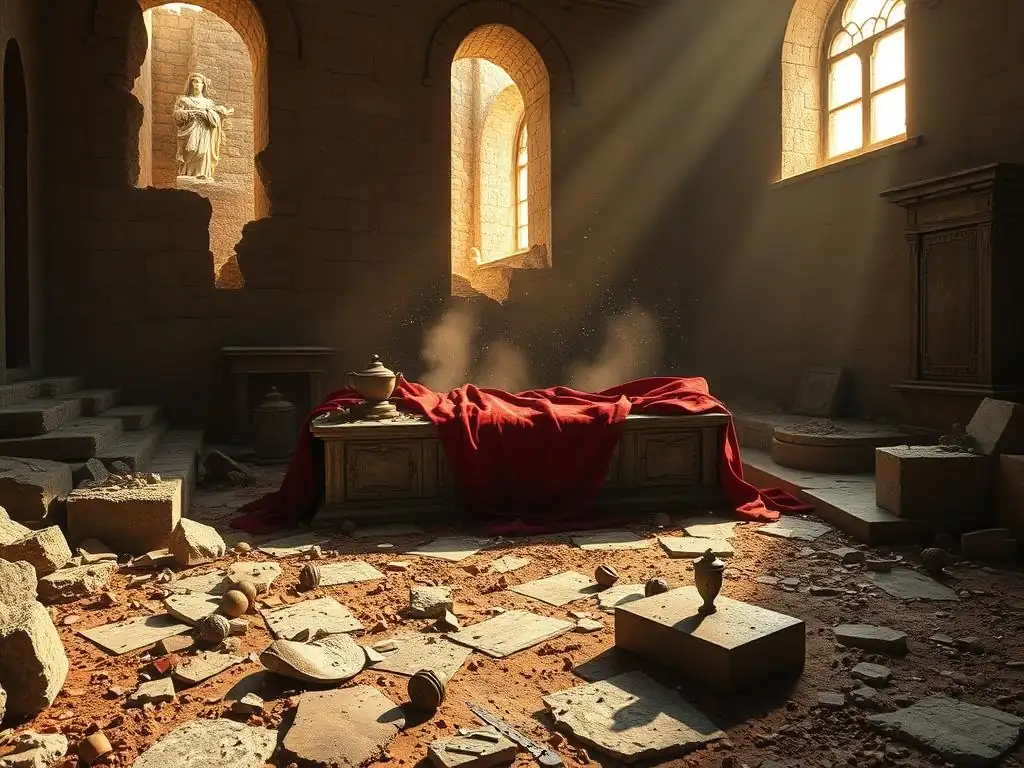
Welcome to ArchaeologyHub.org, your gateway to unraveling the mysteries of the past!
Delve into the fascinating world of archaeological discovery, where every artifact holds a story waiting to be told. In this exploration of ancient rituals, we ask a compelling question: Why were some objects deliberately broken? Our in-depth analysis of Ritual Destruction in European Votive Offerings sheds new light on this intriguing practice, offering a glimpse into the beliefs and behaviors of civilizations long past. Prepare to uncover the secrets hidden within the fragments and discover the profound significance behind the act of breaking. Intrigued? Let's journey back in time...
- Introduction to Ritual Destruction in European Votive Contexts
- Defining "Breaking": Categorizing Forms of Ritual Object Destruction
- Archaeological Evidence of Ritual Destruction in European Votive Deposits
- Motivations Behind Ritual Object Destruction: Exploring the "Why"
- Materials Subjected to Ritual Destruction: A Survey of Common Offerings
- The Relationship Between Ritual Destruction and Deposition
- Interpreting the Meaning of Broken Objects: Theoretical Frameworks
- Challenges in Archaeological Interpretation: Distinguishing Ritual from Practical Destruction
- Conclusion: The Enduring Significance of Ritual Destruction in Understanding European Votive Practices
-
Frequently Asked Questions
- What is ritual destruction in the context of European votive offerings, as discussed on ArchaeologyHub.org?
- Why would ancient Europeans engage in the ritual destruction of valuable objects?
- How common was the practice of ritual destruction in European votive contexts?
- What types of objects were typically subjected to ritual destruction in European votive deposits?
- How does ArchaeologyHub.org help researchers understand the significance of ritual destruction in European votive offerings?
- Final Reflection: Echoes of Intention
- Unearth Your Next Discovery!
Introduction to Ritual Destruction in European Votive Contexts
Understanding Votive Offerings and Their Significance in European Archaeology
Votive offerings represent a profound aspect of ancient European belief systems, serving as objects deposited in sacred locations as part of a ritual act, often intended for deities, ancestors, or supernatural entities. These offerings, ranging from simple pebbles to elaborate metalwork, provide invaluable insights into the spiritual, social, and economic practices of past societies across the continent. Their study allows archaeologists to reconstruct aspects of ancient cosmology, understand community cohesion, and even trace trade networks, making the analysis of European votive offerings a cornerstone of archaeological inquiry.
The significance of these deposits extends beyond mere material culture; they are tangible expressions of devotion, supplication, and gratitude. Found in diverse contexts such as wetlands, caves, springs, mountain passes, and dedicated shrines, these sites often acted as focal points for communal or individual rituals. The deliberate placement of objects, sometimes over millennia, underscores their enduring importance and offers a unique window into the continuity and evolution of religious practices, particularly concerning the widespread phenomenon of ritual destruction European votives.
The Role of Intentional Destruction in Ancient Ritual Practices
Intentional destruction, a recurring theme in the study of European votive deposits, refers to the deliberate act of breaking, bending, burning, or otherwise damaging an object before or during its deposition as an offering. This practice goes beyond simply placing an object; it transforms its physical state, often rendering it unusable for mundane purposes and elevating its status to that of a dedicated sacrifice. The act of breaking was not arbitrary but a purposeful component of the ritual, imbued with symbolic meaning.
This deliberate defacement distinguishes ritual destruction European votives from accidental breakage or post-depositional damage. Archaeologists meticulously analyze fracture patterns, tool marks, and contextual evidence to ascertain whether an object's damaged state is a result of human intent within a ritual framework. Such acts highlight a complex relationship between the offerer, the object, and the divine, suggesting that the destruction itself was as meaningful as the offering's material value.
Defining "Breaking": Categorizing Forms of Ritual Object Destruction
Fragmentation vs. Complete Destruction: A Typology of Deliberate Damage
The spectrum of intentional damage observed in ritual destruction European votives varies significantly, ranging from simple fragmentation to what appears to be complete annihilation. Fragmentation, often seen in pottery or smaller metal items, involves breaking an object into multiple pieces, which may then be scattered or deposited together. This could be a symbolic "killing" of the object or a way to distribute its essence. For instance, Neolithic causewayed enclosures in Britain often contain deliberately smashed pottery, with fragments sometimes scattered across a wide area or placed in specific pits, suggesting a ritualistic act of dispersion.
Conversely, some acts of destruction aimed for a more complete rendering useless of the object, particularly evident in valuable metalwork. Swords, spearheads, and torcs, for example, are frequently found bent, twisted, or snapped in half, making them impossible to repair or reuse. The bronze swords from the Late Bronze Age deposits in the river Thames, many of which are severely bent or broken, exemplify this approach. This extreme form of deliberate damage underscores the finality of the offering, ensuring its dedication solely to the divine realm and preventing its re-entry into human circulation.
Identifying Intentional Breaks: Distinguishing Ritual Damage from Accidental Breakage
Distinguishing between intentional ritual damage and accidental breakage is a critical challenge in the archaeological interpretation of ritual destruction European votives. Archaeologists employ a range of analytical techniques to identify patterns indicative of deliberate human action.
Key indicators include the presence of specific tool marks, consistent fracture patterns across multiple similar artifacts, and evidence that the breakage occurred prior to or during deposition rather than through post-depositional processes like soil pressure or root growth. For example, a sword found bent into a tight loop, clearly requiring significant force, is highly likely to be a ritual act rather than accidental damage.
Furthermore, the context of the find is paramount. If numerous objects of the same type are consistently found with similar forms of breakage within a ritualistic setting, such as a bog or a sacred spring, this strongly suggests intentionality. Conversely, objects found shattered in a domestic context might be interpreted as accidental breakage from daily use. The meticulous study of taphonomic processes—how objects decay and are affected after deposition—is also vital to rule out natural causes, ensuring that interpretations of ritual destruction are robust and evidence-based.
Archaeological Evidence of Ritual Destruction in European Votive Deposits
Case Studies: Broken Artifacts from Flag Fen and Their Interpretation
Flag Fen, a remarkable Bronze Age wetland site in Cambridgeshire, England, provides compelling evidence of ritual destruction European votives. Dating from around 1350-950 BCE, this site features a massive timber platform and numerous deliberately deposited artifacts. Among the thousands of finds, a significant proportion of bronze objects, including swords, spearheads, and daggers, exhibit clear signs of intentional damage. Many swords were found bent at sharp angles, often into multiple pieces, or twisted, rendering them unusable as weapons. For example, over 300 bronze artifacts, many deliberately broken, have been recovered from the waterlogged deposits surrounding the platform and posts.
The interpretation of these broken artifacts at Flag Fen points towards complex water cults and ancestral veneration. The destruction of valuable items before their deposition in the waterlogged environment suggests a final act of sacrifice, dedicating the object irrevocably to the watery realm.
The act of breaking these weapons, symbols of power and status, might have symbolized the neutralization of their earthly power, their transformation into offerings for deities, or perhaps a symbolic "killing" to accompany a deceased individual or mark a significant communal event. The sheer volume and consistency of this practice at Flag Fen underscore its profound ritual significance.
Regional Variations: Comparing Destruction Practices Across Northwestern and Southeastern Europe
While ritual destruction European votives is a continent-wide phenomenon, the specific forms and contexts of destruction exhibit notable regional variations. In Northwestern Europe, particularly in the British Isles, Scandinavia, and parts of Germany, the practice is strongly associated with wetland deposits (bogs, rivers, lakes) and often involves high-value metalwork.
Iron Age bog finds from Denmark, such as those from Hjortspring, include large quantities of weapons and shields that were deliberately bent, broken, and then submerged, suggesting large-scale sacrificial events linked to warfare or communal rites. The focus here often seems to be on rendering objects inert or transferring their essence to a watery, liminal realm.
In contrast, Southeastern Europe, encompassing regions like Greece and the Balkans, often presents different patterns. While some metalwork destruction occurs, fragmentation of pottery, figurines, and other cultic objects in terrestrial sanctuaries and caves is more prevalent. For instance, Minoan peak sanctuaries on Crete yielded numerous fragmented clay figurines of humans and animals, deliberately broken before deposition.
Similarly, at some Greek sanctuaries, votive pottery was systematically smashed after use. These practices might reflect different ritual intentions, perhaps emphasizing a cycle of creation and destruction, or the breaking of a vessel to release its contents or dedicate its essence. These regional distinctions highlight the diverse cultural interpretations and applications of ritual destruction across ancient Europe.
Motivations Behind Ritual Object Destruction: Exploring the "Why"
Appeasing the Gods: Sacrificial Offerings and Destruction as Communication
One primary motivation behind ritual destruction European votives was undoubtedly the appeasement of deities or supernatural powers. The act of destroying a valuable object, rendering it unusable for human purposes, transformed it into a pure sacrifice, dedicated solely to the divine. This complete surrender of an item's utility underscored the offerer's devotion and the gravity of their plea or thanksgiving. By "killing" the object, its essence was believed to be released and transferred to the spiritual realm, establishing a direct line of communication with the gods.
This form of communication was often a desperate plea for divine intervention, a thanks for success in battle, or a propitiation to ward off misfortune. For example, the deliberate bending and breaking of swords and shields, such as those found in the Iron Age sacrificial deposits at Vimose, Denmark, after a battle, can be interpreted as a grand offering to a war deity. The destruction ensured that the spoils of war were irrevocably dedicated, symbolizing a profound act of gratitude and a hope for continued divine favor, emphasizing the communicative power inherent in ritual destruction European votatives.
Neutralizing Power: Breaking Objects to Render Them Spiritually Inactive
Another significant motivation for ritual destruction European votives was the belief in neutralizing or "killing" the inherent power of an object, especially those imbued with spiritual or symbolic potency. Weapons, in particular, were seen as having a life or spirit of their own, capable of causing harm or possessing malevolent energy. By bending, snapping, or twisting a sword or spear, its power was believed to be deactivated or released, preventing its misuse or ensuring its transfer to the spiritual domain without lingering negative effects.
This concept is particularly evident in funerary contexts where personal items, especially weapons, were broken before being interred with the deceased. For instance, some Iron Age burials in Central Europe contain deliberately bent or broken swords, suggesting that the weapon's "life" was ended to accompany the deceased into the afterlife or to prevent its use by the living. This act could also signify the termination of a lineage or the end of a warrior's career, ensuring that the object's power remained tied to its original owner or was safely transferred to the otherworld through this form of ritual destruction.
Symbolic Transformation: Destruction as a Catalyst for Rebirth or Renewal
Beyond appeasement and neutralization, ritual destruction European votives could also serve as a powerful symbolic act of transformation, a catalyst for rebirth or renewal. This seemingly paradoxical concept views destruction not as an end, but as a necessary step in a cycle of change, leading to a new state or meaning. The fragmentation of an object could symbolize a return to elemental form, a dissolution of its earthly ties, or the breaking down of old structures to make way for new beginnings.
This transformative aspect is particularly relevant when considering objects broken and then scattered, or where fragments from different vessels are intentionally mixed. For example, in some Neolithic contexts, the smashing of large ceramic vessels might have been part of a feasting ritual, where the act of breaking and scattering the sherds symbolized the communal bond and the renewal of social ties through shared consumption and ritualistic destruction. This interpretation suggests that ritual destruction was not solely about sacrifice, but also about the cyclical nature of existence and the potential for renewal inherent in processes of disintegration.
Materials Subjected to Ritual Destruction: A Survey of Common Offerings
Metalwork: Swords, Spears, and Jewelry as Targets of Ritual Breaking
Metalwork, especially items crafted from bronze and iron, constitutes a prominent category among ritual destruction European votives due to its inherent value and the effort required for its production. Swords, spears, daggers, and shields were frequently subjected to deliberate bending, snapping, or twisting before deposition, particularly in watery contexts. For example, hundreds of Bronze Age swords and spearheads discovered in riverbeds across Britain, such as the River Thames, exhibit clear signs of having been intentionally bent or broken, often into multiple pieces, rendering them useless as weapons but potent as offerings.
Beyond weaponry, personal ornaments and valuable items like torcs, arm-rings, and brooches also show evidence of ritual destruction. Gold torcs from Scottish hoards, for instance, are sometimes found twisted or cut, indicating a deliberate act of defacement before their burial. The destruction of such prestigious objects underscores their transition from items of human adornment or status to offerings irrevocably dedicated to the divine, symbolizing a profound sacrifice of wealth and power within the context of European votive practices.
Pottery and Ceramics: Fragmentation and Symbolic Reconstruction
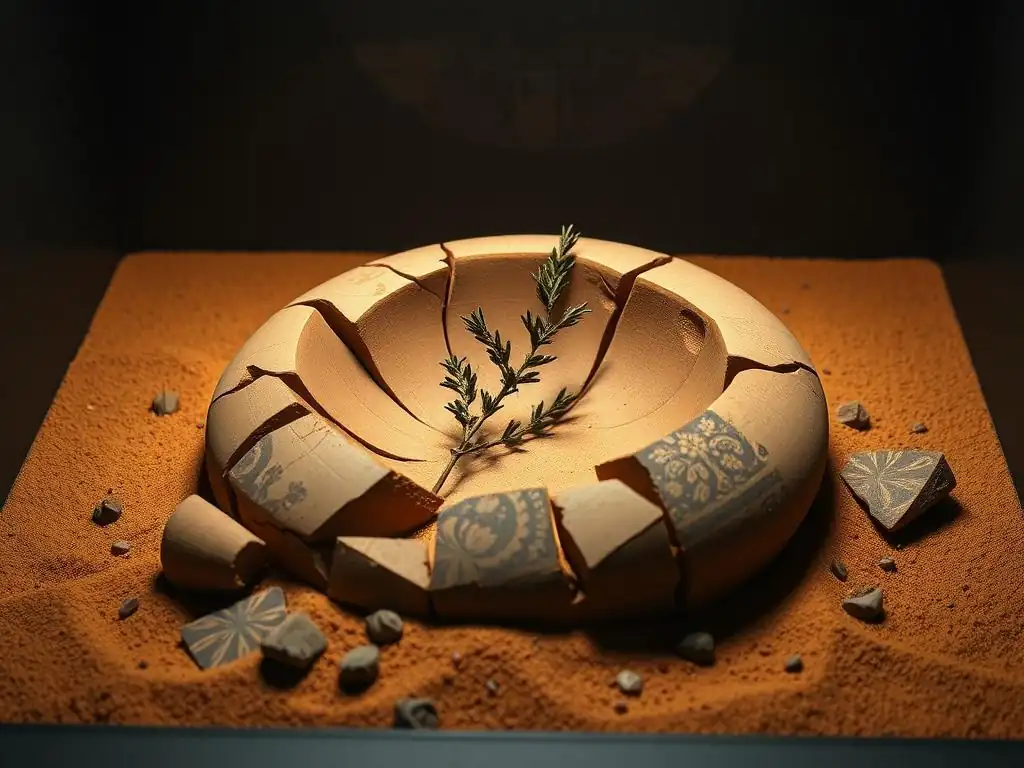
Pottery and ceramics, being ubiquitous and relatively fragile, are extensively represented among ritual destruction European votives, with fragmentation being their primary mode of deliberate damage. Unlike metalwork, which often shows signs of violent bending, pottery is typically smashed or broken into numerous sherds.
This act might have been performed to release contents, to "kill" the vessel after its ritual use, or to symbolize a breaking apart of the mundane. In many Neolithic and Bronze Age sites across Europe, such as at causewayed enclosures or funerary monuments, large quantities of pottery fragments are found deliberately deposited, often with no attempt at reassembly, indicating a focus on the act of breaking itself.
While complete "reconstruction" of a vessel from its fragments is rare in a ritual sense, the deliberate scattering of these fragments, or their specific placement in pits or layers, speaks to a symbolic intent. In some contexts, pieces from different vessels might be found together, or parts of a single vessel widely dispersed, suggesting a ritualistic dissolution of form. This pervasive practice highlights the symbolic power of fragmentation, transforming common domestic items into potent components of ritual destruction, reflecting the varied ways ancient Europeans interacted with their material culture in sacred contexts.
Bone and Antler: Modification and Fragmentation in Ritual Contexts
Bone and antler, derived from animal sacrifices or hunted game, also feature prominently in ritual destruction European votives, often showing signs of intentional modification and fragmentation. Beyond the standard processing for consumption, many faunal remains from ritual contexts exhibit specific patterns of breakage, cutting, or burning that deviate from typical butchery practices. Long bones might be deliberately snapped, skulls fragmented, or antlers broken off, suggesting a ritualistic dismantling of the animal's remains after sacrifice.
For example, at Iron Age oppida like Manching in Germany, specific animal bones, particularly those from cattle and horses, are found in cultic deposits with signs of deliberate breaking or specific defleshing patterns, indicating ritual processing beyond mere sustenance. Similarly, antler tools or ornaments might be found deliberately snapped or carved in ways that suggest ritualistic "killing" or dedication. These acts of modification and fragmentation of organic materials underscore the comprehensive nature of ritual destruction, extending to the very remains of the animals that played a central role in ancient European belief systems and sacrificial practices.
The Relationship Between Ritual Destruction and Deposition
Contextual Analysis: The Significance of Location in Interpreting Broken Artifacts
The location of deposition is intrinsically linked to the interpretation of ritual destruction European votives, providing crucial contextual data for understanding the meaning behind the act. Whether objects were broken at the deposition site or transported there already damaged, the chosen location imbued the act with specific significance.
Wet places—bogs, rivers, lakes, and springs—were particularly favored for the deposition of broken metalwork across Northern Europe, suggesting a connection to water deities, liminal spaces, or the underworld. The deliberate submergence of bent swords or twisted torcs in these environments often points to a desire for permanent dedication or a symbolic return to primordial elements.
Conversely, terrestrial sites like caves, hilltops, or specific sanctuaries also host evidence of ritual destruction, but often with different material emphasis and potential meanings. Caves might be associated with chthonic deities or ancestral spirits, while hilltops could be linked to sky gods or territorial markers.
The purposeful deposition of fragmented pottery in a cave sanctuary, for example, might signify a different ritual intent than the throwing of a bent spear into a bog. Thus, a comprehensive contextual analysis, integrating the type of object, the nature of its destruction, and its precise depositional environment, is essential for a nuanced understanding of these complex European votive practices.
Stratigraphic Evidence: Understanding the Timeline of Destruction and Deposition
Stratigraphic evidence, the study of archaeological layers, plays a vital role in reconstructing the timeline of ritual destruction European votives relative to their deposition. By meticulously excavating and documenting the sequence of deposits, archaeologists can determine whether objects were broken before, during, or after their placement in a votive context. Finding fresh breaks on objects within a sealed, undisturbed layer, particularly if associated with other ritualistic features, strongly suggests that the destruction occurred simultaneously with, or immediately prior to, the act of deposition. This indicates a single, deliberate ritual event.
In some instances, stratigraphic analysis might reveal that fragments of a single object were deposited in different layers or at different times, suggesting a more complex, staged ritual. Conversely, evidence of weathering or patination on fracture surfaces might indicate that an object was broken long before its final deposition, perhaps curated as a broken artifact for a period.
For example, at some Roman-era temples in Gaul, fragments of dismantled altars or statues are found intentionally buried in foundational layers during subsequent building phases, suggesting a ritual closure and re-consecration through ritual destruction. Understanding these temporal relationships is critical for accurately interpreting the sequence and meaning of ancient ritual practices.
Interpreting the Meaning of Broken Objects: Theoretical Frameworks
Applying Cognitive Archaeology to Understand Ritual Intent
Cognitive archaeology offers a powerful theoretical framework for interpreting the meaning behind ritual destruction European votives by attempting to understand the thought processes and belief systems of ancient peoples. Rather than simply describing the material evidence, cognitive archaeology seeks to infer the underlying mental constructs, symbolic meanings, and ritual intentions that motivated the act of breaking. It asks: what did the act of destruction mean to the individuals performing it? How did they conceive of the objects, the deities, and the transformation enacted by the breakage?
By analyzing patterns of destruction across numerous sites and periods, alongside other forms of symbolic expression (art, burial practices), cognitive archaeologists can reconstruct aspects of ancient cosmology. For instance, the widespread practice of bending or "killing" metal weapons across disparate Iron Age European groups suggests a shared cognitive understanding of objects possessing a life force that could be terminated or transferred through deliberate damage. This approach helps move beyond mere description to a deeper appreciation of the complex interplay between material culture and the ancient mind, shedding light on the profound significance of ritual destruction in European votive contexts.
Exploring the Symbolism of Fragmentation and Wholeness in Ancient Beliefs
The symbolism of fragmentation versus wholeness provides another crucial lens through which to interpret ritual destruction European votives. In many ancient belief systems, a complete, whole object often represented integrity, power, and completion. The deliberate act of fragmentation, therefore, was a powerful symbolic disruption of this wholeness. This breaking could represent a dissolution of earthly ties, a transition from the mundane to the sacred, or a symbolic "death" that enabled a new form of existence or dedication.
The paradox of destruction leading to new meaning is central to this interpretation. For example, the smashing of a prestigious ceramic vessel might symbolize the breaking of earthly bonds or the release of its contents (e.g., a libation) to the divine realm. The resulting fragments, no longer functional, acquire a new, sacred status. This transformative symbolism is evident across various forms of ritual destruction, where the act of breaking serves as a liminal process, moving an object from one state of being to another, irrevocably dedicating it to a spiritual purpose within the complex tapestry of ancient European beliefs.
Challenges in Archaeological Interpretation: Distinguishing Ritual from Practical Destruction
Taponomy and Post-Depositional Processes: Recognizing Natural Damage
A significant challenge in interpreting ritual destruction European votives lies in meticulously distinguishing intentional ritual damage from natural post-depositional processes, collectively known as taphonomy. After an object is deposited, it is subject to a range of environmental and geological forces that can cause breakage or alteration, mimicking human-induced damage. These include freeze-thaw cycles, root action, soil pressure, animal gnawing, and erosion. For instance, a ceramic pot might shatter due to ground movement, or a metal object might fracture under immense soil weight, creating breaks that appear similar to deliberate acts.
Archaeologists must employ careful analytical techniques to differentiate these. This involves studying fracture patterns (e.g., fresh breaks vs. weathered breaks), assessing the context (e.g., presence of animal remains or root systems), and examining the micro-topography of the broken surfaces for signs of human tools versus natural forces. The absence of specific tool marks or the presence of weathering on the fracture surfaces often indicates natural damage. This meticulous approach is essential to avoid misinterpreting natural processes as evidence of ritual destruction, ensuring the accuracy of archaeological interpretations.
The Importance of Contextual Data: Integrating Multiple Lines of Evidence
Overcoming the challenges of distinguishing ritual from practical destruction hinges on the integration of multiple lines of contextual data. No single piece of evidence is usually sufficient to definitively identify ritual destruction European votives. Instead, archaeologists must combine observations from object typology, material analysis, specific breakage patterns (e.g., repetitive bending of swords), the presence of tool marks, the precise depositional environment (e.g., a sealed ritual pit versus a disturbed layer), and associated finds.
For example, a bent bronze sword found in a bog is more likely to be interpreted as ritual destruction if it is accompanied by other similarly damaged objects, shows no signs of accidental breakage from use, and is found in a context known for votive deposition. Conversely, a broken pot found amidst domestic refuse might be considered accidental. This holistic approach, which synthesizes archaeological, environmental, and comparative data, allows for more robust interpretations, minimizing ambiguity and strengthening the conclusions drawn about the profound and varied practices of ritual destruction across ancient European votive sites.
Conclusion: The Enduring Significance of Ritual Destruction in Understanding European Votive Practices
Ritual Destruction in European Votives: A Summary of Key Findings
The study of ritual destruction European votives reveals a rich and complex dimension of ancient European belief systems, demonstrating that the act of breaking objects was not merely incidental but a deliberate and deeply meaningful component of ritual practice. We've explored how this phenomenon manifests in various forms, from the fragmentation of pottery to the violent bending of valuable metalwork like swords and torcs, across diverse geographical regions and chronological periods.
Key findings highlight that intentional destruction served multiple purposes: appeasing deities through ultimate sacrifice, neutralizing the inherent power of potent objects, and acting as a symbolic catalyst for transformation or renewal.
Archaeological evidence from sites like Flag Fen unequivocally demonstrates the systematic nature of this practice, while regional variations underscore the diverse cultural interpretations across Northwestern and Southeastern Europe. Distinguishing these intentional acts from accidental damage requires meticulous taphonomic analysis and a robust integration of contextual data. Ultimately, the pervasive nature of ritual destruction European votives underscores the profound symbolic relationship between ancient peoples, their material culture, and the spiritual realms they sought to influence or communicate with, offering invaluable insights into their worldviews and cosmologies.
Future Directions in Research: Unanswered Questions and Emerging Methodologies
Despite significant advancements, many questions regarding ritual destruction European votives remain unanswered, opening exciting avenues for future research. A deeper understanding requires more precise analytical techniques, such as advanced microscopic analysis of fracture surfaces to identify minute tool marks or specific forces applied, further refining the distinction between intentional and accidental breakage. The application of experimental archaeology, where researchers attempt to replicate ancient destruction methods, can also provide critical insights into the effort and techniques involved in breaking different materials.
Furthermore, future research should focus on broader comparative studies, analyzing patterns of ritual destruction across wider geographic ranges and integrating archaeological findings with insights from historical texts, ethnography, and cognitive science. Exploring the social dynamics of destruction—who performed these acts, what was their social status, and how did these rituals reinforce community structures—also represents a fertile area of inquiry. By embracing emerging methodologies and interdisciplinary approaches, archaeologists can continue to unravel the enduring significance of ritual destruction in understanding the intricate tapestry of European votive practices.
Frequently Asked Questions
What is ritual destruction in the context of European votive offerings, as discussed on ArchaeologyHub.org?
Ritual destruction refers to the intentional damaging or breaking of objects offered as votives. This practice was likely seen as a way to transfer the object's essence to the deity or the spirit world. It's explored in detail within ArchaeologyHub.org's collection.
Why would ancient Europeans engage in the ritual destruction of valuable objects?
The destruction wasn't necessarily about devaluing the object. Instead, it was a form of sacrifice and a way to ensure the offering reached its intended recipient. ArchaeologyHub.org provides insights into the symbolic meanings behind this practice.
How common was the practice of ritual destruction in European votive contexts?
Evidence suggests that ritual destruction was a relatively widespread practice across various European cultures and time periods. ArchaeologyHub.org examines the geographic distribution and temporal range of this phenomenon.
What types of objects were typically subjected to ritual destruction in European votive deposits?
A wide range of objects, including weapons, pottery, jewelry, and figurines, were commonly found broken or damaged in votive deposits. ArchaeologyHub.org provides detailed profiles of such artifacts.
How does ArchaeologyHub.org help researchers understand the significance of ritual destruction in European votive offerings?
ArchaeologyHub.org offers detailed timelines, artifact profiles, and interpretive analyses organized by geographic regions and time periods. This structure facilitates a vast taxonomy of in-depth historical content for understanding the practice.
Final Reflection: Echoes of Intention
The exploration of ritual destruction in European votive offerings reveals a practice far more nuanced than simple disposal. It speaks to a profound understanding of transformation, sacrifice, and the enduring power of intention, a concept that resonates deeply even in our secular age. The act of breaking, seemingly destructive, becomes a powerful form of communication with the divine, a tangible expression of hope, gratitude, and supplication.
This ancient practice, though seemingly distant, continues to influence our understanding of value and meaning. The deliberate destruction of an object, imbued with personal significance, highlights the human capacity to transcend material attachment in pursuit of something greater. The object is not destroyed, but transformed; its material existence ends, but its spiritual essence endures.
This sentiment echoes through time, reminding us that true value often lies not in possession, but in the intention and emotion invested within.
As we reflect on the echoes of these ancient rituals, let us consider the power of our own intentions. What are we willing to sacrifice, to break, to transform in pursuit of our deepest desires and aspirations? Let us imbue our actions with purpose, understanding that even in destruction, there lies the potential for profound creation and renewal.
Unearth Your Next Discovery!
Thank you for delving into the fascinating world of ritual object destruction! We hope you found insights into the symbolism and meaning behind these ancient practices. Now, it's time to take what you've learned and put it into action.
Here are a few ways to continue your exploration:
- Reflect on an object in your own life that you might ritually "break" (metaphorically) to release its hold on you. What would that act symbolize for you?
- Share this article with fellow archaeology enthusiasts and spark a discussion about the diverse interpretations of votive offerings across different cultures.
- Delve deeper! Research similar practices in cultures beyond Europe and compare the motivations behind these acts of destruction.
What surprising connection did you make between these ancient practices and your modern life?