
The Kunala Stupa and Monastery: Legend and Archaeology in Taxila

Welcome to ArchaeologyHub.org!
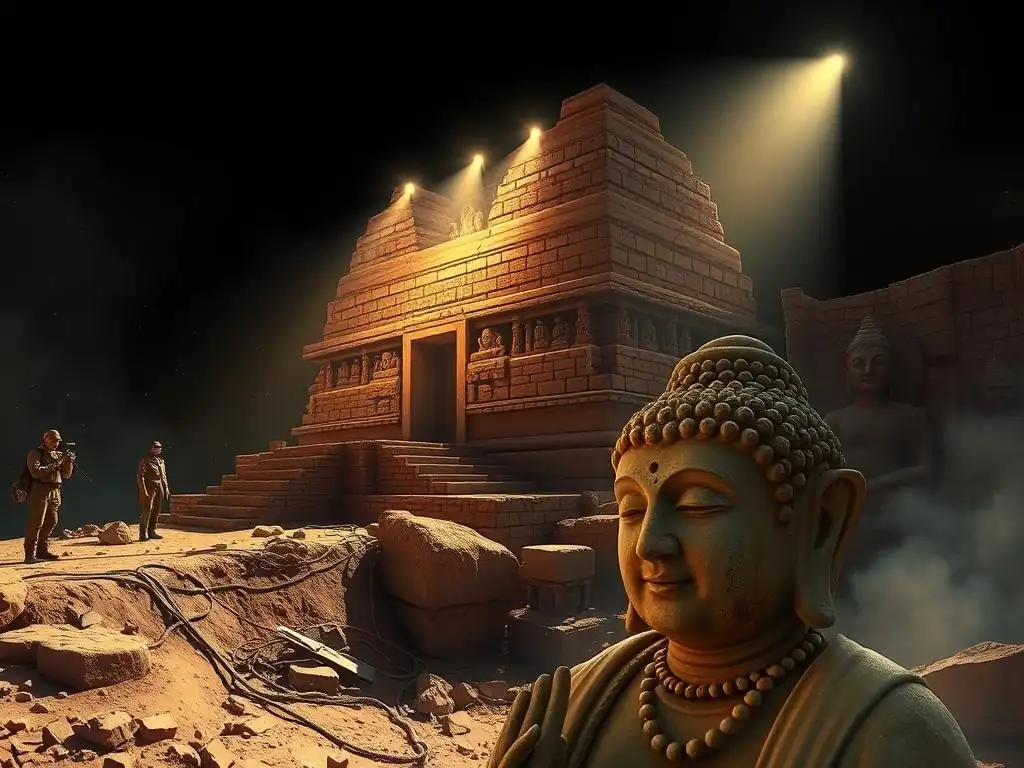
Delve into the captivating world of archaeological discovery, where we unearth the stories etched in stone and whispered through time. Are you ready to uncover secrets hidden beneath layers of history? Then join us as we explore the fascinating details of the Kunala Stupa archaeological excavation, a site steeped in legend and now, meticulously revealed through modern techniques. Discover how this excavation sheds new light on the ancient monastic complex in Taxila and prepares to be captivated by the rich tapestry of the past. Let's begin!
- Introduction to the Kunala Stupa and Monastery
- The Legend of Prince Kunala
- Archaeological Excavation Details of the Kunala Stupa
- Architectural Features of the Kunala Stupa and Monastery
- Religious Significance of the Kunala Monastery
- The Kunala Stupa in Comparison to Other Taxila Sites
- Conservation and Preservation Efforts at the Kunala Stupa
- The Kunala Stupa: A Window into Ancient Taxila
- Conclusion: The Enduring Allure of the Kunala Stupa
-
Frequently Asked Questions
- What is the Kunala Stupa and where is it located?
- What are some of the key archaeological discoveries made at the Kunala Stupa site?
- What is the legendary story associated with Prince Kunala and how does it relate to the stupa?
- What excavation techniques are used to uncover and analyze the Kunala Stupa site?
- Why is the Kunala Stupa important for understanding the history of Taxila and ancient civilizations?
- Final Reflection: Echoes of the Past, Seeds for the Future
- Unearth Your Inner Archaeologist: Start Exploring Today!
Introduction to the Kunala Stupa and Monastery
Taxila: A Historical Overview of the Crossroads of Cultures
Taxila, an ancient city located in the Rawalpindi District of Punjab, Pakistan, stands as a testament to millennia of cultural exchange and intellectual prowess. Designated a UNESCO World Heritage site in 1980, its strategic position at the crossroads of ancient trade routes, including a branch of the Silk Road, allowed it to flourish under various empires, from the Achaemenids in the 6th century BCE to the Mauryans under Ashoka, the Indo-Greeks, and most notably, the Kushans from the 1st to 3rd centuries CE.
This continuous occupation fostered a unique synthesis of Indian, Persian, and Hellenistic cultures, particularly evident in the Gandhara art style, which profoundly influenced Buddhist iconography across Asia.
The city was not merely a commercial hub but also a renowned center of learning, housing one of the earliest known universities. Scholars and students from across the ancient world converged here to study diverse subjects ranging from medicine and astronomy to philosophy and the arts. This vibrant intellectual environment, coupled with its economic prosperity, made Taxila a pivotal point in the history of the Indian subcontinent, leaving behind a rich archaeological record of stupas, monasteries, and urban settlements that offer unparalleled insights into ancient life and religious practices.
Kunala Stupa: Significance in Taxila's Archaeological Landscape
Within the expansive archaeological complex of Taxila, the Kunala Stupa holds a distinct and poignant significance, primarily due to its deep connection with Buddhist legend. Located approximately 2 kilometers from the main Taxila Museum, this site is believed to commemorate the tragic tale of Prince Kunala, son of Emperor Ashoka, whose eyes were cruelly put out at this very spot according to Buddhist tradition. While not as grand in scale as the Dharmarajika Stupa, its narrative association elevates its importance, attracting scholars and pilgrims alike.
The Kunala Stupa, accompanied by its monastic complex, represents a crucial piece of the Buddhist heritage that permeated Taxila, particularly during the Kushan period when Buddhism experienced a golden age in the region. Its architectural remains and the artifacts unearthed through various Kunala Stupa archaeological excavation details provide tangible evidence of monastic life, religious devotion, and the artistic achievements of the Gandhara civilization. It serves as a vital link between the legendary past and the archaeological present, allowing for a deeper understanding of Buddhist practice and patronage in ancient South Asia.
The Legend of Prince Kunala
The Jataka Tales and the Story of Kunala
The legend of Prince Kunala is deeply embedded within the rich tapestry of Buddhist literature, specifically within the Jataka Tales. These tales recount the previous lives of the Buddha, illustrating various moral and ethical principles through his incarnations as a human or an animal. The story of Kunala, found in texts like the Divyavadana, is not a Jataka in the strictest sense but is a well-known Avadana (a story of a meritorious deed or a significant event) that is often linked to the historical Emperor Ashoka and his family.
Prince Kunala, renowned for his exceptionally beautiful eyes, was the son of Emperor Ashoka and his chief queen, Asandhimitra. His name, 'Kunala,' itself means 'one with beautiful eyes,' derived from a Himalayan bird known for its striking ocular beauty. The narrative highlights themes of karma, suffering, and spiritual enlightenment, making it a powerful didactic tool within Buddhist teachings. It underscores the impermanence of physical beauty and the profound impact of negative actions driven by jealousy and deceit.
Kunala's Blindness: A Tragic Narrative
The tragic narrative of Kunala's blindness unfolds due to the malicious machinations of Tishyarakshita, Ashoka's younger and ambitious stepmother. Consumed by jealousy over Kunala's virtue and beauty, and perhaps fearing his succession, Tishyarakshita exploited Ashoka's temporary absence from the capital, Pataliputra. She forged a royal decree, using Ashoka's signet ring, ordering the administrators in Taxila to blind Prince Kunala. The royal officials, recognizing the emperor's seal, reluctantly carried out the horrific command, despite their deep respect and affection for the prince.
According to the legend, Kunala accepted his fate with remarkable equanimity, understanding it as the fruit of past karma. He wandered as a blind mendicant with his loyal wife, Kanchanamala, eventually returning to Pataliputra where he was miraculously cured of his blindness through the power of Buddhist truth, often attributed to the intervention of a Buddhist arhat or his own profound spiritual realization. This episode serves as a powerful allegory for the suffering inherent in worldly attachments and the path to liberation through detachment and wisdom.
The Enduring Legacy of the Kunala Legend in Taxila
The legend of Prince Kunala left an indelible mark on the region of Taxila, transforming the site of his supposed blinding into a revered pilgrimage destination for centuries. The construction of the Kunala Stupa and its associated monastery was a direct consequence of this enduring narrative, serving as a physical embodiment of the story and a place for devotees to reflect on its profound spiritual lessons. Its significance extended beyond local veneration, drawing pilgrims from distant lands who sought to connect with the sacred geography of Buddhism.
Even today, the ruins of the Kunala Stupa evoke the tragic yet inspiring tale, reminding visitors of the deep intertwining of historical events, religious narratives, and archaeological sites in the ancient world. The legend ensured the site's prominence in historical accounts and travelogues, such as those by Chinese Buddhist pilgrims Faxian (early 5th century CE) and Xuanzang (7th century CE), who both mention the stupa and the story of Kunala during their visits to Taxila. Their detailed records provide invaluable historical confirmation of the site's importance and the widespread knowledge of the legend across Buddhist Asia.
Archaeological Excavation Details of the Kunala Stupa
Early Explorations and Discoveries at Kunala Stupa
The initial archaeological interest in the Kunala Stupa site dates back to the early 20th century, following the foundational work of figures like Alexander Cunningham who first identified many sites in the Gandhara region. However, it was Sir John Marshall, the Director-General of the Archaeological Survey of India, who conducted the most systematic and extensive excavations at Taxila between 1913 and 1934. His team's efforts at Kunala were part of a broader strategy to uncover the vast archaeological treasures of the ancient city, meticulously documenting the layout of the stupa and its adjacent monastic complex.
Marshall's early Kunala Stupa archaeological excavation details revealed the core structure of the stupa, identifying its circular drum and the remnants of its dome, along with the surrounding monastic cells. These initial explorations confirmed the site's significance as a major Buddhist establishment, consistent with the descriptions found in ancient pilgrim accounts. The findings provided crucial insights into the architectural styles prevalent in Taxila during the Kushan period, particularly the use of diaper masonry (a type of stone construction using small, regularly shaped stones).
Recent Archaeological Excavations at the Kunala Stupa Site
While Marshall's work laid the groundwork, subsequent "Kunala Stupa archaeological excavation details" and conservation efforts have continued to refine our understanding of the site. In the decades following the initial major excavations, various departments and institutions, including the Department of Archaeology and Museums, Pakistan, have undertaken more focused interventions. These more recent initiatives have often concentrated on preservation and stabilization, but they have also yielded further specific details regarding the site's stratigraphy and different phases of construction.
For instance, detailed stratigraphic analysis during some later conservation works, particularly around the 1960s and 1970s, helped to clarify the sequence of building and rebuilding at the monastic complex, indicating periods of expansion and renovation. These Kunala Stupa archaeological excavation details have shown that the site was not a singular construction but evolved over centuries, with additions and modifications reflecting changing monastic needs and patronage. Such insights are crucial for reconstructing the site's full chronological history and understanding its continuous use as a religious center.
Key Artifacts Unearthed: Insights into Kunala Stupa's History
The Kunala Stupa archaeological excavation details have yielded a variety of artifacts that provide invaluable insights into the site's history, the daily lives of its inhabitants, and its religious significance. Among the most common finds are fragments of pottery, indicative of domestic use and storage within the monastic complex, often dating from the Kushan period (1st-3rd century CE). These pottery shards, while seemingly mundane, offer clues about the diet, cooking practices, and trade networks active at the monastery.
More significant finds include a notable collection of coins, predominantly from the Kushan emperors, such as Kanishka I and Huvishka. These coins, featuring images of Buddhist deities alongside Zoroastrian and Hellenistic ones, help to firmly date various construction phases and illustrate the syncretic religious environment of Taxila.
While no major relic caskets, like those found at Dharmarajika, have been explicitly reported at Kunala, the presence of numerous small votive stupas and fragments of Gandhara sculptures, depicting scenes from the Buddha's life or figures of bodhisattvas, further underscores the site's profound Buddhist dedication and its artistic patronage. These artifacts are instrumental in piecing together the narrative of the Kunala Stupa's role in the broader Buddhist landscape of ancient Gandhara.
Architectural Features of the Kunala Stupa and Monastery
Stupa Design and Construction Techniques
The Kunala Stupa, typical of Gandharan stupa architecture, showcases a specific design that evolved from earlier Indian models, incorporating elements of Hellenistic influence. Its primary structure consists of a circular drum, upon which a hemispherical dome (anda) would have originally rested. While much of the dome has deteriorated over time, the surviving base and drum indicate a substantial structure, possibly reaching a height of approximately 15-20 meters originally, with a base diameter estimated around 10-12 meters. This base is often approached by a flight of steps, leading to a circumambulatory path (pradakshina patha) for pilgrims.
The construction primarily utilized local grey slate stone, meticulously dressed and laid in what is known as diaper masonry, a characteristic technique of the Gandhara region. This method involves the use of small, irregularly shaped stones fitted together with a strong lime mortar, often faced with a finer plaster or stucco that would have been intricately decorated. The careful craftsmanship evident in the remaining walls highlights the skill of ancient artisans and the considerable resources invested in building such revered monuments.
Monastic Complex Layout: Cells, Courtyards, and Assembly Halls
Adjacent to the Kunala Stupa lies a well-preserved monastic complex, designed to accommodate a community of Buddhist monks. The layout is typical of Gandharan monasteries, centered around a spacious open courtyard, which would have served as a communal space for meditation, assembly, and daily activities. Surrounding this courtyard are numerous monastic cells (viharas), estimated to be around 20-30 in number, each providing a private dwelling for individual monks. These cells are generally small, simple rooms, often with a niche for a lamp or personal belongings.
In addition to the cells, the complex includes larger communal areas such as an assembly hall (uposatha-ghara), where monks would gather for sermons, chanting, and disciplinary proceedings, and possibly a refectory for communal meals. The strategic placement of these functional areas facilitated the structured monastic life, emphasizing both individual contemplation and communal cohesion. The overall design reflects a practical yet spiritually focused environment, conducive to the rigorous discipline of Buddhist monasticism.
Decorative Elements: Sculptures and Reliefs at Kunala Stupa
The Kunala Stupa and its monastic complex, like many Gandharan sites, would have been richly adorned with decorative elements, primarily in the distinctive Gandhara art style. Although many of the original sculptures and reliefs have been removed or suffered from erosion, archaeological findings and comparative studies with other Taxila sites provide a clear picture of their likely appearance. These decorations were predominantly executed in stucco or schist stone, often depicting scenes from the life of the Buddha, Jataka tales, and figures of bodhisattvas.
The friezes and panels would have adorned the stupa's drum, the walls of the monastic complex, and the niches within the cells and halls. Typical motifs included narrative panels illustrating episodes such as the Birth of Buddha, his Enlightenment, or the First Sermon, along with individual figures of Maitreya, Avalokiteshvara, and various deities from the Buddhist pantheon. The Gandhara style is characterized by its Greco-Roman influences, visible in the drapery, facial features, and anatomical details of the figures, creating a unique blend of Eastern spirituality and Western artistic conventions that was highly influential across Asia.
Religious Significance of the Kunala Monastery
Buddhism in Taxila: Contextualizing the Monastery's Role
Buddhism flourished in Taxila for several centuries, particularly from the Mauryan period onwards, reaching its zenith under the Kushan Empire (1st to 3rd centuries CE). The city served as a vital intellectual and religious center, attracting monks, scholars, and pilgrims from across Central and South Asia. The Kunala Monastery was an integral part of this vibrant Buddhist ecosystem, contributing to the propagation of the Dharma and serving as a hub for monastic education and practice.
During its peak, Taxila boasted numerous stupas and monastic complexes, each playing a role in the religious life of the region. The Kunala Monastery, with its strong legendary connection to Emperor Ashoka, would have held a special place, perhaps attracting specific schools of thought or monastic lineages. Its existence underscores the widespread adoption and patronage of Buddhism by both rulers and common people, shaping the cultural and spiritual landscape of ancient Gandhara.
Ritual Practices and Monastic Life at Kunala
Life at the Kunala Monastery would have revolved around a structured routine of spiritual discipline, study, and communal activities. Monks engaged in daily rituals such as circumambulating the stupa (pradakshina), a meditative practice of walking clockwise around the sacred monument to accumulate merit. Chanting of sutras, meditation sessions (bhāvanā), and communal meals would have been regular features of their day. The monastic cells provided spaces for individual contemplation and study, while the assembly hall facilitated collective learning and observance of monastic rules (Vinaya).
The monastery likely served as a center for Buddhist education, with senior monks teaching novices and scholars engaging in philosophical debates. The presence of a well-organized monastic complex suggests a self-sufficient community, possibly supported by donations from lay patrons and the surrounding populace. The rigorous yet peaceful environment fostered within the monastery was designed to facilitate the monks' path towards enlightenment, making it a pivotal institution for the preservation and dissemination of Buddhist teachings.
Influence of the Kunala Stupa on Buddhist Pilgrimage
The Kunala Stupa held significant sway over Buddhist pilgrimage routes, largely due to its compelling association with the legend of Prince Kunala and Emperor Ashoka. For centuries, devout Buddhists from distant lands, including China, Central Asia, and other parts of the Indian subcontinent, undertook arduous journeys to visit sites connected to the life of the Buddha and important Buddhist figures. The Kunala Stupa, situated in the renowned Buddhist heartland of Gandhara, became an essential stop on these pilgrimage itineraries.
Accounts from early Chinese pilgrims like Faxian (early 5th century CE) and Xuanzang (7th century CE) explicitly mention the Kunala Stupa and the associated legend in their travelogues. Xuanzang, for instance, describes the stupa in detail and recounts the story of Kunala's blinding and subsequent cure, emphasizing the site's miraculous and sacred qualities. These historical records confirm the stupa's international renown and its role in fostering a sense of shared Buddhist heritage across vast geographical distances, reinforcing its status as a sacred landmark.
The Kunala Stupa in Comparison to Other Taxila Sites
Dharmarajika Stupa vs. Kunala Stupa: A Comparative Analysis
The Kunala Stupa, while significant, differs in scale and certain aspects from the more prominent Dharmarajika Stupa, often considered the largest and oldest Buddhist monument in Taxila. The Dharmarajika Stupa, believed to have been founded by Emperor Ashoka himself in the 3rd century BCE, is a monumental structure with a massive hemispherical dome and multiple concentric rings of chapels and smaller stupas, sprawling over a much larger area. Its central stupa is approximately 15 meters high and 50 meters in diameter, making it significantly larger than Kunala.
In contrast, the Kunala Stupa, though also linked to Ashoka through legend, is comparatively smaller in physical dimensions and appears to have undergone more extensive rebuilding, particularly during the Kushan period. While Dharmarajika's primary significance lies in its antiquity and the potential presence of Buddha relics (a relic casket was found there), Kunala's allure stems directly from the tragic and spiritually resonant legend of Prince Kunala. Both sites, however, showcase the characteristic Gandhara architectural style and the evolution of Buddhist monastic complexes in Taxila.
Jaulian Monastery and Kunala Monastery: Similarities and Differences
The Jaulian Monastery, another prominent Buddhist site in Taxila, offers an interesting comparison with the Kunala monastic complex. Both are examples of well-preserved monastic institutions that flourished during the Kushan era, sharing similar layouts featuring a central courtyard surrounded by monastic cells, assembly halls, and stupas. Jaulian, however, is particularly renowned for its exceptional preservation of stucco sculptures and figures, many still adhering to the walls of its main stupa and smaller chapels, depicting various Buddhist narratives and figures in vivid detail.
While the Kunala Monastery's stucco decorations have largely deteriorated or been removed, its architectural plan and the Kunala Stupa archaeological excavation details suggest a similar function and artistic ambition. A key difference lies in their location and immediate surroundings; Jaulian is perched on a hilltop, offering panoramic views, which might have contributed to its serene atmosphere. Kunala, on the other hand, is situated in a more accessible valley, directly linked to a specific legend, which may have influenced its primary role as a pilgrimage destination rather than solely a secluded monastic retreat.
Mohra Moradu and the Religious Landscape of Taxila
Mohra Moradu represents yet another significant monastic complex in Taxila, further illustrating the rich and diverse religious landscape of the ancient city. Like Kunala and Jaulian, Mohra Moradu features a main stupa, a large monastic courtyard, and numerous cells, showcasing the standardized yet adaptable architecture of Gandharan Buddhist monasteries. Its well-preserved meditation cells, complete with niches for lamps, provide intimate glimpses into the ascetic practices of the monks.
The presence of multiple, distinct monastic centers like Kunala, Jaulian, and Mohra Moradu within a relatively compact area of Taxila highlights the city's status as a thriving hub of Buddhist activity. Each complex, while sharing common architectural and functional elements, likely catered to different monastic orders, schools of thought, or served specific devotional purposes. The Kunala Stupa archaeological excavation details, when viewed alongside those from these other sites, contribute to a comprehensive understanding of the sheer scale and profound influence of Buddhism in Taxila, demonstrating its capacity to support a large and diverse monastic population.
Conservation and Preservation Efforts at the Kunala Stupa
Challenges in Preserving the Kunala Stupa
The preservation of the Kunala Stupa, like many ancient archaeological sites, faces numerous formidable challenges. Environmental factors, such as seasonal heavy rainfall, extreme temperature fluctuations, and wind erosion, continuously contribute to the degradation of the delicate stone and stucco structures. The porous nature of the local slate stone used in construction makes it susceptible to moisture ingress, leading to the growth of vegetation, salt efflorescence, and the eventual crumbling of masonry.
Human impact also poses a significant threat. While direct vandalism is less common at protected sites, unintentional damage from tourism, unregulated access, and historical neglect prior to modern conservation efforts have taken their toll. The sheer age of the structures, dating back nearly two millennia in some parts, means that their inherent structural integrity is compromised, requiring constant monitoring and specialized interventions to prevent further collapse. These challenges necessitate ongoing and meticulous preservation strategies.
Current Conservation Projects and Initiatives
Recognizing the immense historical and cultural value of the Kunala Stupa, various conservation projects and initiatives have been undertaken, primarily by the Department of Archaeology and Museums, Government of Pakistan. These efforts aim to stabilize the existing structures, prevent further decay, and ensure the long-term survival of the site. Key activities include the systematic removal of invasive vegetation, which can cause significant structural damage through root penetration.
Furthermore, critical conservation work involves the consolidation of fragile walls and architectural elements using appropriate traditional materials, such as lime mortar, to ensure compatibility with the original construction. Drainage systems are periodically improved around the site to mitigate water damage, a major cause of deterioration. These ongoing projects often involve detailed documentation, including photographic records and measured drawings, to monitor the condition of the site and inform future interventions, ensuring that the Kunala Stupa archaeological excavation details remain intact for future study.
The Future of Archaeological Research at Kunala
The future of archaeological research at the Kunala Stupa holds considerable promise, building upon the extensive Kunala Stupa archaeological excavation details already gathered. There is significant potential for employing non-invasive technologies, such as Ground-Penetrating Radar (GPR) or Lidar, to explore subsurface features without disturbing the existing remains. Such techniques could reveal previously unmapped structures or deeper stratigraphic layers, potentially uncovering earlier phases of occupation or previously unknown monastic extensions.
Further detailed material analysis of the unearthed artifacts and architectural fragments could provide more precise information on their provenance, dating, and the techniques used in their creation. Collaborative projects with international universities and research institutions could also bring new perspectives and advanced methodologies to the site, fostering a deeper, more nuanced understanding of the Kunala Stupa's role within the broader context of ancient Taxila and South Asian Buddhism. Continued research is vital for unveiling more of the site's secrets and enhancing its interpretation for both scholarly and public audiences.
The Kunala Stupa: A Window into Ancient Taxila
Reconstructing Daily Life Through Archaeological Evidence
The Kunala Stupa archaeological excavation details offer a fascinating window into the daily life of ancient Taxila, particularly within a monastic setting. While the grand stupa itself speaks of religious devotion, the associated monastic complex, with its cells, courtyards, and communal areas, provides tangible evidence of the monks' routines. Pottery shards found during excavations, for instance, indicate the preparation and consumption of meals, suggesting a diet that might have included grains, legumes, and possibly dairy products, reflecting the agricultural produce of the region.
The presence of simple tools, remnants of domestic items, and even small personal effects, though not always extensively publicized, contribute to a picture of a largely self-sufficient community. The layout of the cells, designed for individual retreat and contemplation, contrasts with the larger assembly halls, indicating a balance between solitary practice and communal religious observance. These subtle details, pieced together from the material record, allow archaeologists to reconstruct aspects of the functional and spiritual rhythm that governed life at Kunala centuries ago.
The Kunala Monastery existed within the broader economic and social fabric of Taxila, a thriving urban center positioned along major trade routes. As a significant religious institution, the monastery would have been supported by a combination of royal patronage, particularly during the Kushan period, and donations from the local lay community. This patronage would have ensured a steady supply of resources, including food, building materials, and possibly luxury items for ritual use, reflecting the wealth flowing through Taxila.
The monks themselves, while leading an ascetic life, would have interacted with the local populace, providing spiritual guidance, education, and perhaps even basic medical knowledge. The monastery could have also served as a waypoint for traders and pilgrims, contributing to the local economy through their needs for provisions and services. Thus, the Kunala Monastery was not an isolated entity but an integrated component of Taxila's socio-economic landscape, reflecting the symbiotic relationship between religious institutions and the wider society in ancient times.
Kunala Stupa as a Reflection of Taxila's Cultural Synthesis
The Kunala Stupa stands as a powerful testament to the remarkable cultural synthesis that defined ancient Taxila, particularly during the Gandhara period. Its architecture, while fundamentally Buddhist, exhibits clear influences from Hellenistic and Persian traditions, evident in the use of Corinthian capitals on some columns (if present in the broader complex) or specific decorative motifs. The Gandhara art style, prevalent in the site's sculptures and reliefs, is the quintessential example of this fusion, blending Indian Buddhist iconography with Greco-Roman artistic conventions in drapery, musculature, and facial features.
Furthermore, the very legend of Prince Kunala, intertwined with the historical figure of Emperor Ashoka, highlights the integration of indigenous Indian narratives with the broader Buddhist universalism that characterized the region. The Kunala Stupa archaeological excavation details reveal a site that was not static but continually adapted and evolved, absorbing diverse influences over centuries of occupation. This dynamic interplay of cultures, religions, and artistic styles makes Kunala a microcosm of Taxila's unique identity as a true "crossroads of cultures."
Conclusion: The Enduring Allure of the Kunala Stupa
Summarizing the Importance of the Kunala Stupa Archaeological Excavation Details
The Kunala Stupa archaeological excavation details have been instrumental in bridging the gap between a poignant Buddhist legend and tangible historical evidence. The systematic work, initiated by early pioneers like Sir John Marshall and continued by successive conservation projects, has unveiled the architectural grandeur of the stupa and its monastic complex, revealing construction techniques, monastic layouts, and decorative styles characteristic of the Gandhara period. These details have provided crucial insights into the site's chronology, its role as a vibrant center for Buddhist practice, and its connection to the broader narrative of Emperor Ashoka.
Beyond the physical remnants, the artifacts unearthed—from pottery fragments to Kushan coins and remnants of stucco sculptures—have illuminated aspects of daily life, economic activities, and the prevailing religious syncretism in ancient Taxila. The Kunala Stupa stands as a vital piece in the complex puzzle of South Asian archaeology, illustrating the profound impact of Buddhism in the region and the enduring power of its sacred narratives to shape physical landscapes.
Future Directions for Research and Interpretation
Looking ahead, future research at the Kunala Stupa site should focus on leveraging advanced archaeological techniques to uncover more nuanced "Kunala Stupa archaeological excavation details." Non-invasive methods like ground-penetrating radar could potentially map subterranean structures or earlier phases of the monastery, offering insights into its foundational history. Detailed scientific analysis of construction materials and organic remains could provide more precise dating and environmental data, enriching our understanding of the site's evolution and its ecological context.
Furthermore, comparative studies with newly discovered or less-explored sites in the broader Gandhara region could help contextualize Kunala within a wider network of Buddhist establishments, shedding light on regional variations in monastic practices or architectural styles. The ongoing interpretation of the Kunala legend in conjunction with the archaeological findings will continue to reveal the complex interplay between religious belief, historical figures, and the physical spaces they inhabited, offering a holistic understanding of this significant heritage site.
The Kunala Stupa's Place in South Asian Archaeological Heritage
The Kunala Stupa holds an indispensable place within the vast tapestry of South Asian archaeological heritage. It serves as a powerful symbol of the flourishing of Buddhism in the ancient Gandhara region, a testament to the patronage of powerful emperors like Ashoka, and a vivid illustration of the cultural synthesis that defined Taxila. Its unique connection to a specific, emotionally resonant legend elevates its significance beyond mere architectural ruins, making it a focal point for understanding the spiritual and narrative dimensions of ancient Buddhist sites.
As part of the UNESCO World Heritage site of Taxila, the Kunala Stupa contributes significantly to our global understanding of ancient urbanism, religious development, and artistic exchange. Its continued study and preservation are crucial not only for academic scholarship but also for connecting contemporary generations with the rich, multifaceted history of one of Asia's most pivotal ancient civilizations. The Kunala Stupa remains an enduring reminder of the enduring allure of archaeology in unveiling the stories of the past.
Frequently Asked Questions
What is the Kunala Stupa and where is it located?
The Kunala Stupa is an ancient Buddhist monument located in Taxila, Pakistan. It's believed to be associated with a Jataka tale about a prince named Kunala. The location is significant due to its historical importance along ancient trade routes.
What are some of the key archaeological discoveries made at the Kunala Stupa site?
Excavations have revealed the remains of a monastery, surrounding the stupa, along with numerous artifacts. These include pottery, coins, and sculptures that provide insights into the daily life and religious practices of the people who lived there. The excavations details are important for understanding the site.
What is the legendary story associated with Prince Kunala and how does it relate to the stupa?
The legend tells of Prince Kunala, who was blinded due to a false accusation by his stepmother. The stupa is believed to have been erected to commemorate his suffering and eventual restoration of sight. This story is central to understanding the cultural significance of the site.
What excavation techniques are used to uncover and analyze the Kunala Stupa site?
Archaeologists utilize a variety of techniques, including stratigraphic excavation, to carefully document the layers of the earth. They also use dating methods like radiocarbon dating and artifact analysis to establish a timeline. These archaeological excavation details are vital for accurate interpretation.
Why is the Kunala Stupa important for understanding the history of Taxila and ancient civilizations?
The Kunala Stupa provides valuable information about the Gandhara civilization and the spread of Buddhism in the region. It demonstrates the cultural exchange and religious syncretism that occurred along the Silk Road. The archaeological evidence from the site helps reconstruct the historical narrative of Taxila.
Final Reflection: Echoes of the Past, Seeds for the Future
The journey through the legend and archaeological excavation details of the Kunala Stupa in Taxila reveals more than just ancient bricks and whispered stories; it illuminates the enduring power of historical narratives to shape our understanding of the present. The meticulous unearthing of the site, as detailed in this article, underscores the importance of preserving and interpreting our shared heritage, reminding us that the past is not merely a collection of dates and events, but a living tapestry woven into the fabric of our contemporary world.
The story of Kunala, blinded by deceit and buried in this very stupa, resonates even today, a poignant reminder of the fragility of truth and the enduring consequences of injustice. This exploration of the Kunala Stupa has personally reinforced the profound connection between archaeological discovery and the human condition, highlighting the need to learn from history's triumphs and tragedies. History, despite its wrenching pain, cannot be unlived, but if faced with courage, need not be lived again.
- Maya Angelou. The echoes of Kunala's story continue to reverberate, urging us to be vigilant against deception and to strive for a more just and compassionate world.
As we conclude this exploration of the Kunala Stupa and Monastery, let us carry forward the lessons learned from its archaeological excavation details. Consider how the stories of the past, unearthed through careful investigation and thoughtful interpretation, can inform our present actions and shape a more enlightened future. Reflect on the importance of preserving our cultural heritage and the responsibility we all share in ensuring that the echoes of history continue to inspire and guide generations to come.
Unearth Your Inner Archaeologist: Start Exploring Today!
Thank you for delving into the fascinating story of the Kunala Stupa and Monastery. We hope you've enjoyed this journey through legend and archaeology. Now it's your turn to become part of the exploration!
Here are a few things you can do next:
- Visit your local museum! Explore exhibits on South Asian history and culture, and discover artifacts that bring the past to life.
- Share this article with fellow history buffs or anyone intrigued by the mysteries of ancient civilizations.
- Brainstorm: If you could excavate any archaeological site, which would it be and why? Share your dream excavation in the comments!