
PostClassical History of the Acropolis: Transformations during the Byzantine, Frankish, and Ottoman Periods

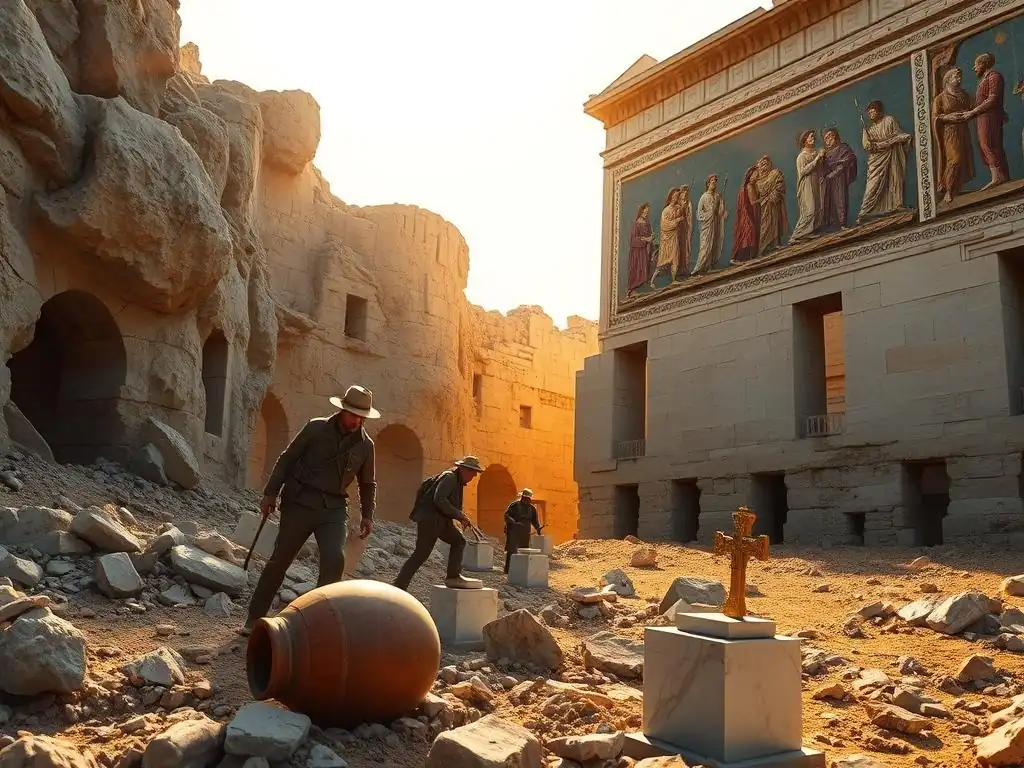
Welcome to ArchaeologyHub.org, your gateway to the world's hidden histories.
Delve into the fascinating story of the Acropolis beyond its classical grandeur. What happened after the fall of ancient Greece? Our featured article, "PostClassical History of the Acropolis: Transformations during the Byzantine, Frankish, and Ottoman Periods," unveils the captivating and often overlooked Byzantine Acropolis historical transformations, revealing layers of history you never knew existed. Discover how this iconic landmark evolved through centuries of shifting empires and cultural influences, and unlock a deeper understanding of its enduring legacy. Intrigued? Let's explore.
- Introduction: The Acropolis Beyond Antiquity
- The Acropolis in the Byzantine Period (c. 330 – 1204 AD): A Center of Christian Worship
- Frankish Rule and the Acropolis: A Ducal Residence (1204 – 1458 AD)
- Ottoman Era on the Acropolis: Mosque, Garrison, and Archaeological Neglect (1458 – 1833 AD)
- Comparing Byzantine, Frankish, and Ottoman Transformations of the Acropolis
- The Legacy of the Postclassical Acropolis: Archaeological Insights and Preservation Challenges
- Conclusion: The Enduring Story of the Acropolis
-
Frequently Asked Questions
- What significant changes did the Acropolis undergo during the Byzantine period?
- How did the Frankish rule impact the Acropolis's use and structure?
- What were the key Ottoman interventions on the Acropolis site?
- How did these post-classical periods contribute to the Acropolis's current state of preservation?
- Why is understanding these "Byzantine Acropolis historical transformations" important for archaeological research?
- Final Reflection: Echoes of Resilience on the Sacred Rock
- Unveil the Acropolis's Hidden Stories!
Introduction: The Acropolis Beyond Antiquity
A Brief Overview of the Acropolis's Enduring Significance
The Acropolis of Athens stands globally as an iconic symbol of classical antiquity, revered for its magnificent temples like the Parthenon, Erechtheion, and Propylaea, which represent the zenith of ancient Greek architectural and artistic achievement. While its classical golden age, particularly the 5th century BC, often dominates popular imagination, the Acropolis has a rich and continuous history of occupation and transformation spanning millennia. This includes significant periods of adaptation and repurposing that profoundly reshaped its function and appearance long after the decline of the Roman Empire.
Beyond its classical grandeur, the Acropolis served as a vibrant locus of human activity through the Byzantine, Frankish, and Ottoman eras. These post-classical periods witnessed the site's metamorphosis from a pagan sanctuary into a Christian church, then a ducal residence, and finally an Ottoman garrison. Each successive power left indelible marks, contributing to a complex archaeological stratigraphy that reveals fascinating Byzantine Acropolis historical transformations and subsequent adaptations, demonstrating the site's enduring strategic and symbolic value.
Shifting Power Dynamics: From Classical Greece to the Byzantine Era
The transition from the Roman period to the nascent Byzantine Empire brought profound changes to Athens and, by extension, the Acropolis. As the Roman Empire embraced Christianity in the 4th century AD, pagan worship gradually diminished, leading to a redefinition of sacred spaces. While Athens retained a certain intellectual prestige for its philosophical schools for some time, its political and religious prominence waned in favor of Constantinople, the new Christian capital founded in 330 AD.
This shift meant that the Acropolis, once the heart of pagan Athenian piety, began its slow but inevitable conversion to Christian use. The Edict of Theodosius I in 381 AD, which made Nicene Christianity the state religion, further accelerated this process. By the 6th century AD, many of the ancient temples on the Acropolis, including the Parthenon itself, were repurposed for Christian worship, marking the initial and arguably most significant Byzantine Acropolis historical transformations.
The Acropolis in the Byzantine Period (c. 330 – 1204 AD): A Center of Christian Worship
Transformation of Ancient Temples: The Parthenon as a Church
One of the most remarkable Byzantine Acropolis historical transformations was the conversion of the Parthenon, the temple dedicated to Athena Parthenos, into the Church of the Theotokos Atheniotissa (Our Lady of Athens) sometime around the 6th or 7th century AD. This involved significant, though largely non-destructive, modifications to adapt the pagan structure for Christian liturgy. The original eastern entrance, where the cult statue of Athena once stood, was walled off, and an apse was constructed at the eastern end, requiring the removal of the inner opisthodomos wall.
The main entrance was relocated to the west, where the original pronaos was modified to serve as a narthex. Inside, Christian altars were installed, and the walls were adorned with frescoes depicting saints and biblical scenes, traces of which were still visible in later centuries. Despite these profound functional changes, the Parthenon's external classical form was largely preserved, a testament to the Byzantines' practical approach to repurposing existing monumental structures rather than demolishing them entirely.
Architectural Adaptations: Byzantine Modifications to the Acropolis Structures
Beyond the Parthenon, other classical structures on the Acropolis also underwent Byzantine Acropolis historical transformations. The Erechtheion, for instance, was likely converted into a church dedicated to the Archangels, or possibly served as an episcopal residence. The Propylaea, the monumental gateway to the Acropolis, was heavily fortified and became the official residence of the Bishop of Athens, with new walls and towers added to enhance its defensive capabilities.
Archaeological evidence suggests that new, less monumental buildings were also constructed within the Acropolis precinct to support the Christian community, including smaller chapels, monastic cells, and residential quarters for the clergy and administrative staff. These additions often utilized spolia—reused ancient building materials—from classical structures, reflecting a pragmatic approach to construction and a continuity of occupation, albeit with a dramatically altered purpose.
The Acropolis as a Refuge: Defensive Role during Byzantine Invasions
Throughout the Byzantine period, the Acropolis maintained its strategic importance as a natural stronghold, frequently serving as a primary refuge for the inhabitants of Athens during times of invasion and instability. Its elevated and defensible position made it an ideal sanctuary. For instance, during the Slavic incursions into Greece in the 6th and 7th centuries AD, Athens, though reduced in size, relied on the Acropolis as its last line of defense, housing the remaining population within its fortified walls.
Later, during the 11th and 12th centuries, as the Byzantine Empire faced external threats from Normans and other forces, the Acropolis continued to play a vital defensive role. The fortifications were periodically reinforced, and the site housed a military garrison alongside the religious community. This dual function as a spiritual center and a military stronghold underscores the ongoing Byzantine Acropolis historical transformations driven by both religious and geopolitical imperatives.
Evidence of Daily Life: Byzantine-Era Artifacts Discovered on the Acropolis
Archaeological excavations on the Acropolis have unearthed a wealth of artifacts from the Byzantine period, offering valuable insights into the daily lives of its inhabitants. These finds include numerous fragments of pottery, varying from utilitarian cooking vessels and storage jars to finer glazed ware, indicating continuous domestic activity within the precinct. Coins from various Byzantine emperors, such as Justinian I (527-565 AD) and Basil II (976-1025 AD), also frequently appear, providing precise dating for different layers of occupation.
Other discoveries include small bronze crosses, oil lamps, tools, and occasional glass fragments, all testifying to the presence of a functioning community. While these artifacts lack the monumental grandeur of the classical period, they paint a vivid picture of a living, breathing settlement, where ordinary people lived, worked, and worshipped amidst the ancient ruins. These humble finds are crucial for understanding the more mundane aspects of the Byzantine Acropolis historical transformations.
Frankish Rule and the Acropolis: A Ducal Residence (1204 – 1458 AD)
The Fourth Crusade and the Establishment of Frankish Athens
The year 1204 AD marked a dramatic turning point for the Byzantine Empire and, consequently, for Athens and the Acropolis. The Fourth Crusade, initially intended for the Holy Land, instead diverted to Constantinople, leading to its brutal sack and the dissolution of the Byzantine Empire into various Latin states. Athens fell under the control of Boniface of Montferrat, and subsequently, the city became the capital of the Duchy of Athens, initially ruled by the Burgundian de la Roche family.
This new Frankish dominion ushered in a period of Western European influence on the Acropolis, transforming it once again. The site, already a fortified Byzantine stronghold, was further adapted to serve as the administrative and military heart of the new Latin Duchy. This political upheaval directly led to significant Acropolis historical transformations, shifting its identity from an Eastern Orthodox spiritual center to a Western feudal seat of power.
The Acropolis as a Frankish Fortress: Strengthening Defenses
Under Frankish rule, the Acropolis was primarily viewed as a strategic fortress, essential for maintaining control over Athens and the surrounding territory. The Frankish dukes invested heavily in strengthening its defenses. They repaired and reinforced the existing Byzantine walls, often adding new towers, bastions, and curtain walls to create a more formidable stronghold against potential threats from rival Latin lords, Byzantine remnants, and later, the encroaching Ottoman Empire.
One of the most prominent additions was the construction of the Frankish Tower, detailed below, but other modifications included reinforcing the Propylaea and the circuit walls. The Frankish emphasis on military engineering transformed the Acropolis into a formidable castle, a stark contrast to its earlier, more open sacred character, highlighting the continuous Acropolis historical transformations driven by geopolitical necessity.
Architectural Changes under Frankish Influence: Addition of the Frankish Tower
The most visible and enduring architectural change introduced during the Frankish period was the construction of the Frankish Tower, a massive defensive structure built by the Acciaiuoli family (who succeeded the de la Roche) in the 14th century. Located at the west end of the Propylaea complex, it was a rectangular tower, approximately 28 meters (92 feet) high, built from spolia, including blocks from the Acropolis's ancient monuments.
This imposing tower served as a formidable defensive lookout and a symbol of Frankish authority. It was integrated directly into the Propylaea, dominating the entrance to the Acropolis for centuries until its controversial demolition in 1875 during archaeological restoration efforts. Its presence fundamentally altered the iconic silhouette of the Acropolis, making it one of the most significant and long-lasting Acropolis historical transformations of the medieval period.
The Acropolis Duke's Residence: Power and Administration
Beyond its defensive role, the Acropolis also served as the ducal residence for the Frankish rulers of Athens. The Propylaea complex, already adapted by the Byzantines, was further converted into a palace, providing living quarters, administrative offices, and reception halls for the Duke of Athens and his court. This transformation solidified the Acropolis's role as the political and administrative hub of the Duchy.
Life on the Acropolis during this period would have been centered around the duke's court, involving a mix of military duties, administrative functions, and the social life of the ruling elite. It was from this elevated position that the dukes governed their territory, issued decrees, and entertained foreign dignitaries. This shift from a spiritual sanctuary to a secular seat of power represents a profound continuation of Acropolis historical transformations.
Ottoman Era on the Acropolis: Mosque, Garrison, and Archaeological Neglect (1458 – 1833 AD)
The Ottoman Conquest of Athens and the Acropolis
The Ottoman conquest of Athens in 1458, led by Sultan Mehmed II himself, marked the end of nearly 250 years of Frankish rule and ushered in a new era of Ottoman dominion that would last for almost four centuries. Sultan Mehmed II, known for his interest in ancient civilizations, reportedly visited the Acropolis shortly after its capture, expressing admiration for its ancient monuments.
Despite this initial appreciation, the Ottomans swiftly asserted their control and adapted the site to serve their imperial and religious needs. Recognizing its formidable strategic value, they maintained the Acropolis primarily as a military garrison, reinforcing its fortifications and establishing it as the administrative heart of Ottoman Athens. This conquest initiated a new phase of profound Acropolis historical transformations.
The Parthenon as a Mosque: The Addition of a Minaret
One of the most significant Acropolis historical transformations under Ottoman rule was the conversion of the Parthenon into a mosque shortly after the conquest in 1458. This conversion involved minimal structural alteration to the main temple building, primarily the addition of a minbar (pulpit) and a mihrab (prayer niche) inside the cella to orient prayers towards Mecca.
The most visually striking change was the construction of a tall, slender minaret at the southwest corner of the Parthenon, near the Propylaea. This minaret, built of limestone, provided a distinctive Islamic silhouette to the ancient temple for centuries, symbolizing the new religious and political authority. While the mosque function preserved the building from complete demolition, it also marked a dramatic departure from its pagan and Christian past.
The Acropolis as a Military Garrison: Strategic Importance to the Ottomans
For the Ottoman Empire, the Acropolis's primary function was that of a strategic military garrison. Its elevated and naturally defensible position made it an impregnable stronghold crucial for controlling Athens and the surrounding plains. A permanent Ottoman military force was stationed on the Acropolis, complete with barracks, armories, and storage facilities.
Access to the Acropolis became highly restricted, primarily limited to the Ottoman military and administration. This military occupation meant that the site was often treated as a functional fortress rather than a historical monument, and its ancient structures were repurposed or subsumed into military infrastructure. The constant presence of soldiers and the focus on defense continued the long history of Acropolis historical transformations towards a military stronghold.
Damage and Destruction: Gunpowder Explosion of 1687
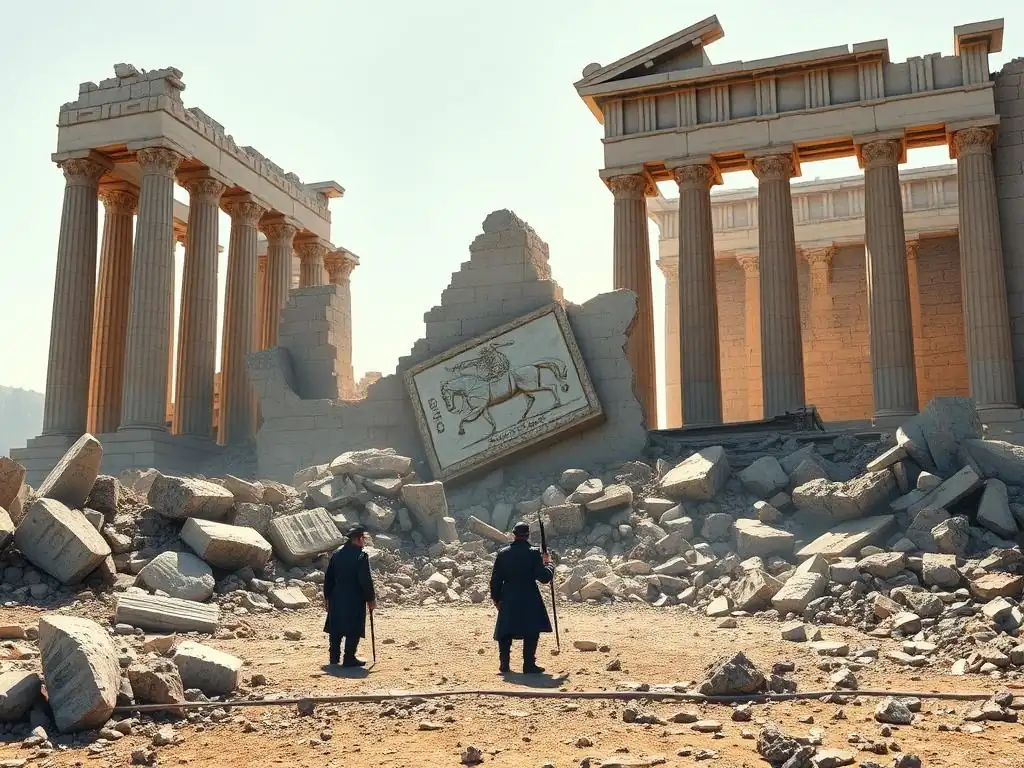
The most catastrophic event in the post-classical history of the Parthenon occurred on September 26, 1687, during the Morean War between the Republic of Venice and the Ottoman Empire. The Ottomans, facing the Venetian siege of Athens under Francesco Morosini, had unwisely converted the Parthenon into a gunpowder magazine, storing a vast quantity of munitions within its walls.
A Venetian cannonball struck the Parthenon, igniting the gunpowder and causing a massive explosion that ripped through the center of the temple. The blast destroyed much of the cella walls, collapsed a significant portion of the roof, and brought down many of the iconic columns of its long sides. This single event, though accidental, caused more damage to the Parthenon than all previous Acropolis historical transformations combined, leaving it in the ruined state largely seen today.
Archaeological Neglect and Looting: Elgin Marbles Removal
During the Ottoman period, particularly in its later centuries, the Acropolis suffered from a general state of archaeological neglect, punctuated by instances of significant looting. While some European travelers and antiquarians were occasionally granted access, systematic archaeological study was non-existent. The site was primarily regarded as a military post, not a heritage site to be preserved.
The most infamous instance of removal occurred between 1801 and 1812 when Thomas Bruce, 7th Earl of Elgin, then British ambassador to the Ottoman Empire, removed a substantial portion of the Parthenon's remaining sculptures, including large sections of the frieze, metopes, and pedimental figures. These "Elgin Marbles," now in the British Museum, were removed with the permission of the Ottoman authorities (through firmans), highlighting the prevailing disregard for ancient heritage during this period of Acropolis historical transformations and contributing to lasting international controversy.
Comparing Byzantine, Frankish, and Ottoman Transformations of the Acropolis
Religious Transformations: From Pagan Temple to Christian Church to Mosque
The religious transformations of the Acropolis offer a compelling narrative of successive shifts in dominant faiths. The Byzantine period saw the conversion of the Parthenon from a pagan temple dedicated to Athena into the Church of the Theotokos Atheniotissa, a move driven by the triumph of Christianity. This involved internal adaptations like the addition of an apse and Christian iconography, repurposing the space for Christian liturgy while largely preserving its external form.
In contrast, the Ottoman conversion of the Parthenon into a mosque, though similarly driven by the assertion of a new dominant faith, was marked by the prominent addition of a minaret. This architectural feature visually declared the site's new Islamic identity to the city. Each conversion, whether Byzantine or Ottoman, profoundly redefined the sacred space, demonstrating how the Acropolis became a canvas for the spiritual and political aspirations of its various rulers, showcasing profound religious Acropolis historical transformations.
Architectural Adaptations: Fortifications and Modifications Across Eras
Architectural adaptations on the Acropolis varied significantly across the Byzantine, Frankish, and Ottoman periods, reflecting distinct priorities and technological capabilities. The Byzantines primarily focused on repurposing existing structures for Christian worship and reinforcing the site's natural defenses, often reusing ancient materials ( spolia) in their constructions. Their changes were generally less intrusive to the overall classical form.
The Frankish rulers, driven by feudal military imperatives, placed a strong emphasis on fortifying the Acropolis as a formidable castle. Their most notable addition, the massive Frankish Tower, dramatically altered the Propylaea's appearance, explicitly declaring the site's new role as a military stronghold. The Ottomans, while maintaining and occasionally reinforcing existing fortifications, also added their own distinct architectural mark with the Parthenon's minaret. These diverse approaches highlight the continuous architectural Acropolis historical transformations that shaped the site.
Throughout its post-classical history, the Acropolis consistently served as a potent symbol of power, albeit with shifting interpretations. For the Byzantines, it represented a bastion of Christian faith and a secure refuge for the dwindling Athenian population, a symbol of spiritual endurance and defense against external threats. Its role as the seat of the Bishop underscored its religious authority.
Under Frankish rule, the Acropolis became the ducal residence and a formidable fortress, embodying the secular military and political authority of the Latin lords over Athens. Its imposing fortifications and the prominent Frankish Tower projected an image of feudal power. Finally, for the Ottomans, the Acropolis was a crucial military garrison, a visible manifestation of their imperial control over the city and the wider region. This enduring function as a locus of control underscores the continuous Acropolis historical transformations in its symbolic meaning and strategic importance.
The Legacy of the Postclassical Acropolis: Archaeological Insights and Preservation Challenges
Understanding the Layered History: Significance for Archaeological Interpretation
The postclassical layers of the Acropolis are of immense significance for archaeological interpretation, offering a continuous record of human occupation and adaptation that extends far beyond its classical zenith. These superimposed strata provide invaluable insights into daily life, evolving religious practices, and the shifting political structures that governed Athens for over 1500 years. Excavations reveal evidence of Byzantine workshops, Frankish domestic quarters, and Ottoman military installations, all built upon or alongside the ancient foundations.
Understanding these later phases is crucial for differentiating between periods of construction and repair, such as distinguishing Byzantine alterations from earlier Roman modifications, or identifying Frankish fortifications built atop Byzantine walls. This complex, layered history, including the pivotal Byzantine Acropolis historical transformations, enriches the overall understanding of the site, allowing archaeologists to trace the unbroken narrative of human interaction with this iconic hill.
Preservation Efforts: Addressing the Impact of Postclassical Modifications
The multi-layered history of the Acropolis presents significant challenges for modern preservation efforts. Deciding which historical layers to prioritize or reveal, especially when later additions obscure or integrate with earlier ones, often leads to complex dilemmas. For example, the decision in the late 19th century to demolish the Frankish Tower was driven by a desire to restore the Propylaea to its classical appearance, effectively sacrificing a significant postclassical element for an earlier one.
Similarly, preservation projects on the Parthenon and other structures have involved the careful removal of later Byzantine and Ottoman additions to expose the classical fabric. While these efforts aim to present the site's most celebrated period, they necessitate a delicate balance. The ongoing debate highlights the difficulty of acknowledging and preserving all phases of the Acropolis's history, including the lasting impact of Acropolis historical transformations from the Byzantine, Frankish, and Ottoman eras.
The Acropolis Today: A Synthesis of Ancient and Postclassical Influences
Today, the Acropolis stands as a synthesis of its ancient and postclassical influences, though primarily restored to emphasize its classical Greek heritage. While the prominent Frankish Tower and the Ottoman minaret are no longer physically present, their historical impact is well-documented and understood. Subtle traces of its later history remain, such as the Byzantine structural modifications within the Parthenon's cella, visible repairs in the Propylaea, and the overall defensive character of the circuit walls that owe much to medieval and Ottoman reinforcements.
The Acropolis is not merely a static monument to a singular golden age but a dynamic testament to millennia of human activity, adaptation, and transformation. Its postclassical history, particularly the Byzantine Acropolis historical transformations, adds profound depth and richness to its identity, demonstrating its continuous relevance as a strategic, religious, and cultural center through successive empires and civilizations.
Conclusion: The Enduring Story of the Acropolis
The Byzantine, Frankish, and Ottoman historical transformations shaped its identity.
The Acropolis of Athens, far from being solely a relic of classical antiquity, has a vibrant and dynamic post-classical history that profoundly shaped its identity. The Byzantine Acropolis historical transformations saw the Parthenon become a Christian church, reflecting the rise of a new faith. Subsequently, Frankish rule converted the site into a ducal fortress, adding imposing defensive structures like the Frankish Tower, symbolizing Western feudal power.
Finally, the Ottoman era re-purposed the Parthenon as a mosque with a minaret, and maintained the Acropolis as a military garrison, enduring catastrophic damage but remaining a symbol of imperial control. Each of these periods left indelible marks, altering the site's function, appearance, and symbolic meaning, and proving that the Acropolis was a living, evolving entity through the ages.
The Acropolis: A Testament to the Adaptability of Ancient Sites
The enduring story of the Acropolis is a remarkable testament to the adaptability and resilience of ancient sites. It survived the collapse of empires, religious upheavals, and numerous conflicts by continuously transforming itself to suit the needs and purposes of its new occupants. From a pagan sanctuary to a Christian spiritual center, a ducal palace, and an Ottoman military stronghold, its ability to be reinterpreted and repurposed over millennia is truly exceptional.
This remarkable adaptability is what makes the Acropolis a unique and invaluable archaeological site. It demonstrates how monumental structures can transcend their original intent, becoming layered repositories of human history. The continuous Acropolis historical transformations highlight its role as a living monument, reflecting the ebb and flow of civilizations that have shaped its destiny.
Further Research: Exploring Byzantine-era Water Management Systems
While much attention is given to the religious and military Byzantine Acropolis historical transformations, further research into the practical aspects of daily life during this period could yield significant insights. Specifically, exploring the Byzantine-era water management systems on the Acropolis presents a fascinating avenue for study. Sustaining a resident population within a fortified citadel required reliable access to water, especially during sieges.
Archaeological investigations could focus on identifying and mapping cisterns, wells, and any remnants of aqueducts or water channels from the Byzantine period. Understanding how the Byzantine inhabitants managed their water supply would provide a clearer picture of their everyday existence, their engineering capabilities, and how they adapted the ancient site for long-term habitation, adding another crucial dimension to our understanding of the Byzantine Acropolis historical transformations.
Frequently Asked Questions
What significant changes did the Acropolis undergo during the Byzantine period?
During the Byzantine period, the Acropolis was transformed into a primarily religious center. Ancient temples were converted into Christian churches, such as the Parthenon becoming the Church of the Theotokos.
How did the Frankish rule impact the Acropolis's use and structure?
Under Frankish rule, the Acropolis became a fortified feudal stronghold. The Propylaea was modified into a palatial residence, reflecting a shift in its function from religious to secular and military.
What were the key Ottoman interventions on the Acropolis site?
The Ottomans used the Acropolis mainly as a military garrison. The Parthenon was converted into a mosque, and a minaret was added, demonstrating a further transformation of the site's religious identity.
How did these post-classical periods contribute to the Acropolis's current state of preservation?
These periods left a layered palimpsest of architectural modifications and repurposing. While some structures were damaged, others were preserved within later constructions, offering valuable insights into different historical eras.
Why is understanding these "Byzantine Acropolis historical transformations" important for archaeological research?
Understanding these transformations provides a more complete picture of the Acropolis's history beyond its classical origins. It highlights the site's continuous occupation and adaptation, revealing its dynamic role in successive civilizations.
Final Reflection: Echoes of Resilience on the Sacred Rock
The journey through the Postclassical history of the Acropolis reveals a narrative far richer and more complex than often acknowledged. Today, as we grapple with preserving historical sites amidst modern challenges, understanding the layers of transformation experienced by the Acropolis during the Byzantine, Frankish, and Ottoman periods offers invaluable lessons in adaptation, resilience, and the enduring power of cultural memory. The Acropolis, far from being a static monument of Classical Greece, was a living, breathing space that absorbed and reflected the shifting tides of history.
This exploration has underscored the profound impact of successive cultures on shaping the Acropolis we know today. Each period, from the Byzantine era's repurposing of temples into churches to the Frankish dukes' imposing towers and the Ottoman mosque within the Parthenon, left an indelible mark. These transformations, often viewed as deviations from a perceived "pure" Classical form, are in reality testaments to the Acropolis's ability to inspire and adapt across centuries. History is not a burden on the memory but an illumination of the soul.
- Lord Acton. This quote encapsulates the idea that understanding the Acropolis's postclassical history is not just about memorizing dates and events, but about gaining a deeper appreciation for the human story etched into its stones.
As you reflect on the Byzantine Acropolis and its historical transformations, consider how this story resonates with your own understanding of cultural heritage and its preservation. The Acropolis stands as a powerful reminder that history is not a fixed narrative, but a dynamic process of interpretation and reinterpretation. Let us all strive to appreciate the multifaceted nature of historical sites, recognizing the value in every layer of their past, and ensuring that these echoes of resilience continue to inspire future generations.
Thank you for delving into the Acropolis's fascinating post-classical history! Now that you've uncovered its Byzantine, Frankish, and Ottoman transformations, let's continue the exploration.
Here are a few ways to keep discovering:
- Craft your own historical narrative: Imagine you are a traveler visiting the Acropolis during one of these periods. Write a short journal entry detailing your observations and experiences.
- Dive deeper into specific architectural changes by comparing architectural elements from different periods on the Acropolis. Identify the unique styles introduced by each culture.
- Share this article with fellow history enthusiasts and ignite a discussion about which post-classical transformation had the most significant impact on the Acropolis.
What other untold stories do you think the stones of the Acropolis still hold?