
The Interaction between Buddhism and Local Cults in Ancient Afghanistan: Syncretism and Influence

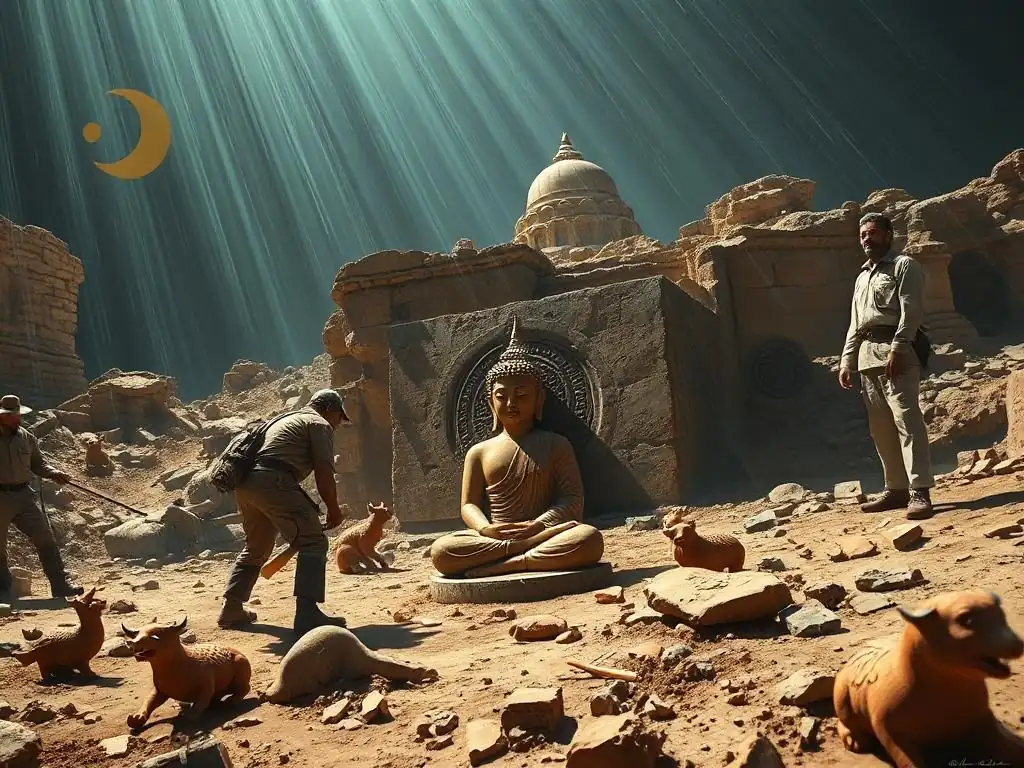
Welcome to ArchaeologyHub.org, your portal to the past! Unearth the secrets of ancient civilizations as we delve into the fascinating world of archaeological discoveries. Prepare to embark on a journey to Afghanistan, where our featured article explores the intriguing interaction between Buddhism and local cults. How did these belief systems intertwine, shaping the cultural landscape of this pivotal region? The answers await – discover the syncretism and influence that defined ancient Afghanistan and left an indelible mark on history.
- Introduction: Buddhism and Pre-Buddhist Beliefs in Ancient Afghanistan
- The Nature of Local Cults in Pre-Buddhist Afghanistan
- Syncretic Processes: The Fusion of Buddhism and Local Beliefs
- Case Studies of Syncretism in Specific Regions of Afghanistan
- The Influence of Buddhism on Local Cults
- The Role of Royal Patronage in Promoting Syncretism
- Archaeological Evidence of Religious Interaction
- Challenges to Understanding Religious Syncretism
- Conclusion: The Enduring Legacy of Buddhist-Local Cult Syncretism in Afghanistan
-
Frequently Asked Questions
- What evidence suggests syncretism between Buddhism and local cults in ancient Afghanistan?
- How did the geographic location of Afghanistan contribute to the interaction between Buddhism and local cults?
- What are some examples of local cults that influenced the development of Buddhism in Afghanistan?
- How did the patronage of rulers impact the relationship between Buddhism and local cults in the region?
- What is the significance of studying the interaction between Buddhism and local cults in understanding Afghanistan's history?
- Final Reflection: Echoes of Harmony in Ancient Lands
- Unearth Your Inner Explorer: Delve Deeper into Afghanistan's Past!
Introduction: Buddhism and Pre-Buddhist Beliefs in Ancient Afghanistan
Archaeological Context: Understanding Ancient Afghanistan's Religious Landscape
Ancient Afghanistan, historically known as Bactria, Gandhara, and Arachosia, served as a crucial crossroads of civilizations along the Silk Road. Its geographical position facilitated a complex interplay of cultural and religious influences, long before the advent of major organized faiths. The pre-Buddhist religious landscape was a rich tapestry woven from indigenous animistic beliefs, proto-Zoroastrian practices, and remnants of earlier Bronze Age cults, reflecting centuries of successive migrations and cultural layering. This multi-faceted spiritual environment laid the groundwork for the unique syncretic processes that would unfold with the arrival of Buddhism.
Archaeological evidence, though often fragmented, hints at this deep religious diversity. Sites like Mundigak, dating back to the 3rd millennium BCE, reveal early urban settlements with evidence of sophisticated material culture that suggests complex social and possibly ritualistic structures. The presence of specific burial practices, distinct pottery styles, and symbolic artifacts across various periods points to localized belief systems that venerated natural forces, ancestors, and fertility, forming the bedrock of the ancient Afghanistan religious identity that Buddhism would later encounter.
The Arrival of Buddhism and its Initial Reception
Buddhism's arrival in ancient Afghanistan is generally attributed to the reign of Emperor Ashoka of the Mauryan Empire in the 3rd century BCE. Ashoka, a zealous patron of Buddhism, dispatched missionaries to various regions, including the northwestern frontiers of his empire, which encompassed parts of modern-day Afghanistan. The religion subsequently spread along established trade routes, particularly the burgeoning Silk Road, which traversed the heart of the region, carrying not only goods but also ideas and spiritual doctrines.
Initially, Buddhism coexisted with the entrenched local belief systems rather than immediately replacing them. Early monastic establishments and stupas, such as those at Kapisa (modern Bagram) and Taxila (though primarily in Pakistan, it influenced eastern Afghanistan), indicate the gradual establishment of Buddhist communities. The initial reception was likely varied, with some local elites adopting the new faith, while the broader populace continued to practice their traditional cults. This period set the stage for a prolonged process of cultural and religious integration, where the distinct elements of Buddhism Afghanistan local cults began to interact.
The Nature of Local Cults in Pre-Buddhist Afghanistan
Identifying Key Indigenous Deities and Rituals
Pinpointing the precise nature of pre-Buddhist indigenous deities in ancient Afghanistan is challenging due to the scarcity of direct textual evidence. However, archaeological findings and comparative studies with neighboring regions suggest a prevalence of animistic beliefs, where spirits inhabited natural elements like mountains, rivers, trees, and specific rocks. Fertility goddesses, often represented by terracotta figurines, were likely central to agricultural communities, ensuring bountiful harvests and progeny. Mountain deities, given Afghanistan's rugged terrain, would have played a significant role for pastoralists and highlanders, often associated with protection and sustenance.
Rituals associated with these cults likely involved offerings of food, libations, and perhaps minor animal sacrifices to appease spirits or solicit blessings. These practices were highly localized and community-specific, often tied to seasonal cycles and the rhythms of daily life. For instance, a village might have a particular sacred grove or spring dedicated to a specific local spirit, demonstrating the intimate connection between the people and their immediate environment. These localized spiritual practices formed a resilient foundation for Buddhism Afghanistan local cults interactions.
The Role of Zoroastrianism and Other Influences
Beyond indigenous cults, Zoroastrianism held a significant presence in ancient Afghanistan, particularly in regions like Bactria and Arachosia, predating and coexisting with Buddhism. As one of the world's oldest monotheistic religions, Zoroastrianism introduced a dualistic cosmology, emphasizing the eternal conflict between the benevolent Ahura Mazda and the malevolent Angra Mainyu. Its core practices included veneration of fire, seen as a symbol of purity and divine light, and a strong ethical code. The existence of fire temples across the region attests to its deep roots and structured religious presence.
Furthermore, Hellenistic influences, following Alexander the Great's conquests in the 4th century BCE, introduced Greek deities and cultural practices into the religious mosaic. Gods like Zeus, Heracles, and Athena were sometimes syncretized with local Iranian or Indian deities, creating hybrid religious figures. This complex interplay of indigenous animism, structured Zoroastrianism, and imported Hellenistic polytheism created a dynamic and religiously diverse environment, where the arrival of Buddhism was just another layer in an already rich spiritual tapestry, setting the stage for unique interactions between Buddhism Afghanistan local cults.
Evidence from Archaeological Findings: Fire Altars, Mother Goddess Figurines, and Animal Sacrifices
Archaeological excavations across Afghanistan have unearthed compelling evidence of these pre-Buddhist religious practices. Fire altars, often simple stone structures or raised platforms, have been discovered at numerous sites, particularly in Bactria, indicating the widespread practice of fire veneration, a hallmark of Zoroastrian or similar Iranian cults. These altars stand in stark contrast to later Buddhist stupas and monastic cells, highlighting distinct religious traditions operating concurrently.
The widespread discovery of "Mother Goddess" figurines, crafted from terracotta or stone, from sites like Tepe Fullol to Ai Khanoum, provides tangible proof of fertility cults. These small, often stylized figures, depicting female forms with exaggerated breasts or hips, point to ancient veneration of creative life forces, essential for agricultural societies.
Additionally, bone deposits found in association with certain pre-Buddhist structures or altars, such as those indicating the ritualistic slaughter of animals, suggest the practice of animal sacrifices, a common ritual in many ancient cults to appease deities or ensure prosperity. These findings are crucial for understanding the pre-existing belief systems that Buddhism Afghanistan local cults encountered and eventually integrated.
Syncretic Processes: The Fusion of Buddhism and Local Beliefs
Incorporation of Local Deities into the Buddhist Pantheon
Buddhism, particularly its Mahayana form which flourished in Afghanistan, demonstrated a remarkable adaptability, a key factor in its widespread appeal. Instead of outright rejection, local deities were frequently reinterpreted and incorporated into the expanding Buddhist pantheon. These indigenous spirits, often associated with specific places or natural phenomena, were transformed into Buddhist protectors ( dharmapalas), benevolent bodhisattvas, or even manifestations of the Buddha himself. This strategic integration allowed for a continuity of worship for the local populace while subtly introducing them to Buddhist doctrine and practices.
A notable example of this syncretic process is the integration of Naga cults. Nagas, powerful serpent deities associated with water, fertility, and subterranean realms, were prevalent in many parts of ancient Asia, including Afghanistan.
In Buddhist narratives and iconography, Nagas were often depicted as guardians of relics, protectors of the Dharma, or even as figures who listened to the Buddha's teachings. Similarly, the Hindu deity Indra, a powerful Vedic god of storms and war, was reinterpreted as Sakra, a prominent protector deity in Buddhist cosmology, demonstrating how existing powerful figures were given new roles within the Buddhist framework, creating a unique blend of Buddhism Afghanistan local cults.
Adaptation of Buddhist Practices to Local Rituals
The process of syncretism was not a one-way street; Buddhist practices themselves were often adapted to resonate with existing local rituals and customs. For instance, the placement of Buddhist stupas, which house relics of the Buddha or revered monks, might have intentionally coincided with pre-existing sacred sites, such as ancient burial grounds or places associated with local spirits. This strategic siting allowed the new Buddhist structures to inherit and transform the sacredness already attributed to these locations, making the transition more seamless for the local population.
Furthermore, Buddhist monastic life and popular devotional practices sometimes absorbed elements from indigenous rituals. Circumambulation ( pradakshina) of stupas, a core Buddhist practice, might have echoed older processional rites around sacred trees or stones. The use of local languages, such as Gandhari Prakrit, in early Buddhist texts and inscriptions facilitated the understanding and adoption of Buddhist concepts by the common people, further blending the foreign doctrine with local cultural nuances. This dynamic adaptation fostered a unique interaction between Buddhism Afghanistan local cults.
The Development of Unique Buddhist Iconography in Afghanistan: Depictions of Vajrapani with Local Attire and Symbolism
The Gandharan art style, which flourished in parts of eastern Afghanistan, is perhaps the most vivid illustration of syncretism in Buddhist iconography. Vajrapani, a protective bodhisattva often depicted as the Buddha's bodyguard, provides a striking example. In Gandharan art, Vajrapani frequently appears with attributes reminiscent of the Greek hero Heracles, holding a thunderbolt ( vajra) and often muscular in build. This fusion reflects the strong Hellenistic influence in the region, where a familiar Western heroic figure was reinterpreted to serve a Buddhist protective role.
Beyond the Greek influence, many depictions of Buddhist figures in Afghanistan, including Buddhas and bodhisattvas, exhibit features that reflect local attire, jewelry, and even facial characteristics. Instead of purely Indian or idealized Greek prototypes, these sculptures often incorporate indigenous elements, such as specific patterns of drapery, types of ornaments, or physiognomic traits that resonate with the local populace. This visual blending is a powerful testament to how the local cultures actively shaped and integrated Buddhism, creating a distinct artistic tradition that embodies the profound interaction of Buddhism Afghanistan local cults.
Case Studies of Syncretism in Specific Regions of Afghanistan
Bamiyan: A Center of Buddhist-Local Cult Integration
Bamiyan, nestled in the Hindu Kush mountains, was a monumental center of Buddhist activity and a prime example of Buddhist-local cult integration. Renowned globally for its colossal Buddha statues carved directly into the cliff face, the site was a thriving monastic complex from the 3rd to the 9th centuries CE. Its strategic location along the Silk Road not only facilitated the spread of Buddhism but also ensured continuous cultural and religious exchange. The numerous cave monasteries, stupas, and vibrant frescoes found within the Bamiyan valley attest to a large and prosperous Buddhist community.
While direct archaeological evidence of pre-Buddhist local cults within the immediate Bamiyan complex is subtle, the very act of carving such immense figures into the natural landscape suggests a profound resonance with older traditions of venerating mountains, caves, or specific geological formations as sacred sites. The monumental scale of the Buddhas might have amplified an existing sense of awe and reverence for the natural environment, transforming pre-existing sacred spaces into grand Buddhist shrines. This integration of local reverence for the landscape with Buddhist monumental art exemplifies the deep interaction between Buddhism Afghanistan local cults.
Hadda: The Gandharan Influence and Local Adaptations
Hadda, located near modern-day Jalalabad in eastern Afghanistan, was another pivotal Buddhist site, particularly known for its exquisite stucco sculptures that belong to the Gandharan art school. Flourishing from the 2nd to the 5th centuries CE, Hadda's art displays a remarkable synthesis of Hellenistic realism, Indian Buddhist themes, and local artistic sensibilities. The sculptures, characterized by their realistic drapery and expressive faces, depict Buddhas, bodhisattvas, and various narrative scenes, showcasing the profound impact of Gandharan artistic conventions.
The sheer proliferation of stupas and monastic complexes at Hadda, estimated to be over 1,000 stupas and 30 monasteries, indicates a deep and widespread local adoption of Buddhism. The presence of countless smaller, votive stupas and figures suggests active patronage not only from the elite but also from the general populace. This widespread local involvement allowed for the integration of regional artistic preferences and perhaps subtle local cultic elements into Buddhist iconography and practice, as communities adapted Buddhist merit-making rituals to their own cultural contexts, further cementing the fusion of Buddhism Afghanistan local cults.
Mes Aynak: The Integration of Copper Mining Cults with Buddhist Practices
Mes Aynak, an archaeological site in Logar Province, presents a unique and compelling case study of syncretism, revealing a vast Buddhist monastic complex built directly atop and around ancient copper mines. This site, active from the 2nd to the 8th centuries CE, is one of the most significant discoveries in recent Afghan archaeology. Its distinctive feature is the intimate spatial and functional relationship between the religious structures and the industrial mining operations, suggesting a profound integration of religious and economic life.
The establishment of such a large-scale Buddhist center in an active mining region indicates that the Buddhist community either consciously positioned itself to convert the miners and integrate their specific local beliefs, or they adopted and sanctified pre-existing sacred sites associated with mining. Local cults surrounding mining often involve deities of the earth, minerals, or subterranean forces, invoked for protection and prosperity.
The Buddhist presence at Mes Aynak suggests a deliberate effort to absorb or transform these pre-existing cults, demonstrating a pragmatic and deep level of interaction between Buddhism Afghanistan local cults and the daily lives of the working population.
The Influence of Buddhism on Local Cults
The Spread of Buddhist Moral and Ethical Principles
The spread of Buddhism into ancient Afghanistan introduced a new set of moral and ethical principles that gradually permeated and influenced existing local belief systems. Core Buddhist tenets such as ahimsa (non-violence), karuna (compassion), and the emphasis on karma (action and its consequences) and samsara (the cycle of rebirth) offered a profound ethical framework. These concepts likely led to a gradual reevaluation of traditional practices, potentially reducing the prevalence of animal sacrifices or shifting focus towards more benevolent forms of worship.
The Buddhist emphasis on individual spiritual development, meditation, and the pursuit of enlightenment provided an alternative spiritual path that contrasted with the more ritualistic or appeasement-focused local cults. This new moral paradigm influenced not only the religious elite but also the broader populace, guiding their daily conduct, fostering a sense of interconnectedness, and shaping their understanding of right and wrong. This ethical diffusion marked a significant transformation in the spiritual landscape of Buddhism Afghanistan local cults.
Transformation of Local Rituals Under Buddhist Influence
As Buddhism gained traction, many existing local rituals underwent subtle or overt transformations to align with Buddhist principles. For instance, a traditional harvest festival dedicated to a local fertility spirit might not have been abandoned entirely but could have incorporated Buddhist chants, prayers, or the veneration of Buddhist images alongside traditional offerings. This allowed for cultural continuity while subtly infusing new religious meaning into established practices.
Furthermore, the construction of Buddhist stupas and monasteries often overshadowed or even replaced pre-existing sacred spaces, thereby transforming their significance. A local sacred grove where spirits were venerated might become the site of a new Buddhist shrine, with the veneration shifting from the tree itself to a relic or an image of the Buddha placed within it. This process of re-sacralization allowed Buddhism to assimilate local sacred geography, demonstrating its adaptive power in shaping the practices of Buddhism Afghanistan local cults.
The Impact on Funerary Practices and Beliefs about the Afterlife
Buddhism's distinct doctrines concerning reincarnation and the cycle of samsara had a profound impact on existing local beliefs about death and the afterlife. Pre-Buddhist traditions might have focused on ancestor veneration, a more immediate underworld, or a cyclical return to the earth. The Buddhist concept of rebirth, driven by karma across multiple lifetimes, introduced a new, complex framework for understanding one's post-mortem existence and destiny.
The Buddhist practice of cremation, though not universally adopted by all converts, and the veneration of relics enshrined in stupas, introduced new funerary rituals and monumental forms of remembrance. The belief in accumulating merit through good deeds for a better rebirth provided a powerful incentive for ethical conduct and patronage of Buddhist institutions. This shift in eschatological understanding profoundly altered the funerary practices and philosophical underpinnings of the local populations, marking a significant influence of Buddhism on ancient Afghanistan local cults.
The Role of Royal Patronage in Promoting Syncretism
Kushan Dynasty: A Catalyst for Religious Fusion
The Kushan Dynasty, which flourished from the 1st to the 3rd centuries CE and controlled much of ancient Afghanistan, served as a crucial catalyst for religious fusion. Emperors like Kanishka (c. 127–150 CE) were celebrated patrons of Mahayana Buddhism, sponsoring the construction of numerous monasteries and stupas, particularly in the Gandhara region.
However, their patronage was remarkably eclectic. Kushan coinage, for instance, famously depicts a pantheon of deities that includes not only Buddhist figures (like the Buddha and Maitreya) but also Zoroastrian gods (such as Mithra, Mao, and Ardoksho), Greek gods (like Heracles and Helios), and various local cult figures.
This deliberate policy of depicting multiple faiths on official currency indicates a conscious royal endorsement of religious tolerance and syncretism. By acknowledging and honoring diverse deities, the Kushan rulers fostered an environment where different religious traditions could interact and blend without overt conflict. This top-down encouragement significantly facilitated the spread of Buddhist art, which itself became a melting pot of Hellenistic, Indian, and local influences, further cementing the intricate interactions between Buddhism Afghanistan local cults.
The Turk Shahis: Patrons of both Buddhism and Local Deities
Even as Buddhism began to decline in Afghanistan with the rise of new powers, the Turk Shahis, who ruled parts of the region from the 7th to the 9th centuries CE, continued to demonstrate a remarkable policy of religious pluralism. Accounts from Chinese pilgrims like Xuanzang (early 7th century CE) confirm the continued existence and patronage of Buddhist monasteries under their rule, even as Islamic influence began to grow in the western parts of the region.
The coinage of the Turk Shahis further illustrates their syncretic approach, often depicting both Buddhist figures (like the Buddha) and Hindu deities (such as Shiva and Ganesha). This visual evidence indicates a continued willingness of the ruling elite to patronize and acknowledge multiple religious traditions. Their pragmatic approach to governance and religion allowed for the enduring presence and ongoing interaction of Buddhism Afghanistan local cults, even in the face of shifting geopolitical and religious landscapes.
How Royal Support Shaped Religious Syncretism
Royal patronage played an indispensable role in shaping and promoting religious syncretism in ancient Afghanistan. By providing legitimacy, financial resources, and political stability, rulers enabled the construction of large-scale religious complexes where different traditions could not only coexist but actively interact. This institutional support allowed for the development of hybrid architectural styles, artistic forms, and philosophical interpretations that reflected the blending of diverse beliefs.
Moreover, the royal court itself often served as a microcosm of the broader religious landscape. Scholars, artists, and religious practitioners from various faiths would congregate, leading to intellectual and artistic exchanges that naturally fostered syncretism. This top-down influence set a precedent for religious tolerance and encouraged the blending of traditions at all levels of society. The deliberate policy of integration, rather than exclusion, by powerful dynasties ensured that the unique fusion of Buddhism Afghanistan local cults became a defining characteristic of the region's ancient identity.
Archaeological Evidence of Religious Interaction
Analysis of Stupas and Monasteries: Mixed Architectural Styles Reflecting Local Traditions
Archaeological analysis of stupas and monastic complexes in Afghanistan provides compelling evidence of religious interaction through their architectural styles. While many structures adhere to classical Gandharan or Indian Buddhist architectural norms, others exhibit elements that reflect local building traditions or pre-Buddhist influences. For example, the use of specific types of stone, brickwork techniques, or decorative motifs in some monasteries deviates from purely imported styles, suggesting the integration of indigenous craftsmanship and aesthetic preferences.
Furthermore, the very layout of some monastic sites, or the presence of non-Buddhist structures within or adjacent to them, points to a deliberate integration or coexistence of different religious practices. A Buddhist monastery might be strategically built near a pre-existing sacred spring, a local shrine, or even a Zoroastrian fire altar, indicating a conscious effort to absorb or overlay existing sacred geography. This architectural blending is a tangible manifestation of the dynamic interplay between Buddhism Afghanistan local cults.
Iconographic Analysis of Buddhist Art: Depictions of Local Deities Alongside Buddhist Figures
Iconographic analysis of Buddhist art from Afghanistan offers perhaps the most vivid and direct evidence of religious syncretism. Beyond the well-known Hellenistic influences on figures like Vajrapani, closer examination reveals numerous instances where local protective spirits, nature deities, or even figures from Zoroastrian or Hellenistic pantheons appear within Buddhist narratives or as guardians. These figures are often depicted in local attire, with specific regional jewelry, or holding attributes that link them to indigenous cults, rather than purely Indian Buddhist traditions.
The presence of composite figures, where elements from different traditions are merged, or the reinterpretation of pre-Buddhist symbols (e.g., sun disks, animal motifs like the lion or bull) within Buddhist art, provides strong visual proof of the blending of Buddhism Afghanistan local cults. For example, some Gandharan reliefs show figures that could be interpreted as local protective spirits offering homage to the Buddha, symbolizing the absorption of indigenous veneration into the Buddhist framework.
Inscriptions and Texts: Mentions of Local Deities in Buddhist Dedicatory Inscriptions
While rare due to the fragility of ancient materials and the challenges of preservation, epigraphic evidence provides invaluable insights into religious interaction. Some dedicatory inscriptions found on stupas, statues, or monastic donations in ancient Afghanistan mention local deities alongside Buddhist ones. These inscriptions, often in Kharosthi or Brahmi scripts, might invoke the protection of both the Buddha and a local yaksha (nature spirit) or a specific mountain deity, signifying a fluid and inclusive religious identity among the patrons.
Such textual evidence indicates that donors, who might have held mixed religious affiliations, felt comfortable dedicating structures or offerings to both Buddhist and local figures. For example, an inscription might state a donation for the merit of the donor and the well-being of the local community, protected by both the Dharma and the indigenous spirits of the land. These mentions underscore the practical, lived reality of syncretism, where the boundaries between Buddhism Afghanistan local cults were often permeable and mutually reinforcing.
Challenges to Understanding Religious Syncretism
Limited Archaeological Data and Interpretational Difficulties
Understanding the full extent and nuances of religious syncretism in ancient Afghanistan faces significant challenges, primarily due to the limited and often fragmented nature of the archaeological record. Decades of conflict, widespread looting, and insufficient systematic excavation have severely hampered efforts to reconstruct a comprehensive picture of the region's ancient religious practices. Many sites remain unexplored, and crucial contextual information for unearthed artifacts is frequently lost, making it difficult to fully grasp the intricate layers of religious interaction.
Furthermore, the interpretation of archaeological findings can be inherently subjective. Distinguishing between a purely Buddhist artifact, a pre-Buddhist relic, or a genuinely syncretic piece requires meticulous analysis and often relies heavily on contextual evidence that may be missing or ambiguous. Pinpointing the exact moment, extent, or specific mechanisms of fusion between Buddhism Afghanistan local cults remains a complex task, often necessitating informed speculation rather than definitive conclusions.
The Influence of Later Islamic Conquests on the Archaeological Record
The advent of Islam from the 7th century CE onwards profoundly impacted the religious landscape of Afghanistan and, consequently, the archaeological record of earlier faiths. As Islam gained dominance, Buddhism and many local cults gradually declined. Many Buddhist sites were abandoned, converted into Islamic structures, or intentionally destroyed, particularly their iconic imagery, due to aniconic principles. This process led to the irreversible loss of invaluable archaeological data and obscured the earlier religious stratigraphy.
The re-use of building materials from Buddhist monasteries for Islamic mosques or fortifications, the deliberate destruction of "idols," and the overlay of Islamic structures often make it exceedingly difficult to trace the specific interactions and transitions between the earlier Buddhism Afghanistan local cults. This historical discontinuity presents a formidable barrier to a complete understanding of the syncretic processes that defined ancient Afghanistan's religious identity.
Avoiding Eurocentric Interpretations of Religious Fusion
A crucial challenge in studying religious syncretism in ancient Afghanistan is the necessity of avoiding Eurocentric or modern interpretations of religious identity. In many Western traditions, religion is often perceived as an exclusive, clearly defined system. However, in ancient contexts, particularly in regions like Afghanistan, religious identity was often fluid, non-exclusive, and highly pragmatic. People might have adhered to multiple belief systems simultaneously, without perceiving a contradiction.
Therefore, researchers must approach the blending of Buddhism Afghanistan local cults not as a dilution or corruption of a "pure" faith, but as a dynamic and natural process of cultural adaptation. Syncretism was a sign of resilience and creativity, allowing new ideas to flourish within existing frameworks without necessarily erasing them. A nuanced and culturally sensitive approach is essential to truly understand the complex, multi-layered spiritual experience of ancient Afghanistan, recognizing its unique historical and cultural context rather than imposing anachronistic frameworks.
Conclusion: The Enduring Legacy of Buddhist-Local Cult Syncretism in Afghanistan
The Transformation of Religious Identity in Ancient Afghanistan
The interaction between Buddhism and local cults profoundly transformed the religious identity of ancient Afghanistan, forging a unique cultural synthesis that endured for centuries. This was not a simple process of one religion replacing another, but a complex layering and merging, where imported Buddhist doctrines and practices were absorbed, reinterpreted, and indigenized by existing belief systems. The resulting spiritual landscape was a vibrant mosaic, reflecting the region's historical role as a crucible of cultures and ideas.
This transformation created a distinct Afghan Buddhist tradition, one that was deeply rooted in the local environment and resonated with the indigenous population. It demonstrated the remarkable adaptability of Buddhism and the resilience of local beliefs, showcasing how new spiritual paradigms could flourish by integrating with, rather than annihilating, pre-existing cultural and religious frameworks. The legacy of Buddhism Afghanistan local cults is one of dynamic coexistence and mutual enrichment.
The Significance of Syncretism for Understanding the Region's History
Studying the syncretic processes in ancient Afghanistan is crucial for a comprehensive understanding of the region's broader history and its enduring cultural resilience. Afghanistan, positioned at the crossroads of major civilizations, consistently absorbed and integrated diverse influences, and its religious history is a prime example of this capacity. The way Buddhism interacted with and adapted to local cults illustrates how foreign ideas were not merely adopted but actively reshaped by the indigenous context.
This historical process offers invaluable insights into the universal phenomenon of how religions evolve and adapt when encountering diverse local belief systems. It provides a rich case study of religious pluralism, cultural exchange, and the long-term impact of such interactions on societal structures, artistic expressions, and philosophical thought. The story of Buddhism Afghanistan local cults is integral to appreciating the region's pivotal role as a bridge between East and West.
Future Directions for Archaeological Research on Religious Interaction
Despite existing scholarship, much remains to be discovered about religious interaction in ancient Afghanistan. Future archaeological research should focus on detailed, systematic excavations at key sites like Mes Aynak, using advanced non-invasive technologies such as remote sensing and LiDAR to uncover buried structures and provide crucial contextual data. Such efforts are vital given the ongoing threats to Afghanistan's cultural heritage.
Beyond excavation, there is a pressing need for more interdisciplinary studies that combine archaeology with art history, epigraphy, comparative religion, and cultural anthropology. Such integrated approaches can provide a more nuanced understanding of the specific mechanisms of cultural absorption and adaptation, moving beyond mere identification of influences to explore the deep and complex interplay of daily life, ritual, and belief. Future research must continue to challenge Eurocentric biases, fostering a more accurate and respectful interpretation of the profound and unique syncretism of Buddhism Afghanistan local cults.
Frequently Asked Questions
What evidence suggests syncretism between Buddhism and local cults in ancient Afghanistan?
Archaeological finds, such as hybrid religious iconography and texts mentioning local deities alongside Buddhist figures, indicate a blending of beliefs. This suggests mutual influence rather than complete replacement.
How did the geographic location of Afghanistan contribute to the interaction between Buddhism and local cults?
Afghanistan's position on the Silk Road made it a crossroads of cultures, exposing Buddhism to diverse religious traditions. This fostered an environment where religious adaptation and integration were common.
What are some examples of local cults that influenced the development of Buddhism in Afghanistan?
Specific examples include cults venerating local deities of nature and fertility, as well as traditions associated with Zoroastrianism and early Hindu beliefs. These likely contributed to the development of unique Buddhist practices.
How did the patronage of rulers impact the relationship between Buddhism and local cults in the region?
Rulers often supported both Buddhist institutions and local religious practices, leading to a coexistence that facilitated religious exchange and syncretism. Royal patronage played a crucial role.
What is the significance of studying the interaction between Buddhism and local cults in understanding Afghanistan's history?
Understanding this interaction reveals the complex religious landscape of ancient Afghanistan, showcasing how Buddhism adapted and integrated with existing beliefs. This provides valuable insight into the region's cultural and religious identity.
Final Reflection: Echoes of Harmony in Ancient Lands
The exploration of the interaction between Buddhism and local cults in ancient Afghanistan reveals a fascinating tapestry of cultural exchange that continues to resonate today. The ability of Buddhism to adapt and integrate with pre-existing belief systems, as evidenced by the syncretic practices uncovered in the region, highlights the enduring power of human connection and the inherent drive towards shared understanding, even amidst diverse spiritual landscapes.
The legacy of this ancient syncretism profoundly shapes our understanding of cultural evolution and religious tolerance. Witnessing how these seemingly disparate traditions intertwined underscores the importance of embracing diversity and seeking common ground in our own lives. The meeting of two personalities is like the contact of two chemical substances: if there is any reaction, both are transformed.
- Carl Jung. This quote perfectly encapsulates the transformative power of cultural exchange, a power that shaped ancient Afghanistan and continues to shape our world.
As we reflect on the lessons gleaned from the interaction between Buddhism and local cults in ancient Afghanistan, let us carry forward the spirit of understanding and acceptance. May we all strive to bridge divides, embrace the richness of cultural diversity, and cultivate a world where different beliefs can coexist harmoniously, just as they once did in the heart of ancient Afghanistan.
Unearth Your Inner Explorer: Delve Deeper into Afghanistan's Past!
Thank you for exploring the fascinating interplay of Buddhism and local cults in ancient Afghanistan. We hope this journey into the past has sparked your curiosity and offered valuable insights into the region's rich cultural tapestry. Now, it's time to take your exploration further!
Here are some ways you can connect with this captivating history:
- Embark on a personal research mission: Delve into academic journals and online resources to uncover more about specific archaeological sites in Afghanistan and their associated religious practices.
- Share your newfound knowledge: Discuss the concept of syncretism in ancient Afghanistan with friends, family, or on social media using the hashtag #AfghanArchaeology.
- Imagine the stories: Write a short fictional piece set in ancient Afghanistan, exploring the daily lives of people influenced by both Buddhism and local cults.
What specific aspect of the cultural fusion between Buddhism and local cults in Afghanistan most resonated with you, and how might it inform our understanding of cultural interactions today?