
Beyond DentateStamping: Incised, Appliqué, and Plain Ware in Lapita Assemblages


Welcome to ArchaeologyHub.org, your gateway to unlocking the mysteries of the past. Ever wondered how archaeologists piece together the stories of lost civilizations from fragments of the past? Our latest deep dive into Lapita pottery analysis techniques unveils the intricate methods used to decipher the secrets held within these ancient artifacts. Prepare to journey beyond dentate stamping and explore the fascinating world of incised, appliqué, and plain ware in Lapita assemblages. Intrigued? Let's begin...
- Introduction to Lapita Pottery Analysis and Decoration Techniques
- Dentate-Stamped Pottery: A Cornerstone of Lapita Ceramic Analysis
- Incised Lapita Pottery: Exploring Alternative Decorative Motifs
- Appliqué Decoration in Lapita Pottery: A Unique Expression
- Plain Ware in Lapita Assemblages: An Often-Overlooked Aspect of Lapita Pottery Analysis
- Comparative Analysis: Dentate-Stamped, Incised, Appliqué, and Plain Ware
- Advanced Techniques in Lapita Pottery Analysis: Beyond Visual Inspection
- Case Studies: Examining Diverse Lapita Pottery Assemblages
- Implications for Understanding Lapita Culture and Austronesian Migration
- Conclusion: A Holistic Approach to Lapita Pottery Analysis
-
Frequently Asked Questions
- How important is dentate-stamping in identifying Lapita pottery?
- What other decorative techniques are found on Lapita pottery besides dentate-stamping?
- How can incised designs help archaeologists understand Lapita culture?
- What does the presence of plain ware in Lapita assemblages suggest?
- What analytical techniques are used to study the composition and origin of Lapita pottery?
- Final Reflection: Unearthing Stories in Clay
- Unlock the Secrets of Ancient Pottery Now!
Introduction to Lapita Pottery Analysis and Decoration Techniques
The Significance of Lapita Pottery in Understanding Austronesian Expansion
Lapita pottery stands as a hallmark archaeological marker, intricately linked to the monumental Austronesian expansion across the Pacific, spanning roughly from 1350 to 750 BCE. Its distinctive characteristics, including specific vessel forms and decorative motifs, are found across an immense geographical range, from the Bismarck Archipelago to as far east as Samoa. This widespread distribution makes Lapita pottery an indispensable tool for tracing migration routes, identifying early settlement patterns, and understanding the technological and cultural exchanges that shaped the prehistory of Oceania. Comprehensive Lapita pottery analysis techniques are fundamental to unlocking these insights.
The detailed study of Lapita ceramic assemblages offers profound insights into the social organization, subsistence strategies, and artistic expressions of these seafaring communities. Beyond mere indicators of presence, the pottery provides tangible evidence of adaptive strategies to new island environments, the establishment of vast exchange networks, and the evolution of cultural identities. Therefore, a thorough understanding of Lapita pottery analysis techniques is not just about typology; it's about reconstructing the vibrant lives of one of history's most successful maritime migrations.
Focusing Beyond Dentate-Stamped Lapita Pottery: Expanding Analytical Horizons
While dentate-stamped pottery is undeniably iconic and has received significant attention in Lapita studies, an exclusive focus on this ornate form can inadvertently limit a complete understanding of Lapita material culture. Many archaeological reports highlight the presence of dentate-stamped sherds, yet often underemphasize other prevalent decorative techniques and, crucially, the often numerically dominant plain ware. This narrow analytical lens risks obscuring the full spectrum of ceramic production and use, potentially leading to incomplete interpretations of cultural complexity and chronological sequences.
Expanding the analytical horizon to include incised, appliqué, and plain ware is vital for a holistic Lapita pottery analysis. These less-celebrated forms offer distinct and equally valuable insights into daily life, functional uses, and regional variations within the Lapita cultural sphere. By integrating all pottery types into our analytical frameworks, researchers can construct a more nuanced and accurate picture of Lapita societies, their technological adaptations, and their evolving artistic traditions across the vast Pacific landscape.
Dentate-Stamped Pottery: A Cornerstone of Lapita Ceramic Analysis
Defining Dentate Stamping: Techniques and Regional Variations
Dentate stamping is the most renowned and often diagnostic decorative technique associated with Lapita pottery, characterized by impressions made on wet clay using a toothed implement. These tools, likely comb-like instruments crafted from shell, wood, or bone, created intricate patterns of dots, dashes, and lines. Common motifs include geometric designs such as triangles, chevrons, and spirals, often arranged in complex panels, alongside rarer anthropomorphic or zoomorphic representations, particularly eyes or bird heads. The precision and complexity of these designs are a testament to the skill of Lapita potters.
Regional variations in dentate stamping are significant for Lapita pottery analysis techniques. Early Lapita sites, particularly those in the Bismarck Archipelago like Talepakemalai (Mussau Island) or Kamgot (New Ireland), exhibit some of the most elaborate and complex dentate-stamped designs, often covering large portions of vessels. As Lapita expanded eastward into Fiji, Tonga, and Samoa, the complexity and proportion of dentate-stamped ware often decreased, with simpler patterns or a reduction in the decorated surface area becoming more common. This geographical and chronological shift provides crucial data for understanding cultural divergence and interaction.
Limitations of Solely Focusing on Dentate-Stamped Designs in Lapita Pottery Analysis
While dentate-stamped pottery is critical for defining the Lapita cultural complex, an exclusive focus on these designs presents several analytical limitations. Firstly, it can lead to an oversimplification of Lapita material culture, implying that decoration was the primary characteristic of all Lapita ceramics, when in fact, undecorated or less ornately decorated wares often constituted the majority of assemblages. For instance, in many later Lapita sites, dentate-stamped sherds might represent less than 10-20% of the total ceramic assemblage, with plain ware dominating.
Secondly, relying solely on dentate stamping can hinder a complete understanding of chronological sequences and regional diversity. As Lapita culture evolved and spread, the prevalence and style of dentate stamping changed, sometimes becoming less common or simpler. Ignoring other forms means missing subtle but important shifts in ceramic traditions that reflect broader cultural or economic transformations. A narrow focus also overlooks the functional aspects of pottery, as decorated vessels might have served different purposes than their utilitarian, plain counterparts, thus limiting insights derived from Lapita pottery analysis.
Incised Lapita Pottery: Exploring Alternative Decorative Motifs
Incision Techniques in Lapita Pottery Production
Incision, a distinct decorative technique in Lapita pottery production, involves drawing lines into the wet clay surface with a sharp, pointed tool before firing. Unlike the impressions made by stamping, incision creates continuous grooves that can vary in depth and width depending on the tool used and the pressure applied. Tools likely included sharpened sticks, bone fragments, or shell edges, allowing for a range of linear patterns. Common incised motifs in Lapita assemblages include straight lines, zigzags, wavy lines, and curvilinear designs, often arranged in geometric patterns or panels.
This technique offered a different aesthetic and perhaps a faster method of decoration compared to the meticulous process of dentate stamping. Incision frequently appears as a standalone decorative element on vessels, but it can also be found in conjunction with dentate stamping, often used to define borders, fill spaces, or create complementary patterns. The presence and style of incised pottery provide valuable data for Lapita pottery analysis techniques, distinguishing regional styles and chronological phases.
Regional Distribution and Stylistic Features of Incised Lapita Ware
The regional distribution of incised Lapita ware shows notable variations across the Pacific. While present in early Lapita contexts, incised pottery often becomes more prominent in later phases and specific geographical areas. For example, sites in Vanuatu and New Caledonia, such as Nessadiou (New Caledonia), often yield a higher proportion of incised sherds compared to the early sites in the Bismarck Archipelago. These incised designs tend to be simpler than the intricate dentate patterns, often involving broad, shallow grooves that cover larger areas of the vessel.
Stylistically, incised Lapita pottery can feature parallel lines, cross-hatching, or simple geometric shapes. In some assemblages, incised lines are used to outline areas that were then filled with dentate stamps, demonstrating a combination of techniques. The distinct stylistic features and regional prevalence of incised ware contribute significantly to our ability to differentiate and characterize Lapita assemblages, offering crucial comparative data for Lapita pottery analysis.
The Role of Incision in Lapita Pottery Chronology
The prevalence and stylistic evolution of incised pottery play a significant role in establishing Lapita pottery chronology. While dentate stamping is characteristic of the early Lapita expansion, there is a general trend in many regions for incised decoration to become more common, or even dominant, in later Lapita phases, particularly in the Central and Eastern Lapita zones (e.g., Fiji, Tonga, Samoa). This shift is often seen as part of a broader simplification or transformation of ceramic traditions over time.
Archaeologists use the relative proportions of incised versus dentate-stamped pottery, along with changes in their specific motifs, as chronological indicators. For instance, in some parts of the Solomon Islands or Vanuatu, a transition from elaborate dentate-stamped to simpler incised and plain wares can be observed within a single site's stratigraphy, helping to refine dating sequences. This makes the systematic study of incised ware an indispensable component of Lapita pottery analysis and dating.
Appliqué Decoration in Lapita Pottery: A Unique Expression
Understanding Appliqué Techniques in Lapita Ceramic Production
Appliqué, a less common but distinct decorative technique in Lapita ceramic production, involves the application of separately molded or coiled pieces of clay onto the surface of a vessel before firing. These added elements are typically pressed onto the wet clay and sometimes smoothed at the edges to ensure adhesion. The technique creates a three-dimensional effect, distinguishing it from the two-dimensional patterns of stamping or incision. Appliqué forms can range from simple raised bands or ridges to more complex features like nodes, bosses, or even stylized anthropomorphic or zoomorphic elements.
The successful application of appliqué requires careful control over clay consistency and drying, as differential shrinkage during firing could lead to detachment. This suggests a sophisticated understanding of ceramic properties by Lapita potters. While not as widespread as dentate stamping, the presence of appliqué indicates a broader repertoire of decorative skills and artistic expression within Lapita communities, adding another layer to Lapita pottery analysis.
Identifying and Analyzing Appliqué Motifs in Lapita Assemblages
Identifying and analyzing appliqué motifs in Lapita assemblages involves careful observation of the added clay elements. Common motifs include raised ridges or fillets, sometimes used to delineate panels or frame other decorative elements. More elaborate examples feature applied "eyes," often associated with bird or human faces, or small conical nodes. These features are particularly notable on some vessel rims or shoulders. For example, certain sites in the Bismarck Archipelago and Vanuatu have yielded sherds with distinct appliqué eyes or nose-like projections.
The analysis of appliqué often focuses on its placement on the vessel, its form, and its association with other decorative techniques. While appliqué may be less numerically significant than incised or stamped ware, its presence can be highly diagnostic for certain regions or chronological periods, offering unique insights into aesthetic preferences or symbolic meanings within specific Lapita groups.
The Cultural Significance of Appliqué Decoration
The cultural significance of appliqué decoration in Lapita pottery is a subject of ongoing archaeological interpretation. Given its often more complex and labor-intensive nature compared to simple stamping or incision, appliqué may have served specific functions beyond mere aesthetics. It could signify prestige, denoting vessels used for important rituals, communal feasts, or as markers of social status. The anthropomorphic or zoomorphic appliqué motifs might represent ancestral figures, spirits, or totemic animals, imbuing the vessels with symbolic or sacred meaning.
The relatively rare occurrence of elaborate appliqué suggests it might have been reserved for special-purpose vessels or produced by specific individuals or groups. Its presence, even in small quantities, provides a tangible link to the symbolic world of Lapita peoples, offering a unique avenue for Lapita pottery analysis to explore aspects of their belief systems and social structures.
Plain Ware in Lapita Assemblages: An Often-Overlooked Aspect of Lapita Pottery Analysis
Defining and Classifying Plain Ware in Lapita Contexts
Plain ware in Lapita contexts refers to undecorated pottery, characterized by the absence of any applied, incised, or stamped ornamentation. Despite its lack of decorative flair, plain ware often constitutes the overwhelming majority of ceramic sherds recovered from Lapita archaeological sites, frequently comprising between 70% and 95% of an assemblage. This numerical dominance underscores its pervasive presence in daily life. Defining and classifying plain ware involves distinguishing between genuinely undecorated vessels and undecorated portions of vessels that might have had decoration elsewhere (e.g., a decorated rim with a plain body).
Classification typically focuses on attributes like vessel form, rim morphology, wall thickness, and paste composition. These attributes, though seemingly mundane, are critical for Lapita pottery analysis, providing data on manufacturing techniques, functional types, and even chronological shifts. The systematic study of plain ware ensures that the full range of Lapita ceramic production is considered, offering a more balanced perspective than focusing solely on decorated pieces.
The Functional Significance of Plain Ware: Vessel Forms and Uses
The functional significance of plain ware in Lapita assemblages is paramount, as these vessels primarily served utilitarian purposes in daily life. Common plain ware forms include large, globular cooking pots (often indicated by sooted exteriors), smaller serving bowls, storage jars, and sometimes specialized forms like griddles or colanders. Their robust construction and simple forms suggest they were designed for durability and efficiency in routine tasks such as food preparation, storage, and consumption.
Analysis of plain ware can provide direct insights into Lapita subsistence strategies and household organization. For example, the presence of specific vessel forms can indicate the types of foods being processed (e.g., large pots for root crops or stews), while variations in size might reflect household size or communal cooking practices. This emphasis on function, rather than just aesthetics, is a crucial dimension of Lapita pottery analysis.
Beyond its utilitarian function, plain ware can also serve as a significant marker of social and economic activities within Lapita societies. Variations in clay sources, tempering materials, and manufacturing techniques observed in plain ware can indicate localized production, specialized potting, or the extent of inter-island exchange networks. Petrographic analysis, for example, has shown that some plain ware, despite its simple appearance, was traded over considerable distances, suggesting established economic ties.
The sheer volume of plain ware also speaks to the importance of pottery in the everyday economy of Lapita communities. Its consistent production across vast regions suggests a shared technological tradition and a widespread reliance on ceramic vessels for daily needs. Therefore, a comprehensive Lapita pottery analysis must account for the substantial contribution of plain ware to understanding the economic underpinnings and social organization of these ancient mariners.
Comparative Analysis: Dentate-Stamped, Incised, Appliqué, and Plain Ware
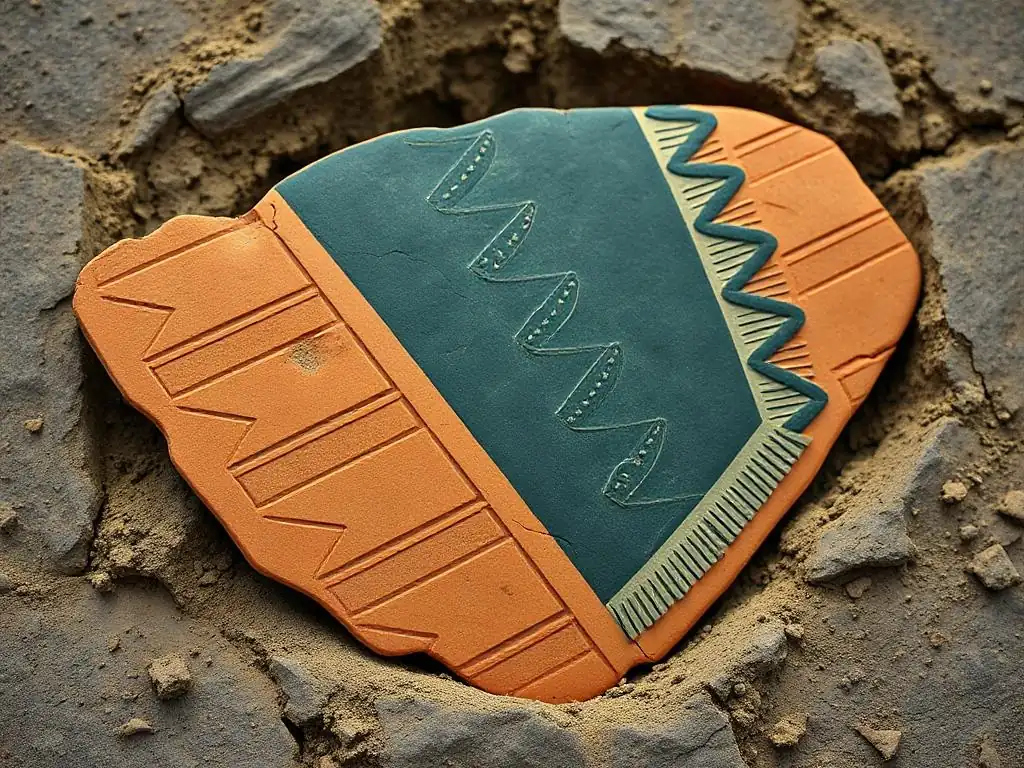
Contrasting Decorative Techniques and Their Chronological Significance
A comparative analysis of dentate-stamped, incised, appliqué, and plain ware reveals significant chronological trends within the Lapita cultural complex. Early Lapita sites, particularly those in the Bismarck Archipelago (e.g., Talepakemalai, c. 1350 BCE), are renowned for their high proportion of elaborate dentate-stamped pottery, often comprising 30-50% of decorated sherds, with intricate patterns.
As Lapita expanded eastward and through time, there's a discernible shift. In later phases, particularly in Fiji, Tonga, and Samoa (c. 900-750 BCE), the proportion of dentate-stamped ware generally declines, often to less than 10-15% of decorated ware, becoming simpler in design or localized to certain vessel parts.
Concurrently, incised decoration often becomes more prevalent in these later phases or in specific regional contexts, sometimes making up 20-40% of decorated sherds in sites like those in Vanuatu or New Caledonia. Plain ware, consistently dominant throughout, tends to increase its overall proportion in later assemblages, sometimes exceeding 80-90% of the total ceramic count. Appliqué, while always less common, also shows regional and temporal variations. These shifts are not uniform but provide crucial chronological markers for Lapita pottery analysis, reflecting evolving cultural practices and technological adaptations across the vast Lapita realm.
Regional Variations in the Prevalence of Different Lapita Pottery Styles
The distribution and prevalence of different Lapita pottery styles exhibit marked regional variations, reflecting localized cultural developments and influences. In the western Lapita zone (Bismarck Archipelago), early assemblages are characterized by a high diversity of vessel forms and elaborate dentate stamping. Moving eastward, into the Solomon Islands and Vanuatu, while dentate stamping persists, incised decoration often becomes more common and stylistically distinct. For instance, some Vanuatu sites display incised patterns not commonly found further west.
Further east, in Fiji, Tonga, and Samoa, the ceramic tradition diverges significantly. While dentate-stamped pottery is still found, it is generally less elaborate and less frequent than in the west, and plain ware becomes overwhelmingly dominant. Some Fijian assemblages, for example, show a strong emphasis on undecorated forms, with decorated sherds forming a very small minority. These regional differences highlight the dynamic and adaptive nature of Lapita culture, where local innovations and preferences influenced ceramic production, offering rich data for comparative Lapita pottery analysis.
Exploring the Interrelationships Between Different Pottery Styles
Understanding the interrelationships between dentate-stamped, incised, appliqué, and plain ware is crucial for a comprehensive Lapita pottery analysis. It's not simply a matter of distinct categories, but often a continuum of decorative choices and functional requirements. For example, some vessels may feature a combination of techniques, such as incised lines framing a panel of dentate stamping, or appliqué elements accentuating a plain surface. This suggests that potters consciously selected and combined techniques to achieve specific aesthetic or functional outcomes.
Furthermore, the co-occurrence of different styles within the same archaeological contexts raises questions about their respective roles. Were decorated vessels primarily for ceremonial or prestige use, while plain ware served daily utilitarian functions? Or did different styles represent distinct social groups, levels of skill, or chronological phases within a single community? Exploring these interrelationships provides deeper insights into the social organization, symbolic systems, and daily lives of Lapita peoples, moving beyond a purely descriptive approach to Lapita pottery analysis.
Advanced Techniques in Lapita Pottery Analysis: Beyond Visual Inspection
Petrographic Analysis: Examining Clay Sources and Pottery Production Centers
Petrographic analysis is a powerful advanced technique in Lapita pottery analysis that extends beyond visual inspection, providing detailed insights into the raw materials used in ceramic production. This method involves preparing thin sections of pottery sherds and examining them under a polarized light microscope to identify the mineral and rock inclusions (temper) within the clay matrix. These inclusions are often characteristic of specific geological formations, allowing archaeologists to pinpoint the geological origin of the clay and, by extension, the pottery's production location.
Through petrographic analysis, researchers can distinguish between locally made pottery and imported wares, thereby tracing ancient trade networks and exchange patterns. For instance, studies on Lapita pottery from the Bismarck Archipelago have used petrography to demonstrate the exchange of vessels over distances exceeding 300 kilometers between islands like New Britain, New Ireland, and Mussau, indicating complex inter-island interaction spheres and regional production centers. This technique is invaluable for understanding the economic and social geography of Lapita societies.
Residue Analysis: Investigating the Contents of Lapita Pottery Vessels
Residue analysis is another crucial advanced technique that moves beyond the form and decoration of Lapita pottery to investigate its functional use. This method involves the chemical analysis of organic residues absorbed into the porous walls of pottery vessels over millennia. Using techniques such as gas chromatography-mass spectrometry (GC-MS) or stable isotope analysis, archaeologists can identify the molecular signatures of fats, proteins, plant materials, and even starch grains.
The findings from residue analysis provide direct evidence of the contents of Lapita pottery vessels, offering unparalleled insights into diet, food preparation, and resource exploitation. For example, residues might reveal the cooking of marine resources like fish and shellfish, terrestrial animals, or starchy root crops such as taro and yam. In some instances, evidence of non-food items like medicinal plants or pigments has also been identified. This direct evidence of vessel use significantly enhances our understanding of Lapita subsistence strategies and daily life, complementing traditional Lapita pottery analysis.
Technological Analysis: Understanding Firing Techniques and Pottery Construction
Technological analysis of Lapita pottery involves a suite of advanced scientific methods aimed at understanding the manufacturing processes, including clay preparation, vessel construction, and firing techniques. Techniques like X-ray diffraction (XRD) can determine the mineralogical composition of the fired clay, providing clues about firing temperatures. Scanning electron microscopy (SEM) allows for high-resolution imaging of the pottery microstructure, revealing details about temper size, porosity, and the degree of vitrification.
These analyses provide critical data on the technological capabilities of Lapita potters. For instance, evidence suggests that most Lapita pottery was low-fired, likely in open bonfires or shallow pits, at temperatures generally below 800-900°C. Insights into construction methods, such as coiling or slab-building, can also be gained. Understanding these technological aspects not only highlights the skill and ingenuity of Lapita artisans but also helps to identify regional variations in pottery production practices, further enriching the scope of Lapita pottery analysis.
Case Studies: Examining Diverse Lapita Pottery Assemblages
Case Study 1: The Significance of Incised Pottery at the Reber-Rakival Site, Watom Island
The Reber-Rakival site on Watom Island, located off the coast of New Britain in the Bismarck Archipelago, is a key early Lapita settlement (c. 1200-1000 BCE). While dentate-stamped pottery is undeniably present and characteristic of the site, archaeological investigations have also highlighted a significant proportion of incised pottery within its assemblages. The incised designs at Reber-Rakival often feature bold, curvilinear patterns and sometimes depict stylized faces or bird motifs, distinct from the more common geometric dentate patterns.
The prevalence and unique stylistic features of incised pottery at Reber-Rakival challenge the notion that early Lapita ceramic decoration was solely dominated by dentate stamping. This site demonstrates a rich diversity in decorative techniques even in the initial phases of Lapita expansion, suggesting that incised ware was an integral part of their artistic repertoire from the outset. Its study is crucial for a comprehensive Lapita pottery analysis, revealing early regional variations and the full scope of Lapita ceramic innovation.
Case Study 2: Comparing Pottery Assemblages from New Caledonia and Fiji
Comparing Lapita pottery assemblages from New Caledonia and Fiji reveals fascinating regional divergences in ceramic traditions during the later phases of the expansion. In New Caledonia, sites like Nessadiou (c. 900-750 BCE) typically yield pottery that includes dentate stamping, often simpler than western forms, but also a notable presence of incised and plain wares. Incised motifs in New Caledonia often feature broad, shallow grooves and distinctive patterns that are less common elsewhere. The overall percentage of decorated ware tends to be lower than in early western sites.
In contrast, Fijian Lapita assemblages (e.g., Bourewa, c. 900 BCE) show a marked emphasis on plain ware, which can constitute over 85-90% of the total assemblage. While dentate-stamped and incised sherds are found, they are often numerically minor and can exhibit unique local styles. For example, some Fijian dentate stamping might feature distinct curvilinear elements. This comparative Lapita pottery analysis underscores how ceramic traditions adapted and diverged as Lapita populations settled new islands, leading to distinct regional expressions of the broader Lapita culture.
Case Study 3: The Transition from Dentate-Stamped to Plain Ware in the Bismarck Archipelago
The Bismarck Archipelago, the heartland of early Lapita culture, offers a compelling case study of the chronological transition from highly elaborate dentate-stamped pottery to predominantly plain ware. Sites such as Talepakemalai on Mussau Island, dating to around 1350 BCE, are famous for their exceptionally rich and complex dentate-stamped ceramics, representing a significant portion of the excavated sherds. These early assemblages showcase the peak of Lapita decorative artistry.
However, in later archaeological layers within the same region, or at sites dating to subsequent periods (e.g., after 1000 BCE), there is a clear and consistent trend: the proportion of dentate-stamped pottery drastically declines, becoming less frequent and often simpler in design. Concurrently, plain ware becomes overwhelmingly dominant, making up the vast majority of the ceramic assemblage. This transition is not always abrupt but represents a gradual shift, indicating changes in cultural priorities, social organization, or perhaps a more utilitarian focus for pottery production. This phenomenon is a cornerstone of chronological Lapita pottery analysis in the Western Pacific.
Implications for Understanding Lapita Culture and Austronesian Migration
Re-evaluating Lapita Pottery as a Cultural Marker
Re-evaluating Lapita pottery as a cultural marker through a holistic lens, encompassing dentate-stamped, incised, appliqué, and plain ware, provides a far more nuanced understanding of Lapita culture. Moving beyond the simplistic equation of "Lapita equals dentate-stamped pottery" allows archaeologists to recognize the full spectrum of ceramic traditions. This broader perspective acknowledges that Lapita societies were not homogenous but exhibited considerable regional and temporal variability in their material culture.
By integrating all pottery forms into Lapita pottery analysis, researchers can identify subtle shifts in ceramic production that reflect adaptive changes to new environments, evolving social structures, or the emergence of distinct regional identities. This comprehensive approach ensures that Lapita pottery remains a powerful cultural marker, but one that conveys a richer, more complex narrative of one of the most dynamic periods in Pacific prehistory.
The role of pottery decoration in expressing identity and social status within Lapita societies is a critical area of inquiry within Lapita pottery analysis. In the early phases of the expansion, the elaborate and technically demanding dentate stamping may have served as a powerful visual marker of shared cultural identity among dispersed groups, a 'signature' of the Lapita migration. These highly decorated vessels could have been prestige items, used in feasting or ceremonial contexts, signifying status for both the owners and the skilled potters who created them.
As Lapita culture evolved and populations settled, the emphasis on elaborate decoration appears to have shifted. The increasing prevalence of simpler incised designs or plain ware in later periods could reflect a change in social organization, a reduced need for overt symbolic expression, or a greater focus on utilitarian production. This evolution in decorative practices provides insights into how Lapita communities negotiated identity, social cohesion, and status in their new island homes, offering valuable data for socio-cultural Lapita pottery analysis.
Future Directions in Lapita Pottery Analysis and Research
Future directions in Lapita pottery analysis and research promise to further unlock the secrets of this remarkable culture. One key direction involves the integration of traditional typological studies with an expanding suite of advanced scientific techniques. For example, combining detailed stylistic analysis with high-resolution imaging, petrography, and residue analysis will provide a multi-faceted understanding of individual vessels and entire assemblages. The application of DNA analysis to organic residues, though still nascent, holds potential for identifying specific plant and animal species consumed or processed in Lapita pots.
Another crucial area for future research is a more systematic and comprehensive focus on the vast quantities of plain ware that often dominate Lapita assemblages. Often under-recorded or summarily treated, plain ware offers immense potential for understanding daily life, economic systems, and regional variations in production. Furthermore, comparative studies across a wider range of Lapita sites, using standardized methodologies for Lapita pottery analysis, will refine our understanding of cultural transmission, adaptation, and divergence throughout the Lapita distribution.
Conclusion: A Holistic Approach to Lapita Pottery Analysis
Emphasizing the Importance of Studying All Forms of Lapita Pottery
A truly comprehensive Lapita pottery analysis necessitates a holistic approach that embraces all forms of ceramic production: the iconic dentate-stamped ware, the often-overlooked incised and appliqué decorations, and the numerically dominant plain ware. Each of these categories, while distinct, contributes uniquely to our understanding of Lapita culture. Focusing solely on one type, particularly the visually striking dentate-stamped pottery, risks presenting an incomplete and potentially misleading picture of the technological capabilities, artistic expressions, and daily lives of these ancient mariners.
By meticulously studying the distribution, stylistic variations, and functional attributes of every pottery type, archaeologists can construct a more accurate and nuanced narrative of Lapita expansion, settlement, and cultural evolution. This integrated perspective reveals the full complexity of Lapita material culture, highlighting adaptive strategies, exchange networks, and the dynamic interplay between aesthetics and utility across its vast geographical and temporal span.
The Future of Lapita Pottery Research: Integrating New Technologies and Methodologies
The future of Lapita pottery research is poised for significant advancements through the continued integration of new technologies and methodologies. The increasing accessibility of non-destructive analytical techniques, alongside refined traditional archaeological methods, will allow for deeper insights into raw material sourcing, manufacturing processes, and vessel functions. Techniques like portable X-ray fluorescence (pXRF) for rapid elemental analysis, and advanced statistical modeling for typological comparisons, will further enhance the precision and scope of Lapita pottery analysis.
Furthermore, interdisciplinary collaborations, drawing on expertise from archaeometry, anthropology, and environmental sciences, will continue to enrich our understanding of Lapita ceramics within their broader ecological and social contexts. Continued rigorous and comprehensive Lapita pottery analysis, embracing all its forms and leveraging cutting-edge tools, is vital for unlocking further secrets of the Austronesian expansion and the vibrant cultures that shaped the Pacific.
Frequently Asked Questions
How important is dentate-stamping in identifying Lapita pottery?
While dentate-stamping is a hallmark of early Lapita pottery, later assemblages feature a broader range of decorative techniques. This includes incising, appliqué, and plain ware, making dentate-stamping not the sole identifier.
What other decorative techniques are found on Lapita pottery besides dentate-stamping?
Beyond dentate-stamping, Lapita pottery often showcases incised designs, applied clay decorations (appliqué), and surfaces devoid of decoration (plain ware). These techniques become increasingly prevalent in later Lapita contexts.
How can incised designs help archaeologists understand Lapita culture?
Analyzing incised motifs provides insights into cultural symbolism, artistic expression, and potential connections between different Lapita communities. The motifs can reveal social structures and belief systems.
What does the presence of plain ware in Lapita assemblages suggest?
The presence of plain ware indicates a functional aspect of Lapita pottery, possibly for everyday use or storage. It suggests a diversification of pottery functions beyond purely ceremonial or decorative purposes.
What analytical techniques are used to study the composition and origin of Lapita pottery?
Researchers use techniques like petrographic analysis to determine the clay sources and trace element analysis to pinpoint the geographic origin of the pottery. These methods help trace trade routes and migration patterns.
Final Reflection: Unearthing Stories in Clay
The exploration of Lapita pottery analysis techniques, as presented in this article, transcends mere archaeological methodology; it offers a tangible connection to the ancestral voices embedded within each shard. By moving beyond the well-trodden path of Dentate Stamping and embracing the nuances of incised, appliqué, and plain ware, we gain a richer, more complete understanding of Lapita culture and its remarkable expansion across the Pacific. This expanded analytical framework allows us to hear the whispers of innovation and adaptation that shaped these early seafaring communities.
The enduring power of Lapita pottery lies not just in its aesthetic beauty, but in its ability to connect us to the ingenuity and resilience of a people who dared to navigate the vast unknown. It serves as a powerful reminder that even the simplest of objects can hold profound stories. We are all connected; To each other, biologically. To the earth, chemically. To the rest of the universe atomically.
- Neil deGrasse Tyson. This quote, though not directly about pottery, speaks to the interconnectedness that Lapita pottery so eloquently demonstrates, linking us to the past and reminding us of our shared human heritage.
As we continue to refine and expand our Lapita pottery analysis techniques, let us remember that we are not simply studying artifacts; we are engaging with the legacy of a pioneering people. Consider how you, too, can look beyond the surface, embrace the complexities of the past, and contribute to a deeper, more nuanced understanding of the human story. Let the spirit of exploration and innovation that characterized the Lapita people inspire you to seek new perspectives and uncover hidden truths in your own life.
Unlock the Secrets of Ancient Pottery Now!
Thank you for delving into the fascinating world of Lapita pottery and its diverse techniques. We hope you've gained a deeper appreciation for the artistry and ingenuity of these ancient potters. Ready to take your newfound knowledge to the next level?
Here are some ways to engage further:
- Visit a local museum or archaeological site showcasing Pacific pottery to see these techniques up close and personal.
- Explore online archives and digital collections to uncover even more examples of incised, appliqué, and plain ware.
- Share this article with fellow archaeology enthusiasts and spark a conversation about the evolution of pottery techniques!
What unique detail about Lapita pottery resonated most with you, and how might it change the way you view ancient craftsmanship?