
Ashoka's Governance: Provincial Administration and the Role of Mahamattas

Welcome to ArchaeologyHub.org!
Delve into the fascinating world of ancient civilizations. Ever wondered how empires maintained control over vast territories? This article focuses on Ashoka's Governance, specifically exploring Ashoka's provincial administration strategies and the pivotal role of the Mahamattas. Discover the innovative methods employed to govern a sprawling empire and uncover the secrets behind Ashoka's enduring legacy. Intrigued? Read on to unravel the complexities of his administrative genius.
- Introduction: Understanding Ashoka's Administrative Framework
- The Mauryan Empire: A Context for Ashoka's Governance
- Ashoka's Provincial Administration Strategies: A Detailed Analysis
- The Role of Mahamattas in Ashoka's Government
- Ashoka's Edicts: Insights into Provincial Governance
- Comparison with Previous Administrative Systems
- Challenges and Limitations of Ashoka's Provincial System
- Legacy of Ashoka's Administrative Reforms
- Conclusion: Ashoka's Enduring Impact on Indian Administration
-
Frequently Asked Questions
- How did Ashoka structure his provincial administration?
- What was the role of the Mahamattas in Ashoka's provincial administration?
- How did Ashoka ensure effective communication between the central government and the provinces?
- What strategies did Ashoka employ to maintain control and stability in his vast empire's provinces?
- How did Ashoka's focus on dharma influence his provincial administration strategies?
- Final Reflection: Echoes of Governance
- Unearth Your Inner Ruler: Embrace Ashoka's Wisdom!
Introduction: Understanding Ashoka's Administrative Framework
Ashoka the Great, who reigned from approximately 268 to 232 BCE, stands as one of the most significant figures in ancient Indian history. His rule marked a transformative period for the Mauryan Empire, not only in its territorial expanse but, more profoundly, in its administrative philosophy. Following the brutal Kalinga War, Ashoka embraced Buddhism and dedicated his reign to the propagation of Dhamma (righteousness or moral law), fundamentally reshaping the imperial governance structure.
This article delves into the intricate details of Ashoka's provincial administration strategies, exploring how a vast and diverse empire was managed under his benevolent yet firm hand. We will examine the hierarchy of his administration, the innovative roles of key officials like the Mahamattas, and the enduring insights provided by his famous edicts, all of which highlight a unique approach to governance focused on welfare, justice, and ethical conduct across the provinces.
The Mauryan Empire: A Context for Ashoka's Governance
Brief History of the Mauryan Dynasty
The Mauryan Dynasty, founded by Chandragupta Maurya around 322 BCE, emerged from the chaos following Alexander the Great's retreat from India. Chandragupta, with the guidance of his astute advisor Chanakya (Kautilya), rapidly consolidated power, overthrowing the Nanda Empire and establishing a vast, centralized state. His reign laid the foundational administrative and military structures, heavily influenced by the principles outlined in Kautilya's Arthashastra, which emphasized a strong, centralized bureaucracy and efficient revenue collection.
His successor, Bindusara, continued the empire's expansion, particularly towards the Deccan plateau. Ashoka, Bindusara's son, inherited this formidable empire. While the initial years of his reign saw further territorial expansion, most notably the conquest of Kalinga (modern-day Odisha) around 261 BCE, this bloody conflict became a pivotal moment that led to Ashoka's profound spiritual transformation and, consequently, a radical shift in his Ashoka provincial administration strategies, moving from military conquest to moral persuasion.
Geographic Extent and Strategic Importance
At its zenith under Ashoka, the Mauryan Empire was arguably the largest empire in ancient India, stretching across a vast geographical expanse. It encompassed nearly the entire Indian subcontinent, from present-day Afghanistan and Balochistan in the west, through modern-day Pakistan, to Bengal and Assam in the east. In the north, it extended to the Himalayan foothills, including parts of Nepal, and southwards into the Deccan plateau, possibly reaching as far as Karnataka. Only the southernmost tip of the subcontinent (Tamilakam) remained outside direct Mauryan control.
This immense territory was strategically vital, controlling major trade routes connecting India with Central Asia, West Asia, and Southeast Asia. Key urban centers like Pataliputra (the capital), Taxila (a major educational and trade hub in the northwest), Ujjain (a significant administrative and trade center in the west), and Suvarnagiri (a gold-producing region in the south) were crucial nodes in the imperial network. The efficient management of such a diverse and expansive realm necessitated sophisticated Ashoka provincial administration strategies to maintain unity, collect revenue, and ensure law and order across varied linguistic and cultural populations.
Ashoka's Provincial Administration Strategies: A Detailed Analysis
Dividing the Empire: The Structure of Provinces (Janapadas)
To effectively govern the sprawling Mauryan Empire, Ashoka implemented a hierarchical administrative structure that divided the vast territory into several major provinces, often referred to as janapadas. While the exact number varied, historical accounts and edicts suggest at least four or five large administrative divisions, each headed by a royal prince (Kumara or Aryaputra) or a trusted governor (Mahamatra). These major provinces included:
- Uttarapatha (Northern Province): Capital at Taxila.
- Avantiratha (Western Province): Capital at Ujjain.
- Dakshinapatha (Southern Province): Capital at Suvarnagiri.
- Kalinga (Eastern Province): Capital at Tosali or Samapa.
- Prachya (Central Province): Centered around the imperial capital Pataliputra, directly administered by the emperor.
Each provincial capital served as a miniature administrative hub, replicating the central government's functions on a smaller scale. Beneath these major provinces, the administration further subdivided into districts ( ahara or vishaya), which were managed by district officers (like the Rajjukas), and then into villages ( grama), the smallest administrative units. This layered approach was fundamental to Ashoka's provincial administration strategies, ensuring that imperial directives could be disseminated and enforced down to the local level, while also allowing for some regional autonomy in customs and traditions.
Key Features of Ashoka's Provincial Administration
Standardized Laws and Regulations Across Provinces
A cornerstone of Ashoka's provincial administration strategies was the emphasis on a standardized legal and ethical framework across the empire. While local customs were respected to some extent, the core principles of Dhamma—non-violence, respect for elders, truthfulness, religious tolerance, and compassion—were universally promoted through his edicts. These edicts, inscribed on rocks and pillars throughout the empire, served as public pronouncements of royal decrees and ethical guidelines, ensuring that a uniform standard of justice and moral conduct was upheld.
For instance, Major Rock Edict IV speaks of the Dhamma-ghosha (sound of Dhamma) replacing the Bheri-ghosha (sound of war), indicating a shift towards a moral governance code for all subjects. This standardization aimed to reduce regional disparities in the application of justice and welfare measures, fostering a sense of imperial unity under a common ethical umbrella. The king's commitment to the welfare of all his subjects, regardless of their provincial location, was a defining characteristic of Ashoka's provincial administration strategies.
Infrastructure Development: Roads, Irrigation, and Communication
Ashoka's reign saw significant investment in public infrastructure, which was vital for both the economic prosperity and the effective governance of his vast empire. An extensive network of roads was maintained and expanded, facilitating trade, troop movement, and the swift communication of imperial orders. These roads were equipped with rest houses ( dharmashalas) for travelers, wells for water, and shade trees, reflecting a concern for public welfare that permeated Ashoka's provincial administration strategies. A notable example is the precursor to the Grand Trunk Road, which connected Pataliputra to Taxila and beyond.
Furthermore, irrigation projects were undertaken to boost agricultural productivity, such as the repair and maintenance of the Sudarshana Lake in Saurashtra (modern-day Gujarat), a task overseen by provincial governors like Pushyagupta and Tushaspha under Ashoka's predecessors and then Ashoka himself. A sophisticated communication system, involving messengers and an intelligence network, ensured that the central government remained informed about provincial affairs and that directives could reach even the most distant regions, thereby strengthening the reach and efficacy of Ashoka's provincial administration strategies.
The Role of Mahamattas in Ashoka's Government
Who Were the Mahamattas? Defining Their Responsibilities
The Mahamattas were a class of high-ranking officials in the Mauryan administration, serving as the backbone of Ashoka's governance structure. Their title, roughly translating to "great officials," underscored their significant authority and responsibility. These officials were directly appointed by the emperor and were responsible for a wide array of duties, ranging from financial administration and judicial functions to military command and public welfare. They acted as the emperor's direct representatives in the provinces, ensuring that imperial policies, particularly Ashoka provincial administration strategies, were effectively implemented.
Mahamattas were not merely bureaucrats; they were often entrusted with considerable discretion and power, reflecting the emperor's trust in their capabilities. Their roles were diverse, with specific titles indicating their specialized functions, such as Anta-Mahamattas (frontier officials) or Nagara-Vyavaharika Mahamattas (city judicial officers). Their crucial role was to bridge the gap between the centralized imperial authority in Pataliputra and the diverse local realities of the distant provinces, making them indispensable to the functioning of Ashoka's provincial administration strategies.
One of Ashoka's most innovative administrative reforms was the creation of the office of Dhamma Mahamattas (Officers of Dhamma) around the 13th year of his reign, as mentioned in Major Rock Edict V. These specialized Mahamattas were unique to Ashoka's rule, distinct from other administrative officials. Their primary responsibility was to propagate Dhamma throughout the empire, ensuring its principles were understood and practiced by all subjects, irrespective of their religious affiliations.
Beyond religious propagation, the Dhamma Mahamattas played a critical social welfare role. They were tasked with inspecting prisons, ensuring fair treatment of prisoners, and even granting remission or release in certain cases. They worked to alleviate suffering, provide relief to the aged, the infirm, and the poor, and ensure justice for all sects and communities. This novel administrative position underscored Ashoka's commitment to a benevolent state, actively promoting social harmony and ethical conduct as integral components of his Ashoka provincial administration strategies.
Rajjukas: Land Survey and Justice Administration
The Rajjukas were another crucial category of officials within Ashoka's provincial administration, primarily responsible for land revenue assessment and judicial administration at the district level. Their role is highlighted in Pillar Edict IV, where Ashoka expresses his desire for the Rajjukas to be independent and confident in their judicial decisions, just as a nurse cares for a child. This indicates a significant delegation of authority and trust.
Initially, Rajjukas were mainly involved in land measurement and revenue collection, ensuring fair taxation across agricultural lands. However, under Ashoka, their judicial powers were significantly enhanced. They were empowered to reward virtuous conduct and punish wrongdoing, mediating disputes and ensuring local justice. This dual responsibility for both land management and judicial oversight made them vital agents in maintaining stability and prosperity within the provinces, embodying the detailed implementation of Ashoka's provincial administration strategies.
Ashoka's Edicts: Insights into Provincial Governance
Edicts as a Source of Information on Administrative Practices
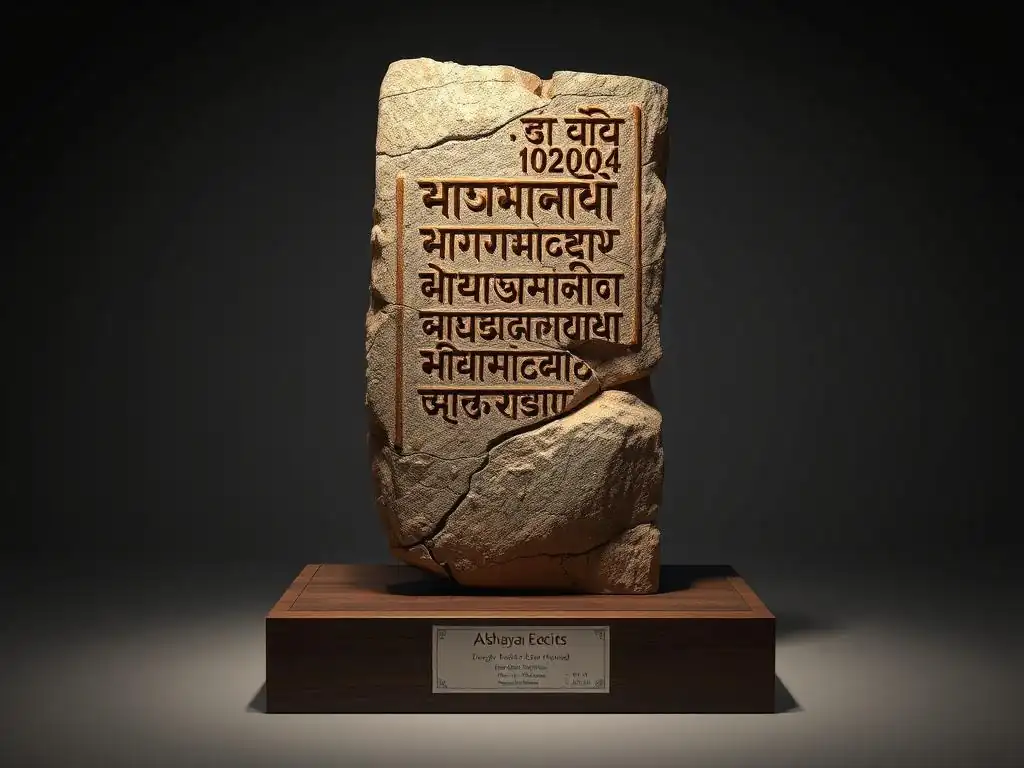
Ashoka's edicts, inscribed on rocks and polished stone pillars throughout his empire, constitute an unparalleled source of information about his reign, his philosophy, and particularly his Ashoka provincial administration strategies. Discovered in over 33 locations across modern-day India, Nepal, Pakistan, and Afghanistan, these inscriptions are not mere declarations but direct communications from the emperor to his subjects and officials. They elucidate the principles of Dhamma, detail administrative directives, and reveal Ashoka's personal commitment to the welfare of his people.
These edicts provide direct evidence of the administrative hierarchy and the specific duties assigned to various officials. For instance, they frequently mention the Mahamattas, Rajjukas, and other functionaries, detailing their responsibilities in upholding justice, promoting welfare, and ensuring compliance with imperial policies. The geographical spread of these edicts also indicates the reach of Ashoka's central authority and the systematic effort to disseminate his vision across the diverse provinces, offering invaluable insights into the practical application of Ashoka's provincial administration strategies.
Many of Ashoka's edicts directly address issues of provincial welfare and justice, demonstrating his active concern for the well-being of his subjects across the empire. Major Rock Edict VI, for example, states his readiness to receive reports from his officials at all times and places, signifying a continuous oversight of administrative functions, including those related to Ashoka provincial administration strategies. This edict also emphasizes his commitment to acting for the "welfare and happiness" of all people.
Major Rock Edict V details the appointment of Dhamma Mahamattas and their specific duties related to prison reform, aid to various religious sects, and welfare activities for families. Pillar Edict VII provides a comprehensive summary of Ashoka's welfare measures, including the digging of wells, planting of trees, and establishment of rest houses, all implemented through his provincial administration network. These edicts collectively illustrate the extensive scope of Ashoka's provincial administration strategies, which extended beyond mere law enforcement to encompass comprehensive social welfare.
Kalinga Edicts: Focus on Just Governance and Reconciliation
Among the most poignant and revealing of Ashoka's inscriptions are the Kalinga Edicts, found at Dhauli and Jaugada in modern-day Odisha. These separate rock edicts, distinct from the main series, specifically address the newly conquered people of Kalinga and the Mauryan officials stationed there. They reflect Ashoka's profound remorse over the Kalinga War and his subsequent determination to govern justly and benevolently.
In Kalinga Edict I, Ashoka explicitly states, "All men are my children." He instructs his Mahamattas in Kalinga to win the confidence of the people, emphasizing that they should not be subjected to "unjust imprisonment or harsh treatment." He warns officials against arbitrary actions, jealousy, cruelty, and laziness, stressing that their primary duty is to ensure justice and welfare for the Kalingan populace. These edicts are a direct manifestation of Ashoka's post-war Ashoka provincial administration strategies, focused on reconciliation, ethical governance, and the integration of conquered territories through compassionate rule rather than coercion.
Comparison with Previous Administrative Systems
Contrasting Ashoka's Approach with Earlier Mauryan Rulers
Ashoka's provincial administration strategies marked a significant departure from the administrative philosophies of his predecessors, Chandragupta Maurya and Bindusara. Chandragupta's governance, heavily influenced by Kautilya's Arthashastra, was characterized by a highly centralized, often ruthless, and militarily robust system primarily focused on imperial expansion, revenue generation, and maintaining strict control through a vast network of spies and officials. The Arthashastra advocates a pragmatic, even Machiavellian, approach to statecraft, where the king's power and the state's security are paramount.
In contrast, Ashoka, particularly after the Kalinga War, shifted the focus from digvijaya (conquest by military might) to dhammavijaya (conquest by righteousness). While the underlying administrative structure remained largely intact, Ashoka infused it with a moral and ethical dimension. His Ashoka provincial administration strategies prioritized the welfare of the subjects, religious tolerance, and ethical conduct over mere territorial expansion or punitive justice. The appointment of Dhamma Mahamattas, dedicated to moral oversight and social welfare, is a clear example of this philosophical divergence, moving towards a more benevolent and less coercive form of governance.
Innovations in Ashoka's Administrative Policies
Ashoka's reign introduced several groundbreaking innovations in Mauryan administrative policies that profoundly shaped his provincial administration strategies. The most prominent was the aforementioned establishment of the Dhamma Mahamattas. This was an entirely new class of officials whose mandate was not economic or military, but purely ethical and social, reflecting a unique blend of statecraft and spiritual morality. No previous Indian empire had institutionalized such a role on a large scale.
Another significant innovation was the extensive and systematic use of rock and pillar edicts for direct communication with the populace and for instructing provincial officials. While earlier rulers might have issued decrees, Ashoka's widespread, permanent inscriptions were unprecedented in their scope and intent, ensuring that his policies and ethical guidelines were publicly accessible across all provinces. Furthermore, Ashoka's emphasis on regular tours ( anusamyana) by high-ranking officials to inspect provincial administration and ensure justice, as mentioned in his edicts, was a proactive measure to maintain central control and adherence to his benevolent Ashoka provincial administration strategies.
Challenges and Limitations of Ashoka's Provincial System
Potential for Corruption and Abuse of Power
Despite Ashoka's noble intentions and sophisticated Ashoka provincial administration strategies, the sheer size and diversity of the Mauryan Empire presented inherent challenges, including the potential for corruption and abuse of power by local officials. The vast distances from the imperial capital, Pataliputra, meant that direct oversight was often difficult. While Ashoka's edicts frequently warned officials against vices like arbitrary action, anger, and idleness, and emphasized the importance of impartiality, human nature being what it is, complete adherence could not always be guaranteed.
The system relied heavily on the integrity and diligence of the Mahamattas, Rajjukas, and other provincial administrators. Instances of local officials misinterpreting or deliberately flouting imperial directives for personal gain or to assert regional authority were likely, despite the king's efforts to instill a sense of moral duty. The edicts themselves, by reiterating warnings and expectations, implicitly acknowledge the ongoing struggle to maintain perfect ethical standards across such a widespread bureaucracy, posing a limitation to the effective implementation of Ashoka provincial administration strategies.
Communication and Control Issues in a Vast Empire
Governing an empire stretching over millions of square kilometers in ancient times posed formidable communication and control challenges, even with Ashoka's advanced infrastructure. While roads were well-maintained and a messenger system existed, the time required for information to travel from distant provinces to Pataliputra and for imperial directives to reach the periphery was considerable. For instance, a message from Taxila or Suvarnagiri could take weeks to reach the capital.
This lag in communication could lead to delayed responses to local crises, misinterpretations of imperial orders, or the gradual erosion of central authority in remote areas. Local administrators, operating with significant autonomy due to logistical constraints, could potentially deviate from the central government's policies without immediate detection. While Ashoka implemented regular tours by high officials to mitigate this, the sheer scale of the empire meant that maintaining uniform control and ensuring consistent application of Ashoka provincial administration strategies across all regions remained a persistent challenge.
Legacy of Ashoka's Administrative Reforms
Influence on Subsequent Indian Empires
Ashoka's administrative reforms and his unique approach to governance left an indelible mark on subsequent Indian empires and political thought. His model of a benevolent, welfare-oriented state, guided by ethical principles rather than pure military might, became an enduring ideal for future rulers. Dynasties like the Guptas (c. 320-550 CE), often referred to as India's "Golden Age," while not directly replicating every aspect of Ashoka's system, certainly drew inspiration from his emphasis on peace, cultural development, and public welfare. The concept of a chakravartin (universal monarch) who rules justly and compassionately gained significant traction, heavily influenced by Ashoka's reign.
His focus on public works, such as road networks and irrigation, was continued and expanded by later rulers who recognized their importance for economic prosperity and administrative efficiency. The institutionalization of a complex bureaucracy with specialized officials, though refined over time, also owed much to the Mauryan foundations. Thus, Ashoka's provincial administration strategies provided a powerful blueprint for statecraft that resonated through centuries of Indian history, shaping the aspirations of many who followed.
Relevance of Ashoka's Principles in Modern Governance
The principles underpinning Ashoka's provincial administration strategies continue to hold remarkable relevance in modern governance. His emphasis on social welfare, religious tolerance, and ethical conduct as core responsibilities of the state mirrors contemporary ideals of good governance, human rights, and inclusive policies. Ashoka's concern for the well-being of all his subjects, irrespective of their background, resonates with modern democratic values that prioritize citizen welfare and equality before the law.
His efforts to establish a uniform legal and ethical framework across a diverse empire, while respecting local variations, offers insights into managing multicultural societies. The concept of a ruler or government actively working for the moral upliftment and material comfort of its people, as exemplified by the Dhamma Mahamattas, remains a powerful ideal. Ashoka's vision for a just and compassionate state, where power is wielded for the public good, ensures that his Ashoka provincial administration strategies remain a subject of study and inspiration for policymakers and citizens alike in the 21st century.
Conclusion: Ashoka's Enduring Impact on Indian Administration
Ashoka's reign represents a watershed moment in ancient Indian administrative history, profoundly transforming the Mauryan Empire's governance from a purely centralized and militaristic system to one infused with ethical and welfare-oriented principles. His Ashoka provincial administration strategies were meticulously crafted to manage a vast and diverse empire, characterized by a hierarchical structure, standardized laws, extensive infrastructure development, and an innovative bureaucracy.
The pivotal role of officials like the Mahamattas, particularly the unique Dhamma Mahamattas, in promoting social welfare and ethical conduct, alongside the Rajjukas' contributions to land management and justice, underscores the comprehensive nature of his rule. Ashoka's edicts serve as invaluable historical documents, providing direct insights into his administrative philosophy and the practical implementation of his policies.
Despite inherent challenges in controlling a sprawling empire in ancient times, Ashoka's reforms laid a lasting foundation for governance in India, influencing subsequent empires and offering enduring lessons on the pursuit of just and benevolent rule. His legacy continues to stand as a testament to the transformative power of leadership guided by a commitment to public good.
Frequently Asked Questions
How did Ashoka structure his provincial administration?
Ashoka divided his empire into provinces governed by Kumars (princes) or high-ranking officials. These provinces often mirrored the administrative structures of the Mauryan central government, ensuring consistency. Ashoka focused on implementing dharma through provincial administration.
What was the role of the Mahamattas in Ashoka's provincial administration?
Mahamattas were specially appointed officials tasked with ensuring the welfare and just governance of the provinces. They supervised local administration and were crucial for communicating the king's edicts, including the implementation of dharma policies.
How did Ashoka ensure effective communication between the central government and the provinces?
Through the Mahamattas and other officials, Ashoka maintained regular communication via messengers and emissaries. His edicts, inscribed on pillars and rocks across the empire, also served as a direct line of communication with the populace.
What strategies did Ashoka employ to maintain control and stability in his vast empire's provinces?
Ashoka used a combination of military presence, administrative oversight, and, most importantly, the promotion of dharma. The focus on ethical conduct and social welfare helped foster loyalty and stability throughout his provinces.
How did Ashoka's focus on dharma influence his provincial administration strategies?
Ashoka believed dharma would create a just and harmonious society. He therefore instructed provincial officials to prioritize ethical governance, social welfare, and the protection of all beings. This was a core tenet of his provincial administrative policies.
Final Reflection: Echoes of Governance
The insights gleaned from Ashoka's provincial administration strategies, particularly the role of the Mahamattas, resonate powerfully even today. Effective governance, characterized by empathy and justice, remains the cornerstone of a thriving society. Understanding how Ashoka balanced centralized authority with regional autonomy offers invaluable lessons for contemporary leaders navigating complex global challenges.
The enduring influence of Ashoka's model lies in its emphasis on ethical leadership and social welfare. His commitment to Dharma, translated into practical administrative policies, continues to inspire discussions on responsible governance and the importance of moral leadership. All men are my children. As for my own children, I desire that they may be provided with all kinds of welfare and happiness in this world and in the next, so do I desire for all men as well.
This quote encapsulates the profound empathy that drove Ashoka's reforms and continues to challenge us to prioritize the well-being of all citizens.
As we reflect on Ashoka's provincial administration strategies, let us consider how we can apply these principles in our own lives and communities. Strive to be agents of positive change, advocating for fairness, justice, and empathy in all our interactions. Embrace the spirit of Ashoka's Dharma and contribute to building a more equitable and compassionate world, one action at a time.
Unearth Your Inner Ruler: Embrace Ashoka's Wisdom!
Thank you for exploring the fascinating world of Ashoka's governance and the intricacies of provincial administration! Now that you've gained insights into his innovative strategies, it's time to put that knowledge into action.
Here are a few ways you can engage further:
- Identify a modern societal challenge and brainstorm how Ashoka's principles of ethical governance and the role of Mahamattas could be adapted to address it.
- Research and share examples of historical or contemporary leaders who embody similar principles of ethical leadership and social welfare.
- Reflect on your own community; how can you become a modern-day "Mahamatta" and contribute to positive change at a local level?
What specific aspect of Ashoka's administrative system resonates most with you, and how might you apply it in your daily life or professional endeavors?