
The Role of Gobekli Tepe in the Transition to Sedentism and Early Agriculture


Welcome to ArchaeologyHub.org, your gateway to unlocking the secrets of the past.
Did the monumental structures of Göbekli Tepe rewrite our understanding of the Neolithic Revolution? Delve into our comprehensive analysis of the site and its profound implications for the Gobekli Tepe Sedentism Agriculture debate. Uncover compelling evidence that challenges conventional theories and sparks a new perspective on the dawn of civilization. Explore further to discover how this enigmatic site forever changed our view of early human society.
- Introduction: Gobekli Tepe and the Neolithic Revolution
- Gobekli Tepe's Architecture: Evidence of Early Sedentism?
- Gobekli Tepe and the Development of Sedentary Lifestyles
- The Relationship Between Gobekli Tepe and Early Agriculture
- Gobekli Tepe's Iconography: Symbolic Representations and Agricultural Themes?
- Gobekli Tepe's Influence on Later Neolithic Settlements
- Alternative Interpretations and Ongoing Debates Regarding Gobekli Tepe's Role
- Conclusion: Gobekli Tepe's Enduring Significance for Understanding Sedentism and Agriculture Origins
-
Frequently Asked Questions
- How did Göbekli Tepe challenge previous assumptions about the relationship between sedentism and agriculture?
- What evidence suggests that Göbekli Tepe was a ritual site, and how does this relate to the "Gobekli Tepe Sedentism Agriculture" topic?
- What is the significance of animal imagery at Göbekli Tepe in understanding the transition to agriculture?
- How does Göbekli Tepe contribute to our understanding of early social organization?
- What are some of the ongoing debates surrounding the interpretation of Göbekli Tepe and its role in the "Gobekli Tepe Sedentism Agriculture" narrative?
- Final Reflection: Echoes of Innovation in Ancient Stones
- Unearth Your Inner Archaeologist!
Introduction: Gobekli Tepe and the Neolithic Revolution
Setting the Stage: Understanding Pre-Pottery Neolithic (PPN) Societies
Before the revolutionary discoveries at Gobekli Tepe, archaeological understanding of the Pre-Pottery Neolithic (PPN) period, roughly 10,000 to 7,000 BCE, largely depicted societies as relatively mobile hunter-gatherers. These groups were characterized by their reliance on wild resources, the absence of pottery (hence "Pre-Pottery"), and the sophisticated use of stone tools. While some early forms of communal living and resource management were recognized, the prevailing view held that large-scale, complex societal structures and monumental architecture only emerged after the establishment of settled agricultural communities.
Traditional models suggested a linear progression: increased food security from agriculture led to permanent settlements, which then allowed for population growth, social stratification, and the organized labor necessary for monumental construction. PPN-A sites like Mureybet in Syria, dated to around 9,500 BCE, showed early attempts at sedentary living with circular mud-brick houses, but lacked the monumental scale seen later. The stage was set for agriculture as the primary driver of all subsequent societal advancements, including Gobekli Tepe sedentism agriculture.
The Enigma of Gobekli Tepe: A Monumental Site Challenging Existing Paradigms
The discovery of Gobekli Tepe in southeastern Turkey in the mid-1990s by Klaus Schmidt fundamentally reshaped this understanding. Dated primarily to the PPN A and early PPN B periods (circa 9600-8200 BCE), this site presents a series of massive stone enclosures featuring intricately carved T-shaped pillars, some weighing up to 20 tons and standing over 5 meters tall. What makes Gobekli Tepe truly enigmatic is its age: it predates widespread evidence of domesticated plants and animals by millennia, challenging the long-held assumption that complex, monumental architecture was a direct consequence of settled agricultural life.
Gobekli Tepe demonstrates that elaborate ritual centers requiring significant communal effort and organization could exist among hunter-gatherer societies, forcing a re-evaluation of the causal links in the Neolithic Revolution. Instead of agriculture leading to sedentism and then monumental building, it suggests that the need for communal gathering places, perhaps for ritual or social cohesion, might have spurred forms of semi-sedentism or sophisticated social organization that then provided the impetus or framework for the development of agriculture. This makes Gobekli Tepe sedentism agriculture a central theme in modern archaeological discourse.
Gobekli Tepe's Architecture: Evidence of Early Sedentism?
Monumental Structures: T-Shaped Pillars and Enclosures
The core of Gobekli Tepe consists of several large, circular or oval enclosures (labeled A through H, and others still unexcavated), each defined by massive T-shaped limestone pillars. These pillars, quarried from nearby bedrock, average 3 to 5.5 meters in height and weigh between 10 and 20 tons.
They are typically arranged in a concentric fashion, with two larger, central pillars surrounded by a ring of smaller ones embedded in a wall. The surfaces of these pillars are often adorned with intricate bas-relief carvings depicting a wide array of animals—snakes, foxes, wild boars, gazelles, birds, and scorpions—as well as abstract symbols.
The sheer scale and complexity of these structures are astounding for their period. For instance, Enclosure D, one of the most thoroughly excavated, measures approximately 20 meters in diameter and contains 12 pillars in its outer ring, in addition to the two central ones.
The effort required to quarry, transport, and erect these megaliths without the aid of draft animals or wheeled vehicles suggests a highly organized, communal labor force capable of coordinating hundreds, if not thousands, of individuals for sustained periods. This level of sustained cooperation points towards a degree of social complexity and perhaps seasonal or semi-permanent gatherings that blur the lines of traditional hunter-gatherer mobility, directly impacting our understanding of Gobekli Tepe sedentism agriculture.
The deliberate and sophisticated planning evident in the layout of Gobekli Tepe's enclosures further underscores the advanced social organization of its builders. Each enclosure appears to have been meticulously designed, with the T-pillars representing stylized human figures, often with arms carved in relief along their sides, suggesting they are guardians or participants in the rituals. The repeated architectural pattern across multiple enclosures, some of which were intentionally backfilled and later replaced by newer, smaller structures, indicates a long-term, evolving cultural tradition.
This systematic construction and eventual burial of older structures implies a continuity of purpose and a shared cultural memory over centuries. Such sustained, large-scale projects are generally associated with settled populations that have a stable food supply and a hierarchical social structure capable of mobilizing and directing labor.
While Gobekli Tepe itself lacks clear evidence of domestic residential structures, its monumental scale and the continuous effort invested in its construction over a period of at least 1,500 years strongly suggest that the people who built and used it were not merely transient foragers, but rather groups with established social cohesion and a capacity for long-term planning, a crucial component for the emergence of Gobekli Tepe sedentism agriculture.
Construction Techniques: Labor Investment and Community Cooperation
The construction of Gobekli Tepe's massive stone circles required sophisticated quarrying techniques. The builders extracted the T-shaped pillars from limestone bedrock outcrops located within a few hundred meters of the site. Evidence of these ancient quarries, including unfinished pillars still partially attached to the rock, provides direct insight into their methods. Once detached, these multi-ton blocks had to be transported to the site and then precisely erected. This likely involved large teams pulling the stones on sledges over rollers, a technique known from later periods but rarely attributed to early PPN societies.
The sheer human power needed for these tasks is staggering. Estimates suggest that moving a 10-ton pillar a few hundred meters would require at least 50-100 people. Erecting it would require even more coordinated effort, possibly involving ramps and leverage systems.
Given that multiple enclosures were built, and some were subsequently buried and new ones constructed, the total labor investment over Gobekli Tepe's active lifespan was immense. This level of coordinated effort points to a well-structured society with clear leadership and a strong sense of community, suggesting that the social conditions for Gobekli Tepe sedentism agriculture were already developing, even if agriculture itself was not yet fully established.
Gobekli Tepe and the Development of Sedentary Lifestyles
Reassessing the Hunter-Gatherer-Farmer Dichotomy
The traditional archaeological narrative posits a clear dichotomy: hunter-gatherers are mobile, and farmers are sedentary. Gobekli Tepe directly challenges this simplistic model. Its existence as a monumental, complex site built by people without widespread evidence of domesticated plants or animals forces a reassessment of what constitutes "sedentism" and how it relates to subsistence strategies. It suggests the possibility of "complex hunter-gatherers" or "affluent foragers" who, due to exceptionally rich natural resources, could afford to invest significant time and labor in non-subsistence activities, including the construction of large ritual centers.
These groups might have engaged in a form of "semi-sedentism," gathering at Gobekli Tepe seasonally for specific ceremonies or social events, perhaps during periods of abundant wild harvests. This regular aggregation would necessitate temporary settlements and a degree of social organization that could then serve as a precursor to more permanent, year-round habitation. The site thus blurs the lines, indicating that social complexity and monumental construction could emerge from specific environmental and cultural conditions among hunter-gatherers, rather than being solely a product of agricultural surplus. This nuanced understanding is crucial for comprehending the origins of Gobekli Tepe sedentism agriculture.
Archaeologists widely interpret Gobekli Tepe as a major ritual or ceremonial center, rather than a permanent settlement. Its lack of domestic structures and the presence of large feasting remains (e.g., thousands of animal bones from wild gazelle, aurochs, and wild boar) suggest it served as a gathering place for dispersed hunter-gatherer groups from a wide surrounding region. These gatherings, perhaps occurring annually or at other significant intervals, would have facilitated social bonding, the exchange of ideas and goods, and the reinforcement of shared cultural beliefs.
Such a central hub could have played a crucial role in the development of sedentary lifestyles. The regular convergence of various groups would have fostered greater social cohesion and potentially led to the formation of larger, more stable social units. The need to organize and manage these gatherings, including the provision of food and the coordination of construction projects, would have placed increasing demands on resource management and social structures, indirectly encouraging more settled patterns of life and laying groundwork for the eventual transition to Gobekli Tepe sedentism agriculture.
Environmental Context: Resource Availability and Attractiveness
The environmental context of Gobekli Tepe during the early Holocene (around 9600 BCE) was exceptionally rich and conducive to supporting large, non-agricultural populations. Located in Upper Mesopotamia, within the Fertile Crescent, the region was a biodiversity hotspot. The nearby Karacadag mountains are the center of origin for wild einkorn wheat, the progenitor of one of the earliest domesticated cereals. The plains and hills around Gobekli Tepe teemed with abundant wild game, including vast herds of gazelle, wild sheep, goats, and aurochs, as well as a variety of wild plant foods, including pulses and nuts.
This abundant natural larder would have provided a reliable food source capable of sustaining large gatherings for extended periods, reducing the constant need for mobility typically associated with hunter-gatherers. The concentration of diverse resources in the vicinity made the area highly attractive and could have enabled a semi-sedentary existence, allowing groups to establish temporary camps and devote significant labor to projects like Gobekli Tepe. This resource richness provided the environmental backdrop against which the complex social dynamics leading to Gobekli Tepe sedentism agriculture unfolded.
The Relationship Between Gobekli Tepe and Early Agriculture
One intriguing hypothesis linking Gobekli Tepe to the origins of agriculture is the "beer before bread" theory. This proposes that the primary impetus for early grain cultivation was not the production of staple food (bread), but rather the desire for fermented beverages (beer) for communal feasts and rituals. At Gobekli Tepe, archaeologists have discovered large stone troughs, some with capacities of up to 160 liters, which exhibit residues consistent with the fermentation of wild grains. These troughs are strategically placed within the enclosures, supporting the idea of large-scale feasting.
The consumption of beer in a communal setting would have served to enhance social cohesion, facilitate the formation of alliances, and perhaps even induce altered states of consciousness conducive to ritual experiences. The need to produce large quantities of wild grains for these feasts could have provided the initial motivation for intensive gathering and subsequent experimental cultivation. This ritualistic demand, rather than daily sustenance, could have been the spark that led to the systematic management and eventual domestication of cereals, making Gobekli Tepe sedentism agriculture a product of social and ritual needs.
Archaeological Evidence for Early Cultivation in the Vicinity of Gobekli Tepe
While direct evidence of on-site grain cultivation at Gobekli Tepe is limited, the broader regional context provides crucial clues. The Karacadag mountains, located approximately 100 kilometers northeast of Gobekli Tepe, are recognized as the genetic homeland of domesticated einkorn wheat (Triticum monococcum). Studies have shown that the genetic diversity of wild einkorn is highest in this region, strongly suggesting it was here that the plant was first domesticated. This geographical proximity is highly significant.
Furthermore, slightly later PPN sites in the wider Upper Mesopotamian region, such as Nevali Cori (also with T-shaped pillars) and Cayonu, show clear evidence of early domesticated plants, including emmer wheat and barley, alongside early domesticated animals like pigs. This indicates that the region around Gobekli Tepe was indeed a hotbed of agricultural innovation. While Gobekli Tepe may not have been a farming village itself, its existence as a central gathering place in the very heartland of agricultural origins suggests a profound, albeit indirect, connection to the processes that led to Gobekli Tepe sedentism agriculture.
The Role of Ritual in the Domestication Process: Seed Selection and Crop Management
The intense ritualistic activity at Gobekli Tepe, particularly the feasting involving wild grains, could have played a critical role in inadvertently initiating the domestication process. Regular large-scale gathering of wild cereals for these events would have necessitated a deep understanding of plant life cycles, optimal harvesting times, and storage techniques. Over time, groups would have naturally selected for desirable traits, such as larger seeds or non-shattering ears (where seeds remain attached to the stalk after ripening), simply by repeatedly collecting and processing them.
The communal effort involved in building and maintaining Gobekli Tepe might have fostered a social structure capable of coordinating the labor required for early plant management. Rituals could have provided a framework for shared knowledge and collaborative action, leading to the deliberate planting of seeds in favorable locations or the protection of wild stands.
Thus, the very social and ritual demands of a site like Gobekli Tepe could have provided the cultural and organizational impetus for early forms of human intervention in plant propagation, paving the way for the full-scale agricultural revolution and the emergence of Gobekli Tepe sedentism agriculture.
Gobekli Tepe's Iconography: Symbolic Representations and Agricultural Themes?
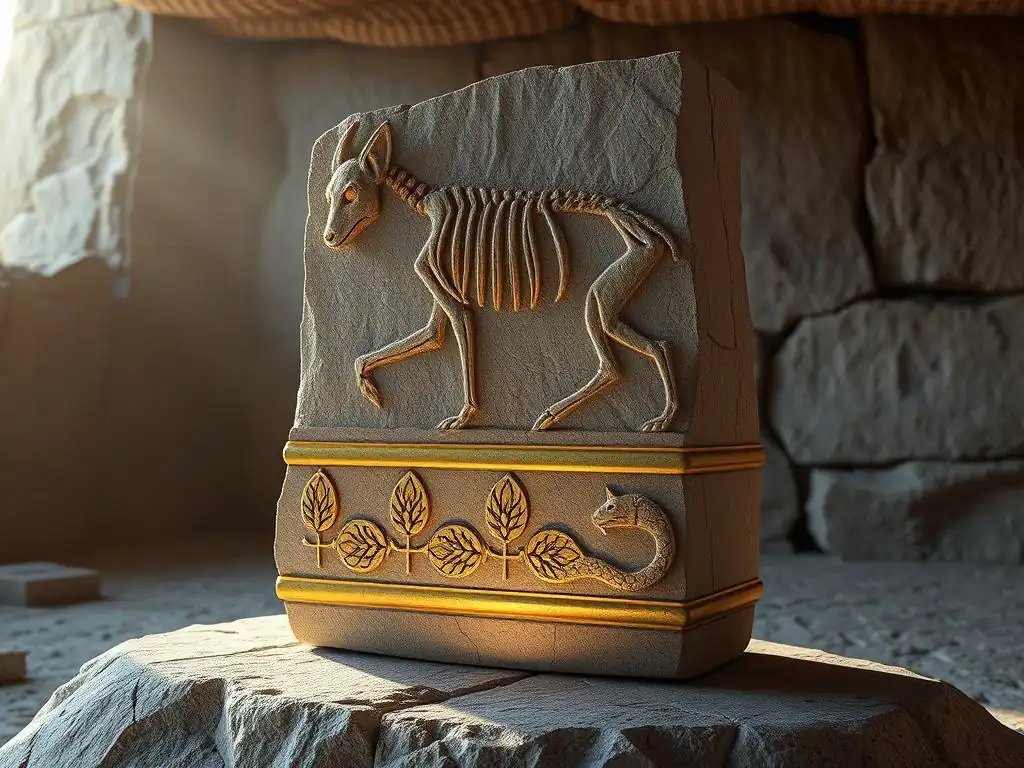
Animal Depictions: Symbolic Meanings and Environmental Significance
The T-shaped pillars of Gobekli Tepe are adorned with a rich array of animal carvings, offering a window into the symbolic world of its builders. Common motifs include snakes, scorpions, spiders, foxes, wild boars, gazelles, aurochs (wild cattle), and various birds, especially vultures. These animals are often depicted in dynamic poses or in what appear to be narrative scenes. While their precise meanings remain a subject of debate, they likely held significant symbolic importance, perhaps representing totemic ancestors, guardian spirits, or powerful forces of nature.
The prevalence of dangerous or predatory animals, such as snakes and scorpions, might symbolize threats or the untamed wilderness, contrasting with the communal order of the enclosures. Conversely, animals like gazelles and aurochs, which were major food sources, highlight the continued reliance on hunting. The detailed and repetitive nature of these carvings suggests a shared belief system and a deep connection to the natural environment that sustained these pre-agricultural societies. These depictions provide insights into the worldview that underpinned the early stages of Gobekli Tepe sedentism agriculture.
Abstract Symbols: Interpreting Potential Links to Fertility and Abundance
Beyond the zoomorphic figures, Gobekli Tepe also features a variety of abstract and geometric symbols. These include H-shapes, crescents, circles, and other enigmatic patterns. The H-shape, for example, appears frequently and consistently across multiple enclosures, suggesting a widely understood meaning. While their specific interpretations are elusive, archaeologists speculate that these abstract symbols might relate to fundamental concepts of life, death, fertility, or cosmic order.
In many early agricultural societies, symbols associated with fertility and abundance are common, reflecting the critical importance of successful harvests and reproduction. While Gobekli Tepe predates widespread agriculture, the presence of such abstract symbols could indicate an early conceptualization of these themes, perhaps linked to the bounty of wild resources or the cyclical nature of the seasons. These symbolic expressions could represent the nascent cognitive frameworks that would later be adapted and expanded upon as humans transitioned to a more controlled relationship with their environment through farming, thus subtly connecting them to the emergence of Gobekli Tepe sedentism agriculture.
Narrative Scenes: Representations of Gazelle Hunting and Vulture Imagery
Some pillars at Gobekli Tepe appear to depict more complex, narrative scenes, offering glimpses into the activities and beliefs of the PPN people. Pillar 43 in Enclosure D, often referred to as the "vulture stone," is a notable example. It features a headless human figure, surrounded by vultures, scorpions, and other animals. This imagery has been interpreted as a depiction of excarnation rituals, where bodies are exposed to scavengers before burial, a practice known from other Neolithic sites like Cayonu and Catalhoyuk. This suggests a sophisticated understanding of the afterlife and a complex relationship with death.
Other scenes might depict communal hunting events, particularly of gazelles, which constituted a significant portion of the faunal remains found at the site. These hunting scenes, combined with the feasting evidence, underscore the continued importance of wild game in their subsistence strategy. While not directly agricultural, these narrative carvings reveal a society deeply engaged with its environment, its resources, and its spiritual beliefs—a context within which the earliest experiments with plant and animal management, leading to Gobekli Tepe sedentism agriculture, would have taken place.
Gobekli Tepe's Influence on Later Neolithic Settlements
Diffusion of Ideas and Technologies: Tracing Gobekli Tepe's Legacy
The monumental architectural style and specific iconography seen at Gobekli Tepe appear to have had a significant influence on contemporaneous and slightly later Pre-Pottery Neolithic sites across Upper Mesopotamia. Sites like Nevali Cori (now submerged by the Ataturk Dam), Karahan Tepe, and Urfa Yenimahalle all feature T-shaped pillars, albeit often on a smaller scale and sometimes integrated into residential structures. This suggests a diffusion of architectural ideas, symbolic systems, and possibly ritual practices from Gobekli Tepe as a major cultural center.
The mechanisms of this diffusion could have involved various forms of interaction: shared ritual gatherings at Gobekli Tepe, where ideas and technologies were exchanged; the movement of groups or individuals carrying these traditions; or the development of regional networks that fostered cultural similarities. This spread of monumental construction and shared symbolism indicates a broad cultural horizon in the early PPN, with Gobekli Tepe potentially serving as a prototype or a highly influential node in this network. Understanding this cultural spread is key to tracing the broader developments of Gobekli Tepe sedentism agriculture.
Similarities and Differences with Other Early Neolithic Sites: Nevali Cori and Cayonu
Comparing Gobekli Tepe with other significant early Neolithic sites in the region highlights both its uniqueness and its place within a broader trajectory towards sedentism and agriculture. Nevali Cori, located about 50 km northwest of Gobekli Tepe and slightly later in date (c. 8400-7600 BCE), also features T-shaped pillars and monumental enclosures. However, Nevali Cori also exhibits clear evidence of permanent residential buildings, suggesting a more settled community. This indicates a transition where monumental ritual spaces began to be integrated with domestic life.
Cayonu, another crucial site in southeastern Turkey (c. 8600-7000 BCE), represents a further step in this evolution. While lacking T-pillars, it boasts rectangular buildings, sophisticated architectural planning, and clear archaeological evidence for the early domestication of plants (e.g., emmer wheat, lentils) and animals (e.g., pigs). These sites illustrate a regional continuum where the social complexity and organizational capacity demonstrated at Gobekli Tepe were gradually channeled into the development of permanent settlements and full-scale agricultural practices, thereby solidifying the link between Gobekli Tepe sedentism agriculture.
The Spread of Agriculture and Sedentism Across the Fertile Crescent
Gobekli Tepe is situated within the "Fertile Crescent," the arc of land spanning from the Levant through Anatolia and Mesopotamia, which is widely recognized as the cradle of agriculture. While the exact mechanisms are still debated, the Neolithic Revolution—the transition from hunting and gathering to farming—spread gradually across this region over several millennia. Gobekli Tepe's significance lies in its early date and monumental scale, suggesting that complex social structures and perhaps ritualistic practices played a much earlier and more fundamental role in this transition than previously thought.
Instead of being a passive recipient of agricultural innovations, the region around Gobekli Tepe appears to have been an active crucible where social, ritual, and environmental factors converged to facilitate the shift. The communal efforts seen at Gobekli Tepe might have provided the organizational templates and social cohesion necessary for managing the demands of early agriculture and supporting larger, more permanent populations. Thus, Gobekli Tepe stands as a pivotal site, not just for understanding early monumental architecture, but for reshaping our timeline and understanding of the preconditions for the widespread adoption of Gobekli Tepe sedentism agriculture.
Alternative Interpretations and Ongoing Debates Regarding Gobekli Tepe's Role
Challenging the Ritual-Only Hypothesis
While the predominant interpretation of Gobekli Tepe emphasizes its role as a monumental ritual center, some scholars propose alternative or supplementary functions. The "ritual-only" hypothesis, while compelling given the lack of domestic structures, might be too narrow. It is argued that such a significant investment of labor and resources would likely serve multiple purposes beyond pure ceremony. For instance, Gobekli Tepe could have functioned as a regional meeting point for social, economic, and even political exchange among dispersed groups.
These gatherings, under the guise of ritual, could have facilitated trade of exotic materials (such as obsidian), negotiation of alliances, resolution of disputes, and the sharing of critical information about resources or environmental changes. The monumental architecture itself could have served as a powerful symbol of group identity and cohesion, reinforcing social hierarchies or collective memory. Thus, while ritual was undoubtedly central, the site's importance likely extended to a broader range of socio-economic functions that facilitated the long-term changes leading to Gobekli Tepe sedentism agriculture.
Exploring Alternative Functions: Observational Astronomy and Ancestor Veneration
Beyond its social and ritual dimensions, other interpretations for Gobekli Tepe's function have been proposed. Some researchers have explored the possibility of astronomical alignments within the enclosures, suggesting that the T-pillars or the site's layout might have been oriented towards specific celestial events, such as solstices, equinoxes, or the rising of certain stars. If proven, this would imply a sophisticated understanding of the cosmos and a calendrical function, potentially aiding in the timing of seasonal gatherings or agricultural cycles.
Another compelling theory involves ancestor veneration. While no full human burials have been found within the enclosures themselves, fragments of human skulls with cut marks, possibly indicating defleshing or ritual manipulation, have been discovered in the fill layers.
This practice is known from other PPN sites and suggests a complex relationship with the dead, possibly involving the display or veneration of ancestors. If Gobekli Tepe was indeed a place where ancestral spirits were honored, it would add another layer of meaning to its sacred landscape and its role in the development of Gobekli Tepe sedentism agriculture through communal memory and identity.
Unanswered Questions and Future Research Directions
Despite two decades of intensive excavation, Gobekli Tepe continues to present numerous unanswered questions, highlighting the dynamic nature of archaeological research. A significant portion of the site remains unexcavated, with geophysical surveys indicating many more buried enclosures. Future excavations are crucial to fully understand the site's extent, its chronological sequence, and the diversity of its structures. For instance, the precise nature of the relationship between the people who built Gobekli Tepe and the later agricultural communities in the region is still being explored.
Questions persist regarding the daily lives of the individuals who constructed and used the site: where did they live? What was their precise subsistence strategy during the construction periods? And perhaps most intriguing, why was Gobekli Tepe intentionally buried and abandoned around 8200 BCE? Was it due to environmental changes, shifts in social structure, or the very success of the agricultural revolution it may have inadvertently spurred? Ongoing research, including detailed environmental studies and further analysis of faunal and botanical remains, will continue to refine our understanding of Gobekli Tepe sedentism agriculture and its profound legacy.
Conclusion: Gobekli Tepe's Enduring Significance for Understanding Sedentism and Agriculture Origins
Gobekli Tepe stands as an unparalleled archaeological marvel, profoundly altering our understanding of early human history. Its monumental architecture, constructed by seemingly pre-agricultural hunter-gatherers, demonstrates that complex social organization and large-scale communal efforts were possible long before the advent of settled farming villages. Instead of being a consequence of agriculture, Gobekli Tepe suggests that the need for ritual, social cohesion, and perhaps the management of abundant wild resources acted as a powerful catalyst for social and economic change.
The site provided a focal point for dispersed groups, fostering a level of cooperation and shared identity that would have been essential for the eventual transition to more intensive forms of resource management and, ultimately, agriculture. It signifies that the human capacity for abstract thought, symbolic expression, and collective action was a driving force in shaping the trajectory of the Neolithic Revolution, creating the preconditions for the emergence of Gobekli Tepe sedentism agriculture.
Rethinking the Timeline of the Neolithic Revolution
The traditional linear model of the Neolithic Revolution—agriculture leading to sedentism, then to complex societies—has been decisively challenged by Gobekli Tepe. The site forces a re-evaluation of the entire timeline, suggesting a more nuanced and iterative process. It proposes that social and ritual needs might have driven early forms of resource management and collective labor, which in turn created the environment conducive to the experimentation and eventual adoption of agriculture.
This "ritual-first" or "social-first" perspective highlights that the shift to farming was not merely an economic innovation but a profound cultural transformation. Gobekli Tepe pushes back the perceived starting point for large-scale human endeavors and complex social structures by millennia, demonstrating that the roots of settled life and food production are deeply intertwined with human ingenuity, spirituality, and the desire for communal gathering. This revised timeline is a central contribution of Gobekli Tepe sedentism agriculture studies.
The enduring legacy of Gobekli Tepe lies in its powerful testament to the sophisticated cognitive and social capabilities of early Holocene hunter-gatherers. It reveals a world where monumental art and architecture flourished without the conventional prerequisites of agriculture and urbanism. The site is a reminder that human societies are adaptable and innovative, capable of creating complex cultural landscapes in diverse environmental and subsistence contexts.
As excavations continue and new interpretations emerge, Gobekli Tepe will undoubtedly remain a cornerstone of archaeological research into the origins of civilization. It compels us to rethink fundamental assumptions about progress, development, and the very essence of what it means to be human in the critical period leading up to the most profound transformation in human history: the adoption of Gobekli Tepe sedentism agriculture.
Frequently Asked Questions
How did Göbekli Tepe challenge previous assumptions about the relationship between sedentism and agriculture?
Previously, it was believed that agriculture preceded sedentism. Göbekli Tepe suggests that ritual and social needs may have driven people to settle in one place before cultivating crops.
What evidence suggests that Göbekli Tepe was a ritual site, and how does this relate to the "Gobekli Tepe Sedentism Agriculture" topic?
The presence of massive T-shaped pillars, adorned with animal depictions, and the lack of domestic structures strongly indicate a ritual purpose. This shows that people may have gathered for ceremonial activities, leading to longer stays and eventually, sedentism.
What is the significance of animal imagery at Göbekli Tepe in understanding the transition to agriculture?
Animal imagery, particularly of wild animals, suggests a focus on hunting and gathering. The shift from depicting wild animals to cultivating plants could reflect a gradual transition to agriculture.
The construction of Göbekli Tepe required coordinated labor and resources, indicating a level of social organization beyond small hunter-gatherer bands. This suggests that complex social structures were developing before large-scale agriculture.
What are some of the ongoing debates surrounding the interpretation of Göbekli Tepe and its role in the "Gobekli Tepe Sedentism Agriculture" narrative?
Debates continue regarding the exact purpose of the site and the extent to which it influenced the development of agriculture. Some argue that it played a direct role, while others suggest it was a catalyst for social changes that indirectly led to farming.
Final Reflection: Echoes of Innovation in Ancient Stones
The exploration of Göbekli Tepe's role in the transition to sedentism and early agriculture reveals that human ingenuity and the desire for community are timeless forces. The intricate carvings and monumental architecture, predating widespread agriculture, challenge conventional narratives and underscore the profound impact of belief systems on societal development, a relevance that resonates deeply as we grapple with our own complex global challenges today.
The enduring mystery of Göbekli Tepe continues to fascinate and inspire, prompting us to reconsider the linear progression of human history. This site serves as a powerful reminder that innovation often arises from unexpected sources, driven by a confluence of spiritual, social, and environmental factors. We have to rewrite the book of human history.
- Klaus Schmidt, reflecting on the implications of Göbekli Tepe. This sentiment encapsulates the ongoing influence of Göbekli Tepe, forcing us to question established paradigms and embrace a more nuanced understanding of our past.
As we stand on the shoulders of these ancient innovators, let us reflect on the lessons of Göbekli Tepe. Consider how your own beliefs and actions contribute to the shaping of our collective future. What monumental structures, both literal and figurative, are you building today? Embrace the spirit of innovation and community that echoes from those ancient stones, and strive to create a world where ingenuity and collaboration pave the way for a more sustainable and meaningful existence for all.
Unearth Your Inner Archaeologist!
Thanks for diving deep into the mysteries of Gobekli Tepe with us! You've now glimpsed how this incredible site reshapes our understanding of early human settlements and agriculture. Ready to take your exploration further?
Here are a few ways you can continue your journey:
- Visit a virtual museum to examine artifacts from similar Neolithic sites and compare them to Gobekli Tepe's unique finds.
- Dive deeper into the debate:Share your thoughts on the chicken-or-egg question - did ritual or agriculture come first?
- Start planning a trip! Research archaeological sites in Turkey and beyond that are open to the public. Who knows, maybe you'll discover something new yourself!
What one small action will you take this week to connect with the ancient world around you?