
The Symbolic Use of Ochre in European Mesolithic Contexts


Welcome to ArchaeologyHub.org, your gateway to unlocking the secrets of the past! Ever wondered what vibrant colors adorned the lives of our Mesolithic ancestors? Dive into our in-depth exploration of The Symbolic Use of Ochre in European Mesolithic Contexts and discover how this ancient pigment offers a fascinating window into their beliefs, rituals, and artistic expression. Prepare to be captivated by the rich tapestry of evidence, revealing a world far more sophisticated than you might imagine. Intrigued? Keep reading to uncover the profound significance of ochre and its enduring legacy!
- Introduction: Unveiling the Significance of Ochre in the Mesolithic
- What is Ochre? Understanding the Material Properties of Red Ochre
- Ochre in the European Mesolithic: A Review of Archaeological Evidence
- Symbolic and Ritualistic Applications of Ochre in Mesolithic Burials
- Ochre and Art: Exploring the Use of Pigments in Mesolithic Rock Art
- Functional Uses of Ochre: Beyond Symbolism in Mesolithic Life
- Interpreting the Symbolic Meaning of Ochre in the European Mesolithic
- Ochre Pigment Analysis: Scientific Techniques and Insights
- Case Studies: Examining Specific Mesolithic Sites with Notable Ochre Use
- The Legacy of Ochre: Connecting Mesolithic Practices to Later Periods
- Conclusion: Ochre as a Window into the Mesolithic Mind
-
Frequently Asked Questions
- What is ochre pigment and why is it significant in archaeology?
- What does the ArchaeologyHub.org article "The Symbolic Use of Ochre in European Mesolithic Contexts" explore?
- How was ochre likely obtained and processed during the European Mesolithic?
- What are some examples of archaeological sites in Europe where ochre has been found in Mesolithic contexts?
- What interpretations are proposed for the symbolic use of ochre in Mesolithic burials?
- Final Reflection: The Enduring Echoes of Ochre
- Unearth Your Own Archaeological Journey!
Introduction: Unveiling the Significance of Ochre in the Mesolithic
The Enduring Mystery of Ochre Pigment in Prehistoric Europe
The use of ochre pigment in prehistoric Europe represents one of the most enduring and fascinating mysteries in archaeology, spanning from the Lower Paleolithic over 200,000 years ago through the Upper Paleolithic and into the Mesolithic period. This natural earth pigment, primarily composed of iron oxides, appears consistently across numerous archaeological contexts, suggesting a deep-rooted significance for early human societies.
While its presence is undeniable, the precise motivations behind its widespread application – whether for purely utilitarian purposes, symbolic expression, or a combination thereof – remain subjects of intense scholarly debate. Its persistence across diverse cultures and millennia underscores its fundamental importance to human cognition and social practices.
During the European Mesolithic, approximately 10,000 to 5,000 BCE, as hunter-gatherer societies adapted to the post-glacial environment, the continued and often elaborate use of ochre pigment in European Mesolithic contexts offers a critical window into their evolving spiritual beliefs, social structures, and technological innovations. Unlike the monumental cave art of the Upper Paleolithic, Mesolithic ochre use often manifests in more subtle yet equally profound ways, particularly in burial practices, portable art, and even functional applications. Unraveling the multifaceted roles of this ubiquitous material is essential for a comprehensive understanding of this transitional period in European prehistory.
ArchaeologyHub.org and the Exploration of Mesolithic European Cultures
ArchaeologyHub.org serves as a comprehensive digital encyclopedia dedicated to archaeological discoveries, offering detailed analyses of ancient civilizations and their cultural expressions. In line with this mission, this article delves into the intricate world of Mesolithic European cultures, specifically focusing on their adaptations and innovations as reflected through the pervasive use of ochre. By examining the archaeological record across various regions, we aim to illuminate the profound significance of ochre pigment in European Mesolithic societies.
Our exploration will move beyond mere description, seeking to interpret the underlying meanings and practical applications of this vibrant pigment. Through detailed case studies and an analysis of scientific findings, ArchaeologyHub.org endeavors to provide an in-depth understanding of how Mesolithic peoples interacted with and imbued meaning into their environment, with ochre serving as a powerful testament to their complex worldview and ingenuity in shaping their material culture.
What is Ochre? Understanding the Material Properties of Red Ochre
Defining Ochre: Composition, Colors, and Sources
Ochre is a naturally occurring earth pigment consisting primarily of hydrated iron oxides, with varying amounts of clay and other mineral impurities. The most common forms are hematite (Fe2O3), which produces reds, and goethite (FeO(OH)), responsible for yellows and browns. These minerals are formed through the weathering of iron-rich rocks and can be found in diverse geological contexts, including ancient sedimentary deposits, weathered igneous rocks, and even as precipitates in certain aquatic environments. The specific hue of the ochre is determined by the dominant iron oxide, its hydration state, and the presence of other trace minerals.
The raw material is typically soft enough to be easily ground into a fine powder, making it readily accessible for prehistoric peoples. Sources could range from small, localized outcrops exploited casually, to more significant, often distant, geological formations that may have necessitated organized procurement or trade networks. For instance, some archaeological evidence suggests the transport of ochre over distances of several tens of kilometers, indicating its value and the effort invested in its acquisition by early communities.
The Prehistoric Palette: Varieties of Ochre Used by Mesolithic Peoples
While red ochre is perhaps the most widely recognized and extensively documented variety found in Mesolithic contexts, prehistoric peoples utilized a broader spectrum of ochre colors. Yellow ochre, derived from goethite, and various shades of brown were also employed, often depending on local availability and desired aesthetic or functional outcomes. The Mesolithic palette was not limited to the natural hues; evidence suggests that these early communities understood and manipulated the properties of ochre.
Through controlled heating, goethite-rich yellow ochre can be transformed into hematite-rich red ochre, a process known as calcination. This thermal alteration intensifies the red color and can also make the pigment more vibrant and durable. Archaeological finds of hearths containing heated ochre lumps, such as those found at some Mesolithic sites in southern Scandinavia, indicate deliberate pyrotechnological manipulation of these pigments. This mastery over material properties underscores a sophisticated understanding of their environment and a deliberate approach to their artistic and ritualistic expressions.
Ochre in the European Mesolithic: A Review of Archaeological Evidence
Geographic Distribution: Ochre Deposits and Mesolithic Sites Across Europe
The archaeological record demonstrates a remarkably widespread distribution of ochre use across Europe during the Mesolithic period, from the far northern reaches of Scandinavia to the Mediterranean coast and across the European mainland. Sites in diverse geographical zones consistently yield evidence of ochre, whether as raw lumps, ground powder, or applied to artifacts and human remains. For example, prominent Mesolithic burial sites in southern Scandinavia, such as Skateholm (Sweden) and Vedbæk-Bøgebakken (Denmark), exhibit extensive use of red ochre in graves. Similarly, sites in Brittany, France, like Téviec and Hoëdic, are renowned for their ochre-rich burials.
Further south, in the Iberian Peninsula, evidence of ochre processing and application is found at various Mesolithic rock shelters and open-air sites, including components of the Levantine Spanish Rock Art. The widespread presence of ochre suggests that access to this material was generally not a limiting factor, although the intensity and specific modes of its use varied regionally, reflecting distinct cultural practices and environmental adaptations. This broad geographic spread underscores the universal appeal and significance of ochre pigment in European Mesolithic societies.
Chronological Context: Ochre Use Throughout the Mesolithic Period
The Mesolithic period in Europe, broadly spanning from approximately 10,000 to 5,000 BCE, witnessed significant environmental and cultural shifts as post-glacial hunter-gatherer societies adapted to new forest and coastal ecosystems. Throughout this entire chronological span, the use of ochre remained a consistent, albeit evolving, feature of material culture. Early Mesolithic sites, often characterized by microlithic tool technologies, frequently show evidence of ochre processing, such as grinding stones stained with pigment.
As the Mesolithic progressed into its later phases, particularly from around 7,000 BCE onwards, the evidence for intensive ochre use becomes especially pronounced in specific contexts, most notably in formal burial grounds. The elaborate ochre-rich burials at sites like Skateholm in Sweden, dating to approximately 6000-4700 BCE, exemplify the peak of this practice. This continuity of ochre use across the entire Mesolithic timeline, coupled with shifts in its specific applications, indicates its enduring cultural importance and its adaptability to changing social and ritual needs.
Symbolic and Ritualistic Applications of Ochre in Mesolithic Burials
Ochre as a Grave Good: Examining Burial Practices and Their Meaning
One of the most striking and frequently cited applications of ochre in the European Mesolithic is its extensive use in burial practices. Numerous Mesolithic cemeteries across Europe, such as those at Skateholm I and II in southern Sweden (dating to roughly 6000-4700 BCE), and Téviec and Hoëdic in Brittany, France (circa 5700-4700 BCE), reveal bodies, grave goods, and even the burial pits themselves covered in significant quantities of red ochre.
At Skateholm, for instance, many individuals, including adults and children, were found completely coated in a thick layer of red ochre, often accompanied by elaborate grave goods like antler tools, bone points, and shell ornaments, also stained with the pigment.
The symbolic meaning of this practice is widely debated but often interpreted as a representation of blood, life force, or a ritualistic return to the earth. The vibrant red color may have symbolized vitality, rebirth, or a protective barrier for the deceased in the afterlife. The sheer volume of ochre used, sometimes estimated to be several kilograms per burial, indicates a considerable investment of labor and resources, underscoring the profound ritualistic importance of these funerary rites and the central role of ochre in mediating the transition between life and death.
Beyond its application in burials, red ochre pigment likely played a significant role in broader ritual performances and social signaling within Mesolithic communities. While direct evidence for body painting is scarce due to preservation issues, the widespread presence of ochre processing tools and pigment residues on portable artifacts strongly suggests its use for personal adornment. Individuals may have painted their bodies for ceremonies, hunting rituals, or to signify group affiliation, status, or identity. The visual impact of vibrant red on skin would have been striking and memorable, serving as a powerful non-verbal form of communication.
Furthermore, ochre may have been used to mark sacred spaces or objects, imbuing them with symbolic power. The sensory aspects of ochre – its color, its earthy smell, and its feel – would have contributed to the immersive experience of ritual. The differential access to, or elaborate application of, ochre could also have functioned as a form of social signaling, distinguishing individuals of higher status or marking participation in specific rites of passage. The pervasive nature of ochre suggests its integration into the very fabric of Mesolithic social and spiritual life.
Ochre and Art: Exploring the Use of Pigments in Mesolithic Rock Art
Cave Paintings and Engravings: Documenting the Use of Ochre in Artistic Expression
While the monumental cave paintings of the Upper Paleolithic are more widely known, Mesolithic societies in certain regions of Europe continued to engage in rock art, often utilizing ochre pigments. The most prominent example is the Levantine Spanish Rock Art, found in numerous rock shelters and shallow caves across eastern Spain (dating roughly 8000-5000 BCE). These distinctive artistic expressions typically feature schematic, dynamic human and animal figures, often depicted in scenes of hunting, gathering, and ritualistic activities. The primary color used in these paintings is a vibrant red, derived from ochre, applied directly to the rock surface.
Unlike the deep caves of the Paleolithic, these Mesolithic shelters were often more accessible, suggesting a shift in the context and audience for the art. The techniques involved grinding ochre into a fine powder, mixing it with a binder (possibly water, animal fat, or plant sap), and then applying it with fingers, brushes made from plant fibers, or even feather quills. The enduring presence of these red ochre paintings, despite their exposure to the elements, testifies to the skill of Mesolithic artists and the durability of the pigment.
Portable Art: Ochre Decoration on Tools and Personal Ornaments
Beyond stationary rock art, Mesolithic peoples frequently applied ochre to portable objects, transforming utilitarian items into decorated artifacts or creating purely aesthetic pieces. This includes the decoration of pebbles, bone tools, antler implements, and shell ornaments. A notable example comes from the Azilian culture, found across parts of France and Spain (circa 10,000-8,000 BCE), where hundreds of painted pebbles have been discovered, often featuring geometric patterns, dots, and lines applied with red ochre pigment. These "Azilian pebbles" are thought to have held symbolic or mnemonic significance.
Similarly, bone and antler tools, such as harpoons and points from sites like Star Carr in England (circa 9500-8500 BCE), sometimes bear traces of ochre, suggesting either intentional decoration or the transfer of pigment during use in processing ochre-stained materials. Shell beads and pendants, common personal ornaments in the Mesolithic, also occasionally show evidence of ochre staining, indicating they were either worn by ochre-covered individuals or intentionally coated for aesthetic or symbolic reasons. This widespread application of ochre to portable items demonstrates its integral role in personal expression, identity, and the broader material culture of Mesolithic communities.
Functional Uses of Ochre: Beyond Symbolism in Mesolithic Life
Ochre as an Adhesive or Preservative: Examining Practical Applications
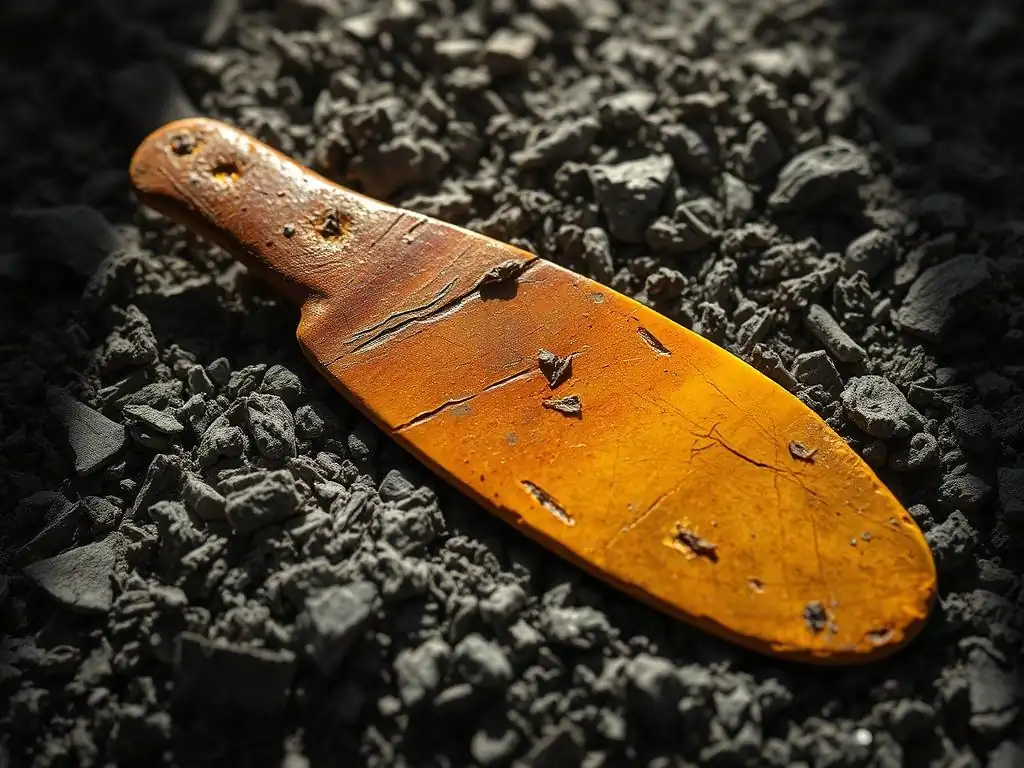
While the symbolic and artistic uses of ochre are often highlighted, archaeological and experimental evidence suggests that Mesolithic peoples also exploited its practical properties. One significant functional application was its role as a component in adhesives or mastics. Ochre, particularly red ochre, has been found mixed with organic binders like plant resins or animal fats to create a strong, durable adhesive for hafting tools.
For instance, microscopic analysis of stone tools from various prehistoric sites has revealed residues consistent with ochre-resin compounds used to secure microliths to shafts, creating composite tools like arrows or spears. The addition of ochre not only provided color but may have also improved the adhesive's workability, strength, or even its setting time.
Furthermore, ochre possesses mild antiseptic and preservative qualities due to its iron oxide content. This property might have been utilized in the treatment of animal hides, potentially aiding in the tanning process or offering protection against decay. While direct evidence is challenging to pinpoint, the widespread use of ochre in close association with animal products and perishable materials suggests its potential role in prolonging the life of valuable resources, showcasing a nuanced understanding of its chemical properties.
Ochre in Tanning and Other Technological Processes
The use of ochre in the tanning of animal hides is another well-documented functional application that extends back into the Paleolithic and continued through the Mesolithic. By rubbing animal skins with ochre, particularly red ochre, early peoples could significantly improve the flexibility, durability, and resistance to putrefaction of the leather. The fine ochre particles would penetrate the hide fibers, helping to break down collagen and prevent bacterial growth, resulting in a softer, more stable material. Microscopic analysis of archaeological leather fragments and tools associated with hide processing occasionally reveals embedded ochre particles, supporting this hypothesis.
Beyond tanning, ochre may have served other technological purposes. Its fine particulate nature and abrasive qualities could have made it useful for polishing bone, antler, or stone artifacts. Some researchers also propose its use as an insect repellent when applied to skin or clothing, or even as a rudimentary form of sunscreen, given its opaque properties. While these latter uses are more speculative, they highlight the diverse range of practical applications that Mesolithic communities might have discovered for this versatile natural resource, demonstrating their ingenuity in adapting to and manipulating their environment.
Interpreting the Symbolic Meaning of Ochre in the European Mesolithic
Color Symbolism: Red Ochre and Its Associations with Life, Death, and Renewal
The pervasive use of red ochre pigment in European Mesolithic contexts, particularly in burials, strongly suggests a profound symbolic association with fundamental concepts of life, death, and renewal. Red, being the color of blood, is universally linked to vitality, fertility, and the life force.
In funerary rites, coating the deceased or their grave goods in red ochre could have symbolized a return to the nourishing "womb" of the earth, a regeneration, or a protective measure for the soul's journey. The vibrant red might have been seen as a way to re-infuse life into the dead or to mark them as part of a continuous cycle of existence.
This symbolism extends beyond the individual. The earth itself, from which ochre is extracted, can be seen as a source of life and sustenance. By covering the dead with red earth, Mesolithic peoples might have been expressing a deep connection to the land and a belief in a cyclical relationship between human life and the natural world. The act of applying ochre, therefore, was not merely decorative but a potent ritualistic performance imbued with rich cosmological meaning.
Beyond its associations with life and death, the use of ochre in the European Mesolithic likely played a significant role in defining and communicating social identity, both on an individual and group level. Differential application of ochre in burials – some individuals extensively covered, others less so, or specific grave goods stained – could indicate variations in social status, age, gender, or role within the community. For example, at the Skateholm sites, while many burials feature ochre, the degree of application varies, potentially signaling different social distinctions among the deceased.
Furthermore, ochre could have been used to reinforce group affiliation. Distinctive patterns of body painting, the coloring of specific tools, or the marking of communal spaces with ochre might have served as visual markers distinguishing one Mesolithic band or lineage from another. The shared practice of procuring, processing, and applying ochre would have fostered a sense of collective identity and reinforced social cohesion. In ritual contexts, the visual impact of ochre-decorated individuals or objects would have contributed to a shared symbolic landscape, solidifying community bonds and reinforcing cultural narratives.
Ochre Pigment Analysis: Scientific Techniques and Insights
Spectroscopic Analysis: Identifying the Composition and Origin of Ochre
To unravel the mysteries surrounding ochre pigment in European Mesolithic sites, archaeologists increasingly rely on advanced scientific analytical techniques. Spectroscopic methods are particularly valuable for identifying the precise mineralogical composition of ochre and, in some cases, tracing its geological origin. Techniques such as X-ray Fluorescence (XRF) spectroscopy, Raman spectroscopy, and Fourier-Transform Infrared (FTIR) spectroscopy are non-destructive or minimally invasive and can provide detailed information about the elemental and molecular makeup of ochre samples.
XRF analysis, for instance, identifies the elemental composition, revealing the presence of iron, aluminum, silicon, and other trace elements that can act as "fingerprints" for specific geological sources. Raman and FTIR spectroscopy, on the other hand, identify the specific mineral phases (e.g., hematite, goethite) and any organic binders present. By comparing the trace element profiles or mineralogical signatures of archaeological ochre with known geological deposits, researchers can infer trade networks or movement patterns of Mesolithic groups, offering insights into their resource procurement strategies and inter-group interactions related to ochre pigment European Mesolithic exchange.
Microscopic Analysis: Examining the Application and Use of Ochre in Artifacts
Microscopic analysis provides crucial insights into how ochre was processed, applied, and used by Mesolithic peoples. Techniques such as polarized light microscopy (PLM), scanning electron microscopy (SEM) coupled with energy-dispersive X-ray spectroscopy (EDX), and digital microscopy allow for detailed examination of ochre particles, residues on artifacts, and stained surfaces. PLM can reveal the morphology of individual ochre grains, their size, and the presence of any non-pigmentary inclusions, indicating the degree of processing (e.g., coarse grinding vs. fine pulverization).
SEM-EDX provides high-magnification images and elemental mapping, enabling the identification of ochre residues on stone tools, bone artifacts, or even human remains. This can reveal how ochre was applied (e.g., rubbed, painted, mixed into a mastic), whether it was heated, and if it was combined with other materials.
For example, the discovery of ochre particles embedded in the pores of bone tools suggests their use in processing ochre or ochre-stained materials, while residues on projectile points might indicate their use in hunting ochre-stained game or as part of a pigmented adhesive. These microscopic details significantly enhance our understanding of the practical and symbolic roles of ochre in Mesolithic daily life.
Case Studies: Examining Specific Mesolithic Sites with Notable Ochre Use
Case Study 1: A Site with Burial Practices
Site: Skateholm (Skateholm I and II), Southern Sweden Period: Mesolithic, circa 6000-4700 BCE
The Mesolithic cemetery complex at Skateholm, located near the Baltic Sea coast in southern Sweden, represents one of the most significant sites for understanding ochre use in European Mesolithic burial practices. Excavations at Skateholm I and II revealed over 80 human burials, alongside several dog burials, all characterized by the extensive application of red ochre.
Many individuals, including adults, children, and infants, were found completely covered in a thick layer of red ochre, often saturating the surrounding soil of the grave pit. The pigment was applied not only to the human remains but also to associated grave goods, which included elaborate antler crowns, bone points, flint tools, and shell ornaments.
For instance, one notable burial at Skateholm I featured an adult male laid on his back, covered in a dense layer of red ochre, accompanied by an antler crown and a flint dagger. The sheer quantity of ochre used, estimated to be several kilograms for some burials, indicates a considerable investment of effort and resources, underscoring the profound symbolic importance of this pigment in their funerary rituals.
The consistent use of ochre across a range of individuals, including multiple dog burials, suggests a shared cultural belief system where red ochre played a crucial role in mediating the transition between life and death, possibly symbolizing rebirth, protection, or a connection to the earth.
Case Study 2: A Site with Rock Art
Site: Cueva de la Araña, Bicorp, Spain (part of the Levantine Spanish Rock Art tradition) Period: Mesolithic, circa 8000-5000 BCE
The Cueva de la Araña, located in the Bicorp region of Valencia, Spain, is a prominent example of Mesolithic rock art within the broader Levantine Spanish Rock Art tradition, which frequently utilizes ochre as a primary pigment. While perhaps most famous for its iconic "Honey Collector" scene, the site, like many others in the region, features numerous schematic human and animal figures depicted on the rock shelter walls.
These figures are typically rendered in a vibrant red ochre, applied directly to the stone surface, often with fluid lines and dynamic poses that portray scenes of hunting, gathering, and social activities.
The ochre used in these paintings was likely prepared by grinding raw hematite or goethite into a fine powder, which was then mixed with a binder, possibly water or animal fat, to create a paint. The artists applied the pigment using various techniques, including direct finger painting or with rudimentary brushes made from plant fibers or feathers.
The choice of red ochre for these artistic expressions suggests its visual impact was highly valued, and the pigment itself may have held symbolic meaning related to the subjects depicted, such as the vitality of animals or the life-giving aspects of nature. The enduring presence of these red ochre paintings, despite thousands of years of exposure, testifies to the durability of the pigment and the skill of Mesolithic artists.
The Legacy of Ochre: Connecting Mesolithic Practices to Later Periods
Continuity and Change: Ochre Use in the Neolithic and Beyond
The profound significance of ochre pigment in European Mesolithic societies did not abruptly end with the advent of the Neolithic revolution. Instead, its use continued, albeit with evolving contexts and meanings, into later prehistoric periods, demonstrating a remarkable cultural continuity. In the Neolithic, particularly in agricultural communities, ochre remained present in burial practices, though sometimes less universally applied than in the Mesolithic. For instance, ochre staining is found in some Neolithic megalithic tombs and individual burials, suggesting its persistent symbolic link to the deceased.
As societies transitioned and diversified, the application of ochre also expanded to new forms of material culture. It was used for decorating early pottery, for coloring plaster in domestic structures, and for various other utilitarian and decorative purposes. While the scale of its use in funerary contexts might have diminished in some regions compared to the intensive Mesolithic practices, the fundamental understanding of ochre's properties and its symbolic resonance endured, reflecting a long-term cultural memory and adaptation of an ancient tradition to new social and economic landscapes.
The Enduring Appeal of Red: Exploring the Universal Significance of Ochre
The enduring appeal of red ochre, from the earliest human expressions to its continued presence in the Mesolithic and beyond, speaks to a deeply rooted, perhaps universal, human fascination with the color red. Across diverse cultures and millennia, red has consistently been associated with fundamental concepts: blood, life, vitality, fertility, danger, power, and protection. This inherent symbolic weight likely underpinned its widespread adoption by Mesolithic peoples, who saw in this vibrant pigment a means to express profound beliefs about existence, death, and the cosmos.
Whether used to coat the dead for a journey to the afterlife, to adorn bodies for ritual, or to create enduring artistic representations on rock walls, the red ochre pigment in European Mesolithic contexts served as a tangible link between the physical and spiritual worlds. Its universal significance transcends specific cultural boundaries, highlighting a shared human tendency to imbue natural materials with deep meaning. The legacy of ochre reminds us that even the simplest earth pigments can carry immense cultural weight, offering a powerful window into the cognitive and symbolic capacities of our ancient ancestors.
Conclusion: Ochre as a Window into the Mesolithic Mind
Summarizing the Multifaceted Role of Ochre in European Mesolithic Societies
The study of ochre pigment in European Mesolithic contexts provides an invaluable lens through which to understand the complex societies that thrived in post-glacial Europe. Far from being a mere decorative substance, ochre played a multifaceted and deeply integrated role in Mesolithic life, encompassing symbolic, ritualistic, artistic, and even practical applications.
Its pervasive presence in burials, where bodies and grave goods were often extensively coated in vibrant red, underscores its profound connection to concepts of life, death, and regeneration. In artistic expression, from schematic rock art to decorated portable objects, ochre served as a primary medium for conveying narratives, identities, and aesthetic values.
Beyond its symbolic dimensions, scientific analysis reveals its practical utility as a component in adhesives, a preservative for hides, and potentially in other technological processes. This remarkable versatility, combined with the significant investment of labor in its procurement and processing, highlights the ingenuity and sophisticated understanding Mesolithic peoples had of their natural environment. Ochre was not just a material; it was a powerful cultural tool, shaping their rituals, expressing their identities, and reflecting their complex worldview.
Future Directions: Unresolved Questions and Opportunities for Further Research on Ochre
Despite significant advancements in our understanding, numerous unresolved questions persist regarding ochre pigment in European Mesolithic studies, offering exciting opportunities for future research. One key area involves more precise sourcing of ochre, utilizing advanced geochemical fingerprinting techniques to map ancient trade routes and resource networks with greater accuracy. This could reveal more about the social organization and inter-group relations of Mesolithic communities. Further detailed microscopic and spectroscopic analysis of ochre residues on a wider range of artifacts, particularly those with less obvious applications, could uncover previously unknown functional uses or subtle symbolic practices.
Moreover, comparative studies across different Mesolithic regions, focusing on variations in ochre procurement, processing, and application, could illuminate regional cultural distinctions and adaptations. The integration of experimental archaeology to replicate ancient ochre preparation and application techniques, combined with ethnoarchaeological insights from contemporary indigenous cultures that still use ochre, could provide deeper contextual understanding. Ultimately, continued research into ochre promises to unlock further insights into the cognitive abilities, symbolic behaviors, and intricate social lives of European Mesolithic societies, enriching our digital encyclopedia at ArchaeologyHub.org.
Frequently Asked Questions
What is ochre pigment and why is it significant in archaeology?
Ochre pigment is a naturally occurring clay earth pigment, usually red or yellow, containing iron oxides. Its significance lies in its widespread use by ancient cultures for symbolic purposes, such as painting, body decoration, and burial rituals, offering insights into their beliefs and practices.
What does the ArchaeologyHub.org article "The Symbolic Use of Ochre in European Mesolithic Contexts" explore?
The article delves into the prevalence and interpretation of ochre use during the European Mesolithic period. It examines how this pigment was employed in various contexts, focusing on burial sites and rock art, to understand its symbolic meaning and cultural importance.
How was ochre likely obtained and processed during the European Mesolithic?
During the Mesolithic, ochre was likely obtained from naturally occurring deposits, such as riverbeds and caves. Processing probably involved crushing the raw material and mixing it with binders, such as animal fat or plant extracts, to create a usable pigment.
What are some examples of archaeological sites in Europe where ochre has been found in Mesolithic contexts?
Numerous Mesolithic sites across Europe have yielded ochre, including burial sites in Scandinavia and rock art sites in Spain and France. Specific examples include burial sites in Skateholm, Sweden and rock art in the Côa Valley, Portugal, which demonstrate the varied uses of ochre across the region.
What interpretations are proposed for the symbolic use of ochre in Mesolithic burials?
Interpretations range from ochre representing blood and life force, signifying rebirth or protection in the afterlife, to it being a symbol of social status or ritualistic purification. The specific meaning likely varied depending on the cultural context and the manner in which the ochre was applied.
Final Reflection: The Enduring Echoes of Ochre
The exploration of ochre's symbolic use in European Mesolithic contexts, as we've seen, isn't just an archaeological exercise; it's a window into the deeply human need for expression and meaning-making that transcends millennia. The presence of ochre, meticulously documented and analyzed, speaks volumes about the beliefs, rituals, and social structures of these early European communities, reminding us that our ancestors were not simply surviving, but actively shaping their world with symbolic intent.
The enduring power of ochre lies in its ability to connect us to these distant pasts, offering tangible evidence of shared human experiences. Personally, I find it profoundly moving to consider the hands that ground this pigment, the intentions that guided its application, and the stories it was meant to tell. Archaeology is the only branch of anthropology that can tell us what people do in it, what people did in the past, and what people are likely to do in the future.
- Lewis Binford. This quote encapsulates the importance of understanding these ancient practices, as they offer insights into the very core of human behavior and societal development.
As we conclude this journey into the ochre-stained world of the European Mesolithic, I invite you to consider the enduring legacy of symbolic expression. How can we, in our own lives, create meaning and connection through art, ritual, and shared experiences? Let the echoes of ochre inspire you to reflect on the power of symbolism and its ability to transcend time, connecting us to the past and shaping our understanding of the present.
Unearth Your Own Archaeological Journey!
Thank you for delving into the fascinating world of ochre in Mesolithic Europe. We hope you've discovered new insights into the lives and beliefs of our ancestors. Now, let's turn that knowledge into action!
Here are some ways you can further explore this topic:
- Embark on your own research: Delve deeper into specific Mesolithic sites mentioned in the article and uncover further details about ochre usage in those contexts.
- Visit a local archaeology museum: Look for exhibits featuring Mesolithic artifacts or ochre pigments. Observe the pieces and discuss the symbolic significance with curators.
- Share this article: Help spread the word about the article on your social networks and invite others to participate in the discussion.
What other ancient pigments spark your curiosity?