
Rock Art as a Record of Extinct Species: Evidence from Kakadu and Murujuga

Welcome to ArchaeologyHub.org!
Delve into the past and uncover the stories etched in stone. This digital encyclopedia is your gateway to a world of archaeological wonders, from excavation techniques to the secrets of ancient civilizations. Are you ready to explore how rock art can illuminate lost worlds? In this article, we examine compelling evidence from Kakadu and Murujuga, revealing how ancient art serves as a vital record of extinct species. Prepare to be amazed by the insights these sites offer into the environmental history of Australia and beyond.
- Introduction: Unveiling Lost Fauna through Australian Rock Art
- Understanding the Archaeological Context of Kakadu and Murujuga Rock Art
- Identifying Extinct Species in Kakadu and Murujuga Rock Art
- Comparative Analysis: Kakadu vs. Murujuga Rock Art Depictions of Extinct Animals
- The Environmental and Cultural Context of Extinction Events
- Preserving and Interpreting Rock Art Sites: Challenges and Opportunities
- Conclusion: Rock Art as a Window into Australia's Lost Past
-
Frequently Asked Questions
- How does rock art from Kakadu and Murujuga provide evidence of extinct species?
- What specific types of extinct species might be represented in Kakadu and Murujuga rock art?
- What are the challenges in accurately interpreting rock art depictions of extinct species?
- How does the location of Kakadu and Murujuga contribute to the significance of their rock art?
- What role does ArchaeologyHub.org play in researching and disseminating information about this rock art?
- Final Reflection: Echoes of Lost Worlds
- Unearth the Past: Become a Rock Art Explorer!
Introduction: Unveiling Lost Fauna through Australian Rock Art
The Significance of Rock Art in Archaeological Interpretation
Rock art serves as an invaluable primary source for archaeologists, offering direct visual insights into the environments, faunas, and human-animal interactions of past societies. Unlike skeletal remains or fossil records that provide snapshots of anatomy, rock art captures behavior, habitat, and the cultural significance of animals as perceived by the people who coexisted with them. This unique perspective allows researchers to reconstruct ancient ecosystems and understand the relationship between humans and their natural world over millennia.
Beyond illustrating daily life or ceremonial practices, rock art stands as a crucial archive for identifying species that no longer roam the Earth. It provides compelling evidence of animals that vanished thousands of years ago, offering a visual testament to their former presence and distribution. This pictorial record complements paleontological findings, often filling gaps in our understanding of when and where certain species existed, particularly highlighting the "Kakadu Murujuga extinct species" connection.
Kakadu and Murujuga: Prime Locations for Studying Ancient Australian Biodiversity
Australia is home to some of the world's most extensive and ancient rock art complexes, with Kakadu National Park and Murujuga (Burrup Peninsula) standing out as paramount examples. Kakadu, a UNESCO World Heritage site, boasts an estimated 5,000 known art sites across its vast landscape, reflecting over 65,000 years of continuous human occupation. Murujuga, located in Western Australia, is renowned for potentially over one million petroglyphs, making it the largest concentrated collection of rock art globally.
These sites are not merely galleries of ancient art; they are living landscapes that encapsulate profound environmental and cultural histories. Their immense age and the sheer volume of artistic expression make them unparalleled natural laboratories for studying prehistoric biodiversity, including the vanished megafauna and other species. The detailed depictions found within these regions provide critical clues about the Kakadu Murujuga extinct species that once thrived across the continent.
Focusing on the "Kakadu Murujuga Extinct Species" Connection
This article specifically delves into the remarkable capacity of rock art from Kakadu and Murujuga to document species that are now extinct. The focus is on how these ancient artistic expressions provide concrete evidence of animals that lived alongside early Aboriginal Australians, offering a unique window into their lost world. By examining specific examples of these depictions, we can gain a deeper appreciation for the ecological changes that have shaped the Australian landscape.
The identification of "Kakadu Murujuga extinct species" within these rock art panels offers profound implications for understanding past environments, climate shifts, and the long-term impact of human presence. It allows us to move beyond mere speculation, grounding our understanding of prehistoric extinctions in tangible visual records created by the very people who witnessed these animals. The art thus becomes a vital part of the scientific narrative surrounding Australia's ancient biodiversity.
Understanding the Archaeological Context of Kakadu and Murujuga Rock Art
Kakadu National Park: A Living Cultural Landscape
Kakadu National Park, situated in the Northern Territory, is a dual World Heritage property recognized for both its natural and cultural values. Spanning nearly 20,000 square kilometers, it is a landscape of immense ecological diversity, from floodplains and wetlands to escarpments and stone country. This rich environment has supported Aboriginal people for at least 65,000 years, making it one of the longest continuously inhabited human communities on Earth. The park's rock art, found in numerous shelters and caves, reflects this deep time, showcasing a continuous tradition of artistic expression that documents environmental changes, spiritual beliefs, and subsistence activities.
The rock art of Kakadu is characterized by distinct stylistic periods, including the early "Dynamic Figures" or "Yam" styles, and later "X-ray" art, where internal organs and bones of animals are depicted. These diverse styles provide a chronological sequence that helps archaeologists interpret the changing fauna and human interactions over millennia. The continuous occupation and the sheer volume of art make Kakadu a crucial site for understanding the long-term human-environment relationship, particularly in relation to the "Kakadu Murujuga extinct species" discussion.
Dating Kakadu Rock Art: Challenges and Methods
Dating rock art directly presents significant challenges due to the inorganic nature of most pigments and the difficulty of isolating carbon-bearing material. However, archaeologists employ a range of indirect and direct dating methods to establish chronological sequences for Kakadu's vast art corpus. These methods include:
- Radiocarbon dating of associated archaeological deposits: Charcoal fragments found in stratified layers beneath painted panels can provide minimum ages for the art above them. For instance, archaeological excavations at some Kakadu shelters have yielded dates exceeding 20,000 years Before Present (BP) for the earliest occupation layers associated with rock art.
- Stylistic analysis and superimposition: Observing the overlapping of different art styles allows for relative dating, establishing which styles are older or newer. The evolution from naturalistic depictions to more abstract or X-ray styles provides a chronological framework.
- Optically Stimulated Luminescence (OSL) dating: This technique can date mineral accretions (e.g., mud wasp nests) overlying or underlying the paint, providing direct or minimum ages. While less common for the art itself, it helps date the rock surfaces.
- Uranium-Thorium dating of mineral skins: More recent advancements allow for dating of thin mineral accretions that form on rock surfaces, sometimes encapsulating or being encapsulated by rock art. This has pushed some dates for Australian rock art beyond 40,000 years.
Through these combined methods, researchers have established that some of Kakadu's rock art dates back at least 20,000 years, offering a deep historical record that potentially includes depictions of "Kakadu Murujuga extinct species." The oldest securely dated art in Kakadu, such as the Malarrngan figures, provides a testament to the antiquity of human presence and artistic expression in the region.
Murujuga (Burrup Peninsula): A Vast Outdoor Art Gallery
Murujuga, also known as the Burrup Peninsula, located in the Pilbara region of Western Australia, is home to arguably the world's largest concentration of rock engravings (petroglyphs). This rugged, arid landscape of ancient iron-rich rocks and granite boulders contains an estimated one million petroglyphs spread across approximately 100,000 hectares.
The sheer scale and density of the art make Murujuga an archaeological marvel, offering an unparalleled record of human activity and environmental change over tens of thousands of years. The petroglyphs depict a vast array of subjects, including human figures, animals (both terrestrial and marine), mythological beings, and abstract designs, deeply embedded within the cultural practices of the Traditional Owners, the Ngarda-Ngarli people.
The art at Murujuga is primarily executed by pecking or abrading the dark outer patina of the rock surfaces to expose lighter rock underneath. The subsequent repatination of these engravings over time provides a visual indicator of their relative age, with older engravings often appearing almost as dark as the surrounding rock. This unique characteristic, combined with their immense number, positions Murujuga as a critical site for understanding prehistoric human-environment interactions and identifying evidence of "Kakadu Murujuga extinct species."
The Deep Time History of Murujuga's Rock Art
The time depth of Murujuga's rock art is profound, with some archaeological estimates suggesting the earliest engravings could date back more than 40,000 years, placing them among the oldest in the world. This immense antiquity is inferred through several lines of evidence, including:
- Stratigraphic analysis: The presence of engraved rocks in deeply stratified archaeological deposits provides minimum ages for the art. Excavations at sites like the North West Shelf Gas Project area have revealed engraved rocks buried under sediment layers dated to the Last Glacial Maximum (around 20,000 years ago) and even earlier periods.
- Patinas and weathering: The degree of repatination (re-darkening of the rock surface over the engraving) is a general indicator of age, with older engravings having a darker, more weathered appearance.
- Depictions of extinct fauna and changing environments: The presence of now-extinct species and marine animals in locations now far from the coast provides compelling evidence of deep time, reflecting periods of lower sea levels during glacial maxima.
These indicators collectively point to a continuous tradition of art-making that spans the Late Pleistocene and Holocene. The deep time history of Murujuga's rock art offers critical insights into long-term environmental fluctuations and the adaptation of human societies, making it an indispensable resource for exploring the "Kakadu Murujuga extinct species" narrative.
Identifying Extinct Species in Kakadu and Murujuga Rock Art
Depictions of Thylacines (Tasmanian Tigers) in Rock Art
Among the most clearly identifiable extinct species in Australian rock art are depictions of the thylacine ( Thylacinus cynocephalus), commonly known as the Tasmanian Tiger. These distinctive marsupial carnivores are prominently featured in rock art across northern Australia, including both Kakadu and Murujuga.
The thylacine is characterized by its dog-like appearance, stiff tail, and most notably, the series of dark stripes across its lower back and rump, which are faithfully reproduced in the rock art. Their consistent and accurate portrayal across various sites provides compelling evidence of their widespread mainland distribution long after they were thought to have vanished from the mainland, persisting until approximately 2,000 years ago in some regions.
The presence of thylacine images in rock art is significant because it confirms human coexistence with these animals. In Kakadu, numerous thylacine depictions, often in the characteristic "X-ray" style, can be found in shelters such as Nourlangie Rock and Ubirr. In Murujuga, while less numerous than some other species, identifiable thylacine engravings also exist, contributing to the broader understanding of their former range. These artistic records are invaluable for understanding the timeline of their mainland extinction, directly contributing to the "Kakadu Murujuga extinct species" narrative.
Thylacine Morphology and Distribution: Evidence from Kakadu and Murujuga
Rock art depictions of thylacines offer remarkable detail regarding their morphology, reinforcing their identification. Artists consistently rendered key features:
- Striped hindquarters: The most defining characteristic, often shown as distinct bands.
- Stiff, tapering tail: Unlike a dog's tail, the thylacine's tail was thick at the base and did not curl.
- Erect, rounded ears: Typically depicted standing upright.
- Dog-like head and body: General proportions resembling a canid, but with a more slender build.
These accurate morphological details, coupled with their presence in geographically distinct rock art sites like Kakadu and Murujuga, provide direct evidence of the thylacine's Holocene distribution across northern Australia. While the last known wild thylacine died in Tasmania in 1936, the rock art indicates a much more recent mainland presence than suggested by the fossil record alone, which typically places their mainland extinction around 3,000 to 2,000 years ago.
The art illustrates that these animals were a tangible part of the environment and hunting practices of Aboriginal people for thousands of years, enriching our understanding of "Kakadu Murujuga extinct species."
Representations of Megafauna: Procoptodon Goliah in Murujuga
Murujuga's vast petroglyph collection includes compelling representations of extinct megafauna, particularly the short-faced kangaroo, Procoptodon goliah. This giant marsupial, which stood up to 2 meters tall and weighed over 200 kilograms, possessed a distinctive morphology that is faithfully captured in some of the engravings. Key features visible in the rock art include its short, broad face, forward-facing eyes, and most notably, its single large toe on each hind foot, adapted for powerful locomotion. The identification of Procoptodon in Murujuga's art is a groundbreaking discovery, as it provides direct evidence of human coexistence with these enormous animals.
While less common than other animal depictions, the presence of these megafauna images is crucial for understanding the deep time history of the region. These engravings typically show the animals in profile, often with a sense of movement. Their identification is based on comparison with skeletal remains and paleontological reconstructions, confirming that the artists were depicting animals that were part of their lived experience. These depictions highlight the significance of Murujuga in documenting "Kakadu Murujuga extinct species" from a much earlier period than many other rock art sites.
The Role of Rock Art in Understanding Megafauna Extinction
The depiction of megafauna like Procoptodon goliah in Murujuga rock art plays a pivotal role in the ongoing debate surrounding the extinction of Australia's giant animals. For decades, the primary explanations for megafauna extinction have revolved around either climate change (increasing aridity post-Last Glacial Maximum) or the "overkill" hypothesis (intensive hunting by early human arrivals). The rock art, however, provides direct evidence that humans coexisted with these species for an extended period, potentially thousands of years, before their disappearance.
This coexistence suggests a more complex interaction than simple hunting-driven extinction. It indicates that these giant animals were not just abstract creatures of the past but were known, observed, and culturally significant to the early inhabitants. The art implies that humans adapted to and lived alongside these creatures, potentially even hunting them, but not necessarily driving them to immediate extinction. Therefore, the rock art contributes a unique, human-centric perspective to the megafauna extinction puzzle, enriching the narrative of "Kakadu Murujuga extinct species" and suggesting a nuanced interplay of environmental and human factors in their demise.
Possible Depictions of Other Extinct Species: Genyornis Newtoni
Beyond the relatively clear depictions of thylacines and megafaunal kangaroos, archaeologists and paleontologists continue to investigate other potential representations of extinct species in Australian rock art. One such intriguing possibility is the depiction of Genyornis newtoni, a giant flightless bird that stood over 2 meters tall and weighed up to 240 kilograms.
While no definitive, universally accepted rock art image of Genyornis has been identified, some large bird motifs in both Kakadu and Murujuga possess morphological characteristics consistent with this extinct species. These include unusually thick legs, a robust body, and a relatively small head for their size, distinguishing them from modern emus or cassowaries.
The identification of Genyornis in rock art remains an active area of research, with ongoing debate among experts. The significance of such a discovery would be immense, as Genyornis is believed to have become extinct around 45,000 to 50,000 years ago, coinciding with the arrival of humans in Australia. If confirmed, these depictions would represent some of the oldest detailed rock art images globally, pushing back the timeline of human-megafauna interaction even further and providing critical insights into the earliest "Kakadu Murujuga extinct species" witnessed by humans.
Challenges in Identifying Species from Rock Art: Interpretation and Context
Identifying extinct species from rock art is often a complex and challenging endeavor, fraught with interpretational difficulties. Several factors contribute to this complexity:
- Artistic abstraction and stylization: Ancient artists often employed varying degrees of realism, abstraction, or stylization. A depiction might capture the essence of an animal without being an anatomically precise rendering, making definitive species identification difficult without clear diagnostic features.
- Lack of comparative osteological data: For some extinct species, the fossil record is incomplete, making it challenging to match rock art depictions to known skeletal morphologies with certainty.
- Superimposition and weathering: Many rock art panels are palimpsests of multiple layers of art from different periods, and extensive weathering can obscure details, further complicating interpretation.
Therefore, the identification of "Kakadu Murujuga extinct species" in rock art relies heavily on a combination of expert iconographic analysis, comparative anatomy with known paleontological specimens, and a deep understanding of the archaeological and environmental context. While some identifications, like the thylacine, are widely accepted due to distinctive features, others, such as Genyornis, remain speculative, requiring careful consideration of all available evidence and acknowledging the inherent ambiguities in interpreting ancient artistic conventions.
Comparative Analysis: Kakadu vs. Murujuga Rock Art Depictions of Extinct Animals
Similarities in Artistic Styles and Subject Matter
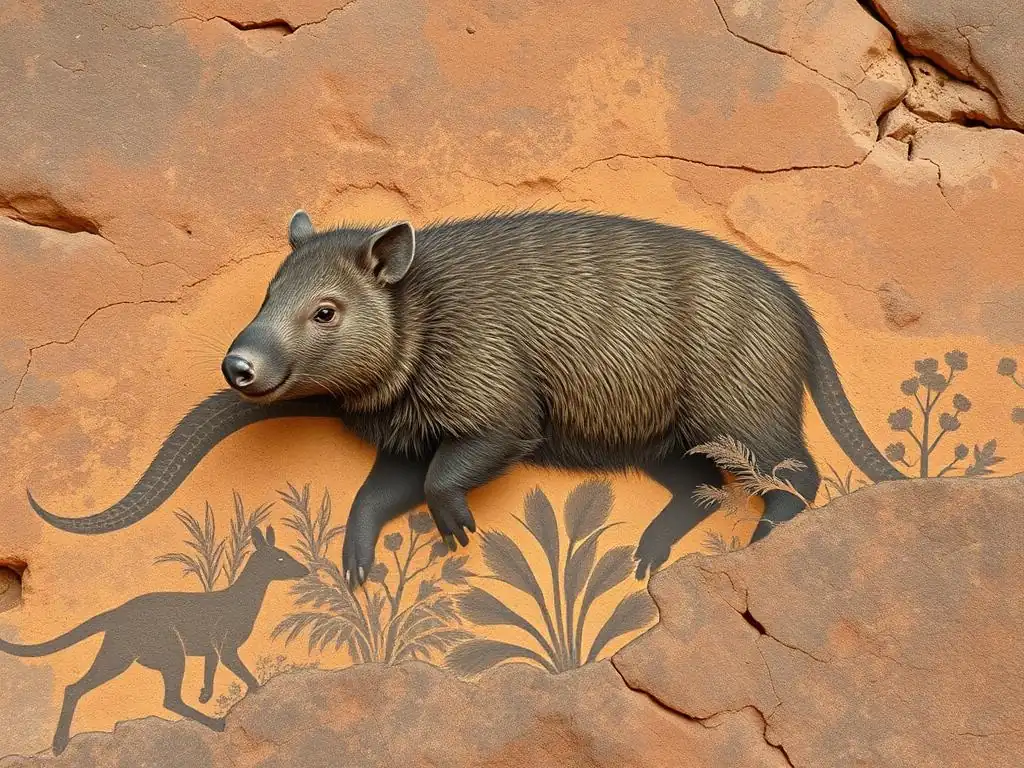
Despite their geographical separation and distinct environmental settings, the rock art of Kakadu and Murujuga shares several remarkable similarities in artistic styles and subject matter, particularly concerning animal depictions. Both regions showcase a deep connection to the natural world and a profound observational skill on the part of the artists. Common themes include:
- Detailed animal representations: Artists in both areas demonstrate an impressive ability to capture the distinctive features of animals, enabling species identification. Whether it's the X-ray style of Kakadu showing internal organs or the naturalistic outlines of Murujuga, the focus on animal morphology is evident.
- Narrative and mythological elements: Beyond simple depictions, both sites feature compositions that suggest narratives, hunting scenes, or mythological beings that are composites of human and animal forms.
- Cultural continuity: The sustained practice of rock art over tens of thousands of years in both regions points to a profound cultural continuity and a shared human experience of adapting to and living within the Australian landscape.
These shared approaches underscore the importance of animal life to the ancient inhabitants of both regions and provide a consistent framework for analyzing the "Kakadu Murujuga extinct species" record. Both art traditions serve as vital archives of past biodiversity and human interaction with a changing environment.
Differences in Species Representation: Environmental and Temporal Factors
While similarities exist, significant differences in the types of extinct species depicted in Kakadu and Murujuga rock art reflect their distinct environmental histories and the temporal depth of specific artistic traditions.
- Environmental Context:
- Kakadu: Situated in a monsoonal tropical climate with extensive wetlands, Kakadu's art often features estuarine and freshwater fauna, such as barramundi, crocodiles, and waterbirds. While thylacines are present, megafauna depictions are rare or absent, possibly reflecting their earlier extinction in this region or a different ecological focus.
- Murujuga: Located in an arid, coastal environment, Murujuga's art includes a broader range of terrestrial megafauna, such as Procoptodon, alongside marine animals. The coastal setting, which has changed dramatically with sea-level fluctuations, heavily influenced the fauna encountered and depicted.
- Temporal Factors:
- Some of Murujuga's deepest engravings are thought to be among the oldest in the world, possibly dating back to the initial human colonization when a wider array of megafauna still existed. This may explain the presence of Procoptodon.
- Kakadu's securely dated art, while ancient, often captures species from later periods, such as the thylacine, which persisted on the mainland until relatively recently.
These differences highlight how the rock art of each region provides a unique, localized record of "Kakadu Murujuga extinct species," reflecting the specific ecological conditions and chronological periods experienced by their respective artists.
The Role of Sea Level Changes in shaping the Fauna Depicted in Rock Art
The geological history of Australia, particularly the dramatic post-glacial sea-level rise, profoundly influenced the environments and, consequently, the fauna depicted in the rock art of both Kakadu and Murujuga.
- Murujuga's Marine Depictions: Many petroglyphs at Murujuga depict marine animals such as fish, turtles, and even large marine mammals, some of which are now found far offshore or in deeper waters. This suggests that during the Last Glacial Maximum (around 20,000 years ago), when global sea levels were up to 120 meters lower, the coastline extended significantly further out. The artists were engraving these animals when the sea was much closer, making them accessible. As sea levels rose, these hunting grounds were submerged, transforming the landscape but leaving their artistic record. This provides a clear temporal marker for some of the oldest engravings, linking the "Kakadu Murujuga extinct species" narratives to profound paleogeographic shifts.
- Kakadu's Wetland Evolution: While Kakadu is less directly impacted by open ocean sea-level changes in its core art sites, the formation of its extensive floodplains and wetlands is a result of changing hydrological regimes over millennia, influenced by both sea level and climate. The rich aquatic life depicted in Kakadu's X-ray art reflects a well-established wetland ecosystem that developed in the mid-Holocene.
The changing coastlines and evolving inland water bodies directly impacted the distribution and accessibility of various species, including those that eventually became extinct. The rock art thus provides a visual chronology of these environmental transformations, offering unique insights into the ecological drivers behind the presence or absence of "Kakadu Murujuga extinct species" in different periods.
The Environmental and Cultural Context of Extinction Events
Climate Change and its Impact on Australian Megafauna
The last 65,000 years have seen significant climatic fluctuations in Australia, profoundly impacting its ecosystems and contributing to the extinction of its unique megafauna. The period leading up to and during the Last Glacial Maximum (LGM), approximately 30,000 to 18,000 years ago, was characterized by increasing aridity and a reduction in rainfall across much of the continent. This led to a contraction of forests and woodlands, replaced by more extensive grasslands and deserts.
This environmental stress, including dwindling water sources and changes in vegetation, placed immense pressure on large, water-dependent herbivores like Procoptodon and Genyornis. While rock art does not explicitly detail climate data, the shift in depicted fauna over time in sites like Murujuga implicitly reflects these environmental changes. The disappearance of megafauna from the artistic record, particularly the "Kakadu Murujuga extinct species," corresponds broadly with these periods of significant climatic drying and ecosystem transformation, suggesting climate as a major contributing factor to their demise.
The Arrival of Humans and its Potential Role in Extinctions
The arrival of the first humans in Australia, estimated to be around 65,000 years ago, broadly coincides with the period of megafauna decline and extinction. This temporal overlap has led to the long-standing "overkill" hypothesis, suggesting that human hunting pressure was the primary driver of these extinctions. However, the evidence from rock art complicates this simplistic narrative.
As seen in Murujuga, the depiction of megafauna like Procoptodon goliah indicates a period of coexistence between humans and these giant animals. If early humans rapidly hunted megafauna to extinction, one might expect fewer, if any, detailed depictions. Instead, the art suggests that humans were part of the landscape alongside megafauna for potentially thousands of years, adapting to and interacting with them.
This implies a more nuanced relationship, where human activities might have contributed to extinctions in combination with environmental stresses, rather than being the sole cause. The "Kakadu Murujuga extinct species" narrative from the rock art thus offers a crucial indigenous perspective on this complex ecological puzzle.
Indigenous Knowledge and Oral Histories: Complementing the Rock Art Record
Indigenous knowledge and oral histories represent a vital, yet often underutilized, resource for interpreting Australia's deep past and understanding extinction events. While direct oral traditions about megafauna that vanished tens of thousands of years ago are unlikely to persist, long-term cultural memory and traditional ecological knowledge provide invaluable context.
For example, Indigenous narratives often speak of profound environmental changes, such as the rising sea levels that transformed the coastline of Murujuga, or the drying of inland areas. These stories, passed down through generations, offer a cultural lens through which to understand the landscape's evolution and the disappearance of certain species. While not explicitly naming "Kakadu Murujuga extinct species," these oral traditions complement the archaeological and rock art records by providing a continuous human narrative of adaptation to a dynamic environment, offering insights into human perceptions of ecological shifts and the long-term impacts of climate change on biodiversity.
Preserving and Interpreting Rock Art Sites: Challenges and Opportunities
Threats to Rock Art: Natural Erosion, Vandalism, and Industrial Development
The ancient rock art sites of Kakadu and Murujuga face a multitude of threats that jeopardize their long-term survival and the invaluable records they hold of "Kakadu Murujuga extinct species." These threats can be broadly categorized:
- Natural Erosion: Weathering processes such as wind and water erosion, exfoliation (flaking of rock surfaces), and biological growth (lichens, fungi) cause slow but relentless degradation of both paintings and engravings. In Murujuga, the iron-rich rock is particularly susceptible to weathering.
- Vandalism and Deliberate Damage: Unfortunately, some sites suffer from deliberate acts of vandalism, including graffiti, scratching, or even attempts to remove panels, causing irreparable harm to irreplaceable cultural heritage.
- Industrial Development: In Murujuga, the proximity of massive industrial operations, particularly liquefied natural gas (LNG) processing plants, poses a significant and contentious threat. Emissions from these facilities, including acid gases, are believed by many to accelerate the weathering of the rock art, impacting the delicate patina that determines the age and visibility of the engravings. Dust, vibration, and increased human access associated with industrial activity also contribute to degradation.
These combined pressures highlight the urgent need for robust conservation efforts to protect these fragile records of Australia's lost past, including the unique depictions of "Kakadu Murujuga extinct species."
Conservation Efforts and Management Strategies for Kakadu and Murujuga
Recognizing the immense value and vulnerability of these sites, significant conservation efforts and management strategies are in place, though challenges persist.
- Kakadu National Park: As a dual UNESCO World Heritage site, Kakadu benefits from national and international protection. Management plans, developed in collaboration with Traditional Owners, focus on minimizing visitor impact, controlling access to sensitive sites, and implementing fire management strategies to protect rock art shelters. Ongoing monitoring programs track the condition of the art, and some fragile panels are protected by physical barriers or shelters.
- Murujuga: While not yet fully inscribed as a World Heritage site (it is on the Tentative List), Murujuga is protected under Western Australian heritage laws. Management involves collaboration between the Murujuga Aboriginal Corporation (MAC), industry, and government agencies. Efforts include documentation programs, research into the impacts of industrial emissions, and the development of heritage management plans. However, the balance between industrial development and heritage protection remains a contentious issue, particularly regarding potential cumulative impacts on the "Kakadu Murujuga extinct species" record.
These strategies aim to ensure the long-term preservation of the art, allowing future generations to study and appreciate the profound insights they offer into Australia's ancient environments and the "Kakadu Murujuga extinct species" that once inhabited them.
The Importance of Community Engagement in Rock Art Research and Preservation
The successful preservation and interpretation of rock art sites in Kakadu and Murujuga are fundamentally reliant on deep and respectful community engagement, particularly with the Traditional Owners. Indigenous communities are the custodians of these sites, possessing invaluable intergenerational knowledge about the art, its meaning, its creators, and the surrounding landscape.
- Custodial Role: Traditional Owners have a spiritual and cultural connection to the rock art, viewing it as a living heritage. Their involvement is essential for ethical research practices, ensuring that archaeological work respects cultural protocols and contributes to community aspirations.
- Knowledge Sharing: Indigenous elders and community members often hold crucial knowledge about the identity of depicted animals, the stories associated with the art, and historical environmental changes. This traditional ecological knowledge complements scientific research, enriching interpretations of the "Kakadu Murujuga extinct species" and their ecological context.
- Management and Protection: Collaborative management frameworks, where Traditional Owners are central to decision-making regarding site access, conservation priorities, and research agendas, are vital for effective preservation. For example, the Murujuga Aboriginal Corporation plays a leading role in advocating for the protection of the Burrup Peninsula's rock art from industrial impacts.
This collaborative approach ensures that the "Kakadu Murujuga extinct species" record is not only scientifically studied but also culturally understood and protected for future generations.
Conclusion: Rock Art as a Window into Australia's Lost Past
The Enduring Significance of Kakadu and Murujuga Rock Art
The rock art of Kakadu and Murujuga stands as an extraordinary testament to the ingenuity, adaptability, and deep connection to country of Australia's Aboriginal people. These vast open-air galleries are not merely static images; they are dynamic archives that encapsulate tens of thousands of years of human history, environmental change, and cultural evolution. Their enduring significance lies in their unparalleled ability to provide direct visual evidence of Australia's ancient past, offering insights that no other archaeological record can fully replicate.
From the detailed X-ray art of Kakadu to the countless petroglyphs of Murujuga, these sites offer a profound window into societies that flourished during periods of dramatic climatic and ecological transformation. They are globally recognized as irreplaceable cultural treasures, vital for understanding human resilience and ingenuity in the face of environmental challenges, and central to the narrative of "Kakadu Murujuga extinct species."
Future Research Directions: Exploring the "Kakadu Murujuga Extinct Species" Narrative Further
Despite decades of research, the rock art of Kakadu and Murujuga continues to yield new discoveries and pose fascinating questions. Future research directions will undoubtedly deepen our understanding of the "Kakadu Murujuga extinct species" narrative:
- Advanced Dating Techniques: Continued refinement and application of dating methodologies, such as more precise OSL and Uranium-Thorium dating, could provide more definitive chronologies for specific animal depictions, potentially resolving debates around the age of megafauna art.
- High-Resolution Documentation and Analysis: The use of advanced imaging technologies (e.g., 3D scanning, multispectral imaging) can reveal faded or obscured details, enhancing species identification and providing more nuanced interpretations of artistic styles and techniques.
- Comparative Studies: Further comparative analysis with paleontological and paleoenvironmental data will strengthen the links between the rock art record and the broader scientific understanding of past ecosystems and extinction events.
- Indigenous Knowledge Integration: Continued and deeper collaboration with Traditional Owners will unlock further layers of meaning and context, enriching scientific interpretations with invaluable cultural perspectives on the depicted "Kakadu Murujuga extinct species."
These avenues of research promise to further illuminate the unique contributions of Australian rock art to global archaeology and environmental science.
Rock Art's Contribution to Understanding Australian Biodiversity and Extinction Events
The rock art of Kakadu and Murujuga offers an irreplaceable contribution to our understanding of Australian biodiversity and the complex story of its extinction events. It provides tangible evidence of species long gone, such as the thylacine and Procoptodon goliah, captured in vivid detail by the people who coexisted with them. This artistic record challenges and complements paleontological findings, offering a human perspective on the timing and context of these extinctions.
The art shows that early Australians were keen observers of their environment, meticulously documenting the animals that were integral to their lives. The presence of "Kakadu Murujuga extinct species" in their art underscores the deep time human presence on the continent and the dynamic interplay between humans, climate change, and the natural world. These ancient masterpieces are not just beautiful relics; they are scientific documents, providing a unique and profound window into Australia's lost past and the rich, vanished biodiversity that once thrived across its landscapes.
Frequently Asked Questions
How does rock art from Kakadu and Murujuga provide evidence of extinct species?
Rock art depicts animals that are no longer found in the region, providing visual records of their past existence. These images act as a form of paleo-ecological documentation.
What specific types of extinct species might be represented in Kakadu and Murujuga rock art?
The art may depict species like the Thylacoleo (marsupial lion) and other megafauna that once roamed the Australian landscape. These images are crucial for understanding past biodiversity.
What are the challenges in accurately interpreting rock art depictions of extinct species?
Distinguishing between realistic depictions and stylized or symbolic representations can be difficult. Also, the dating of the art itself is often a complex process.
How does the location of Kakadu and Murujuga contribute to the significance of their rock art?
Both regions possess unique environmental conditions and geological features that have aided in the preservation of the rock art. Their location also points to distinct, but connected, cultural histories.
What role does ArchaeologyHub.org play in researching and disseminating information about this rock art?
ArchaeologyHub.org serves as a digital encyclopedia, providing detailed information on archaeological discoveries like these. It offers artifact profiles and interpretive analyses of ancient civilizations, making it a valuable resource.
Okay, here's a final reflection crafted to fit your article's theme, structure, and target keyword, using the Markdown format you requested:
Final Reflection: Echoes of Lost Worlds
The preceding exploration of rock art in Kakadu and Murujuga reveals more than just ancient artistic expression; it offers a profound connection to a vanished biodiversity, a tangible record of species that no longer roam the Australian landscape. This connection is particularly relevant today as we grapple with unprecedented rates of extinction, forcing us to confront the fragility of our ecosystems and the irreversible consequences of environmental change. The art serves as a powerful, silent warning, etched in stone for millennia, about the potential for loss.
The enduring presence of these depictions profoundly shapes our understanding of the past and our responsibility to the future. Seeing these extinct creatures immortalized in rock art compels us to consider the interconnectedness of all life and the devastating impact of human activity. >As David Attenborough eloquently stated, "No one will protect what they don't care about; and no one will care about what they have never experienced." This art offers a vicarious experience, a glimpse into a world we must strive to protect from further depletion.
Let the stories etched in the rocks of Kakadu and Murujuga resonate within you. Consider the legacy we are creating for future generations. What will our art, our actions, say about our stewardship of the planet? May this exploration inspire you to become a champion for conservation, ensuring that the echoes of lost worlds do not become the defining soundtrack of our future.
Unearth the Past: Become a Rock Art Explorer!
Thank you for delving into the fascinating world of rock art and its role in preserving the memory of extinct species. Now, it's time to take your newfound knowledge and turn it into action. Here’s how you can contribute to the ongoing exploration and preservation of this invaluable cultural heritage:
- Dedicate time to research rock art sites near you or even in remote areas. Understanding the local context is key to revealing new insights.
- Share this article with your network to spread awareness about rock art as a unique window into our planet's biodiversity and cultural history. Encourage discussions and further exploration.
- Visit a local museum or archaeological site showcasing rock art or indigenous heritage. Engage with the stories these places hold and support their preservation efforts.
What specific aspects of the rock art discussed intrigued you the most, and what questions do you have after reading the article?