
Transportation Technology: Bullock Carts, Riverine Boats, and Maritime Vessels in the IVC

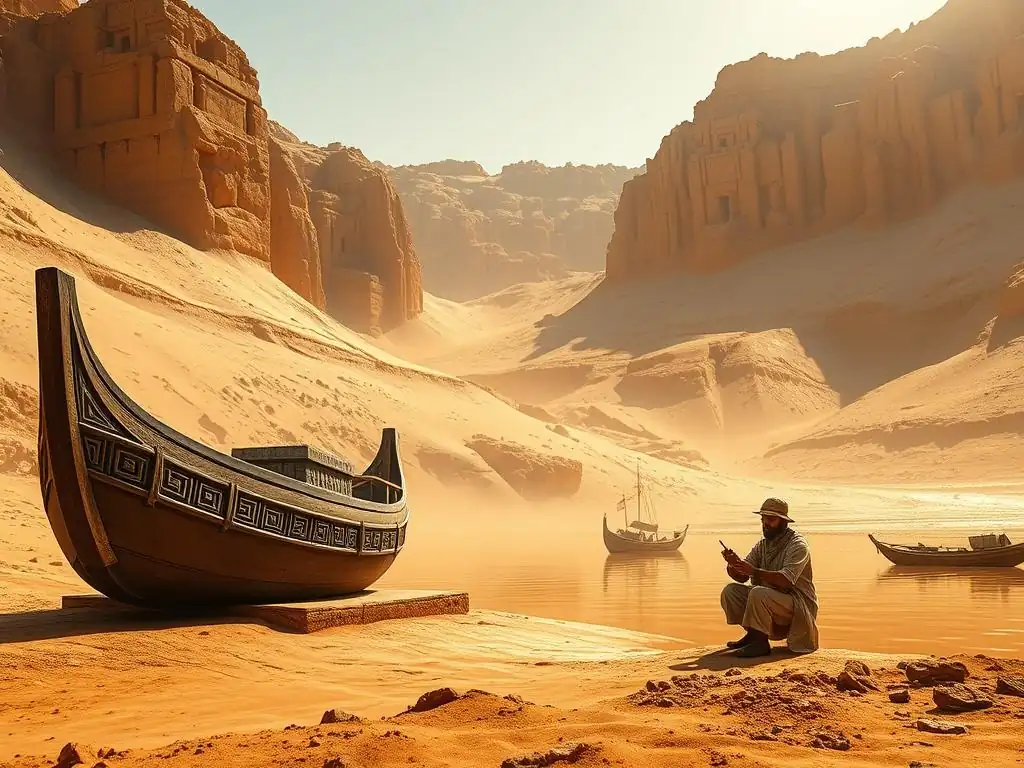
Welcome to ArchaeologyHub.org, your gateway to the past! Ever wondered how ancient civilizations moved goods and ideas across vast distances? This exploration of Transportation Technology in the Indus Valley Civilization (IVC) delves into the fascinating world of bullock carts, and, most importantly, the vital role of IVC riverine boat transport. Discover how these waterways shaped their society and economy, and uncover the secrets hidden within the ancient rivers. Ready to set sail on a journey of discovery?
- Introduction: Transport and Technology in the Indus Valley Civilization
- Bullock Carts: Land Transportation in the Indus Valley
- Riverine Boats: Navigating the Indus River System
- Maritime Vessels: Coastal Navigation and Overseas Trade of the IVC
- The Interplay of Land and Water Transportation in the IVC
- Comparative Analysis: IVC Transport Technology vs. Contemporary Civilizations
- Legacy of IVC Transportation Technology
- Conclusion: A Sophisticated Transportation Network in the Indus Valley Civilization
-
Frequently Asked Questions
- What role did riverine boats play in the Indus Valley Civilization (IVC)?
- What evidence supports the use of riverine boats in the IVC?
- Besides riverine boats, what other forms of transportation were used in the IVC?
- How did IVC transportation technology contribute to the civilization's development?
- How does ArchaeologyHub.org contribute to our understanding of IVC transportation?
- Final Reflection: Echoes of Innovation on Ancient Waters
- Unearth Ancient Routes: Navigate the IVC Today!
Introduction: Transport and Technology in the Indus Valley Civilization
The Importance of Transportation for the IVC's Urban Centers
The development of sophisticated transportation systems was paramount to the rise and sustenance of the vast urban centers of the Indus Valley Civilization (IVC), such as Mohenjo-Daro and Harappa. These cities, with estimated populations potentially reaching tens of thousands in their prime, required an efficient logistical framework to support their inhabitants.
This framework was essential for the movement of agricultural surpluses from fertile plains to urban granaries, the supply of raw materials like timber, copper, and semi-precious stones from distant regions, and the distribution of finished goods. Without robust transport, the scale and complexity of IVC urban life would have been unattainable.
An effective transport network facilitated deep economic integration across the IVC's sprawling territory, which encompassed over 1 million square kilometers. It enabled regional specialization in production, allowing for the efficient exchange of goods and resources between different ecological zones and manufacturing hubs. This connectivity was not merely economic; it also played a crucial role in maintaining social cohesion, administrative control, and cultural exchange across a diverse and geographically extensive civilization. The ability to move goods and people reliably over long distances underpinned the entire socio-economic structure of the Harappan world.
Understanding IVC Transport Through Archaeological Evidence
Archaeologists reconstruct IVC transport systems through a mosaic of indirect and direct evidence. Terracotta models of carts and boats are among the most telling direct finds, providing visual insights into the design of ancient vehicles. Numerous such models, particularly of cart frames and wheels, have been unearthed at major sites like Mohenjo-Daro, Harappa, and Chanhudaro. Additionally, seals depicting various vehicles, including boats with masts and rudders, offer iconographic data on watercraft and their capabilities.
Further understanding comes from the distribution patterns of artifacts, suggesting trade routes and the capacities of the transport system. For instance, the widespread presence of specific pottery types or raw materials like carnelian beads or copper far from their sources indicates a well-organized network.
While actual perishable remains like wooden boat hulls or cart bodies are rare, the discovery of a large brick basin at Lothal, interpreted by many as a tidal dockyard, points to significant investment in transport infrastructure. The standardization of weights and measures across the civilization also implies a system geared for efficient, large-scale trade and movement of goods.
Bullock Carts: Land Transportation in the Indus Valley
Evidence of Wheeled Transport in Harappan Civilization
Tangible archaeological evidence for wheeled transport in the Harappan Civilization is abundant, primarily in the form of terracotta models. Hundreds of these miniature cart frames and solid wheels have been excavated from various IVC sites, including Harappa, Mohenjo-Daro, and Lothal. These models, some surprisingly detailed, consistently depict a simple, two-wheeled chassis with solid wheels, often with a central hub, providing a clear indication of the basic design principles of IVC bullock carts. The sheer quantity and widespread distribution of these models underscore the commonality and importance of wheeled transport.
Beyond the models, implied evidence further supports the prevalence of bullock carts. While distinct rut marks in ancient streets are less commonly preserved, the extensive distribution of heavy goods like building stones, timber, and large quantities of pottery across the IVC landscape strongly suggests the use of efficient, heavy-duty land transport. For example, the movement of thousands of fired bricks, each weighing approximately 7-8 kg, from kilns to construction sites in major urban centers would have been impractical without wheeled vehicles, indicating the crucial role of bullock carts in urban development.
Bullock Cart Design and Construction in the IVC
Based on the numerous terracotta models and comparisons with traditional carts still used in the region, IVC bullock carts likely featured a simple, robust design. They comprised a basic wooden platform or frame mounted on two solid wooden wheels.
The axle was probably fixed to the cart body, with the wheels rotating around it, or the wheels were fixed to the axle, and the axle rotated within bearings on the cart frame. The ready availability of timber from the extensive forests of the Himalayan foothills and local plains, including species like deodar, teak, and sal, would have provided ample raw material for construction.
While direct evidence of the specific wood types or joinery techniques is scarce due to preservation issues, it is inferred that local, durable timbers were used. The wheels themselves were solid, likely crafted from a single piece of wood or, for larger wheels, from multiple planks joined together, designed to withstand the rigors of unpaved and uneven terrain. The simplicity of the bullock cart design suggests it was easy to construct, maintain, and repair, making it a highly practical and widely adopted mode of land transport across the diverse landscapes of the Indus Valley Civilization.
Bullock Carts and Their Role in IVC Trade and Agriculture
Bullock carts served as the backbone of land transportation in the IVC, playing a dual crucial role in both agriculture and trade. In agriculture, they were indispensable for moving harvested crops from the fields to the massive granaries found in urban centers like Harappa and Mohenjo-Daro. This efficient transport of agricultural surplus was vital for feeding the large, non-agricultural urban populations and sustaining the sophisticated division of labor characteristic of the civilization. They also facilitated the movement of manure to fields and other agricultural necessities.
In trade, bullock carts were essential for transporting raw materials from their sources to manufacturing hubs. For instance, copper ore from regions like Rajasthan or semi-precious stones from Gujarat would have been moved by cart to the major urban centers for processing into tools, ornaments, and beads. Subsequently, finished products, such as distinctive Harappan pottery, intricate carnelian beads, and copper tools, were distributed by carts to various settlements within the extensive IVC network, complementing the longer-distance capabilities of riverine and maritime transport.
The Significance of River Transport for the IVC
The Indus River and its extensive network of tributaries were the lifeblood of the Indus Valley Civilization, serving as a natural, highly efficient highway for the movement of goods and people. IVC riverine boat transport offered a distinct advantage over land travel, particularly for the bulk movement of heavy and voluminous goods such as grain, timber, and building stone, which could be transported far more efficiently and with less effort than by bullock cart. This inherent efficiency facilitated the growth and prosperity of major urban centers like Mohenjo-Daro, Harappa, and Ganweriwala, all strategically located along the riverbanks.
The reliability of Indus Valley Civilization river transport significantly reduced the need for extensive and costly road networks across the vast, often flood-prone plains. This natural infrastructure allowed for the relatively rapid and cost-effective movement of essential resources. For example, timber from the upper reaches of the Indus system could be floated downstream, and agricultural surpluses from the fertile plains could be consolidated and shipped to urban consumers, underlining the fundamental importance of riverine connections to the IVC's economic viability and widespread reach.
Archaeological Findings of IVC Riverine Boats and Watercraft
Direct archaeological evidence for IVC riverine boat transport includes numerous terracotta models of boats, found at sites such as Lothal, Mohenjo-Daro, and Harappa. These models typically depict simple, flat-bottomed vessels, well-suited for navigating the relatively shallow and shifting channels of the Indus and its tributaries. A particularly notable piece of evidence is a steatite seal from Mohenjo-Daro, which intricately depicts a boat with a central cabin, a steering oar at the stern, and a bird perched on the prow, suggesting a more sophisticated design for passenger or valuable cargo transport.
Beyond the models, the most significant archaeological finding related to IVC watercraft is the large brick basin at Lothal. Measuring approximately 218 meters in length and 37 meters in width, this structure, strategically located near the Sabarmati river and the Gulf of Khambhat, is widely interpreted as a tidal dockyard. While its precise function is still debated by some scholars, its engineering and location strongly suggest it facilitated the movement of both riverine and maritime vessels, serving as a crucial hub for Harappan river transport and coastal trade.
Construction Techniques of IVC River Boats
Based on the limited direct evidence from terracotta models and general knowledge of ancient boat-building practices, IVC riverine boat transport vessels were likely constructed primarily from timber. Smaller boats might have been simple dugouts, carved from single large logs, a technique common in many ancient riverine cultures. Larger vessels, however, would have required plank construction, where wooden planks were joined together to form the hull. The diverse timber resources available in the Indus region, including durable woods like deodar and sal, would have provided suitable materials for various types of watercraft.
For waterproofing and sealing the seams between planks, it is plausible that the Harappans employed materials such as reeds and bitumen, similar to techniques used by contemporary civilizations in Mesopotamia. The flat-bottomed design, commonly depicted in terracotta boat models, was a practical choice for river navigation, allowing boats to operate effectively in varying water depths and to be easily beached along riverbanks. This design maximized stability and cargo capacity, contributing to the efficiency of Indus Valley Civilization river transport for bulk goods.
IVC Riverine Boat Transport: Cargo, Passengers, and Trade Routes
IVC riverine boat transport was instrumental in moving a wide array of goods, particularly bulk commodities. Primary cargo included vast quantities of grain from agricultural hinterlands to the urban centers, substantial timber logs floated down from the northern forests, and heavy building materials like bricks and stones. Large quantities of distinctive Harappan pottery, produced in specialized centers, were also distributed extensively via river, ensuring widespread availability across the civilization. The massive granaries at sites like Harappa and Mohenjo-Daro attest to the large-scale influx of agricultural produce, much of which would have arrived by river.
Beyond cargo, Indus Valley Civilization river transport also facilitated the movement of people, connecting the numerous cities and towns spread across the vast Indus basin. The river system provided a critical network that linked the fertile plains of Punjab and Sindh to the coastal regions and the resource-rich highlands. This extensive internal trade network, reliant on efficient riverine movement, fostered significant cultural exchange and economic integration, serving as the circulatory system of the Harappan domain.
Evidence of IVC Maritime Activity and Coastal Settlements
Evidence for IVC maritime activity is compelling and multifaceted. The aforementioned "dockyard" at Lothal, a large brick-lined basin with an inlet channel, is a strong indicator of a sophisticated maritime infrastructure, capable of accommodating both riverine and seagoing vessels. In addition to Lothal, several other coastal settlements like Balakot, Sutkagen-Dor, and Dholavira, strategically located along the Arabian Sea coastline, further attest to the Harappans' engagement with the sea. These sites often show evidence of shell-working industries, pottery production, and trade goods, reinforcing their role in maritime commerce.
Further proof comes from discoveries of Harappan artifacts in distant lands, notably in Mesopotamia (modern Iraq) and Oman, and conversely, the presence of foreign artifacts in IVC sites. For instance, seals from Mohenjo-Daro depict ships with prominent masts and sails, suggesting vessels capable of open-sea voyages. The discovery of standardized weights and measures at IVC port cities like Lothal, identical to those used in Mesopotamia, provides strong indirect evidence of direct and regular maritime trade between these two great ancient civilizations.
Types of Maritime Vessels Used by the Indus Valley Civilization
Based on the available archaeological and iconographic evidence, the Indus Valley Civilization utilized various types of maritime vessels, ranging from smaller coastal craft to larger, more robust ships capable of extensive open-sea voyages. Seals from Mohenjo-Daro, such as one depicting a vessel with a high prow and stern, a central cabin, and a prominent mast with a furled sail, indicate the use of wind power for propulsion, a crucial technology for long-distance maritime travel across the Arabian Sea.
While no actual hulls survive, it is inferred that these vessels were primarily plank-built, a common construction method in the ancient world. Timbers such as teak or deodar, known for their durability and resistance to rot, would have been suitable materials. Bitumen, a naturally occurring asphalt, was likely used for caulking and waterproofing, a practice well-documented in contemporary Mesopotamian boat-building. These vessels would have been designed to be sturdy enough to withstand the conditions of the Arabian Sea and the Persian Gulf, facilitating regular trade with regions to the west.
IVC Maritime Trade Routes and Destinations: Lothal, Oman, and Mesopotamia
The primary maritime trade route for the IVC extended from its coastal ports, such as Lothal and Balakot, across the Arabian Sea. Vessels would have sailed along the coast of the Arabian Peninsula, making stops in regions like Oman, before entering the Persian Gulf and proceeding upstream along the Tigris and Euphrates rivers to reach the great cities of Mesopotamia, including Ur, Kish, and Susa. Another significant route involved direct coastal sailing to various sites in present-day Oman and the Arabian Peninsula, where Harappan artifacts have been found.
Goods exchanged along these routes were diverse and valuable. From the IVC, exports included carnelian beads, copper, timber (especially teak, highly prized in Mesopotamia), cotton textiles, and ivory products. In return, the Harappans imported tin (essential for bronze production), lapis lazuli (a highly valued blue stone), and possibly silver and wool. Cuneiform texts from Mesopotamia refer to a trading partner called "Meluhha," which is widely identified by scholars as the Indus region, confirming the regularity and substantial nature of this inter-civilizational maritime commerce. For instance, over 20,000 carnelian beads of Harappan origin have been discovered in Mesopotamian archaeological contexts.
The Role of Maritime Transport in the IVC Economy and Culture
Maritime transport played a pivotal role in the IVC economy by enabling the acquisition of exotic raw materials not readily available within the Indus plains. Access to resources like tin from Afghanistan or Oman (for bronze alloy), and lapis lazuli from Afghanistan (for intricate jewelry and prestige items), was crucial for the development of specialized craftsmanship and the overall prosperity of the urban economy. This long-distance trade fostered a sophisticated network of production and exchange, enriching the material culture of the Harappans.
Beyond economic benefits, overseas trade facilitated cultural exchange and diffusion. While the extent of cultural influence is debated, the interaction with Mesopotamia and other regions likely led to the exchange of ideas, technologies, and artistic motifs, as evidenced by shared iconography on seals or pottery. The wealth generated through this robust maritime commerce contributed significantly to the affluence and longevity of the Indus Valley Civilization, establishing it as a major player in the ancient world's interconnected economic and cultural landscape.
The Interplay of Land and Water Transportation in the IVC
How Bullock Carts and Riverine Boats Connected IVC Cities
The Indus Valley Civilization developed a highly integrated and complementary transportation system, where bullock carts and IVC riverine boat transport worked in tandem to connect its vast network of cities, towns, and villages. Bullock carts primarily handled shorter distances, serving as the crucial link for "last-mile" delivery. They transported goods from agricultural fields to local collection points, from river ports to inland urban centers, and for local distribution within cities. This land-based transport was essential for moving goods over terrain not accessible by water.
Conversely, IVC riverine boat transport was optimized for the bulk movement of goods over long distances along the extensive Indus River system and its tributaries. Major urban centers like Harappa, Mohenjo-Daro, and Ganweriwala, strategically located on or near major waterways, served as key hubs where goods could be efficiently transferred between riverine vessels and bullock carts. This seamless transfer allowed for the movement of massive quantities of raw materials and finished products across the widespread Harappan domain, creating an efficient logistical chain.
The Efficiency of the IVC's Integrated Transportation System
The combination of land and water transport modes created a remarkably efficient system for its time, allowing the IVC to manage the complex logistics of a large and highly urbanized civilization. This multi-modal approach enabled the movement of vast quantities of food, raw materials, and manufactured goods necessary to sustain large populations and support extensive internal and external trade networks. The standardization of weights and measures across the IVC, a hallmark of its administrative sophistication, further points to a well-organized and efficient system designed to facilitate commerce.
This efficiency was key to the specialized production and distribution that characterized the Harappan economy. For instance, the transport of copper from mines in Rajasthan or Baluchistan to manufacturing centers like Harappa, where it was smelted and crafted into tools and ornaments, relied entirely on this integrated system. Subsequently, the distribution of these finished products to other cities and towns would again leverage the combined strengths of Indus Valley Civilization river transport and bullock cart networks.
Copper, Grain, and Pottery: Integrated Transport Examples
To illustrate the integrated nature of IVC transport, consider the journey of copper. Copper ore, sourced from mines such as those in the Aravalli hills of Rajasthan, would likely have been transported by bullock cart over land to the nearest navigable river point. From there, it would be loaded onto IVC riverine boat transport vessels and shipped down the Indus system to major urban centers like Harappa or Mohenjo-Daro for smelting and crafting into tools, weapons, and ornaments. The finished copper products could then be distributed further by either river or land, depending on their final destination.
Similarly, grain, harvested in the fertile plains surrounding the urban centers, would be carted from the fields to the riverbanks. There, it would be loaded onto Indus Valley Civilization river transport boats, which would then carry the bulk produce to the massive granaries within cities. Pottery, produced in specialized workshops, also followed a similar pattern: bulk transport by river for long distances, with local distribution handled by bullock carts, ensuring the wide availability of distinctive Harappan black-on-red ware throughout the civilization.
Comparative Analysis: IVC Transport Technology vs. Contemporary Civilizations
Examining Transportation Methods in Mesopotamia and Egypt
When comparing the IVC's transportation technology with its contemporary civilizations, Mesopotamia and Egypt, distinct approaches emerge. Mesopotamian civilizations, situated between the Tigris and Euphrates rivers, also heavily relied on riverine transport for bulk goods using reed boats (like the guffa) and wooden vessels. For land transport, they utilized wheeled carts, having been pioneers in the development of the wheel around 3500 BCE, and employed pack animals like donkeys for moving goods over shorter distances or where rivers were not accessible. Their river systems were crucial for connecting cities like Ur, Lagash, and Mari.
Ancient Egypt, by contrast, was almost entirely dependent on the Nile River for north-south transport. The prevailing winds allowed for sailing upstream, while the river current facilitated downstream travel, making the Nile an incredibly efficient natural highway for bulk movement using papyrus and wooden boats. Land transport in Egypt was comparatively less developed; wheeled vehicles were known but not widely used for heavy transport due to the efficiency of the Nile. Instead, sledges were employed for moving massive stones over short distances, and donkeys served as primary pack animals.
Technological Advancements and Limitations of IVC Transportation
The IVC demonstrated significant technological advancements in its transportation systems. The widespread adoption and standardization of solid-wheeled bullock carts for land transport across a vast geographical area was a notable achievement. Furthermore, the development of sophisticated IVC riverine boat transport capable of navigating extensive river networks, and the construction of maritime vessels with sails for long-distance overseas trade, reflect a high level of engineering and navigational skill. The potential existence of a tidal dockyard at Lothal, if conclusively proven, would represent a truly remarkable feat of hydraulic engineering for the Bronze Age.
However, the IVC's transport technology also had its limitations. Unlike later civilizations, there is no evidence of spoked wheels, which would have made carts lighter, faster, and more efficient. The lack of extensive, paved road networks, common in later empires, meant that land travel was likely slower and more arduous, especially during monsoon seasons. While their integrated system was highly effective for their needs, these technological constraints meant that the speed and capacity of land transport were limited compared to what would emerge in subsequent historical periods.
The Unique Features of IVC Riverine Boat Transport and Land-Based Systems
A unique feature of the IVC's transportation system was the highly integrated and extensive nature of its land and water networks across a massive geographical expanse. Unlike Egypt's almost singular reliance on the Nile or Mesopotamia's more localized river systems, the IVC leveraged the entire, vast Indus River system for bulk IVC riverine boat transport, complemented by the ubiquitous use of bullock carts for local distribution and overland routes. This comprehensive approach allowed for efficient resource allocation and trade across diverse ecological zones.
Furthermore, the scale of the IVC, which covered a larger area than contemporary Egypt and Mesopotamia combined, necessitated a robust and adaptable transport infrastructure. The standardization of weights and measures, and indirect evidence suggesting possible standardization of cart gauges, indicates a centrally organized and well-managed system designed to facilitate widespread trade and movement of goods. This level of organization and integration of Indus Valley Civilization river transport and land-based systems stands out as a unique characteristic among Bronze Age civilizations.
Legacy of IVC Transportation Technology
Influence of IVC Transport on Later South Asian Civilizations
The transportation technologies developed by the Indus Valley Civilization had a profound and lasting influence on later South Asian civilizations. The basic design of the IVC bullock cart, characterized by its solid wheels and simple, sturdy frame, proved to be remarkably enduring. This fundamental design persisted for millennia in the Indian subcontinent, becoming a ubiquitous tool for agriculture and local trade. Its continued use throughout subsequent historical periods, from the Vedic Age through the Maurya and Gupta empires and even into modern times, speaks volumes about its practicality and effectiveness as a land transport solution.
Similarly, the Harappans' expertise in water transport, particularly IVC riverine boat transport and maritime navigation, laid crucial groundwork for future developments. While the exact river courses changed over time, the concept of utilizing the extensive river systems for bulk trade and communication continued to be central to South Asian economies. The IVC's pioneering maritime connections with the Persian Gulf and beyond also established a precedent for the vibrant Indian Ocean trade networks that would flourish in later centuries, demonstrating an early understanding of naval capabilities and long-distance commerce.
Future Research on IVC Dockyards and Maritime Infrastructure
Despite significant progress, several aspects of IVC transportation technology remain subjects of ongoing research and debate. The precise function and operational details of the Lothal basin, often referred to as a dockyard, continue to be a focal point. Future research involving more precise geoarchaeological studies, detailed sediment analysis, and comparative studies with other ancient port structures could definitively confirm its role as a tidal dock and shed further light on the sophistication of IVC riverine boat transport and maritime engineering.
Beyond Lothal, further research is needed to identify and investigate more coastal settlements and smaller riverine landing sites that would have supported the extensive trade network. Reconstructing ancient river channels through paleohydrological studies could provide a clearer picture of precise Indus Valley Civilization river transport routes. Additionally, more in-depth analysis of any preserved timber remains or microscopic residues could offer valuable insights into the specific materials and construction techniques used for both riverine and maritime vessels, enhancing our understanding of this critical aspect of Harappan technology.
Conclusion: A Sophisticated Transportation Network in the Indus Valley Civilization
Frequently Asked Questions
What role did riverine boats play in the Indus Valley Civilization (IVC)?
Riverine boats were crucial for transport within the IVC. They facilitated the movement of goods and people along the Indus River and its tributaries, promoting trade and communication.
What evidence supports the use of riverine boats in the IVC?
Archaeological evidence, such as seals depicting boats and miniature terracotta models of boats, suggests their use. Furthermore, the location of many IVC settlements along rivers points to their importance for transportation.
Besides riverine boats, what other forms of transportation were used in the IVC?
Bullock carts were also a common form of land transport. Evidence suggests they were used for moving goods overland, complementing the riverine network.
How did IVC transportation technology contribute to the civilization's development?
Efficient transportation, including riverine boats and bullock carts, facilitated trade and resource distribution. This contributed significantly to the economic and social development of the Indus Valley Civilization.
How does ArchaeologyHub.org contribute to our understanding of IVC transportation?
ArchaeologyHub.org provides detailed artifact profiles and interpretive analyses related to the IVC. This includes information on boat models and depictions, helping researchers and the public understand IVC transportation technology.
Okay, here's a final reflection crafted to fit your article "Transportation Technology: Bullock Carts, Riverine Boats, and Maritime Vessels in the IVC," targeting the keyword "IVC riverine boat transport," and following the specified structure:
Final Reflection: Echoes of Innovation on Ancient Waters
The journey through the transportation technologies of the Indus Valley Civilization reveals more than just historical methods; it illuminates the enduring human drive for connection and progress. The sophisticated riverine boat transport system, alongside bullock carts and maritime vessels, underscores a remarkable ingenuity that allowed the IVC to thrive, connecting communities and facilitating trade across vast distances. This legacy resonates today as we grapple with the challenges of sustainable and efficient transportation in a globalized world.
The impact of the IVC's transportation infrastructure extends far beyond its immediate economic benefits. It shaped the very fabric of their society, fostering cultural exchange and enabling the dissemination of knowledge. The rivers, once arteries of commerce, also served as conduits for ideas and innovation. The river is everywhere at once, upstream and down, in the sea, in the mountains, everywhere, while the present only gives it to us in one place.
- Hermann Hesse. This quote encapsulates the profound and multifaceted role of rivers in shaping civilizations, a role vividly exemplified by the IVC's masterful utilization of riverine boat transport.
As we reflect on the ingenuity of the IVC's riverine boat transport and other transportation methods, let us consider the lessons they offer for our own time. How can we, like the people of the Indus Valley, harness technology to build more connected, sustainable, and equitable societies? Let us strive to emulate their resourcefulness and foresight, ensuring that our own innovations leave a positive and lasting legacy for generations to come.
Thank you for exploring the fascinating world of Indus Valley Civilization transportation! We hope you've gained a new appreciation for the ingenuity of these ancient technologies. Now, it’s time to set sail on your own journey of discovery.
- Delve deeper: Research a specific type of IVC vessel, like the possible features of the large boats used for maritime trade with Mesopotamia.
- Explore local museums or online archives for archaeological exhibits featuring IVC artifacts. Share your findings!
- Brainstorm: How might modern transportation infrastructure draw inspiration from the IVC's sustainable riverine and coastal routes?
What new questions about ancient trade routes have surfaced for you after reading this article?