
Art and Culture of the Qin Dynasty: Beyond the Terracotta Army

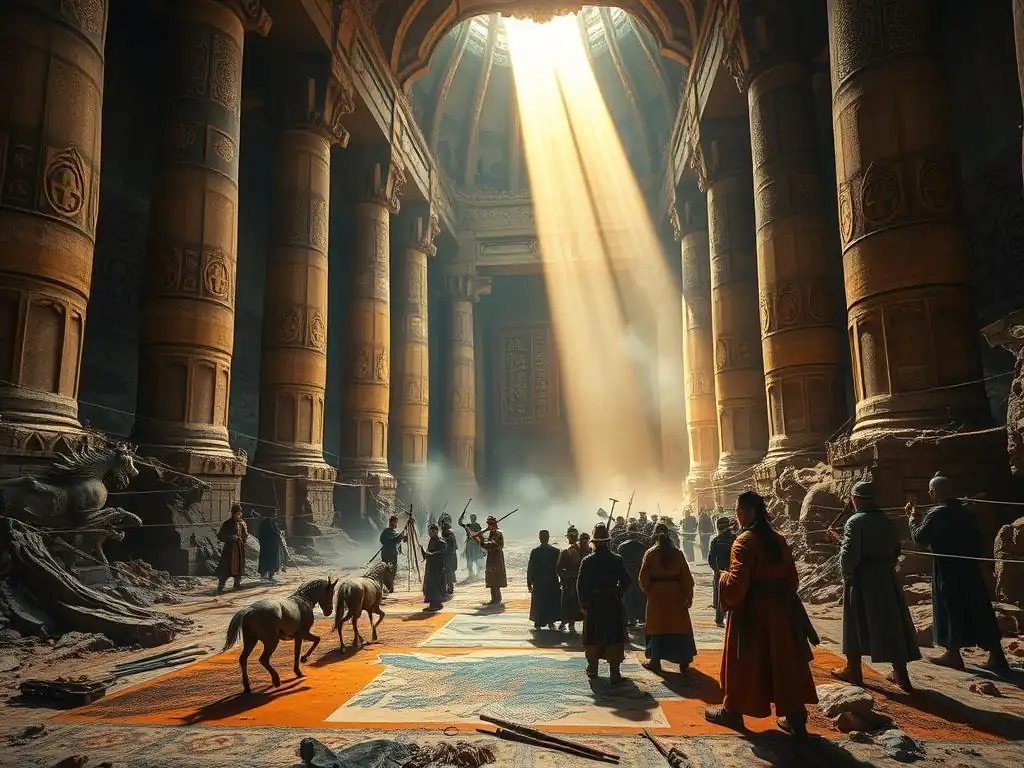
Welcome to ArchaeologyHub.org, your gateway to unlocking the secrets of the past. Ever wondered what life was really like beyond the iconic Terracotta Army? Delve into the fascinating world of Qin Dynasty art culture, and discover the intricate details that shaped an empire, revealing artistic innovations and societal norms that continue to captivate us today. Prepare to explore a new perspective on this pivotal period in Chinese history, uncovering insights that go far beyond the battlefield.
- Introduction: Unveiling the Artistic and Cultural Landscape of the Qin Dynasty
- Architectural Marvels of the Qin Empire: Monumental Construction Projects
- Qin Dynasty Art: A Glimpse into Imperial Aesthetics
- The Cultural Impact of the Qin Dynasty: Lasting Legacies
- Beyond the Terracotta Army: Exploring Other Archaeological Finds
- Qin Dynasty Literature and Calligraphy: Preserving History and Culture
- Qin Dynasty Music and Performing Arts: Entertainment and Ritual
- Comparison: Qin Dynasty Art Culture Versus Previous Dynasties
- The Decline and Fall: Impact on Qin Dynasty Artistic Production
- Conclusion: Appreciating the Rich Tapestry of Qin Dynasty Art Culture
-
Frequently Asked Questions
- How significant was the Terracotta Army in representing Qin Dynasty art culture?
- Besides the Terracotta Army, what other forms of art flourished during the Qin Dynasty?
- What influence did the Qin Dynasty's legalist philosophy have on its artistic expression?
- How did the Qin Dynasty's standardization efforts impact artistic development?
- Where can I find more in-depth information about Qin Dynasty art culture beyond ArchaeologyHub.org?
- Final Reflection: Echoes of Innovation and Imperial Vision
- Unearth the Secrets: Become a Qin Dynasty Explorer!
Introduction: Unveiling the Artistic and Cultural Landscape of the Qin Dynasty
Understanding the Historical Context of Qin Dynasty Art
The unification of China under Qin Shi Huang in 221 BC marked a profound shift from the fragmented Warring States period to a centralized imperial system. This pivotal historical event profoundly shaped the Qin Dynasty art culture, moving away from the diverse regional styles that characterized earlier periods. The emperor's ambition to consolidate power and establish a unified empire was directly reflected in the scale and nature of artistic endeavors, which increasingly served the state's agenda rather than regional lords or ritualistic traditions alone. This transition laid the groundwork for a distinctly imperial aesthetic.
Despite its brevity, lasting only 15 years, the Qin Dynasty's impact on Chinese art was monumental. Qin Shi Huang's vision of an eternal empire, coupled with his obsession with immortality and control, spurred the creation of colossal projects, most famously the Mausoleum and its Terracotta Army. These undertakings were not merely engineering feats but artistic statements of unparalleled grandeur, designed to project absolute power and order. The sheer scale and uniformity seen in these creations define much of the surviving Qin Dynasty art culture, signaling a new era of centralized artistic production.
Defining Qin Dynasty Cultural Identity
The cultural identity of the Qin Dynasty was intrinsically linked to its dominant philosophy: Legalism. This ideology, emphasizing strict laws, centralized authority, and a utilitarian approach to governance, permeated every aspect of society, including its artistic output. Unlike the preceding Zhou Dynasty, which often focused on elaborate ritual bronze vessels and a more decentralized artistic patronage, Qin Dynasty art culture embraced a more disciplined, functional, and often monumental aesthetic that directly mirrored the state's values.
A defining characteristic of Qin cultural identity was its relentless pursuit of standardization. This extended beyond weights, measures, and currency to include the written script (Small Seal Script) and even the dimensions of chariot axles. This drive for uniformity, while practical for administration and trade, also imposed a cohesive, albeit less diverse, artistic style across the vast empire. This standardization is evident in the remarkable consistency of the Terracotta Army figures, where individual features are combined with mass-produced modular components, showcasing a unique blend of efficiency and artistic detail within Qin Dynasty art culture.
Architectural Marvels of the Qin Empire: Monumental Construction Projects
Qin Dynasty Building Techniques and Innovations
The Qin Dynasty was an era of unprecedented architectural ambition, characterized by monumental construction projects that showcased advanced engineering and organizational capabilities. Key examples include the early sections of the Great Wall, which were consolidated and extended under Qin Shi Huang, and the Lingqu Canal, a significant waterway connecting the Xiang and Li rivers, facilitating military transport and trade. The primary building material for many of these structures was rammed earth (hangtu), a technique perfected by the Qin, allowing for the rapid construction of incredibly durable walls and foundations, often reaching heights of 10-15 meters for city walls.
The construction of the Qin Shi Huang Mausoleum complex, estimated to cover an area of 56 square kilometers, stands as a testament to Qin innovation. It involved sophisticated drainage systems to manage groundwater, precise alignment of structures with astronomical significance, and the use of standardized bricks and tiles. The logistical challenges were immense, requiring hundreds of thousands of laborers, including skilled artisans and conscripted peasants. This massive mobilization of resources and labor, coupled with meticulous planning, underscores the advanced state of architectural engineering within Qin Dynasty art culture.
The Significance of City Planning in the Qin Dynasty
City planning during the Qin Dynasty served as a powerful symbol of imperial authority and centralized control. Xianyang, the capital city, exemplified this approach with its grand scale and axial layout. Historical accounts describe vast imperial palaces, administrative complexes, and residential areas, all meticulously arranged to reflect the emperor's power and the empire's hierarchical structure. Notably, Qin Shi Huang ordered the construction of "palaces of the six states" within Xianyang, built to replicate the palaces of the conquered kingdoms, symbolically absorbing their power and demonstrating the unified nature of the new empire.
Beyond the capital, Qin city planning extended to military garrisons, administrative centers, and transportation hubs strategically placed throughout the newly unified territories. These urban centers were designed for efficiency and control, facilitating communication, troop movements, and the collection of taxes. The standardized design principles applied to these cities, though less ornate than later dynasties, reinforced the notion of a single, unified state. This systematic approach to urban development was a critical component of Qin Dynasty art culture, reflecting the Legalist emphasis on order and state utility.
Qin Dynasty Art: A Glimpse into Imperial Aesthetics
Pottery and Ceramics in the Qin Dynasty: Styles and Techniques
Beyond the world-renowned Terracotta Army, Qin Dynasty pottery encompassed a range of functional and ritualistic ceramics. Everyday wares, such as storage jars, cooking pots, and eating utensils, were typically unglazed or adorned with simple lead glazes, reflecting a utilitarian aesthetic. Roof tiles, often decorated with geometric patterns or imperial motifs like cloud scrolls, were mass-produced for the vast architectural projects, demonstrating a high degree of standardization in ceramic production. The firing techniques, while less varied than later periods, were efficient, producing durable and functional pieces.
The Terracotta Army figures, discovered near the Mausoleum of Qin Shi Huang, represent the zenith of Qin ceramic artistry and engineering. These approximately 8,000 life-sized warriors, chariots, and horses were produced using a sophisticated modular system. Different body parts were molded separately, fired, and then assembled, allowing for mass production while still enabling individual customization of facial features, hairstyles, and armor details. This innovative blend of industrial-scale production and personalized craftsmanship is a hallmark of Qin Dynasty art culture in ceramics, showcasing an unparalleled organizational capacity.
Bronze Work and Metal Crafts: Weapons, Vessels, and Cultural Significance
Bronze work in the Qin Dynasty primarily focused on the production of weaponry, reflecting the empire's military might and emphasis on conquest. Archaeological excavations at the Terracotta Army site have yielded tens of thousands of highly advanced bronze weapons, including swords, spears, halberds, and crossbow triggers. These weapons exhibit remarkable precision and sharpness, a testament to Qin metallurgical expertise. Some bronze swords have even shown traces of a chromium oxide layer, an advanced anti-rust treatment, indicating a level of technological sophistication far ahead of its time for Qin Dynasty art culture.
While bronze ritual vessels, so prominent in the preceding Zhou Dynasty, were less central to Qin artistic expression, some utilitarian bronze items and smaller vessels have been unearthed. These often display simpler designs compared to their Zhou counterparts, emphasizing function over elaborate ornamentation.
The two sets of magnificent bronze chariots and horses (Pit K0008) discovered near the Mausoleum, however, are exquisite examples of Qin bronze casting. These intricately detailed, half-life-size models served as imperial conveyances for the emperor's spirit in the afterlife, highlighting the continued, albeit recontextualized, significance of bronze in Qin Dynasty art culture for imperial display and funerary purposes.
Jade Carvings: Symbolism and Craftsmanship in Qin Art
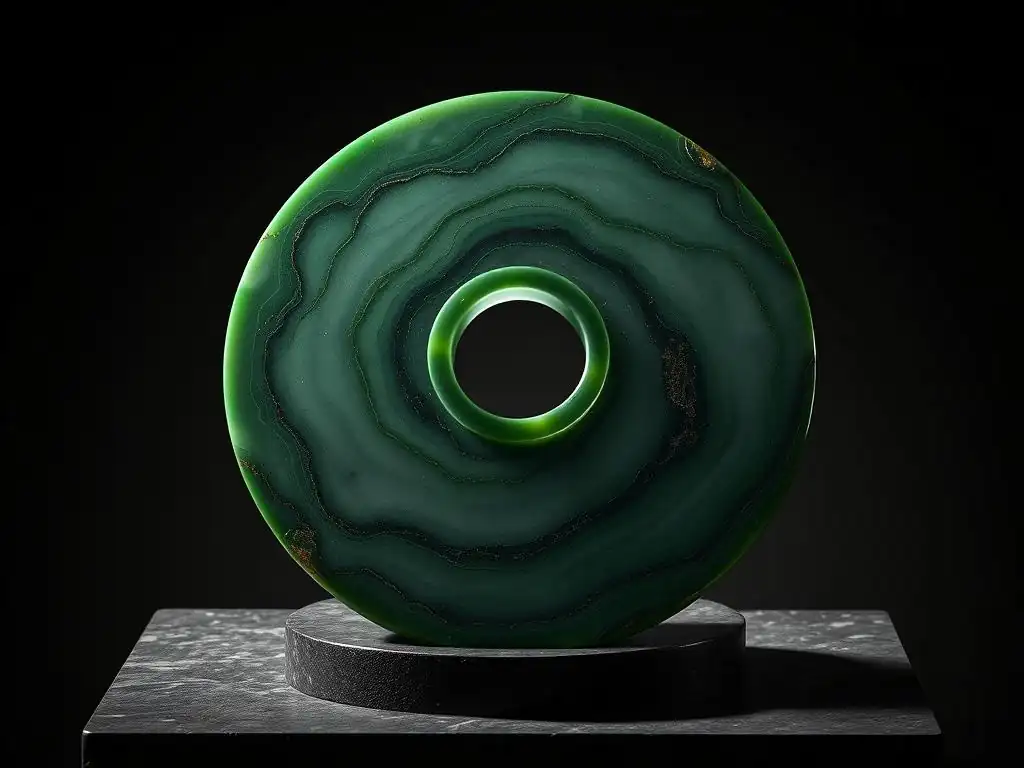
Jade held profound symbolic significance in Qin Dynasty art, inheriting its revered status from earlier Chinese cultures. Valued for its perceived purity, immortality, and connection to the heavens, jade was primarily used for ritual objects, imperial regalia, and funerary adornments. While Qin jade carvings might appear less intricate than those of the Han Dynasty or earlier Zhou periods, they maintained a high level of craftsmanship, reflecting the immense skill required to work with such a hard material. Common forms included bi discs (symbolizing heaven) and cong tubes (symbolizing earth), often found in imperial tombs.
The scarcity of highly elaborate jade pieces compared to other dynasties suggests a shift in artistic emphasis, perhaps due to the Qin's focus on utilitarianism and monumental projects. However, the presence of jade artifacts in the Mausoleum complex and associated burials underscores its continued importance as a precious material reserved for the elite and for significant ritualistic purposes. The enduring presence and symbolic weight of jade in imperial burial contexts demonstrate its integral role in the spiritual and aesthetic dimensions of Qin Dynasty art culture, even if its stylistic expression became somewhat more restrained.
The Cultural Impact of the Qin Dynasty: Lasting Legacies
Standardization and its Influence on Qin Dynasty Art Culture
The Qin Dynasty's most pervasive cultural impact was its radical program of standardization, which profoundly influenced Qin Dynasty art culture. Qin Shi Huang unified disparate regional systems, imposing common standards for weights, measures, currency, and, crucially, the written script (Small Seal Script). This systematic approach, driven by Legalist principles of order and control, fostered a sense of national unity and facilitated centralized governance, trade, and communication across the vast empire.
In the realm of art, this standardization translated into a more cohesive and less regionally diverse aesthetic. The consistent scale and construction methods of the Terracotta Army figures, the uniform design of bronze coinage, and the prescribed styles for official inscriptions exemplify this. While it may have curtailed some regional artistic expressions, this standardization laid a foundational template for subsequent imperial artistic conventions, demonstrating the state's power to shape not just governance but also the visual and material culture of its subjects, leaving an indelible mark on Qin Dynasty art culture.
Legalism and its Reflection in Qin Dynasty Artistic Expression
Legalism, as the guiding philosophy of the Qin Dynasty, exerted a direct and powerful influence on its artistic expression. With its emphasis on strict laws, absolute state power, military strength, and a clear hierarchy, Legalism fostered an aesthetic that valued order, discipline, and monumental scale. Art was often utilitarian, serving the practical needs of the state or projecting the emperor's absolute authority, rather than focusing on individual expression or elaborate ritual symbolism for its own sake.
The Terracotta Army stands as the ultimate embodiment of Legalist principles in art. It is a massive, disciplined force, meticulously organized and uniformly equipped, designed to serve and protect the emperor in the afterlife. The sheer number of figures and their standardized production reflect the Legalist ideal of a highly controlled and efficient state, where individual identity is subsumed within the collective for the greater good of the empire. This focus on power, order, and control is a defining characteristic of Qin Dynasty art culture, distinguishing it sharply from previous and subsequent periods.
Beyond the Terracotta Army: Exploring Other Archaeological Finds
Excavations and Discoveries Shedding Light on Qin Dynasty Life
While the Terracotta Army pits are the most famous archaeological discoveries, ongoing excavations around the Mausoleum of Qin Shi Huang continue to shed light on various aspects of Qin Dynasty art culture and daily life. For instance, Pit K0006, the "acrobats pit," discovered in 1999, revealed a group of highly realistic terracotta figures depicting performers, including strongmen and acrobats, suggesting the presence of organized entertainment and courtly spectacles within the imperial complex. Another significant find, Pit K0008, unearthed two exquisite bronze chariots and horses, meticulously detailed and adorned, providing insights into imperial transportation and funerary rituals.
Beyond the immediate mausoleum complex, other archaeological sites, though less extensively publicized, contribute to our understanding of the Qin. Discoveries of bamboo slips, such as the Shuihudi Qin bamboo texts (unearthed in 1975) and the Liye Qin slips (discovered in 2002), offer invaluable textual evidence. These documents detail Qin laws, administrative regulations, medical practices, and daily life, providing a rich narrative that complements the material culture. They reveal the practicalities of governance and the strict legal framework that underpinned Qin Dynasty art culture and society.
Imperial Tombs and Everyday Objects: Insights into Qin Society
The Qin Shi Huang Mausoleum itself, with its unexcavated central tomb mound, is arguably the largest imperial tomb complex in world history, estimated to be roughly 70 meters high and covering an area of approximately 220,000 square meters. The surrounding pits, including the Terracotta Army, the acrobats, and the bronze chariots, serve as a microcosmic replication of the emperor's earthly empire, designed to accompany him into the afterlife. These imperial finds offer profound insights into the emperor's worldview, his desire for eternal power, and the sophisticated organization of the Qin court.
While imperial objects dominate the archaeological record due to their monumental nature and preservation, everyday objects from the Qin period are less frequently encountered, partly due to the dynasty's short duration and its tumultuous end. However, fragments of simple pottery, agricultural tools, coins, and household items have been found in various contexts, providing glimpses into the lives of commoners and the material culture of the broader society. These artifacts, though humble, are crucial for constructing a more complete picture of Qin Dynasty art culture beyond the grandeur of the imperial court.
Qin Dynasty Literature and Calligraphy: Preserving History and Culture
The Role of Scribes and Scholars in the Qin Dynasty
During the Qin Dynasty, scribes played an indispensable role in the administration of the vast, newly unified empire. With the emphasis on legal codes, centralized control, and standardized communication, the ability to read and write was crucial for governance. Qin Shi Huang's prime minister, Li Si, is credited with standardizing the written script into the "Small Seal Script" ( xiaozhuan), a uniform style that replaced diverse regional scripts. This standardization greatly facilitated the dissemination of laws, edicts, and administrative documents across the empire, becoming a cornerstone of Qin Dynasty art culture in its textual form.
However, the Qin Dynasty's approach to scholarship was notoriously restrictive. The infamous "Burning of Books and Burying of Scholars" incident, circa 213 BC, was a drastic measure undertaken to suppress dissenting thought, particularly Confucianism, and promote Legalist ideology. This event led to the destruction of countless historical texts, philosophical works, and literary pieces from earlier periods, severely impacting the preservation of ancient knowledge and limiting the scope of official scholarship. This policy profoundly shaped the intellectual and literary landscape of Qin Dynasty art culture, prioritizing state-sanctioned knowledge over independent thought.
Surviving Texts and Documents: Insights into Qin Dynasty Society
Despite the extensive destruction during the "Burning of Books," some Qin texts and documents survived, primarily those deemed practical or directly related to the state, such as works on medicine, divination, agriculture, and official Qin history. The most significant surviving textual evidence comes from archaeological discoveries of bamboo slips. The Shuihudi Qin bamboo texts, unearthed in 1975 in Hubei province, are a prime example. These slips contain detailed Qin laws, administrative regulations, legal cases, and even a chronicle of Qin Shi Huang's reign, providing unparalleled insights into the legal system and daily life of the period.
Another crucial discovery is the Liye Qin slips, found in Hunan province in 2002, which include over 36,000 bamboo slips detailing local administrative records, census data, and official correspondence. These archaeological finds offer invaluable primary source material, allowing scholars to reconstruct aspects of Qin society, its governance, and its legal framework that would otherwise be lost. They reveal the practical, utilitarian nature of Qin writing and its function in maintaining imperial control, showcasing a distinct aspect of Qin Dynasty art culture through its official documents.
Qin Dynasty Music and Performing Arts: Entertainment and Ritual
Musical Instruments and Performances During the Qin Dynasty
Direct archaeological evidence of Qin Dynasty music and performing arts is relatively scarce compared to other art forms, but inferences can be drawn from earlier traditions and limited finds. The discovery of the "acrobats pit" (Pit K0006) near the Mausoleum suggests the presence of organized entertainment, likely involving music and dance. Instruments commonly used during the preceding Zhou Dynasty, such as bronze bells ( bianzhong), stone chimes ( bianqing), various drums, and stringed instruments like the qin and se, were likely still in use for imperial court performances and rituals.
These performances would have served various functions, including entertainment during imperial banquets and accompanying official ceremonies. For instance, the bronze chariots (Pit K0008) are believed to have been accompanied by musical ensembles, indicating the importance of music in imperial processions and the grand display of power. While specific compositions are largely unknown, the presence of musicians and performers within the emperor's afterlife retinue underscores the structured and ceremonial role of music in Qin Dynasty art culture.
The Influence of Qin Dynasty Rituals on Artistic Expression
Qin Dynasty rituals, particularly those related to the emperor's divine mandate and the worship of heaven and earth, profoundly influenced artistic expression, especially in monumental projects. The sheer scale and meticulous planning of the Qin Shi Huang Mausoleum complex can be understood as a colossal ritual undertaking, designed to ensure the emperor's power and prosperity in the afterlife. The Terracotta Army, a symbolic extension of the imperial guard, embodies the ritualistic desire to replicate the earthly order in the spiritual realm.
The uniform and disciplined appearance of the Terracotta Army figures reflects the highly organized and ritualized nature of Qin military and state functions. The emphasis on order, hierarchy, and collective strength in imperial rituals was directly mirrored in the precise execution and standardized forms within Qin Dynasty art culture. Even the layout of the capital, Xianyang, with its axial symmetry, can be seen as a ritualistic representation of cosmic order, aligning the earthly realm with the heavens and reinforcing the emperor's position as the Son of Heaven.
Comparison: Qin Dynasty Art Culture Versus Previous Dynasties
Innovations and Departures in Qin Dynasty Artistic Styles
The Qin Dynasty art culture represented a significant departure and introduced several innovations compared to the preceding Zhou Dynasty. While Zhou art often focused on elaborate bronze ritual vessels adorned with intricate animal motifs and complex patterns, Qin art shifted towards utilitarianism, monumental scale, and mass production. The Terracotta Army, with its standardized yet individualized figures, exemplifies this fundamental change, moving from unique, regionally diverse artistic expressions to a centralized, collective display of imperial power.
Key innovations included the systematic, modular approach to large-scale ceramic production, as seen in the Terracotta figures, which allowed for unprecedented output. Furthermore, advances in metallurgy for weaponry, such as the chromium plating found on bronze swords, showcased a pragmatic and technologically advanced approach. The standardization of script and measurement also had a profound impact on artistic and cultural uniformity. These innovations laid a crucial groundwork for subsequent imperial art, establishing a distinctly unified and powerful Qin Dynasty art culture.
Contrasting Qin Art with Zhou Dynasty Art
The contrasts between Qin and Zhou Dynasty art are stark and reflect their differing political and philosophical landscapes. Zhou Dynasty art, particularly its bronze ritual vessels (e.g., ding, gui), was characterized by intricate designs, zoomorphic patterns, and a focus on ancestor worship and complex ritual functions. These pieces often varied significantly by region, reflecting the decentralized feudal system of the Zhou. The aesthetic was deeply symbolic and often highly ornate, embodying a rich tradition of ritualistic expression.
In contrast, Qin Dynasty art culture was a direct manifestation of a centralized, authoritarian empire. Qin bronze work was predominantly utilitarian, focusing on weapons and tools, rather than elaborate ritual vessels. The overall artistic philosophy emphasized uniformity, scale, and power over individual artistic flair or regional diversity. The monumental scale of its architecture and the disciplined uniformity of its terracotta warriors perfectly illustrate this shift, prioritizing function, order, and imperial grandeur over the ornate symbolism and regional variations of earlier periods.
The Decline and Fall: Impact on Qin Dynasty Artistic Production
How the End of the Qin Dynasty Affected Artistic Development
The rapid collapse of the Qin Dynasty in 206 BC, just 15 years after its unification of China, had an immediate and profound impact on its artistic development. Widespread peasant rebellions and internal strife led to the cessation of all major imperial projects, including the ongoing construction of the Qin Shi Huang Mausoleum complex. This abrupt end brought an immediate halt to the large-scale artistic production that had characterized the dynasty, particularly the highly organized efforts supported by the imperial court.
The chaos and destruction that followed the fall of Qin, including the burning of palaces and the looting of imperial sites, resulted in the loss of countless artifacts, historical records, and artistic creations. Many workshops and skilled artisans, who had been mobilized for imperial projects, were likely dispersed or perished. This period of instability severely limited the surviving examples of Qin Dynasty art culture, making archaeological discoveries even more critical for understanding its scope and nature.
The Legacy of Qin Dynasty Art in Subsequent Dynasties
Despite its short lifespan and violent end, the Qin Dynasty left an undeniable artistic and cultural legacy that influenced subsequent dynasties, most notably the Han. The concept of a unified empire, the standardization of systems, and the monumental scale of imperial projects established precedents that the Han largely adopted and built upon. While Han dynasty tomb art developed its own distinct styles, it often continued the Qin tradition of replicating the earthly world for the afterlife, though with different materials and a more diverse artistic vocabulary.
The Terracotta Army, though buried and rediscovered millennia later, stands as the most enduring testament to the organizational power, technological prowess, and artistic ambition of the Qin Dynasty. Its discovery revolutionized our understanding of ancient Chinese military organization, metallurgy, and large-scale artistic production. Even though its immediate influence on daily artistic trends was cut short by the dynasty's collapse, the sheer audacity and scale of Qin Dynasty art culture continue to inspire and inform our understanding of China's first imperial age.
Conclusion: Appreciating the Rich Tapestry of Qin Dynasty Art Culture
The Qin Dynasty art culture, though often overshadowed by the iconic Terracotta Army, represents a pivotal and transformative period in Chinese history. It was an era defined by a radical shift from regional artistic diversity to a unified, centralized imperial aesthetic. This transformation was driven by Qin Shi Huang's ambition for a consolidated empire and the guiding principles of Legalism, which emphasized order, utility, and monumental scale in artistic expression. From the standardized script to the vast architectural projects, every artistic endeavor reflected the state's absolute authority and its vision of an eternal empire.
Beyond the awe-inspiring terracotta warriors, the rich tapestry of Qin Dynasty art encompasses groundbreaking architectural innovations, advanced bronze metallurgy, and the enduring symbolic power of jade. Archaeological discoveries, including bamboo slips and other burial pits, continue to illuminate the practicalities of Qin society, its strict legal framework, and its structured approach to entertainment and ritual. The Qin's brief but impactful reign fundamentally reshaped Chinese art and culture, laying the groundwork for subsequent imperial dynasties and leaving an indelible legacy that continues to be explored and appreciated through its remarkable archaeological heritage.
Frequently Asked Questions
How significant was the Terracotta Army in representing Qin Dynasty art culture?
The Terracotta Army is undeniably significant, serving as a powerful symbol of Qin power and artistic skill. However, it's crucial to remember that it's just one facet of a broader artistic landscape.
Besides the Terracotta Army, what other forms of art flourished during the Qin Dynasty?
While the Terracotta Army is famous, the Qin Dynasty also saw development in bronze work, particularly in weapons and ritual vessels. Standardized calligraphy and early forms of painting also emerged.
What influence did the Qin Dynasty's legalist philosophy have on its artistic expression?
Legalism emphasized order and control, which likely influenced the uniformity and scale observed in the Terracotta Army. This philosophy favored practicality over individual expression in many art forms.
How did the Qin Dynasty's standardization efforts impact artistic development?
The standardization of weights, measures, and writing directly impacted art. This led to greater consistency in design and production, especially in mass-produced items like bricks and tiles.
Where can I find more in-depth information about Qin Dynasty art culture beyond ArchaeologyHub.org?
While ArchaeologyHub.org is a great resource, consider exploring academic journals, museum collections, and specialized books on Chinese art history for more detailed analyses.
Final Reflection: Echoes of Innovation and Imperial Vision
The enduring fascination with the Terracotta Army often overshadows the broader artistic and cultural landscape of the Qin Dynasty, yet understanding this era is crucial for grasping the foundations of Chinese civilization. The Qin Dynasty's impact extends far beyond its military might, shaping artistic styles, standardizing writing, and laying the groundwork for future dynasties. Its legacy continues to resonate in contemporary art and cultural practices, reminding us of the power of centralized vision and its lasting influence on national identity.
The Qin Dynasty, despite its brevity, fundamentally altered the course of Chinese history, and its artistic innovations are a testament to its ambition. Personally, I find the standardization of writing under Qin Shi Huang to be particularly compelling, as it facilitated communication and cultural cohesion across a vast empire. This act alone underscores the dynasty's commitment to unity and control, reflected in the imposing scale and meticulous detail of its artistic endeavors. The Qin Dynasty, though short-lived, left an indelible mark on Chinese history, shaping its political landscape and cultural identity for centuries to come.
As we delve deeper into the art and culture of the Qin Dynasty, let us remember that the Terracotta Army is merely one facet of a complex and transformative period. Consider how the Qin's pursuit of immortality, their emphasis on order, and their innovative spirit continue to inspire and challenge us today. Let us strive to appreciate the full spectrum of their artistic achievements and recognize the profound influence they have had on shaping the world we inhabit.
Unearth the Secrets: Become a Qin Dynasty Explorer!
Thanks for delving into the captivating world of Qin Dynasty art and culture! We hope you've gained a fresh perspective on this transformative period. Now, let's put that newfound knowledge into action.
- Visit your local museum or search online for high-resolution images of Qin Dynasty artifacts beyond the Terracotta Army. Focus on the intricate details of bronze work, jade carvings, or early forms of calligraphy.
- Share your favorite Qin Dynasty artifact or aspect of its culture on social media using #QinDynastyUncovered. Let's spread the knowledge!
- Dive deeper: Research the life of a specific artisan or craftsman from the Qin Dynasty. What challenges did they face, and how did their work reflect the era?
What lesser-known aspect of Qin Dynasty art and culture most piqued your curiosity, and what will you explore next?