
Key Archaeological Markers for Distinguishing Hallstatt Cultural Phases


Welcome to ArchaeologyHub.org, your gateway to the past! Ever wondered how archaeologists piece together the intricate puzzle of ancient civilizations? Dive in and discover the subtle, yet crucial, clues that unlock the secrets of bygone eras. This week, we delve into the fascinating world of the Hallstatt culture, exploring the key archaeological markers that define its distinctive chronological phases. What seemingly insignificant artifact can reveal centuries of history? Read on to unravel the mysteries of Hallstatt and uncover the methods used to distinguish its cultural evolution.
- Introduction: Understanding Hallstatt Chronology Through Archaeological Evidence
- Hallstatt A and B Phases: Bronze Age Transitions (c. 1200-800 BC)
- Hallstatt C and D Phases: The Early Iron Age (c. 800-450 BC)
- Key Artifact Types as Hallstatt Cultural Phase Indicators
- Regional Variations in Hallstatt Chronological Markers
- Radiocarbon Dating and Absolute Chronology in Hallstatt Studies
- Conclusion: Utilizing Archaeological Markers for Precise Hallstatt Phase Identification
-
Frequently Asked Questions
- What are the key chronological markers used to differentiate between the phases of the Hallstatt culture?
- How do bronze artifacts, specifically, serve as indicators of different Hallstatt periods?
- Can the location and structure of burial mounds provide information about the Hallstatt chronology?
- What role does pottery analysis play in understanding the different phases of the Hallstatt culture?
- How does ArchaeologyHub.org help researchers and enthusiasts understand Hallstatt culture chronological markers?
- Final Reflection: Echoes of Hallstatt, Whispers of Time
- Unearth Your Inner Archaeologist: Take the Next Step!
Introduction: Understanding Hallstatt Chronology Through Archaeological Evidence
The Significance of Chronological Markers in Hallstatt Culture Studies
The study of the Hallstatt culture, a pivotal period spanning the Late Bronze Age to the Early Iron Age in Central Europe, relies heavily on the precise identification of chronological markers. These markers, primarily derived from archaeological finds, enable scholars to delineate distinct phases of development, track technological advancements, and understand evolving social structures over centuries. Without these discernible Hallstatt culture chronological markers, the rich tapestry of this ancient civilization would remain an undifferentiated mass, hindering our ability to reconstruct its history, trade networks, and cultural interactions.
Furthermore, the ability to accurately date and phase archaeological assemblages allows for comparative studies across different regions and with contemporary cultures, such as the Urnfield culture that preceded it or the emerging La Tène culture that succeeded it. This chronological precision is vital for tracing the diffusion of ideas, technologies like ironworking, and artistic styles, offering profound insights into the dynamic processes that shaped prehistoric Europe. The meticulous analysis of these Hallstatt culture chronological markers forms the bedrock of all interpretive analyses regarding this influential period.
Hallstatt Culture: A Brief Overview of its Temporal and Geographical Extent
The Hallstatt culture, named after the rich salt mines and burial grounds discovered near Hallstatt, Austria, represents a significant cultural horizon in European prehistory. It flourished approximately from 1200 BC to 450 BC, bridging the Late Bronze Age and the Early Iron Age. Geographically, its influence extended across a vast area, encompassing much of Central Europe, from eastern France and Switzerland through southern Germany and Austria, into Slovenia, Croatia, Hungary, and parts of the Czech Republic and Slovakia.
This extensive geographical spread, coupled with its long duration, naturally led to regional variations in material culture, yet a discernible set of shared characteristics defines the Hallstatt cultural sphere. The period is broadly divided into four main phases—Hallstatt A, B, C, and D—each marked by specific artifact typologies, burial rites, and settlement patterns that serve as crucial Hallstatt culture chronological markers. Understanding these broad temporal and spatial parameters is the first step in appreciating the nuances of its internal development.
Hallstatt A and B Phases: Bronze Age Transitions (c. 1200-800 BC)
Hallstatt A1 and A2: Defining Characteristics and Key Artifacts
The Hallstatt A phase, roughly dated from 1200 to 1000 BC, marks the transition from the Late Bronze Age Urnfield culture, inheriting many of its traditions while beginning to forge its own distinct identity. This period is characterized by the continued dominance of bronze metallurgy and widespread cremation burials. Archaeological sites from this era often reveal large urnfields with simple grave goods, reflecting a society that was still largely egalitarian compared to later phases, yet showing early signs of developing social differentiation.
Key artifacts from Hallstatt A include specific forms of bronze swords, such as the Sprockhoff Type I, as well as distinctive ceramic styles. The pottery often features incised geometric patterns, meander motifs, and sometimes stamped decoration, indicative of local traditions evolving from Urnfield prototypes. These early forms of weaponry and ceramic decoration are among the primary Hallstatt culture chronological markers for distinguishing this initial phase.
Pottery Styles as Hallstatt A Chronological Indicators
Pottery from Hallstatt A (c. 1200-1000 BC) typically exhibits a continuity with late Urnfield traditions, characterized by biconical shapes, often with a sharply carinated profile, and burnished surfaces. Decoration is predominantly incised or stamped, featuring geometric patterns like triangles, checkerboards, and meanders, or occasionally channels. While variations exist regionally, the prevalence of fine, dark-slipped wares with precise geometric ornamentation serves as a reliable Hallstatt culture chronological marker for this early period.
Notable examples include the so-called "Rippenzisten" (ribbed cists), a type of ceramic vessel often found in burials, and various forms of bowls and jars with distinctive incised motifs. The relative simplicity and specific decorative repertoire, compared to the more elaborate and painted wares of later phases, allow archaeologists to confidently assign assemblages to Hallstatt A, providing crucial insights into the early stages of the culture's evolution.
Bronze Weaponry and Tools: Evolution and Typological Changes in Hallstatt A
Bronze weaponry in Hallstatt A (c. 1200-1000 BC) shows a clear evolution from earlier Urnfield types, though bronze remains the dominant metal. Swords, such as the "Griffzungenschwerter" (flanged-hilt swords) and early forms of the Sprockhoff Type I, are characteristic, often featuring elaborate hilts cast in bronze or made from organic materials. These swords, while functional, also served as status symbols, reflecting a society where martial prowess was gaining importance.
Beyond weaponry, a range of bronze tools including axes, sickles, and chisels, alongside personal ornaments like pins, fibulae (brooches), and bracelets, are common finds. The specific typologies of these bronze artifacts, particularly the shift from leaf-shaped swords to more elongated, pointed forms, provide critical Hallstatt culture chronological markers that help differentiate Hallstatt A from both its predecessors and subsequent phases. The craftsmanship, though refined, generally lacks the intricate ornamentation seen in later Iron Age bronze work.
The Hallstatt B phase, spanning approximately 1000 to 800 BC, represents a period of significant societal evolution, marked by increasing social stratification and the expansion of trade networks. While bronze remained the primary metal, the scale of production and the sophistication of bronze artifacts grew considerably. This era saw the emergence of larger, more complex burial mounds (tumuli) and a wider array of grave goods, signaling a developing hierarchy within communities.
Archaeological evidence from Hallstatt B sites points to more formalized settlements and specialized production activities. The presence of exotic materials, such as amber from the Baltic region and gold, albeit in limited quantities, indicates established long-distance trade routes. These developments in material culture and mortuary practices are vital Hallstatt culture chronological markers, reflecting a society that was becoming increasingly organized and interconnected.
Tumulus Burials and Grave Goods: Insights into Hallstatt B Social Stratification
Tumulus burials, large earthen mounds covering single or multiple graves, became a prominent feature in Hallstatt B (c. 1000-800 BC), particularly in the western Hallstatt zone. While cremation remained common, the increased size and elaboration of these mounds, often containing multiple burials over generations, suggest the emergence of distinct lineage-based social groups. The range and richness of grave goods within these tumuli provide clear Hallstatt culture chronological markers for social stratification.
Grave goods from Hallstatt B burials frequently include finely crafted bronze vessels, elaborate fibulae (like the "Paukenfibel" or "bow fibula"), and an increase in personal ornaments. The presence of bronze armor, such as helmets and breastplates, though rare, hints at an emerging warrior elite. These distinct mortuary practices and the associated assemblages of artifacts offer invaluable insights into the social hierarchy and status differentiation characteristic of this phase.
Copper and Bronze Metallurgy: Technological Advancements in Hallstatt B
The Hallstatt B phase (c. 1000-800 BC) witnessed significant advancements in copper and bronze metallurgy, solidifying the culture's expertise in metalworking. While the basic techniques of alloying copper with tin to produce bronze were established, the scale of production and the diversity of cast objects increased. Evidence from workshops and hoards indicates more specialized production, with complex casting techniques used to create intricate objects like large cauldrons, elaborate fibulae, and finely decorated vessels.
The development of new tools and weapons, such as more efficient axes and a wider variety of specialized bronze tools for woodworking and agriculture, also marks this period. The sheer volume of bronze artifacts recovered from Hallstatt B sites, including hoards containing hundreds of pieces, underscores the economic importance of metal production and trade. These metallurgical innovations serve as key Hallstatt culture chronological markers, distinguishing the technical prowess of this phase.
Hallstatt C and D Phases: The Early Iron Age (c. 800-450 BC)
Hallstatt C: The Rise of Ironworking and Elite Centers
The Hallstatt C phase, spanning approximately 800 to 650 BC, marks the definitive transition into the Early Iron Age. This period is characterized by the widespread adoption of ironworking technology, although bronze production continued to flourish, often for prestige items. The emergence of powerful local elites is evident in the archaeological record, with the construction of impressive fortified hillforts and exceptionally rich "princely" burials.
Iron, initially used for weaponry, gradually became more common for tools, reflecting its practical advantages and growing availability. The shift from bronze to iron as the primary material for functional items is a critical Hallstatt culture chronological marker. This era also saw an intensification of trade, with increasing contact with Mediterranean civilizations, leading to the incorporation of exotic goods into elite burials.
Iron Weaponry and Armor: A Defining Marker of the Hallstatt C Period
The introduction and widespread adoption of iron for weaponry and tools is the most striking Hallstatt culture chronological marker of the Hallstatt C period (c. 800-650 BC). While bronze continued to be used for prestige items, iron swords, daggers, and spearheads became increasingly common, replacing their bronze counterparts as the standard military equipment. These early iron weapons often mimicked the forms of earlier bronze types but demonstrated the new material's superior hardness and edge retention.
Notable examples include the long iron swords with characteristic antenna-like hilts, sometimes adorned with bronze or bone inlays, indicating their high status. The presence of early iron helmets and shields, though rare, further underscores the developing martial culture. The transition from bronze to iron as the dominant metal for combat gear is an unambiguous archaeological signal for the Hallstatt C phase, reflecting a profound technological shift.
Settlement Patterns: Identifying Hallstatt C Fortified Sites and Hillforts
The Hallstatt C period (c. 800-650 BC) is marked by a significant change in settlement patterns, characterized by the emergence of large, often fortified, hilltop settlements or hillforts. These sites, such as the Heuneburg in Germany or the Burgstallkogel near Kleinklein in Austria, served as central places for political, economic, and social activities. Their strategic locations and impressive defensive structures, sometimes featuring multiple rings of ramparts and ditches, indicate a heightened need for security and the centralization of power.
These hillforts often housed workshops, elite residences, and storage facilities, suggesting their role as centers of production, trade, and administration for surrounding territories. The scale and complexity of these settlements, contrasting with the smaller, more dispersed hamlets of earlier phases, represent a clear Hallstatt culture chronological marker for the increasing social complexity and hierarchical organization of Hallstatt C society.
Hallstatt D1, D2, and D3: Increasing Continental Trade and La Tène Influence
The Hallstatt D phase, roughly from 650 to 450 BC, represents the culmination of the Hallstatt culture, characterized by peak social stratification, extensive trade networks, and increasing interaction with the Classical world. This period saw the flourishing of the "princely states" in the western Hallstatt zone, evidenced by incredibly rich burial mounds. Towards its end, the Hallstatt D phase shows growing influence from the burgeoning La Tène culture, particularly in artistic styles and burial practices.
Mediterranean imports, including Greek pottery, Etruscan bronze vessels, and even silk, became more common in elite burials, underscoring the vast reach of Hallstatt trade routes. The stylistic evolution of artifacts, particularly in metalwork and pottery, along with distinctive burial rituals, provides crucial Hallstatt culture chronological markers for distinguishing Hallstatt D from preceding phases and its eventual transition into the La Tène period.
The Wagon Burials: Indicators of Hallstatt D Elite Status and Mobility
One of the most iconic Hallstatt culture chronological markers for the Hallstatt D phase (c. 650-450 BC), especially in the western zone, is the prevalence of elaborate wagon burials. These burials, typically found beneath large tumuli, interred individuals of exceptionally high status, often accompanied by the remains of a four-wheeled wagon or chariot. The wagons, sometimes disassembled or symbolically represented, signify not only wealth but also mobility and possibly military or ceremonial leadership.
Notable examples include the princely tombs of Vix in France and Hochdorf in Germany, where incredibly rich grave goods, including imported Mediterranean bronzes and gold torcs, were found alongside the wagons. These distinctive burial complexes provide unparalleled insights into the opulence, social hierarchy, and far-reaching connections of the Hallstatt D elite, making wagon burials a definitive archaeological signature for this late phase.
Pottery and Metalwork: Identifying Hallstatt D Styles and La Tène Interactions
Pottery and metalwork in Hallstatt D (c. 650-450 BC) exhibit a distinct stylistic evolution, serving as crucial Hallstatt culture chronological markers. Pottery, while still featuring geometric patterns, often incorporates painted decoration, sometimes with red, black, or white pigments, and animal motifs (e.g., the "bird-urns" from the eastern zone). Shapes become more varied, including large storage vessels and fine table wares, some influenced by Mediterranean forms.
Metalwork, particularly bronze, reaches a zenith of sophistication. Elaborate openwork bronze ornaments, highly decorated fibulae with intricate designs, and large bronze vessels like the Vix Krater (an imported Greek piece) are characteristic. Towards the very end of Hallstatt D, subtle stylistic shifts and the appearance of early curvilinear designs hint at the emerging La Tène artistic influence, marking the transition from one cultural epoch to the next.
Key Artifact Types as Hallstatt Cultural Phase Indicators
Pottery Analysis: Chronological Shifts in Form and Decoration
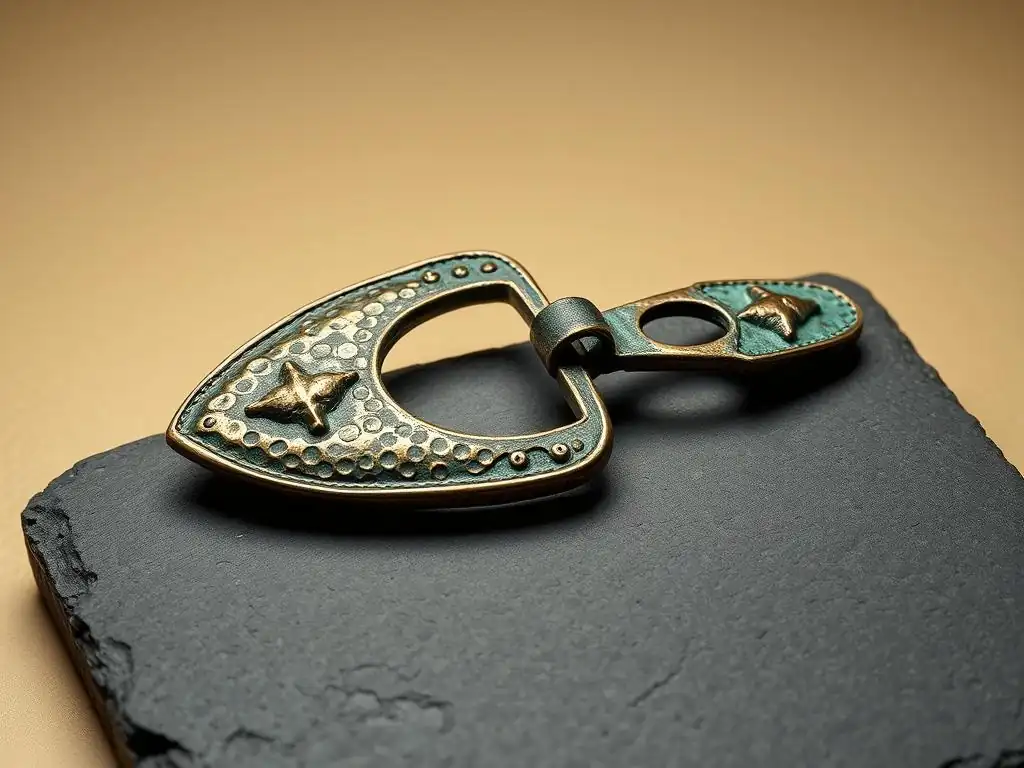
Pottery analysis is a cornerstone for establishing Hallstatt culture chronological markers, as ceramic forms and decorative styles evolved significantly throughout the period. From the simple, incised wares of Hallstatt A to the more varied and often painted vessels of Hallstatt D, changes in clay preparation, firing techniques, vessel shapes, and decorative motifs provide a sensitive barometer for temporal distinctions. Archaeologists meticulously document these variations, creating typologies that map the progression of styles.
The ubiquity of pottery fragments on almost every Hallstatt site makes it an invaluable dating tool. Even small sherds can often be assigned to a specific phase based on diagnostic features like rim profiles, base types, or the presence of specific decorative elements. This systematic approach to ceramic analysis allows researchers to build detailed relative chronologies for sites and regions, even in the absence of absolute dating methods.
Specific Pottery Types Characteristic of Each Hallstatt Phase
- Hallstatt A (c. 1200-1000 BC): Characterized by biconical urns with sharp carinations, often dark-slipped and burnished, decorated with incised geometric patterns (triangles, meanders, checkerboards). Examples include "Rippenzisten" (ribbed cists) and simple bowls.
- Hallstatt B (c. 1000-800 BC): Continues A forms but with increasing variety; carinations become softer. Decoration remains incised but can be more elaborate, sometimes with finger-impressed bands. Larger storage vessels and finer tablewares begin to appear.
- Hallstatt C (c. 800-650 BC): Introduction of painted decoration, particularly in the eastern zone, alongside continued incised patterns. Shapes become more diverse, including globular vessels and situlae (bucket-shaped containers). Animal motifs, especially birds, become more common.
- Hallstatt D (c. 650-450 BC): Peak of painted pottery, often in red, black, or white on a buff background, featuring intricate geometric and stylized animal motifs. Fine, thin-walled wares are more prevalent. Forms include elegant bowls, cups, and large storage jars, some showing early La Tène curvilinear influences. These distinct styles are strong Hallstatt culture chronological markers.
Metalwork Typology: Tracing the Evolution of Tools and Weapons
Metalwork typology is another critical source of Hallstatt culture chronological markers, reflecting both technological progress and changing societal needs. The transition from a bronze-dominated economy to one where iron played an increasingly significant role is a defining feature of the Hallstatt period. Analyzing the forms, manufacturing techniques, and decorative elements of metal artifacts—from weapons and tools to personal ornaments and prestige items—provides a precise chronological framework.
The evolution of specific artifact types, such as fibulae (brooches), swords, and axes, allows archaeologists to trace stylistic changes over time, often correlating with broader cultural shifts. The presence or absence of certain metal objects, or the prevalence of one metal over another, are strong indicators of a site's temporal placement within the Hallstatt sequence.
Bronze vs. Iron: The Shifting Ratio and its Chronological Implications
The ratio of bronze to iron artifacts in archaeological assemblages is a crucial Hallstatt culture chronological marker. During Hallstatt A and B (c. 1200-800 BC), bronze was overwhelmingly dominant, used for virtually all tools, weapons, and ornaments. Iron appears sporadically, if at all, and is primarily limited to small, often non-functional, prestige items or ornaments, indicating its rarity and high value.
By Hallstatt C (c. 800-650 BC), iron production becomes widespread, particularly for weaponry and agricultural tools. While bronze still flourishes for prestige items, vessels, and elaborate ornaments, the utilitarian function shifts towards iron. In Hallstatt D (c. 650-450 BC), iron is fully integrated into daily life, with bronze largely reserved for high-status objects, elaborate adornments, and imported luxury goods. This clear progression in metal use provides an unambiguous chronological indicator.
Hallstatt Swords and Daggers: Typological Evolution Across Phases
The typological evolution of swords and daggers serves as a finely tuned Hallstatt culture chronological marker. In Hallstatt A, swords often feature flanged hilts and are generally leaf-shaped, evolving from late Urnfield types. Hallstatt B sees the continued dominance of bronze swords, with more elaborate hilts and sometimes distinct "antennae" at the pommel, though these are more characteristic of later phases.
Hallstatt C is defined by the widespread adoption of iron swords and daggers, often long and slender, with the characteristic "antenna" hilts made of iron or inlaid bronze. These iron swords are a hallmark of the early Iron Age. In Hallstatt D, while iron remains prevalent, some forms become shorter, and the influence of early La Tène styles, such as more curvilinear hilt designs, begins to appear, providing subtle yet important chronological distinctions.
Burial Practices: Differentiating Hallstatt Phases Through Mortuary Rituals
Burial practices offer some of the most profound Hallstatt culture chronological markers, reflecting changes in social structure, belief systems, and material culture over time. From the widespread cremation urnfields of the early phases to the elaborate inhumation tumuli of the later periods, shifts in mortuary rituals provide a rich dataset for chronological and social analysis. The size and construction of burial mounds, the types and quantities of grave goods, and the orientation of burials all contribute to our understanding of phase distinctions.
The transition from predominantly cremation to an increasing prevalence of inhumation, particularly for elite burials in the western Hallstatt zone, is a key indicator. Furthermore, the specific assemblages of artifacts found within graves are often diagnostic of particular phases, allowing archaeologists to assign burials to a precise chronological slot.
Tumulus Size and Construction: Indicators of Social Hierarchy and Chronology
The evolution of tumulus (burial mound) size and construction provides significant Hallstatt culture chronological markers. In Hallstatt A, cremation burials were typically placed in simple flat graves or small, unassuming mounds. Hallstatt B sees the emergence of more substantial tumuli, often covering multiple cremation burials, indicating a growing emphasis on ancestral lineage and communal identity.
The Hallstatt C and D phases, particularly in the western zone, are characterized by the construction of exceptionally large and elaborate tumuli, sometimes exceeding 80 meters in diameter and 10 meters in height, such as the "Magdalenenberg" near Villingen. These monumental mounds typically covered rich inhumation burials of single, high-status individuals, often accompanied by wagons. The scale and complexity of these structures are direct indicators of the advanced social hierarchy and elite power characteristic of the later Hallstatt period.
Grave Goods Assemblages: Identifying Phase-Specific Artifact Associations
The specific assemblages of grave goods found within burials are invaluable Hallstatt culture chronological markers. In Hallstatt A, grave goods are relatively modest, often consisting of bronze pins, simple bracelets, and pottery vessels. Hallstatt B burials show an increase in the quantity and quality of bronze objects, including more elaborate fibulae, bronze vessels, and sometimes early forms of bronze armor.
Hallstatt C grave goods are distinguished by the presence of iron weaponry (swords, daggers) alongside continued bronze prestige items. Imported goods are rare but begin to appear. Hallstatt D elite burials, particularly the "princely" tombs, contain lavish assemblages that are highly diagnostic: four-wheeled wagons, elaborate gold and bronze ornaments (torcs, armrings), fine painted pottery, and a significant proportion of Mediterranean imports (e.g., Greek kraters, Etruscan situlae). These distinct artifact combinations allow for precise phase identification.
Regional Variations in Hallstatt Chronological Markers
Eastern Hallstatt Zone: Specific Markers in the Eastern Alps and Carpathian Basin
The Eastern Hallstatt Zone, encompassing regions like Austria, Slovenia, Hungary, and parts of the Czech Republic, exhibits distinct Hallstatt culture chronological markers compared to its western counterpart. While sharing broad cultural traits, specific artifact typologies and burial practices developed regionally. For instance, in the Eastern Hallstatt, painted pottery, often featuring bird and animal motifs, is far more prevalent from Hallstatt C onwards, particularly the "bird-urns" and vessels with the "situla art" style.
Cremation also remained a dominant burial rite for longer in the east, even for elite individuals, contrasting with the shift to inhumation in the western princely graves. Furthermore, specific bronze vessel forms, like the "situlae" (bucket-shaped containers) with figural scenes, are highly characteristic of the eastern zone, especially from the Hallstatt D period, reflecting unique artistic traditions and trade connections, particularly with the Adriatic and Italic regions.
Western Hallstatt Zone: Distinguishing Features in Modern-Day France and Switzerland
The Western Hallstatt Zone, covering areas of southern Germany, eastern France, and Switzerland, is renowned for its specific Hallstatt culture chronological markers, particularly during the later phases. This region is most famously associated with the "princely states" and their exceptionally rich tumulus burials from Hallstatt C and D. The shift to inhumation burial for elites, often accompanied by four-wheeled wagons, is a defining characteristic of this western area, exemplified by sites like Vix and Hochdorf.
In terms of material culture, the western zone shows a stronger emphasis on large, elaborate bronze vessels, often imported from the Mediterranean (e.g., the Vix Krater), and distinctive gold jewelry, such as large torcs. While iron weaponry is common, the bronze and gold prestige items found in the western princely graves are unparalleled elsewhere, reflecting unique trade routes and the accumulation of immense wealth by local chieftains.
Radiocarbon Dating and Absolute Chronology in Hallstatt Studies
The Role of Radiocarbon Dating in Refining Hallstatt Chronologies
Radiocarbon dating (14C) has played an indispensable role in refining and anchoring the relative Hallstatt culture chronological markers derived from artifact typologies and stratigraphy to an absolute timescale. By providing scientifically determined age ranges for organic materials (like charcoal, bone, or wood) found in association with Hallstatt archaeological contexts, 14C dating allows researchers to establish precise calendar dates for the various phases. This has helped to resolve long-standing debates about the exact start and end dates of each Hallstatt period and the duration of transitions.
For example, initial typological chronologies could place Hallstatt C between "early" and "late" Iron Age, but radiocarbon dates have narrowed its range to approximately 800-650 BC, providing a concrete temporal framework. The application of high-precision radiocarbon dating, often using Accelerator Mass Spectrometry (AMS), has further refined these chronologies, offering tighter date ranges and allowing for a more nuanced understanding of cultural developments and interactions.
Combining Relative and Absolute Dating Methods for a Comprehensive Understanding
A comprehensive understanding of Hallstatt culture chronological markers relies on the synergy between relative and absolute dating methods. Relative dating, based on typological sequences of artifacts (e.g., the evolution of fibula forms) and stratigraphic relationships (which layers are older than others), establishes the order of events and cultural changes. It tells us what came before what.
Absolute dating, primarily through radiocarbon analysis, provides the calendar ages for these sequences, telling us when these events occurred. By combining the precision of relative typologies with the temporal anchoring of absolute dates, archaeologists can construct robust and highly accurate chronologies for the Hallstatt culture. This integrated approach allows for the confident assignment of archaeological finds to specific phases, facilitating detailed comparative studies across vast geographical areas and long temporal spans.
Conclusion: Utilizing Archaeological Markers for Precise Hallstatt Phase Identification
Future Directions in Hallstatt Chronological Research
Future directions in the study of Hallstatt culture chronological markers will likely involve even higher-resolution dating techniques, such as dendrochronology where preserved wood allows, and further refinement of radiocarbon sequences through Bayesian statistical modeling. This will allow for even tighter chronological control, potentially revealing short-term cultural shifts or regional micro-chronologies that are currently obscured. Additionally, the application of new scientific methods, such as archaeogenetic studies on human remains, could provide novel insights into population movements and their correlation with chronological shifts in material culture.
Furthermore, interdisciplinary research, combining archaeological findings with paleoclimatic data, could help understand how environmental changes influenced settlement patterns and trade networks across Hallstatt phases. The continued development of digital archaeological databases and GIS mapping will also enhance our ability to analyze and visualize the spatial distribution of these chronological markers, leading to a more holistic understanding of the Hallstatt culture's dynamic evolution.
The Importance of Continued Excavation and Analysis for Understanding Hallstatt Culture
The ongoing importance of continued excavation and meticulous analysis for understanding Hallstatt culture chronological markers cannot be overstated. Each new archaeological discovery, whether a previously unknown settlement, a rich burial, or a hoard of artifacts, contributes fresh data that can refine, confirm, or occasionally challenge existing chronological frameworks. New finds often provide crucial diagnostic artifacts or contexts that fill gaps in our knowledge or offer unprecedented insights into specific aspects of Hallstatt life.
Systematic analysis of these newly unearthed materials, combined with re-examination of older collections using modern analytical techniques, ensures that our understanding of Hallstatt chronology remains robust and accurate. This continuous process of discovery, analysis, and re-evaluation is fundamental to building a comprehensive and nuanced picture of this pivotal Early Iron Age society, allowing us to trace its development, interactions, and eventual transformation with ever-increasing precision.
Frequently Asked Questions
What are the key chronological markers used to differentiate between the phases of the Hallstatt culture?
Archaeologists primarily use grave goods, such as bronze weaponry and pottery styles, as well as the morphology of burial mounds themselves to distinguish between Hallstatt phases.
How do bronze artifacts, specifically, serve as indicators of different Hallstatt periods?
The style and decoration of bronze axes, swords, and other artifacts evolved over time. Changes in casting techniques and the introduction of new decorative motifs help date finds to specific phases within the Hallstatt period.
Can the location and structure of burial mounds provide information about the Hallstatt chronology?
Yes, the size and complexity of burial mounds, along with their location relative to settlements, can indicate the social status and chronological period of the individuals buried within.
What role does pottery analysis play in understanding the different phases of the Hallstatt culture?
Pottery styles, including shape, decoration, and manufacturing techniques, changed throughout the Hallstatt period. Analyzing these ceramic variations allows archaeologists to establish a relative chronology for different sites and phases.
How does ArchaeologyHub.org help researchers and enthusiasts understand Hallstatt culture chronological markers?
ArchaeologyHub.org provides detailed artifact profiles, comparative analyses of grave goods, and geographic visualizations of Hallstatt sites, enabling users to track the evolution of the culture across time and space, and identify key chronological markers.
Final Reflection: Echoes of Hallstatt, Whispers of Time
The preceding analysis of Hallstatt culture chronological markers underscores not just the meticulous work of archaeologists, but also the enduring power of material culture to speak across millennia. In a world increasingly focused on the ephemeral, these tangible remnants of the past offer a vital connection to our shared human story, reminding us that even the most seemingly distant civilizations have shaped the world we inhabit today.
The study of Hallstatt culture, with its intricate burial practices and distinctive metalwork, continues to resonate deeply. It reminds us that identity, innovation, and societal structure are not modern inventions, but rather fundamental aspects of the human experience, constantly evolving and adapting. Archaeology is the only branch of anthropology that can tell us anything about the past of 99% of humanity.
- Michael Brian Schiffer. This quote encapsulates the profound responsibility we have to understand and preserve these fragments of the past, for they hold the keys to understanding ourselves.
As you consider the chronological markers discussed, I invite you to reflect on the legacy of the Hallstatt culture and its relevance to our present. How can we, as individuals, contribute to the preservation and appreciation of our shared heritage? Let us strive to be mindful custodians of the past, ensuring that the echoes of Hallstatt continue to resonate for generations to come, inspiring curiosity and fostering a deeper understanding of the human journey.
Unearth Your Inner Archaeologist: Take the Next Step!
Thanks for diving deep into the Hallstatt culture with us! We hope you've gained a newfound appreciation for the subtle yet significant markers that define its fascinating phases. Now, let's put that knowledge into action:
- Visit a local museum or archaeological site featuring Hallstatt artifacts – experience the past firsthand!
- Share this article with a fellow history enthusiast and spark a discussion about the nuances of archaeological classification.
- Try researching specific Hallstatt burial sites in your region (or a region that interests you) and compare the grave goods found to identify the cultural phase.
What overlooked artifact do you think could revolutionize our understanding of Hallstatt chronology?