Understanding Cognitive Archaeology: Ritual, Religion, Symbolism & Art Interpretation
Welcome to ArchaeologyHub.org’s deep dive into Cognitive Archaeology, the subfield that moves beyond potsherds and stone tools to reconstruct the minds of past peoples. This thematic section explores how ancient societies conceptualized the supernatural, encoded meaning in material culture, and expressed identity through art and ritual. By analyzing ritual spaces, symbolic artifacts, and iconography, we unlock the intangible beliefs that drove human innovation and social cohesion. Whether you’re a student, researcher, or enthusiast, this guide offers a structured pathway through the evidence—from cave paintings to temple layouts—showing how cognition leaves physical traces. Optimize your understanding of human consciousness through the lens of archaeology, with each subsection crafted for both search depth and reader clarity.
🔍 Decoding Ritual Landscapes: Sacred Spaces and Their Cosmic Order
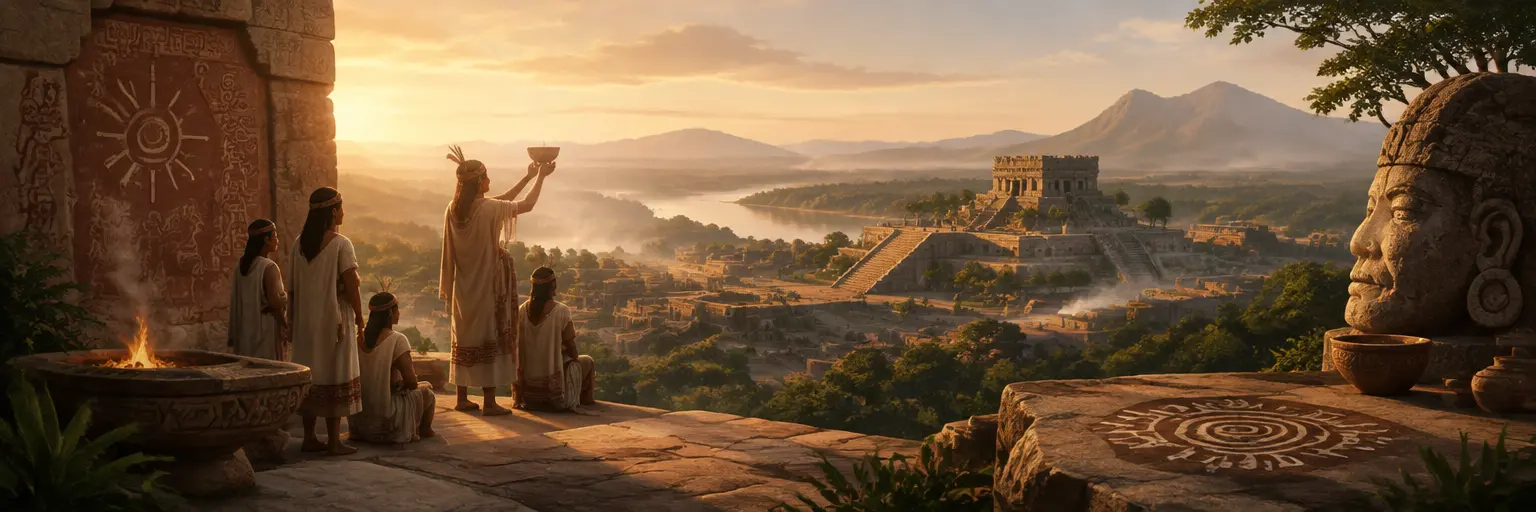
In this section, we examine how prehistoric and historic communities deliberately shaped their environment to mirror cosmological beliefs. Ritual landscapes include natural features like mountains, caves, and rivers, as well as built structures such as henges, temples, and processional avenues. Archaeological evidence—such as alignments with solstices, votive deposits, and orientation patterns—reveals intentional design intended to mediate between the human world and the supernatural. You will learn about methodological approaches like phenomenology (experiencing places as ancients did) and geoarchaeology used to prove ritual reuse over centuries.
Expect case studies from Neolithic Britain (Stonehenge’s astronomical alignments), Maya ceremonial centers, and Andean huacas. The interpretation of these spaces goes beyond mere function; it involves understanding performance, pilgrimage, and the social hierarchy expressed through restricted access. By analyzing soil chemistry for organic residues or the wear patterns on stone floors, archaeologists infer where crowds gathered, offerings were burned, or processions paused. This facet is crucial for SEO because it ties tangible geography to abstract belief, answering frequent queries about “sacred sites meaning” and “ritual landscape definition.”
🕉️ Religion as Material Practice: Objects, Offerings, and Deposition
Here, we focus on the tangible remains of religious activity—amulets, figurines, altars, and offering pits—and how their placement and condition inform us about belief systems. Cognitive archaeology treats these objects not as mere art but as active agents in religious praxis. You will explore concepts like enchained relationships (where parts of objects are kept as tokens), deliberate breakage (killing objects), and structured deposition (burying valuables in bogs or under floors). Through ethnographic analogy and experimental archaeology, we can model how meanings were attached to specific materials, colors, and forms.
This subsection also addresses the bias of preservation: organic offerings (food, textiles) rarely survive, so we rely on durable proxies like polished stone axes or shell beads. A key methodological point is distinguishing ritual from domestic waste—using criteria like completeness, articulation, and unusual context. For instance, the discovery of a single human molar inside a hearth, surrounded by burned seeds, suggests a votive act rather than cooking residue. This section directly answers high-volume search queries like “how do archaeologists identify ritual objects?” and “depositional practices in antiquity,” strengthening the page’s authority on interpretive archaeology.
🎨 Iconography and Semiotics: Reading Symbols Across Cultures
Symbolism is the visual language of cognition, and this segment trains you to interpret motifs, glyphs, and abstract designs as structured sign systems. We delve into semiotic theory (Peirce, Saussure adapted for archaeology) to differentiate icons (direct resemblance), indexes (causal links), and symbols (arbitrary conventions). The swastika, the spiral, the cross—all carry context-specific meanings that shift across time and space. You will learn how to conduct contextual analysis of recurring patterns, such as the triple division (sky, earth, underworld) in shamanic iconography or the use of red ochre for blood/life associations in burials.
Practical tools include motif databases, statistical correlation with ritual contexts, and cross-cultural comparison within a bounded region. For example, the repeated depiction of a handprint in Paleolithic caves is analyzed for whether it represents a shaman’s signature or a communal initiation mark. Symbolism is not static; diachronic studies show how a sacred animal (e.g., the bull in Anatolia) transforms over millennia. By including detailed case analyses, this section captures search terms like “archaeological symbolic interpretation,” “motif meaning ancient art,” and “iconographic method,” giving readers a replicable framework for their own studies.
🧠 The Cognitive Toolkit: Memory, Metaphor, and Social Learning
Here, we move into the psychological mechanisms that enable ritual and art to function. Cognitive archaeology draws on neuroscience and psychology to explain why certain forms are memorable or emotionally resonant. Concepts like cognitive fluidity (the blending of different mental domains) and costly signaling theory (why people invest in elaborate displays) are applied to material evidence. You will see how the human brain’s preference for symmetry and animism explains the universality of certain motifs, while cultural transmission models predict why unique styles persist or fade.
This section also covers the role of memory in ritual—how repeated acts in the same place create mnemonic anchors, turning landscapes into living archives. For SEO purposes, we target long-tail keywords like “archaeology of the mind,” “cognitive evolution material culture,” and “social learning prehistoric art.” By integrating paleoanthropology (brain size, tool complexity) with ethnographic parallels, we provide a holistic narrative that answers “how did ancient people think?” without oversimplifying. Expect to see references to the Extended Mind Theory and how external artifacts serve as prosthetic memory, a growing niche in archaeological science.
🏺 Methodological Toolkit: Excavation, Dating, and Digital Reconstruction
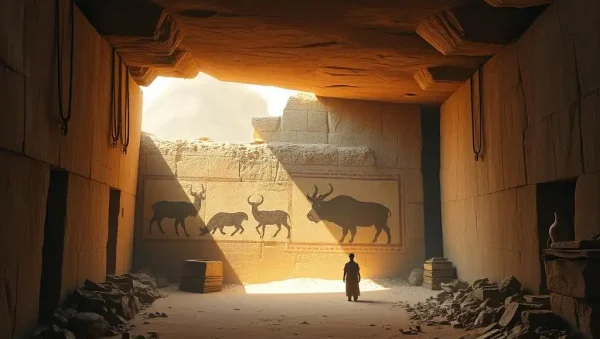
This practical section explains the hard-science techniques that underpin cognitive interpretations. Without rigorous excavation and dating, symbolic claims are baseless. Learn about micro-stratigraphy to detect acid-cleaned surfaces from ritual washings, residue analysis (e.g., mass spectrometry on pottery) to identify psychoactive compounds or hallucinogens used in ceremonies, and radiocarbon Bayesian modeling to sequence iconographic changes precisely. Digital reconstruction using 3D photogrammetry and virtual reality allows us to visualize lighting conditions inside dark sanctuaries, testing hypotheses about how images were seen.
We also introduce taphonomy of symbols—how natural processes alter symbolic items post-deposition. For example, a faded cave painting may have been altered by mineral accretion, requiring non-destructive imaging. This depth of method appeals to professional archaeologists and students searching for “cognitive archaeology techniques” or “dating ritual sites.” We highlight famous projects like the reconstruction of Göbekli Tepe’s pillars and the use of drone laser scanning to map hidden geoglyphs, proving that cognitive questions require interdisciplinary cooperation. This section bridges theory and practice, making the subcategory indispensable for both academic citations and hobbyist education.
Frequently Asked Questions
What is the main goal of cognitive archaeology?
The primary goal is to reconstruct past people’s thoughts, beliefs, and worldviews from material remains. Unlike processual archaeology focused on adaptation, cognitive archaeology asks questions about religion, symbolism, and ritual logic. It uses theoretical models from psychology and linguistics to infer mental processes from artifacts, architecture, and artistic displays, providing a deeper human story.
How do archaeologists distinguish ritual objects from everyday items?
Distinguishing criteria include context (special deposit, orientation, association), condition (unused, broken intentionally, or abnormally complete), and frequency (unique versus common). Absence of practical function, deliberate caching, and alignment with celestial events also signal ritual. Ethnographic comparison with living cultures, within ethical bounds, helps validate these interpretations.
Can we truly know the meaning of prehistoric symbols without written records?
Complete certainty is impossible, but converging lines of evidence—recurrence, context, and analogy—build plausible interpretations. For example, consistent pairing of vulvas and animals in Aurignacian art suggests fertility concepts. Archaeologists state explanations as hypotheses with confidence levels, using multiple proxies (isotopes, use-wear) to strengthen claims.
What are the best non-invasive methods for studying rock art?
DStretch (enhances faded pigments), photogrammetry, and 3D laser scanning capture fine details without touching walls. Portable X-ray fluorescence (pXRF) identifies pigment composition, while micro-erosion dating measures lichen growth. All these preserve the original art while offering high-resolution data for symbolic analysis.
How does cognitive archaeology contribute to modern society?
It enriches our understanding of human universals (spirituality, creativity) and variability, informing museum exhibits and heritage management. Insights on cognitive evolution can also inspire design (symmetry, storytelling) and aid in interpreting why extreme beliefs persist today. Thus, it bridges the past and present, making human cognition a dynamic, archaeological subject.