Archaeology of Trade & Exchange: Networks and Cultural Interaction
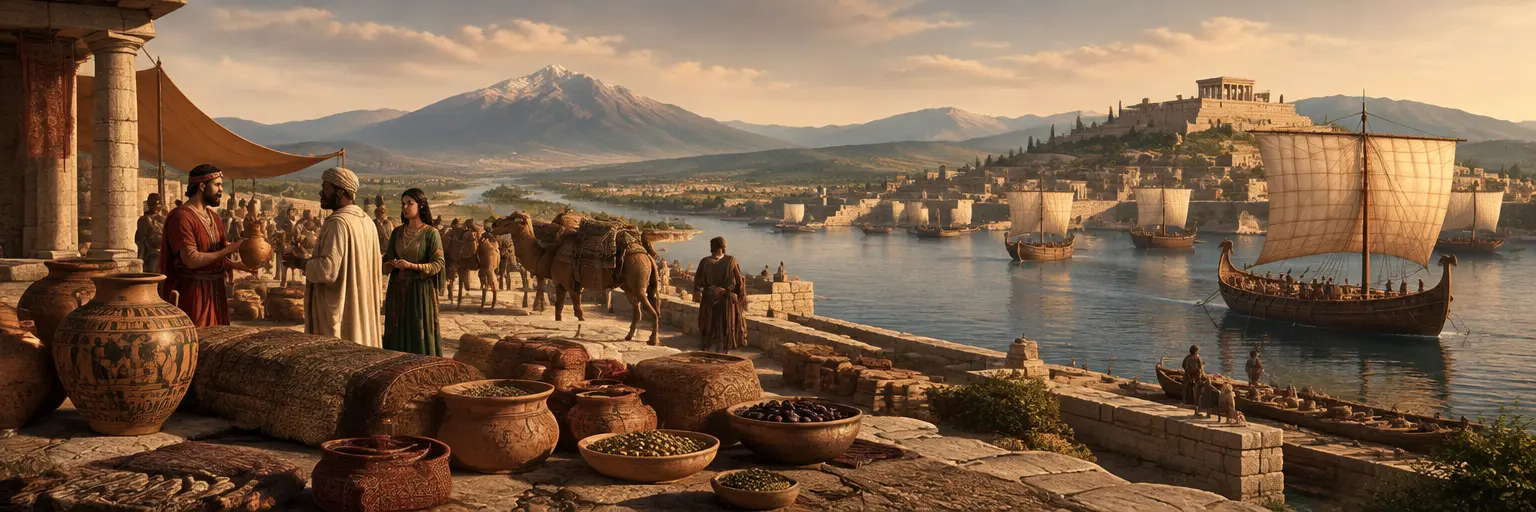
Welcome to ArchaeologyHub.org’s deep dive into the Archaeology of Trade & Exchange—a subcategory that unravels the intricate web of ancient commerce, movement of goods, and the cultural dialogues that shaped civilizations. Here, we explore how raw materials, finished artifacts, and even ideas traversed continents long before modern globalization. From the Silk Road to maritime spice routes, this section illuminates the archaeological evidence of connectivity that redefines our understanding of past societies. Expect a blend of artifact analysis, site-specific case studies, and theoretical frameworks that reveal how trade networks fostered cultural interaction, technological diffusion, and social transformation. Whether you are a student, researcher, or enthusiast, this resource is crafted to be your authoritative gateway into the material traces of human exchange.
🔍 Unearthing Ancient Trade Routes: Methods and Evidence
In this section, we dissect the methodologies archaeologists use to reconstruct trade networks—from petrographic analysis of pottery to isotopic fingerprinting of metals and obsidian. Learn how the distribution of exotic items like lapis lazuli, amber, or cowrie shells maps out prehistoric exchange corridors. We also examine the role of shipwrecks, caravanserais, and harbor installations as “fossilized” nodes of commerce, providing direct evidence of loading patterns, packaging, and even the weight standards of ancient economies. This is where you’ll grasp the scientific rigor behind identifying provenance and trace the journeys of everyday and luxury goods.
Beyond the lab, geospatial technologies like GIS and least-cost path analysis now allow us to simulate likely overland and maritime routes, considering terrain, wind currents, and resource availability. These models, when compared with artifact distributions, reveal patterns of deliberate choice and incidental drift—for instance, why some routes flourished while others stagnated. You will find here case studies from the Bronze Age Aegean, the Roman Empire’s amphora trade, and the Indian Ocean exchange, each demonstrating how multiple lines of evidence converge to create a robust picture of ancient connectivity.
🌍 Cultural Interaction and Material Culture: Beyond the Marketplace
Trade is never merely economic; it is a powerful engine of cultural transmission and hybridization. This segment focuses on how imported goods influenced local tastes, religious practices, and social status. For example, the adoption of Mediterranean wine-drinking customs in Iron Age Gaul, or the spread of Buddhist iconography along the Silk Road, are phenomena you will explore through specific artifact assemblages. We analyze the concept of “creolization” and “entanglement,” where objects acquire new meanings in foreign contexts, thereby reshaping identity and ritual life. Expect detailed profiles of trade-as-catalyst: emporia, port cities, and border markets that functioned as contact zones.
Additionally, we investigate how the control of trade goods translated into political power—from the monopoly on tin in the Bronze Age to the spice monopolies of the medieval Islamic world. By examining elite burials filled with foreign luxuries, or hoards of standardized currency, you’ll see the intimate link between exchange and hierarchy. The subsection also addresses the less glamorous side: evidence of slavery, forced labor, and unequal exchange, reminding us that globalization’s ancestors had winners and losers. These narratives enrich our appreciation of how material culture acts as both a mirror and a motor of historical change.
🏺 Commodity-Specific Studies: From Spice to Textiles
Here we zoom into the biographies of individual commodities—silk, spices, metals, glass, incense, and slaves—each with its own unique archaeological signature. For instance, you will learn how the presence of Chinese celadon pottery in East African coastal sites indicates not just trade, but also diplomatic gifts and status curation. Similarly, the analysis of resin traces inside amphorae reveals the exact cargo of ancient ships, while the study of textile dye residues in workshops offers insights into production centers and their distribution networks. These commodity-focused studies are essential for quantifying trade volume, seasonality, and price fluctuations in pre-monetary societies.
We also delve into technological transfer that accompanied these goods—how the import of rotary querns, silk-weaving looms, or glass-blowing techniques altered local industries. You’ll encounter examples like the spread of the domesticated chicken along maritime routes, or the introduction of papermaking from China westward. Each commodity narrative is supported by excavation reports, experimental archaeology, and ethno-historical accounts, giving you a multi-sensory understanding of what it meant to produce, transport, and consume these items. This granular perspective helps you appreciate the scale and sophistication of ancient supply chains.
📜 Theoretical Frameworks: World Systems, Ports of Trade, and Anthropological Models
This section arms you with the conceptual tools to interpret archaeological data within broader socio-economic theories. We critically evaluate Immanuel Wallerstein’s “world-systems theory” as applied to pre-modern economies, questioning its applicability to decentralized networks. In its place, you’ll explore more flexible models like “peer polity interaction,” “entrepot economies,” and the “Archipelago of Exchange” concept for island Southeast Asia. Each theory is illustrated with concrete archaeological examples, from the Uruk expansion to the Viking trade in furs and walrus ivory, allowing you to see how abstraction clarifies or obscures the material record.
Moreover, we introduce behavioral and agency-based approaches that emphasize the role of individual merchants, state sponsorship, and piracy in shaping exchange. You will critically assess the notion of “free trade” versus “administered trade” in ancient contexts, using the Amarna letters or Roman “annona” system as case studies. By understanding these lenses, you can independently evaluate competing narratives about why trade intensified or collapsed in different epochs. The goal is to transform you from a passive reader into an active interpreter of archaeological evidence, equipped to see multiple possible explanations and weigh their merits.
🗺️ Case Studies in Global Connectivity: From the Mediterranean to the Pacific
Here we present focused, richly illustrated case studies that synthesize theory and data. Travel with us to the Uluburun shipwreck (14th century BCE), whose cargo of copper, tin, glass, and ebony reveals international diplomacy and trade in the Late Bronze Age. Then, hop to the Maya classic period, where obsidian from highland Guatemala was traded hundreds of kilometers, questioning assumptions about “pristine” economies. Each case study includes discussion of routes, logistics, and the human stories behind the artifacts, such as sailors’ rations or merchants’ letters found at sites like Kanesh in Anatolia. These narratives breathe life into the dusty objects of museum displays.
We also examine the Indian Ocean and Pacific maritime networks, which connected East Africa, Arabia, India, Southeast Asia, and China, evidenced by ceramics, beads, and botanical remains like cloves and pepper. You will learn how monsoon winds dictated seasonal rhythms of exchange and how coastal settlements acted as transshipment hubs. Additionally, we touch on overland equivalents like the “Tea-Horse Road” through Tibet. By comparing these diverse regions, you will recognize common patterns—such as the rise of merchant diasporas or the role of religious pilgrimages in facilitating trade—while also appreciating each network’s unique characteristics. This comparative approach is vital for a nuanced understanding of human connectivity.
Frequently Asked Questions
What is the primary archaeological evidence used to study ancient trade?
The primary evidence includes artifact provenance through chemical or mineralogical analysis (e.g., trace elements in obsidian or ceramics), distribution patterns, shipwrecks, and site-level features like storage rooms or import warehouses. Written records, when available, supplement these with price lists or tax invoices.
How do archaeologists distinguish between local and imported goods?
Distinguishing relies on compositional analysis (e.g., XRF or petrography) to match artifacts to known raw material sources. Additionally, stylistic traits, manufacturing techniques, and the absence of local production waste help indicate foreign origin, though caution is needed due to local imitations.
Did ancient trade only involve luxury items?
No, recent studies show bulk goods like grain, timber, pottery, and salt were widely traded, especially for urban centers. However, luxury items are often more archaeologically visible because they are more likely to be imported and curated, while perishables or low-value goods may leave scant traces.
How did trade networks affect social hierarchy in ancient societies?
Trade often reinforced hierarchy, as elites controlled access to exotic goods used in status display and rituals. However, some goods like iron tools or common textiles could empower lower classes, leading to nuanced social shifts. The distribution of imported items in domestic contexts helps archaeologists infer such dynamics.
Can we map ancient trade routes with certainty?
Routes are inferred rather than proven, using Bayesian modeling of artifact distributions, shipwreck locations, and geographic constraints. While some routes are well-supported (e.g., trans-Saharan gold), others remain hypotheses. Uncertainties are always acknowledged, and multiple competing models are often equally valid.