
Ancestor Worship: Its Central Role in Zhou Dynasty Religion and Society

Welcome to ArchaeologyHub.org, your gateway to the past!
Delve into the fascinating world of ancient civilizations and uncover the secrets they left behind. This time, we're turning our attention to the influential Zhou dynasty, exploring a cornerstone of their society: ancestor worship. How did this practice shape their religious beliefs and social structures? Join us as we unravel the rituals, beliefs, and profound impact of this enduring tradition, and discover how it echoes through history. Prepare to be enlightened!
- Introduction: Understanding Zhou Dynasty Religion through Ancestor Veneration
- The Historical Context: Zhou Dynasty and the Rise of Ancestor Worship
- The Centrality of Ancestor Worship in Zhou Dynasty Society
- Key Elements of Zhou Dynasty Ancestor Worship
- The Significance of Lineage and Genealogy in Zhou Ancestor Worship
- The Political and Social Implications of Ancestor Worship during the Zhou Dynasty
- Comparing Zhou Dynasty Ancestor Worship with Earlier Traditions
- Case Studies: Archaeological Evidence of Zhou Dynasty Ancestor Worship
- The Decline of Zhou Dynasty Ancestor Worship and its Legacy
- Conclusion: Zhou Dynasty Ancestor Worship - A Cornerstone of Early Chinese Civilization
-
Frequently Asked Questions
- How central was ancestor worship to the Zhou Dynasty?
- What role did ancestor worship play in legitimizing Zhou rule?
- What types of rituals were commonly performed in Zhou Dynasty ancestor worship?
- How did the Zhou Dynasty's concept of ancestor worship differ from that of previous dynasties?
- Where can I find more information about Zhou Dynasty ancestor worship on ArchaeologyHub.org?
- Final Reflection: Echoes of the Past in the Present
- Embrace the Wisdom of the Ancients
Introduction: Understanding Zhou Dynasty Religion through Ancestor Veneration
Ancestor worship stood as a pivotal pillar in the religious and social fabric of the Zhou Dynasty (c. 1046–256 BCE). Far from a mere superstitious practice, it permeated every aspect of life, from the highest echelons of royal power to the daily routines of common households. This profound reverence for deceased forebears provided a foundational framework for moral conduct, social hierarchy, and political legitimacy, shaping the very identity of early Chinese civilization. Understanding Zhou dynasty ancestor worship is crucial for comprehending the complex interplay between spiritual beliefs and temporal authority during this formative period.
The Historical Context: Zhou Dynasty and the Rise of Ancestor Worship
Transition from Shang Dynasty Rituals to Zhou Practices
The Zhou Dynasty inherited and significantly transformed the ancestor worship practices of its predecessor, the Shang Dynasty (c. 1600–1046 BCE). While Shang kings primarily focused their veneration on Di, the High God, and their own immediate royal ancestors—often consulting them through extensive oracle bone divination—the Zhou broadened this scope. They maintained the belief in powerful ancestral spirits, but shifted emphasis from a singular focus on the Shang royal lineage's connection to Di towards a more universal concept of Heaven ( Tian) and a more formalized, hierarchical system of ancestral veneration that extended beyond the royal house to the nobility.
This transition saw the Zhou adapt existing ritual forms while imbuing them with new philosophical underpinnings. For instance, while Shang kings sought specific instructions from their ancestors regarding warfare, harvests, or illnesses, the Zhou integrated ancestral blessings into a broader moral and political discourse. The Zhou also developed a more systematic approach to the zongfa (lineage system), which formalized the hierarchy of worship among different branches of a clan, ensuring that each noble house maintained its own ancestral cult while acknowledging the supremacy of the royal ancestral line.
The Mandate of Heaven and its Connection to Ancestral Lineage
The concept of the Mandate of Heaven ( Tianming) was a revolutionary ideological tool introduced by the Zhou, directly linking their legitimacy to ancestral lineage and moral conduct. The Zhou kings asserted that Heaven had granted them the right to rule because the Shang kings had become corrupt and lost the favor of their own ancestors through misrule. Conversely, the Zhou's ancestors, particularly the virtuous King Wen and his son King Wu, were seen as having gained Heaven's approval, thus justifying the dynastic overthrow.
This powerful doctrine profoundly reinforced the importance of ancestral veneration. Maintaining the Mandate of Heaven required the Zhou rulers to govern virtuously and uphold proper ritual conduct, including respectful and elaborate ancestor worship. Failure to perform these rites meticulously or to rule justly was believed to incur ancestral displeasure, which could manifest as natural disasters, military defeat, or internal rebellion, ultimately leading to Heaven revoking the Mandate. Thus, the stability and prosperity of the state were inextricably tied to the proper performance of Zhou dynasty ancestor worship and the favor of the ancestral spirits.
The Centrality of Ancestor Worship in Zhou Dynasty Society
Ancestor worship was not merely a religious observance but a fundamental mechanism for structuring and maintaining the feudal social hierarchy of the Zhou Dynasty. Each noble clan traced its lineage back to a common, often revered, ancestor, establishing claims to status, land, and ritual prerogatives. The zongfa system, or clan-lineage system, meticulously dictated the hierarchy of worship, mirroring the social and political stratification: the Son of Heaven worshipped the most senior and powerful ancestors, dukes venerated their own clan founders, and so on down to the lowest nobility. This system provided a rigid, divinely sanctioned framework for social order.
Under the zongfa system, the eldest son in the direct line, known as the da zong (great lineage), held primary responsibility for the performance of ancestral rites for the main lineage and inherited the principal family property and titles. Cadet branches, or xiao zong (small lineage), maintained their own subordinate ancestral cults. This hierarchical arrangement ensured that power and status were passed down through specific lines, reinforcing the stability of the feudal system. The correct performance of Zhou dynasty ancestor worship thus served as a public affirmation of one's place within this intricate social structure.
Rituals and Offerings: Maintaining Harmony with the Ancestral Spirits
The performance of rituals and the presentation of offerings were central to maintaining a harmonious relationship with the ancestral spirits in Zhou society. These elaborate ceremonies typically involved grand banquets, sacrifices of grain, wine, and animals such as oxen, sheep, and pigs, alongside musical performances and ritual dances. The primary goal was to provide sustenance and pleasure to the ancestors, ensuring their benevolent influence on the living, and soliciting their blessings for good harvests, health, and prosperity. The precision and formality of these rites were paramount, as any perceived disrespect could incur ancestral displeasure.
Beyond mere sustenance, these offerings served as a vital means of communication, allowing the living to seek guidance, protection, and blessings from their revered forebears. Neglecting these essential rituals was believed to provoke the ancestors' wrath, potentially leading to misfortune, illness, or even the collapse of the lineage. Texts like the Liji (Book of Rites), though compiled later, reflect many Zhou-era ritual concepts, detailing the strict protocols and moral significance attached to these acts of piety. The adherence to these practices underscored the deep belief in the ancestors' continued involvement in the affairs of the living.
Key Elements of Zhou Dynasty Ancestor Worship
Ancestral Tablets: Representing the Presence of the Deceased
A crucial element in Zhou dynasty ancestor worship was the use of ancestral tablets, known as shenzhu or lingwei. These were typically wooden tablets, meticulously inscribed with the name, title, and sometimes the lifespan of the deceased ancestor. They were housed in ancestral temples or household altars and served as a physical locus for the ancestral spirit during rituals. The tablets provided a tangible focal point for veneration, allowing worshippers to direct their prayers and offerings to a specific representation of their forebears.
The significance of these tablets extended beyond mere symbolism. It was widely believed that the hun (spiritual soul) of the ancestor could temporarily reside within the tablet during ceremonies. Therefore, offerings were meticulously placed before them, and prostrations were made directly to them, signifying a direct interaction with the venerated ancestor. While archaeological evidence of specific Zhou-era wooden tablets is scarce due to their perishable nature, the continuity of this practice into later dynasties, along with textual references, strongly suggests their early adoption and profound importance in the ritual landscape of the Zhou.
Sacrificial Rites: Communicating with and Honoring Ancestors
Sacrificial rites in the Zhou Dynasty were highly formalized and elaborate events, integral to communicating with and honoring ancestors. These ceremonies often involved specific sets of bronze vessels—such as ding tripods for cooking meat, gui for grain, and zun or hu for wine—along with prescribed music, dance, and strict procedures. The type and quantity of offerings were meticulously dictated by the social status of both the worshipper and the ancestor being honored. For instance, royal sacrifices might involve dozens of oxen, while a lower noble might offer only a single pig.
These sacrifices held both profound social and spiritual dimensions. They were not merely private acts of piety but public affirmations of social order, familial continuity, and political legitimacy. Through these rituals, the living sought to bridge the gap between their world and the spirit realm, ensuring the prosperity of the lineage and the well-being of the state. The communal sharing of the sacrificial meal after the ritual, often known as xiang, also served as a powerful bonding experience, reinforcing kinship ties and social cohesion among the participants.
The Role of Oracle Bones and Divination: Shift from Scapulimancy to Yijing Divination
The Zhou Dynasty witnessed a significant evolution in methods of divination compared to its Shang predecessor, impacting how ancestral will was sought. While the Shang heavily relied on scapulimancy—the practice of heating ox scapulae and turtle plastrons to produce cracks, which were then interpreted as divine messages—the Zhou saw a gradual shift towards milfoil stalk divination. This method, involving the manipulation of bundles of yarrow stalks to generate hexagrams, later formed the basis of the Yijing (I Ching) or Book of Changes, marking a transition towards a more abstract and philosophical approach to understanding cosmic patterns and ancestral influences.
Although less direct than the inscribed oracle bones of the Shang, the Yijing offered a sophisticated means for the Zhou elite to interpret omens, make crucial decisions, and understand the potential outcomes of their actions in relation to the unseen world, including the blessings or warnings from their ancestors. This shift reflected a growing emphasis on moral principles and the inherent order of the cosmos, rather than direct, specific inquiries to individual ancestors. Despite this evolution, divination remained a vital component of Zhou dynasty ancestor worship, providing a framework for discerning divine and ancestral will.
The Significance of Lineage and Genealogy in Zhou Ancestor Worship
Maintaining Family Records: The Importance of Genealogy
The meticulous maintenance of family records, or genealogies ( zupu), was of paramount importance in Zhou dynasty ancestor worship. These records painstakingly traced a family's lineage back through generations, establishing a clear line of descent from a common ancestor. Such documented genealogies were not merely historical curiosities; they served as irrefutable proof of one's social standing, claims to land, and, crucially, the right to perform specific ancestral rites. They were tangible evidence of one's connection to esteemed forebears and a vital component of family identity.
Genealogy played a pivotal role in regulating various aspects of Zhou society. It validated social status, dictated appropriate marriage alliances (preventing unions within certain degrees of kinship), and influenced inheritance patterns, ensuring that property and titles remained within the designated lineage. More fundamentally, these records ensured the correct performance of ancestor worship, guaranteeing that the appropriate rituals were directed to the correct ancestors, thereby maintaining the flow of blessings and the continuity of the family unit across time. The zupu was a living document, reflecting the dynamic nature of lineage and its centrality to Zhou social order.
Ancestral Shrines and Temples: Focal Points of Worship
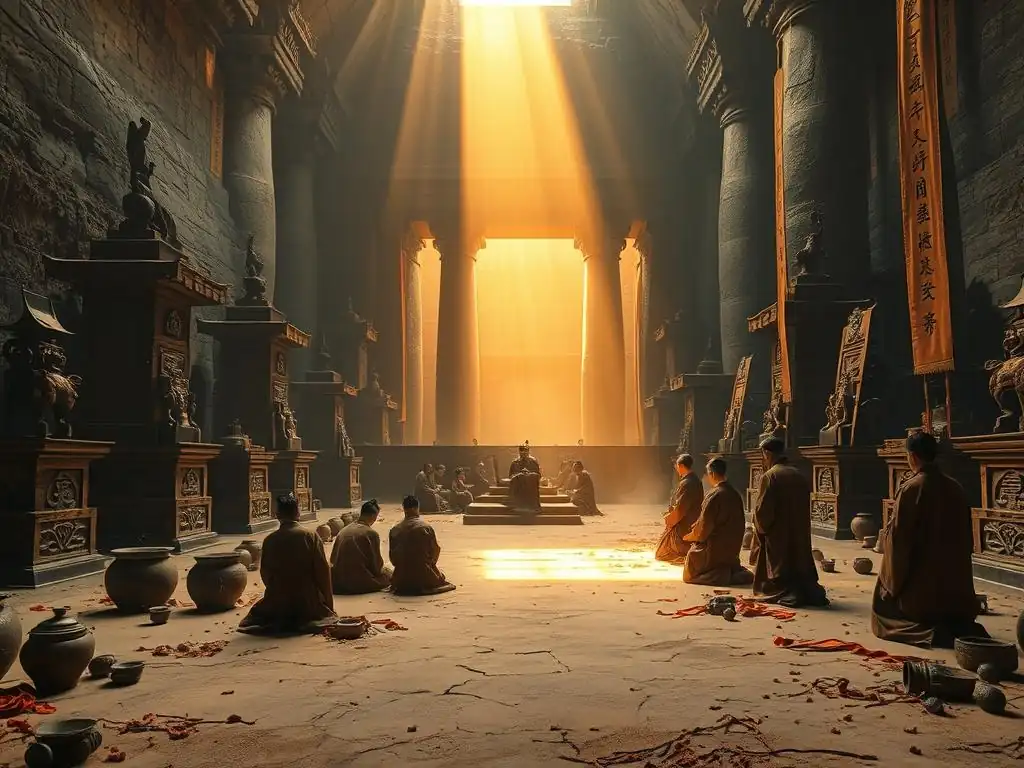
Ancestral shrines and temples ( zongmiao) were the physical and spiritual heart of Zhou dynasty ancestor worship, serving as the primary focal points for ritual activities. These structures ranged in scale from grand royal temples, such as the impressive complex that would have existed in the Zhou capital of Haojing, to smaller, yet equally significant, halls maintained by noble families. Within these temples, ancestral tablets were housed, and major lineage rituals, sacrifices, and ceremonies were regularly performed, underscoring their sacred importance.
These temples were far more than mere places of worship; they were potent symbols of lineage continuity, power, and prestige. The integrity of an ancestral temple was intrinsically linked to the fate of the family it served; its destruction was considered a profound desecration and could signify the end of a lineage's influence or even its existence. For the Zhou kings, the royal ancestral temple was a central institution, embodying the dynasty's connection to Heaven and its founding ancestors, King Wen and King Wu, thereby serving as the spiritual and political nexus of the realm.
Ancestor Worship as a Tool for Legitimacy and Control
Ancestor worship served as an indispensable tool for establishing and maintaining political legitimacy and control during the Zhou Dynasty. The Zhou kings meticulously leveraged their direct lineage to the virtuous King Wen and the conquering King Wu, asserting that their rule was sanctioned by Heaven itself through these revered ancestors. By performing the most elaborate and exclusive ancestral rites, often involving significant resources and public display, the Son of Heaven reinforced his supreme position in the social and political hierarchy, demonstrating his unique connection to the divine.
Furthermore, the state actively fostered the virtue of filial piety ( xiao), which extended beyond respect for living parents to profound reverence for ancestors. This emphasis on obedience and loyalty within the family unit was strategically extrapolated to the wider political sphere, encouraging subjects to demonstrate similar deference to their rulers. This created a stable social fabric where hierarchy was not merely enforced by law but also divinely sanctioned and maintained through deeply ingrained ritual practice, providing a powerful ideological foundation for governance.
The Influence of Ancestor Worship on Zhou Dynasty Laws and Customs
The pervasive influence of Zhou dynasty ancestor worship extended deeply into the legal and customary practices of the era. Filial piety, for instance, was not merely a moral virtue but often codified into laws, with severe punishments for those who showed disrespect or neglect towards their parents or ancestors. Inheritance laws were particularly shaped by the imperative to maintain the ancestral line and ensure the continuous performance of ancestral rites, often prioritizing male heirs to carry on the family name and ritual obligations.
Beyond formal laws, ancestor worship profoundly shaped daily customs and social norms. Practices such as the elaborate mourning rituals, which could last for three years for a deceased parent, and the meticulous funeral rites, were deeply ingrained in society. The paramount importance placed on producing male heirs, for example, stemmed directly from the belief that only sons could properly continue the ancestral sacrifices, ensuring the well-being of the family in both the present and the afterlife. These customs, collectively known as Li (Rites), regulated virtually all aspects of social behavior, underscoring the enduring power of ancestral veneration.
Comparing Zhou Dynasty Ancestor Worship with Earlier Traditions
Similarities and Differences with Shang Dynasty Practices
Zhou dynasty ancestor worship shared several fundamental similarities with the practices of the preceding Shang Dynasty. Both cultures believed in the active involvement of deceased ancestors in the affairs of the living, utilizing divination to consult them and offering sacrifices to appease and gain their favor. Both dynasties also heavily relied on sophisticated bronze vessels for their ritual ceremonies, reflecting a shared material culture of veneration. The concept of a supreme deity, whether the Shang's Di or the Zhou's Heaven ( Tian), was also closely linked to the highest ancestral figures in both traditions.
However, significant differences emerged. The Zhou broadened the scope of ancestor worship beyond the Shang king's direct lineage to encompass all noble clans, formalizing the zongfa system to delineate ritual rights and responsibilities across the feudal hierarchy. The Zhou also saw a gradual shift from the Shang's predominant use of oracle bones for specific divinations to the more abstract milfoil stalk divination, which evolved into the Yijing. Crucially, the Zhou introduced the Mandate of Heaven, explicitly tying ancestral favor and the right to rule to the moral conduct of the living ruler, a concept less explicit in Shang records.
The Evolution of Ancestor Worship in Subsequent Dynasties: Influence on Qin and Han Dynasties
The core tenets of Zhou dynasty ancestor worship continued to evolve and exert profound influence on subsequent Chinese dynasties, particularly the Qin and Han. While the short-lived Qin Dynasty (221–206 BCE), with its Legalist ideology, sought to centralize power and standardize practices, ancestor worship remained a foundational element. The First Emperor, for instance, still performed grand sacrifices to Heaven and Earth, implicitly invoking ancestral connections to legitimize his unified rule, though the emphasis on the feudal zongfa system naturally diminished.
The Han Dynasty (206 BCE–220 CE) witnessed a significant resurgence and formalization of Confucianism, which deeply integrated and expanded upon Zhou-era concepts of filial piety and ancestor worship. Han emperors continued to build elaborate ancestral temples, and the practice became even more deeply entrenched in everyday life, from imperial state rituals to common household practices across all social strata.
Archaeological discoveries, such as the elaborate Mawangdui tombs, provide rich evidence of Han funerary practices and grave goods, clearly demonstrating the continued and even amplified reverence for ancestors and the belief in their ongoing influence, directly stemming from the precedents set by Zhou dynasty ancestor worship.
Case Studies: Archaeological Evidence of Zhou Dynasty Ancestor Worship
Excavations of Royal Tombs and Ancestral Shrines
Archaeological excavations have provided invaluable insights into the material culture and practices of Zhou dynasty ancestor worship. The Zhouyuan site in Shaanxi Province, believed to be an early Zhou capital or major ritual center, has yielded significant evidence. Discoveries include foundations of large structures, possibly ancestral temples, along with numerous bronze vessels and a smaller number of oracle bones, often bearing inscriptions that dedicate them to specific ancestors or commemorate ritual events. These findings underscore the scale and formality of royal and noble ancestral cults.
Beyond Zhouyuan, numerous Zhou noble tombs, such as those unearthed at the cemetery of the State of Jin at Tianma-Qucun in Shanxi Province, offer further compelling evidence. These elite burials frequently contain large quantities of elaborate bronze ritual vessels, jade objects, and even chariots, indicating a strong belief in the continuity of status and needs in the afterlife. The presence of such rich grave goods suggests a significant material investment in preparing ancestors for their post-mortem existence and their perceived continued role in the living world, directly linked to the practices of Zhou dynasty ancestor worship.
Analysis of Ritual Artifacts: Bronzes and Jade Objects Associated with Ancestor Worship
Bronze vessels constitute some of the most iconic and informative artifacts associated with Zhou dynasty ancestor worship. Pieces such as ding tripods (used for cooking sacrificial meat), gui food vessels, zun wine vessels, and hu jars were central to ancestral rites.
Their elaborate designs, often featuring stylized animal motifs like the taotie mask, and their intricate inscriptions (known as jinwen) frequently dedicate the vessel to an ancestor, commemorate a significant event, or record a royal bestowal, highlighting their sacred function in communicating with the spirit world. The sheer volume, artistry, and standardized forms of these bronzes found in tombs and caches attest to their profound importance.
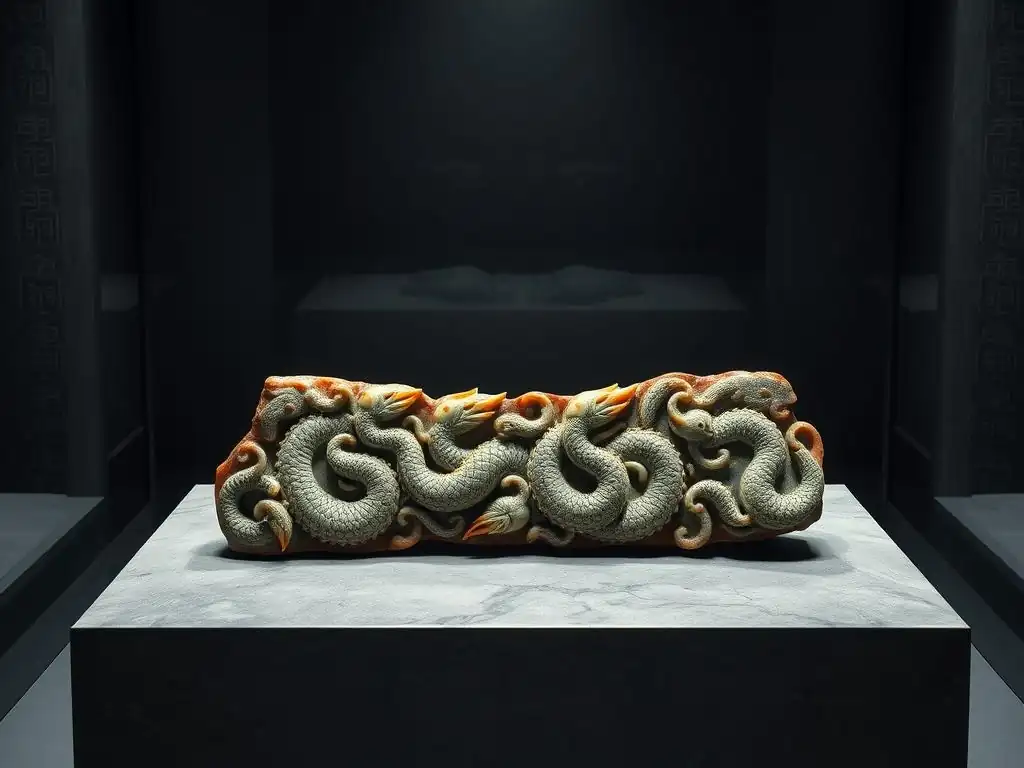
Jade objects, particularly bi discs and cong tubes, while having roots in earlier Neolithic cultures, continued to be used in Zhou rituals, often as burial goods placed with the deceased or as ceremonial items. Their perceived purity, durability, and intrinsic value made them ideal for connecting with the spiritual realm and honoring ancestors. The presence of these precious artifacts in elite Zhou burials, often arranged according to specific ritual patterns, further reinforces the significant material culture dedicated to ancestor worship and the enduring belief in the ancestors' continued spiritual presence and influence.
The Decline of Zhou Dynasty Ancestor Worship and its Legacy
Factors Contributing to the Gradual Decline of Traditional Practices
The traditional practices of Zhou dynasty ancestor worship, particularly their centralized and rigidly hierarchical forms, experienced a gradual decline as the dynasty itself weakened. During the Spring and Autumn (771–476 BCE) and Warring States (475–221 BCE) periods, the authority of the Zhou king waned significantly. Feudal lords, increasingly independent and ambitious, began to usurp ritual prerogatives previously reserved for the Son of Heaven, performing grander ancestral rites in their own domains. This erosion of ritual hierarchy and the decentralization of power fundamentally undermined the structured system of Zhou dynasty ancestor worship.
Simultaneously, the intellectual ferment of the Hundred Schools of Thought, including Confucianism, Daoism, and Legalism, offered new philosophical frameworks for social order and individual morality. While Confucianism, in particular, upheld filial piety and ancestor veneration, it often reinterpreted them with a greater emphasis on moral cultivation and ethical governance rather than strict adherence to ancient, costly rituals as the sole basis for societal well-being. The prolonged period of chaos and warfare also led to more pragmatic approaches to survival, sometimes at the expense of maintaining elaborate and resource-intensive ancestral ceremonies.
The Enduring Influence of Zhou Dynasty Ancestor Worship on Chinese Culture
Despite the political fragmentation and the eventual collapse of the Zhou Dynasty, the core tenets of Zhou dynasty ancestor worship, particularly the profound emphasis on filial piety and the importance of lineage, continued to shape Chinese society for millennia. Confucianism, which later became the dominant state ideology, codified and perpetuated these values, ensuring their transmission through education and social norms. The reverence for ancestors became an indelible part of the Chinese cultural identity, transcending dynastic changes.
The enduring legacy of Zhou dynasty ancestor worship is evident in numerous practices that persisted for centuries and, in some forms, continue to this day. These include the practice of maintaining ancestral tablets at home, the performance of grave-sweeping rituals such as the Qingming Festival, and the deep cultural emphasis on family continuity, respect for elders, and the importance of male heirs to carry on the ancestral line. This profound and lasting influence demonstrates that Zhou dynasty ancestor worship was not merely a historical religious practice but a foundational cornerstone that profoundly shaped the very fabric of Chinese civilization.
Conclusion: Zhou Dynasty Ancestor Worship - A Cornerstone of Early Chinese Civilization
Frequently Asked Questions
How central was ancestor worship to the Zhou Dynasty?
Ancestor worship was absolutely central to Zhou Dynasty religion and society. It wasn't just a practice but a foundational pillar of their social and political structure, shaping their beliefs and behaviors.
What role did ancestor worship play in legitimizing Zhou rule?
Ancestor worship provided a powerful tool for legitimizing Zhou rule. By claiming descent from virtuous ancestors and performing rituals to honor them, the Zhou rulers reinforced their divine mandate and authority.
What types of rituals were commonly performed in Zhou Dynasty ancestor worship?
Rituals involved elaborate ceremonies, including sacrifices of food and animals, and the offering of prayers. These rituals were often held in ancestral temples and were overseen by members of the elite class.
How did the Zhou Dynasty's concept of ancestor worship differ from that of previous dynasties?
The Zhou Dynasty refined ancestor worship, emphasizing its ethical and moral aspects. They linked ancestral veneration to virtuous behavior and good governance, setting a new standard for their rule.
Where can I find more information about Zhou Dynasty ancestor worship on ArchaeologyHub.org?
ArchaeologyHub.org offers detailed information about the Zhou Dynasty and its religious practices. You can find specific content by searching for "Zhou Dynasty religion" or exploring the section dedicated to ancient Chinese civilizations.
Okay, here's a final reflection designed to conclude your article on ancestor worship in the Zhou Dynasty, optimized for the keyword "Zhou dynasty ancestor worship" and following the structure you provided:
Final Reflection: Echoes of the Past in the Present
The exploration of Zhou dynasty ancestor worship reveals more than just historical practices; it illuminates the enduring human need to connect with our lineage and find meaning in the continuum of generations. The principles of respect, remembrance, and social cohesion, central to Zhou dynasty ancestor worship, resonate powerfully even today, as societies grapple with questions of identity, tradition, and the legacy we leave behind. Understanding this ancient practice offers a valuable lens through which to examine our own relationship with the past and its influence on the present.
The profound impact of ancestor worship on the Zhou dynasty's social and political structure is undeniable, shaping everything from family dynamics to the legitimacy of rulers. This deep-seated reverence for ancestors continues to subtly influence cultural values in many societies, reminding us of the enduring power of tradition and the importance of honoring those who came before us. To know the road ahead, ask those coming back.
This ancient proverb encapsulates the wisdom embedded in ancestor veneration, highlighting the invaluable lessons and guidance that can be gleaned from the experiences of our predecessors.
As we conclude this exploration of Zhou dynasty ancestor worship, let us consider how we, too, can cultivate a deeper appreciation for our own heritage. Take a moment to reflect on the values and sacrifices of those who paved the way for us. How can we honor their memory and ensure that their stories continue to inspire future generations? Let the lessons of the Zhou dynasty remind us that by understanding and respecting our past, we can build a more meaningful and connected future.
Embrace the Wisdom of the Ancients
Thank you for diving into the fascinating world of Zhou Dynasty ancestor worship! We hope you’ve gained a deeper understanding of its profound impact on their society and beliefs. Now, let's explore how you can connect with this ancient practice and its enduring legacy.
Here are some actionable steps to take:
- Begin researching your own family history; uncover stories and traditions passed down through generations.
- Visit a local museum with East Asian artifacts, reflecting on how these ancient beliefs may have influenced the creation of such pieces.
- Share this article with friends or family who might appreciate learning about the spiritual practices of the Zhou Dynasty.
What captivating story or family tradition will you unearth as you delve deeper into your heritage?