
Analyzing the Pigments of the Terracotta Army: Clues to Qin Artistic Practices

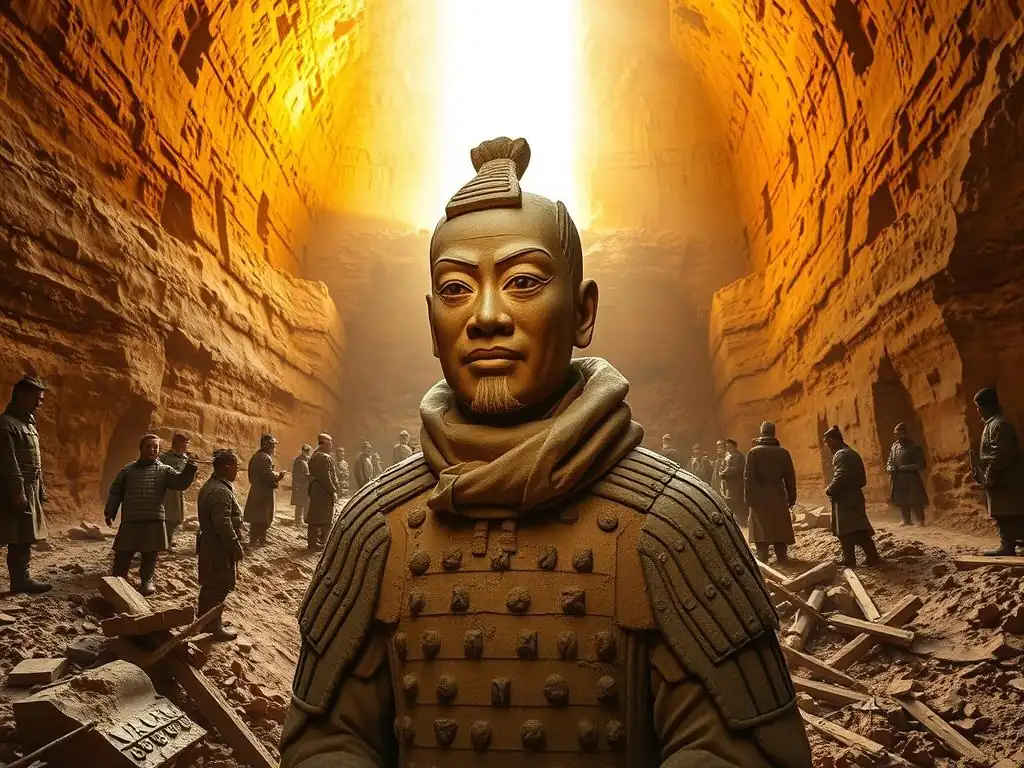
Welcome to ArchaeologyHub.org, your portal to the past!
Ever wonder what secrets lie hidden within the vibrant colors of ancient artifacts? Our latest deep dive unravels precisely that, focusing on the groundbreaking Qin terracotta army pigments analysis. Uncover the surprising techniques and materials used by Qin artisans, and how these colorful clues are reshaping our understanding of their artistic practices. Prepare to be amazed as we peel back the layers of history, one pigment at a time! Dive in and begin your archaeological journey.
- Introduction: Unveiling Artistic Secrets Through Qin Terracotta Army Pigment Analysis
- The Discovery and Initial Examination of Terracotta Army Pigments
- Methods of Analysis: Unlocking the Chemical Composition of Qin Pigments
-
Identification of Pigments Used in the Terracotta Army
- Purple Pigment: The Barium Copper Silicate Mystery of the Qin Dynasty
- Blue Pigments: Egyptian Blue and its Presence in Ancient China
- Green Pigments: Malachite, Celadonite, and other Green Earth Pigments
- Red Pigments: Cinnabar (Mercury Sulfide) and its Symbolic Significance
- Yellow Pigments: Goethite and Jarosite
- Interpretation: What Pigments Reveal About Qin Artistic Practices
- The Role of Pigment Analysis in Reconstructing the Original Appearance of the Terracotta Army
- Pigment Degradation and Conservation Efforts
- Conclusion: The Enduring Legacy of Qin Artistic Practices Through Pigment Analysis
-
Frequently Asked Questions
- What is the significance of analyzing the pigments used on the Qin Terracotta Army?
- Where did the Qin artisans source the pigments for the Terracotta Army?
- How does pigment analysis contribute to our understanding of the Terracotta Army's original appearance?
- What analytical techniques are used to study the pigments of the Terracotta Army?
- What are some of the common pigments identified on the Terracotta Army figures?
- Final Reflection: Unearthing the Palette of an Empire
- Unearth Your Inner Archaeologist: Take Action Now!
Introduction: Unveiling Artistic Secrets Through Qin Terracotta Army Pigment Analysis
ArchaeologyHub.org Explores the Qin Dynasty's Artistic Legacy
ArchaeologyHub.org serves as a comprehensive digital encyclopedia dedicated to exploring ancient civilizations, and few exemplify the grandeur and mystery of antiquity quite like the Qin Dynasty. The discovery of the Terracotta Army, a vast funerary sculpture complex comprising over 8,000 unique warriors, chariots, and horses, stands as a monumental testament to Qin artistry and engineering prowess. This site, unearthed near Xi'an, China, offers an unparalleled window into the imperial ambitions and sophisticated logistical capabilities of Emperor Qin Shi Huang's reign.
Our exploration delves beyond the mere form of these figures to investigate the very essence of their original vibrancy: the pigments that once adorned them. Through meticulous Qin terracotta army pigments analysis, researchers are piecing together the true visual impact of this subterranean legion. Understanding these ancient colors provides invaluable insights into the aesthetic preferences, technological advancements, and symbolic meanings embedded within the Qin Dynasty's artistic legacy.
The Significance of Pigments in Understanding Qin Dynasty Craftsmanship
The study of pigments is far more than an exercise in color identification; it is a profound journey into the material science, trade networks, and workshop organization of the Qin period. The choice and application of specific pigments directly reflect the technological capabilities and the availability of resources during this era. For instance, the presence of certain synthetic pigments indicates a highly advanced understanding of chemistry.
Furthermore, Qin terracotta army pigments analysis illuminates the sophisticated craftsmanship involved in their creation. The multi-layered paint schemes, often applied over a lacquer primer, speak volumes about the meticulous processes and specialized skills of the artisans. This detailed approach to polychromy underscores a dedication to creating a truly majestic and lifelike representation of the imperial army, intended to accompany the emperor into the afterlife.
The Discovery and Initial Examination of Terracotta Army Pigments
Early Observations of Color Preservation and Degradation
Upon their initial discovery in 1974 by local farmers near Xi'an, the Terracotta Army figures presented a breathtaking sight: many warriors were still adorned with vibrant, lifelike colors. These early observations revealed striking hues of red, blue, green, purple, and yellow, applied over a dark lacquer undercoat. However, this initial wonder quickly turned to concern as the vibrant pigments, exposed to the dry air and light of the surface environment, began to degrade rapidly.
Within minutes to hours of excavation, the original polychromy, which formed a thin layer typically 0.1 to 0.2 mm thick over a 0.3 to 0.5 mm thick lacquer primer, would shrink, curl, and flake off. This rapid deterioration meant that only a fraction of the figures—less than 10% of those excavated to date—retain any significant traces of their original paint, making the remaining fragments incredibly precious for Qin terracotta army pigments analysis.
Challenges in Preserving and Analyzing Ancient Pigments
The inherent fragility of the ancient paint layers presented immediate and profound challenges for preservation. The lacquer layer, originally saturated with moisture in the damp burial environment, rapidly dehydrated upon exposure to the significantly drier surface atmosphere. This desiccation caused the lacquer to shrink, detaching the pigment layer from the terracotta body. The resulting flaking was so rapid that immediate on-site conservation measures became paramount, often involving the application of consolidants within minutes of a figure being unearthed.
Beyond preservation, the analytical challenges were considerable. Researchers faced the dilemma of obtaining meaningful data from extremely small, often degraded, pigment samples without causing further damage to these irreplaceable artifacts. This necessitated the development and application of highly sensitive, often non-destructive, analytical techniques tailored specifically for detailed Qin terracotta army pigments analysis, pushing the boundaries of archaeological science.
Methods of Analysis: Unlocking the Chemical Composition of Qin Pigments
Non-Destructive Techniques: X-Ray Diffraction (XRD) and Raman Spectroscopy
To preserve the delicate and rare pigment samples on the Terracotta Army figures, non-destructive analytical techniques have been prioritized. X-Ray Diffraction (XRD) is a primary method used to identify the crystalline phases of mineral pigments. By directing a beam of X-rays at the sample and analyzing the diffraction pattern, researchers can determine the atomic and molecular structure of the material. This allows for precise identification of pigments like cinnabar (mercury sulfide) or malachite (copper carbonate hydroxide) directly on the artifact without requiring a physical sample.
Raman Spectroscopy is another powerful non-destructive technique. It involves illuminating a sample with a laser and analyzing the inelastic scattering of light, which provides a unique "fingerprint" for the chemical compounds present. Raman spectroscopy is highly sensitive and can identify both inorganic pigments and some organic binders or degradation products. Its micro-analytical capability allows for the study of individual pigment grains or specific layers within the paint stratigraphy, providing crucial data for Qin terracotta army pigments analysis at a microscopic level.
Destructive Techniques: Microscopic Analysis and Chemical Testing
While non-destructive methods are preferred, certain micro-destructive techniques are occasionally employed when more detailed elemental or structural information is required, and a minute sample can be safely taken. Scanning Electron Microscopy with Energy Dispersive X-ray Spectroscopy (SEM-EDS) is a key tool in this category. SEM provides high-resolution images of the pigment surface and cross-sections, revealing application layers and particle morphology. Concurrently, EDS identifies the elemental composition of the pigments, allowing researchers to determine if a green pigment is copper-based (like malachite) or iron-based (like a green earth pigment).
Historically, traditional wet chemical tests were used for preliminary pigment identification, though their destructive nature and limited information have led to their decline in favor of more advanced techniques. However, the initial surveys of the Terracotta Army pigments sometimes involved such methods on detached flakes. The careful selection of analytical methods, balancing the need for information with the imperative of preservation, remains a cornerstone of comprehensive Qin terracotta army pigments analysis.
High-Performance Liquid Chromatography-Mass Spectrometry (HPLC-MS) for Organic Binder Analysis
Understanding the organic binders used to mix and apply the pigments is as crucial as identifying the pigments themselves. High-Performance Liquid Chromatography-Mass Spectrometry (HPLC-MS) is an essential technique for this purpose, particularly for analyzing complex organic mixtures. HPLC separates the various components of a sample based on their chemical properties, while MS then identifies these separated components by their mass-to-charge ratio. This allows for the precise identification of proteins, lipids, or carbohydrates that served as binding media.
For the Terracotta Army pigments, HPLC-MS has been instrumental in identifying the use of animal glues, likely derived from animal collagen (e.g., hide glue or bone glue), as the primary binding medium. This information provides direct evidence of the workshops' material science and preparation techniques. The identification of specific organic residues through this advanced Qin terracotta army pigments analysis offers insights into the daily practices of the artisans and the available resources during the Qin Dynasty.
Identification of Pigments Used in the Terracotta Army
Purple Pigment: The Barium Copper Silicate Mystery of the Qin Dynasty
Among the most remarkable discoveries from the Terracotta Army is the presence of a unique synthetic purple pigment, often referred to as "Han Purple." Chemically identified as barium copper silicate (BaCuSi2O6), this pigment is distinct from the more widely known Egyptian Blue (calcium copper silicate). Its identification on the figures, particularly on the uniforms of high-ranking officers, revealed a sophisticated understanding of chemistry and material synthesis in ancient China that paralleled, and in some respects exceeded, contemporary Western technologies.
The existence of Han Purple demonstrates that Qin artisans were capable of producing complex synthetic compounds. Its presence challenges previous assumptions about the global spread of synthetic pigments and places China at the forefront of this advanced chemical knowledge. The study of this pigment is a cornerstone of Qin terracotta army pigments analysis, highlighting an indigenous technological achievement.
The Unique Composition and Production Techniques of Han Purple
Han Purple is characterized by its unique tetragonal crystal structure, which gives it its distinct purple hue. Its synthesis is a complex process, requiring precise control of raw materials and high temperatures, typically ranging from 900°C to 1000°C. The raw materials include barium minerals (such as baryte or witherite), quartz (silica), and copper minerals. The precise stoichiometry and firing conditions needed for its successful production suggest a highly controlled and specialized manufacturing process, likely carried out in dedicated workshops.
The discovery of Han Purple on the Terracotta Army, alongside its structurally related blue counterpart (Han Blue, BaCuSi4O10), indicates a deliberate and sophisticated chemical industry within the Qin empire. Researchers continue to explore whether its production was an intentional synthesis from scratch or a byproduct of other metallurgical processes, but its consistent appearance on many figures points to a well-established and efficient manufacturing method for this highly prized pigment.
Blue Pigments: Egyptian Blue and its Presence in Ancient China
While initial reports sometimes referred to "Egyptian Blue" in early studies of the Terracotta Army, subsequent and more precise Qin terracotta army pigments analysis clarified that the dominant blue pigment found was actually "Han Blue" (barium copper silicate, BaCuSi4O10). Han Blue is structurally and chemically similar to Han Purple, differing primarily in its silicon content and crystal structure, which imparts a blue rather than a purple color.
Han Blue, like Han Purple, is a synthetic pigment unique to ancient China. Its presence further underscores the advanced chemical capabilities of the Qin Dynasty. While Egyptian Blue (calcium copper silicate) was widely used in the Mediterranean and Near East, its presence in ancient China is rare and debated. The consistent identification of Han Blue on the Terracotta Army figures firmly establishes it as an indigenous Chinese innovation, reflecting a distinct trajectory in ancient pigment technology.
Green Pigments: Malachite, Celadonite, and other Green Earth Pigments
The vibrant green hues seen on the Terracotta Army warriors, particularly on their armor and garments, were primarily achieved using naturally occurring mineral pigments. Malachite (copper carbonate hydroxide, Cu2(CO3)(OH)2) was a prominent green pigment identified through Qin terracotta army pigments analysis. This mineral, known for its bright, vivid green, was readily available from copper mining regions within China. Its widespread use reflects its accessibility and the desire for strong, clear colors.
In addition to malachite, some figures also show traces of green earth pigments, such as celadonite or glauconite. These are iron-rich phyllosilicates that produce more subdued, earthy green tones. Their presence suggests that Qin artisans utilized a range of natural green pigments, perhaps chosen based on desired shade, availability, or cost-effectiveness for different parts of the figures or different ranks of warriors.
Red Pigments: Cinnabar (Mercury Sulfide) and its Symbolic Significance
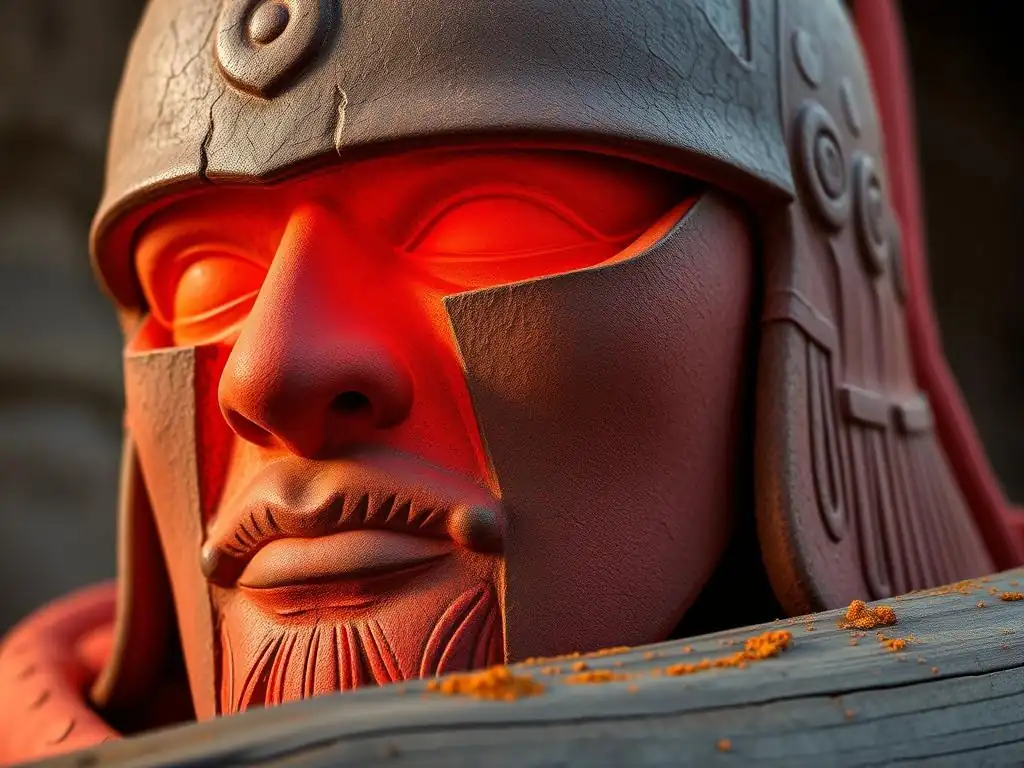
The striking red elements on the Terracotta Army, notably on facial features, sashes, and armor details, were predominantly created using cinnabar (mercury sulfide, HgS). Cinnabar is a naturally occurring mineral, highly prized for its brilliant vermilion hue. Its extraction and processing into a pigment were labor-intensive and costly, making it a luxurious material often reserved for imperial or sacred contexts.
In ancient Chinese culture, red held profound symbolic significance, often associated with power, life, prosperity, and immortality—themes highly relevant to an imperial mausoleum. The extensive use of cinnabar on the Terracotta Army underscores the immense resources commanded by Emperor Qin Shi Huang and the deep symbolic value attributed to the color red in his vision for the afterlife. Its identification provides compelling insights into both the economics of pigment sourcing and the cultural beliefs of the Qin Dynasty.
Yellow Pigments: Goethite and Jarosite
Yellow pigments played a role in the polychromy of the Terracotta Army, contributing to details on clothing and other elements. Qin terracotta army pigments analysis has identified goethite (α-FeOOH), a common iron oxyhydroxide, as a primary source for yellow hues. Goethite is a naturally occurring mineral found in various forms of ochre, making it an accessible and stable pigment. Its use is widespread in ancient art across different cultures due to its availability and lightfastness.
Another yellow pigment identified, though less common than goethite, is jarosite (KFe3(SO4)2(OH)6). This potassium iron sulfate hydroxide produces a more vibrant, sometimes slightly brownish, yellow. The presence of both goethite and jarosite indicates that Qin artisans likely had access to and utilized a variety of yellow earth pigments, allowing for a range of shades and textures in their intricate polychrome designs.
Interpretation: What Pigments Reveal About Qin Artistic Practices
Pigment Sourcing and Trade Networks During the Qin Dynasty
The diverse palette of pigments identified through Qin terracotta army pigments analysis offers compelling evidence of extensive pigment sourcing and sophisticated trade networks operating during the Qin Dynasty. The presence of cinnabar, for example, points to distant mercury mines, possibly located in regions like modern-day Guizhou or Hunan, hundreds of kilometers from the mausoleum site. Similarly, the raw materials for synthetic pigments like Han Purple, such as barium minerals and copper ores, would have been sourced from various geological locations across the vast Qin empire.
The consistent supply of these varied and sometimes rare materials to the massive workshops near the mausoleum indicates a highly organized and centralized system of resource acquisition and distribution. This logistical prowess reflects the immense administrative and economic power wielded by the Qin imperial court, capable of mobilizing resources on an unprecedented scale for projects of imperial significance.
The Organization of Artisan Workshops and Pigment Preparation
The meticulous application of multiple paint layers—a base coat of lacquer followed by several layers of pigments—reveals a highly organized and specialized workshop system dedicated to the Terracotta Army's polychromy. This level of detail suggests a division of labor where different groups of artisans specialized in specific tasks, from preparing the lacquer to grinding pigments and applying the final colors. Estimates suggest thousands of artisans were involved in the overall production of the army.
The preparation of pigments, particularly the complex synthesis of Han Purple and Han Blue, indicates a sophisticated understanding of chemistry and material processing. Pigments would have been carefully ground to specific particle sizes, mixed with animal glue binders, and perhaps even pre-mixed to achieve desired shades. This systematic approach to pigment preparation and application points to a highly efficient, almost factory-like, production line within the imperial workshops, demonstrating the advanced organizational capabilities of the Qin Dynasty.
The Symbolic Use of Color in the Terracotta Army and Qin Dynasty Art
The vibrant colors that once adorned the Terracotta Army were not merely decorative; they held profound symbolic meaning within Qin Dynasty cosmology and imperial ideology. Qin terracotta army pigments analysis reveals a deliberate and purposeful use of specific hues. Red, derived from costly cinnabar, was deeply associated with power, vitality, and immortality, reflecting the emperor's quest for eternal life and his supreme authority. Blue and purple, particularly the unique Han Blue and Han Purple, may have carried cosmic or divine connotations, linking the emperor to the heavens.
The polychromy transformed the army from mere clay figures into a vivid, awe-inspiring representation of imperial might, designed to protect Emperor Qin Shi Huang in the afterlife. This symbolic use of color extended beyond the Terracotta Army, influencing other aspects of Qin art and architecture. The overall visual impact, with each warrior distinct in their colored attire and facial features, would have created a powerful tableau, reinforcing the emperor's absolute control and his vision for an eternal empire.
Qin Pigments and their relationship with the Mausoleum of Emperor Jing of Han
While separated by a century, the pigment analysis of the Terracotta Army finds interesting parallels and divergences with later Han Dynasty imperial sites, such as the Mausoleum of Emperor Jing of Han (Yangling Museum). Figures from Emperor Jing's tomb, though smaller in scale and produced with different techniques (e.g., molded in sections, often with silk clothing), also utilized advanced synthetic pigments. Notably, Han Purple and Han Blue have been identified on artifacts from Yangling.
Comparative Qin terracotta army pigments analysis with these later Han findings is crucial for understanding the evolution and continuity of pigment technology in ancient China. The shared use of these unique barium copper silicate pigments demonstrates that the chemical knowledge developed during the Qin Dynasty persisted and was adopted by subsequent imperial courts. This continuity highlights a lasting legacy of material science and artistic innovation that transcended dynastic changes, showcasing the enduring impact of Qin's advancements.
The Role of Pigment Analysis in Reconstructing the Original Appearance of the Terracotta Army
Digital Reconstruction and Visualization Techniques
Qin terracotta army pigments analysis provides the foundational data for digitally reconstructing the original appearance of the warriors. Once pigments are identified and their original shades approximated, this information is fed into sophisticated digital visualization techniques. Researchers use 3D scanning to create accurate models of the terracotta figures, capturing their precise forms and textures. Subsequently, the analytical data on color, layer sequence, and texture is meticulously mapped onto these digital models.
This process allows for the creation of virtual reconstructions that display the figures in their intended polychrome glory. Advanced rendering software can simulate how light would have interacted with the original paint surfaces, providing a historically informed and visually compelling representation. These digital reconstructions are invaluable tools for both academic study and public engagement, offering a glimpse into the Terracotta Army as it was meant to be seen.
Challenges in Accurately Recreating the Original Color Scheme
Despite significant advancements in analytical and digital technologies, accurately recreating the original color scheme of the Terracotta Army presents several challenges. One major hurdle is the incomplete preservation of the pigments; often, only minute traces remain, making it difficult to ascertain the exact original shade or the extent of variations across different figures. Pigment degradation also alters hues, requiring careful scientific interpretation to reverse the effects of time and environment.
Furthermore, the original application techniques, such as blending or layering, might be difficult to fully discern from degraded samples. There's also the subjective nature of color perception and the impact of different lighting conditions (metamerism) on how colors appear. Researchers must rely on a combination of scientific data, archaeological context, and art historical knowledge to make informed approximations, acknowledging that a perfect, absolute recreation remains elusive.
Digital Rendering of Warriors with Reconstructed Polychromy
The culmination of Qin terracotta army pigments analysis and digital reconstruction efforts is the creation of high-fidelity digital renderings of the warriors with their reconstructed polychromy. These renderings are not merely artistic interpretations but are rigorously informed by scientific data, representing the most accurate visual hypotheses of the army's original appearance. They can be presented as static images, interactive 3D models, or even animated sequences, allowing for a dynamic exploration of the historical colors.
These digital visualizations are crucial for communicating the findings of complex scientific research to a broader audience, enabling visitors to museums and online platforms to experience the awe-inspiring vibrancy that characterized the Terracotta Army. By restoring the visual dimension lost to time and degradation, digital rendering brings the past to life, enriching our understanding and appreciation of this extraordinary archaeological treasure.
Pigment Degradation and Conservation Efforts
Environmental Factors Affecting Pigment Stability
The rapid degradation of the Terracotta Army's pigments upon excavation is primarily attributed to a combination of environmental factors. The most critical is the drastic change in humidity. Within the burial pits, the figures were in a stable, high-humidity environment. Upon exposure to the much drier surface air, the lacquer layer underneath the pigments rapidly loses moisture, causing it to shrink dramatically. This shrinkage leads to cracking, curling, and ultimately, the detachment and flaking of the delicate pigment layer.
Other significant environmental factors include exposure to light, particularly ultraviolet (UV) radiation, which can cause fading and chemical alteration of certain pigments (e.g., some organic binders or even cinnabar darkening). Fluctuations in temperature and humidity, as well as atmospheric pollutants like sulfur dioxide, also contribute to the long-term instability and degradation of the ancient paints. Understanding these factors is crucial for effective Qin terracotta army pigments analysis and preservation.
Current Strategies for Preserving and Protecting the Terracotta Army's Pigments
To combat the rapid degradation, immediate, on-site conservation strategies have been developed and implemented. As soon as a polychrome figure is unearthed, conservators apply specialized consolidants, often polyethylene glycol (PEG) solutions or acrylic emulsions (such as HEMA-based polymers), to stabilize the paint layers and prevent moisture loss. These consolidants penetrate the lacquer and pigment layers, forming a protective barrier that reduces shrinkage and adheres the paint to the terracotta.
International collaboration, notably with German conservation experts, has played a vital role in pioneering advanced techniques like radiation curing. This method involves applying a monomer solution that, when exposed to electron beam radiation, polymerizes within the paint layers, creating a robust and stable network that permanently consolidates the pigments. Controlled microclimates within the exhibition pits, maintaining stable temperature and humidity, are also essential for long-term preservation of the remaining Qin terracotta army pigments.
Future Research Directions in Terracotta Army Pigment Conservation
The field of Terracotta Army pigment conservation is continuously evolving, with ongoing research focusing on developing even more effective and sustainable preservation methods. Future directions include the exploration of novel consolidants that are more stable, reversible, and less intrusive, potentially utilizing nanotechnology for targeted delivery of protective agents. Research into "smart materials" that can respond dynamically to environmental changes to provide enhanced protection is also a promising avenue.
Furthermore, advanced non-invasive monitoring techniques, such as hyperspectral imaging and laser scanning, are being developed to continuously assess the condition of the pigments without direct contact. This allows for proactive conservation interventions and a deeper understanding of long-term degradation processes. The commitment to continuous research ensures that the irreplaceable Qin terracotta army pigments are preserved for future generations, allowing for continued study and appreciation of this extraordinary cultural heritage.
Conclusion: The Enduring Legacy of Qin Artistic Practices Through Pigment Analysis
Summarizing Key Findings on Qin Terracotta Army Pigments
Qin terracotta army pigments analysis has unveiled a remarkable story of ancient artistry, technology, and symbolic expression. The findings confirm that the Terracotta Army was once a vibrant, polychrome spectacle, far removed from its current monochrome appearance. Key discoveries include the identification of unique synthetic pigments like Han Purple and Han Blue, demonstrating an advanced and indigenous understanding of chemistry. The use of traditional minerals such as cinnabar, malachite, and goethite further illustrates a comprehensive palette.
This detailed analysis has provided unprecedented insights into the sophisticated organization of Qin Dynasty workshops, the extensive trade networks required to source diverse raw materials, and the profound symbolic importance of color in imperial art. The meticulous multi-layered paint application highlights the exceptional craftsmanship and specialized skills of the artisans involved in creating this monumental funerary complex.
The Importance of Interdisciplinary Research in Archaeology and Art History
The success in understanding the original appearance and cultural context of the Terracotta Army's polychromy underscores the critical importance of interdisciplinary research. The complex challenge of Qin terracotta army pigments analysis cannot be met by archaeology or art history alone. It requires seamless collaboration between archaeologists, who provide context and excavation expertise; chemists, who identify and characterize the pigments; conservators, who develop and implement preservation strategies; and art historians, who interpret the aesthetic and symbolic meanings of the colors.
This collaborative approach ensures that scientific data is integrated with historical and cultural interpretations, leading to a more holistic and accurate understanding of ancient civilizations. It exemplifies how diverse fields can converge to unlock secrets from the past, enriching our knowledge of human ingenuity and artistic expression.
The Potential for Future Discoveries Through Advanced Analytical Techniques
Despite the significant strides made in Qin terracotta army pigments analysis and conservation, the potential for future discoveries remains vast. Emerging analytical techniques, such as synchrotron radiation-based methods, advanced mass spectrometry, and artificial intelligence for data processing, promise to unlock even more detailed information from the minute traces of pigment that survive. These technologies can provide insights into molecular structures, degradation mechanisms, and subtle variations in pigment composition that are currently beyond our grasp.
The ongoing commitment to research, coupled with continuous advancements in scientific methodology, ensures that the vibrant legacy of Qin artistic practices will continue to inform and inspire. Each new piece of data gathered through advanced analysis deepens our appreciation for the technological prowess and aesthetic vision of one of history's most fascinating empires, allowing us to virtually experience the Terracotta Army in its original, awe-inspiring splendor.
Frequently Asked Questions
What is the significance of analyzing the pigments used on the Qin Terracotta Army?
Understanding the pigments provides insights into the artistic practices of the Qin Dynasty, revealing the materials available and the techniques used to create these iconic sculptures.
Where did the Qin artisans source the pigments for the Terracotta Army?
Analysis helps identify the geographic origins of the pigments, suggesting trade routes and resource management during the Qin Dynasty. This also shows what materials were valued at the time.
How does pigment analysis contribute to our understanding of the Terracotta Army's original appearance?
Pigment analysis allows archaeologists to reconstruct the original colors of the Terracotta Army, which have faded over time, giving a truer sense of their intended visual impact.
What analytical techniques are used to study the pigments of the Terracotta Army?
Common techniques include X-ray diffraction (XRD), Raman spectroscopy, and microscopy to identify the chemical composition and structure of the pigments.
What are some of the common pigments identified on the Terracotta Army figures?
Typical pigments include azurite (blue), malachite (green), cinnabar (red), and ochre (yellow), reflecting the range of colors available during the Qin Dynasty.
Final Reflection: Unearthing the Palette of an Empire
The intricate analysis of the Qin Terracotta Army pigments, as explored in this article, transcends mere scientific inquiry; it offers a vibrant window into the artistic ambition and technological prowess of the Qin Dynasty. The meticulous selection and application of these pigments, painstakingly reconstructed through modern analysis, reveal a sophisticated understanding of materials and a dedication to realism that continues to captivate audiences worldwide. This research underscores the enduring power of art to communicate across millennia, offering tangible evidence of a civilization's values and aspirations.
The impact of understanding these pigments extends far beyond the laboratory. It allows us to connect with the artisans of the Qin Dynasty on a deeply human level, appreciating their skill and dedication in bringing these clay soldiers to life. The vibrant colors, now faded with time, once stood as a testament to the emperor's power and the empire's wealth. Art washes away from the soul the dust of everyday life,
as Pablo Picasso eloquently stated, and in studying these pigments, we are, in essence, washing away the dust of centuries to reveal the brilliance of a bygone era.
As we conclude this exploration of the Qin Terracotta Army pigments, I invite you to consider the legacy of artistry and innovation that it represents. How can we, in our own lives, strive for such meticulous attention to detail and such a profound understanding of the materials at our disposal? Let us be inspired by the Qin artisans to embrace creativity, to push the boundaries of our own capabilities, and to leave behind a legacy that will resonate for generations to come.
Unearth Your Inner Archaeologist: Take Action Now!
Thank you for delving into the mysteries of the Terracotta Army's pigments with us. We hope you've enjoyed uncovering the artistic secrets hidden within these ancient statues. Now, it's time to bring that sense of discovery into your own life!
Here's how you can continue your archaeological adventure:
- Embark on a creative journey: Experiment with creating your own pigments using natural materials, just like the Qin artisans might have done. Document your process and share your results.
- Explore local museums or historical sites to see examples of ancient art and craftsmanship firsthand. What colours and techniques do you notice?
- Share this article with fellow history buffs and spark a conversation about the lasting legacy of the Terracotta Army and its impact on artistic practices.
What surprising colour do you think the Qin Dynasty might have experimented with next? Share your thoughts in the comments below!