
Interpreting Ashoka: Historical Debates and Modern Perspectives on His Reign

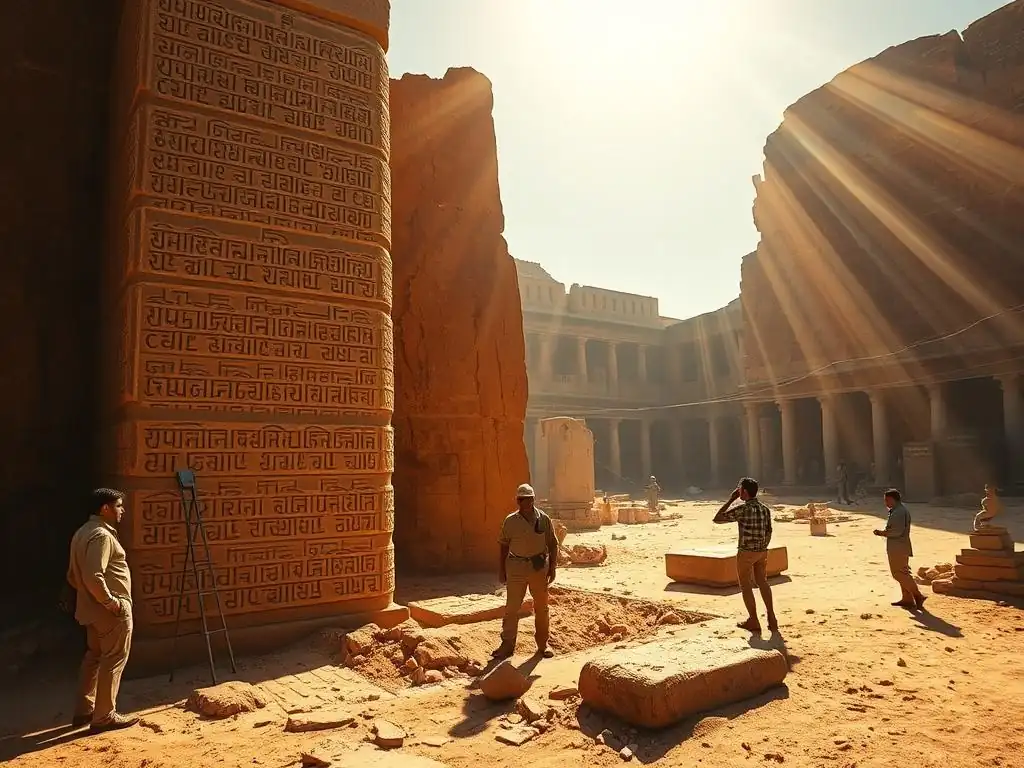
Welcome to ArchaeologyHub.org, your gateway to uncovering the past!
Dive into the fascinating world of ancient civilizations, where every shard and inscription holds a story waiting to be unearthed. Are you ready to explore the complexities and controversies surrounding one of history's most enigmatic rulers? Our featured article delves into the heart of Ashoka’s reign interpretation debates, examining the historical sources and modern perspectives that shape our understanding of this pivotal figure. What truly defined Ashoka's legacy, and how has our interpretation evolved over time? Discover the answers and join the discussion!
- Introduction: Unpacking the Enigma of Ashoka's Reign
- Early Interpretations of Ashoka: Colonial Perspectives and Nationalist Responses
- The Debate Over Ashoka's Conversion: Sincere Faith or Political Expediency?
- Ashoka's Dhamma: Religious Doctrine or Social Ethic?
- The Nature of Ashoka's Empire: Centralized Control vs. Regional Autonomy
- Ashoka and Violence: Pacifism vs. Practicality
- Modern Perspectives on Ashoka: New Archaeological Discoveries and Interpretive Frameworks
- Ashoka’s Reign Interpretation Debates: A Summary of Key Contentions
- Conclusion: Ashoka's Enduring Legacy and the Importance of Critical Analysis
-
Frequently Asked Questions
- How significant are the edicts of Ashoka in understanding his reign?
- What are some of the major debates surrounding the interpretation of Ashoka's dhamma?
- How has modern scholarship changed our understanding of Ashoka compared to early interpretations?
- What role did Ashoka's conversion to Buddhism play in shaping his policies and legacy?
- What are some of the limitations in interpreting Ashoka's reign solely based on available historical records?
- Final Reflection: Echoes of Dharma in a Modern World
- Unearth Ashoka's Legacy: What's Your Next Archaeological Adventure?
Introduction: Unpacking the Enigma of Ashoka's Reign
Ashoka's Legacy: A Central Figure in Mauryan History
Ashoka the Great, who ruled the Mauryan Empire from approximately 268 to 232 BCE, stands as one of the most enigmatic and influential figures in ancient Indian history. His vast empire encompassed nearly the entire Indian subcontinent, stretching from present-day Afghanistan in the west to Bangladesh in the east, and from the Himalayas in the north to the Deccan Plateau in the south. Ashoka's early reign was marked by military expansion, culminating in the devastating Kalinga War, which, according to his own accounts, profoundly transformed his outlook.
This transformation, from an ambitious conqueror to a proponent of Dhamma (righteousness), cemented his unique place in history. His reign is a cornerstone for understanding the evolution of ancient Indian political thought, the early development and spread of Buddhism, and the practical application of social ethics in governance. The complexity of his character and the apparent dichotomy between his initial militarism and later pacifism have fueled numerous Ashoka’s reign interpretation debates among historians and scholars for centuries.
The Significance of Ashoka's Edicts in Understanding His Reign
Our primary and most direct window into Ashoka's reign comes from his extensive rock and pillar edicts, scattered across the Indian subcontinent and beyond. Discovered and deciphered primarily by James Prinsep in the 1830s, these inscriptions, written in various forms of Prakrit, Greek, and Aramaic, are unparalleled as royal proclamations from ancient India. They are found on major rock surfaces, caves, and monumental pillars erected by Ashoka himself, providing unique insights into his policies, personal beliefs, and moral code.
These edicts are not merely administrative decrees but also deeply personal reflections, often detailing Ashoka's remorse over the Kalinga War and his subsequent commitment to Dhamma. They outline his principles of governance, his welfare measures, and his efforts to promote inter-religious harmony. The geographical spread of these edicts—from Kandahar in Afghanistan to Maski in Karnataka, and from Girnar in Gujarat to Dhauli in Odisha—underscores the empire's vast reach and Ashoka's deliberate attempt to communicate his message directly to his subjects, making them central to all Ashoka’s reign interpretation debates.
Early Interpretations of Ashoka: Colonial Perspectives and Nationalist Responses
The Initial Focus on Ashoka's Buddhist Conversion and Piety
Early European scholars, particularly British archaeologists and linguists of the 19th century, were the first to systematically study Ashoka's edicts. Figures like James Prinsep, who deciphered the Brahmi script, and Alexander Cunningham, a pioneering archaeologist, were instrumental in bringing Ashoka to light. Their interpretations largely centered on Ashoka's profound conversion to Buddhism, seeing him as a pious and almost saintly Buddhist monarch. This focus was partly influenced by the contemporary European fascination with Eastern religions and the prevailing scholarly interest in identifying historical figures who embodied spiritual ideals.
Scholars such as T.W. Rhys Davids, a prominent Pali scholar and founder of the Pali Text Society, significantly contributed to this narrative. He presented Ashoka as an exemplar of Buddhist kingship, a ruler whose actions were purely guided by deep spiritual conviction and a renunciation of worldly desires. This early emphasis on Ashoka's Buddhist piety often highlighted his renunciation of violence and his promotion of Dhamma as purely religious tenets, sometimes overlooking the complex political and socio-economic dimensions of his reign, a narrowness that later fueled Ashoka’s reign interpretation debates.
Critiques of Early Interpretations: Orientalist Bias and the Construction of the 'Ideal' Ruler
While foundational, these early interpretations later faced significant critique for what many scholars identified as Orientalist biases. Critics, drawing on frameworks developed by thinkers like Edward Said, argued that European scholars often projected their own romanticized notions of the 'spiritual East' onto figures like Ashoka. This led to a simplified portrayal, where Ashoka was constructed as an 'ideal' ruler, a benevolent philosopher-king, rather than a complex historical figure operating within specific political realities.
This 'ideal' ruler narrative, while acknowledging Ashoka's unique moral stance, was seen by some as downplaying the practicalities and challenges of governing a vast, diverse, and often turbulent empire. The intense focus on his piety might have inadvertently obscured the strategic aspects of his policies, such as the use of Dhamma for imperial integration or social control. Such critiques highlighted how initial interpretations, despite their scholarly rigor, were not entirely free from cultural and ideological lenses, thus contributing to the ongoing Ashoka’s reign interpretation debates.
Nationalist Reinterpretations: Ashoka as a Symbol of Indian Unity and Moral Leadership
In the 20th century, particularly during India's struggle for independence, Indian nationalist leaders and historians began to re-appropriate Ashoka's legacy. For figures like Jawaharlal Nehru, India's first Prime Minister, Ashoka became a powerful symbol of a glorious, unified Indian past. He embodied ideals of peace, tolerance, and moral governance—qualities that the newly emerging Indian nation aspired to represent on the world stage. Ashoka's emblem, the Ashoka Chakra, prominently placed on the Indian national flag, is a testament to this re-appropriation.
This nationalist reinterpretation often emphasized Ashoka's pan-Indian empire as a precursor to modern Indian unity. His Dhamma was frequently presented not merely as a Buddhist doctrine but as a secular ethical code, promoting universal values of social harmony, pluralism, and respect for all traditions. This perspective helped to forge a sense of national identity, portraying Ashoka as a pioneering figure in statecraft and ethics. This shift in emphasis from a purely religious figure to a national icon further enriched and complicated the landscape of Ashoka’s reign interpretation debates.
The Debate Over Ashoka's Conversion: Sincere Faith or Political Expediency?
Examining the Evidence for Ashoka's Conversion to Buddhism
The evidence for Ashoka's conversion to Buddhism is primarily derived from his own edicts and traditional Buddhist chronicles. In Minor Rock Edict I, Ashoka explicitly states his acceptance of Buddhism, declaring, "I have been an Upasaka (lay follower) for more than two and a half years, and for a year and more, I have exerted myself vigorously for the Dhamma."
This personal declaration is corroborated by his subsequent actions, such as his pilgrimage to Bodh Gaya, the site of Buddha's enlightenment, as recorded in the Rummindei Pillar Inscription (also known as the Lumbini Edict), which commemorates his visit to Buddha's birthplace.
Furthermore, traditional Buddhist texts like the Mahavamsa and Dipavamsa, though written centuries after Ashoka's reign and containing legendary elements, provide detailed accounts of his conversion, his immense patronage of the Buddhist Sangha, and his dispatch of Buddhist missionaries. These chronicles claim that Ashoka sent his son Mahinda and daughter Sanghamitta to Sri Lanka to propagate Buddhism, an event that finds some corroboration in Sri Lankan historical records. The consistent theme of Buddhist principles throughout his numerous edicts also points towards a profound personal commitment.
Despite the strong evidence for his conversion, a significant strand within Ashoka’s reign interpretation debates argues for a politically motivated dimension to his adoption of Buddhism. Scholars propose that after the brutal Kalinga War (c. 261 BCE), which resulted in the death of 100,000 people and the deportation of 150,000, Ashoka faced the challenge of integrating a vast and diverse empire. Buddhism, with its universal message of peace, non-violence, and social harmony, offered an ideal ideology for achieving this.
By adopting a religion that transcended local cults and emphasized ethical conduct over ritual, Ashoka could project an image of a benevolent ruler, distinct from the aggressive expansionism of his predecessors. This could help legitimize his rule over recently conquered territories and foster a sense of unity among diverse populations, potentially reducing internal dissent and rebellion. The promotion of Dhamma could also serve as a unifying moral code, promoting social cohesion without alienating various regional beliefs, making it a pragmatic tool for empire consolidation.
Counterarguments: The Profound Impact of Buddhism on Ashoka's Personal Conduct and Policies
Counterarguments to the purely political expediency theory emphasize the depth and consistency of Buddhist principles reflected in Ashoka's policies over decades, suggesting a genuine personal conviction. His active promotion of Dhamma, which included the appointment of Dhamma-Mahamatras (officers of Dhamma) to disseminate his moral message and ensure justice across the empire (Major Rock Edict V), seems to go beyond mere strategic calculation. These officers were tasked with ensuring the welfare of all sects and promoting ethical conduct among the populace.
Specific policy changes, such as the significant reduction in animal slaughter for the royal kitchens (Pillar Edict V states that only two peacocks and one deer were killed daily, down from hundreds previously) and his extensive welfare measures like establishing medical care for humans and animals (Major Rock Edict II), indicate a profound transformation in his personal conduct and state policy.
The sheer scale of his efforts to propagate Dhamma not just within his empire but also to Hellenistic kingdoms, as mentioned in Major Rock Edict XIII, suggests a sincere and enduring commitment that transcends simple political gain, continuously fueling Ashoka’s reign interpretation debates.
Analyzing the Principles of Dhamma as Articulated in Ashoka's Edicts
Ashoka's Dhamma, as articulated in his edicts, stands at the core of Ashoka’s reign interpretation debates. Its principles are notably universal and ethical, rather than sectarian or dogmatic. Key tenets include respect for elders, generosity towards Brahmins and ascetics, kindness to servants and slaves, non-violence towards all living beings, truthfulness, self-control, and purity of thought. For instance, Major Rock Edict VII emphasizes "self-control and purity of mind" as essential for Dhamma.
Significantly, the edicts rarely mention specific Buddhist doctrines such as the Four Noble Truths, the Eightfold Path, or Nirvana. Instead, they focus on practical ethical conduct and the promotion of inter-religious harmony. Ashoka explicitly states that "growth in Dhamma is possible in many ways," and he expresses a strong desire for "the growth of the essence of Dhamma among all sects" (Major Rock Edict XII). This indicates that Dhamma was presented as a moral code applicable to all, regardless of their specific religious affiliation, fostering a common ground for virtuous living.
Interpretations of Dhamma as a Universal Moral Code
Many scholars interpret Ashoka's Dhamma as a universal ethical system, deliberately crafted to transcend specific sectarian beliefs and foster social cohesion within a vast, multi-religious empire. In an era marked by diverse philosophical and religious movements—Buddhism, Jainism, Ajivikism, and various Vedic traditions—Ashoka sought a common denominator for ethical living that could be embraced by all his subjects. This interpretation views Dhamma as a state-sponsored moral philosophy rather than an imposition of Buddhism.
This perspective highlights Ashoka's foresight in attempting to create a unified moral framework for a diverse population. By emphasizing shared values like non-violence ( ahimsa), tolerance, and respect for all traditions, he aimed to minimize religious conflict and promote a shared sense of civic duty and mutual respect. This approach positioned Dhamma as a unifying force, contributing to the stability and well-being of the empire, and further enriching the Ashoka’s reign interpretation debates regarding its true nature.
Beyond its philosophical and ethical dimensions, Dhamma was explicitly utilized by Ashoka as a practical tool for social reform and governance. The appointment of Dhamma-Mahamatras, officers specifically tasked with the propagation of Dhamma and the welfare of the people, underscores its governmental role. These officers were responsible for disseminating Ashoka's moral message, settling disputes, and ensuring justice, especially for vulnerable groups (Major Rock Edict V).
Ashoka's Dhamma aimed to mitigate social tensions, such as those arising from caste distinctions or sectarian rivalries. By promoting respect for all religious traditions and emphasizing moral behavior, he sought to create a more harmonious and stable society.
Measures like the provision of medical services for both humans and animals, and the planting of medicinal herbs and fruit trees along roads (Major Rock Edict II), demonstrate a practical application of Dhamma for public welfare. Thus, Dhamma was not just a doctrine but an active policy for promoting social harmony and ethical conduct, thereby strengthening his rule through benevolent means, a key point in Ashoka’s reign interpretation debates.
The Nature of Ashoka's Empire: Centralized Control vs. Regional Autonomy

Debates on the Extent of Ashoka's Direct Control Over the Mauryan Empire
The traditional view of the Mauryan Empire, often influenced by Kautilya's Arthashastra (a treatise on statecraft, though its precise relationship to Ashoka's administrative practices is debated), posits a highly centralized state with an extensive bureaucracy. This perspective suggests strong imperial control emanating from Pataliputra, the capital, over a vast territory estimated to cover over 5 million square kilometers, making it one of the largest empires of the ancient world.
The widespread distribution of Ashoka's edicts across strategic locations, including frontier regions and major trade routes, is often cited as evidence of a deliberate imperial presence and a sophisticated communication strategy.
However, the practical enforcement mechanisms over such a vast geographical area, given the limitations of ancient communication and transport, remain a significant point of Ashoka’s reign interpretation debates. While the edicts convey a unified ideological message, the actual degree of direct administrative control from the center over every distant village is questioned. Scholars debate whether the Mauryan state under Ashoka was as rigidly centralized as previously assumed, or if it allowed for considerable regional variation.
Evidence for Regional Variations in Governance and Administration
Counter-arguments regarding the extent of centralization are supported by evidence of regional variations in edict content and archaeological findings. While the core message of Dhamma is consistent, some edicts, such as the Kalinga Edicts (Special Kalinga Edicts I and II), contain specific directives tailored to the newly conquered and potentially restive populations of Kalinga. These edicts emphasize the need for fair administration and paternalistic care, suggesting a degree of adaptive governance responsive to local conditions.
Moreover, the Mauryan Empire was divided into several provinces, each with its own capital—such as Taxila in the northwest, Ujjain in the west, Tosali (Kalinga) in the east, and Suvarnagiri in the south—often governed by royal princes ( kumara) or viceroys. The sheer size and diversity of the empire likely necessitated significant regional autonomy in day-to-day administration. The central authority might have focused more on strategic control, revenue collection, major infrastructure projects, and the propagation of Dhamma, allowing local administrations to manage local affairs.
Reconciling Centralized Power with Local Autonomy in Ashoka's Reign
A more nuanced understanding, prominent in contemporary Ashoka’s reign interpretation debates, suggests that Ashoka's empire operated with a blend of centralized authority on key matters and significant local autonomy. The edicts served as a powerful means of projecting imperial authority and moral guidelines across diverse regions, creating a shared ideological framework. However, the practical implementation and daily governance would have largely rested with provincial and local authorities.
The Mauryan state under Ashoka might be better understood as a "hegemony" or a "loosely integrated empire" rather than a rigidly centralized modern state. Control was maintained through a network of provincial capitals, strategic trade routes, and the ideological cohesion fostered by Dhamma. This allowed for variations in local governance and adaptation to regional customs, while still maintaining overall imperial suzerainty. This perspective acknowledges the administrative realities of the ancient world, where complete centralized control over vast territories was often impractical.
Ashoka and Violence: Pacifism vs. Practicality
Examining Ashoka's Renunciation of Violence After the Kalinga War
Central to Ashoka's historical image is his dramatic renunciation of violence following the Kalinga War, detailed vividly in Major Rock Edict XIII. In this pivotal inscription, Ashoka expresses profound remorse for the suffering caused by the war, stating, "When he had been consecrated eight years, the Kalingas were conquered by the Beloved of the Gods, King Piyadasi [Ashoka].
One hundred and fifty thousand were deported, one hundred thousand were killed there, and many times that number perished." This experience, he claims, led to his conversion to Dhamma and his subsequent adoption of Dhamma Vijaya (conquest by righteousness) over Dig Vijaya (conquest by arms).
After Kalinga, Ashoka ceased military expansion and focused on spreading his moral message through peaceful means. He famously sent missions of Dhamma not just within his empire but also to Hellenistic kingdoms in the West, including those of Antiochus II Theos of Syria, Ptolemy II Philadelphus of Egypt, Antigonus II Gonatas of Macedon, Magas of Cyrene, and Alexander of Epirus, as explicitly mentioned in Major Rock Edict XIII. This marks a unique shift in ancient imperial policy, from aggressive expansion to ideological outreach.
Interpretations of Ashoka's Policies on Animal Welfare and Justice
Ashoka's commitment to non-violence extended beyond human conflict to encompass animal welfare, a policy unprecedented in its scale for an ancient ruler. Pillar Edict V details regulations concerning animal slaughter, stating that only two peacocks and one deer were killed daily for the royal kitchen, a significant reduction from previous practices.
He also prohibited the sacrifice of certain animals and the killing of pregnant or young animals, demonstrating a practical application of his ahimsa (non-harm) philosophy. Major Rock Edict II describes his efforts to establish "Dhamma hospitals" for both humans and animals, and to plant medicinal herbs, fruit trees, and dig wells along roads for the benefit of all beings.
Furthermore, Ashoka introduced significant reforms in the justice system. Pillar Edict IV mentions his provision of a three-day reprieve for condemned prisoners, allowing them time for introspection or appeals, and granted clemency on certain auspicious days. He emphasized fairness and impartiality for his Rajukas (provincial administrators), instructing them to administer justice with compassion and to ensure that people were not imprisoned or harassed without cause. These policies collectively demonstrate a profound commitment to reducing suffering and promoting justice, adding a unique dimension to Ashoka’s reign interpretation debates.
The Debate Over the Practicality of Complete Non-Violence in a Large Empire: Maintaining Internal Order and Border Security
Despite Ashoka's fervent advocacy for non-violence, Ashoka’s reign interpretation debates often question the practicality of complete pacifism in managing a vast and complex empire. While he renounced offensive warfare, the Mauryan state did not disband its standing army. The edicts do not suggest the dismantling of military garrisons or the cessation of border security measures. It is generally understood that the military remained necessary for maintaining internal order, suppressing rebellions, and defending the empire's extensive frontiers against external threats.
Scholars debate whether Dhamma Vijaya entirely replaced military deterrence or if it was a complementary strategy, aiming to reduce the need for force through moral persuasion. The continued existence of capital punishment, albeit with reprieves, and the presence of officers responsible for law and order indicate that the state retained its coercive power. This suggests that Ashoka's non-violence, while genuinely transformative for his personal conduct and imperial ideology, was likely tempered by the pragmatic necessities of governance, balancing ethical ideals with the realities of maintaining a large empire.
Modern Perspectives on Ashoka: New Archaeological Discoveries and Interpretive Frameworks
The Impact of New Archaeological Evidence on Understanding Ashoka's Reign
Modern archaeological research continues to significantly impact and refine our understanding of Ashoka's reign, moving beyond solely textual interpretations. Ongoing excavations at Mauryan sites across the subcontinent, such as Kumhrar (ancient Pataliputra), Taxila, and Sanchi, provide crucial material evidence that contextualizes the edicts. Discoveries of new edict fragments, such as the recently identified fragment of a Minor Rock Edict in Feroz Shah Kotla, Delhi, or further investigations at existing pillar sites, consistently add to the corpus of primary sources.
These archaeological findings offer insights into urban planning, trade networks, pottery sequences, and the daily lives of people in the Mauryan period. For instance, the scale of Mauryan public works, including large structures and fortifications, revealed through excavation, helps to gauge the administrative capacity of the empire. This material culture provides a non-textual lens through which to evaluate the practical implementation of Ashoka's policies and the socio-economic realities of his time, enriching the Ashoka’s reign interpretation debates with tangible data.
Applying Postcolonial and Subaltern Perspectives to Ashokan Studies
Contemporary scholarship has increasingly applied postcolonial and subaltern perspectives to Ashokan studies, leading to a critical re-examination of earlier interpretations. Postcolonial critiques challenge the narratives shaped by colonial scholars, who often viewed Indian history through a Eurocentric lens, and also question nationalist interpretations that might have served specific political agendas. This approach seeks to deconstruct existing biases and develop more nuanced understandings of power dynamics, recognizing the complex interplay of historical forces.
While direct evidence from marginalized groups during Ashoka's time is scarce, subaltern studies encourage scholars to consider whose voices are represented in the edicts and whose are absent. This involves questioning how Ashoka's policies, particularly Dhamma, were received and impacted the common populace, the peasants, artisans, and other non-elite groups, rather than focusing solely on the elite or the ruler's intentions. This adds a critical layer to Ashoka’s reign interpretation debates, prompting a more inclusive historical analysis.
Re-evaluating Ashoka's Legacy in the Context of Contemporary South Asia
Ashoka's legacy is continually re-evaluated and reinterpreted in contemporary South Asia, particularly in light of ongoing political, social, and religious issues. His emphasis on religious tolerance, pluralism, and ethical governance, as articulated in his edicts, is frequently invoked in modern discussions about secularism, inter-faith harmony, and human rights in India and neighboring countries. He remains a powerful symbol for those advocating for peaceful coexistence in diverse societies.
His reign continues to be a touchstone for debates on the nature of state power, the role of religion in public life, and the potential for a ruler to transform society through moral principles. The symbolic presence of the Ashoka Chakra on the Indian flag, representing the wheel of Dhamma and righteousness, underscores his enduring cultural and political resonance. Thus, Ashoka’s reign interpretation debates are not confined to academic circles but remain vital for understanding contemporary identity and governance in the region.
Ashoka’s Reign Interpretation Debates: A Summary of Key Contentions
Recapitulating the Major Points of Contention in Ashoka's Interpretation
The historical figure of Ashoka the Great is perpetually at the center of robust Ashoka’s reign interpretation debates, primarily due to the unique nature of his rule and the limited, yet rich, primary sources available. The core contentions revolve around several critical aspects of his reign.
Firstly, there is the enduring question of his conversion to Buddhism: was it a sincere spiritual awakening, a shrewd political maneuver to consolidate a vast empire, or a complex blend of both? Secondly, the nature of his Dhamma is debated—was it a specific religious doctrine intended to promote Buddhism, or a universal ethical code designed for social harmony across diverse belief systems?
Furthermore, scholars contend over the administrative structure of his empire: was it a highly centralized state with direct control over vast territories, or did it operate with significant regional autonomy, relying more on ideological cohesion and strategic points? Finally, the practicality of his famed non-violence is a key point of discussion. While he renounced aggressive warfare, did his empire truly abandon force, or was the military still a pragmatic necessity for maintaining internal order and border security? These multifaceted questions highlight the complexity inherent in interpreting historical figures from ancient times.
Highlighting the Ongoing Nature of Scholarly Debate
It is crucial to recognize that Ashokan studies are not static; they are a dynamic field where new discoveries, reinterpretations of existing evidence, and evolving theoretical frameworks constantly challenge and refine our understanding. The scholarly community engages in vigorous discussions, with historians, archaeologists, and philologists continually presenting new arguments and counter-arguments. For instance, the discovery of new edict fragments or fresh analyses of their linguistic nuances can prompt a re-evaluation of established theories about Ashoka's intentions or the empire's reach.
This ongoing dialogue is vital because it prevents a monolithic or overly simplistic view of such a pivotal historical figure. The very existence of Ashoka’s reign interpretation debates ensures that Ashoka is seen as a complex human being operating within a specific historical context, rather than a mere archetype. The dynamic nature of these scholarly contentions reflects the enduring importance of Ashoka as a subject of inquiry and the continuous pursuit of a more accurate and comprehensive historical narrative.
The Enduring Relevance of Ashoka's Story for Understanding Ancient India
Despite the numerous Ashoka’s reign interpretation debates, Ashoka's reign remains undeniably crucial for understanding the zenith of the Mauryan Empire, the foundational spread of Buddhism across the Indian subcontinent and beyond, and the sophisticated development of statecraft in ancient India. His unique approach to governance, combining imperial power with a profound moral vision, set a precedent that resonated for centuries. The Mauryan period under Ashoka marks a significant epoch of political consolidation, cultural synthesis, and ethical experimentation.
His story provides invaluable insights into the challenges of ruling a diverse population, the interplay between religion and state, and the potential for a ruler to champion ideals of peace and welfare. Whether viewed as a pious monarch, a shrewd politician, or a benevolent reformer, Ashoka's policies and principles continue to inspire and provoke thought, making him a figure of enduring historical, philosophical, and even contemporary significance. His legacy offers a rich tapestry for understanding the complexities of ancient Indian society and governance.
Conclusion: Ashoka's Enduring Legacy and the Importance of Critical Analysis
Ashoka as a Symbol of Peace, Justice, and Good Governance
Ashoka the Great stands as an iconic figure in world history, widely recognized as a symbol of peace, justice, and good governance. His transformation from a ruthless conqueror to a compassionate ruler, as depicted in his edicts, continues to inspire. His Dhamma, with its emphasis on non-violence, tolerance, public welfare, and ethical conduct, remains an aspirational model for rulers and societies striving for harmony and righteousness. The principles he espoused resonate with modern humanitarian ideals, making his legacy particularly relevant in today's interconnected world.
His efforts to establish a moral foundation for imperial rule and his pioneering initiatives in social welfare, environmental protection, and inter-religious dialogue set him apart from many ancient monarchs. The widespread adoption of the Ashoka Chakra as a central motif on India's national flag and national emblem testifies to his enduring status as a beacon of ethical leadership and national pride, embodying the highest ideals of the Indian state.
The Need for Nuance and Context in Interpreting Historical Figures
Understanding Ashoka requires moving beyond simplistic, one-dimensional interpretations. He was a complex ruler operating within the specific political, social, and religious contexts of the 3rd century BCE. His actions and motivations were likely multifaceted, driven by a combination of personal conviction, imperial necessity, and the prevailing intellectual currents of his time. Attributing his policies solely to either pure idealism or cynical political calculation risks oversimplifying a truly extraordinary reign.
Therefore, critical analysis is paramount when engaging with Ashoka's history. It is essential to consider all available evidence—epigraphic, archaeological, and literary—while also acknowledging the inherent biases in historical sources and the interpretive lenses applied by subsequent scholars. Embracing the nuances and complexities of Ashoka’s reign interpretation debates allows for a richer, more accurate, and ultimately more compelling understanding of this pivotal figure and his profound impact on ancient India.
Despite centuries of scholarship, Ashokan studies continue to offer fertile ground for further research. Future investigations could delve deeper into the regional variations in the implementation and reception of Ashoka's Dhamma, utilizing more localized archaeological data and comparative studies of contemporary polities. Understanding how imperial policies were adapted or resisted at the local level across such a vast empire remains an intriguing area for exploration.
Moreover, further research could focus on the social impact of Dhamma on different strata of Mauryan society, particularly on non-elite groups, using interdisciplinary approaches to piece together fragmented evidence. Investigating the economic and administrative mechanisms that underpinned his vast empire, beyond the ideological pronouncements, would also provide a more holistic understanding of his reign. These avenues promise to further enrich the ongoing Ashoka’s reign interpretation debates and deepen our appreciation for one of history's most remarkable rulers.
Frequently Asked Questions
How significant are the edicts of Ashoka in understanding his reign?
The edicts are absolutely crucial as they are the primary source for understanding Ashoka's policies and personal beliefs. They provide direct insight into his dhamma and his efforts to govern righteously.
What are some of the major debates surrounding the interpretation of Ashoka's dhamma?
Debates center on whether dhamma was a political strategy, a genuine spiritual transformation, or a combination of both. Furthermore, the specific content and application of dhamma are subject to ongoing discussion.
How has modern scholarship changed our understanding of Ashoka compared to early interpretations?
Modern scholarship considers a wider range of evidence, including archaeological findings and comparative historical analysis. This has led to a more nuanced understanding of Ashoka’s reign, moving beyond purely religious interpretations.
What role did Ashoka's conversion to Buddhism play in shaping his policies and legacy?
His conversion is considered a pivotal moment, significantly influencing his policies promoting peace, social welfare, and non-violence. It's central to understanding his legacy as a benevolent ruler.
What are some of the limitations in interpreting Ashoka's reign solely based on available historical records?
The edicts present a somewhat idealized view, and other perspectives from the period are scarce. This makes it challenging to get a completely unbiased or comprehensive understanding of Ashoka's rule and its impact.
Final Reflection: Echoes of Dharma in a Modern World
The exploration of Ashoka's reign, as we've seen, is far from a settled historical narrative. The very debates surrounding his legacy highlight the enduring power of interpretation and the subjective lens through which we view history. Understanding these debates is not just an academic exercise; it's crucial for grappling with contemporary issues of leadership, ethics, and the complexities of building a just and compassionate society.
The impact of Ashoka’s reign, and the ongoing discussions surrounding it, continue to resonate deeply within the cultural and social landscape. His commitment to Dharma, however imperfectly realized, serves as a powerful reminder of the potential for ethical leadership and the transformative power of non-violence. The greatest conquest is the conquest of oneself.
This quote, often attributed to Buddhist teachings, encapsulates the core of Ashoka's transformation and the enduring appeal of his message.
As we conclude this journey through the interpretations of Ashoka's reign, I invite you to consider the lessons he offers. How can we, like Ashoka, strive for a more just and compassionate world? How can we apply the principles of Dharma to our own lives and contribute to a future where empathy and understanding prevail? Let Ashoka's story, with all its complexities and contradictions, inspire us to reflect on our own actions and to build a better world, one act of kindness and compassion at a time.
Unearth Ashoka's Legacy: What's Your Next Archaeological Adventure?
Thank you for diving into the captivating world of Ashoka! Now that you've explored the diverse interpretations and modern perspectives surrounding his reign, let's turn that knowledge into action.
Here's how you can continue your journey:
- Become an Ashoka Ambassador: Identify one key lesson from Ashoka's reign that resonates with you and share it on social media, sparking conversations about its relevance today. Use the hashtag #AshokaLegacy.
- Explore related topics: Delve deeper into Mauryan art and architecture or ancient Indian history through books, documentaries, or online courses.
- Contribute to ArchaeologyHub.org: Share your thoughts, insights, or even your own research ideas related to Ashoka's reign in the comments section below.
What single policy implemented by Ashoka do you believe has the greatest relevance for leaders today, and why?