PaleoArctic Tradition: Early Inhabitants of Canada's Northern Regions
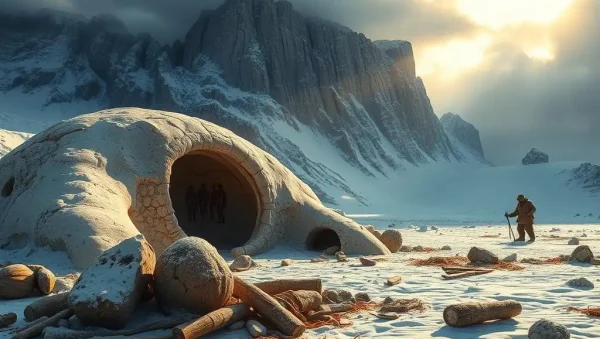
🌟 Explore the PaleoArctic tradition in Canada's northern regions, shedding light on early inhabitants and their archaeological significance. This key chapter in…
Read article
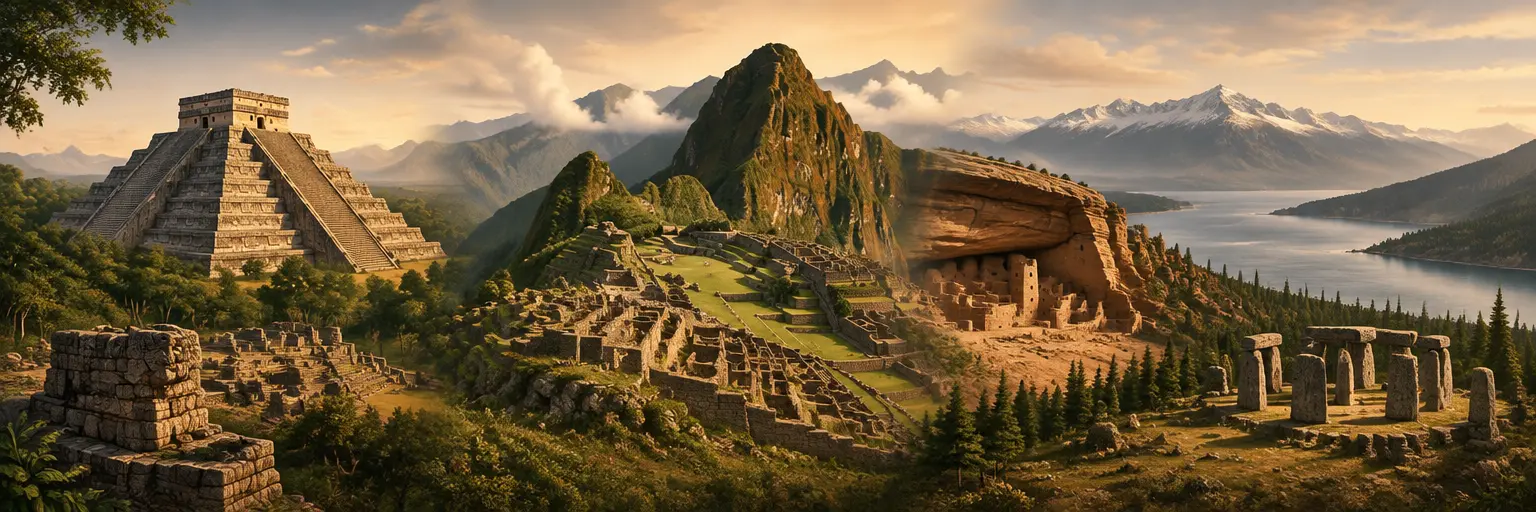
Explore the rich archaeological heritage of the Americas through our in-depth regional overviews, spanning Mexico’s ancient pyramids, Peru’s Andean wonders, and the diverse landscapes of the USA and Canada. From the Maya and Aztec to the Inca and Indigenous North American cultures, these insights highlight groundbreaking excavations, monumental architecture, and cultural evolution across millennia. Uncover key sites, artifacts, and timelines that reveal how societies adapted to their environments, from coastal trade routes to highland terraces. Whether you’re a student, enthusiast, or professional, our curated summaries simplify complex histories, emphasizing recent discoveries and methodological advances in field archaeology. Dive into comparative analyses that connect regional patterns, such as urban planning, ceremonial practices, and resource management, while boosting your knowledge of pre-Columbian and post-contact narratives. Perfect for research, travel planning, or personal curiosity, this hub makes accessible the nuanced stories of ancient peoples, their legacies, and the ongoing efforts to preserve them.
Welcome to the comprehensive guide on the Archaeology of the Americas, a fascinating subcategory within our Regional & National Archaeological Overviews at ArchaeologyHub.org. Here, we delve into the deep-time narratives of four major geographical zones—Mexico, Peru, the USA, and Canada—uncovering how ancient peoples adapted, innovated, and thrived across diverse landscapes. From the majestic pyramids of Mesoamerica to the enduring shell middens of the Pacific Northwest, this page serves as your digital passport to iconic sites, breakthrough discoveries, and interpretive debates. Whether you are a student, a lifelong learner, or a professional researcher, you will find meticulously curated timelines, artifact spotlights, and excavation analyses that illuminate the continent's rich cultural heritage. Dive in and discover how these regions connect through trade, migration, and shared technological revolutions, all while maintaining unique local traditions that continue to shape modern archaeological practice.
When exploring Mexican archaeology, expect to journey through the heart of the Olmec, Maya, Aztec, and Zapotec worlds. This subcategory provides detailed overviews of iconic sites like Teotihuacan, Palenque, and Monte Albán, emphasizing not just their monumental pyramids but also their urban planning, water management, and celestial alignments. You will learn how recent lidar surveys have revealed hidden city layouts beneath dense jungle canopies, reshaping our understanding of ancient population densities. The content also covers the decipherment of Maya hieroglyphs, shedding light on royal dynasties and ritual calendars. Expect rich interpretive essays that connect material culture—such as obsidian blades, jade masks, and ceramic figurines—to broader social and political dynamics, offering a holistic view of pre-Columbian Mexican history.
Beyond the well-known classics, our Mexican archaeology section highlights lesser-known but equally vital cultures like the Tarascan (Purépecha) empire and the coastal Huastec societies. We emphasize the importance of ethnohistorical sources, such as the Florentine Codex, to bridge the gap between archaeological finds and indigenous perspectives. You will also find up-to-date discussions on the ongoing preservation challenges at UNESCO World Heritage sites, including the impact of tourism, urban encroachment, and climate change. Through detailed artifact profiles—from intricately carved stelae to everyday cooking pots—we illustrate how archaeologists infer social stratification, long-distance trade networks, and dietary practices. This section is your gateway to understanding how Mexico's ancient past continues to inform national identity and modern scientific inquiry.
Peruvian archaeology offers an unparalleled window into complex societies like the Chavín, Moche, Nazca, Wari, and Inca. This subcategory provides comprehensive overviews of highland and coastal sites, including Machu Picchu, Chan Chan, and the Nazca Lines, with a focus on environmental adaptation and state formation. You will explore how the Inca Empire integrated diverse ethnic groups through a system of roads (Qhapaq Ñan), storage facilities (qollqas), and state-sponsored religious centers. We also delve into cutting-edge research on frozen mummies, such as the "Ice Maiden" of Ampato, which offers extraordinary preservation of ritual offerings. Expect detailed chronologies that clarify the rise and fall of each culture, supported by stratigraphic evidence and radiocarbon dating results.
In this Andean section, we emphasize the innovative agricultural techniques—terracing, raised fields, and canal irrigation—that allowed societies to thrive in challenging vertical ecologies. You will discover how the Moche's fine-line painted ceramics reveal mythical narratives and sacrificial rituals, while the Nazca Lines continue to inspire interdisciplinary research in archaeoastronomy. Our content also covers recent genomic studies that trace population migrations and genetic continuity between ancient and modern Andean peoples. For those interested in colonial encounters, we include the archaeology of the Spanish conquest, examining the destruction and reinterpretation of Inca sacred spaces. By connecting material remains with colonial chronicles, this subsection offers a nuanced understanding of cultural resilience and transformation across millennia.
For the United States, this subcategory spans the entire continent, from the Ancestral Puebloan cliff dwellings of the Southwest to the massive earthworks of Cahokia in the Midwest. Expect to find in-depth overviews of mound-building cultures, the Iroquoian longhouses of the Northeast, and the complex hunter-gatherer societies of California and the Pacific Northwest. Our content highlights key excavations at sites like Chaco Canyon, Poverty Point, and Moundville, emphasizing how new archaeometric techniques—such as strontium isotope analysis and ancient DNA—are rewriting migration stories. You will also encounter discussions on the peopling of the Americas, including the Clovis-first model and its challengers, alongside evidence for pre-Clovis coastal routes. Expect a careful treatment of tribal consultation and repatriation, reflecting the ethical responsibilities of modern archaeology.
American archaeology in our hub goes beyond the famous monumental sites to explore everyday life—domestic architecture, foodways, and craft production. We provide artifact spotlights on items like Clovis points, Hohokam pottery, and Eastern Woodlands copper tools, explaining their manufacturing techniques and symbolic meanings. Our regional overviews also cover historical archaeology, including the excavation of colonial settlements, enslaved African American communities, and frontier trading posts, allowing you to see how archaeology complements written history. You will learn about recent discoveries in underwater archaeology, such as sunken ships in the Great Lakes and submerged prehistoric sites on the continental shelf. With a focus on public archaeology and community engagement, this section illustrates how American archaeologists are working with Native nations to preserve heritage and share knowledge in culturally respectful ways.
Canadian archaeology offers a unique perspective on adaptation to extreme environments, from the Thule/Inuit cultures of the Arctic to the ancestral Haida and Coast Salish peoples of the Pacific Northwest. This subcategory provides overviews of sites like L'Anse aux Meadows—the only confirmed Norse settlement in North America—and the intricate fish weirs of the St. Lawrence River. You will explore the Dorset and Paleo-Inuit cultures, whose enigmatic artworks and stone structures challenge our assumptions about survival in frigid conditions. Expect detailed discussions on permafrost-preserved organic materials, including wooden masks and harpoons, which provide rare glimpses into ancient lifeways. Our content emphasizes the importance of Indigenous knowledge systems in interpreting these archaeological records, fostering a collaborative research model.
Beyond the iconic Arctic imagery, Canadian archaeology also covers the Great Plains bison hunting cultures, the Maritime Archaic tradition of Newfoundland, and the long-distance trade networks that connected interior Subarctic communities. We include analyses of petroforms (stone alignments), shell middens, and fur trade forts, showing how material culture reveals shifting colonial relationships. Recent research on paleoclimatology and sea-level change helps contextualize site locations and abandonment patterns. You will also find dedicated sections on underwater archaeology in the St. Lawrence and Fraser rivers, plus current debates on the re-dating of the Bluefish Caves, which may indicate early Beringian occupation. This subcategory serves as a bridge linking North American archaeology with circumpolar studies, highlighting shared technologies and social responses to environmental change.
Across all four national contexts, our subcategory regularly publishes thematic overviews on methodology—such as ground-penetrating radar, soil chemistry, and zooarchaeological analysis—that drive discoveries. Expect to learn how archaeologists in the Americas are increasingly using non-invasive techniques to protect sacred sites and minimize excavation impact. We also feature case studies on repatriation and NAGPRA compliance, illustrating how university and museum collections are being reassessed. Emphasis is placed on collaborative research projects that include descendant communities, ensuring that interpretations align with indigenous oral traditions and values. You will find practical guides for students on how to pursue fieldwork in these regions, including information on permits, institutional ethics boards, and funding sources.
This forward-looking section also addresses the impact of climate change on vulnerable coastal and permafrost sites, which are eroding at alarming rates. We highlight digital archaeology initiatives, such as 3D modeling of artifacts and open-access databases, that democratize access to knowledge. By examining the history of archaeology itself—from early antiquarianism to professionalization—you will gain critical perspectives on how colonial legacies still shape research topics and site selection. Our essays propose future research priorities, including gender archaeology, household-level analyses, and the archaeology of resistance. This subcategory ultimately aims to equip you with a holistic toolkit, blending hard science with humanistic interpretation, to appreciate the rich, multi-layered history of the Americas.
The oldest widely accepted sites include Monte Verde in Chile (dated ~14,500 years ago) and Meadowcroft Rockshelter in Pennsylvania (possibly ~16,000 years ago). In Mexico, the Chiquihuite Cave has controversial claims of 30,000-year-old occupation. More recent discoveries at White Sands National Park in New Mexico date human footprints to about 21,000-23,000 years ago, challenging older models.
They primarily use radiocarbon dating for organic materials, luminescence dating for sediments and ceramics, and obsidian hydration dating for volcanic glass. For cross-correlation, they also employ dendrochronology (tree-ring dating) in the Southwest, and stratigraphic principles. Newer techniques, such as ancient DNA and stable isotope analysis, provide biological and dietary timelines.
Yes, L'Anse aux Meadows in Newfoundland is a UNESCO World Heritage Site with clear Norse-style structures, dated to around 1000 CE. Artifacts like a bronze cloak pin and iron nails confirm Norse activity. This evidence supports the sagas of Leif Erikson’s voyages, but it remains the only confirmed Norse site in North America.
NAGPRA, the Native American Graves Protection and Repatriation Act, is a 1990 U.S. federal law requiring museums and federal agencies to return Native American human remains, funerary objects, sacred objects, and objects of cultural patrimony to affiliated tribes. It fundamentally changed archaeological practice by mandating consultation with tribal groups before excavation and repatriation.
Archaeologists use aerial photography, satellite imagery, and drone-based LiDAR (light detection and ranging) to map the geoglyphs without physical contact. Ground-penetrating radar and magnetometry help detect subsurface features. Researchers also employ non-invasive photogrammetry to create 3D models, while strictly avoiding walking on the fragile desert surface to prevent cracks.