Global Prehistory: Paleolithic to Neolithic Overview – A Journey Through Human Origins
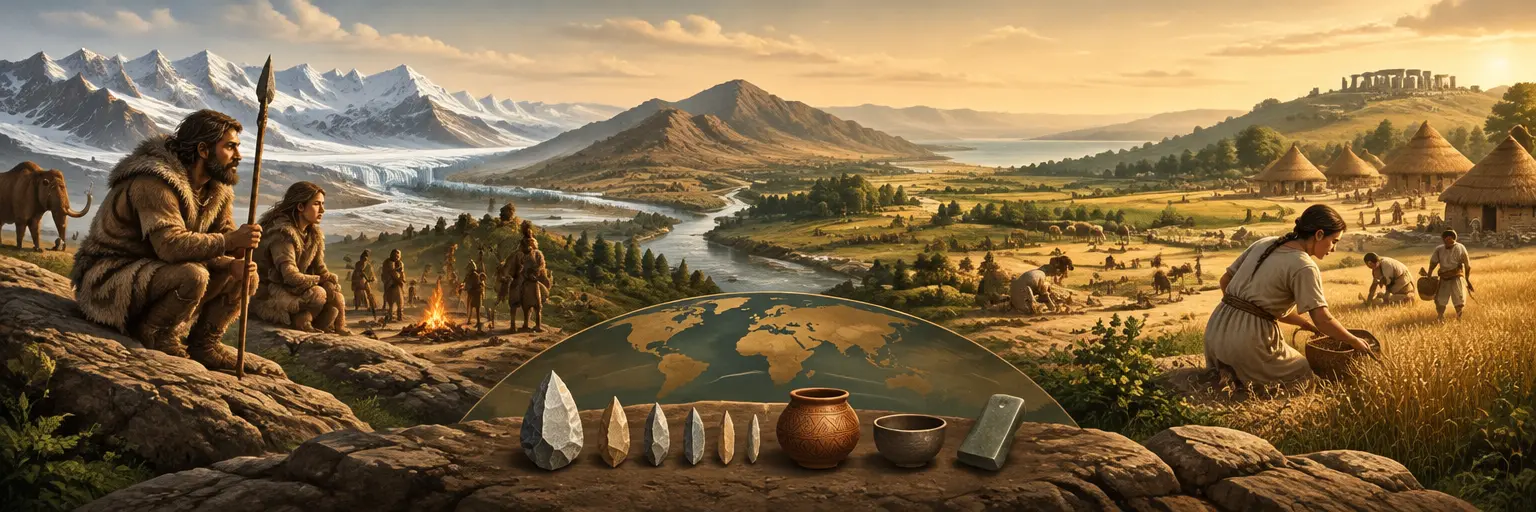
Welcome to ArchaeologyHub.org’s comprehensive gateway into the profound transformation of human existence, spanning from the earliest stone tool makers of the Paleolithic era to the revolutionary agricultural settlements of the Neolithic period. This subcategory provides a sweeping chronological framework that connects Africa, Europe, Asia, and the Americas, emphasizing migratory patterns, technological breakthroughs, and the emergence of complex social structures. By integrating artifact profiles, site-specific case studies, and interpretive timelines, this overview equips both students and enthusiasts with the essential context to understand how hunter-gatherer societies evolved into sedentary farming communities—a change that fundamentally reshaped our species’ trajectory.
🔍 Key Technological Innovations and Stone Tool Evolution
Here, you will discover the meticulous progression from crude Oldowan choppers to the beautifully crafted Acheulean handaxes and eventually to the microlithic blades of the Mesolithic transition. Each technological leap is analyzed through excavated assemblages, offering insight into cognitive development and adaptive strategies. Expect detailed comparisons of knapping techniques, raw material sourcing, and regional variations that highlight human ingenuity under environmental pressures.
This section also emphasizes the symbolic significance of tool production, linking functional utility with early forms of cultural identity. By examining sites like Olduvai Gorge and Boxgrove, you will learn how core reduction methods evolved, enabling more efficient hunting and processing of resources. The narrative connects these innovations to broader survival challenges, illustrating how technological mastery directly influenced group mobility, social organization, and eventual territorial expansion across continents.
🌍 Human Migration and Dispersal Patterns Across Continents
Delve into the fascinating story of our ancestors’ out-of-Africa expansion, tracing routes through the Levantine corridor, coastal Arabia, and into Sahul and the Americas. This section synthesizes genetic, linguistic, and archaeological evidence to reconstruct migratory timelines, highlighting key waypoints such as the Niah Caves and Monte Verde. You will understand how climate fluctuations, sea-level changes, and resource availability shaped these epic journeys over tens of thousands of years.
Beyond mere movement, environmental adaptation is a central theme—how groups developed specialized toolkits, shelter designs, and dietary practices for diverse ecosystems, from tundra to tropical rainforest. The analysis integrates lithic scatter studies and faunal remains to demonstrate the flexible, problem-solving nature of early humans. This holistic view fosters appreciation for the resilience and ingenuity that enabled our species to occupy nearly every terrestrial habitat on the globe.
🏠 Sedentism, Architecture, and the Rise of Villages
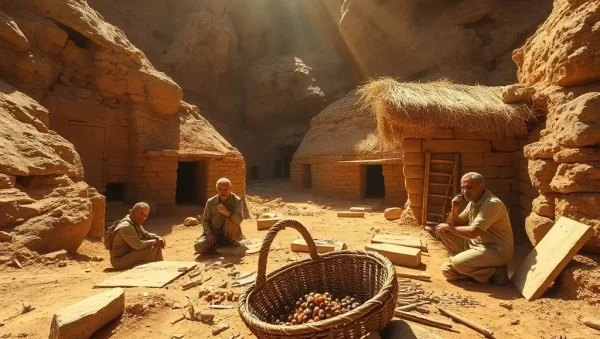
Witness the gradual shift from temporary camps to permanent settlements, focusing on transitional sites like Göbekli Tepe, Jericho, and Çatalhöyük. This section examines the architectural innovations—mudbrick walls, plastered floors, and communal structures—that indicate new social contracts and religious practices. Expect detailed spatial analyses that reveal household organization, storage practices, and emerging inequalities that laid groundwork for future civilizations.
Here, the domestication of space parallels the domestication of plants and animals, as communities began to invest in built environments that anchored them to specific landscapes. Through ethnoarchaeological comparisons and residue analysis, we interpret how these settlements fostered demographic growth, craft specialization, and long-distance trade. Understanding these shifts is crucial for appreciating the foundational changes that ultimately led to urbanism and state formation in later periods.
🌾 Origins of Agriculture and Animal Domestication
This segment investigates the “Neolithic Revolution” with a critical eye, exploring independent centers of domestication in the Fertile Crescent, China, Mesoamerica, and the Andes. You will encounter evidence from phytoliths, starch grains, and ancient DNA that pinpoint the timelines for wheat, rice, maize, and millet cultivation. The role of climate stabilization and human selection is discussed alongside the ecological consequences of farming expansion.
The partnership between humans and animals—dogs, sheep, goats, cattle, and pigs—is framed through morphological changes and burial contexts, revealing intimate bonds and utilitarian roles. We also address the costs of agriculture, such as increased disease loads and workload, challenging the romanticized view of a linear “progress.” This balanced perspective encourages readers to consider alternative pathways like resource management horticulture practiced by some hunter-gatherers, offering a nuanced understanding of economic transitions.
🎨 Art, Ritual, and Cognitive Symbolism in Prehistory
Explore the rich visual culture of prehistoric peoples, from the majestic cave paintings of Lascaux and Altamira to the enigmatic Venus figurines and monumental megaliths. This section deciphers the potential meanings behind symbolic motifs, using ethnographic analogy and neuropsychological theories. You will learn about pigment processing, portable art, and the acoustic properties of caves that may have enhanced ritual experiences.
Art is presented not merely as decoration but as a cognitive archive reflecting worldview, social memory, and territorial markers. The placement of imagery within deep cave systems suggests shamanistic practices and seasonal aggregation events, providing insights into belief systems largely inaccessible from skeletal remains. By integrating archaeoacoustics and experimental replication, we reconstruct the sensory dimensions of these ceremonies. This holistic approach underscores the human capacity for abstract thought and communication long before writing.
📜 Regional Case Studies and Comparative Frameworks
This section offers targeted examinations of key regions—such as Europe’s Mesolithic, the Jomon culture of Japan, and the Natufian of the Levant—highlighting their unique pathways to complexity. Each case study provides a microcosmic view of broader trends, allowing for cross-cultural comparisons of social stratification, exchange networks, and environmental management. You will encounter site reports, artifact typologies, and radiocarbon sequences that form the backbone of chronological control.
The comparative lens reveals that the Paleolithic-Neolithic transition was not a uniform event but a series of contingent, multi-linear developments. For instance, some societies adopted pottery before agriculture, while others practiced intensive foraging without full domestication. Through quantitative spatial analysis and advanced dating methods, we illuminate how local innovations interacted with global climate shifts. This regional specificity enriches the overarching narrative, demonstrating the diversity of human solutions to shared challenges.
Frequently Asked Questions
What is the main difference between Paleolithic and Neolithic lifestyles?
The Paleolithic era (Old Stone Age, ~2.6 million to 10,000 BCE) featured nomadic hunter-gatherer groups relying on wild plants and animals, using chipped stone tools and living in temporary shelters. The Neolithic era (New Stone Age, ~10,000 to 4,500 BCE) marked a shift to sedentary farming villages, with polished stone tools, pottery, domesticated crops, and animals, leading to larger, permanent settlements and increased social complexity.
Why is Göbekli Tepe so significant in prehistory?
Göbekli Tepe, dated to ~9600 BCE, is a massive stone temple complex in Turkey, built by hunter-gatherers before agriculture was widespread. Its carved pillars and elaborate reliefs suggest advanced ritual organization and social cooperation without permanent residence. This challenges the assumption that farming preceded monumental architecture, implying that shared religious beliefs may have driven sedentism and domestication.
How did climate change influence the Neolithic transition?
The end of the last Ice Age (~10,000 BCE) brought warmer, wetter conditions, expanding zones for wild cereals and increasing resource predictability. This allowed hunter-gatherers to intensify collection and storage, reducing mobility. As populations grew, pressures from resource concentration may have incentivized deliberate planting and animal management, ultimately leading to domestication in several independent regions globally.
What are the earliest known cave paintings and where are they found?
The earliest securely dated cave paintings include El Castillo in Spain (~40,800 years old) and the Chauvet Cave in France (~37,000 years old), depicting animals like lions, rhinos, and horses. Sulawesi, Indonesia, also has hand stencils dated to ~40,000 years ago. These works demonstrate sophisticated artistic expression among early Homo sapiens, likely linked to shamanistic rituals and storytelling.
Did all prehistoric societies adopt farming at the same time?
No, agriculture emerged independently and at different rates across the globe. The Fertile Crescent began ~10,000 BCE, China’s Yangtze and Yellow river valleys ~7,000 BCE, Mesoamerica ~4,000 BCE, and the Andes ~3,000 BCE. Some regions, like Australia, maintained foraging lifestyles until European contact. Even within “Neolithic” regions, some communities long continued mixed foraging-farming strategies.