Rise of Civilizations: Bronze Age and Iron Age Transitions
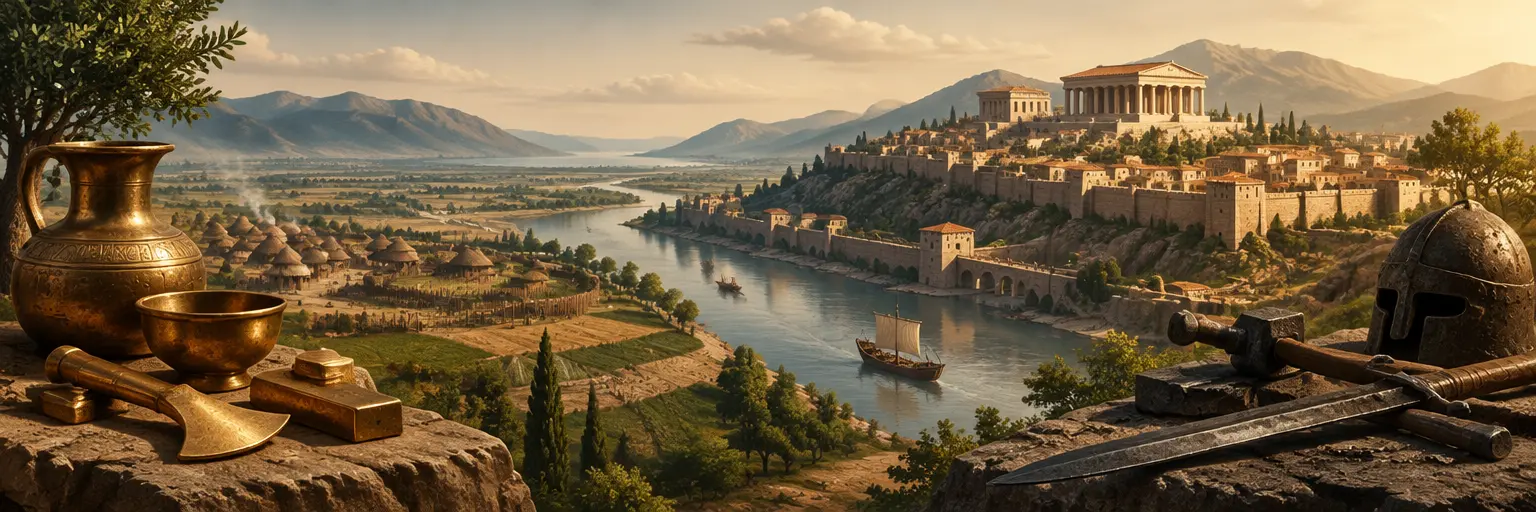
Welcome to ArchaeologyHub.org’s deep dive into one of history’s most transformative eras—the shift from Bronze to Iron Age societies. This subcategory explores how metallurgical innovation, trade network collapses, and climate shifts reshaped ancient power structures across the Mediterranean, Near East, and beyond. Here, you’ll uncover excavation reports, artifact analyses, and comparative chronologies that illuminate why iron technology replaced bronze as the backbone of warfare, agriculture, and statecraft. Perfect for students, enthusiasts, and researchers, this page synthesizes complex archaeological evidence into a clear, SEO-rich narrative journey.
⚒️ The Metallurgical Leap: From Bronze to Iron in Daily Life
This section examines how the transition from bronze (copper-tin alloy) to iron (smelted from hematite and bog ore) revolutionized tools, weapons, and social hierarchies. You’ll learn about smithing techniques, the role of trade routes for tin and copper, and why iron’s abundance made it a democratizing technology. Expect artifact profiles—from Hittite swords to Iberian plowshares—that reveal regional adoption rates and localized innovations.
By analyzing smelting furnaces, slag deposits, and workshop layouts at sites like Tell Hammeh (Jordan) or Agia Varvara (Cyprus), we show how iron production shifted from elite palatial control to rural, household-level craft. This decentralization foreshadowed new economic models and led to surplus agriculture in previously marginal lands. The transition wasn’t overnight; it spanned centuries, with bronze remaining ritualistically significant even as iron dominated functional use.
🏛️ Collapse and Rebirth: The Late Bronze Age Systems Crisis
Here, we unravel the Late Bronze Age collapse (c. 1200 BCE), when palatial societies in Greece, Anatolia, and the Levant fragmented. Explore hypotheses—from Sea Peoples’ invasions to drought and earthquake clusters—and see how recent dendrochronology and sediment cores refine these theories. This section provides a framework for understanding why iron’s rise coincided with political reorganization, not just technological superiority.
Archaeological evidence from Ugarit’s destruction layers, Mycenaean fortress abandonments, and Egyptian texts like the Medinet Habu reliefs demonstrates a networked world unraveling. We then trace how survivor communities adapted: smaller polities, new burial customs, and a revival of long-distance trade in the early Iron Age. This resilience, not mere survival, set the stage for Phoenician expansion and Greek colonial ventures.
🌍 Regional Case Studies: Europe, Near East, and Asia
Zoom in on distinct geographic trajectories with this comparative overview. In Europe, the Urnfield culture and Hallstatt salt mines showcase early iron adoption without state bureaucracy. In the Near East, Assyrian military campaigns relied on iron weaponry to forge an empire. In South Asia, the Vedic period saw iron axes clear forests, enabling Ganges Valley settlement. Each region’s pace and purpose differed, offering rich material for cross-cultural analysis.
Key sites like Gordion (Phrygia), Huelva (Iberia), and Kodumanal (Tamil Nadu) provide stratified sequences that date iron’s arrival relative to local ceramic traditions. We highlight how radiocarbon dating and typological seriation refine chronologies, challenging older diffusionist models. You’ll also find maps and tables linking metallurgy to agricultural expansion, population growth, and nascent urbanism—core themes for any Bronze-Iron transition study.
🔍 Excavation Methods and Interpretive Challenges
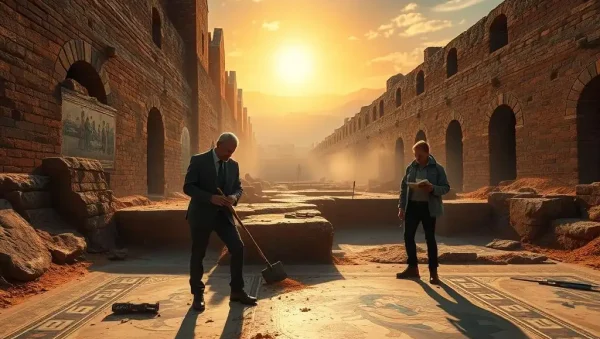
Discover how archaeologists distinguish Bronze Age layers from Iron Age deposits, using stratigraphy, typology, and scientific dating. This section addresses practical challenges: Iron corrosion often destroys diagnostic features, while bronze hoards are frequently reused or melted down. We explain techniques like X-ray fluorescence (XRF) to source ores and micro-slag analysis to reconstruct smelting temperatures—methods that elevate artifact interpretation beyond surface typology.
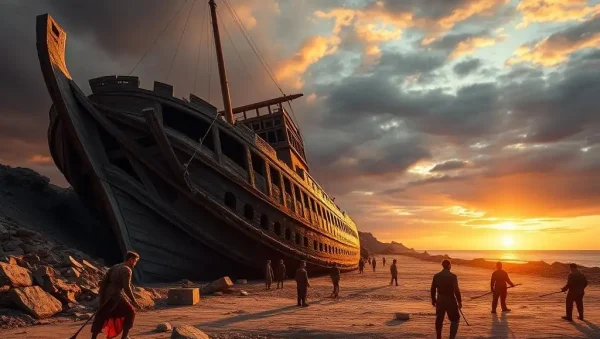
Case studies include the late Bronze Age shipwreck at Uluburun, whose cargo tells of tin and copper exchange, and the early Iron Age hillforts of Central Europe, where excavations reveal centralized storage and defensive works. We also discuss pitfalls, such as radiocarbon plateaus during this period, and how Bayesian modeling helps narrow date ranges. This methodological lens prepares you to critically read excavation reports and museum displays with newer, more nuanced insights.
📜 Cultural and Religious Transformations
Beyond tools and warfare, this transition altered belief systems, art, and social identity. Examine funerary rituals: urnfield cremation replaced inhumation in many areas, while new iconography—like the Gundestrup Cauldron—blended Celtic and Thracian motifs. Iron’s perceived magical properties often tied to sky deities, as seen in votive hoards of miniature weapons. This section shows that technological change was entwined with cosmology, not merely practical need.
Glyptic art from Assyrian cylinder seals and Greek Geometric pottery reflect new narratives of heroism and pastoral life, mirroring societal shifts toward individual status. At sites like Danebury (Britain), ritual pits filled with iron tools and animal bones suggest communal feasting and offerings. By linking artifact classes to spatial layouts, we infer how elites legitimized power through new ritual vocabularies—a theme resonant with modern comparative archaeology.
Frequently Asked Questions
Why did iron replace bronze if bronze is stronger?
Bronze is indeed harder when properly alloyed, but iron ore is far more abundant and cheaper to smelt. As trade networks for tin collapsed in the Late Bronze Age, iron became a cost-effective alternative despite needing more skill to work. Over time, carburization and quenching improved iron’s quality to match bronze for most uses, making it a pragmatic choice for mass production.
What was the role of the Sea Peoples in the Bronze-Iron transition?
The Sea Peoples—a confederation of raiders—contributed to the destruction of several palatial centers around 1200 BCE, but their exact origins and motives remain debated. Their attacks disrupted trade, cutting off tin supplies and accelerating bronze’s decline. However, recent scholarship suggests they were symptoms of larger systemic crises, including famine and earthquakes, not sole causal agents.
How do archaeologists date iron artifacts from this period?
Iron artifacts are dated indirectly via associated pottery, stratigraphic context, and radiocarbon dating of organic residues. Because iron itself is rarely datable, archaeologists often rely on corrosion products or embedded charcoal. When consistent sequences exist, typological comparisons with sites having established chronologies, like Gordion, help refine dates for regions lacking written records.
Were there any societies that skipped the Bronze Age entirely?
Yes, sub-Saharan Africa, parts of East Asia, and Oceania transitioned directly from Stone Age or Neolithic to ironworking with little or no bronze phase. For example, the Nok culture of Nigeria (c. 500 BCE) smelted iron without prior bronze metallurgy. This shows that iron’s appeal—abundant ores and simple bloomery smelting—made it ideal for regions lacking tin or copper sources.
What is the best archaeological site to visit for this transition?
Top recommendations include Boghazköy-Hattusa (Turkey) for Hittite iron workshops, Hallstatt (Austria) for early iron mining and salt trade, and Tel es-Safi/Gath (Israel) for Philistine iron smelting. For a complete sequence, the Acropolis of Athens shows continuous occupation from Bronze Age megarons to Iron Age temples, with visible stratigraphy and museum artifacts that illustrate the shift clearly.