Explore the Lives and Legacies of Archaeology's Greatest Minds
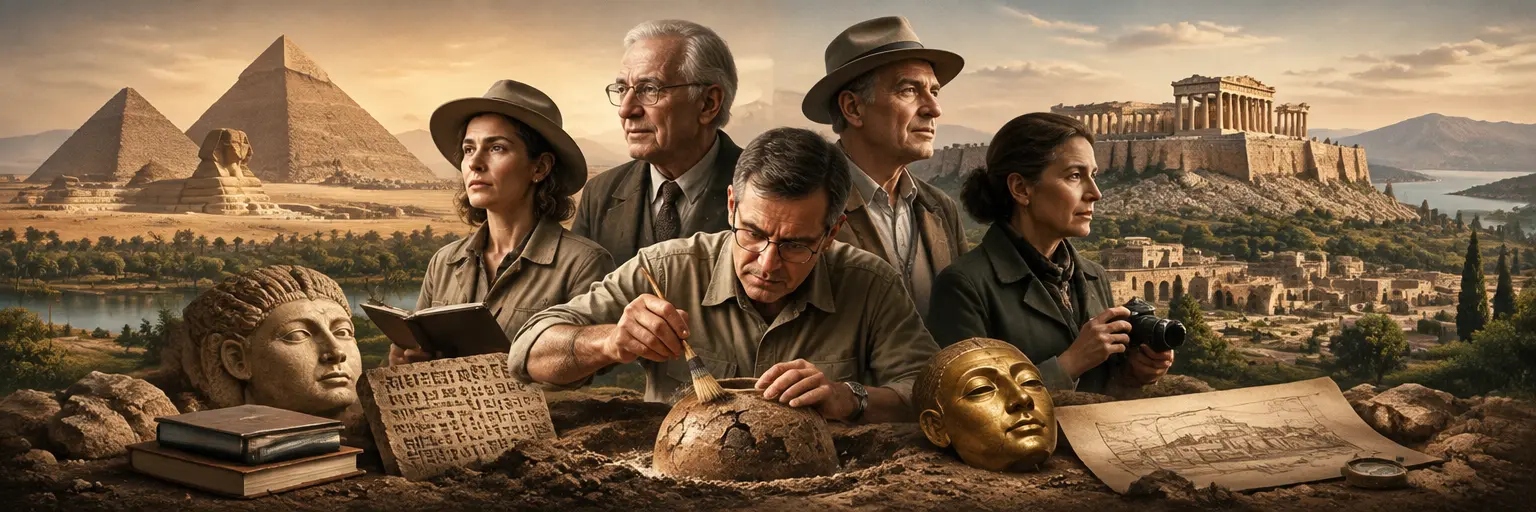
Step into the world of visionaries who reshaped our understanding of human history. This subcategory of Biographies of Archaeologists & Key Thinkers at ArchaeologyHub.org focuses on the influential 20th-century archaeologists whose groundbreaking fieldwork, innovative theories, and spectacular discoveries transformed the discipline. From uncovering lost cities to decoding ancient scripts, these pioneers defined modern archaeological practice. Here, you’ll find detailed biographical narratives, excavation histories, and the lasting impact of their findings on our global heritage.
🗿 Pioneers of Field Archaeology: Excavation Techniques That Changed History
This section highlights figures like Mortimer Wheeler and Kathleen Kenyon, who introduced systematic stratigraphic excavation and grid-based methods. Wheeler’s disciplined approach to digging, with baulks and sections, revolutionized how sites were recorded, while Kenyon’s work at Jericho revealed Neolithic layers previously unimaginable. You’ll explore how these techniques became the backbone of professional archaeology, influencing every subsequent dig from the Middle East to the Americas.
Beyond their technical contributions, these archaeologists trained generations of students and published meticulous reports that remain essential references. Their insistence on context and precise documentation elevated archaeology from treasure-hunting to a rigorous science. Expect case studies from Mohenjo-daro and Tel el-Sultan, alongside practical explanations of why their methods endure in modern fieldwork, making this an essential read for students and enthusiasts alike.
🔍 Decoding Civilizations: Epigraphers and Linguistic Breakthroughs
Discover how scholars like Michael Ventris (Linear B) and Yigael Yadin (Bar Kokhba letters) unlocked forgotten languages and texts. Ventris’s decipherment of Mycenaean Greek in 1952 opened a window onto Bronze Age administration, while Yadin’s excavations at Masada and the Dead Sea Scrolls caves provided priceless documentary evidence. This subsection details the intellectual struggles, philological methods, and sheer perseverance required to crack ancient codes.
These breakthroughs were not isolated feats but collaborative efforts involving historians, linguists, and archaeologists. You’ll learn how inscriptions—once dismissed as curiosities—became primary sources for reconstructing political, economic, and religious life. The section also covers controversies, such as the rivalry between Ventris and Alice Kober, and emphasizes ethical debates over artifact provenance, ensuring readers grasp the full complexity behind these dazzling achievements.
🏺 Unearthing Lost Cities: Explorers of Iconic Sites
Journey with adventurers like Hiram Bingham (Machu Picchu), Aurel Stein (Silk Road oasis towns), and Leonard Woolley (Ur). Their expeditions combined daring exploration with careful excavation, producing treasures like the Royal Standard of Ur and the thousands of manuscripts from Dunhuang. This part of the subcategory focuses on the logistical challenges—remote terrains, hostile climates, and political instability—that these pioneers overcame to reveal entire urban landscapes.
You’ll also examine the colonial-era contexts that shaped these digs, including questions about cultural heritage and repatriation. Highlighting both triumphs and ethical failures, this section encourages critical thinking about how archaeological narratives were constructed. For each site, we provide timeline maps, artifact profiles, and interpretive commentary on what these cities taught us about trade, governance, and daily life in antiquity, enriching your understanding beyond simple discovery tales.
🌋 Theoretical Revolutionaries: Rethinking Human Prehistory
Meet thinkers who challenged established paradigms, from V. Gordon Childe and his Marxist-influenced models of social evolution to Lewis Binford, the father of processual archaeology. Childe’s “Neolithic and Urban Revolutions” framed prehistory as a series of transformative leaps, while Binford argued for scientifically testable hypotheses about past human behavior. This section dissects their major works, including Man Makes Himself and Analytical Archaeology, placing their ideas within the intellectual ferment of the 20th century.
Their theories sparked fierce debates, notably against post-processualists like Ian Hodder (Çatalhöyük research), which you’ll trace from the 1960s to the 1990s. By examining primary texts and secondary critiques, you’ll grasp how these archaeologists influenced not just fieldwork but the philosophy of history itself. This critical lens prepares readers to approach modern archaeological interpretation with greater sophistication.
🏆 Controversial Icons: Frauds, Rivals, and Ethical Dilemmas
Not all influential archaeologists followed ethical paths. This segment investigates figures like Yukio Kobayashi, who fabricated the Kamitakamori site, and the notorious Piltdown Man hoax that fooled experts for decades. While these cases are cautionary tales, they also underscore the importance of scientific scrutiny. Alongside them, you’ll encounter professional rivalries, such as the Howard Carter vs. Lord Carnarvon disputes, that shaped public perception of archaeology.
We analyze how institutional pressures, nationalism, and personal ambition sometimes corrupted scientific rigor. Yet, these very failures led to improvements in excavation standards, publication openness, and chronological verification via radiocarbon dating. This subsection provides a balanced view, urging readers to appreciate both the brilliance and fallibility of human inquiry, making your exploration of archaeological history far more nuanced.
Frequently Asked Questions
Who is considered the most influential 20th-century archaeologist?
Many scholars point to V. Gordon Childe for his theoretical frameworks that merged Marxism with empirical data, shaping how we study social change. Others champion Mortimer Wheeler for methodological rigor. The answer depends on whether you value theory or technique—both are covered extensively in this subcategory.
How did 20th-century archaeologists date their finds before radiocarbon?
They relied on stratigraphy, typology, and cross-dating with known historical records. For example, Kenyon used pottery sequences at Jericho, while Wheeler used coin dates in India. These relative methods were often precise but occasionally flawed, as the Piltdown forgery demonstrates.
Why are some discoveries from this era still controversial?
Issues like colonial extraction, racial biases, and funding pressures led to questionable practices. The repatriation debates over artifacts from Ur or Machu Picchu stem from these origins. This subcategory includes a dedicated section to help you understand these colonial contexts.
Can I access primary sources from these archaeologists?
Yes, many excavation reports and letters are digitized in university archives, such as the Penn Museum’s Ur collection. ArchaeologyHub.org provides links to these repositories, along with summaries of their contents, so you can explore raw data and personal diaries.
How did gender diversity evolve in 20th-century archaeology?
Early figures like Kathleen Kenyon and Dorothy Garrod broke barriers, though they often received less recognition than male peers. As the century progressed, more women entered fieldwork and theory, with leaders like Marija Gimbutas influencing Neolithic studies. This shift is tracked throughout our biographies.