
Olduvai Gorge's Stone Tool Industries: Mary Leakey's Classification and Analysis


Welcome to ArchaeologyHub.org!
Delve into the fascinating world of archaeological discoveries, where we unearth the past and illuminate the stories of ancient civilizations. Ever wondered how early humans shaped their world? Today, we journey to the heart of Tanzania and the renowned Olduvai Gorge, exploring the groundbreaking work of Mary Leakey and her classification and analysis of Olduvai Gorge stone tool evolution. Prepare to be captivated by the ingenuity of our ancestors and the pivotal role this iconic site played in understanding human origins. What secrets will you uncover about early hominin technology and its impact on human development? Let's begin!
- Introduction to Olduvai Gorge and its Significance in Understanding Stone Tool Evolution
- Mary Leakey: Pioneer in Stone Tool Analysis and Classification
- Oldowan Industry: The Earliest Stone Tool Technology at Olduvai Gorge
- Developed Oldowan: An Evolution in Early Stone Tool Production
- Acheulean Industry: The Emergence of Handaxes at Olduvai Gorge
- Comparing Oldowan and Acheulean Industries: A Technological Progression
- Mary Leakey's Methodology: Excavation, Recording, and Analysis of Stone Tools
-
The Significance of Mary Leakey's Work for Understanding Human Evolution
- Interpreting Hominin Behavior Through Stone Tool Analysis: Hunting, Gathering, and Social Organization
- Olduvai Gorge as a Window into Early Human Cognitive Abilities: Planning, Problem-Solving, and Social Learning
- The Lasting Impact of Mary Leakey's Research on Olduvai Gorge Stone Tool Evolution: Establishing a Framework for Paleoanthropological Research
-
Conclusion: Mary Leakey's Enduring Contribution to Paleoanthropology
- Summarizing Key Findings and Insights: Establishing a Chronology and Technological Sequence
- Future Research Directions in Olduvai Gorge and Stone Tool Studies: Applying New Technologies and Reassessing Existing Collections
- Acknowledging Mary Leakey's Pioneering Role in Understanding Early Human Technology: Inspiring Future Generations of Researchers
-
Frequently Asked Questions
- How did Mary Leakey classify the stone tools found at Olduvai Gorge?
- What is significant about the stone tools discovered at Olduvai Gorge in relation to human evolution?
- What are some of the key types of stone tools found within the Olduvai Gorge, and what were their likely uses?
- How does the Oldowan industry differ from the Acheulean industry in terms of stone tool technology?
- What factors contributed to the preservation of stone tools at Olduvai Gorge, allowing archaeologists to study them today?
- Final Reflection: Echoes of Innovation in Stone
- Rediscover the Dawn of Innovation!
Introduction to Olduvai Gorge and its Significance in Understanding Stone Tool Evolution
Geological Context of Olduvai Gorge: Stratigraphy and Dating
Olduvai Gorge, located in the Serengeti Plains of northern Tanzania, is a deeply incised ravine that exposes a remarkably complete stratigraphic sequence spanning nearly two million years of geological and archaeological history. This sequence is primarily composed of four main geological units, known as Beds I through IV, which consist of alternating layers of volcanic ash, lacustrine sediments, and fluvial deposits.
These distinct layers provide a chronological framework essential for understanding the Olduvai Gorge stone tool evolution. For instance, Bed I, the oldest archaeological horizon, is reliably dated using potassium-argon (K-Ar) and argon-argon (Ar-Ar) dating methods to approximately 1.85 to 1.7 million years ago (Ma), establishing a crucial baseline for the earliest stone tool industries.
The precise dating of these strata, meticulously established through years of geological survey and radiometric analysis, allows archaeologists to correlate specific hominin fossils and stone tool assemblages with defined time periods. This detailed chronological control is paramount for reconstructing the sequence of technological advancements and behavioral changes exhibited by early hominins. The successive layers, each representing a different environmental phase, offer a unique opportunity to trace the development of tool-making skills and their adaptation to fluctuating landscapes, thereby illuminating the long trajectory of Olduvai Gorge's tool evolution.
Tectonics and Sedimentation: Shaping the Landscape of Olduvai
The formation of Olduvai Gorge is intrinsically linked to the immense geological forces of the East African Rift System, which began to pull apart the African continent millions of years ago. This ongoing tectonic activity led to the creation of fault lines and basins, where sediments accumulated over vast periods, preserving evidence of ancient life and hominin activity. The downfaulting and subsequent erosion by the seasonal Olduvai River carved out the gorge, exposing the deeply buried archaeological horizons that would become world-renowned.
The sedimentary layers within the gorge reflect a dynamic ancient environment, oscillating between periods of active volcanism, the expansion and contraction of an ancient lake, and the deposition of riverine sediments. These varied depositional environments played a critical role in preserving the delicate remains of early hominins and their stone tools, often burying them rapidly and protecting them from degradation. The interplay of tectonic forces, volcanic eruptions, and hydrological cycles thus created a unique natural archive, providing an unparalleled window into early human history and the progression of Olduvai Gorge stone tool evolution.
Mary Leakey: Pioneer in Stone Tool Analysis and Classification
Early Life and Influences on Mary Leakey's Paleoanthropological Career
Mary Leakey, born Mary Douglas Nicol in 1913, developed an early and profound interest in archaeology, nurtured by her father's passion for ancient Egypt and her own visits to prehistoric sites in France. Despite lacking formal university education, her innate talent for drawing, meticulous observation, and systematic recording quickly distinguished her in the field. Her initial archaeological experience was gained working on Neolithic sites in England, where she honed her excavation and documentation skills under the tutelage of prominent archaeologists like Dorothy Liddell, who recognized her exceptional abilities in flint artifact analysis.
Her collaboration with Louis Leakey, whom she married in 1936, marked a pivotal turn in her career, shifting her focus to the deep past of human origins in East Africa. While Louis was often the public face of their discoveries, Mary's rigorous scientific approach, particularly her unparalleled expertise in lithic analysis, formed the bedrock of their collective achievements. Her early training and dedication to meticulous detail laid the foundation for her groundbreaking work in classifying the complex stone tool assemblages found at Olduvai Gorge, significantly advancing the understanding of Olduvai Gorge stone tool evolution.
Leakey's Multidisciplinary Approach: Integrating Geology, Paleontology, and Archaeology
Mary Leakey's approach to paleoanthropology was inherently multidisciplinary, recognizing that a comprehensive understanding of early hominin behavior required integrating evidence from diverse scientific fields. She understood that stone tools were not isolated artifacts but components of a broader ecological and behavioral system. Consequently, her excavations at Olduvai Gorge meticulously documented the geological context of finds, correlating tool assemblages with specific stratigraphic layers and associated faunal remains.
This holistic perspective allowed her to reconstruct the ancient environments in which early hominins lived, inferring their subsistence strategies, diet, and interactions with their surroundings. By integrating geological data (e.g., sediment types, volcanic ash layers), paleontological evidence (e.g., animal bones, particularly those showing cut marks), and archaeological findings (the tools themselves and their spatial distribution), Mary Leakey established a robust framework for interpreting early hominin lifeways. Her insistence on contextual analysis revolutionized the study of Olduvai Gorge stone tool evolution, moving beyond mere typology to understand the behaviors these tools facilitated.
Oldowan Industry: The Earliest Stone Tool Technology at Olduvai Gorge
Characteristics of Oldowan Tools: Unifacial Flaking and Cobble Reduction
The Oldowan industry, named after Olduvai Gorge where it was first systematically identified, represents the earliest known stone tool technology, dating back to approximately 2.6 to 1.7 million years ago. These tools are characterized by their relatively simple manufacturing technique, primarily involving the percussion flaking of cobbles to create sharp edges. The most common method was unifacial flaking, where flakes were struck from only one side of a cobble or core, resulting in a single working edge.
Raw materials for Oldowan tools at Olduvai Gorge predominantly included locally available volcanic rocks such as basalt, quartz, and quartzite, which were readily found in riverbeds and outcrops. The objective was often to produce sharp-edged flakes for cutting and scraping, or to create choppers with robust edges for more forceful activities. This fundamental approach to stone tool production marks the very beginning of Olduvai Gorge stone tool evolution.
Oldowan Tool Types: Choppers, Scrapers, and Hammerstones
Mary Leakey's seminal classification of Oldowan tools identified several recurring forms, reflecting distinct functions and manufacturing strategies. The most iconic Oldowan tool is the chopper, typically a pebble or cobble with a few flakes removed from one end to create a jagged, sharp edge. These choppers, ranging in size from small hand-held pieces to larger, more robust implements, were likely used for breaking open bones to access marrow, disarticulating carcasses, or perhaps processing tough plant materials.
Alongside choppers, Oldowan assemblages frequently include simple flakes, often sharp enough for cutting meat or soft vegetation, and scrapers, which are flakes with retouched edges suitable for processing hides or wood. Hammerstones, unmodified rounded stones showing evidence of battering, were also essential components of the Oldowan toolkit, used both for striking flakes from cores and for pounding activities. These basic yet effective tools provided early hominins with a significant advantage in exploiting their environment, representing the foundational stage of Olduvai Gorge stone tool evolution.
Mary Leakey's Classification of Oldowan Tools: Hominid Activities and Tool Use
Mary Leakey's comprehensive 1971 publication, Olduvai Gorge, Vol. 3: Excavations in Beds I and II, 1960-1963, provided the definitive classification of the Oldowan industry, meticulously detailing tool morphology, raw material, and likely function. She categorized Oldowan tools into types such as choppers (side, end, two-edged), discoids, polyhedrons, spheroids, and various types of flakes and scrapers. Her classification was not merely typological but deeply rooted in understanding the activities these tools facilitated.
By analyzing the spatial distribution of tools alongside fragmented animal bones, often bearing cut marks, Leakey proposed that Oldowan sites were often "occupation floors" or "living floors" where hominins engaged in activities like butchery, scavenging, and perhaps rudimentary social gatherings. For instance, the high concentration of choppers and associated bone fragments at sites like FLK Zinj indicated intensive carcass processing. Her work provided crucial insights into the behavioral patterns of early hominins like Homo habilis, demonstrating how these simple tools were integral to their subsistence strategies and marked the initial stages of Olduvai Gorge stone tool evolution.
Developed Oldowan: An Evolution in Early Stone Tool Production
Distinguishing Features of the Developed Oldowan Industry: Refined Flaking and Tool Diversity
The Developed Oldowan industry, first identified by Mary Leakey, represents a subtle yet significant evolutionary step from the classic Oldowan, appearing in upper Bed I and Bed II at Olduvai Gorge, roughly between 1.7 and 1.5 million years ago. While still retaining the core-and-flake technology of its predecessor, the Developed Oldowan exhibits a greater degree of refinement in flaking techniques and a broader diversity of tool forms. There is a noticeable increase in the number of bifacially worked cores and the more deliberate shaping of tools, indicating an emerging cognitive complexity in tool production.
Key distinguishing features include a higher proportion of retouched flakes, indicating secondary modification for specific tasks, and the more frequent presence of proto-bifaces or rudimentary handaxes, though not yet the fully symmetrical forms of the later Acheulean. This industry demonstrates hominins' growing ability to envision and create more standardized tools, hinting at a developing "mental template" for tool production. The Developed Oldowan thus serves as a critical bridge in the narrative of Olduvai Gorge stone tool evolution.
Technological Advancements in the Developed Oldowan: Bifacial Flaking and Small Tool Production
Technological advancements within the Developed Oldowan are evident in the increased proficiency in bifacial flaking, where both sides of a core are worked to produce a sharper and more symmetrical edge. While not as refined as later Acheulean bifaces, these early attempts demonstrate an improved understanding of stone fracture mechanics and a desire for more efficient cutting implements. This shift indicates a progression from simply producing a sharp edge to shaping the entire tool.
Furthermore, there is an observable trend towards the production of smaller, more specialized tools, suggesting a wider range of activities beyond just heavy-duty chopping. These smaller flakes and retouched tools could have been used for more delicate tasks such as preparing plant foods, processing hides, or woodworking. The emergence of these more nuanced tool types reflects a greater adaptive flexibility among hominins and a clear trajectory in Olduvai Gorge stone tool evolution.
Mary Leakey's Insights into the Developed Oldowan: Adaptations to Changing Environments
Mary Leakey's meticulous analysis of the Developed Oldowan assemblages led her to propose that this industry represented an adaptive response to evolving environmental conditions and perhaps new subsistence opportunities. She noted its persistence alongside the earliest Acheulean tools, suggesting either a functional differentiation between toolkits used by different hominin groups (e.g., Homo habilis and early Homo erectus) or a gradual, overlapping transition in technological traditions.
Her observations suggested that the increased sophistication of the Developed Oldowan toolkit allowed hominins to exploit a broader range of resources or perform existing tasks with greater efficiency. This adaptability would have been crucial in the dynamic landscapes of early Pleistocene East Africa, characterized by shifts in climate and vegetation. Leakey's work thus highlighted the interconnectedness of technological innovation and environmental adaptation, providing invaluable insights into the drivers of Olduvai Gorge stone tool evolution.
Acheulean Industry: The Emergence of Handaxes at Olduvai Gorge
The Acheulean Toolkit: Handaxes, Cleavers, and Picks
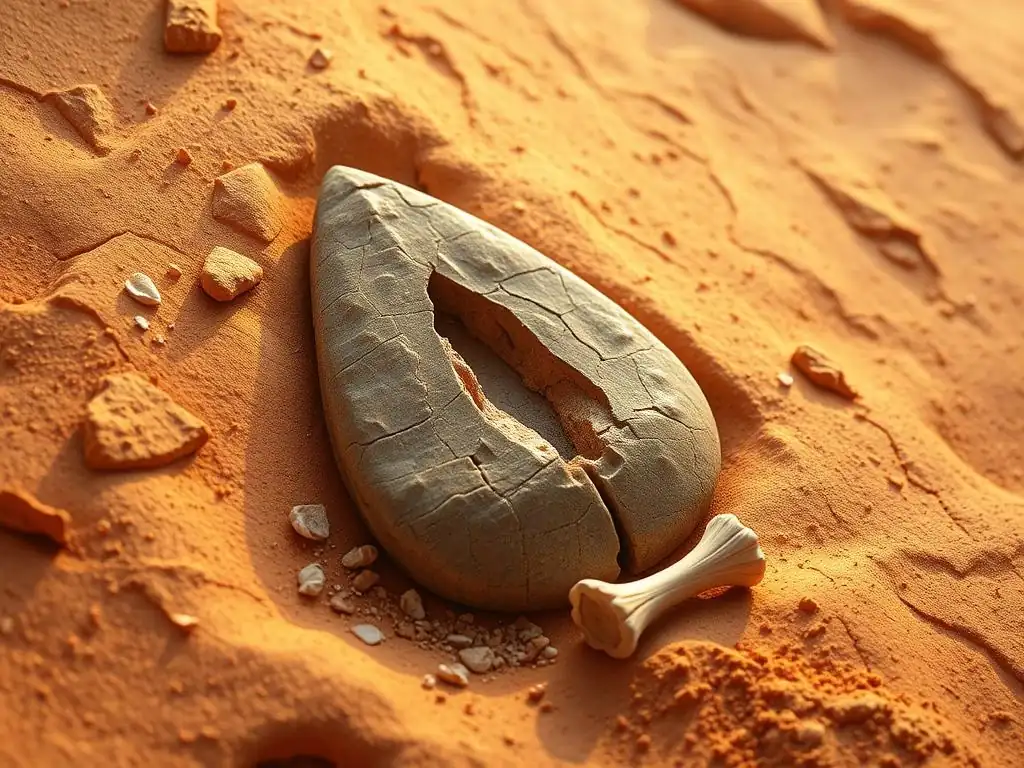
The Acheulean industry, appearing at Olduvai Gorge from approximately 1.5 million years ago, marks a profound leap in hominin technological sophistication, characterized by the widespread production of large, bifacially flaked tools, most notably the iconic handaxe. Unlike the simpler Oldowan choppers, Acheulean handaxes are typically almond-shaped or teardrop-shaped, exhibiting remarkable symmetry and a carefully prepared cutting edge all around. These versatile tools are believed to have served multiple functions, from butchering large animals to digging for roots or water, and even as projectiles.
In addition to handaxes, Acheulean assemblages at Olduvai include other characteristic large bifacial implements such as cleavers, which have a broad, transverse cutting edge, and picks, which are pointed and often thicker. The consistent morphology of these tools across vast geographical areas and over immense spans of time suggests a widespread shared cognitive capacity for planning and abstract thought among Acheulean hominins. The presence of these standardized forms signifies a major advancement in Olduvai Gorge stone tool evolution.
Acheulean Tool Manufacturing Techniques: Soft Hammer Percussion and Standardization
The production of Acheulean tools, particularly the sophisticated handaxes, demonstrates a significant advancement in knapping techniques, moving beyond the simple hard hammer percussion of the Oldowan. Acheulean toolmakers increasingly utilized soft hammer percussion, employing materials like bone, antler, or wood to strike flakes from the core. This technique allowed for greater control over flake removal, producing thinner, flatter, and more symmetrical tools with sharper edges. The resulting tools often show evidence of extensive secondary flaking and retouching to refine their shape and cutting efficiency.
The remarkable standardization of Acheulean handaxes, with their consistent overall shape and proportions, suggests that hominins were working from a "mental template" or a preconceived idea of the desired tool form. This indicates a higher level of cognitive complexity, including advanced planning, foresight, and the ability to visualize a finished product before its creation. This level of intentionality in tool production represents a critical milestone in Olduvai Gorge stone tool evolution.
Mary Leakey's Analysis of Acheulean Assemblages: Regional Variations and Functional Specialization
Mary Leakey's detailed analysis of the Acheulean assemblages at Olduvai Gorge, particularly from Beds II and IV, revealed not only the technological progression but also subtle regional variations and potential functional specialization within the industry. She meticulously documented different "stages" of Acheulean development at the site, from early, less refined forms to later, more elegant and symmetrical handaxes. Her work highlighted how Acheulean tool forms might vary depending on the specific raw material available or the intended use of the tool.
Leakey's studies also suggested that certain Acheulean sites at Olduvai might have been specialized activity areas. For example, high concentrations of large handaxes and cleavers alongside abundant faunal remains indicated intensive butchery sites, while other areas might have been associated with different tasks. Her ability to discern these patterns from the archaeological record provided crucial insights into the complex behaviors of Homo erectus and later hominins, further enriching our understanding of Olduvai Gorge stone tool evolution.
Comparing Oldowan and Acheulean Industries: A Technological Progression
Key Differences in Tool Morphology and Functionality: Symmetry and Cutting Edge Length
The contrast between the Oldowan and Acheulean industries at Olduvai Gorge provides a compelling narrative of technological progression in early hominin history. Morphologically, Oldowan tools are generally crude, expedient, and asymmetrical, often comprising simple choppers and flakes produced with minimal effort to create a sharp edge. Their functionality was broad but less refined, suitable for basic tasks like bone smashing and rough cutting. The average Oldowan flake might offer a cutting edge of only a few centimeters.
In stark contrast, Acheulean tools, particularly handaxes, exhibit remarkable symmetry, bifacial flaking, and a deliberate, preconceived form. They are often much larger and possess significantly longer and more efficient cutting edges—a typical handaxe could provide 20-30 cm of sharp edge, far exceeding that of an Oldowan chopper. This enhanced morphology translates into superior functionality for tasks requiring sustained cutting, butchery of large animals, or shaping wood. This clear morphological and functional divergence underscores the significant leap in Olduvai Gorge stone tool evolution.
The Transition from Oldowan to Acheulean: Increased Cognitive Complexity and Planning
The technological shift from the Oldowan to the Acheulean at Olduvai Gorge reflects a profound increase in hominin cognitive complexity and planning abilities. Oldowan tool production primarily involved a simple "goal-oriented" approach: strike a few flakes to get a sharp edge. Acheulean toolmaking, however, required a "mental template" – the ability to visualize the final shape of the tool before beginning the flaking process, and to execute a multi-stage manufacturing sequence. This implies enhanced spatial reasoning, foresight, and fine motor control.
Furthermore, the standardization of Acheulean handaxes across vast geographical regions suggests social learning and the transmission of complex technological knowledge over generations. This level of technological sophistication points to more developed communication skills and perhaps even early forms of teaching. The transition thus represents not just a change in tools, but a fundamental advancement in the hominin mind, central to understanding Olduvai Gorge stone tool evolution.
Mary Leakey's Perspective on the Oldowan-Acheulean Transition at Olduvai: Gradual Shift and Regional Coexistence
Mary Leakey's extensive work at Olduvai Gorge provided crucial insights into the nature of the Oldowan-Acheulean transition, challenging earlier notions of an abrupt replacement. She observed that the Developed Oldowan industry, characterized by more refined Oldowan forms and rudimentary bifaces, persisted in certain layers of Bed II even after the earliest Acheulean tools appeared. This led her to propose a scenario of gradual transition and regional coexistence rather than a simple succession.
Leakey suggested that different hominin groups, perhaps Homo habilis continuing the Developed Oldowan tradition and early Homo erectus pioneering the Acheulean, might have coexisted and utilized distinct toolkits for a period. Alternatively, a single hominin lineage might have maintained both technological traditions for different purposes or in response to varying environmental conditions. Her meticulous stratigraphic analysis provided the empirical basis for this nuanced understanding of Olduvai Gorge stone tool evolution, highlighting the complexity of early human technological development.
Mary Leakey's Methodology: Excavation, Recording, and Analysis of Stone Tools
Excavation Techniques Employed at Olduvai Gorge: Grid Systems, Stratigraphic Control, and Screening
Mary Leakey's archaeological methodology at Olduvai Gorge set new standards for meticulousness and scientific rigor in paleoanthropology. Her excavations employed a precise grid system, dividing sites into square units, typically 10-foot by 10-foot (approximately 3x3 meters), to ensure accurate spatial recording of every artifact and fossil. This systematic approach allowed for detailed mapping of artifact distributions and the reconstruction of ancient activity areas.
Crucially, Leakey prioritized stratigraphic control, excavating layer by layer according to the natural geological horizons. This painstaking process ensured that artifacts were precisely correlated with their depositional context and chronological position, preventing the mixing of materials from different time periods. All excavated sediment was carefully screened through fine sieves to recover even the smallest flakes, bone fragments, and other micro-artifacts, ensuring a comprehensive recovery of the archaeological record and providing a complete picture of Olduvai Gorge stone tool evolution.
Documentation and Recording of Artifacts: Detailed Measurements, Drawings, and Photography
Mary Leakey was renowned for her unparalleled dedication to detailed documentation and recording of every find. Each stone tool, bone fragment, and fossil was meticulously measured, drawn, and photographed in situ before removal from the ground. Her illustrative skills were exceptional, and her published atlases of Olduvai stone tools are still considered benchmarks for their precision and clarity. These drawings captured not only the overall form but also subtle details of flaking patterns and use-wear.
Every artifact was assigned a unique catalogue number, linking it to its precise provenience (grid square, depth, and stratigraphic layer). This rigorous system of documentation created an invaluable, permanent record that allowed for subsequent analysis and re-evaluation by other researchers. Her commitment to comprehensive data collection was instrumental in building the foundation for understanding the intricate story of Olduvai Gorge stone tool evolution.
Microscopic Analysis and Use-Wear Studies: Identifying Butchering, Woodworking, and Hide Processing
One of Mary Leakey's most pioneering contributions was her early application and development of microscopic analysis and use-wear studies on stone tools. While not the sole inventor of the technique, she was among the first to systematically apply it to large assemblages of early prehistoric tools from Olduvai Gorge. By examining the microscopic polishes, striations, and edge damage on tool edges under a microscope, she could infer the materials these tools were used on and the specific activities performed.
For instance, specific patterns of polish and micro-flaking on Oldowan flakes were identified as consistent with butchering animal carcasses, while others suggested woodworking or processing plant materials. The presence of characteristic damage on Acheulean handaxes indicated their use in heavy-duty tasks like dismembering large game or digging. This innovative approach transformed the study of stone tools from mere typology to a dynamic understanding of hominin behavior, providing direct evidence of how tools contributed to Olduvai Gorge stone tool evolution and daily life.
The Significance of Mary Leakey's Work for Understanding Human Evolution
Mary Leakey's meticulous analysis of stone tool assemblages at Olduvai Gorge, combined with the associated faunal remains and site organization, provided unprecedented insights into early hominin behavior. Her work demonstrated that Oldowan hominins were actively processing animal carcasses, evidenced by cut marks on bones alongside percussion marks from hammerstones used to break open bones for marrow. This indicated a shift towards incorporating meat into their diet, whether through scavenging or rudimentary hunting.
Furthermore, the clustering of tools and bones at certain "living floors" suggested the possibility of repeated occupation, perhaps as temporary camps or processing sites, implying some level of social organization and cooperation. The technological progression observed through Olduvai Gorge stone tool evolution also hints at increasingly complex subsistence strategies, from simple opportunistic foraging to more organized activities involving planning and resource exploitation.
The sequence of stone tool industries at Olduvai Gorge, particularly from the Oldowan to the Acheulean, offers a unique window into the evolving cognitive abilities of early humans. The transition from expedient Oldowan tools to the symmetrical, bifacially flaked Acheulean handaxes signifies a substantial leap in cognitive complexity. Acheulean toolmaking required foresight, abstract thought (the "mental template"), and a multi-stage planning process, demonstrating advanced problem-solving skills.
The consistency of Acheulean forms across vast geographical areas and over a million years also points to the importance of social learning and the transmission of complex knowledge across generations. This suggests that early hominins were not merely imitating but actively learning and teaching, laying the groundwork for more complex cultural behaviors. Olduvai Gorge thus provides tangible evidence of the cognitive underpinnings driving Olduvai Gorge stone tool evolution and, by extension, human intellectual development.
The Lasting Impact of Mary Leakey's Research on Olduvai Gorge Stone Tool Evolution: Establishing a Framework for Paleoanthropological Research
Mary Leakey's research at Olduvai Gorge profoundly shaped the field of paleoanthropology, establishing a rigorous framework for the study of early human technology and behavior. Her detailed stratigraphical and typological analyses provided the definitive chronological and technological sequence for the earliest stone tool industries, which became the benchmark for sites across Africa and beyond. The terms "Oldowan" and "Acheulean" are now universally recognized classifications derived directly from her work.
Beyond classification, her emphasis on contextual archaeology—understanding tools within their geological, faunal, and spatial settings—revolutionized interpretive approaches. Her meticulous excavation techniques, documentation standards, and pioneering use-wear studies set a precedent for future generations of archaeologists. Mary Leakey's enduring legacy is that she not only unearthed crucial evidence of Olduvai Gorge stone tool evolution but also provided the methodological blueprint for how such evidence should be recovered, analyzed, and interpreted, continuing to inspire research today.
Conclusion: Mary Leakey's Enduring Contribution to Paleoanthropology
Summarizing Key Findings and Insights: Establishing a Chronology and Technological Sequence
Mary Leakey's monumental work at Olduvai Gorge fundamentally transformed our understanding of early human technological development. She meticulously excavated and analyzed vast assemblages of stone tools, leading to the definitive classification and chronological sequencing of the Oldowan and Acheulean industries. Her research established that the Oldowan, characterized by simple choppers and flakes, predates the more sophisticated Acheulean, with its distinctive handaxes and cleavers.
This established timeline, from approximately 2.6 million years ago to around 150,000 years ago, provided a robust framework for tracing the Olduvai Gorge stone tool evolution. Her insights into the "Developed Oldowan" further elucidated the nuanced and often overlapping nature of technological transitions in early prehistory.
Future Research Directions in Olduvai Gorge and Stone Tool Studies: Applying New Technologies and Reassessing Existing Collections
The legacy of Mary Leakey's work continues to drive new research in Olduvai Gorge and the broader field of stone tool studies. Modern archaeological science is leveraging advanced technologies to build upon her foundations. Techniques such as 3D digital modeling and photogrammetry are now used to create highly detailed records of tools and sites, allowing for virtual re-excavation and analysis that was unimaginable in Leakey's time.
Advanced use-wear analysis, aided by high-resolution microscopy and experimental archaeology, continues to refine our understanding of tool function. Furthermore, the systematic re-analysis of Mary Leakey's original collections, housed in the National Museum of Tanzania, using contemporary analytical methods, promises to yield new insights into hominin behavior and the intricate details of Olduvai Gorge stone tool evolution.
Acknowledging Mary Leakey's Pioneering Role in Understanding Early Human Technology: Inspiring Future Generations of Researchers
Mary Leakey's pioneering role in paleoanthropology is undeniable. Through her unwavering dedication, meticulous methodology, and insightful interpretations, she not only unearthed critical evidence of the earliest human technologies but also provided the conceptual and practical framework for their study. Her classification system for Oldowan and Acheulean tools remains foundational, and her emphasis on the behavioral context of artifacts revolutionized the field.
Her enduring contributions continue to inspire new generations of researchers to explore the deep past, pushing the boundaries of our knowledge about early human ingenuity, adaptation, and the complex journey of Olduvai Gorge stone tool evolution. Her legacy ensures that Olduvai Gorge remains one of the most important sites for understanding the origins of human culture and technology.
Frequently Asked Questions
How did Mary Leakey classify the stone tools found at Olduvai Gorge?
Mary Leakey developed a system categorizing Olduvai Gorge stone tools into distinct industries, primarily based on their shape, size, and manufacturing technique. Her analysis helped establish a chronological sequence of technological development.
What is significant about the stone tools discovered at Olduvai Gorge in relation to human evolution?
The Olduvai Gorge stone tools provide tangible evidence of early hominin cognitive abilities and technological innovation. They demonstrate the development of tool-making skills crucial for survival and adaptation.
What are some of the key types of stone tools found within the Olduvai Gorge, and what were their likely uses?
Key tool types include choppers, scrapers, and handaxes. These tools were likely used for tasks such as butchering animals, processing plants, and woodworking.
How does the Oldowan industry differ from the Acheulean industry in terms of stone tool technology?
The Oldowan industry, the earliest, features simpler tools like choppers. The later Acheulean industry shows more sophistication with larger, bifacial tools, such as the iconic handaxe.
What factors contributed to the preservation of stone tools at Olduvai Gorge, allowing archaeologists to study them today?
The volcanic activity in the region led to rapid burial and preservation of artifacts. This created a favorable environment for fossilization and the preservation of the stone tools.
Final Reflection: Echoes of Innovation in Stone
The journey through Olduvai Gorge's stone tool industries, meticulously classified and analyzed by Mary Leakey, reveals more than just ancient artifacts; it unveils the enduring spirit of human ingenuity. The echoes of those first deliberate strikes, shaping stone into tools, resonate powerfully today, reminding us that innovation is not a modern invention, but a fundamental aspect of our species' survival and progress.
This exploration of early toolmaking profoundly impacts our understanding of human evolution. It forces us to contemplate the cognitive leaps our ancestors made, the problem-solving skills they developed, and the collaborative efforts that enabled them to thrive. The tools are not merely objects; they are the fossilized thoughts of early man.
This quote, though perhaps not directly attributable to Leakey, encapsulates the profound connection between these stones and the minds that shaped them, a connection that continues to shape our own.
As we reflect on the Olduvai Gorge and the legacy of Mary Leakey's work, let us consider the lessons embedded within those ancient stones. What innovations are you fostering in your own life? What problems are you tackling with the same spirit of resourcefulness and determination that characterized our ancestors? Embrace the challenge, and remember that even the simplest tool can spark a revolution.
Rediscover the Dawn of Innovation!
Thank you for diving into the fascinating world of Olduvai Gorge and Mary Leakey's groundbreaking work. Now that you've explored the origins of stone tool technology, it's time to put that knowledge into action.
Here are a few things you can do next:
- Visit a local museum with Paleolithic exhibits and try to identify the different tool types you learned about in the article.
- Share this article with a friend or colleague and discuss how understanding early tool industries shapes our perspective on human evolution.
- Delve deeper into related research: Explore online databases of archaeological finds and compare tool classifications from different sites to understand the diversity of early human technologies.
What specific feature of Olduvai Gorge's stone tools resonates most with you, and how does it challenge your understanding of early human ingenuity?