
Debating Neanderthals: 19thCentury Controversies Surrounding Early Human Fossils

Welcome to ArchaeologyHub.org, your portal to uncovering the past!
Dive into the fascinating world of archaeological discovery as we explore ancient civilizations, groundbreaking excavations, and the stories behind remarkable artifacts. This week, we delve into a particularly contentious era in paleoanthropology with " Debating Neanderthals: 19th Century Controversies Surrounding Early Human Fossils." How did initial interpretations of these early human remains shape our understanding of Neanderthals? Join us as we examine the heated debates and key figures that forever changed our perception of human evolution. Prepare to question what you thought you knew...
- Introduction: The Dawn of Neanderthal Discovery and Early Interpretations
- The Initial Discoveries: Unearthing the First Neanderthal Remains
- Key Figures in the 19th-Century Neanderthal Debate
- Conflicting Interpretations: Nature vs. Nurture in Shaping the Neanderthal Narrative
- The Geopolitical Landscape: Nationalism and Scientific Bias in Neanderthal Studies
- The Impact of Darwinism: Evolution and the Place of Neanderthals in the Human Family Tree
- Reassessing the Evidence: Late 19th-Century Developments and New Fossil Discoveries
- Conclusion: Reflecting on the 19th-Century Neanderthal Controversies and Their Lasting Impact
-
Frequently Asked Questions
- What were some of the initial reactions to the discovery of Neanderthal fossils in the 19th century?
- How did scientific biases influence the interpretation of Neanderthal fossils during that era?
- Why was there so much debate surrounding the relationship between Neanderthals and modern humans?
- What role did cultural and social contexts play in shaping the understanding of Neanderthals?
- How have modern archaeological techniques changed our understanding of Neanderthal fossils compared to the 19th century?
- Final Reflection: Echoes of Ancient Debates
- Unearth Your Inner Archaeologist!
Introduction: The Dawn of Neanderthal Discovery and Early Interpretations
Contextualizing Neanderthal Fossil Finds within Archaeological History
The mid-19th century marked a pivotal period for archaeology, transitioning from antiquarian pursuits to a more scientific discipline. Before the groundbreaking discovery of Neanderthal remains, the prevailing understanding of human history was largely shaped by biblical chronologies, often limiting human existence to a mere few thousand years.
The concept of "deep time" – the vast expanse of Earth's geological past – was only just beginning to gain traction, primarily through the work of geologists like Charles Lyell. This intellectual landscape meant that any evidence suggesting ancient human forms, particularly those differing significantly from modern humans, would inevitably ignite profound Neanderthal fossil interpretation debates.
Archaeological techniques were still nascent, and the systematic excavation and contextualization of finds were not yet standardized practices. Most discoveries were accidental, often by quarry workers or miners. Therefore, when unusual bones emerged from ancient deposits, their significance was often overlooked or misinterpreted through the lens of existing, limited knowledge. The subsequent Neanderthal fossil interpretation debates were not just about bones; they were about challenging deeply ingrained beliefs about human uniqueness, divine creation, and the very timeline of our species.
Neanderthal Fossil Interpretation Debates: Setting the Stage for Scientific Controversy
The unearthing of the first recognized Neanderthal fossil in 1856, just three years before the publication of Darwin's On the Origin of Species, thrust the scientific community into an unprecedented discussion about human antiquity and diversity. These skeletal remains presented anatomical features that defied easy categorization within the known human spectrum, forcing scientists to confront the possibility of extinct human forms. The initial Neanderthal fossil interpretation debates were characterized by a stark divide: were these the remains of a diseased modern human, a primitive "savage," or an entirely distinct, ancient species?
This controversy was further fueled by a lack of comparative fossil evidence; the Neanderthal specimen stood largely alone for decades, making its interpretation exceptionally challenging. The scientific community grappled with how to classify a skullcap with prominent brow ridges and a low, sloping forehead, alongside robust limb bones. These early Neanderthal fossil interpretation debates laid the foundation for paleoanthropology as a distinct field, highlighting the complexities and biases inherent in interpreting the fragmentary evidence of our deep past.
The Initial Discoveries: Unearthing the First Neanderthal Remains
The Feldhofer Cave Discovery (1856): A Landmark Moment in Paleoanthropology
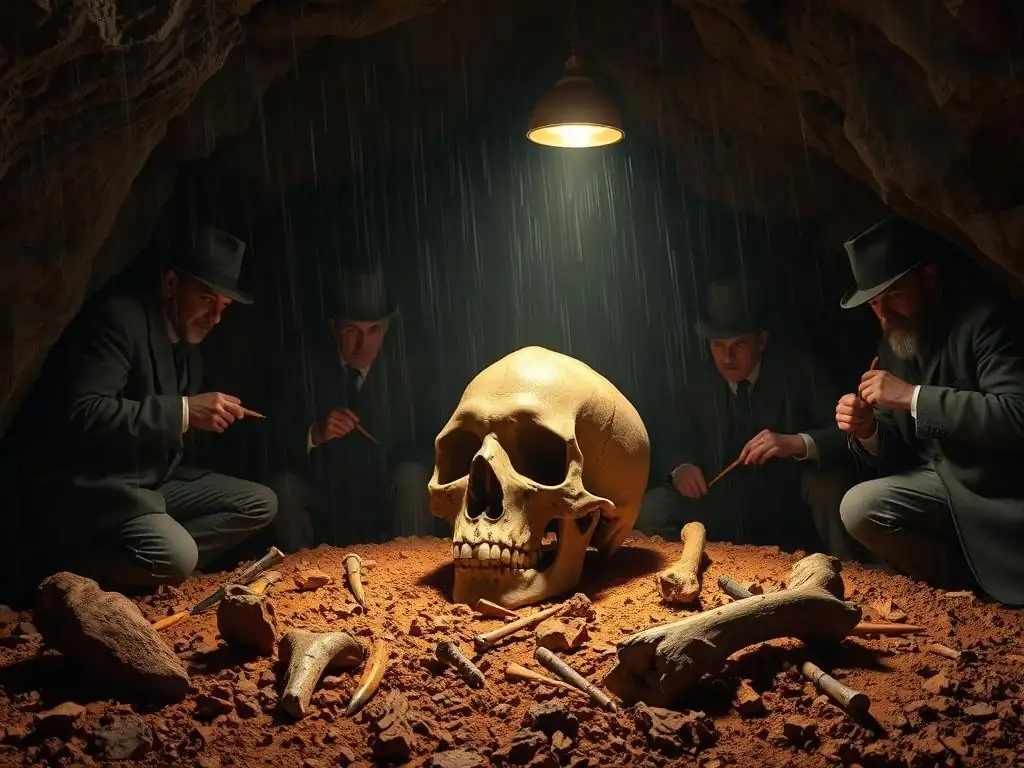
In August 1856, limestone quarry workers in the Feldhofer Grotto within Germany's Neander Valley (Neanderthal in German) stumbled upon unusual skeletal remains. Initially, they dismissed the bones – a skullcap, parts of a right scapula, a clavicle, ribs, a humerus, ulna, and radius, and a left ilium – as those of a cave bear. Fortunately, a local teacher and amateur naturalist, Johann Carl Fuhlrott, was alerted to the discovery.
He recognized the human characteristics of the bones, yet noted their distinctly archaic features, particularly the prominent brow ridge of the skullcap. This careful observation marked the true beginning of the Neanderthal fossil interpretation debates.
Fuhlrott promptly acquired the remains and, convinced of their antiquity and unique nature, brought them to the attention of Hermann Schaaffhausen, a professor of anatomy at the University of Bonn. This collaboration was crucial, as Schaaffhausen's anatomical expertise provided the first detailed scientific description of the bones, presented in 1857. The Feldhofer discovery, though initially met with skepticism, provided the tangible evidence that would fuel decades of intense Neanderthal fossil interpretation debates and fundamentally reshape understanding of human evolution.
Early Assessments of the Neanderthal Skull: Initial Scientific Reactions
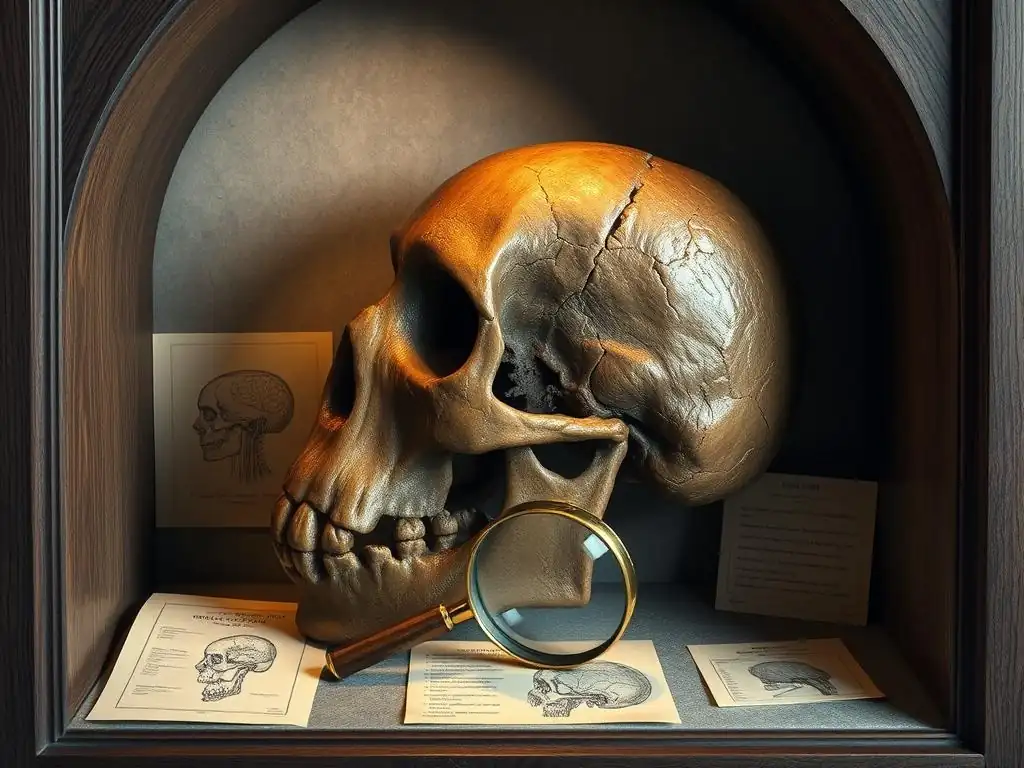
The skullcap from Feldhofer Cave was the most striking of the discovered remains, exhibiting features unlike any modern human skull known at the time. Its low, receding forehead, massive brow ridges, and overall robusticity immediately sparked varied and often contradictory interpretations. Some scientists, unfamiliar with the concept of extinct human forms, suggested the individual suffered from pathological conditions, such as rickets, which could deform the skull, or severe arthritis, explaining the robust limb bones. This "pathological individual" theory was a popular early explanation in the Neanderthal fossil interpretation debates.
Other suggestions were even more dismissive: some proposed the remains belonged to a Cossack cavalryman who had deserted during the Napoleonic Wars and suffered from a severe form of hydrocephalus, or even a victim of a fall. The lack of a comparative fossil record made objective interpreting Neanderthal fossils incredibly challenging, leading many to fit the new evidence into existing frameworks of human variation or pathology rather than accepting the revolutionary idea of a distinct ancient human species. These initial reactions underscore the intellectual resistance to what would become one of the most significant discoveries in human prehistory.
Key Figures in the 19th-Century Neanderthal Debate
Johann Carl Fuhlrott: The Visionary Teacher and Early Advocate for Neanderthal Significance
Johann Carl Fuhlrott (1803–1877) was a gymnasium teacher in Elberfeld, Germany, whose passion for natural history led him to inspect the bones found in the Feldhofer Grotto. Despite not being a professional anatomist or paleontologist, Fuhlrott's keen observational skills allowed him to immediately recognize the unique and ancient characteristics of the remains. He noted their robusticity and archaic features, concluding that they represented an early human form, distinct from any living population. This prescient understanding placed him at the vanguard of the Neanderthal fossil interpretation debates.
Fuhlrott's conviction was unwavering, even in the face of widespread scientific doubt. He carefully cleaned and preserved the bones, then sought the opinion of more established scientists, most notably Hermann Schaaffhausen. His role was critical not only in salvaging the precious fossils from potential destruction but also in initiating the formal scientific inquiry into their nature. His early advocacy provided the initial impetus for the Neanderthal fossil interpretation debates, challenging the prevailing view of a short and unchanging human history.
Hermann Schaaffhausen: The Anatomist Who Recognized Neanderthal Antiquity
Hermann Schaaffhausen (1816–1893), Professor of Anatomy at the University of Bonn, was the first prominent scientist to formally study the Feldhofer remains. After receiving the bones from Fuhlrott, Schaaffhausen conducted a meticulous anatomical analysis, comparing the skullcap and limb bones to those of modern humans.
In his seminal presentation to the Lower Rhine Medical and Natural History Society in 1857, he concluded that the bones belonged to an individual of "a race of man that had existed before the present one." He noted the "extraordinary strength of the bones" and the "peculiar conformation of the skull," arguing that these features indicated a primitive human form that lived in deep antiquity.
Schaaffhausen's courageous endorsement of the Neanderthal's antiquity, especially given the scientific climate of the time, was a pivotal moment in the Neanderthal fossil interpretation debates. While he didn't explicitly use the term "evolution," his conclusion aligned with emerging ideas of biological change and provided a scientific basis for future discussions. His work directly challenged the prevailing notion that all human remains must belong to modern-day populations, thus paving the way for the acceptance of extinct human species.
Rudolf Virchow: The Influential Pathologist and Skeptic of Neanderthal as a Distinct Species
Rudolf Virchow (1821–1902), a towering figure in 19th-century medicine and pathology, became one of the most vocal and influential skeptics in the Neanderthal fossil interpretation debates. Known as the "father of modern pathology" for his work on cellular theory, Virchow's immense authority lent significant weight to his pronouncements. He meticulously examined plaster casts of the Neanderthal bones and concluded that their unusual features were not indicative of an ancient, distinct species, but rather the result of pathological conditions in a modern human.
Virchow argued that the Neanderthal's prominent brow ridges could be attributed to a robust muscle attachment from a lifetime of hard labor, while the low skull vault and other cranial peculiarities were consistent with rickets, a bone-deforming disease. He also suggested that severe arthritis could explain the robustness and apparent bowing of the limb bones. His powerful argument, published in 1872, dominated the Neanderthal fossil interpretation debates for decades, significantly hindering the widespread acceptance of Neanderthals as a separate, archaic human lineage and demonstrating the profound impact of individual scientific authority on the progress of knowledge.
Conflicting Interpretations: Nature vs. Nurture in Shaping the Neanderthal Narrative
The "Pathological Individual" Argument: Virchow's Influence and its Impact
Rudolf Virchow's "pathological individual" theory held significant sway over the 19th-century Neanderthal fossil interpretation debates. He posited that the Feldhofer specimen was not a representative of an ancient human species, but rather a modern human afflicted by various diseases and injuries. For instance, he attributed the robust brow ridges and thick skull bones to exceptional muscular development, perhaps due to a life of strenuous physical activity.
The low, flattened skull vault, he argued, was a result of rickets, a nutritional deficiency that can deform bones during development. Furthermore, the bowed limb bones were explained as evidence of severe arthritis, a common ailment that could lead to such deformities.
Virchow's arguments resonated with the scientific community of the time for several reasons. Firstly, his unparalleled reputation as a pathologist made his medical diagnoses highly credible. Secondly, the prevailing scientific paradigm was resistant to the idea of human evolutionary change, making a pathological explanation more palatable than acknowledging an extinct human ancestor. This powerful interpretation effectively stalled the acceptance of Neanderthals as a distinct human form for several decades, profoundly shaping the trajectory of the Neanderthal fossil interpretation debates and influencing how the public perceived these early human remains.
The "Primitive Human Race" Theory: Schaaffhausen's Perspective on Neanderthal Ancestry
In contrast to Virchow's pathological theory, Hermann Schaaffhausen championed the idea that the Feldhofer remains belonged to a distinct, primitive human race. His detailed anatomical analysis led him to conclude that the skeletal features – particularly the robusticity of the bones and the unique skull morphology – were too consistent and pronounced to be merely the result of disease or individual variation within modern humans.
Schaaffhausen saw these characteristics as evidence of a genuine archaic form, representing an earlier stage of human development. He argued that these features were not pathological, but rather inherent traits of a population that existed long before contemporary humans.
Schaaffhausen's perspective, though initially met with skepticism, was a crucial step in advancing the Neanderthal fossil interpretation debates. He proposed that this "primitive race" lived in Europe during a period of great geological antiquity, coexisting with now-extinct megafauna. While his understanding of evolution was still rudimentary compared to later Darwinian thought, his willingness to accept the existence of an ancient, distinct human lineage laid the groundwork for future paleoanthropological research and provided a counter-narrative to the prevailing pathological explanations.
The Role of Trauma and Disease: Debates on the Skeletal Morphology of Neanderthal Fossils
The presence of healed injuries and signs of disease on the Neanderthal bones became a central point of contention in the Neanderthal fossil interpretation debates. The Feldhofer skeleton, for instance, showed evidence of a healed fracture on its left humerus and signs of severe osteoarthritis, particularly in the left hip and shoulder joints. Virchow seized upon these observations to bolster his pathological argument, claiming that these ailments were responsible for the Neanderthal's unusual morphology. He suggested that the individual's suffering from rickets and arthritis led to the very features that others interpreted as primitive.
However, proponents of the "primitive human race" theory interpreted these same observations differently. They argued that the healed injuries and disease indicated a tough life, but did not account for the fundamental, consistent morphological differences observed across the entire skeleton, such as the unique cranial features. Instead, they saw evidence of resilience and survival in a harsh environment. These varying interpretations of the same skeletal evidence highlight the limitations of 19th-century anatomical diagnostics and the powerful influence of pre-existing scientific biases on the Neanderthal fossil interpretation debates.
The Geopolitical Landscape: Nationalism and Scientific Bias in Neanderthal Studies
National Pride and the Search for Human Origins: Influence of National Identity on Interpretations
The burgeoning field of paleoanthropology in the 19th century was not immune to the pervasive influence of nationalism. As European nations vied for scientific supremacy and cultural prestige, the discovery of early human remains within their borders became a point of national pride.
Each country desired to claim the "first human" or the most significant ancestor, leading to subtle, and sometimes overt, biases in the interpretation of fossil finds. For instance, German scientists might have been more inclined to defend the uniqueness and antiquity of the Neanderthal, found in their own territory, while French or British researchers might have been more skeptical, preferring to await discoveries from their own nations.
This nationalistic fervor significantly influenced the Neanderthal fossil interpretation debates. The acceptance or rejection of a discovery could hinge not just on scientific merit, but also on its origin. The Neanderthal, being a German discovery, faced scrutiny from international scholars, some of whom may have been unconsciously predisposed to find flaws in the interpretation of a foreign find. This climate of national competition highlights how broader geopolitical contexts could subtly, yet powerfully, shape scientific discourse and the progress of understanding in the Neanderthal fossil interpretation debates.
Prevailing Evolutionary Biases and their Influence on Neanderthal Studies
During the 19th century, the developing theories of human evolution were heavily influenced by a prevailing bias towards a linear, progressive model. Many scientists expected to find a "missing link" that perfectly bridged the gap between apes and modern humans, characterized by a large brain and relatively ape-like jaw. This "brain-first" evolutionary hypothesis was deeply ingrained in the scientific thought of the era, reflecting a belief in the primacy of intellect as the defining human characteristic. Consequently, the Neanderthal skull, with its prominent brow ridges, receding forehead, and robust features, did not neatly fit this preconceived ideal.
The Neanderthal's morphology, particularly its seemingly less globular braincase compared to modern humans, led some to view it as too "primitive" or even a degenerate form, rather than a direct ancestor or a distinct, successful archaic human species. This inherent bias made it difficult for many scientists to accept the Neanderthal as a legitimate early human, contributing significantly to the prolonged Neanderthal fossil interpretation debates. The expectation of a specific evolutionary pathway, rather than open-minded assessment of the evidence, often colored the initial Neanderthal fossil interpretation debates and delayed their full recognition.
The Impact of Darwinism: Evolution and the Place of Neanderthals in the Human Family Tree
Darwin's "Origin of Species" and its Implications for Understanding Human Evolution
Charles Darwin's On the Origin of Species, published in 1859, just three years after the Feldhofer discovery, revolutionized biological thought by introducing the theory of evolution by natural selection. While Darwin meticulously avoided discussing human evolution in this groundbreaking work, its implications for understanding our own species were immediately apparent to the scientific community. The book provided a powerful theoretical framework for the idea of species changing over vast periods of time, challenging the static view of creation. This intellectual shift created a fertile ground for reconsidering the Neanderthal remains, moving beyond purely pathological explanations.
Darwin's theory, though not directly addressing human origins until The Descent of Man (1871), made the concept of ancient, distinct human forms far more plausible. It provided a mechanism for how such variations could arise and exist, thereby giving new context to the Neanderthal fossil interpretation debates. The "primitive" features of the Neanderthal, once seen as anomalies or deformities, could now be interpreted as ancestral traits, representing an earlier stage in the human evolutionary lineage. The publication of Origin fundamentally altered the terms of the Neanderthal fossil interpretation debates, pushing them into an evolutionary framework.
Thomas Henry Huxley: Championing Darwinism and Neanderthals' Place in the Evolutionary Lineage
Thomas Henry Huxley (1825–1895), a prominent anatomist and staunch defender of Darwin's theory, played a crucial role in shaping the Neanderthal fossil interpretation debates. Known as "Darwin's Bulldog," Huxley applied evolutionary principles directly to the question of human origins. In his influential work, Man's Place in Nature (1863), he meticulously compared the Neanderthal skullcap to those of modern humans and apes. His detailed anatomical analysis demonstrated that while the Neanderthal skull possessed archaic features, it was unequivocally human.
Huxley argued forcefully against Virchow's pathological interpretation, asserting that the Neanderthal's unique morphology was too consistent to be merely the result of disease. He concluded that the Neanderthal represented an ancient, primitive form of humanity that occupied an intermediate position between modern humans and the great apes. His scientific rigor and powerful advocacy for an evolutionary perspective significantly advanced the Neanderthal fossil interpretation debates, helping to shift scientific opinion towards accepting Neanderthals as a legitimate, if archaic, part of the human family tree.
The Gradual Acceptance of Neanderthals as Early Humans: Timeline of Growing Acceptance
The acceptance of Neanderthals as an ancient human species was a gradual process throughout the late 19th century, driven by new discoveries and the increasing influence of evolutionary theory. Initially, skepticism, fueled by Virchow's authority and a lack of comparative evidence, dominated the Neanderthal fossil interpretation debates.
However, as more hominin fossils began to emerge from various European sites, the isolated nature of the Feldhofer find diminished. The discovery of remains like the Engis 2 child's skull in Belgium (found 1829, recognized later) and particularly the La Naulette jaw in Belgium (1866) provided further, albeit fragmentary, evidence of archaic human forms.
The turning point came decisively with the discovery of two virtually complete Neanderthal skeletons at Spy d'Orneau, Belgium, in 1886. These finds, occurring alongside Mousterian stone tools and extinct Ice Age fauna, made the "pathological individual" argument untenable.
It was highly improbable that multiple individuals found in different locations, associated with ancient tools and animals, would all suffer from the same rare pathologies. By the close of the 19th century, the scientific consensus had largely shifted, leading to the widespread, though not universal, acceptance of Neanderthals as a distinct, ancient human species, thereby resolving many of the initial Neanderthal fossil interpretation debates.
Reassessing the Evidence: Late 19th-Century Developments and New Fossil Discoveries
The Spy d'Orneau Neanderthal Discoveries: Strengthening the Case for Neanderthal Antiquity
The discovery of two Neanderthal skeletons at Spy d'Orneau, Belgium, in 1886 by Maximin Lohest and Marcel de Puydt, represented a watershed moment in the Neanderthal fossil interpretation debates. These finds were crucial for several reasons. Firstly, the presence of multiple individuals, exhibiting the same distinctive features as the Feldhofer specimen (e.g., prominent brow ridges, robust build), fundamentally undermined Rudolf Virchow's "pathological individual" theory. It became statistically improbable that multiple separate individuals, found decades apart, would all suffer from the exact same rare combination of diseases.
Secondly, and perhaps even more importantly, the Spy skeletons were found in clear association with Mousterian stone tools and the bones of extinct Ice Age animals, such as woolly mammoths and rhinoceroses. This indisputable contextual evidence firmly established the Neanderthals' deep antiquity and their presence during the Paleolithic era. The Spy discoveries provided irrefutable proof that Neanderthals were not diseased modern humans but an ancient, distinct human population, pushing the Neanderthal fossil interpretation debates definitively towards their acceptance as archaic hominins.
The Significance of Associated Artifacts: Stone Tools and Neanderthal Behavior
Beyond the skeletal remains themselves, the consistent discovery of associated artifacts, particularly stone tools, played a critical role in advancing the Neanderthal fossil interpretation debates. The Mousterian tool industry, characterized by sophisticated flint-knapping techniques such as the Levallois method, was repeatedly found in direct association with Neanderthal fossils, including at the pivotal Spy site. These tools were not crude implements but showed evidence of deliberate design, planning, and specialized function, indicating a level of cognitive ability and technological sophistication previously underestimated for early humans.
The presence of these artifacts challenged the initial perception of Neanderthals as brutish, unintelligent beings. It suggested organized hunting strategies, processing of animal hides, and other complex behaviors. This shift in focus from purely anatomical Neanderthal fossil interpretation debates to include their cultural capabilities provided a more holistic understanding of their existence. The archaeological context provided by these tools helped to paint a picture of a capable, adaptable hominin, further solidifying their place in the human evolutionary story.
The Legacy of 19th-Century Neanderthal Debates: Paving the Way for Modern Paleoanthropology
The intense Neanderthal fossil interpretation debates of the 19th century, though often contentious, laid the foundational groundwork for the modern discipline of paleoanthropology. The controversies forced scientists to develop more rigorous methods for excavating, documenting, and interpreting fossil evidence. The need to counter arguments like Virchow's pushed proponents of Neanderthal antiquity to conduct more detailed comparative anatomical studies and to emphasize the importance of geological and archaeological context.
This period also saw the emergence of key figures who dedicated their careers to the study of human origins, establishing a specialized field of inquiry. The Neanderthal fossil interpretation debates highlighted the critical role of interdisciplinary approaches, integrating geology, anatomy, and archaeology to reconstruct the past. The lessons learned from these early struggles – about overcoming preconceived notions, the power of cumulative evidence, and the iterative nature of scientific understanding – continue to inform paleoanthropological research today, demonstrating the enduring legacy of these pivotal 19th-century discussions.
Conclusion: Reflecting on the 19th-Century Neanderthal Controversies and Their Lasting Impact
Neanderthal Fossil Interpretation Debates: Lessons Learned and Future Directions in Paleoanthropology
The 19th-century Neanderthal fossil interpretation debates offer profound lessons about the scientific process, particularly in fields dealing with fragmentary evidence and deeply held beliefs. The initial resistance to accepting Neanderthals as a distinct, ancient human form stemmed from a combination of limited comparative fossil data, prevailing scientific paradigms (like the short chronology and fixed species concepts), and the powerful influence of individual scientific authority. The eventual acceptance was driven by the accumulation of irrefutable evidence, particularly from sites like Spy d'Orneau, which provided multiple individuals in clear archaeological context, making pathological explanations untenable.
Today, paleoanthropology continues to build upon these foundations. The debates have evolved from simply classifying Neanderthals to understanding their complex behaviors, cognitive abilities, genetic relationships with modern humans, and eventual disappearance. Modern research employs advanced techniques such as ancient DNA analysis, sophisticated imaging, and detailed taphonomic studies, allowing for far more nuanced Neanderthal fossil interpretation debates. The enduring legacy is a recognition that scientific understanding is iterative, constantly refined by new discoveries and critical re-evaluation, and that early controversies are often essential catalysts for progress.
Continuing to Explore the History of Archaeological Discoveries and Interpretations
The history of archaeological discoveries, as exemplified by the Neanderthal fossil interpretation debates, is not merely a chronicle of finds but a dynamic narrative of human intellectual evolution. Understanding how past generations grappled with groundbreaking discoveries provides invaluable insight into the challenges and triumphs of scientific inquiry. The initial misinterpretations and subsequent re-evaluations of Neanderthal remains serve as a powerful reminder of the biases that can influence scientific thought and the importance of open-minded, evidence-based reasoning.
ArchaeologyHub.org strives to illuminate this rich history, offering detailed accounts of pivotal discoveries and the controversies that shaped their understanding. By delving into the 19th-century Neanderthal fossil interpretation debates, we gain a deeper appreciation for the pioneers of archaeology and paleoanthropology who, armed with limited tools and knowledge, began to piece together the extraordinary story of human origins. This ongoing exploration of the past, both of ancient civilizations and of the history of their discovery, remains crucial for appreciating the complex journey of human knowledge.
Frequently Asked Questions
What were some of the initial reactions to the discovery of Neanderthal fossils in the 19th century?
Early reactions were often skeptical, with some scientists interpreting Neanderthal remains as pathological modern humans or evidence of extinct races unrelated to modern Homo sapiens. The idea of a distinct, ancient human species was initially controversial.
How did scientific biases influence the interpretation of Neanderthal fossils during that era?
Prevailing biases, such as the belief in human linear progression, led some scientists to view Neanderthals as primitive and brutish, reinforcing existing racial hierarchies and evolutionary theories.
Why was there so much debate surrounding the relationship between Neanderthals and modern humans?
The debates stemmed from limited fossil evidence, different interpretations of anatomical features, and the challenge of reconciling Neanderthal remains with existing theories of human origins and evolutionary development.
Cultural and social contexts influenced perceptions of Neanderthals, often portraying them as uncivilized and inferior to modern humans, reflecting prevailing social norms and prejudices of the time.
How have modern archaeological techniques changed our understanding of Neanderthal fossils compared to the 19th century?
Modern techniques, such as DNA analysis and advanced dating methods, provide much more accurate and detailed information, allowing for a more nuanced and evidence-based understanding of Neanderthal biology, behavior, and relationship to Homo sapiens.
Final Reflection: Echoes of Ancient Debates
The journey through the 19th-century controversies surrounding Neanderthal fossil interpretations reveals more than just scientific disagreements; it highlights the enduring human struggle to understand our origins. These debates, though rooted in now-outdated scientific frameworks, resonate powerfully today, reminding us that even established scientific truths are built upon layers of interpretation and subject to revision. The very act of reconstructing the past, whether it be a Neanderthal skeleton or a historical narrative, is inherently an act of interpretation, colored by the biases and perspectives of the present.
The impact of these early debates extends far beyond the scientific community, shaping our cultural understanding of humanity's place in the world. The struggle to reconcile Neanderthals with prevailing notions of human exceptionalism continues to inform our discussions about diversity, evolution, and what it truly means to be human. Every generation rewrites the past. In easy times, history is more often a work of piety; in periods of upheaval, revision becomes a tool.
- Arthur Schlesinger Jr. This quote underscores the cyclical nature of historical interpretation and its profound influence on our present understanding.
As we reflect on the "Neanderthal fossil interpretation debates," let us remember that the pursuit of knowledge is a continuous process, marked by both progress and persistent uncertainty. Consider how your own perspectives might shape your understanding of the past and the present.
Embrace the complexities of interpretation, and strive to approach new information with both critical thinking and an open mind. The story of Neanderthals, and the debates surrounding their existence, serves as a powerful reminder that the quest to understand ourselves is an ongoing journey, one that demands intellectual humility and a willingness to challenge our own assumptions.
Unearth Your Inner Archaeologist!
Thank you for delving into the fascinating debates surrounding Neanderthals! We hope you found this exploration of 19th-century controversies insightful. Now, let's put that newfound knowledge into action.
- Visit your local natural history museum and examine their hominid fossil displays with a critical eye, considering the historical context of their interpretation.
- Share this article with a friend or colleague and spark a conversation about how historical biases can influence scientific understanding.
- Explore ArchaeologyHub.org's forum and contribute your thoughts on the ongoing evolution of our understanding of Neanderthals.
What surprised you most about the 19th-century interpretations of Neanderthals, and how might that inform our approach to current archaeological discoveries?