
The "Treasuries" of Mycenae: Function and Significance Beyond Burial

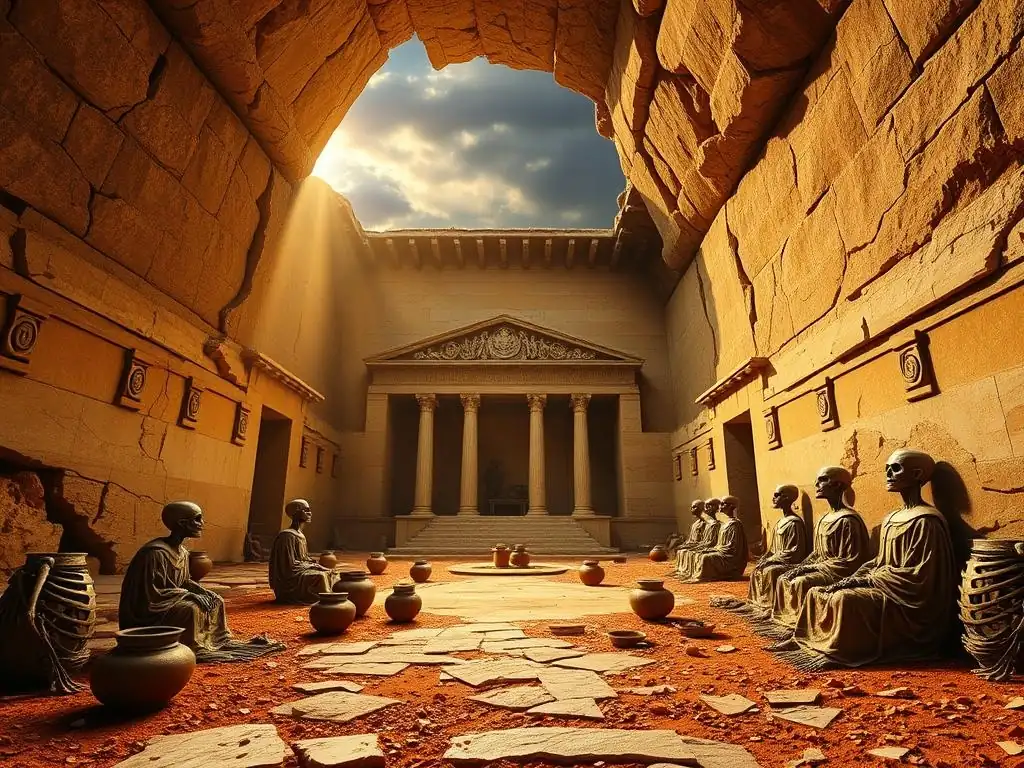
Welcome to ArchaeologyHub.org, your gateway to unlocking the secrets of the past!
Delve into the fascinating world of ancient civilizations as we explore groundbreaking archaeological discoveries and insightful analyses. Ever wondered about the true purpose of the imposing structures known as the "Treasuries" of Mycenae? Join us as we unravel the Mycenaean Treasury Function Significance, venturing beyond the conventional understanding of these monumental tombs and uncovering their potential roles in Mycenaean society and ritual. Intrigued? Let's journey back in time and explore the evidence together...
- Introduction: Unveiling the Mycenaean Treasuries
- Architectural Marvels: Exploring the Structure of Mycenaean Tombs
- Debunking the Burial-Only Theory: Functionality Beyond Funerary Rites
- Wealth and Power: Interpreting the Grave Goods and Their Symbolic Value
- Case Study: The Treasury of Atreus - A Detailed Examination
- Comparative Analysis: Contextualizing Mycenaean "Treasuries" within the Aegean Bronze Age
- The Legacy of the Mycenaean "Treasuries": Influences and Interpretations
- Conclusion: Reassessing the Function and Significance of Mycenaean Tombs
-
Frequently Asked Questions
- What is the common misconception about the "Treasuries" of Mycenae?
- What was the likely primary function of these Mycenaean "Treasuries"?
- How did the "Treasuries" contribute to Mycenaean society's power structure?
- What archeological evidence supports the interpretation of these structures as more than just tombs?
- Why is understanding the true function of these "Treasuries" important for understanding Mycenaean civilization?
- Final Reflection: Unearthing Enduring Legacies
- Unearth Your Inner Archaeologist!
Introduction: Unveiling the Mycenaean Treasuries
Locating the Mycenaean "Treasuries": A Historical Overview
The ancient citadel of Mycenae, nestled in the Argolid plain of Greece, is renowned for its monumental Bronze Age architecture, most notably its impressive tholos tombs, often mislabeled as "treasuries." These circular, beehive-shaped structures represent the pinnacle of Mycenaean engineering and served as the elaborate resting places for the ruling elite from approximately 1500 to 1250 BCE. At Mycenae itself, around nine or ten such tholos tombs have been identified, with the most famous being the "Treasury of Atreus" and the "Tomb of Clytemnestra," towering testaments to the wealth and power of the Mycenaean kings and queens.
Early archaeological interpretations, heavily influenced by classical Greek writers like Pausanias who visited the site centuries later, often focused on the sheer scale and perceived richness of these structures, leading to the enduring "treasury" designation. This initial understanding primarily highlighted their role as repositories of valuable grave goods, reflecting the opulent burial practices of the Mycenaean aristocracy. However, a deeper dive into their construction and the broader context of Mycenaean society reveals a more complex Mycenaean treasury function significance that extends beyond mere storage of wealth.
The Misnomer: Challenging the Term "Treasury"
The term "treasury," while evocative of hidden riches, is largely a misnomer when applied to the Mycenaean tholos tombs. It originated from the observations of later Greek visitors who, accustomed to the concept of treasuries as places for storing offerings or state wealth, projected this understanding onto the grand, empty chambers they encountered. This historical misattribution has persisted, obscuring the primary funerary purpose of these magnificent structures and the multifaceted roles they played within Mycenaean society.
Modern archaeological research has definitively established that these "treasuries" were, first and foremost, monumental tombs. They served as permanent memorials for powerful families or ruling dynasties, designed to house multiple burials over generations. While they certainly contained immense wealth in the form of grave goods, their Mycenaean treasury function significance encompasses more than just a vault for valuables; they were also powerful symbols of status, dynastic continuity, and possibly even sites for post-burial rituals, challenging the simplistic "burial-only" or "storage" interpretations.
Architectural Marvels: Exploring the Structure of Mycenaean Tombs
The Tholos Tomb: A Defining Feature of Mycenaean Architecture
The tholos tomb is perhaps the most iconic architectural innovation of the Late Helladic period, a defining characteristic of Mycenaean civilization. Each tholos typically comprises three main components: a long, unroofed entrance passage known as a dromos; a monumental doorway, or stomion, often adorned with elaborate facades; and the circular, beehive-shaped main chamber itself, constructed using corbelled vaulting. The sheer scale of these structures, with some chambers reaching diameters of over 14 meters and heights of over 13 meters, speaks volumes about the advanced engineering capabilities and centralized labor organization of the Mycenaeans.
These impressive dimensions and the sophisticated construction techniques employed ensured the structural integrity and longevity of the tombs. The tholos design allowed for the creation of vast, open internal spaces without the need for internal supports, a remarkable feat for the Bronze Age. This architectural prowess underscored the power and authority of the individuals interred within, contributing significantly to the overall Mycenaean treasury function significance as symbols of dynastic might.
Construction Techniques: Engineering the Treasury Domes
The construction of the tholos domes relied on a sophisticated technique known as corbelling. This method involved laying successive courses of stone blocks, each projecting slightly inward beyond the one below it, until the gap at the top could be capped by a single keystone.
The precision required to cut and fit these massive limestone or conglomerate blocks, some weighing upwards of 120 tons (as seen in the lintel stone of the Treasury of Atreus), is astonishing. The exterior of the dome was then typically covered with earth, forming a mound that helped to stabilize the structure and provided a natural appearance from a distance, resembling a small hill.
The engineering challenges overcome by the Mycenaean builders highlight their profound understanding of structural mechanics and material properties. The meticulous shaping and placement of thousands of individual stones, often transported from considerable distances, required an immense coordinated effort involving hundreds, if not thousands, of laborers. This colossal undertaking not only demonstrated the technical skill of Mycenaean artisans but also the capacity of their ruling elite to mobilize vast resources, further emphasizing the political and social Mycenaean treasury function significance.
The Dromos: Entrance Passageways and Ritual Significance
The dromos, or entrance passageway, was an integral component of the tholos tomb, serving both practical and symbolic purposes. These long, open-air corridors, often reaching lengths of 30 to 40 meters, were meticulously cut into the hillside, leading directly to the tomb's monumental entrance. The walls of the dromos were typically lined with carefully cut ashlar masonry, creating a grand approach that heightened the sense of anticipation and reverence for those entering the sacred space.
Beyond its function as an access route, the dromos likely played a crucial role in funerary rituals and ceremonies. Archaeological evidence, such as fragments of pottery and animal bones found within dromoi, suggests that offerings, libations, or even communal feasts may have taken place here, perhaps as part of ancestor veneration rites or commemorative events. This indicates that the Mycenaean treasury function significance extended beyond simply housing the dead, encompassing ongoing interactions and rituals that reinforced community bonds and the authority of the deceased's lineage.
Debunking the Burial-Only Theory: Functionality Beyond Funerary Rites
Evidence of Non-Funerary Activities within the "Treasuries"
While the primary function of Mycenaean tholos tombs was undoubtedly funerary, archaeological findings suggest that these monumental structures were not exclusively used for burials. Evidence from various sites points to the occurrence of non-funerary activities within or immediately surrounding the tombs. For instance, the presence of specific types of pottery shards, often from drinking vessels, and concentrations of animal bones, particularly from sheep and goats, in the dromoi and forecourts of some tombs, indicates ritual feasting or communal gatherings.
Furthermore, some tholos tombs exhibit signs of periodic re-entry long after the initial burial, not for further interments, but potentially for ancestor veneration or specific cultic practices. The careful sealing and re-opening of the stomion (doorway) suggests controlled access, implying that these spaces retained a sacred or ceremonial importance beyond simply housing the dead. This multifaceted use broadens our understanding of Mycenaean treasury function significance beyond a singular, static purpose.
Potential Uses: Storage, Ritual Spaces, and Communal Centers
Given the evidence, it is plausible to consider a range of potential uses for the "treasuries" beyond their role as burial sites. As ritual spaces, they could have served as focal points for ancestor cults, where descendants performed rites to honor and maintain a connection with their powerful forebears. The monumental nature of the tombs would have provided an imposing backdrop for such ceremonies, reinforcing the prestige of the ruling family.
Additionally, while not their primary purpose, the robust construction of the tholoi might have offered secure temporary storage for valuable cultic objects or offerings associated with the deceased, especially during periods of political instability. Some scholars also theorize that the forecourts or dromoi could have functioned as communal gathering places for the elite, hosting important political or social events that leveraged the symbolic power emanating from the ancestral tombs. This expanded view of Mycenaean treasury function significance highlights their dynamic role in the social and religious fabric of Mycenaean society.
Wealth and Power: Interpreting the Grave Goods and Their Symbolic Value
Artifact Analysis: Insights into Mycenaean Society and Economy
The discovery of opulent grave goods within Mycenaean tombs, particularly the earlier shaft graves that preceded the tholoi, offers invaluable insights into the society, economy, and artistic prowess of the Mycenaean civilization. While many tholos tombs were looted in antiquity, records and remaining fragments indicate that they too were originally furnished with immense wealth. Artifacts include intricate gold jewelry, elaborate bronze weapons, finely crafted pottery, seal stones, and imported materials such as amber from the Baltic region and lapis lazuli from Afghanistan.
The sheer volume and diversity of these grave goods underscore a highly stratified society with a powerful elite capable of commanding vast resources and engaging in extensive trade networks across the Aegean and beyond. The technical skill evident in the metallurgy, gem-cutting, and pottery production points to a specialized economy with skilled artisans serving the ruling class. This rich material culture is central to understanding the full Mycenaean treasury function significance, reflecting both personal wealth and state-level economic power.
The deliberate inclusion of lavish grave goods was a powerful means of displaying the deceased's status and reinforcing the social hierarchy within Mycenaean society. Gold death masks, intricately decorated daggers, and vast quantities of precious metals served as clear indicators of the individual's position at the apex of the social pyramid. These objects were not merely personal possessions but potent symbols designed to project an image of immense wealth, authority, and divine favor even in death.
The scale and richness of the tholos tombs themselves, far exceeding the more common chamber tombs used by lesser elites and commoners, further emphasized this social stratification. The construction of such monumental structures, requiring vast labor and resources, was an exclusive privilege of the ruling families. Thus, the grave goods, in conjunction with the architectural grandeur, collectively communicated the unparalleled Mycenaean treasury function significance as instruments of social legitimation and displays of elite power.
The Role of Gold and Precious Materials in Mycenaean Culture
Gold held a preeminent position in Mycenaean culture, symbolizing power, divinity, and immortality. The Shaft Graves at Mycenae, for instance, yielded an astonishing quantity of gold objects, including some 14 kilograms of gold from Grave Circle A alone, showcasing an unprecedented accumulation of wealth for the period. While tholos tombs were often looted, historical accounts and the limited finds suggest similar initial concentrations of precious metals. The use of gold for death masks, elaborate jewelry, and ceremonial objects indicates its profound symbolic value, associating the deceased with divine attributes and ensuring their enduring legacy.
Beyond gold, other precious materials like silver, ivory, faience, and semi-precious stones were meticulously crafted into objects of beauty and utility. Ivory carvings, often depicting mythical creatures or heroic scenes, and intricate seals made from carnelian or amethyst, reveal a sophisticated artistic sensibility and a demand for luxury goods. The acquisition and display of these materials, whether through trade or tribute, were crucial aspects of the Mycenaean economy and contributed significantly to the perceived Mycenaean treasury function significance as repositories of both tangible and symbolic wealth.
Case Study: The Treasury of Atreus - A Detailed Examination
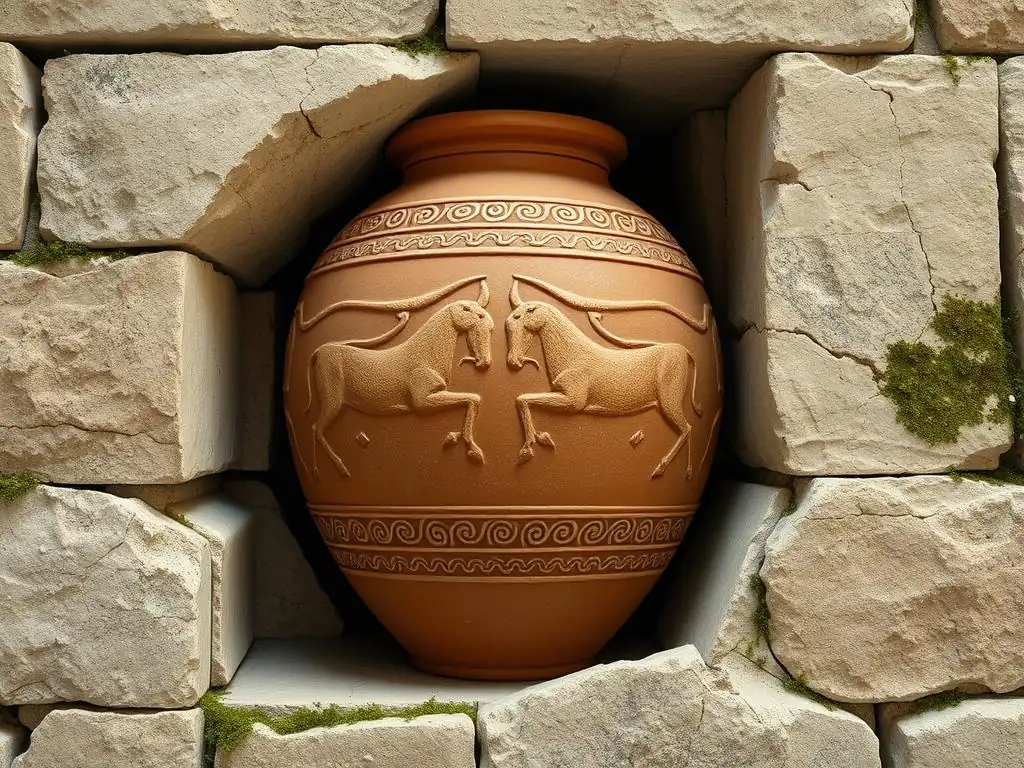
Architectural Analysis of the Treasury of Atreus
The "Treasury of Atreus," also known as the Tomb of Agamemnon, stands as the most magnificent and well-preserved of the Mycenaean tholos tombs, a true marvel of Bronze Age engineering. Its colossal dimensions are staggering: the main chamber boasts an internal diameter of approximately 14.5 meters and rises to a height of about 13.2 meters. The dromos, cut into the hillside, extends for over 36 meters, leading to a monumental stomion (doorway) that is over 5 meters high.
Above the massive lintel stone, which alone weighs an estimated 120 tons, a large relieving triangle reduces the pressure on the doorway. This triangle was originally covered by decorative panels of red and green porphyry and carved spirals, though these are now largely lost. The sheer scale and precision of its construction, utilizing thousands of finely cut ashlar blocks, underscore the exceptional skill of its builders and the immense resources commanded by the Mycenaean rulers, signifying the apex of Mycenaean treasury function significance as a display of power.
Artifacts Discovered within the Treasury of Atreus: A Curated Collection
Unfortunately, the Treasury of Atreus, like many other grand tholos tombs, was extensively looted in antiquity, likely long before systematic archaeological excavations began in the 19th century. Consequently, no significant intact grave goods were found within its main chamber or side chamber during modern investigations. This lack of a "curated collection" of artifacts directly within the tomb has sometimes led to misconceptions about its original contents.
However, historical records and the scattered fragments that have been recovered suggest that the tomb was originally furnished with immense wealth, consistent with its monumental scale and royal association. Small gold ornaments, fragments of precious materials, and pottery shards found during early explorations hint at the opulence that would have accompanied the interred individuals. Despite the looting, the architectural grandeur alone conveys the profound Mycenaean treasury function significance as a repository of immense wealth and a symbol of dynastic power.
Interpreting the Purpose and Importance of the Treasury of Atreus
The primary purpose of the Treasury of Atreus was undoubtedly as a royal funerary monument. Its unparalleled size and elaborate construction strongly suggest it was built for a king or a prominent ruling family of Mycenae, possibly around 1250 BCE. It served not only as a permanent resting place for multiple generations of the elite but also as a powerful and enduring symbol of their authority, wealth, and legitimacy. The monumentality of the structure would have been an unmistakable declaration of the dynasty's power to both its subjects and rival polities.
Beyond its funerary role, the Treasury of Atreus likely held significant ritualistic importance. Its imposing presence would have been central to ancestor cults, serving as a focal point for ceremonies and offerings designed to honor the deceased and reinforce the continuity of their lineage. This multifaceted Mycenaean treasury function significance highlights its role not just as a tomb, but as a dynamic locus of power, memory, and religious practice within the Mycenaean citadel.
Comparative Analysis: Contextualizing Mycenaean "Treasuries" within the Aegean Bronze Age
Comparing Mycenaean Tombs with Other Aegean Burial Structures
Mycenaean "treasuries," or tholos tombs, represent a distinct and highly specialized form of burial architecture within the broader context of the Aegean Bronze Age. They stand in stark contrast to earlier Mycenaean burial types, such as the Shaft Graves of Grave Circles A and B at Mycenae (dating from around 1600-1500 BCE), which were deep, rectangular pits containing multiple burials and extraordinarily rich grave goods. While the Shaft Graves also reflected elite status, their construction was less monumental and visible than the later tholoi.
Furthermore, tholos tombs differ significantly from the more common Mycenaean chamber tombs, which were smaller, rock-cut chambers typically used by less prominent families or groups. These chamber tombs, often found in necropolises outside the main settlements, lacked the elaborate dromoi and monumental scale of the tholoi. The evolution from shaft graves to chamber tombs and the eventual emergence of the colossal tholoi demonstrates a progressive increase in architectural ambition and a more overt display of elite power, solidifying the unique Mycenaean treasury function significance in the funerary landscape.
The Influence of Minoan Culture on Mycenaean Tomb Design
The advanced Minoan civilization of Crete, flourishing prior to and contemporaneously with the Mycenaeans, exerted a significant influence on various aspects of Mycenaean culture, including possibly funerary architecture. While Minoan burial practices often involved ossuaries, pithoi burials, or small rectangular tombs, there were also instances of circular structures, known as tholoi or round tombs, particularly in the Mesara plain of southern Crete, dating back to the Early Minoan period (c. 3000-2000 BCE). These early Minoan tholoi, though much smaller and simpler in construction than their Mycenaean counterparts, may have provided a conceptual precedent for circular monumental tombs.
Mycenaeans, known for their adaptation and militarization of Minoan artistic and architectural elements, likely drew inspiration from these earlier circular forms, transforming them into their uniquely grand and technically sophisticated structures. The adoption of corbelled vaulting, a technique potentially refined in the Minoan context, also points to this cultural exchange. This cross-cultural influence highlights how the Mycenaean treasury function significance in architectural design was part of a broader Aegean cultural dialogue, reinterpreted through a distinctly Mycenaean lens of monumentalism and power.
Regional Variations in Mycenaean Tomb Architecture and Function
While the tholos tomb is a hallmark of Mycenaean civilization, there are notable regional variations in their architecture and potentially their function across the Mycenaean world. For instance, tholoi in Messenia, particularly at sites like Peristeria and Nichoria, often exhibit slightly different construction techniques or internal layouts compared to those in the Argolid (Mycenae, Tiryns). Some regional tholoi might be smaller in scale, or incorporate local stone types, reflecting variations in available resources or local architectural traditions.
The presence and distribution of tholos tombs also vary regionally, often correlating with the centers of political power. While Mycenae boasts the most impressive examples, significant tholoi are also found at other major Mycenaean palatial centers such as Pylos and Orchomenos. These regional differences suggest that while the overarching concept of the tholos tomb as an elite burial structure was widespread, its specific Mycenaean treasury function significance and architectural expression could be subtly adapted to suit local power dynamics, cultural nuances, or available resources, demonstrating a flexible monumental tradition.
The Legacy of the Mycenaean "Treasuries": Influences and Interpretations
Modern Archaeological Perspectives on Mycenaean Burial Practices
Modern archaeological perspectives on Mycenaean burial practices have significantly evolved beyond the simplistic "treasury" designation. Contemporary scholarship emphasizes a holistic understanding of these structures, viewing them not merely as static repositories for the dead, but as dynamic components of Mycenaean social, political, and religious life. Research now focuses on the complex interplay between architecture, ritual, and social display, recognizing that the monumental scale of the tholoi was as much about projecting power to the living as it was about honoring the dead.
Ongoing studies incorporate interdisciplinary approaches, leveraging technological advancements such as geophysical surveys to identify unexcavated structures, and detailed material analyses to reconstruct trade networks and craft production. This nuanced approach helps to unravel the full spectrum of Mycenaean treasury function significance, moving beyond a singular explanation to embrace the multiplicity of roles these structures played in maintaining elite status and societal cohesion.
The Impact of the "Treasuries" on Our Understanding of Mycenaean Society
The "treasuries" of Mycenae have profoundly shaped our understanding of Mycenaean society. Their existence unequivocally points to a highly centralized and hierarchical social structure, ruled by powerful kings or chieftains capable of mobilizing immense labor and resources for monumental construction. The sheer wealth of grave goods, even from looted tombs, speaks to a sophisticated economy, extensive trade networks, and a flourishing artisan class.
Furthermore, these structures offer insights into Mycenaean religious beliefs, particularly the importance of ancestor veneration and the cult of the dead. The enduring presence of the tholoi, visible for miles, served as constant reminders of dynastic legitimacy and the continuity of power. Thus, the Mycenaean treasury function significance extends far beyond their primary purpose, acting as a crucial lens through which we interpret the political organization, economic prowess, and cultural values of this formidable Bronze Age civilization.
Preserving and Protecting Mycenaean Archaeological Sites: Future Directions
The preservation and protection of Mycenaean archaeological sites, including the iconic "treasuries," represent a critical ongoing challenge. These ancient structures, exposed to centuries of natural erosion, seismic activity, and the impact of tourism, require continuous conservation efforts. Modern preservation strategies involve meticulous monitoring, structural reinforcement where necessary, and careful management of visitor access to minimize wear and tear.
Future directions in archaeological preservation emphasize sustainable tourism, community engagement, and the integration of digital technologies for documentation and virtual reconstruction. Protecting these invaluable sites ensures that future generations can continue to study and learn from the rich material culture of the Mycenaean civilization. This commitment to safeguarding the physical remnants of the past is essential for fully appreciating the enduring Mycenaean treasury function significance and their legacy in the history of human achievement.
Conclusion: Reassessing the Function and Significance of Mycenaean Tombs
The Enduring Mystery of the Mycenaean "Treasuries"
The "Treasuries" of Mycenae, despite centuries of archaeological investigation, continue to hold an enduring mystery. While their primary role as elite funerary monuments is well-established, the full scope of their Mycenaean treasury function significance remains a subject of ongoing debate and fascination. They were not merely tombs but powerful architectural statements, embodying the wealth, authority, and engineering prowess of the Mycenaean elite. Their monumental scale and the evidence of associated rituals suggest they were dynamic spaces central to the social and religious life of the community, far more than simple repositories for valuables.
The term "treasury" itself, a historical misnomer, ironically highlights the perception of immense wealth associated with these structures, even if their actual use extended far beyond mere storage. The blend of architectural grandeur, ritualistic implications, and symbolic displays of power ensures that these "treasuries" remain among the most compelling and enigmatic structures of the Bronze Age Aegean.
Future Research Directions: Unlocking Further Insights into Mycenaean Culture
Future research into Mycenaean "treasuries" promises to unlock even further insights into this fascinating Bronze Age culture. Integrating new scientific techniques, such as non-invasive geophysical surveys, advanced material analysis, and stable isotope studies of human remains (where available from other contexts, as tholoi are often looted), could reveal previously unknown details about construction methods, resource acquisition, and the diet and mobility of the Mycenaean population.
Re-evaluating older excavation records with modern theoretical frameworks, along with comparative studies across the wider Aegean and Near East, will continue to refine our understanding of their symbolic, social, and political roles. The ongoing exploration of the Mycenaean treasury function significance will undoubtedly continue to deepen our appreciation for the complexity and sophistication of one of Europe's earliest great civilizations.
Frequently Asked Questions
What is the common misconception about the "Treasuries" of Mycenae?
The most common misconception is that these structures were primarily used as burial chambers or actual treasuries filled with valuable artifacts. While some burials did occur within them, this wasn't their primary function.
What was the likely primary function of these Mycenaean "Treasuries"?
They likely served as commemorative monuments showcasing the power and wealth of a particular ruling family or clan. These structures were designed to impress and reinforce social hierarchies.
How did the "Treasuries" contribute to Mycenaean society's power structure?
By acting as prominent landmarks, the "Treasuries" served as visual reminders of the ruling elite's authority and control. Their sheer scale and craftsmanship underscored the dynasty's economic and political strength.
What archeological evidence supports the interpretation of these structures as more than just tombs?
The presence of large-scale construction and architectural features, along with the relative scarcity of grave goods within some "Treasuries," suggests a function beyond simple burial. Their design emphasizes monumentality and display.
Why is understanding the true function of these "Treasuries" important for understanding Mycenaean civilization?
Understanding their function sheds light on the social organization, political dynamics, and belief systems of the Mycenaean civilization. It moves beyond a simple understanding of burial practices to reveal a more nuanced picture of Mycenaean power and ideology.
Okay, here's a final reflection designed to conclude your article, "The 'Treasuries' of Mycenae: Function and Significance Beyond Burial," optimized for the keyword "Mycenaean Treasury Function Significance," and following the structure you provided:
Final Reflection: Unearthing Enduring Legacies
The exploration of the Mycenaean Treasuries reveals far more than just elaborate tombs; it unveils a sophisticated society deeply invested in symbolic representation and the perpetuation of power. These structures, once thought solely dedicated to burial, now stand as testaments to Mycenaean ingenuity and their complex understanding of legacy, a relevance that resonates even today as we grapple with our own historical narratives and the monuments we choose to leave behind.
The enduring allure of these "Treasuries" lies not just in their architectural grandeur, but in their capacity to connect us to a distant past, prompting us to reconsider the very nature of remembrance and the multifaceted purposes of monumental architecture. Reflecting on the Mycenaean Treasuries compels us to acknowledge the power of architecture to transcend its immediate function and become a potent symbol of cultural identity and societal values. Architecture should speak of its time and place, but yearn for timelessness.
- Frank Gehry. This quote perfectly encapsulates the enduring significance of these structures, which continue to inspire awe and intrigue centuries after their creation.
As we conclude this journey into the heart of Mycenaean civilization, let us carry forward a deeper appreciation for the multifaceted nature of history and the enduring power of human creativity. Consider how the lessons learned from the "Treasuries" – the careful crafting of legacy, the symbolic power of architecture, and the enduring human desire for remembrance – can inform your own understanding of the past and inspire you to build a future worthy of remembrance. Let the echoes of Mycenae resonate in your own pursuit of meaning and purpose.
Unearth Your Inner Archaeologist!
Thank you for exploring the mysteries of Mycenae with us. We hope you've found a new appreciation for the "Treasuries" and their role in Mycenaean society beyond just burial sites. Now, it's time to take your exploration further:
- Visit a local museum with Mycenaean artifacts or research online collections to see similar objects up close. Seeing the craftsmanship firsthand can truly bring the past to life!
- Share this article with fellow history buffs or start a discussion in an online forum about alternative theories regarding the "Treasuries'" function.
- Plan a hypothetical research project: What questions would you ask, and what evidence would you seek to uncover more about the true purpose of these monumental structures?
What other long-held archaeological beliefs deserve a fresh look, and what surprising discoveries might we make if we challenge the status quo?