
Rare Finds: Investigating Basketry from Waterlogged European Neolithic and Mesolithic Sites


Welcome to ArchaeologyHub.org!
Delve into the past with us as we unearth the secrets of lost civilizations. In this article, we're exploring the fascinating world of Neolithic and Mesolithic Europe through the lens of basketry finds. What can these fragile artifacts tell us about daily life, technological advancements, and the cultural exchange of our ancestors? Prepare to be amazed by the insights gleaned from these remarkably preserved remnants, and discover how they are reshaping our understanding of prehistoric societies. Intrigued? Keep reading to unravel the story woven within each strand.
- Introduction: Unearthing Ancient Basketry in Europe
- Basketry from the Mesolithic Period: Early Examples of Weaving Technology
- Neolithic European Basketry: Evolution and Diversification
- Investigating Basketry Materials: Plant Fibers and Their Identification
- Construction Techniques: Weaving, Coiling, and Plaiting
- Case Studies of Notable Basketry Discoveries in Europe
- The Function and Purpose of Basketry in Ancient European Societies
- Basketry and the Development of Textile Technology
- Dating Basketry Finds: Methods and Challenges
- The Preservation and Conservation of Waterlogged Basketry Artifacts
- Conclusion: Basketry as a Window into the Past of Neolithic Europe
-
Frequently Asked Questions
- What makes basketry finds from Neolithic European sites so rare and significant?
- How does the analysis of basketry help us understand Neolithic and Mesolithic European societies?
- Where in Europe are these waterlogged sites with basketry finds most commonly located?
- What materials were typically used to construct basketry during the Neolithic period in Europe?
- What are some examples of the types of objects that were created using basketry techniques in Neolithic Europe?
- Final Reflection: Weaving Threads of the Past into the Future
- Unearth Your Inner Archaeologist!
Introduction: Unearthing Ancient Basketry in Europe
The Significance of Basketry Finds in Archaeological Research
Basketry, often considered among the most ephemeral of archaeological materials, holds profound significance in understanding prehistoric societies. These woven artifacts offer direct insights into the daily lives, technological capabilities, resource management, and economic practices of ancient peoples. Unlike more durable materials such as stone or pottery, organic remains like basketry rarely survive the millennia, making each discovery a valuable window into otherwise lost aspects of prehistoric culture. The intricate patterns and construction techniques reveal sophisticated knowledge of material properties and design.
Furthermore, the study of basketry provides crucial evidence for the development of early technologies that underpinned later advancements, including textile production and even architecture. Analyzing the raw materials used in basketry finds Neolithic European sites can inform us about the local environment, seasonality of resource collection, and the specific plant species exploited. This holistic perspective allows archaeologists to reconstruct a more complete picture of subsistence strategies and the ingenuity of Mesolithic and Neolithic communities.
Waterlogged Sites: A Preservation Haven for Neolithic Basketry
The exceptional preservation of organic materials, including delicate European Neolithic basketry, is predominantly attributed to specific environmental conditions found in waterlogged archaeological sites. These unique contexts, such as lake dwellings, bogs, and submerged coastal settlements, create anaerobic (oxygen-deprived) environments that inhibit the microbial decay processes common in drier conditions. In the absence of oxygen, bacteria and fungi, which are typically responsible for the decomposition of plant fibers, cannot thrive, thus preserving materials that would otherwise vanish without a trace.
These "wet sites" act as natural time capsules, offering an unparalleled glimpse into the perishable aspects of prehistoric material culture. While basketry is often absent from the archaeological record of most terrestrial sites, waterlogged environments have yielded thousands of well-preserved fragments and complete basketry artifacts. This phenomenon makes sites like those found around the Alpine lakes or along the Danish coast invaluable for understanding the full scope of ancient European technologies and daily life, particularly regarding basketry finds Neolithic European and Mesolithic periods.
Basketry from the Mesolithic Period: Early Examples of Weaving Technology
Mesolithic Basketry Techniques: Materials and Construction
Mesolithic basketry represents some of the earliest evidence of complex weaving technology in Europe, dating back to periods between approximately 10,000 and 5,000 BCE. These early artisans utilized readily available natural resources from their immediate environment, primarily focusing on flexible plant materials such as reeds, rushes, willow shoots, and various barks like lime or birch. The techniques employed were typically simple but effective, including twining, coiling, and simple plaiting. Twining, for instance, involves two weft elements twisting around a passive warp, creating a strong and flexible fabric.
The construction of Mesolithic baskets often reflected the nomadic or semi-nomadic lifestyle of hunter-gatherer societies. Evidence suggests that these early Mesolithic basketry finds were robust enough for carrying foraged foods, processing wild plants, and constructing fishing traps. The tools used for their creation were likely rudimentary, consisting of sharpened bone or stone awls for piercing and splitting fibers, and possibly simple wooden frames for support during the weaving process. The sophistication of these early woven objects underscores a deep understanding of natural materials and their potential.
Functionality and Use of Mesolithic Baskets
The primary functionality of Mesolithic baskets revolved around the essential needs of hunter-gatherer communities: procurement, processing, and transport of resources. Light, durable, and easily transportable baskets would have been indispensable for gathering wild berries, nuts, roots, and other edible plants from the landscape. Their flexible structure made them ideal for conforming to various loads and for efficient carrying during daily foraging excursions. Archaeological evidence suggests their use in collecting shellfish and other aquatic resources as well.
Beyond simple containers, Mesolithic basketry extended to more specialized tools. Woven traps, such as those found at Tybrind Vig in Denmark, demonstrate the use of basketry in sophisticated fishing strategies, allowing for the efficient capture of fish in coastal or wetland environments. Furthermore, basketry may have been used for processing wild cereals or other plant materials, acting as sieves or winnowing trays. These versatile ancient European basketry items were fundamental to the subsistence economy, enabling the effective exploitation of diverse natural resources.
Neolithic European Basketry: Evolution and Diversification
Regional Variations in Neolithic Basketry Design
The transition to the Neolithic period, marked by the advent of agriculture and sedentary lifestyles, brought about significant changes in Neolithic European basketry. While fundamental techniques like coiling, twining, and plaiting persisted, there was a noticeable diversification in design, size, and function, often reflecting regional environmental differences and cultural traditions. For instance, lakeside settlements in the Alpine region, such as those in Switzerland and Germany, yielded a rich array of finely woven baskets made from lime bast, willow, and spruce root, often exhibiting complex twined and coiled patterns.
In contrast, coastal Neolithic sites might feature basketry utilizing reeds and rushes more prominently, adapted to the specific flora of marshy or shoreline environments. The distinct choices of raw materials, combined with preferred weaving methods, resulted in unique regional styles. For example, the basketry finds Neolithic European sites in the Iberian Peninsula, like La Draga, show specific plaiting techniques possibly influenced by local plant availability and early agricultural practices, distinguishing them from contemporaneous finds in Central Europe. This regional specificity highlights an increasingly localized material culture.
The Role of Basketry in Neolithic Subsistence and Economy
With the establishment of agriculture, the role of basketry expanded dramatically, becoming integral to the Neolithic subsistence economy. Large, sturdy baskets were essential for the storage of surplus grain, legumes, and other harvested crops, facilitating the long-term preservation of food resources crucial for sedentary communities. These storage vessels helped manage seasonal fluctuations in food availability, allowing populations to grow and settlements to become more permanent.
Beyond storage, basketry played a vital role in various agricultural processes, including the transport of seeds to fields, carrying harvested produce back to settlements, and perhaps even as sieves for processing cereals. The development of specialized basketry for specific tasks reflects a more complex division of labor within Neolithic societies. Furthermore, the standardized production of certain basket types could indicate early forms of craftsmanship and even trade networks, where specialized basketry finds Neolithic European could have been exchanged for other goods, demonstrating their economic value beyond mere utility.
Investigating Basketry Materials: Plant Fibers and Their Identification
Common Plant Species Used in Neolithic and Mesolithic Basketry
The identification of plant species used in ancient basketry provides invaluable data on resource exploitation, environmental conditions, and technological choices. Across Mesolithic and Neolithic Europe, basket makers primarily utilized flexible and durable plant fibers readily available in their local ecosystems. Common choices included various species of willow (Salix spp.) due to its pliable young shoots, and different types of rushes (Juncus spp.) and reeds (Phragmites australis) for their long, straight stems suitable for plaiting and coiling.
Another significant material, particularly in Central European Neolithic contexts, was lime bast (Tilia spp. ), derived from the inner bark of lime trees. This fiber is renowned for its exceptional strength and flexibility, making it ideal for fine basketry and cordage. Spruce roots (Picea abies) were also frequently employed, especially in the Alpine regions, known for their toughness and ability to withstand prolonged immersion in water. The consistent selection of these specific plants across diverse sites underscores their functional suitability for ancient European basketry and the deep botanical knowledge of prehistoric communities.
Microscopic Analysis of Basketry Fibers
Microscopic analysis is a fundamental technique for accurately identifying the plant species used in basketry finds Neolithic European and Mesolithic periods. This process involves taking minute samples from the archaeological artifact, carefully preparing them into thin sections or macerated slides, and examining them under a high-powered microscope. By comparing the cellular structure of the archaeological fibers—such as vascular bundles, parenchyma cells, and epidermal features—with reference collections of known plant species, botanists and archaeobotanists can precisely identify the original material.
This detailed analysis can reveal not only the specific plant species but sometimes even the particular part of the plant (e.g., stem, root, bark) that was utilized. Such precision offers critical insights into ancient resource management strategies, including preferred harvesting times (e.g., young shoots of willow collected in spring), selective gathering practices, and the environmental landscape surrounding the ancient settlements. Microscopic fiber analysis is indispensable for reconstructing the full material biography of these delicate prehistoric European basketry artifacts.
Construction Techniques: Weaving, Coiling, and Plaiting
Detailed Analysis of Weave Patterns in Neolithic Basketry
The study of weave patterns in Neolithic European basketry provides a detailed understanding of the technological sophistication of ancient artisans. The three primary construction techniques are weaving, coiling, and plaiting, each with numerous variations. Weaving, often seen in mats or flat containers, involves interlacing warp (stationary) and weft (active) elements, producing patterns like plain weave (over-one, under-one) or twill weave (offset interlacing). Coiling involves spiraling a core element and sewing it to the previous coil with a flexible stitch, creating robust, often watertight vessels.
Plaiting, simpler than weaving, involves interlacing multiple elements at an angle, often used for flat objects like mats or for forming ropes and bands. Within each of these categories, archaeologists analyze specific attributes such as the number of elements involved, the direction of twist (S-twist or Z-twist), the density of the weave, and the finishing techniques. These detailed observations allow for the classification of basketry types and can sometimes indicate cultural preferences or specialized functions. For example, tightly coiled baskets were likely used for liquid storage, while open twined structures might have served as sieves.
Reconstructing Ancient Basketry Techniques: Experimental Archaeology
Experimental archaeology plays a crucial role in understanding the processes and challenges involved in creating ancient European basketry. By attempting to replicate archaeological basketry finds using only tools and materials available in the prehistoric period, researchers gain invaluable insights into the time, skill, and effort required for their production. This hands-on approach helps to demystify the ancient technologies, revealing the practical knowledge inherent in the artifacts.
For instance, experimental reconstruction can illuminate the amount of raw material needed for a specific basket, the optimal time of year for harvesting certain plants, and the most efficient methods for preparing fibers (e.g., soaking, splitting). Recreating complex twined or coiled patterns, like those found in the Alpine lake dwellings, allows archaeologists to appreciate the dexterity and experience of the original craftspeople. This method not only deepens our understanding of Neolithic European basketry construction but also helps identify potential uses and limitations of the original objects based on their replicated performance.
Case Studies of Notable Basketry Discoveries in Europe
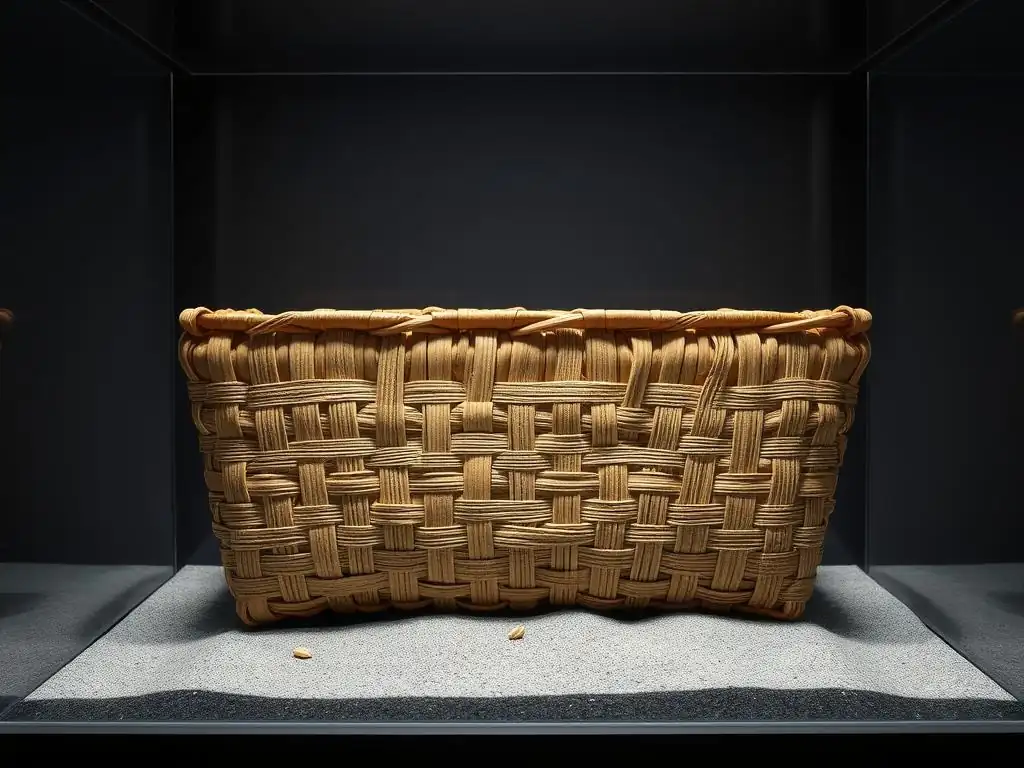
Case Study 1: Tybrind Vig, Denmark - Basketry from a Submerged Settlement
Tybrind Vig, located off the coast of Funen, Denmark, is a renowned Mesolithic submerged settlement dating to around 5,500-4,000 BCE. The anaerobic conditions of the seabed have preserved an extraordinary array of organic materials, including some of the most significant Mesolithic basketry finds in Europe. Among the discoveries are fragments of finely woven mats, parts of fishing weirs, and even portions of woven traps. These finds are particularly rare given the early date and the typically poor preservation of organic remains from this period.
One notable find includes a large, woven fish trap, demonstrating the sophisticated fishing technologies employed by Mesolithic hunter-gatherers. The basketry from Tybrind Vig provides crucial evidence for the exploitation of marine resources and the ingenuity of coastal communities in crafting tools essential for their subsistence. The quality and variety of the ancient European basketry from this site offer a tangible link to the daily lives of people inhabiting the submerged landscapes of the North Sea basin.
Case Study 2: La Draga, Spain - Neolithic Basketry and its Agricultural Context
The site of La Draga, located on the shores of Lake Banyoles in northeastern Spain, is an early Neolithic lakeside settlement dating to around 5,300-4,900 BCE. It is exceptional for its preservation of organic materials, including a diverse collection of Neolithic European basketry. The waterlogged conditions have allowed archaeologists to recover numerous fragments of baskets, mats, and cordage, offering a unique glimpse into the material culture of one of the earliest farming communities in the Western Mediterranean.
The basketry from La Draga includes coiled and twined vessels, often made from various types of reeds and rushes. Some fragments show evidence of being used as sieves or containers for processing cereals, directly linking them to the agricultural practices of the inhabitants. The presence of these basketry finds Neolithic European contexts highlights their integral role in the new agrarian economy, from storing harvested grains to preparing food, reinforcing the understanding of how early farmers managed their resources.
Case Study 3: Niederwil, Switzerland - Basketry in a Wetland Environment
Niederwil, a Neolithic wetland settlement in Switzerland dating to approximately 3,700-3,600 BCE, provides a rich assemblage of well-preserved organic artifacts, including an extensive collection of basketry. The site's location in a former bog has ensured the survival of a wide range of perishable materials, offering detailed insights into daily life in an Alpine lake-dwelling community. The basketry finds Neolithic European from Niederwil include various forms, from large storage containers to smaller, more intricate vessels.
The Niederwil assemblage showcases diverse weaving techniques, including highly sophisticated coiling and twining methods, often utilizing lime bast and willow. Analysis of these baskets reveals their varied functions, likely encompassing food storage, transport, and perhaps even specialized craft activities. The sheer volume and diversity of prehistoric European basketry from Niederwil make it a key site for understanding the full spectrum of basketry production and its pervasive role in the economy and daily routines of Neolithic wetland inhabitants.
The Function and Purpose of Basketry in Ancient European Societies
Basketry as Containers for Food Storage and Transport
One of the most fundamental and pervasive functions of ancient European basketry was its use as containers for food storage and transport. In Mesolithic societies, flexible baskets were indispensable for gathering wild berries, nuts, and roots, allowing hunter-gatherers to efficiently collect and move their foraged provisions across the landscape. With the advent of agriculture in the Neolithic period, the importance of basketry for storage escalated dramatically. Large, robust baskets became essential for holding surplus grains, dried fruits, and other harvested crops, facilitating long-term food preservation and ensuring sustenance through leaner seasons.
These containers varied in size and construction, tailored to specific needs. Tightly woven or coiled baskets, sometimes lined with clay or resin, could even hold liquids or finely processed foods, preventing spoilage. Their lightweight nature, compared to pottery or stone, made them ideal for transporting produce from fields to settlements, or for carrying goods during trade and seasonal migrations. The ubiquity of basketry finds Neolithic European contexts linked to food management underscores their critical role in supporting the demographic and economic shifts of the agricultural revolution.
Basketry as Tools for Fishing and Hunting
Beyond their use as simple containers, prehistoric European basketry played a crucial role in sophisticated subsistence technologies, particularly in fishing and hunting. Woven fish traps, often conical or cylindrical in shape, were strategically placed in rivers, lakes, or coastal waters to funnel and capture fish. These passive fishing devices, like those found at Tybrind Vig, demonstrate an advanced understanding of aquatic environments and animal behavior, allowing for efficient resource acquisition with minimal effort.
Similarly, woven materials might have been incorporated into hunting equipment. While direct archaeological evidence is scarce due to their perishability, ethnographic parallels suggest the use of woven nets for snaring small animals or birds, or as components of larger hunting drives. The strength and flexibility of plant fibers made them ideal for creating resilient and adaptable tools that significantly enhanced the efficiency of both Mesolithic hunter-gatherers and Neolithic agriculturalists in securing protein sources.
Basketry in Ritual and Symbolic Contexts
While the utilitarian functions of basketry finds Neolithic European are well-documented, their role in ritual and symbolic contexts is more challenging to ascertain due to the lack of direct evidence. However, it is plausible that certain baskets, particularly those with intricate designs or made from rare materials, held special significance beyond their practical use. They might have served as containers for offerings in religious ceremonies, held sacred objects, or been used in funerary rites. The careful craftsmanship evident in some archaeological basketry suggests an aesthetic value that transcends mere functionality.
Furthermore, patterns woven into baskets could have conveyed symbolic meanings, representing tribal affiliations, social status, or cosmological beliefs. In some cultures, the act of weaving itself is a deeply spiritual practice. While specific archaeological proof is elusive, the presence of exceptionally well-made or uniquely decorated ancient European basketry in non-domestic contexts, such as burials or ceremonial sites, could hint at their symbolic importance, reflecting a deeper connection between daily craft and spiritual life in prehistoric societies.
Basketry and the Development of Textile Technology
The Relationship Between Basketry and Early Textile Weaving
The technological principles underlying ancient European basketry are fundamentally intertwined with the origins of textile weaving. Both crafts involve the systematic interlacing of flexible elements to create a cohesive fabric. Basketry, with its larger and stiffer components, can be seen as a direct precursor, establishing the foundational concepts of warp and weft, interlacing patterns (plain weave, twill), and edge finishing. The dexterity and conceptual understanding developed through basketry would have been directly transferable to the nascent art of textile production.
The shift from rigid basketry materials to finer, more pliable fibers like flax or wool marked a key technological evolution. However, the basic hand movements, the understanding of tension, and the structural logic of interweaving remained consistent. Archaeological evidence suggests a gradual continuum, where early textiles might have been produced using techniques very similar to those found in basketry, before the development of more specialized tools like looms allowed for the creation of much larger and finer fabrics. Thus, understanding Neolithic European basketry provides crucial insight into the very beginnings of clothing and fabric production.
Basketry as a Precursor to More Complex Textile Forms
Basketry served as a vital experimental ground for developing the sophisticated techniques that would later characterize more complex textile forms. Innovations in fiber preparation, such as retting (soaking plant fibers to separate them) or processing animal hair, likely emerged from the experience gained in preparing materials for basketry. The ability to create long, uniform strands from diverse plant sources, a prerequisite for fine basketry, directly fed into the development of spun yarns for textiles.
Moreover, the exploration of various weave patterns in basketry, from simple plaiting to intricate twining and coiling, laid the groundwork for the decorative and structural complexities seen in early textiles. The development of techniques for joining elements, creating selvages, and shaping woven forms in basketry provided a practical template for designing and constructing garments and other fabric items. Therefore, the study of basketry finds Neolithic European offers a clear lineage, demonstrating how this ancient craft was not merely a utilitarian skill but a foundational technology that propelled the evolution of human material culture towards more elaborate textile forms.
Dating Basketry Finds: Methods and Challenges
Radiocarbon Dating of Organic Basketry Materials
Radiocarbon dating (C14 dating) is the primary absolute dating method employed for basketry finds Neolithic European and Mesolithic periods. Since basketry is composed of organic plant materials, it contains carbon-14, a radioactive isotope that decays at a known rate after the organism's death. By measuring the residual amount of carbon-14 in a sample, archaeologists can determine the approximate age of the basket. Modern accelerator mass spectrometry (AMS) techniques allow for dating very small samples, often just a few milligrams, minimizing damage to the fragile artifacts.
Despite its precision, radiocarbon dating of basketry presents challenges. Contamination from modern carbon sources (e.g., handling, preservatives) can skew results, necessitating meticulous sampling and preparation. The "old wood effect," where the wood used for the basket was already old when the basket was made, can also lead to dates slightly older than the actual use-life of the artifact. However, with careful calibration against tree-ring chronologies, radiocarbon dates provide a remarkably accurate temporal framework for these rare ancient European basketry discoveries, typically with a margin of error of ±50-100 years.
Stratigraphic Context and Relative Dating of Basketry
Alongside absolute dating methods, the stratigraphic context of basketry finds Neolithic European provides crucial relative dating information. Stratigraphy is the study of archaeological layers (strata); artifacts found in deeper layers are generally older than those in shallower layers, assuming undisturbed deposition. This principle allows archaeologists to establish a chronological sequence of artifacts and features within a site, even without absolute dates. For waterlogged sites, the consistent deposition of sediments over time creates clear stratigraphic sequences.
When basketry is found in association with other datable artifacts, such as pottery or specific architectural features, its relative age can be inferred. For example, if a basket is found within a specific Neolithic house layer, its age can be bracketed by the known occupation period of that structure. While not providing a precise calendar date, stratigraphic analysis is vital for understanding the temporal relationships between different basketry types and their association with other aspects of prehistoric life, offering a robust framework for interpreting the overall archaeological assemblage.
The Preservation and Conservation of Waterlogged Basketry Artifacts
Specialized Techniques for Drying and Stabilizing Ancient Basketry
The preservation of waterlogged basketry finds after excavation is an extremely delicate and complex process. When removed from their anaerobic, waterlogged environment, these organic artifacts are highly susceptible to rapid deterioration, including shrinkage, distortion, and collapse, as the water within their cellular structure evaporates. To prevent this irreversible damage, specialized conservation techniques are employed, with freeze-drying (lyophilization) being one of the most common and effective methods.
Freeze-drying involves freezing the waterlogged artifact and then placing it in a vacuum chamber, where the ice sublimates directly into vapor, bypassing the liquid phase. This process removes the water slowly and evenly, minimizing cellular collapse. Another technique involves impregnating the basketry with a bulking agent, such as polyethylene glycol (PEG), which replaces the water within the cell walls, providing structural support as the artifact dries. These meticulous procedures are essential to stabilize the fragile ancient European basketry and ensure its long-term survival for study and display.
Long-Term Preservation Strategies for Basketry Collections
Once stabilized, the long-term preservation of basketry finds Neolithic European requires stringent environmental controls in museum and archival collections. These fragile organic artifacts are highly sensitive to fluctuations in temperature, relative humidity, and light exposure, all of which can accelerate degradation. Therefore, they are typically stored in climate-controlled environments, maintaining stable temperatures (e.g., around 18-20°C) and relative humidity levels (e.g., 50-55%). High humidity can encourage mold growth, while low humidity can cause desiccation and cracking.
Light, especially ultraviolet (UV) radiation, can cause irreversible fading and weakening of organic fibers, so basketry is often stored in darkness or exhibited under low, filtered light. Furthermore, artifacts are typically housed in inert, archival-quality materials, such as acid-free boxes or custom-made supports, to prevent chemical reactions and physical damage. Regular monitoring by conservators and ongoing research into new preservation technologies are crucial for safeguarding these irreplaceable prehistoric European basketry collections for future generations.
Conclusion: Basketry as a Window into the Past of Neolithic Europe
What Basketry Reveals About Neolithic and Mesolithic Life
The study of basketry finds Neolithic European and Mesolithic sites offers an unparalleled window into the perishable aspects of prehistoric life, revealing details often absent from the more robust archaeological record. These fragile organic artifacts illuminate the technological ingenuity of ancient peoples, showcasing their sophisticated understanding of plant materials and their diverse applications. Basketry provides direct evidence of daily activities such as food gathering, processing, storage, and transport, fundamentally shaping our understanding of subsistence economies.
Beyond utility, basketry sheds light on environmental adaptation, as the choice of materials directly reflects local flora and resource management strategies. The evolution of techniques, from simple Mesolithic forms to more complex Neolithic designs, illustrates a continuous development in craft specialization and material culture. Ultimately, ancient European basketry allows us to reconstruct a richer, more nuanced picture of prehistoric communities, highlighting their resourcefulness, adaptability, and the essential role these often-overlooked objects played in their survival and societal development.
Future Research Directions in Basketry Studies
Future research in basketry finds Neolithic European and Mesolithic periods is poised to benefit significantly from emerging scientific technologies and interdisciplinary approaches. Advanced microscopic techniques, such as scanning electron microscopy (SEM), can provide even finer detail on fiber structures and possible residues, potentially identifying specific plant parts or even traces of contents. DNA analysis of plant fibers could offer precise species identification, while residue analysis (e.g., lipid or protein analysis) might reveal what substances were stored or processed within the baskets.
Moreover, the integration of computational modeling can help analyze complex weave patterns and potentially reconstruct the original three-dimensional forms of fragmented basketry. Continued experimental archaeology will refine our understanding of manufacturing processes and functional performance. Furthermore, the systematic exploration of new waterlogged sites across Europe holds immense potential for new discoveries, continually enriching our understanding of prehistoric European basketry and its profound implications for interpreting the daily lives, technologies, and economies of our ancient ancestors.
Frequently Asked Questions
What makes basketry finds from Neolithic European sites so rare and significant?
Basketry rarely survives due to its organic nature. Waterlogged sites offer anaerobic conditions that prevent decomposition, preserving these fragile artifacts and providing unique insights into past technologies.
How does the analysis of basketry help us understand Neolithic and Mesolithic European societies?
Basketry reveals information about resource management, craft specialization, and social complexity. The techniques and materials used reflect cultural traditions and environmental adaptations of the time.
Where in Europe are these waterlogged sites with basketry finds most commonly located?
These sites are frequently found in lake regions, peat bogs, and river valleys across Northern and Central Europe, including areas like Switzerland, Germany, and Scandinavia.
What materials were typically used to construct basketry during the Neolithic period in Europe?
Common materials included plant fibers such as willow, rush, and reeds. The specific choice of material depended on local availability and the intended function of the basket.
What are some examples of the types of objects that were created using basketry techniques in Neolithic Europe?
Basketry was used to create a variety of items, including containers for storage, fishing traps, and even potentially components of dwellings or other structures.
Final Reflection: Weaving Threads of the Past into the Future
The exploration of basketry finds from Neolithic and Mesolithic European sites reveals more than just ancient artifacts; it unveils the ingenuity and resourcefulness of our ancestors, demonstrating their deep connection to the natural world and their mastery of sustainable technologies. These fragile remnants, preserved against all odds in waterlogged environments, offer invaluable insights into the daily lives, technological advancements, and cultural practices of societies long past, highlighting the enduring human need to create and innovate.
This journey into the past underscores the profound impact of basketry on the development of early European societies, providing not only practical tools for gathering and storage but also serving as a medium for artistic expression and cultural transmission. These intricate weaves speak volumes about the skills, knowledge, and social structures of these communities. The past is never dead. It's not even past.
- William Faulkner. This quote resonates deeply when considering these basketry finds, reminding us that the echoes of these ancient artisans continue to shape our understanding of human history and our relationship with the environment.
Now, as we reflect on the delicate beauty and enduring legacy of these basketry finds, let us consider how we can learn from the past to build a more sustainable future. Let us embrace the principles of resourcefulness, craftsmanship, and respect for the natural world that these ancient artisans embodied. How can we, in our own lives, weave together the threads of tradition and innovation to create a more resilient and harmonious world for generations to come?
Unearth Your Inner Archaeologist!
Thank you for delving into the fascinating world of ancient basketry! We hope you've enjoyed discovering the incredible ingenuity of our Neolithic and Mesolithic ancestors and the secrets these waterlogged sites reveal. Now, let's translate that inspiration into action!
Here's how you can continue your exploration:
- Visit your local museum and examine any basketry or textile artifacts in their collection. Reflect on the craftsmanship and stories they might tell. This will offer a tangible connection to the past.
- Research local archaeological societies or heritage groups in your area. Consider attending a lecture or workshop focused on prehistoric crafts or archaeological discoveries.
- Share this article with three friends or colleagues who appreciate archaeology or ancient crafts. You never know who else might be fascinated by these forgotten skills and help expand the knowledge.
What unique aspect of ancient basketry techniques most intrigues you, and what modern craft shares a connection with it?