
FamilyFriendly Archaeological Destinations: Engaging History for All Ages

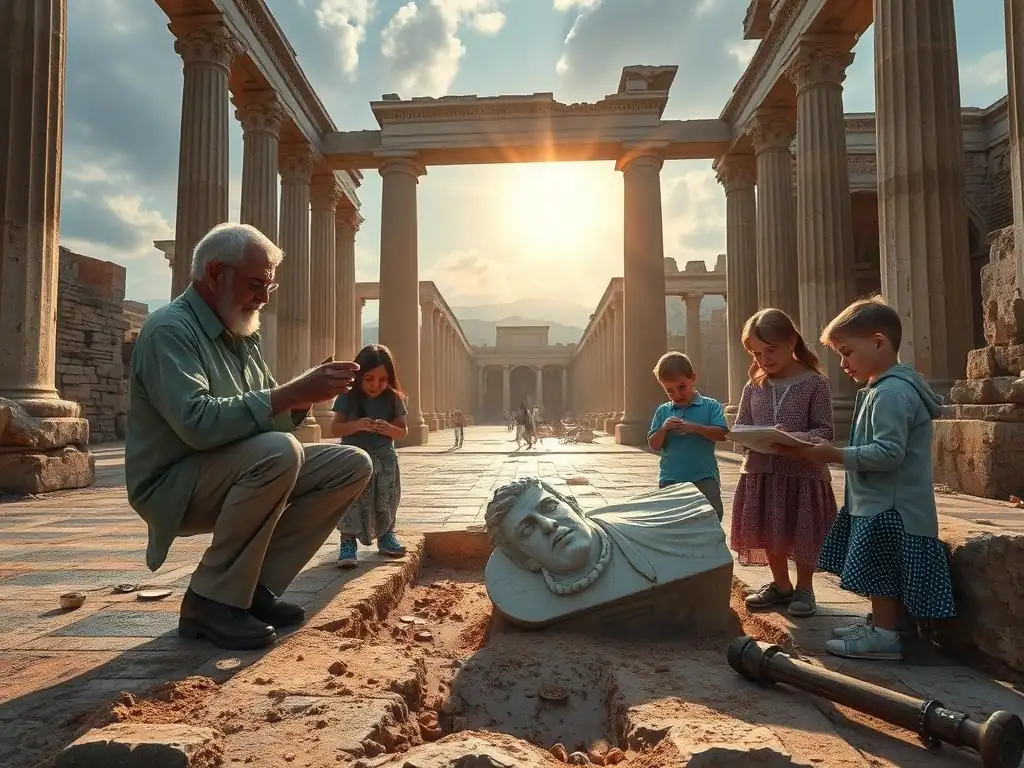
Welcome to ArchaeologyHub.org, your portal to the past! Ever dreamt of exploring ancient ruins with your family, making history come alive for all ages? Dive into our world of archaeological wonders and discover Family-Friendly Archaeology Travel Tips that will transform your next vacation into an unforgettable adventure. Unearth the secrets, plan your journey, and ignite a passion for history – the adventure begins now!
- Planning Your Family Archaeology Trip: Top Tips for an Unforgettable Adventure
- Top Family-Friendly Archaeological Destinations Worldwide
- Family Archaeology Travel Gear: Essential Products for a Successful Trip
- Making Archaeology Fun for Kids: Interactive Activities & Educational Resources
- Post-Trip: Extending the Learning Experience at Home
-
Frequently Asked Questions
- How can I make an archaeological site visit engaging for children?
- What are some essential safety precautions to take when visiting archaeological sites with family?
- Are there any budget-friendly archaeological destinations suitable for families?
- How can I prepare my children before visiting an archaeological site?
- What types of activities and resources can enhance the learning experience at an archaeological site?
- Final Reflection: Unearthing Shared Pasts, Building Future Memories
- Plan Your Family Adventure!
Planning Your Family Archaeology Trip: Top Tips for an Unforgettable Adventure
Why Choose Archaeology for Your Family Vacation?
Choosing an archaeological destination for your next family vacation offers a unique blend of education, adventure, and bonding. Unlike typical beach resorts or amusement parks, archaeological sites provide a tangible connection to the past, allowing children and adults alike to walk in the footsteps of ancient civilizations.
Imagine standing within the walls of a Roman amphitheater where gladiators once fought, or gazing upon a Mayan pyramid that served as a celestial observatory; these experiences spark curiosity and foster a deeper understanding of human history and cultural diversity. This immersive learning environment is invaluable, creating lasting memories and often inspiring a lifelong passion for discovery.
Beyond the historical insights, family-friendly archaeology travel tips often highlight the active and exploratory nature of such trips. Many sites involve significant walking, climbing, and outdoor exploration, which can be a fantastic way for families to stay active together. Children are naturally curious, and these sites offer endless opportunities for them to ask "why" and "how," encouraging critical thinking and observation skills.
For instance, at sites like Pompeii in Italy, families can observe the daily life of ancient Romans frozen in time, from bakeries with ovens to intricate mosaics, providing a vivid picture that textbook learning often cannot replicate. This hands-on engagement transforms history from abstract facts into a vibrant narrative.
Essential Family-Friendly Archaeology Travel Tips: Pre-Trip Preparations
Effective pre-trip preparation is crucial for a successful family archaeology adventure. One of the most important family-friendly archaeology travel tips is to research your chosen destination thoroughly to understand its accessibility, amenities, and specific attractions for children. For example, some sites, like the Acropolis in Athens, involve significant uphill walking and uneven terrain, which might be challenging for very young children or those needing strollers.
Checking official site websites for opening hours, ticketing information, and any family-specific programs (such as guided tours designed for kids or interactive exhibits) can save valuable time and prevent frustration upon arrival. Consider purchasing tickets online in advance, especially for popular attractions like the Colosseum, where queues can extend for hours, potentially exhausting young travelers before they even enter.
Another key aspect of preparation involves engaging your children in the planning process. Introduce them to the history of the site through age-appropriate books, documentaries, or even simple online videos. For instance, before visiting Egypt's pyramids, reading about pharaohs and ancient Egyptian myths can build excitement and provide context, making the actual visit far more meaningful.
Discussing the itinerary and what to expect can also help manage expectations and reduce potential meltdowns. Packing smart is also vital: comfortable walking shoes are a non-negotiable for exploring vast archaeological parks, and a small backpack with water, snacks, sunscreen, and a hat will be indispensable, especially when exploring open-air sites under the sun for extended periods.
Top Family-Friendly Archaeological Destinations Worldwide
Exploring Ancient Rome with Kids: A Colosseum & Forum Adventure
Ancient Rome offers an unparalleled journey into one of history's most influential empires, and with the right approach, it becomes a thrilling adventure for children. The Colosseum, an iconic amphitheater completed around 80 CE, is a must-see. Its sheer scale, capable of holding an estimated 50,000 to 80,000 spectators, immediately captures the imagination.
Families can discuss the gladiatorial contests and public spectacles that once took place there, bringing ancient Roman life vividly to mind. Many guided tours specifically cater to children, using storytelling and visual aids to explain the history without overwhelming young minds. These tours often focus on the daily lives of Romans, the emperors, and the engineering marvels of the structure itself, making it one of the best family-friendly archaeology travel tips for Rome.
Adjacent to the Colosseum, the Roman Forum and Palatine Hill provide a sprawling open-air museum of ancient ruins. While it might seem like a lot of scattered stones to some, with proper context, kids can visualize the bustling marketplace, the Senate House, and the temples that once stood here. Encourage children to spot specific architectural elements, imagine the speeches delivered by famous orators, or even play "I spy" with ancient columns and archways.
The Palatine Hill, offering panoramic views of the Forum and Circus Maximus, can be particularly engaging as children visualize chariot races and royal residences. A good family-friendly archaeology travel tip for these extensive sites is to break up the visit, perhaps focusing on key areas or utilizing audio guides designed for younger listeners to maintain interest.
Uncovering Mayan Mysteries in Mexico: Chichen Itza Family Travel
Chichen Itza, a UNESCO World Heritage site on Mexico's Yucatán Peninsula, offers an incredible opportunity to explore the advanced civilization of the ancient Maya. Its most famous structure, El Castillo (the Temple of Kukulcan), is a stunning example of Mayan astronomical precision, with 365 steps representing the days of the solar year.
During the spring and autumn equinoxes, the shadow of a serpent appears to slither down the pyramid's staircase, a breathtaking phenomenon that highlights the Maya's sophisticated understanding of the cosmos. Exploring this site with children allows for discussions about ancient calendars, mathematics, and the unique ballgame played in the massive Great Ball Court, which is the largest in Mesoamerica, measuring 168 by 70 meters.
Beyond El Castillo, Chichen Itza presents a rich tapestry of structures, including the intricate carvings of the Temple of the Warriors and the sacred Cenote Sagrado (Sacred Cenote), a natural sinkhole used for rituals. When considering family-friendly archaeology travel tips for Chichen Itza, remember that the site is extensive and can be hot. Planning an early morning visit can help avoid the midday heat and larger crowds.
Engage children by encouraging them to look for the various animal carvings, such as jaguars and eagles, or by explaining the significance of the glyphs and symbols. The site provides a fantastic backdrop for imagining life in a powerful ancient city, offering insights into Mayan beliefs, daily life, and their eventual decline.
Egyptian Adventures for the Whole Family: Pyramids of Giza & Nile Cruises
Egypt, with its iconic pyramids and ancient temples, provides an unmatched historical journey for families. The Pyramids of Giza, towering over the desert landscape, are perhaps the most recognized archaeological wonders globally. The Great Pyramid of Khufu, standing approximately 138 meters tall today (originally 146 meters), was the tallest man-made structure for over 3,800 years.
Standing at their base, children can truly grasp the monumental scale and engineering prowess of the ancient Egyptians, completed over 4,500 years ago. Exploring the Sphinx, with its enigmatic gaze, and even venturing inside one of the smaller pyramids, offers a thrilling and tangible connection to the pharaohs and their burial practices, making it a highlight for any family-friendly archaeology travel tips list for Egypt.
Beyond Giza, a family-friendly Nile cruise offers a leisurely yet immersive way to explore a string of magnificent temples along the riverbanks, such as Karnak and Luxor Temples in modern-day Luxor, and the temples of Edfu and Kom Ombo further south. These cruises typically last 3 to 7 nights, providing a comfortable base while allowing families to disembark for guided tours of the sites.
Children can marvel at the colossal statues, decode hieroglyphics with the help of a guide, and learn about the gods and goddesses of the Egyptian pantheon. The experience of sailing on the Nile, the lifeblood of ancient Egypt, while witnessing timeless monuments unfold, provides a unique perspective on the civilization's enduring legacy and offers invaluable family-friendly archaeology travel tips.
Discovering Ancient Greece: Athenian Acropolis Family Exploration
Ancient Greece, the cradle of democracy and philosophy, offers a wealth of archaeological wonders, with the Athenian Acropolis being a crowning jewel for family exploration. Perched high above Athens, the Acropolis is home to the majestic Parthenon, a Doric temple dedicated to the goddess Athena, constructed between 447 and 438 BCE. Its impressive columns and intricate carvings tell tales of ancient Greek myths and architectural brilliance.
For children, the sheer size and historical significance of the Parthenon can be awe-inspiring, prompting discussions about ancient gods, heroes, and the birth of democratic ideals. A key family-friendly archaeology travel tip for the Acropolis is to visit early in the morning to avoid the intense sun and large crowds, ensuring a more comfortable and engaging experience.
Beyond the Parthenon, the Acropolis complex includes the Propylaea (the monumental gateway), the Erechtheion with its famous Caryatids (female figures serving as columns), and the Temple of Athena Nike. Each structure has its own story, which guides or well-researched audio tours can bring to life for young minds. Below the Acropolis, the Ancient Agora, the heart of ancient Athenian public life, offers further exploration.
Here, Socrates once debated, and citizens gathered. Walking through these ruins, families can imagine the daily hustle and bustle of ancient Athens. Combining the outdoor exploration with a visit to the modern Acropolis Museum, which houses many artifacts from the site and offers interactive exhibits, enhances the learning experience, providing a comprehensive family-friendly archaeology travel tips itinerary for Greece.
Family Archaeology Travel Gear: Essential Products for a Successful Trip
Kid-Friendly Archaeology Tools: Engaging Young Explorers
Equipping young explorers with their own "archaeology tools" can significantly enhance their engagement and sense of adventure on a trip. While not for actual excavation at protected sites, these items foster a playful, hands-on approach to observation. A simple magnifying glass, for instance, allows children to examine the textures of ancient stones, the details on pottery fragments (if permitted to handle replicas or within designated areas), or the intricate carvings on monuments.
This encourages close observation skills, a fundamental aspect of archaeological study. Another useful item is a small brush, like a soft paintbrush, which can be used to "dust off" imaginary artifacts or simply to mimic the careful work of archaeologists, making the experience more interactive and memorable.
Beyond observational tools, a small field notebook and pencils are invaluable. Children can use these to sketch what they see, jot down observations, or even create their own "artifact profiles" based on the exhibits. This activity not only hones their drawing and writing skills but also helps them process and remember the information presented at the sites.
Some companies offer basic "kid archaeology kits" that include a plastic trowel, brush, and magnifying glass, designed for sandpit play but adaptable for imaginative role-playing during a trip. These items transform a passive viewing experience into an active investigation, embodying the best family-friendly archaeology travel tips for keeping kids engaged.
Travel Essentials for Family Archaeology Adventures
Successful family archaeology adventures hinge on practical travel essentials that prioritize comfort and safety. Given that many archaeological sites are extensive and involve significant walking, comfortable, sturdy walking shoes are paramount for every family member. Blisters or sore feet can quickly derail an otherwise enjoyable day of exploration.
Hydration is another critical factor, especially at sun-exposed sites like those in Mexico, Egypt, or the Mediterranean; reusable water bottles that can be refilled are an eco-friendly and practical solution. Packing a variety of healthy snacks is also a smart move, as site cafes can be limited or expensive, and a quick energy boost can prevent hunger-induced meltdowns.
Sun protection is non-negotiable for most outdoor archaeological sites. Wide-brimmed hats, sunglasses, and high-SPF sunscreen should be applied generously and frequently. A lightweight, breathable backpack for each child (or a shared family bag) can hold their water, snacks, and any "archaeology tools," giving them a sense of responsibility. Furthermore, a compact first-aid kit containing band-aids, antiseptic wipes, pain relievers, and any necessary personal medications is essential for minor scrapes or ailments that can occur while exploring. These foundational family-friendly archaeology travel tips ensure that physical comfort supports the intellectual and emotional engagement with the ancient world.
Making Archaeology Fun for Kids: Interactive Activities & Educational Resources
Gamifying History: Turning Sites into Interactive Learning Experiences
Transforming an archaeological site visit into an interactive game can significantly boost children's engagement and retention of historical information. One highly effective family-friendly archaeology travel tip is to create a simple scavenger hunt. Before visiting, research key features or artifacts at the site (e.g., "Find a carving of a pharaoh," "Locate the tallest column," "Spot a mosaic with an animal").
Provide a checklist or picture clues for younger children. As they discover each item, they tick it off, turning the exploration into a rewarding quest. This active search encourages observation and careful examination of the surroundings, making the history feel like a puzzle to be solved.
Another approach is to encourage role-playing or storytelling. For example, at the Roman Forum, children can pretend to be ancient senators debating, or at a Mayan site, they can imagine themselves as astronomers observing the stars. Ask open-ended questions like, "What do you think people did here?" or "If you lived here, what would your day be like?"
This prompts imaginative thinking and personal connection to the past. Some museums or sites offer digital apps with augmented reality features or interactive quizzes that can be downloaded beforehand, allowing children to "discover" virtual artifacts or learn about historical figures through engaging narratives. These "gamified" elements make the learning experience dynamic and memorable, reinforcing family-friendly archaeology travel tips for immersive education.
Educational Resources for Young Archaeologists
Leveraging educational resources before and after your trip can deepen a child's understanding and enthusiasm for archaeology. Prior to visiting a site, introduce age-appropriate books that tell the stories of ancient civilizations or feature young characters exploring archaeological themes. For instance, there are numerous children's books on ancient Egypt, Rome, or the Maya that use engaging narratives and vibrant illustrations to explain complex historical concepts simply.
Watching documentaries or educational videos designed for kids can also provide visual context and spark initial curiosity, setting the stage for a more meaningful on-site experience. Many reputable organizations, such as National Geographic Kids or the BBC, offer excellent historical content tailored for young audiences.
After the trip, continue the learning journey by visiting your local library for more books on the civilizations you explored, or by checking out museum websites that often have online games, virtual tours, or educational printables. Encourage children to share what they learned with friends or family, reinforcing their knowledge through teaching.
Some children might even enjoy starting a "mini-archaeology collection" at home with replica artifacts or by creating their own "dig site" in a sandbox. These ongoing activities, which are excellent family-friendly archaeology travel tips, transform a single trip into a continuous educational adventure, fostering a lasting interest in history and discovery.
Post-Trip: Extending the Learning Experience at Home
Creating an Archaeology-Themed Scrapbook: Preserving Memories
After returning from an enriching archaeological adventure, creating an archaeology-themed scrapbook is a wonderful way to consolidate learning and preserve cherished family memories. This tactile project allows children to revisit their experiences, reinforcing the historical facts and personal connections made during the trip. Encourage them to include photos from the sites, ticket stubs, small maps, or even drawings they made during the journey.
They can also write short captions or paragraphs describing what they saw, what they learned, or their favorite moments. For instance, a child might write about the awe they felt standing inside the Colosseum, or the surprise of seeing hieroglyphs up close in an Egyptian temple.
Beyond just photos and mementos, the scrapbook can become a creative outlet for further exploration. Children can research additional facts about the sites or artifacts they found most interesting and include them in their scrapbook. They might add a "glossary" of new historical terms they learned (e.g., pharaoh, pyramid, mosaic, cenote), or draw diagrams of ancient structures.
This activity not only hones their organizational and artistic skills but also helps them process the vast amount of information absorbed during the trip. This particular family-friendly archaeology travel tip transforms holiday souvenirs into a meaningful educational tool, keeping the spirit of discovery alive long after the suitcases are unpacked.
Further Exploration: Expanding Knowledge and Inspiring Future Adventures
The return home doesn't mark the end of the archaeological journey; rather, it's an opportunity to expand knowledge and inspire future adventures. Encourage your children to seek out more information about the ancient civilizations they encountered. A visit to your local library can yield a treasure trove of books, from detailed historical accounts to engaging fiction set in ancient times.
Watching documentaries or educational series on historical channels can also provide deeper insights and visual context, helping connect the dots between different ancient cultures and their lasting impact on the world. Many prominent archaeological institutions and museums, such as the British Museum or the Metropolitan Museum of Art, offer extensive online resources, including virtual tours and digital collections, that families can explore from home.
Consider joining a local historical society or archaeology club if available, as these often offer lectures, workshops, or even local "mini-digs" that can provide hands-on experience and connect children with a community of enthusiasts. Discussing potential future archaeological destinations can also keep the excitement alive.
Perhaps a trip to Angkor Wat in Cambodia for its stunning temples, or the ancient city of Petra in Jordan for its rock-cut architecture. These ongoing engagements, which are excellent family-friendly archaeology travel tips, foster a lifelong love of learning and discovery, demonstrating that history is not just about the past, but a living, breathing narrative that continues to unfold.
Frequently Asked Questions
How can I make an archaeological site visit engaging for children?
Focus on interactive elements, like scavenger hunts or storytelling. Consider age-appropriate tours that highlight specific artifacts or historical figures.
What are some essential safety precautions to take when visiting archaeological sites with family?
Always stay on marked paths and avoid climbing on ruins. Pack sunscreen, hats, and plenty of water to prevent heat exhaustion.
Are there any budget-friendly archaeological destinations suitable for families?
Look for sites with free admission, like national parks or local museums. Consider visiting during off-season for lower travel and lodging costs.
How can I prepare my children before visiting an archaeological site?
Read books or watch documentaries about the site's history and culture. Discuss what to expect and generate excitement about the upcoming adventure.
What types of activities and resources can enhance the learning experience at an archaeological site?
Look for sites that offer guided tours, educational programs, or interactive exhibits. Utilize online resources from ArchaeologyHub.org to supplement your visit.
The journey through family-friendly archaeological destinations, as we've explored, is more than just ticking off historical sites. It's about forging lasting connections between generations through the tangible remnants of the past. In a world increasingly dominated by fleeting digital experiences, the opportunity to stand where history unfolded, to touch the stones that witnessed ancient lives, offers a profound and deeply resonant experience, especially for families seeking meaningful adventures.
This exploration of archaeological sites accessible to all ages has underscored the enduring power of history to shape our understanding of ourselves and the world around us. The ability to share these experiences with loved ones, to witness their awe and curiosity firsthand, is a gift that transcends mere tourism. It fosters empathy, ignites imagination, and plants the seeds of lifelong learning. We are not makers of history. We are made by history.
- Martin Luther King, Jr. This quote reminds us that understanding our past is crucial to shaping a better future.
As you consider your next family adventure, I encourage you to look beyond the typical tourist traps and consider the transformative power of archaeology. Seek out these family-friendly destinations, not just for the historical lessons they impart, but for the shared memories you will create. Let the echoes of the past inspire your present and guide your future, enriching your family's bond and fostering a deeper appreciation for the human story.
Plan Your Family Adventure!
Thank you for exploring the world of family-friendly archaeology with us. We hope you've discovered some exciting new destinations to spark your and your family's curiosity about history. Now, let's turn that inspiration into action!
- Book that trip! Don't just dream about it; make it a reality. Choose one site that resonated with your family and start planning your visit to create lasting memories together.
- Share your own experiences! Have you already visited a fantastic archaeological site with your kids? Tell us about it in the comments below to inspire other families.
- Research a local history mystery! Discover a hidden piece of forgotten local history in your hometown and visit the related site with your kids to bring the adventure even closer to home.
Ready to unearth your next family adventure?