
Banpo Village: A Comprehensive Archaeological Profile of a Neolithic Matriarchal Settlement


Welcome to ArchaeologyHub.org, your gateway to the past!
Delve into the fascinating world of archaeological discovery, where every artifact whispers a story. Unearth the secrets of ancient civilizations and explore the methods that bring them to light. This article focuses on a prime example of this: the Banpo Village Neolithic matriarchal settlement. What can the remnants of this ancient society reveal about life, culture, and social structures thousands of years ago? Join us as we explore this pivotal site and its enduring legacy, sparking your curiosity to explore more of our in-depth historical content.
- Introduction to Banpo Village: Unveiling a Neolithic Matriarchal Society
- The Archaeological Landscape of Banpo: Excavations and Findings
- Banpo Society: Evidence of a Matriarchal Social Structure
- Banpo Pottery: A Window into Neolithic Art and Technology
- Banpo Agriculture and Subsistence: Sustaining a Neolithic Community
- The Decline and Legacy of Banpo: Understanding the End of an Era
- Conclusion: Banpo Village - A Crucial Site for Understanding Neolithic Matriarchal Societies in China
-
Frequently Asked Questions
- What is Banpo Village and why is it archaeologically significant?
- How does the archaeological evidence from Banpo Village support the theory of a matriarchal social structure?
- What types of artifacts have been discovered at Banpo Village?
- Where is Banpo Village located and what geographical region did it belong to?
- What are the key features that distinguished Banpo Village from other Neolithic settlements of the time?
- Final Reflection: Echoes of Matriarchal Harmony
- Unearth Your Inner Explorer!
Introduction to Banpo Village: Unveiling a Neolithic Matriarchal Society
Banpo Site: Location, Discovery, and Significance in Chinese Neolithic Archaeology
The Banpo archaeological site, situated on the eastern outskirts of Xi'an in Shaanxi Province, China, represents one of the most thoroughly excavated and well-preserved Neolithic settlements in East Asia. Discovered in 1953 during construction work, this remarkable site quickly became a cornerstone for understanding the Yangshao Culture, a prominent Neolithic culture that flourished along the Yellow River basin.
Its systematic excavation, conducted from 1954 to 1957, revealed a large, organized community, providing unprecedented insights into early Chinese agricultural societies and their social structures. The sheer scale and preservation of Banpo have made it an invaluable resource for archaeologists studying the transition from nomadic lifestyles to settled agricultural communities in the region.
Banpo's significance extends beyond its pristine preservation; it stands as a pivotal site for challenging conventional understandings of early social organization in China. Dating primarily from approximately 4500 to 3750 BCE, the Banpo settlement is often cited as a prime example of a Neolithic village that exhibits characteristics consistent with a matriarchal society.
This interpretation stems from various archaeological clues, including burial practices, the layout of dwellings, and the types of artifacts found, which collectively suggest a social system where women held considerable influence or authority. The study of this Banpo village Neolithic matriarchal settlement continues to inform debates about gender roles and social hierarchy in prehistoric societies.
ArchaeologyHub's Focus: Contextualizing Banpo within East Asian Archaeological Studies
ArchaeologyHub features Banpo prominently due to its unparalleled contribution to East Asian archaeological studies, serving as a critical benchmark for understanding the Neolithic period across the region. The site offers a detailed snapshot of daily life, technological advancements, and social complexities that characterized early agricultural communities in the Yellow River valley.
By examining Banpo, scholars can draw comparisons with contemporary sites in Korea, Japan, and other parts of China, illuminating shared cultural traits, technological diffusion, and distinct regional developments. It provides a robust framework for analyzing the evolution of human societies from the pre-dynastic era to the emergence of complex states.
Furthermore, Banpo's archaeological profile is crucial for contextualizing the unique social dynamics often attributed to the Banpo village Neolithic matriarchal settlement. Its evidence of communal living, shared resources, and specific burial patterns offers a tangible case study for discussions on egalitarianism and gender roles in prehistoric contexts.
This focus allows ArchaeologyHub to present a nuanced understanding of how early human communities in East Asia structured their societies, challenging monolithic narratives of social development and highlighting the diversity of human experience during the Neolithic transition. The site's comprehensive data set continues to fuel research into the social fabric of ancient East Asia.
The Archaeological Landscape of Banpo: Excavations and Findings
Dating Banpo: Establishing the Chronology of the Neolithic Settlement
Establishing a precise chronology for the Banpo settlement has been fundamental to understanding its development and place within the broader Neolithic period of China. Radiocarbon dating of organic materials recovered from various strata across the site indicates that Banpo was continuously occupied for approximately 700 to 800 years, roughly from 4800 to 4300 BCE, though some sources extend this range to 4500-3750 BCE for its primary occupation.
This extensive duration allowed archaeologists to identify distinct phases of occupation, marked by subtle changes in pottery styles, house construction techniques, and burial practices. The consistent dating methods have provided a reliable timeline, firmly placing Banpo within the middle phase of the Yangshao Culture.
Further chronological insights come from stratigraphic analysis, where layers of sediment and cultural remains are meticulously examined to determine their sequence and relative age. The superposition of different cultural layers at Banpo confirmed a long-term, stable occupation, allowing researchers to trace the evolution of the Banpo village Neolithic matriarchal settlement over centuries. This multi-phase chronology is crucial for interpreting social and technological developments, revealing how the community adapted and thrived before its eventual decline. The detailed dating helps distinguish Banpo's unique characteristics from those of earlier or later Neolithic settlements in the region.
Banpo Excavation Techniques: Methods Used in Unearthing the Past
The systematic excavations at Banpo from 1954 to 1957 by the Institute of Archaeology, Chinese Academy of Sciences, set a high standard for archaeological fieldwork in China. Archaeologists employed a grid system, dividing the site into measurable squares, which allowed for precise mapping and recording of all features and artifacts in their exact spatial context.
This meticulous approach ensured that the relationships between dwellings, storage pits, kilns, and burial grounds were thoroughly documented, providing a comprehensive understanding of the settlement's layout and functionality. The large-scale excavation covered an area of approximately 50,000 square meters, revealing about one-fifth of the entire village.
Beyond the grid system, the archaeologists utilized detailed stratigraphic excavation, carefully peeling back layers of soil to uncover successive occupational phases. Every artifact, from large pottery vessels to small bone needles, was recorded, photographed, and cataloged. This rigorous methodology allowed for accurate reconstruction of the Banpo village Neolithic matriarchal settlement's daily life, economic activities, and social organization. The painstaking documentation of features such as post holes, hearths, and activity areas provided invaluable data for interpreting the function of different spaces within the community and understanding the behaviors of its inhabitants.
Key Archaeological Discoveries at Banpo: Artifacts and Structures
The excavations at Banpo yielded an astonishing array of archaeological discoveries, painting a vivid picture of Neolithic life. Over 100 dwelling foundations were uncovered, primarily semi-subterranean circular or rectangular houses, typically 30-40 square meters in area, with central hearths and supported by wooden posts. A prominent feature was a large rectangular communal building, covering about 160 square meters, believed to have served as a meeting hall or a shared workshop for the entire community. Alongside these structures, numerous storage pits, pottery kilns, and animal pens were identified, indicating a well-organized and self-sufficient agricultural settlement.
The artifact assemblage from Banpo is equally rich, comprising tens of thousands of objects. Pottery constitutes the most abundant find, characterized by distinctive red ware with black painted designs, often featuring geometric patterns, stylized human faces, and fish motifs. Stone tools, including polished axes, adzes, chisels, knives, and grinding stones, indicate advanced agricultural practices and craftsmanship.
Bone and antler tools, such as needles, fishhooks, harpoons, and arrowheads, highlight hunting, fishing, and textile production activities. These artifacts, along with ornaments made of stone and bone, collectively provide profound insights into the technological capabilities, artistic expressions, and daily routines of the Banpo village Neolithic matriarchal settlement.
The burial practices observed at Banpo offer compelling, albeit debated, insights into the social organization of the Neolithic community. Over 250 adult burials were excavated, primarily located in a communal cemetery north of the living area. The vast majority of these graves were simple, single inhumations, with individuals buried in an extended position, often with minimal or no grave goods.
This general lack of opulent or differentiated burials suggests a relatively egalitarian society, where social stratification based on wealth or status was not pronounced. The absence of elaborate male-dominated burials, common in many later patriarchal societies, is often cited as a significant indicator.
A unique aspect of Banpo burials is the practice of interring children in pottery urns, often located near the houses. This practice, along with the consistent orientation of adult burials (typically head facing west), points to a shared set of beliefs and rituals within the community.
The collective nature of the cemetery and the uniformity of the adult burials, in contrast to later periods where male chieftains or warriors received grander treatment, lend support to the hypothesis of a more communal and potentially matriarchal social structure within the Banpo village Neolithic matriarchal settlement. While "matriarchy" is a complex term in archaeology, the evidence suggests a society where collective identity and perhaps female lineage played a prominent role.
The layout of the Banpo settlement itself provides further clues about its social organization. The houses, predominantly circular or rectangular semi-subterranean dwellings of similar size (around 30-40 square meters), are clustered around a large central communal building. This central structure, significantly larger than individual homes, is interpreted as a shared space for meetings, rituals, or communal work, rather than the residence of a single powerful leader. The uniformity in house size and the absence of clear distinctions in dwelling quality suggest that individual families or households did not possess significantly different levels of wealth or status.
This communal arrangement, with shared facilities like kilns and storage pits, implies a strong emphasis on collective living and cooperation. The design suggests that resources and labor were likely shared among the inhabitants of the Banpo village Neolithic matriarchal settlement, reinforcing the idea of an egalitarian social system.
The structure of the community, where individual households were integrated into a larger collective unit centered around a communal space, contrasts sharply with later settlements characterized by hierarchical arrangements and segregated elite residences. This architectural evidence strengthens the argument for a society that prioritized collective well-being over individual accumulation of power or wealth.
Gender Roles in Banpo: Analyzing Artifacts for Evidence of Matriarchy
The interpretation of gender roles at Banpo, particularly the suggestion of a matriarchal society, is primarily based on indirect archaeological evidence and comparative ethnography. While direct proof of "matriarchy" (female political dominance) is difficult to ascertain from material remains, scholars propose a strong likelihood of matrilineal descent and significant female influence or authority within the Banpo village Neolithic matriarchal settlement.
This hypothesis is supported by the prevalence of artifacts associated with traditionally female activities in many early societies, such as pottery production and textile making. Thousands of spindle whorls, used for spinning thread, have been found, suggesting widespread textile manufacturing, often a female-centric craft.
Furthermore, the iconic fish and human face motifs on Banpo pottery are sometimes interpreted in relation to fertility cults or symbols of female power, though these interpretations remain speculative. Crucially, the absence of overt symbols of male power, large caches of weapons, or evidence of male-dominated warfare, which are often characteristic of patriarchal societies, further supports the idea of a different social dynamic.
While not a definitive declaration of "matriarchy" in the modern political sense, the combined archaeological data points to a society where women likely held significant economic, social, and perhaps ritualistic importance, contributing to the characterization of Banpo as a distinctive Neolithic matriarchal settlement.
Banpo Pottery: A Window into Neolithic Art and Technology
Styles and Techniques: Examining Banpo Pottery Production
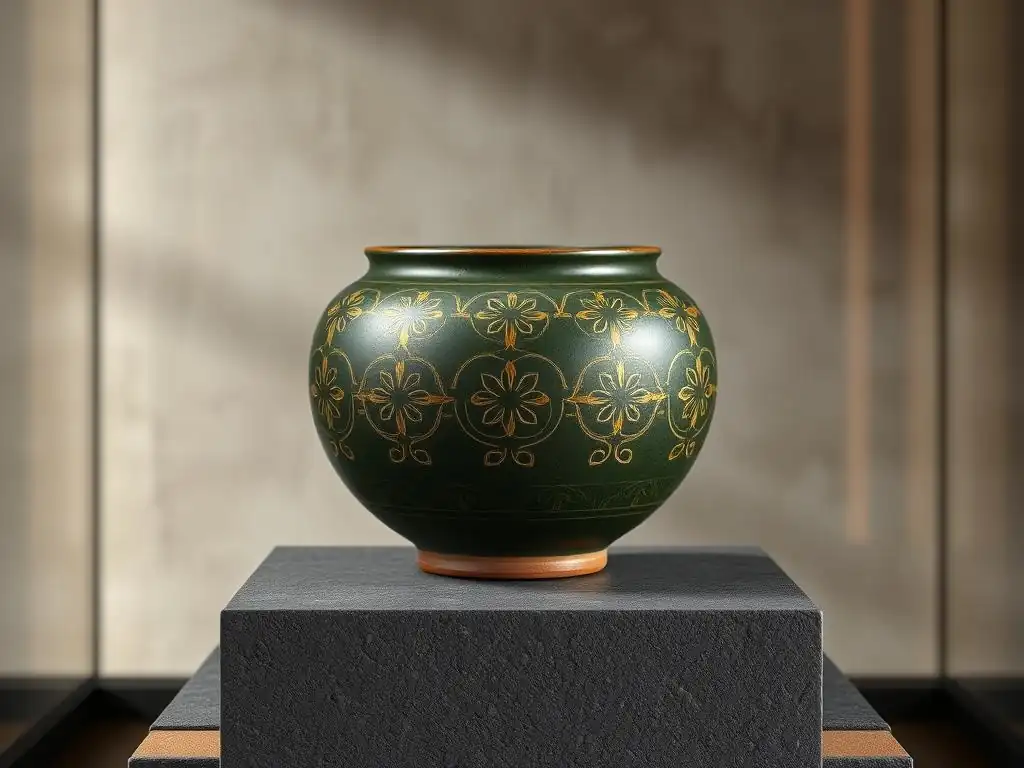
Banpo pottery is a hallmark of the Yangshao culture and is renowned for its distinctive style and sophisticated production techniques. The dominant type is a fine red earthenware, often with a smooth, burnished surface, decorated with black painted designs. The pottery was primarily made using the coiling method, where clay ropes were built up layer by layer, then smoothed and shaped.
Evidence from the numerous pottery kilns found at the site indicates that the vessels were fired at relatively low temperatures, likely ranging from 800 to 1000 degrees Celsius, which produced the characteristic reddish hue. The consistency in quality and design across thousands of excavated pieces suggests a specialized craft, possibly undertaken by dedicated potters within the community.
The forms of Banpo pottery are varied, including deep bowls, basins, jars, and narrow-necked bottles, catering to a range of domestic uses such as cooking, storage, and serving. The precision in their construction and the artistic flair of the decoration speak volumes about the technological capabilities and aesthetic sensibilities of the Banpo village Neolithic matriarchal settlement. The standardized nature of the pottery, despite individual variations, points to a shared cultural identity and possibly communal production practices, further reinforcing the collective nature of their society. This mastery of pottery production was vital for their sedentary lifestyle and food storage needs.
Symbolic Meanings in Banpo Pottery: Deciphering the Artistic Motifs
The painted motifs on Banpo pottery are among the most intriguing aspects of the site, offering rare glimpses into the symbolic world and belief systems of its inhabitants. The most iconic designs include stylized human faces with fish features, often surrounded by geometric patterns, and various forms of fish, deer, and geometric symbols like triangles, zigzags, and spirals.
The human face motif, sometimes depicted with a fish in its mouth or ears, has been a subject of extensive interpretation. Scholars suggest it might represent a shamanistic figure, a deity related to water or fertility, or a clan totem, reflecting a deep connection to nature and possibly animistic beliefs.
The prevalence of fish motifs is particularly notable, given Banpo's proximity to the Chan River. Fish likely symbolized abundance, sustenance, and perhaps fertility, playing a crucial role in their diet and spiritual life. The intricate and often repeated geometric patterns may have had their own symbolic meanings, perhaps representing natural phenomena, cosmology, or social structures within the Banpo village Neolithic matriarchal settlement. While definitive interpretations remain elusive, these artistic expressions are invaluable for understanding the cultural identity, spiritual practices, and intellectual depth of this ancient community.
Pottery as Evidence of Trade and Interaction: Banpo's Regional Connections
While the Banpo settlement was largely self-sufficient in terms of its daily needs, the analysis of its pottery and raw materials provides subtle clues about regional interactions and potential trade networks. The specific types of clay used for Banpo pottery are locally available, suggesting that most production was indigenous.
However, the widespread distribution of similar Yangshao-style pottery across a vast area of the Yellow River basin indicates a shared cultural sphere and probable inter-community exchanges. Stylistic similarities between Banpo pottery and that found at other Yangshao sites, such as Jiangzhai, suggest cultural diffusion, perhaps through migration, intermarriage, or limited trade.
Although direct evidence of extensive long-distance trade in Banpo is scarce, the presence of non-local materials like certain types of stone for tools or decorative items, albeit in small quantities, hints at some level of interaction with neighboring groups. The consistent quality and distinctive aesthetic of Banpo pottery might also have made it a desirable item for exchange. These connections, even if indirect, underscore that the Banpo village Neolithic matriarchal settlement was not an isolated entity but part of a broader network of early agricultural communities in Neolithic China, contributing to and benefiting from a shared cultural landscape.
Banpo Agriculture and Subsistence: Sustaining a Neolithic Community
Crop Cultivation at Banpo: Evidence of Millet and Other Grains
The inhabitants of Banpo were skilled agriculturalists, with the cultivation of millet being the cornerstone of their subsistence strategy. Archaeobotanical analysis of plant remains recovered from storage pits and hearths has conclusively identified foxtail millet ( Setaria italica) as the primary cultivated crop. Large quantities of millet grains have been found, indicating extensive cultivation and successful harvests that supported the relatively large population of the Banpo village Neolithic matriarchal settlement over centuries. The presence of numerous stone grinding tools and querns further attests to the processing of grains for consumption.
In addition to millet, evidence suggests the cultivation of other plants, though to a lesser extent. While millet provided the staple carbohydrate, early forms of vegetables and fruits may have supplemented their diet. The development of systematic agriculture allowed the Banpo community to establish a sedentary lifestyle, leading to the growth of a stable and organized village. This shift from nomadic foraging to settled farming was a critical turning point in human history, exemplified by the efficient agricultural practices demonstrated at Banpo.
Animal Husbandry Practices: The Role of Animals in Banpo Life
Alongside crop cultivation, animal husbandry played a significant role in the subsistence economy of the Banpo village Neolithic matriarchal settlement. Zooarchaeological studies of animal bones reveal that pigs ( Sus scrofa domesticus) were the most commonly domesticated animals, likely raised for their meat. Dogs were also present, probably serving as companions, guards, or hunting aids. The presence of pens within the settlement further supports the practice of animal domestication, indicating a controlled food source close to the living areas.
While domestication was important, hunting and fishing continued to supplement the Banpo diet. Bones of wild animals such as deer, wild boar, and various birds have been found, indicating that hunting was still a valuable activity for protein. The proximity to the Chan River made fishing a viable option, with numerous fishhooks and harpoons made from bone and antler recovered from the site. This mixed subsistence strategy, combining intensive agriculture with animal husbandry, hunting, and fishing, ensured a diverse and resilient food supply for the Banpo community, allowing for sustained habitation and growth.
Tools and Techniques for Agriculture: Adapting to the Environment
The technological ingenuity of the Banpo people is clearly reflected in their agricultural tools, which were essential for adapting to and shaping their environment. A wide array of polished stone tools has been unearthed, including axes for clearing land, adzes for woodworking, and shovels and hoes for tilling the soil. These robust tools demonstrate a sophisticated understanding of land preparation and crop management. Stone sickles, often with serrated edges, were used for harvesting millet, indicating efficient methods for collecting their staple crop.
Beyond cultivation tools, the Banpo village Neolithic matriarchal settlement developed effective techniques for food storage and processing. Numerous bell-shaped storage pits, some several meters deep, were dug into the ground to preserve harvested grains, protecting them from pests and moisture. These pits allowed for the accumulation of surplus food, providing a buffer against lean times and supporting a larger, more stable population. The presence of grinding stones and querns for processing millet into flour further highlights their advanced agricultural technology and their capacity to sustain a complex, sedentary community.
The Decline and Legacy of Banpo: Understanding the End of an Era
Environmental Changes and Their Impact on Banpo
The precise reasons for the eventual decline and abandonment of the Banpo settlement around 4300 BCE are not fully understood, but environmental changes are often cited as a significant contributing factor. During the mid-Holocene, the climate in the Yellow River basin experienced fluctuations, including periods of increased aridity or shifts in monsoon patterns. Such changes could have severely impacted the agricultural productivity of the Banpo village Neolithic matriarchal settlement, leading to reduced crop yields and increased pressure on food resources. A sustained period of environmental stress might have made the area less hospitable for a large, sedentary population.
Furthermore, continuous occupation and intensive agriculture over several centuries could have led to localized environmental degradation, such as soil exhaustion or deforestation for fuel and construction materials. As resources in the immediate vicinity became depleted, the community might have faced increasing challenges in sustaining itself. While catastrophic events like floods or earthquakes cannot be entirely ruled out, a gradual decline due to environmental pressures and resource scarcity is a more plausible explanation for the eventual relocation or dispersal of the Banpo inhabitants, marking the end of this distinct Neolithic phase.
Transition to Later Cultures: Banpo's Influence on Subsequent Societies
The end of the Banpo settlement does not imply a complete disappearance of its people or culture; rather, it represents a transition to later cultural phases. The Yangshao culture, of which Banpo is a prime example, did not simply vanish but evolved and influenced subsequent Neolithic cultures in the Yellow River basin.
Elements of Banpo's material culture, particularly its distinctive pottery styles and agricultural practices, can be traced in later archaeological horizons. This suggests that the inhabitants of the Banpo village Neolithic matriarchal settlement either migrated and merged with other groups, or their cultural traditions were adopted and adapted by emerging communities.
For instance, later cultures like the Longshan Culture, which succeeded the Yangshao, show continuities in certain aspects of technology and subsistence, even as they developed new pottery forms and social structures. The knowledge and advancements in agriculture, pottery production, and community organization pioneered at Banpo provided a foundation for future developments in Chinese prehistory. Thus, Banpo's legacy lies not only in its archaeological remains but also in its contribution to the broader cultural trajectory of Neolithic China, demonstrating a dynamic process of cultural evolution and interaction.
Banpo's Lasting Significance: Its Contribution to Understanding Neolithic China
Banpo's lasting significance in archaeology is immense, positioning it as one of the most crucial sites for understanding the Neolithic period in China and the broader East Asian context. Its meticulous excavation and rich findings have provided unparalleled insights into the daily lives, economic activities, technological prowess, and social organization of early agricultural communities. The site stands as a tangible testament to the shift from mobile foraging to settled village life, showcasing the complexities of early communal living and resource management.
Moreover, Banpo's unique evidence, particularly concerning its potential matriarchal social structure, has profoundly impacted academic discourse on gender roles and social hierarchy in prehistoric societies. It challenges simplistic linear models of social evolution, offering a compelling case study of a community that may have operated under different principles of power and authority. The Banpo village Neolithic matriarchal settlement continues to be a vibrant subject of research, inspiring new questions about human adaptation, social diversity, and the intricate tapestry of early Chinese civilization. Its preservation as a museum site ensures its ongoing educational and scientific value for generations to come.
Conclusion: Banpo Village - A Crucial Site for Understanding Neolithic Matriarchal Societies in China
Banpo's Place in the Broader Context of Neolithic East Asia
Banpo Village holds an indispensable position in the archaeological landscape of Neolithic East Asia, serving as a quintessential example of the Yangshao Culture's achievements and complexities. Its well-preserved structures, vast array of artifacts, and comprehensive layout offer a detailed window into the lives of early agriculturalists in the Yellow River basin, a region pivotal to the development of Chinese civilization.
As a representative site, Banpo allows for invaluable comparisons with other contemporary Neolithic settlements across China, Japan, and Korea, highlighting shared technological innovations, subsistence strategies, and cultural practices that characterized the broader region during this transformative period. It underscores the widespread adoption of millet cultivation and sedentary lifestyles that defined the Neolithic revolution in East Asia.
Beyond its general representativeness, Banpo is particularly significant for its unique social characteristics. The evidence suggesting a Banpo village Neolithic matriarchal settlement distinguishes it within the broader archaeological narrative of East Asia. While other sites might offer glimpses into early communal living, Banpo provides some of the most compelling, albeit debated, archaeological arguments for a society where female influence and collective decision-making may have predominated. This unique social organization makes Banpo a critical focal point for comparative studies on social evolution, gender roles, and the diversity of human societal structures across the ancient world, not just within East Asia.
Future Research Directions: Unanswered Questions about Banpo
Despite decades of extensive research, the Banpo village Neolithic matriarchal settlement continues to pose intriguing questions that invite future archaeological and scientific inquiry. One primary area for ongoing investigation is the more precise nature of its social organization.
While the term "matriarchal" is widely used in relation to Banpo, further detailed analysis, potentially through advanced bioarchaeological techniques like ancient DNA analysis of human remains (if permissible and available), could provide deeper insights into kinship systems, genetic diversity, and the precise roles of different individuals within the community. Refining our understanding of power dynamics and decision-making processes remains a key challenge.
Furthermore, future research could focus on more granular paleoenvironmental reconstructions to better understand the specific climatic and ecological pressures that might have led to Banpo's eventual abandonment. Integrating new data from surrounding, less-excavated sites could also shed light on regional interactions, trade networks, and migration patterns, providing a more comprehensive picture of Banpo's place within the dynamic Neolithic landscape. The ongoing re-evaluation of existing artifact collections with new theoretical frameworks and analytical methods promises to unlock even more secrets from this pivotal site, ensuring that the Banpo village Neolithic matriarchal settlement remains at the forefront of archaeological discourse.
Frequently Asked Questions
What is Banpo Village and why is it archaeologically significant?
Banpo Village is a Neolithic settlement in China, significant for providing valuable insights into matriarchal societies and early agricultural practices. The site showcases a remarkably well-preserved example of a Yangshao culture village.
Archaeological findings, such as the placement of female remains in prominent burial sites and the prevalence of female imagery in pottery, suggest a matriarchal or matrilineal social organization. Inheritance and social status may have been passed down through the female line.
What types of artifacts have been discovered at Banpo Village?
A diverse range of artifacts have been unearthed, including pottery, stone tools, and bone tools, providing a comprehensive understanding of daily life. These artifacts demonstrate sophisticated craftsmanship for the Neolithic period.
Where is Banpo Village located and what geographical region did it belong to?
Banpo Village is located near Xi'an, in the Shaanxi province of China. It belongs to the Yellow River valley region, a cradle of Chinese civilization and a crucial area for understanding early agricultural development.
What are the key features that distinguished Banpo Village from other Neolithic settlements of the time?
Banpo Village is distinguished by its well-planned layout, evidence of communal living, and the strong indicators of a matriarchal social structure. Its comprehensive archaeological record makes it a unique and valuable site for studying the Neolithic period.
Final Reflection: Echoes of Matriarchal Harmony
The exploration of Banpo Village, a window into a Neolithic matriarchal settlement, resonates profoundly today, reminding us that alternative societal structures are not just historical curiosities, but potent reminders of human adaptability and potential. The intricate pottery, communal living spaces, and burial practices unearthed at Banpo offer tangible evidence of a society where women held significant influence, challenging conventional narratives of patriarchal dominance as an inevitable historical trajectory. This understanding is crucial as we grapple with contemporary issues of gender equality and the search for more balanced and equitable social models.
The enduring legacy of Banpo continues to shape our understanding of Neolithic societies and the diverse forms human civilization can take. Personally, the meticulous craftsmanship and the evident emphasis on community within Banpo deeply inspire a re-evaluation of our modern priorities, often skewed towards individualism and material accumulation. The past is never dead. It's not even past.
- William Faulkner. This quote encapsulates the enduring power of Banpo, its echoes resonating across millennia, prompting us to question the foundations of our own social structures and consider alternative paths towards a more harmonious future.
As we close this exploration of Banpo Village, let us carry forward the lessons learned from this ancient matriarchal settlement. Consider how the principles of community, cooperation, and respect for the feminine, so evident in Banpo, can be integrated into your own life and contribute to building a more balanced and equitable world. Let the spirit of Banpo inspire you to challenge conventional norms, advocate for inclusivity, and cultivate a society where all voices are heard and valued.
Unearth Your Inner Explorer!
Thank you for diving into the world of Banpo Village! We hope you found its rich history as fascinating as we do. Now, let's bring that archaeological spirit to life!
Here are a few ways to continue your exploration:
- Visit your local history museum or archaeological site to see similar artifacts and learn about early settlements in your area.
- Share this article with fellow history buffs and spark a discussion about the importance of understanding Neolithic societies.
- Research similar matriarchal societies throughout history and create a comparative analysis to deepen your understanding.
What surprising connection did you find between Banpo Village and your own community's history?