
The Symbolism of Sun Discs, Water Birds, and Aquatic Motifs in Hallstatt Iconography

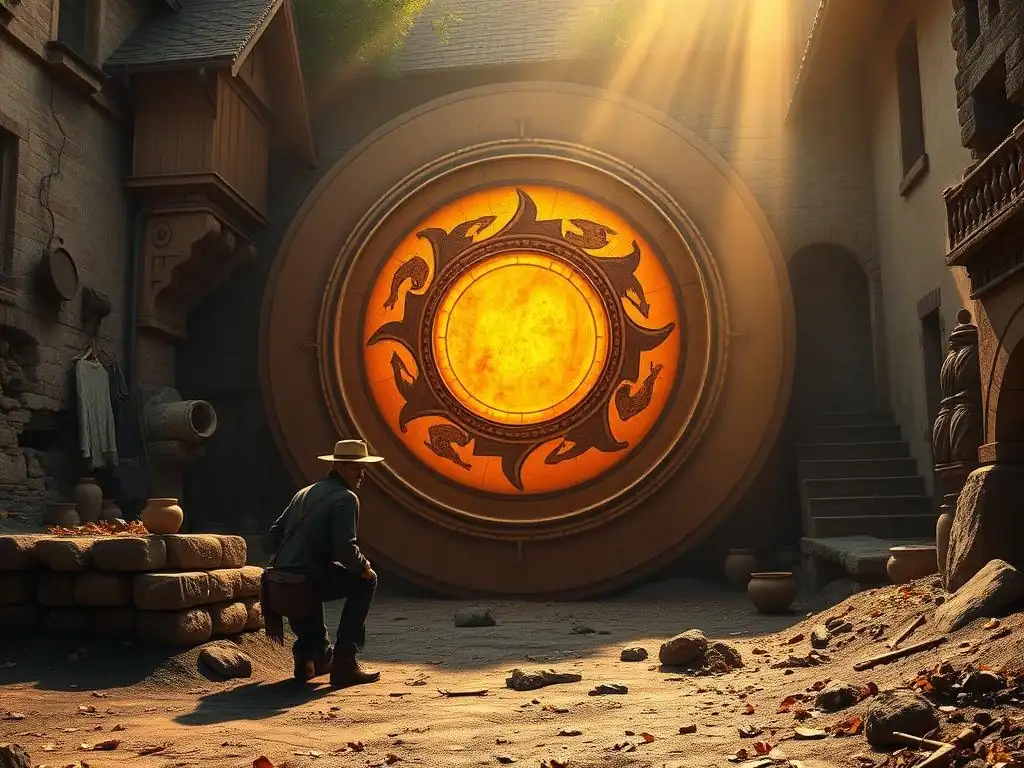
Welcome to ArchaeologyHub.org, your gateway to unlocking the secrets of the past! Ever wondered what ancient symbols truly meant? Our latest deep dive explores the captivating world of the Hallstatt culture, focusing on the intricate Hallstatt sun disc symbolism. Discover how this recurring motif, alongside water birds and aquatic elements, reveals profound insights into their beliefs and understanding of the cosmos. Are you ready to unravel the mysteries held within these ancient designs?
- The Symbolism of Zoomorphic and Geometric Motifs in La Tène Iconography
- Introduction to La Tène Culture and its Symbolic Language
- The La Tène Boar: A Central Symbol of Power and Warfare
- Birds in La Tène Iconography: Messengers and Omens
- Geometric Motifs in La Tène Art: Spirals, Triskeles, and Interlace
- The Interplay of Zoomorphic and Geometric Motifs
- Regional Variations in La Tène Iconography
- Interpreting La Tène Symbolism: Scholarly Perspectives
- Conclusion: The Enduring Legacy of La Tène Iconography
-
Frequently Asked Questions
- How significant is the Hallstatt sun disc in understanding Hallstatt culture?
- What other recurring motifs often accompany the sun disc in Hallstatt art?
- Does the "ArchaeologyHub.org" website offer more information on the Hallstatt sun disc symbolism?
- What does the presence of water birds suggest about the belief system of the Hallstatt people?
- How are the Hallstatt sun discs categorized and studied on ArchaeologyHub.org?
- Final Reflection: Unveiling Ancient Connections
- Unearth Hallstatt's Secrets: Your Journey Begins Now!
The Symbolism of Zoomorphic and Geometric Motifs in La Tène Iconography
Introduction to La Tène Culture and its Symbolic Language
Understanding La Tène Art and its Significance in Celtic Prehistory
La Tène art represents the pinnacle of Celtic artistic expression during the Early and Middle Iron Age, flourishing from approximately 450 BCE to the Roman conquest. This distinctive art style, named after the archaeological site of La Tène on Lake Neuchâtel in Switzerland, is characterized by its curvilinear forms, abstract zoomorphic figures, and intricate geometric patterns.
Unlike the more static, geometric styles of the preceding Hallstatt culture, La Tène art introduced a dynamic fluidity and often a playful ambiguity, reflecting a sophisticated symbolic language that permeated various aspects of Celtic life, from warfare and ritual to daily adornment. Its significance lies not only in its aesthetic appeal but also as a crucial window into the worldview and belief systems of the ancient Celts across a vast geographical expanse, stretching from Ireland to the Balkans.
The evolution of La Tène art saw several distinct phases, from the early "Waldalgesheim style" known for its flowing tendrils and subtle zoomorphs, to later, more exuberant or even debased forms. Thousands of artifacts bearing this iconography have been unearthed across Europe, including weaponry, jewelry, pottery, and ritual objects.
For instance, the Marlborough Bucket, dating to the 4th century BCE, showcases intricate human and animal figures that exemplify the early La Tène artistic mastery, demonstrating a complex interplay of form and meaning. Understanding La Tène symbolism is therefore essential for any in-depth study of European prehistory, offering profound insights into the social structures, spiritual practices, and cultural identity of a people who left no written records of their own.
The Importance of Iconography in Deciphering La Tène Beliefs
The study of La Tène iconography is paramount for archaeologists and historians seeking to decipher the complex spiritual and philosophical beliefs of the Celtic peoples. Lacking indigenous written accounts, the visual language embedded in their artifacts serves as the primary source for understanding their cosmology, deities, rituals, and societal values.
Every curve, every stylized animal, and every intricate geometric pattern found on La Tène objects likely carried specific meanings, often multilayered and context-dependent. For example, the recurring motif of the human head, frequently depicted with exaggerated features on torcs and brooches, is widely interpreted as a symbol of spiritual power, divine connection, or even a focus for ancestor veneration, reflecting a deep engagement with the supernatural realm.
Furthermore, the widespread distribution of certain iconographic elements across different La Tène regions suggests a shared cultural substratum and a common symbolic vocabulary. While regional variations certainly existed, the prevalence of specific animal motifs like the boar or bird, or geometric designs such as the triskele, indicates a collective understanding of their symbolic significance.
The analysis of these recurring La Tène symbols, combined with archaeological context from burial sites, sanctuaries, and settlements, allows researchers to piece together fragments of a rich belief system. This interpretative process is often challenging, as the original meanings may be lost to time, but the consistent appearance of certain La Tène motifs on prestigious items underscores their profound importance to the people who created and used them, making iconography an indispensable tool for cultural reconstruction.
The La Tène Boar: A Central Symbol of Power and Warfare
Origins and Evolution of the Boar Motif in La Tène Art
The boar motif holds a prominent and enduring place within La Tène art, tracing its origins back to earlier Iron Age traditions and even prehistoric periods where the wild boar was a formidable presence in European landscapes. In La Tène culture, the boar emerged as a particularly potent symbol, frequently depicted on a wide array of artifacts, from helmets and shields to personal ornaments and cultic objects.
Early examples of boar imagery can be seen in the Hallstatt culture, but it is in the La Tène period that the motif becomes highly stylized and widespread, often rendered with exaggerated tusks, bristly manes, and dynamic postures that emphasize its ferocity.
The evolution of the La Tène boar motif often shows a progression from more naturalistic representations to increasingly abstract and curvilinear forms, sometimes integrated so seamlessly into complex patterns that the animal's outline only becomes apparent upon close inspection, a hallmark of the La Tène artistic style.
This artistic evolution reflects not only changing aesthetic preferences but also a potential deepening of its symbolic resonance within La Tène society. For instance, archaeological finds from sites like the Glauberg in Germany, where a striking La Tène warrior statue adorned with a boar's crest was discovered, illustrate the tangible connection between the animal and elite status or martial prowess.
The persistence of the boar motif across centuries and diverse geographical areas within the La Tène cultural sphere underscores its fundamental importance. From the 5th century BCE onwards, the boar's image became an almost ubiquitous emblem, evolving in style but consistently retaining its powerful symbolic charge, a testament to its deep roots in Celtic mythology and societal values.
La Tène Boar Symbolism: Ferocity, Strength, and Divine Association
The symbolism of the La Tène boar is multifaceted, primarily associated with ferocity, strength, and an indomitable spirit, qualities highly valued in warrior societies. The wild boar, a dangerous and formidable creature in its natural habitat, served as an ideal emblem for warriors, embodying courage in battle and a refusal to yield.
Its tusks, capable of inflicting severe wounds, were often emphasized in artistic renditions, signifying its aggressive nature and protective power. This association with martial prowess made the boar a popular crest for helmets, such as the aforementioned Glauberg prince, or as decorative elements on shields, intended to imbue the wearer with the animal's formidable attributes and perhaps strike fear into opponents.
Beyond its martial connotations, the La Tène boar also carried significant divine or sacred associations. In Celtic mythology, boars were often linked to deities of the hunt, fertility, and even the underworld, suggesting a complex spiritual dimension to their symbolism.
The Gundestrup Cauldron, though slightly later in date, depicts a prominent horned boar, further hinting at its mythological importance and potential connection to chthonic powers or a tutelary spirit. The consistent appearance of the boar on ritualistic items and prestigious personal adornments indicates that it was more than just a symbol of physical strength; it was likely revered as a sacred animal, possibly representing a primal force or a divine protector, a key element in understanding La Tène symbolism and its rich spiritual landscape.
Materials and Techniques Used in Crafting La Tène Boar Depictions
La Tène artisans utilized a variety of materials and sophisticated techniques to craft their iconic boar depictions, reflecting their mastery of metallurgy and other crafts. Bronze was a particularly favored material for creating three-dimensional boar figures, often cast using the lost-wax method, which allowed for intricate details and fluid forms.
Examples include boar figurines found at various La Tène settlements and sanctuaries, such as those from the oppidum of Manching in Bavaria, dating to the 3rd-2nd centuries BCE, where numerous small bronze animal figures, including boars, have been excavated. These small sculptures often served as votive offerings or decorative elements on larger items.
Iron was also employed, especially for functional items like helmet crests or sword scabbards, where the boar motif would be embossed, engraved, or applied as a separate element. For instance, some La Tène scabbards feature highly stylized boar heads at their chape, demonstrating the integration of the symbol into weaponry.
In addition to metalwork, boar imagery also appeared on pottery, carved wood, and even bone, showcasing the versatility of La Tène artistic expression. The skill involved in rendering these complex La Tène symbols, often incorporating curvilinear patterns and a dynamic sense of movement, highlights the advanced craftsmanship of the Celtic artisans and their dedication to imbuing everyday and ceremonial objects with profound symbolic meaning.
Birds in La Tène Iconography: Messengers and Omens
The Role of Birds in La Tène Rituals and Mythology
Birds held a significant and multifaceted role in La Tène rituals and mythology, frequently appearing in their iconography as symbols deeply connected to the celestial and spiritual realms. Due to their ability to soar through the sky, birds were often perceived as intermediaries between the human world and the divine, serving as messengers from the gods or spirits.
Their flight patterns and calls might have been interpreted as omens, guiding human actions or foretelling future events, a practice common in many ancient cultures. Archaeological evidence from La Tène sanctuaries and burial contexts occasionally includes bird bones or bird-shaped artifacts, suggesting their importance in votive practices or funerary rituals, perhaps guiding the soul in the afterlife or protecting the deceased.
Various species of birds appear in La Tène art, though often highly stylized, making precise identification challenging. However, certain characteristics suggest the depiction of ravens, eagles, or waterbirds, each potentially carrying specific symbolic weight.
Ravens, for example, are often associated with prophecy, war, and death in Celtic traditions, while eagles might symbolize power, majesty, and divine authority. The consistent presence of bird motifs on prestigious items like torcs, brooches, and especially helmets, such as the Agris Helmet, underscores their central position within La Tène belief systems, reflecting a deep reverence for these winged creatures and their perceived connection to the supernatural.
Depictions of Birds on La Tène Artifacts: A Visual Analysis
Bird depictions on La Tène artifacts are characterized by their highly abstract and curvilinear forms, often integrated seamlessly into intricate decorative schemes. Unlike more naturalistic portrayals, La Tène birds are frequently reduced to their essential elements – a prominent beak, an eye, and stylized wings or tail feathers – which are then elongated, spiraled, or interwoven with other motifs.
This abstract approach allows for a dynamic sense of movement and energy, making the bird a fluid component of a larger design rather than a static representation. For instance, the terminals of many La Tène torcs or fibulae often feature stylized bird heads, with their beaks forming hooks or their eyes serving as decorative bosses.
A notable example of bird symbolism in La Tène art can be found on the bronze mounts of wooden vessels or on shield bosses, where multiple bird heads might emerge from a swirling mass of tendrils. The rhythmic repetition and intertwining of these bird forms create a visually complex and engaging composition, inviting the viewer to trace the lines and discover the hidden animals within the abstract patterns.
This sophisticated integration of zoomorphic elements into geometric designs is a hallmark of the La Tène artistic style. The precise details of their plumage or anatomical features are less important than the overall impression of vitality and the symbolic message conveyed by their presence, reinforcing the idea that these La Tène symbols were deeply embedded in the cultural fabric.
Bird Symbolism: Connecting to the Sky and the Spiritual Realms
The pervasive bird symbolism in La Tène iconography strongly suggests a profound connection to the sky, the celestial realm, and the spiritual dimensions of existence. As creatures of the air, birds were naturally seen as mediators between the earthly and the divine, capable of traversing boundaries that humans could not.
This perception likely informed their role in divination and their association with deities or spirits who resided in the heavens. The frequent appearance of birds on funerary objects or in burial contexts further reinforces their symbolic link to the transition between life and death, perhaps guiding the departed soul or acting as protective guardians in the afterlife.
Moreover, the specific characteristics of certain birds might have lent them particular symbolic qualities. Waterbirds, often depicted with long necks and aquatic associations, could symbolize journeys, purification, or connection to primordial waters, elements also significant in Celtic cosmology.
The dynamic nature of bird flight, their freedom, and their ability to observe from above might also have contributed to their symbolic power, representing spiritual insight or divine surveillance. Ultimately, the consistent presence of bird motifs across diverse La Tène artifacts speaks to a deeply held belief in their sacred nature and their integral role in the Celtic understanding of the cosmos, making them vital components in the study of La Tène symbolism.
Geometric Motifs in La Tène Art: Spirals, Triskeles, and Interlace
The Significance of Geometric Patterns in La Tène Cosmology and Decoration
Geometric patterns form a foundational element of La Tène art, providing the underlying structure and rhythm for many of its most iconic creations. Unlike the more figurative art of classical antiquity, La Tène artisans often favored abstract and curvilinear geometry, which played a significant role not only in decoration but also, arguably, in expressing aspects of their cosmology and philosophical understanding. Spirals, triskeles (three-legged spirals), and interlace patterns are particularly pervasive, appearing on a vast array of objects from finely crafted jewelry to monumental stone carvings.
These motifs are rarely static; instead, they convey a sense of continuous movement, growth, and transformation, reflecting a dynamic worldview. For example, the recurring double spiral, often seen on bronze torcs or brooches, suggests duality or cyclical processes, important concepts in many ancient belief systems.
The precision and complexity with which these geometric patterns were executed demonstrate a high level of artistic skill and a deliberate choice to imbue objects with more than just aesthetic appeal. The patterns themselves might have been seen as embodying inherent power or representing fundamental principles of the universe.
The intricate network of lines and curves could symbolize the interconnectedness of all things, the cyclical nature of time, or the journey of life itself. The application of these La Tène symbols was meticulous, often requiring sophisticated drafting and metalworking techniques, such as repoussé or engraving, ensuring that the visual impact was both striking and meaningful.
Geometric Motifs as Symbols of Continuity, Cycles, and Interconnectedness
The repeated use of spirals, triskeles, and interlace patterns in La Tène art strongly suggests their symbolic association with continuity, cycles, and interconnectedness. The spiral, a universal symbol, inherently represents growth, expansion, and the continuous unfolding of existence. In La Tène contexts, both single and double spirals frequently appear, sometimes forming the eyes or joints of stylized animals, thereby integrating the symbolic geometry directly into zoomorphic forms. This fusion highlights the Celtic appreciation for the organic growth patterns found in nature and perhaps the concept of an eternal, cyclical universe.
The triskele, a motif composed of three interlocking spirals or legs, is particularly emblematic of La Tène symbolism. Its tripartite nature could represent various concepts such as past, present, and future; earth, sea, and sky; or the cyclical nature of life, death, and rebirth. Its dynamic motion suggests perpetual movement and energy, making it a powerful symbol of vitality and transformation.
Similarly, interlace patterns, where lines or ribbons are woven over and under each other, create a sense of infinite connection and unity, with no clear beginning or end. This visual metaphor of interconnectedness likely reflected the Celtic understanding of the world as a complex web of relationships, where human, natural, and spiritual realms were inextricably linked. These La Tène motifs were not merely decorative; they were profound statements about the nature of existence.
Examples of Geometric Symbolism on La Tène Torcs and Brooches
La Tène torcs and brooches provide some of the finest examples of the sophisticated application of geometric symbolism. Torcs, often made of bronze or gold, were prestigious neck rings worn by elites, and their terminals frequently incorporated intricate geometric designs.
For instance, many torcs feature terminals adorned with highly stylized double spirals that meet at a central point, creating a mesmerizing visual effect that emphasizes balance and continuity. The Waldalgesheim style, a prominent early phase of La Tène art from the 4th century BCE, is particularly renowned for its flowing, abstract curvilinear patterns that often resolve into spirals or tendrils, demonstrating a mastery of fluid geometric composition.
Brooches (fibulae), used to fasten clothing, were also miniature canvases for complex La Tène symbolism. Numerous examples display intricate S-scrolls, interlocking circles, and variations of the triskele, often meticulously engraved or cast. The so-called "dragon" fibulae, for instance, frequently feature a central spiral or a series of interconnected curves that define the body of the stylized creature, illustrating how geometric patterns could form the very structure of zoomorphic representations.
The meticulous craftsmanship involved in these small but highly detailed objects suggests that their geometric ornamentation was not merely aesthetic but carried significant symbolic weight, communicating status, identity, or spiritual beliefs to those who wore and observed them. These precious objects are key to understanding the aesthetic and symbolic language of La Tène art.
The Interplay of Zoomorphic and Geometric Motifs
Examining the Relationship Between Animal and Geometric Symbolism in La Tène Culture
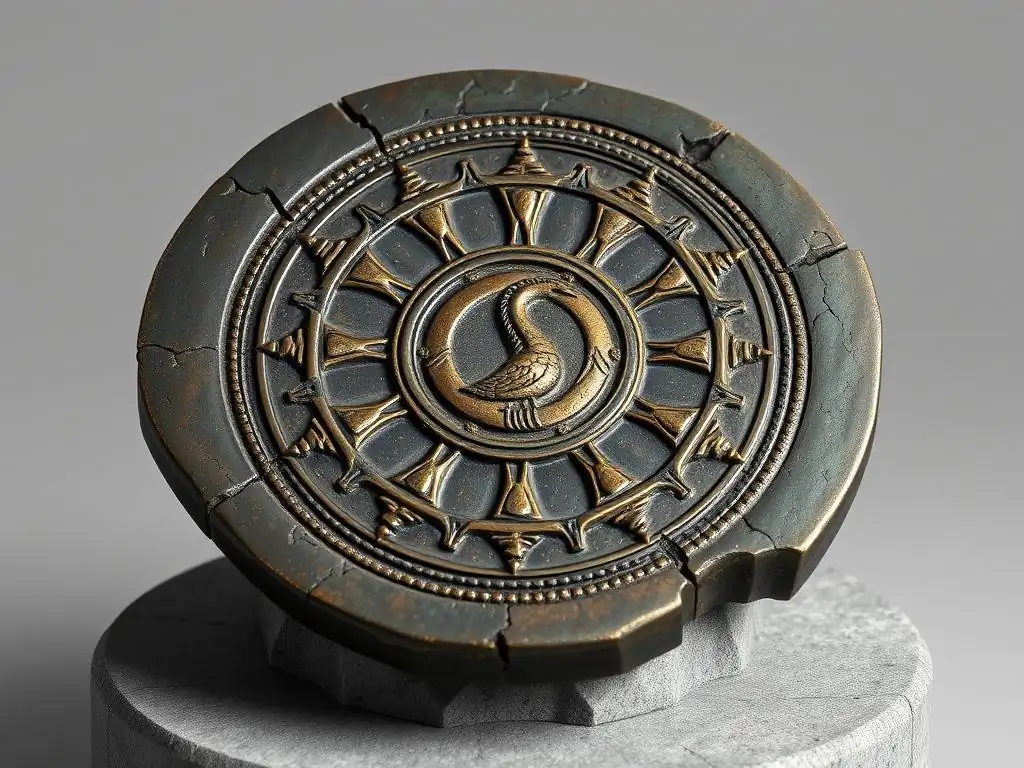
One of the most striking characteristics of La Tène art is the seamless and often ambiguous interplay between zoomorphic (animal) and geometric motifs. Rather than existing as separate decorative categories, these elements frequently merge and transform into one another, creating a dynamic and visually complex symbolic language. Animal forms are often highly stylized, reduced to their most essential curvilinear outlines, making them appear to emerge from or dissolve back into abstract geometric patterns.
For instance, a spiral might subtly unfold into a bird's head, or an interlace pattern could resolve into the body of a fantastic beast. This fluidity blurs the distinction between the figurative and the abstract, reflecting a sophisticated artistic sensibility and potentially a worldview that perceived no rigid boundaries between the natural world and underlying cosmic forces.
This intricate relationship suggests that the symbolic meanings of animals and geometric patterns were not isolated but deeply interconnected within La Tène culture. A geometric spiral, representing continuity, might gain additional layers of meaning when it forms the eye of a stylized boar, imbuing the animal with cosmic significance. Conversely, the power associated with a zoomorphic figure could be amplified by its integration into an eternal, cyclical geometric design. This fusion created a rich tapestry of La Tène symbolism, where each element contributed to a greater, holistic message, making the art both aesthetically compelling and deeply meaningful.
Integrated Iconographic Programs: Animals and Geometric Patterns on La Tène Shields
La Tène shields provide exceptional examples of integrated iconographic programs where zoomorphic and geometric motifs are combined to create powerful symbolic statements. While most shields were made of wood and have not survived, their bronze bosses and decorative mounts offer glimpses into their elaborate designs. The Battersea Shield, a masterpiece of La Tène metalwork from the 1st century BCE found in the Thames, exemplifies this integration.
Its central boss and surrounding mounts are adorned with intricate swirling patterns that simultaneously form stylized bird heads, serpentine creatures, and abstract curvilinear designs. The eyes of the stylized animals often take the form of enamel inlays, providing pops of color against the bronze, further enhancing the visual complexity.
Another notable example is the Witham Shield, also from Britain, which features a central spine decorated with elongated bird motifs and circular bosses containing intricate geometric patterns. These shields were not merely defensive equipment; they were prestigious objects, likely belonging to high-ranking warriors or chieftains, and their elaborate La Tène symbolism would have communicated status, protection, and perhaps allegiance to specific deities or ancestral spirits. The deliberate combination of powerful animal imagery with dynamic geometric patterns created a visually arresting and symbolically charged surface, designed to inspire awe and convey the formidable nature of the warrior who bore it.
The Agris Helmet: A La Tène Artifact Displaying Complex Zoomorphic and Geometric Designs
The Agris Helmet, discovered in a cave at Agris, Charente, France, dating to approximately 350-250 BCE, stands as one of the most magnificent and complex examples of La Tène art, showcasing a masterful fusion of zoomorphic and geometric designs. Crafted from iron and adorned with gold leaf, coral, and red enamel, the helmet's surface is a dazzling display of intricate La Tène symbolism.
Its main decorative elements include highly stylized bird heads, particularly ravens or eagles, whose elongated beaks and eyes emerge from swirling tendrils and palmette-like forms. These birds are not naturalistic but are abstracted into elegant curvilinear patterns, making them appear to be part of the organic flow of the design.
Alongside these zoomorphic elements, the helmet features prominent geometric motifs, including tightly coiled spirals, S-scrolls, and intricate interlace patterns that form the background and framework for the animal figures. The eyes of the birds are often marked by coral inlays, while other areas are filled with red enamel, creating a vibrant contrast against the gold.
The overall effect is one of dynamic movement and profound symbolic meaning, with the protective function of the helmet being reinforced by the powerful animal imagery and the cosmic order suggested by the geometric patterns. The Agris Helmet is a testament to the sophisticated artistic techniques and the rich symbolic vocabulary of La Tène culture, illustrating how zoomorphic and geometric elements were seamlessly interwoven to create objects of extraordinary beauty and significance.
Regional Variations in La Tène Iconography
Comparison of Animal and Geometric Symbolism Across Different La Tène Regions
While La Tène art shares overarching stylistic characteristics across Europe, significant regional variations in the emphasis and interpretation of animal and geometric symbolism can be observed. In the early phases, particularly the "Waldalgesheim style" prevalent in the Middle Rhine region (e.g., Germany, France), there was a strong emphasis on flowing, abstract curvilinear patterns that often subtly incorporated highly stylized zoomorphic elements, sometimes making the animal forms almost hidden within the geometry. This style is characterized by its elegant restraint and a preference for continuous, undulating lines.
In contrast, later La Tène art, particularly in Britain and Ireland (often termed "Insular La Tène art" or "Early Celtic Art"), developed a more overtly zoomorphic and sometimes exuberant style. While geometric patterns remained fundamental, animal forms, such as the prominent birds on shields like the Battersea Shield or the stylized beasts on torcs, became more pronounced and sometimes more fantastical. This regional divergence suggests differing cultural emphases or local interpretations of shared symbolic concepts.
For example, the use of bright enamel inlays was more prevalent in British La Tène art, adding a vibrant color dimension often less common in continental examples. These regional differences highlight the dynamic evolution of La Tène symbolism across its vast geographical spread.
Influence of Mediterranean Cultures on La Tène Iconographic Motifs
The development of La Tène iconography was not insular but was significantly influenced by contacts with Mediterranean cultures, particularly the Etruscans, Greeks, and later the Romans. Early La Tène art, especially from the 5th century BCE, shows clear adoption and transformation of classical motifs.
For instance, the palmette, a decorative motif originating in ancient Egypt and widely used in Greek and Etruscan art, was reinterpreted by La Tène artisans into distinctive, flowing patterns that are almost unrecognizable from their original form, often transforming into tendrils or even stylized animal parts. Similarly, the use of fantastic beasts like griffins or sphinxes, common in Near Eastern and Mediterranean art, filtered into La Tène symbolism, though they were invariably rendered in the characteristic curvilinear and abstract La Tène style.
This cultural exchange was facilitated by trade routes and interactions between Celtic communities and their southern neighbors. Celtic mercenaries serving in Greek armies, for example, would have been exposed to classical art.
However, the La Tène artists did not simply copy these foreign motifs; they assimilated them, transforming them into something uniquely Celtic, imbued with their own symbolic meanings. This process of reinterpretation is crucial to understanding La Tène art: foreign elements were absorbed and then radically re-imagined through the distinctive La Tène aesthetic, resulting in a vibrant hybrid style that maintained its unique identity while reflecting broader cultural connections.
Local Interpretations of La Tène Symbolism
Despite the widespread diffusion of core La Tène symbolic elements, local interpretations and specific applications of zoomorphic and geometric motifs varied considerably, reflecting distinct regional traditions or even the preferences of individual workshops. For example, while the boar was a ubiquitous symbol of power, its exact stylization might differ between a piece found in Bohemia and one from Gaul.
In some areas, certain animals might have held particular local significance due to indigenous beliefs or their prevalence in the environment. The emphasis on waterbirds in some British La Tène contexts, for instance, might be linked to island geography or specific local cults.
Furthermore, the materials available locally often influenced the final appearance and complexity of La Tène symbolism. Regions rich in specific metals like gold or bronze might have produced more elaborate metalwork, while areas with abundant stone could feature more monumental carvings.
The overall context of discovery—whether an object was found in a warrior burial, a ritualistic bog deposit, or a domestic settlement—also provides clues to its specific local meaning and function. These variations underscore that while La Tène culture shared a broad artistic and symbolic language, it was also a dynamic and adaptable system, allowing for diverse local expressions of its core tenets and ensuring a rich tapestry of La Tène symbolism across its vast domain.
Interpreting La Tène Symbolism: Scholarly Perspectives
Different Theories on the Meaning of Zoomorphic and Geometric Elements
Interpreting the meaning of zoomorphic and geometric elements in La Tène art has been a subject of extensive scholarly debate, leading to several prominent theories. One major school of thought suggests that these motifs primarily served as apotropaic symbols, designed to ward off evil or provide protection. The fierce boars on helmets, for instance, could have been intended to protect the warrior and intimidate enemies.
Another perspective emphasizes their role as status symbols, with the complexity and preciousness of the artwork reflecting the wearer's social standing and power. Objects like the Agris Helmet or elaborate torcs certainly fit this interpretation, indicating the elite status of their owners.
A more nuanced theory posits that La Tène symbolism is deeply rooted in Celtic mythology and cosmology, with animals representing specific deities, spirits, or ancestral figures, and geometric patterns embodying fundamental cosmic principles like continuity, duality, or rebirth. Scholars like Paul Jacobsthal, a pioneering figure in the study of Celtic art, emphasized the "vegetal" and "organic" nature of La Tène designs, suggesting a connection to natural growth and life cycles.
More recently, some interpretations have focused on the performative aspect of the art, suggesting that the ambiguity and transformative nature of the La Tène symbols were intended to evoke altered states of consciousness or reflect shamanistic practices. These diverse theories highlight the complexity of La Tène symbolism and the challenges inherent in deciphering a non-literate culture's visual language.
The Role of Archaeological Context in Understanding La Tène Iconography
The archaeological context of an artifact is absolutely crucial for understanding and interpreting La Tène iconography. Without precise contextual information—where an object was found, what other objects were found with it, and the nature of the site itself (e.g., burial, settlement, sanctuary)—any interpretation of its symbolism remains largely speculative.
For example, a stylized bird motif found on a bronze cauldron from a ritual bog deposit might carry a different meaning than the same motif found on a warrior's helmet in a grave. The former might suggest a votive offering or a connection to water deities, while the latter could imply protection or a link to a warrior cult.
Moreover, the association of specific La Tène symbols with particular types of objects or locations can provide vital clues to their function and meaning. The consistent appearance of boar crests on military equipment strongly points to a martial association, while intricate torcs found in elite burials suggest status and perhaps a spiritual role.
The discovery of numerous small animal figurines, including boars and birds, at oppida like Manching, suggests their use as votive offerings or cult objects within a settlement context. Therefore, meticulous archaeological excavation and detailed recording of provenance are indispensable for moving beyond purely stylistic analysis to a more profound understanding of the complex La Tène symbolism and its role in Celtic society.
Ongoing Debates and Future Research Directions in La Tène Symbolism
Despite centuries of study, the interpretation of La Tène symbolism remains a vibrant field of ongoing debate and research. One key area of discussion revolves around the precise meaning of the highly abstract and ambiguous forms. Are the hidden faces and transforming animals merely artistic flourishes, or do they represent profound spiritual concepts of metamorphosis and the interconnectedness of all life?
Scholars continue to grapple with the degree to which these La Tène symbols were universally understood versus having localized or even personal meanings. The absence of written records means that interpretations often rely on comparative mythology from later Celtic literature (which is often mediated through Christian lenses) or analogies with other ancient cultures, methods that are not without their limitations.
Future research directions in La Tène symbolism are likely to benefit from new archaeological discoveries, particularly those from well-preserved contexts, which can provide fresh insights into the function and deposition of artifacts. Advances in analytical techniques, such as non-invasive imaging or material analysis, might also reveal hitherto unseen details or production methods that inform interpretation.
Furthermore, interdisciplinary approaches, combining archaeological evidence with linguistic studies (of reconstructed Proto-Celtic words), anthropological models of animistic societies, and cognitive archaeology, hold promise for deepening our understanding of the complex worldview embedded in La Tène art. The enduring mystery and aesthetic power of La Tène symbolism continue to inspire new inquiries into the beliefs of Iron Age Celtic Europe.
Conclusion: The Enduring Legacy of La Tène Iconography
Summarizing the Key Symbolic Meanings of Zoomorphic and Geometric Motifs
The rich tapestry of La Tène iconography, characterized by its distinctive zoomorphic and geometric motifs, offers a profound glimpse into the worldview of the Iron Age Celts. Zoomorphic figures, particularly the boar and various birds, were imbued with multifaceted meanings: the boar symbolized ferocity, strength, and martial prowess, often with divine or chthonic associations, reflecting a warrior society's values and spiritual beliefs. Birds, conversely, represented connections to the celestial realm, acting as messengers from the gods, omens, or guides for the soul, underscoring the Celtic reverence for the sky and the spiritual journey.
Parallel to these animal forms, geometric motifs such as spirals, triskeles, and interlace patterns were far more than mere decoration. They served as powerful La Tène symbols of continuity, cycles, growth, and the interconnectedness of the cosmos, reflecting a dynamic and holistic understanding of existence.
The genius of La Tène art lies in its masterful integration of these two symbolic languages, where animal forms often emerge from or dissolve into abstract geometry, creating a fluid and ambiguous visual language that encouraged contemplation and suggested a world where boundaries between the natural, human, and divine were permeable. This complex interplay of La Tène symbolism underscores a sophisticated system of belief.
The Importance of La Tène Art for Understanding Celtic Europe
La Tène art is of paramount importance for understanding Celtic Europe, serving as the primary visual record of a complex and expansive culture that left no written accounts of its own. Through the intricate designs on their weaponry, jewelry, ritual objects, and everyday items, we gain invaluable insights into their societal structures, religious practices, aesthetic values, and philosophical outlook. The widespread adoption of the La Tène style across a vast geographical area, from Ireland to the Balkans, speaks to a shared cultural identity and a common symbolic vocabulary that transcended tribal boundaries, even amidst regional variations.
Moreover, the evolution of La Tène art, from its early, more restrained forms to later, more ornate or even debased styles, provides a chronological framework for tracking cultural developments and external influences. The absorption and reinterpretation of Mediterranean motifs, for instance, reveal the dynamic nature of Celtic society and its capacity to assimilate foreign ideas while maintaining its unique artistic voice. Without the enduring legacy of La Tène iconography, our understanding of Iron Age Celtic Europe would be significantly diminished, leaving a crucial gap in the narrative of European prehistory.
La Tène Symbolism: A Window into the Beliefs of a Complex Culture
Ultimately, La Tène symbolism acts as a vital window into the beliefs of a complex and sophisticated culture. The recurring motifs, their intricate combinations, and their pervasive presence across all facets of material culture suggest a deeply spiritual and symbolically rich society. The ambiguity and transformative nature of many La Tène symbols, where faces emerge from patterns and animals fluidly merge with vegetation, point to a worldview that embraced metamorphosis, the unseen, and the interconnectedness of all phenomena. This suggests a nuanced understanding of reality, where the physical and spiritual realms were inextricably linked.
While the precise meanings of every La Tène symbol may forever remain elusive, the consistent visual language allows us to infer core values such as strength, protection, spiritual connection, and cyclical existence. The study of La Tène art is not merely an aesthetic appreciation; it is an archaeological endeavor to reconstruct the intangible aspects of an ancient people—their cosmology, their deities, their rituals, and their very identity. The enduring power and beauty of La Tène iconography continue to captivate and challenge researchers, offering a compelling testament to the imaginative depth and spiritual richness of Iron Age Celtic Europe.
Frequently Asked Questions
How significant is the Hallstatt sun disc in understanding Hallstatt culture?
The Hallstatt sun disc is highly significant because it provides valuable insight into their religious beliefs and cosmological understanding. It's a key artifact that reveals their connection to solar worship.
What other recurring motifs often accompany the sun disc in Hallstatt art?
Water birds and other aquatic motifs are frequently depicted alongside the sun disc, suggesting a connection between the sun, water, and possibly cycles of rebirth or the afterlife.
Does the "ArchaeologyHub.org" website offer more information on the Hallstatt sun disc symbolism?
Yes, ArchaeologyHub.org provides detailed timelines, artifact profiles, and interpretive analyses of ancient civilizations, so you can find in-depth content on the Hallstatt culture and the symbolism of sun discs.
What does the presence of water birds suggest about the belief system of the Hallstatt people?
The presence of water birds suggests a belief system that integrates water as a significant element, potentially representing the journey of the sun or souls across the water, or a connection to the underworld.
How are the Hallstatt sun discs categorized and studied on ArchaeologyHub.org?
On ArchaeologyHub.org, these artifacts are categorized by geographic region and time period, allowing for a comprehensive and systematic study of Hallstatt culture and its iconographic elements.
Final Reflection: Unveiling Ancient Connections
The exploration of Hallstatt sun disc symbolism, water birds, and aquatic motifs reveals more than just artistic preferences; it unveils a profound connection between a prehistoric culture and their understanding of the cosmos. The enduring power of these symbols lies in their ability to bridge the gap between the tangible world and the spiritual realm, offering a glimpse into the beliefs and anxieties of a society long past. This understanding remains relevant today as we strive to decipher the narratives embedded within ancient artifacts and appreciate the universality of human attempts to make sense of our existence.
The intricate details of Hallstatt iconography have not only enriched our understanding of their worldview but have also profoundly influenced the way we perceive early European art and its connection to nature. Personally, I find it deeply moving to consider the dedication and skill involved in crafting these symbols, each one a testament to a sophisticated understanding of the natural world and its cycles. Art is not what you see, but what you make others see.
- Edgar Degas. This quote resonates deeply when considering the Hallstatt artisans, who, through their art, sought to convey their understanding of the universe to their community and to future generations.
As we conclude this journey into the heart of Hallstatt sun disc symbolism, I invite you to reflect on the enduring power of symbols and their ability to transcend time and culture. Consider how these ancient motifs resonate with your own understanding of the world and the forces that shape our lives. Let us carry forward this appreciation for the past, using it to illuminate our present and inspire a future where the wisdom of ancient cultures continues to inform and enrich our own.
Unearth Hallstatt's Secrets: Your Journey Begins Now!
Thank you for delving into the fascinating world of Hallstatt iconography with us! We hope this exploration has illuminated the profound symbolism behind sun discs, water birds, and aquatic motifs. Now, it's time to translate this knowledge into action.
Here are a few ways you can continue your exploration:
- Dive deeper: Visit your local museum to see if they have Hallstatt artifacts or similar Bronze Age relics.: Seeing these symbols in person will bring a whole new dimension to your understanding.
- Share your newfound insights! Discuss your favorite symbol or interpretation with fellow enthusiasts on social media.
- Get creative! Sketch your own interpretation of a Hallstatt sun disc or water bird, incorporating modern symbolism.
What other ancient symbols spark your curiosity, and how do you think they connect to our world today?