
Legal Papyri and Documents: Understanding Law and Order in Middle Kingdom Society


Welcome to ArchaeologyHub.org, your gateway to unraveling the mysteries of the past. Ever wondered how ancient societies maintained order? Dive into our detailed exploration of Ancient Egyptian legal papyri analysis to uncover the intricacies of law and governance in the Middle Kingdom. Explore the documents themselves and discover how they reveal a surprisingly sophisticated system of justice.
- Introduction: Unveiling Middle Kingdom Justice Through Ancient Egyptian Legal Papyri
- The Significance of Legal Documents in Understanding Middle Kingdom Society
- Types of Legal Papyri Discovered from the Middle Kingdom
- Ancient Egyptian Legal Papyri Analysis: Key Themes and Interpretations
- Case Studies: Analyzing Specific Ancient Egyptian Legal Papyri
- The Evolution of Law in the Middle Kingdom: From Tradition to Formalization
- Archaeological Context of Ancient Egyptian Legal Papyri Discoveries
- Implications of Ancient Egyptian Legal Papyri Analysis for Understanding Middle Kingdom Society
- Conclusion: The Enduring Value of Ancient Egyptian Legal Papyri Analysis
-
Frequently Asked Questions
- How significant are legal papyri for understanding Ancient Egyptian society?
- What kind of legal issues are typically documented in Middle Kingdom papyri?
- What analysis techniques are used to study these ancient legal documents?
- Where were most of these Middle Kingdom legal papyri discovered?
- What can ArchaeologyHub.org offer regarding Ancient Egyptian legal papyri analysis?
- Final Reflection: Echoes of Justice Across Millennia
- Unveil the Secrets of Ancient Justice!
Introduction: Unveiling Middle Kingdom Justice Through Ancient Egyptian Legal Papyri
The study of ancient Egypt has traditionally relied heavily on monumental inscriptions, tomb reliefs, and religious texts, offering a grand narrative of pharaohs, gods, and the afterlife. However, a more intimate and granular understanding of daily life, economic activity, and social structures emerges from a different, often more fragile, source: legal papyri and administrative documents. These invaluable texts, preserved by the dry desert climate, provide a direct window into the practical application of law and order during the Middle Kingdom, a period renowned for its stability and cultural flourishing.
These ancient Egyptian legal papyri offer a unique counterpoint to the official state narrative, revealing the concerns, disputes, and transactions of ordinary individuals. They detail everything from land ownership and inheritance to contracts and court proceedings, providing concrete evidence of how the complex legal system functioned at a societal level. Through their meticulous ancient Egyptian legal papyri analysis, scholars can reconstruct the intricate web of relationships, rights, and responsibilities that defined Middle Kingdom society, moving beyond the idealized depictions found in royal propaganda.
The Significance of Legal Documents in Understanding Middle Kingdom Society
Why Legal Papyri Offer Unique Insights into Ancient Egyptian Life
While monumental inscriptions primarily serve to glorify pharaohs and deities, presenting a top-down view of ancient Egyptian civilization, legal papyri provide an unparalleled bottom-up perspective. These fragile documents delve into the minutiae of daily existence, detailing the personal affairs, economic transactions, and interpersonal conflicts of individuals from various social strata. For instance, they reveal how a farmer might dispute a land boundary, how a merchant secured a loan, or how a family divided an inheritance, offering a direct glimpse into the practical realities of life, rather than just the grand pronouncements of the elite.
Furthermore, the detailed nature of these ancient Egyptian legal papyri exposes the practical workings of the legal system, including the roles of scribes, local officials, and judicial bodies. They illustrate how legal principles were applied in specific cases, detailing the evidence presented, the testimonies given, and the judgments rendered. This provides a dynamic understanding of justice in action, showcasing the legal system's mechanisms for maintaining social cohesion and resolving disputes, thereby offering a truly unique lens into the fabric of Middle Kingdom society.
The Role of Law and Order in Maintaining Middle Kingdom Stability
Following the turbulent First Intermediate Period, the re-establishment of a strong centralized government during the Middle Kingdom necessitated a robust and predictable system of law and order. A well-defined legal framework was absolutely crucial for ensuring political stability, fostering economic prosperity, and preventing social unrest. It provided a structured environment for agricultural production, facilitated trade, and protected private and state property rights, all of which were foundational to the kingdom's resurgence and subsequent flourishing.
The existence and enforcement of comprehensive laws, as evidenced by extensive ancient Egyptian legal papyri analysis, underpinned the state's authority and ensured a degree of fairness and predictability in governance. This legal infrastructure allowed for the efficient administration of resources, the collection of taxes, and the peaceful resolution of conflicts, contributing significantly to the sustained period of peace and prosperity that characterized the Twelfth Dynasty. Without such a formalized system, the cultural and artistic achievements of the Middle Kingdom would likely not have reached their remarkable heights.
Types of Legal Papyri Discovered from the Middle Kingdom
Land Ownership and Property Rights: Evidence from Ancient Documents
Documents pertaining to land ownership and property rights constitute a significant portion of the Middle Kingdom legal corpus. These include deeds of sale, land registers, and inheritance documents that meticulously detail the transfer, division, and inheritance of agricultural land, which was the primary source of wealth and sustenance in ancient Egypt. For example, some papyri specify the exact dimensions of plots, their boundaries, and the names of their owners, sometimes tracing ownership through multiple generations. These records highlight the importance of land as a commodity and the legal mechanisms in place to protect its ownership.
Beyond mere ownership, these ancient Egyptian legal papyri also illuminate the complexities of land management, including leases, tenancy agreements, and disputes over water rights or boundary encroachments. They reveal that while much land was controlled by the state or temples, private individuals also held significant property, and their rights were legally recognized and protected. The detailed nature of these documents provides invaluable data for understanding the agrarian economy and the intricate land tenure system of the Middle Kingdom.
Contracts and Agreements: Economic Activities Recorded in Papyri
The Middle Kingdom economy was sophisticated, and this is clearly reflected in the diverse range of contracts and agreements preserved on papyrus. These documents formalize various economic transactions beyond land, encompassing loans, sales of goods (such as tools, livestock, or grain), and agreements for services. They typically outline the terms and conditions of the agreement, the obligations of each party, and often include clauses specifying penalties for breach of contract, indicating a well-developed understanding of contractual law.
Examples include agreements for renting fields for cultivation, contracts for hiring laborers for specific tasks, or detailed records of commercial exchanges. Through ancient Egyptian legal papyri analysis, these texts provide concrete figures on prices, wages, and the types and quantities of goods traded, offering a detailed picture of daily commerce. They demonstrate that formal, written agreements were a cornerstone of economic interactions, providing security and legal recourse for individuals engaging in a wide array of economic activities.
Wills and Inheritance: Legal Structures Governing Family Wealth
Wills, often referred to as "ikhet-documents," and other inheritance-related papyri offer unique insights into family structures, property distribution, and gender roles within Middle Kingdom society. These documents typically outline how a deceased individual's property—both real estate and movable goods—was to be divided among their heirs. They reveal that women, particularly wives, held significant legal rights regarding property ownership and inheritance, often receiving substantial portions of an estate.
These wills frequently contain specific provisions for various family members, including children (both legitimate and sometimes adopted), siblings, and even servants, reflecting the complex social and familial obligations of the time. Some wills also include clauses for maintaining funerary cults or providing for specific religious offerings, linking legal practices with deeply held religious beliefs. The careful ancient Egyptian legal papyri analysis of these documents is crucial for understanding succession patterns, the legal status of individuals within a household, and the societal norms surrounding wealth transfer.
Litigation and Court Records: Glimpses into the Middle Kingdom Legal System
Perhaps the most direct evidence of the Middle Kingdom legal system in action comes from litigation records and court proceedings. These papyri include petitions, testimonies, complaints, and judicial verdicts, providing a step-by-step account of how disputes were initiated, heard, and resolved. They cover a wide array of civil and criminal matters, from property disputes and debt collection to accusations of theft or assault, offering a rare look at the types of conflicts that arose in daily life.
These records often name the parties involved, the nature of the dispute, the witnesses called, and the decisions rendered by various judicial bodies, such as local courts (known as kenbet) or higher administrative tribunals overseen by officials like the vizier. The detailed nature of these documents, including the arguments presented and the evidence considered, allows for a comprehensive ancient Egyptian legal papyri analysis, illuminating the formal procedures, the reasoning behind judgments, and the practical application of law within the Middle Kingdom.
Ancient Egyptian Legal Papyri Analysis: Key Themes and Interpretations
Examining the Structure of Middle Kingdom Law Codes
Unlike later Mesopotamian civilizations, ancient Egypt has not yielded a single, comprehensive "law code" comparable to Hammurabi's Code for the Middle Kingdom period. However, through the meticulous ancient Egyptian legal papyri analysis of hundreds of individual legal documents, scholars can reconstruct the underlying legal principles and customary laws that governed Middle Kingdom society. Recurring clauses, consistent legal formulae, and the precedents set in various court cases strongly suggest an uncodified but well-understood body of law, perhaps transmitted orally and through scribal tradition.
This inferred legal framework appears to have been deeply rooted in the concept of Ma'at, embodying principles of truth, justice, and cosmic order, which guided judicial decisions. The emphasis on fair dealings, the protection of property rights, and the resolution of disputes through established channels indicates a sophisticated legal system, even in the absence of a single codified document. The consistency observed across diverse papyri, despite their disparate origins, points to a unified legal philosophy and administrative practice across the kingdom.
The Role of Scribes and Officials in Legal Documentation
Scribes played an indispensable role in the Middle Kingdom legal system, serving as the primary custodians of legal knowledge and the meticulous drafters of all official legal documents. Their expertise in hieratic script, their command of legal terminology, and their understanding of established formulae were crucial for ensuring the validity, clarity, and enforceability of contracts, wills, and court records. A legal document's legitimacy often depended on its proper formulation and the scribe's accurate recording of details and attestations.
Beyond scribes, a hierarchy of officials oversaw the administration of justice. Local magistrates and town leaders handled minor disputes, while more significant cases could be appealed to higher authorities, ultimately reaching the vizier, who served as the chief justice of the land. These officials were responsible for interpreting the law, hearing testimonies, rendering judgments, and ensuring that legal decisions were properly executed. The meticulous bureaucratic processes evident in ancient Egyptian legal papyri analysis highlight the centralized and organized nature of Middle Kingdom justice.
Legal papyri often provide poignant insights into the social stratification of the Middle Kingdom, revealing how legal processes interacted with the hierarchical structure of society. Disputes might involve individuals from vastly different social classes—from high-ranking officials and wealthy landowners to humble farmers, artisans, and even slaves. The nature of the disputes themselves, the resources available to the litigants, and the eventual outcomes could vary depending on the social standing of the parties involved.
For instance, while the legal system theoretically aimed for fairness, a powerful official might have greater access to legal resources or influence than a commoner. Punishments or reparations might also be tailored to the social status of the offender or the victim. However, ancient Egyptian legal papyri analysis also shows that individuals from lower social strata did have recourse to the legal system, indicating a degree of accessibility to justice, even if not always perfectly equitable. These documents thus offer a nuanced view of power dynamics and social mobility within Middle Kingdom society.
Case Studies: Analyzing Specific Ancient Egyptian Legal Papyri
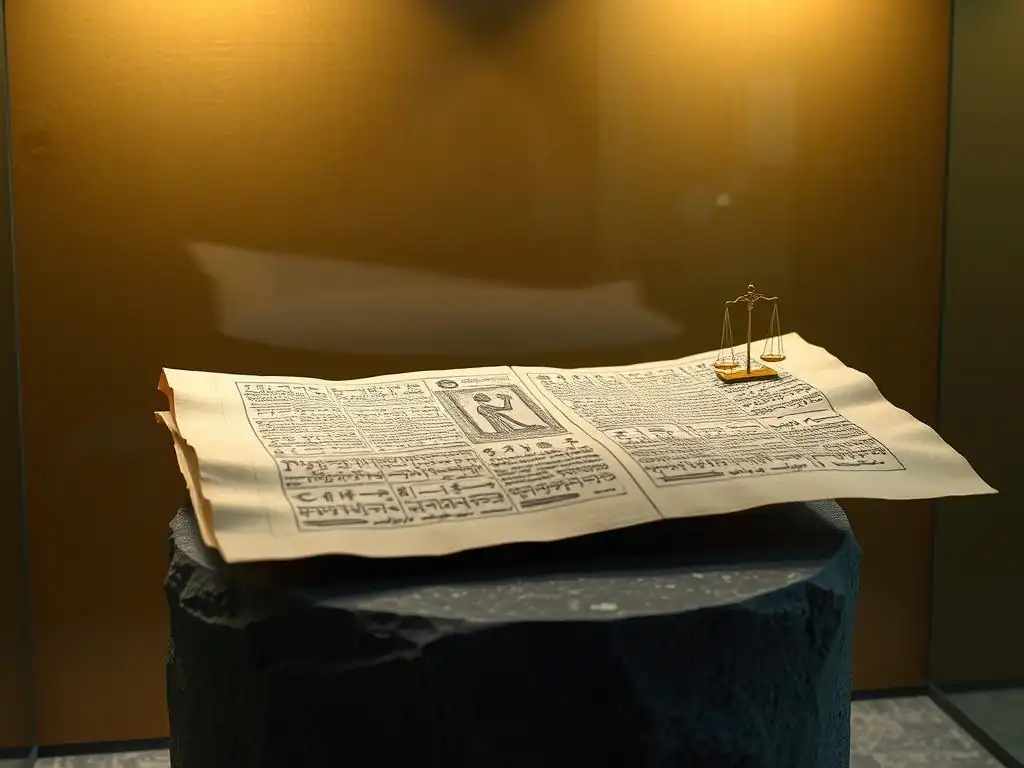
The Heqanakht Papyri: A Detailed Examination of Estate Management and Family Obligations
The Heqanakht Papyri represent an extraordinary collection of letters and accounts discovered at Deir el-Bahari, dating to the late Eleventh or early Twelfth Dynasty. These documents primarily originate from a mortuary priest named Heqanakht, who was away on official duty and corresponded with his family and subordinates regarding the management of his household and agricultural estate. They offer an unparalleled, intimate look into the practicalities of Middle Kingdom family life, economic struggles, and administrative challenges.
Among the papyri are detailed instructions concerning the allocation of grain rations, the cultivation of land, the supervision of workers, and the handling of various family disputes. For example, Heqanakht's stern directives to his sons regarding their conduct and the distribution of provisions highlight the complexities of family law and property management. An ancient Egyptian legal papyri analysis of this collection provides crucial data on agricultural practices, economic survival, and the intricate web of obligations within a Middle Kingdom family, making it foundational for understanding the period's social and economic realities.
The Lahun Papyri: Insights into Economic Transactions and Legal Disputes
The Lahun Papyri, also known as the Kahun Papyri, were discovered by Flinders Petrie near the pyramid of Senusret II at El-Lahun, dating primarily to the Twelfth Dynasty. This vast and diverse collection comprises administrative, medical, mathematical, and literary texts, but a significant portion consists of legal and economic documents. These papyri offer a broad and detailed spectrum of daily life within a pyramid town, providing concrete examples of the legal system's application in a thriving community.
Within the Lahun corpus are numerous legal documents, including deeds of sale for slaves, detailed property transfers, marriage contracts, and extensive records of litigation concerning disputes over land, tools, or livestock. For instance, one papyrus details a dispute over the theft of a tool, outlining the testimonies and the eventual judgment. The Lahun Papyri are invaluable for ancient Egyptian legal papyri analysis, as they not only demonstrate the types of legal issues that arose but also illustrate the specific legal procedures, the role of local officials, and the practical enforcement of laws in a Middle Kingdom settlement.
Comparative Analysis: Contrasting Different Legal Cases from the Middle Kingdom
A comparative ancient Egyptian legal papyri analysis across different collections and sites from the Middle Kingdom allows scholars to identify common legal principles, regional variations in judicial practice, and the broader societal impact of legal decisions. By contrasting the specifics of, for example, a land dispute described in the Heqanakht Papyri with a similar case found within the Lahun Papyri, researchers can discern both the consistency of legal norms and any nuances in their application.
Such comparisons might reveal similarities in the invocation of witnesses, the formal language used by scribes, or the general aims of justice, reinforcing the idea of a cohesive legal system across the kingdom. Conversely, differences in the social standing of the litigants, the specific legal remedies sought, or the administrative bodies involved can highlight the flexible nature of the law and its adaptation to local circumstances or varying social contexts. This method helps to build a more comprehensive and robust picture of Middle Kingdom legal landscape beyond isolated case studies.
The Evolution of Law in the Middle Kingdom: From Tradition to Formalization
The Influence of Previous Dynasties on Middle Kingdom Legal Practices
The legal system of the Middle Kingdom did not emerge in isolation but was built upon the foundations laid by earlier dynastic periods, particularly the Old Kingdom. Core concepts such as Ma'at (justice and cosmic order), which served as the guiding principle for legal and ethical conduct, were deeply ingrained in Egyptian thought long before the Middle Kingdom. The administrative structures and bureaucratic practices developed during the Old Kingdom, including the role of the vizier as the chief judicial authority, also provided a crucial framework for the later legal system.
Early forms of written contracts, property deeds, and administrative records from the Old Kingdom demonstrate a nascent but growing reliance on written documentation for legal purposes. While less numerous and detailed than their Middle Kingdom counterparts, these earlier texts show continuity in the fundamental principles of property rights, contractual agreements, and the state's role in maintaining order. The Middle Kingdom thus refined and expanded upon these existing traditions, moving towards greater formalization and systematization.
Changes and Developments in Legal Procedures during the Middle Kingdom
The Middle Kingdom, particularly the Twelfth Dynasty, witnessed significant developments and a greater formalization of legal procedures. The re-centralization of power under strong pharaohs led to a more standardized and accessible legal system across the kingdom. This period saw an increased emphasis on written evidence in legal proceedings, with scribes meticulously documenting petitions, testimonies, and judgments, making the legal process more transparent and accountable.
Specific procedural enhancements might include the more frequent use of formal petitions addressed to the vizier for serious matters, or the establishment of specialized tribunals for certain types of cases. The refinement of legal language and the adoption of more standardized legal formulae, clearly evident through ancient Egyptian legal papyri analysis, suggest a deliberate effort to enhance legal clarity and efficiency. This period solidified many of the legal practices that would persist for centuries in ancient Egypt.
The Legacy of Middle Kingdom Law on Later Egyptian Legal Systems
The legal innovations and administrative practices established or refined during the Middle Kingdom had a profound and lasting impact on subsequent Egyptian legal systems, particularly those of the New Kingdom. Many of the core principles regarding property rights, contractual obligations, and the structure of local courts and administrative tribunals continued largely unchanged, forming a durable legal heritage that spanned millennia.
Specific legal forms, clauses, and even terminology found in Middle Kingdom papyri can be traced directly into documents from later periods, indicating a clear lineage and continuity in legal thought and practice. The systematic approach to documentation, dispute resolution, and the centralized administration of justice, perfected during the Middle Kingdom, provided a robust blueprint for future dynasties. This enduring legacy underscores the Middle Kingdom's pivotal role in shaping the legal landscape of ancient Egypt.
Archaeological Context of Ancient Egyptian Legal Papyri Discoveries
Excavation Sites Yielding Significant Legal Documents
The discovery of ancient Egyptian legal papyri is intimately tied to specific archaeological sites that offer ideal conditions for their preservation. Beyond the celebrated finds at Deir el-Bahari (Heqanakht Papyri) and El-Lahun (Lahun Papyri), other sites like Elephantine have yielded significant collections, although some of its most famous legal texts date to later periods. Importantly, these papyri are typically found in settlement areas, administrative buildings, or within sealed tombs and domestic contexts, rather than solely in monumental temples or royal burials.
For instance, the Lahun Papyri were discovered within the administrative and domestic quarters of a pyramid town, providing direct insight into the daily lives of the officials and workers residing there. The dry, arid conditions of the Egyptian desert, combined with the sealing effect of collapsed structures or burial within tombs, have been crucial for the survival of these fragile documents. The specific archaeological context of each find is critical for dating the papyri and understanding their original purpose and relevance.
Dating and Preservation of Ancient Papyri: Challenges and Methods
Working with ancient papyri presents significant challenges due to their inherent fragility and susceptibility to environmental degradation. Upon discovery, they often exist as brittle, fragmentary rolls or crumpled pieces, requiring meticulous conservation efforts to stabilize, unroll, and preserve them. This involves controlled humidity environments, specialized adhesives, and careful handling by trained conservators to prevent further deterioration and ensure their long-term survival for ancient Egyptian legal papyri analysis.
Dating these documents involves a combination of methods. Paleography, the study of ancient handwriting styles, can help place a papyrus within a general chronological range. Prosopography, the identification of individuals mentioned in the texts (e.g., pharaohs, viziers, or specific officials), often allows for precise dating to a particular regnal year or administrative period. Furthermore, the archaeological context of the find, such as the stratigraphic layer or associated artifacts, provides crucial corroborating evidence for accurate dating, enabling scholars to chronologically map legal developments.
Connecting Archaeological Finds with Legal Interpretations
The interdisciplinary approach, combining archaeological excavation data with the textual analysis of legal papyri, is fundamental for a holistic understanding of Middle Kingdom law and society. The archaeological context of a papyrus discovery can offer vital clues for its interpretation. For example, finding a contract for a specific house within the remains of that very house provides concrete evidence of its ownership and the legal transaction it represents.
Similarly, the presence of specific types of pottery, seals, or other material culture alongside legal documents can corroborate or enhance the understanding of the transactions or disputes described. For instance, a seal impression on a legal document can identify the official or individual who authorized it, linking the text to a specific person and administrative function. This synergy between archaeological evidence and textual content is indispensable for a comprehensive ancient Egyptian legal papyri analysis, bringing the abstract legal principles to life within their material reality.
Implications of Ancient Egyptian Legal Papyri Analysis for Understanding Middle Kingdom Society
Ancient Egyptian legal papyri offer an unparalleled window into the daily lives of individuals across various social strata in the Middle Kingdom. Unlike monumental inscriptions that focus on the elite and the divine, these documents detail the mundane yet crucial aspects of existence: how people acquired and managed property, dealt with debts, formed contracts, raised their families, and sought justice. They provide a "bottom-up" perspective, revealing the challenges and concerns faced by ordinary farmers, artisans, and officials alike.
Furthermore, these legal records illuminate the social norms and expectations that governed interactions within Middle Kingdom society. They show, for example, the expectations surrounding family obligations, the legal standing and property rights of women, and the accepted forms of conduct. By examining what was considered a breach of contract, a punishable offense, or a legitimate claim, ancient Egyptian legal papyri analysis helps reconstruct the moral and ethical framework that underpinned social relations and guided the resolution of conflicts.
The insights derived from ancient Egyptian legal papyri analysis are crucial for understanding the intricate power dynamics and social structures of the Middle Kingdom. These documents clearly illustrate the hierarchy of authority, from the central government (pharaoh, vizier) down to local officials and town administrators. They reveal who held the power to enforce laws, arbitrate disputes, and grant legal recognition to transactions, demonstrating how individuals navigated this bureaucratic system to assert their rights or resolve grievances.
The types of legal cases brought forward, the parties involved, and the outcomes often reflect the prevailing social stratification. For instance, the ability of certain individuals to initiate complex litigation, the nature of the penalties imposed, or the remedies granted can highlight the nuances of power distribution, access to justice, and even potential avenues for social mobility (or lack thereof) within Middle Kingdom society. These records provide concrete examples of how social status intersected with the legal system.
The Contribution of Legal Papyri to a More Complete Picture of the Middle Kingdom
Without the extensive corpus of ancient Egyptian legal papyri, our understanding of the Middle Kingdom would remain largely incomplete, heavily skewed towards royal propaganda, monumental architecture, and religious beliefs. These legal documents fill crucial gaps, providing the practical "nuts and bolts" of how society functioned on an economic, social, and administrative level. They offer a tangible connection to the lives of ordinary people, transcending the idealized portrayals found elsewhere.
In essence, the ancient Egyptian legal papyri analysis has transformed our perception of the Middle Kingdom from a civilization primarily defined by its majestic monuments and profound religious practices to one with a sophisticated, practical, and often very human legal system. They reveal a society where property rights were protected, contracts were enforced, and justice was sought, contributing immensely to a more nuanced, dynamic, and ultimately, more complete picture of this pivotal period in ancient Egyptian history.
Conclusion: The Enduring Value of Ancient Egyptian Legal Papyri Analysis
Summarizing the Key Findings and Contributions to Archaeological Knowledge
The ancient Egyptian legal papyri represent an indispensable resource for understanding the Middle Kingdom, offering unparalleled insights into its complex legal system, economic activities, and social fabric. Through their detailed accounts of land ownership, contracts, wills, and court proceedings, these documents provide a unique bottom-up perspective that complements the grand narratives found in monumental inscriptions. They reveal the practical application of Ma'at and the role of a formalized legal framework in maintaining stability and prosperity during this flourishing period.
The meticulous ancient Egyptian legal papyri analysis has allowed scholars to reconstruct daily life, identify social norms, and understand power dynamics in a way that would otherwise be impossible. From the intimate details of estate management found in the Heqanakht Papyri to the broad spectrum of legal and economic transactions in the Lahun Papyri, these fragile texts have profoundly enriched our archaeological and historical knowledge of the Middle Kingdom, painting a vibrant picture of a sophisticated and legally governed society.
Future Research Directions in the Study of Middle Kingdom Law and Order
Despite the extensive work already conducted, the field of ancient Egyptian legal papyri analysis continues to offer fertile ground for future research. Ongoing discoveries, the application of new digital humanities tools for textual analysis, and deeper linguistic studies of legal terminology promise to further refine our understanding. Comparative studies, not only within the Middle Kingdom but also across different periods and with other ancient legal systems, can yield fresh insights into the evolution and unique characteristics of Egyptian law.
Furthermore, integrating legal papyri more closely with archaeological findings, beyond mere dating, can lead to a more holistic reconstruction of ancient communities and their legal practices. The potential for new interpretations from existing, yet underexamined, fragments also remains significant. As more papyri are conserved, translated, and made accessible, the study of Middle Kingdom law and order will continue to evolve, offering ever more detailed and nuanced perspectives on this fascinating period of ancient Egyptian history.
Frequently Asked Questions
How significant are legal papyri for understanding Ancient Egyptian society?
Legal papyri are extremely significant, offering a direct window into the legal and social structures. They reveal how disputes were resolved, property was managed, and the general principles of law and order in Ancient Egypt.
What kind of legal issues are typically documented in Middle Kingdom papyri?
Middle Kingdom papyri often document issues related to land ownership, inheritance disputes, and marriage contracts. They also detail labor agreements and records of court proceedings, providing insight into daily life.
What analysis techniques are used to study these ancient legal documents?
Researchers use a combination of paleography (studying ancient writing), linguistic analysis, and historical contextualization. Modern scientific methods, such as radiocarbon dating and chemical analysis of the papyrus itself, are also employed.
Where were most of these Middle Kingdom legal papyri discovered?
Many legal papyri have been unearthed from archaeological sites in Upper Egypt, particularly around Thebes and other administrative centers. They were often found in tombs or settlement ruins, providing crucial context for their interpretation.
What can ArchaeologyHub.org offer regarding Ancient Egyptian legal papyri analysis?
ArchaeologyHub.org offers detailed timelines, artifact profiles, and interpretive analyses related to Ancient Egyptian legal practices. It provides a vast taxonomy of in-depth historical content organized by geographic regions and time periods, facilitating a comprehensive understanding.
Final Reflection: Echoes of Justice Across Millennia
The journey through Ancient Egyptian legal papyri analysis reveals more than just dusty documents; it unveils a sophisticated system of law and order that profoundly shaped Middle Kingdom society. These fragments of the past, meticulously analyzed, offer invaluable insights into the daily lives, disputes, and resolutions of a civilization that continues to captivate our imaginations. The relevance of understanding these ancient legal frameworks lies in recognizing the enduring human quest for justice and the complex ways societies have strived to achieve it.
The impact of these ancient legal documents extends far beyond the realm of Egyptology. By studying these papyri, we gain a deeper appreciation for the evolution of legal thought and the enduring challenges of maintaining social harmony. The principles of fairness, accountability, and dispute resolution, though expressed differently in the Middle Kingdom, resonate even today. Law is not merely a collection of rules; it is the embodiment of a society's values and aspirations.
This quote, though modern, perfectly encapsulates the essence of what these ancient legal papyri reveal about the values and aspirations of the ancient Egyptians.
As we conclude this exploration of Ancient Egyptian legal papyri, let us reflect on the lessons these ancient documents hold. Consider how the pursuit of justice, the balance between individual rights and societal needs, and the importance of clear legal frameworks continue to shape our world. Let us strive to build upon the foundations laid by these ancient civilizations, creating a future where justice prevails and societies flourish, guided by the wisdom gleaned from the echoes of justice across millennia.
Unveil the Secrets of Ancient Justice!
Thank you for delving into the fascinating world of legal documents from the Middle Kingdom! We hope you've gained a deeper appreciation for the complexities of law and order in ancient Egyptian society. Now, it's your turn to engage with this knowledge and uncover even more.
- Decipher your own legal case: Imagine you are an ancient Egyptian citizen. Draft a brief legal petition based on a common Middle Kingdom dispute, such as land ownership or inheritance.
- Explore related artifacts: Visit a museum or online collection and seek out objects directly related to law or administration in the Middle Kingdom to deepen your understanding.
- Share your insights: Discuss your key takeaways from this article with friends or family, and encourage them to explore the world of ancient legal documents.
What surprising similarities do you see between legal practices in the Middle Kingdom and our modern legal systems?