
The Ongoing Quest to Fully Decipher the Meroitic Language and Script

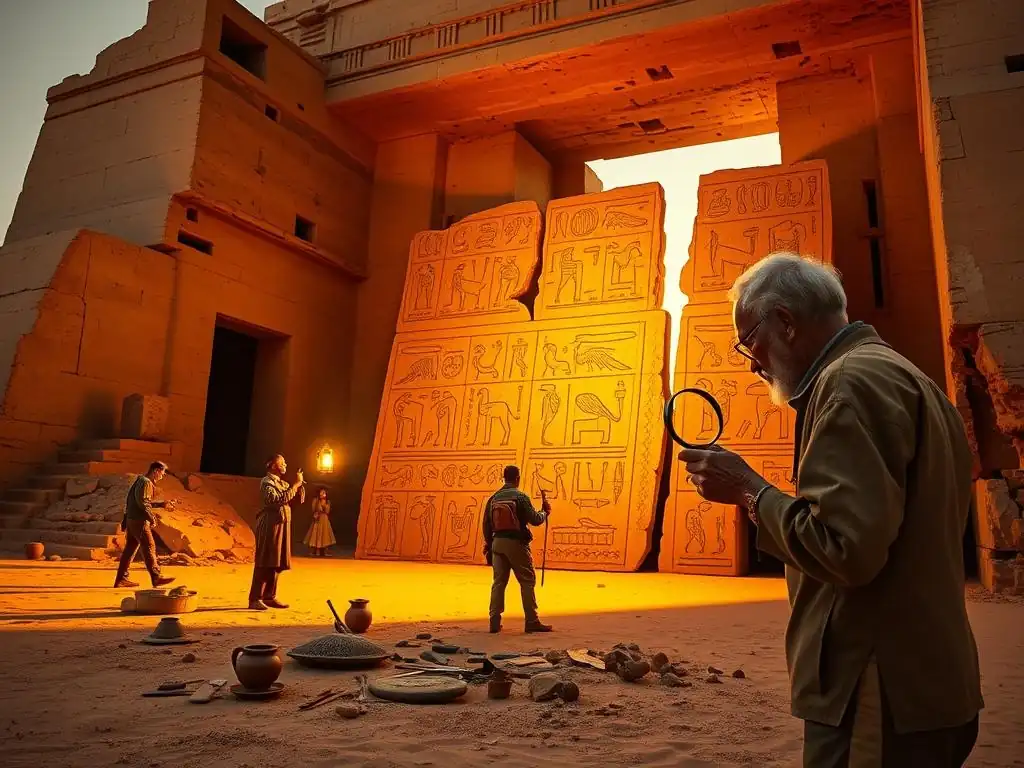
Welcome to ArchaeologyHub.org, your portal to uncovering the secrets of the past. Delve into the fascinating world of archaeological discoveries, excavation techniques, and ancient civilizations. Are you ready to explore one of history's enduring enigmas? This article shines a light on the compelling and often frustrating journey of researchers tackling the Meroitic language decipherment challenges. Join us as we unravel the complexities surrounding this ancient script and explore the ongoing quest to unlock its hidden stories. Dive in and discover why this language has remained so stubbornly resistant to full understanding.
- Introduction: Unveiling the Mysteries of Meroitic
- The Meroitic Kingdom and its Linguistic Legacy
- Meroitic Language Decipherment Challenges: A Deep Dive
- Early Attempts at Decipherment: Pioneering Efforts
- Modern Approaches to Meroitic Decipherment
- Key Meroitic Texts and Inscriptions: A Closer Look
- The Current State of Meroitic Language Understanding
- The Significance of Deciphering Meroitic for Understanding Ancient Nubia
- Future Directions in Meroitic Language Research
- Conclusion: The Enduring Allure of Meroitic
-
Frequently Asked Questions
- What is the Meroitic language, and why is its decipherment important?
- What are the main challenges in deciphering the Meroitic language?
- How does the phonetic understanding of Meroitic script contribute to, and yet fall short of, full decipherment?
- What types of archaeological discoveries could potentially aid in the full decipherment of Meroitic?
- How does ArchaeologyHub.org contribute to the understanding of the Meroitic language and script?
- Final Reflection: Unveiling Ancient Voices
- Unearth the Mysteries: Join the Meroitic Language Expedition!
Introduction: Unveiling the Mysteries of Meroitic
The ancient kingdom of Meroe, flourishing in what is now modern-day Sudan, stands as a testament to a powerful and sophisticated civilization in ancient Nubia. While archaeological excavations have unearthed impressive temples, pyramids, and artifacts, a significant portion of Meroitic history and culture remains shrouded in mystery due to the undeciphered nature of its unique language and script. The ongoing quest to fully decipher Meroitic is a monumental undertaking that promises to unlock a wealth of indigenous knowledge, providing an unparalleled window into the minds and lives of the Meroitic people.
The Meroitic Kingdom and its Linguistic Legacy
The Geographical Context: Meroe and the Kushite Civilization
The city of Meroe, located approximately 200 kilometers north of Khartoum between the 5th and 6th cataracts of the Nile, served as the southern capital of the Kingdom of Kush for nearly six centuries. This strategic position, nestled within the fertile Nile Valley but also at the crossroads of ancient trade routes, allowed the Meroitic civilization to thrive. Its control over access to sub-Saharan Africa, rich in resources like gold, ivory, and exotic animals, positioned Meroe as a significant regional power.
The Meroitic Kingdom inherited a long and distinguished history from its Kushite predecessors, particularly the Napatan period, which had once ruled Egypt as the 25th Dynasty. Meroe's geographical isolation from direct Egyptian control, combined with its abundant natural resources, fostered a distinct cultural identity, including its own written language, which became a hallmark of its unique civilization.
The Rise and Fall of the Meroitic Kingdom: A Historical Overview
The Meroitic period proper is generally considered to have begun around 300 BCE, when the capital of the Kushite kingdom shifted from Napata to Meroe, though the broader Kushite civilization dates back much further. This shift marked a period of increasing independence from Egyptian cultural influence and the development of a unique Meroitic identity.
The kingdom reached its zenith from approximately 250 BCE to 50 CE, characterized by monumental building projects, a flourishing iron industry, and active trade networks extending across Africa and into the Roman world. Notable rulers, such as the Kandake (Queen) Amanirenas, famously defied Roman expansion in the late 1st century BCE, engaging in conflicts that resulted in a peace treaty with Emperor Augustus.
The decline of the Meroitic Kingdom began gradually around the 2nd century CE, influenced by a combination of factors including changing trade routes, environmental degradation (possibly due to deforestation for iron production), and internal political instability. The final blow is often attributed to an invasion by the Aksumite Kingdom from Ethiopia around 350 CE, which led to the collapse of the Meroitic state and left its rich cultural and linguistic heritage largely unreadable for centuries.
The Meroitic Script: Origins and Evolution
The Meroitic script, developed around the 2nd century BCE, represents a significant indigenous innovation in ancient Nubia, distinct from the Egyptian hieroglyphs that preceded it in the region. It exists in two forms: Meroitic hieroglyphic, used primarily for monumental inscriptions on temples and stelae, and Meroitic cursive, a more simplified and widely used form for everyday documents, funerary texts, and ostraca. Both forms derive from Egyptian scripts – the hieroglyphic from Egyptian hieroglyphs, and the cursive from Egyptian Demotic.
Despite its Egyptian origins, the Meroitic script is fundamentally different in its structure. It is an alphabetic or abugida system, meaning consonants inherently carry a default vowel (typically 'a'), which can be modified by explicit vowel signs.
The script consists of approximately 23 signs: 15 consonant signs, 4 vowel signs (a, e, i, o), and 4 syllabic signs (ne, se, te, to). This phonetic clarity, largely deciphered by Francis Llewellyn Griffith in the early 20th century, allows scholars to transliterate Meroitic texts, meaning they can "read" the sounds, even if the meaning of the words often remains elusive, presenting significant Meroitic language decipherment challenges.
Meroitic Language Decipherment Challenges: A Deep Dive
Limited Bilingual Texts: The Key Obstacle to Meroitic Translation
One of the most formidable Meroitic language decipherment challenges stems from the extreme scarcity of extensive bilingual texts. Unlike the Rosetta Stone, which provided the key to Egyptian hieroglyphs by presenting the same decree in three known scripts (hieroglyphic, Demotic, and Ancient Greek), Meroitic lacks such comprehensive parallels. The most significant Meroitic-Egyptian bilingual is the "Isis Litany from Philae," a short and repetitive religious text that offers only limited vocabulary and grammatical insights.
This absence of substantial parallel texts means that researchers cannot simply translate known words or phrases from a sister language. Instead, they must rely on internal analysis, contextual clues from the archaeological record, and comparative linguistic methods – a much more arduous and speculative process. The sheer lack of direct translational anchors is arguably the single greatest barrier to full Meroitic translation.
The Structure of the Meroitic Language: Identifying Grammatical Patterns
Even with the ability to transliterate Meroitic signs into phonetic values, understanding the underlying grammatical structure of the language remains a profound Meroitic language decipherment challenge. Scholars are still working to consistently identify word boundaries, let alone determine the morphology (how words are formed), syntax (sentence structure), and specific functions of prefixes, suffixes, verb conjugations, or noun declensions. The language's internal logic is largely unknown.
Some linguists hypothesize that Meroitic might be an agglutinative language, a type where words are formed by adding multiple affixes to a root, each expressing a single grammatical meaning. For example, common suffixes such as -k or -l are frequently observed in texts, but their precise grammatical role (e.g., case markers, pluralizers, or verbal endings) is still subject to intense debate. Without a clear understanding of these fundamental grammatical rules, comprehensive translation of Meroitic texts remains largely out of reach.
Understanding Meroitic Vocabulary: A Lexical Puzzle
Another core Meroitic language decipherment challenge lies in building a comprehensive lexicon. While proper nouns, such as royal names like "Natakamani" or "Amanitore," and a few titles like qore (king) and kandake (queen) are widely understood due to their appearance in bilingual contexts or consistent association with royal figures, the vast majority of Meroitic words lack a known meaning. Even frequently occurring terms, beyond personal names or common funerary formulas, remain lexical puzzles.
The existing corpus of over 2,000 Meroitic inscriptions, while extensive in number, is often repetitive in content, consisting predominantly of funerary stelae and temple dedications. This redundancy limits the contextual variation available for inferring word meanings. Without a substantial body of diverse texts that use words in different contexts, or a direct linguistic relative to provide cognates, deducing the meaning of abstract concepts, verbs, or adjectives is exceptionally difficult, leaving much of the Meroitic vocabulary untranslated.
Early Attempts at Decipherment: Pioneering Efforts
Griffith's Groundbreaking Work: Establishing a Foundation
Francis Llewellyn Griffith (1863–1934), a British Egyptologist, is widely credited with laying the foundational groundwork for Meroitic studies and making the most significant early breakthroughs in its decipherment. In the early 20th century, particularly through his landmark publications Meroitic Inscriptions (1911-1917), Griffith meticulously cataloged and analyzed the then-known Meroitic texts. His genius lay in recognizing that, unlike Egyptian hieroglyphs, the Meroitic script was alphabetic, or an abugida, rather than ideographic.
Griffith's key insight involved a painstaking comparison of Meroitic royal names and titles that also appeared in Egyptian hieroglyphic or Greek inscriptions. By matching the Meroitic spelling of names such as "Amanirenas" or "Natakamani" with their known Egyptian equivalents, he was able to systematically deduce the phonetic values of individual Meroitic signs. This established a consistent method for transliterating the Meroitic script, allowing scholars to "read" the sounds of the language, even if the meaning of the words remained largely unknown.
Identifying the Meroitic Alphabet: Recognizing Phonetic Values
The process of identifying the Meroitic alphabet and assigning phonetic values was a monumental achievement, primarily undertaken by Griffith. This involved a meticulous cross-referencing of Meroitic inscriptions with their Egyptian or Greek counterparts, particularly those found on temples or monuments shared by both cultures. For instance, the sequence of Meroitic signs corresponding to the name of Queen "Amanitore" could be matched with the known Egyptian hieroglyphic spelling of her name, thereby allowing for the deduction of the phonetic values for 'a', 'm', 'n', 't', 'r', and 'e'.
Through this comparative analysis, it was determined that the Meroitic script functions as an abugida, where consonant signs inherently carry a default vowel (usually 'a') unless another vowel sign is explicitly indicated. The system comprises 15 consonant signs, 4 vowel signs (a, e, i, o), and 4 syllabic signs (ne, se, te, to). This precise understanding of the phonetic system, largely complete by 1911, was crucial, as it transformed Meroitic from an entirely unreadable script into one whose sounds could be consistently reproduced, thus overcoming a fundamental Meroitic language decipherment challenge.
Early Interpretations and Their Limitations
Following the successful phonetic decipherment, early scholars, building on Griffith's work, began to attempt preliminary interpretations of Meroitic texts. Their approach primarily involved identifying recurring patterns, formulaic phrases, and contextual clues. For example, funerary inscriptions, which constitute a large portion of the corpus, often contained repetitive structures. Scholars could identify the names of the deceased, their parentage, and recurring invocations. The term wosi, frequently found in these contexts, was tentatively understood to mean "is alive" or "may he/she live," reflecting a blessing for the deceased.
However, these early interpretations faced severe limitations. Without comprehensive bilingual texts or a known linguistic relative, the inferred meanings were largely speculative and lacked definitive proof. While the overall context of a funerary stela could be grasped, the precise grammatical function and nuanced meaning of individual words or complex sentences remained opaque. The vast majority of the Meroitic vocabulary, particularly verbs and abstract concepts, continued to elude translation, underscoring the formidable Meroitic language decipherment challenges that persisted despite the phonetic breakthrough.
Modern Approaches to Meroitic Decipherment
Computational Linguistics and Meroitic: Leveraging Technology
In the modern era, computational linguistics has emerged as a powerful tool to address the enduring Meroitic language decipherment challenges. Researchers now employ sophisticated software to analyze the ever-growing corpus of Meroitic texts. These computational methods enable the systematic identification of recurring patterns, word frequencies, and collocations (words that frequently appear together) that might be too subtle or extensive for manual analysis. This approach helps in generating hypotheses about word boundaries, morphemes, and grammatical structures.
For instance, algorithms can detect how consistently certain suffixes appear with specific root words, suggesting potential grammatical functions like case markers or verb conjugations. While computational tools do not provide direct translations, they are invaluable for mapping the internal structure of the language and for building statistical models that can reveal hidden linguistic relationships. Projects like the "Meroitic Online" database are making texts digitally accessible, facilitating such advanced analytical techniques.
Comparative Linguistics: Exploring Connections to Other Languages
Comparative linguistics plays a crucial role in modern Meroitic research, as scholars actively investigate potential genetic relationships between Meroitic and other African language families. Researchers have explored connections to Nilo-Saharan, Afro-Asiatic, and even Niger-Congo languages, hoping that identifying a clear linguistic relative could provide shared vocabulary or grammatical structures that would unlock significant portions of the Meroitic lexicon.
Despite these persistent efforts, a definitive genetic link between Meroitic and any living language family has yet to be conclusively established. While some proposed cognates or structural similarities have been noted, they are often insufficient to prove a direct relationship or to provide widespread translational breakthroughs. This ongoing lack of a clear linguistic family tree remains a significant Meroitic language decipherment challenge, forcing researchers to rely more heavily on internal analysis and archaeological context.
Statistical Analysis of Meroitic Texts: Identifying Recurring Patterns
Beyond basic word frequency counts, advanced statistical analysis of Meroitic texts involves examining the distribution and co-occurrence of signs, words, and phrases within the entire corpus. By identifying which linguistic units consistently appear together or in similar contexts, researchers can infer semantic relationships and propose grammatical roles. For example, if a specific sequence of signs consistently precedes known royal names, it might indicate a title or an honorific.
This quantitative approach helps in segmenting continuous texts into meaningful units and in identifying potential grammatical markers that are otherwise opaque. For instance, the recurring phrase s-r-k (often transliterated as "serke"), which appears in many funerary texts, typically before the name of the deceased, suggests a formulaic opening, possibly meaning "O, Osiris" or "To the deceased." While the precise meaning may still be debated, its consistent pattern provides a strong basis for understanding its ritualistic function and contributes to overcoming Meroitic language decipherment challenges by revealing structural regularities.
Key Meroitic Texts and Inscriptions: A Closer Look
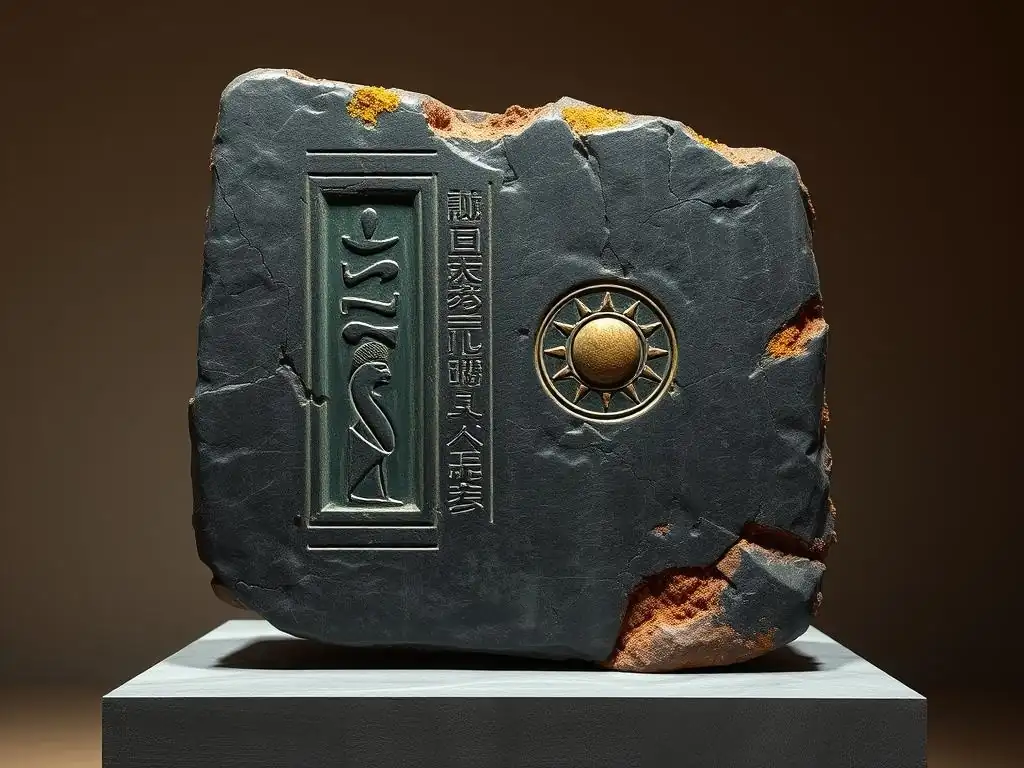
The Lion Temple Inscriptions: The Apedemak Temple Inscriptions
The Lion Temple at Musawwarat es-Sufra, dedicated to the unique Meroitic lion-headed god Apedemak, is home to some of the most extensive and visually striking Meroitic hieroglyphic inscriptions. These monumental texts are primarily religious in nature, detailing dedications to the deity, prayers, and invocations, often accompanied by elaborate reliefs depicting Meroitic rulers and gods. Their prominent placement within a major cultic center underscores their importance in Meroitic religious life and royal ideology.
One particularly intriguing inscription from the Lion Temple, sometimes referred to as the "Adultery Text," stands out for its potential glimpse into Meroitic legal or social practices. Although its full meaning remains a significant Meroitic language decipherment challenge, the text appears to describe a judicial or ritualistic event involving a transgression. The context and recurring phrases within this inscription, though not fully understood, offer valuable clues for identifying verbs and actions beyond the more common funerary and dedicatory formulas.
Funerary Texts: Insights into Meroitic Beliefs
A substantial portion of the surviving Meroitic corpus, estimated to comprise well over 1,000 inscriptions, consists of funerary texts found on stelae, offering tables, and tomb walls. These texts typically identify the deceased, their lineage (parentage and sometimes profession), and often include formulaic invocations to the Meroitic pantheon, particularly to Osiris and Isis, reflecting a continuation of ancient Egyptian mortuary traditions. The highly repetitive nature of these inscriptions, while limiting the overall vocabulary, provides invaluable consistent patterns for structural and grammatical analysis.
From these funerary texts, researchers have successfully identified common phrases and terms, such as wosi ("is alive" or "may he/she live") and šore (possibly "good" or "blessed"), alongside the names and titles of the deceased. While the precise theological nuances and the full narrative of these texts remain part of the ongoing Meroitic language decipherment challenges, they offer the most direct and abundant insights into Meroitic beliefs about the afterlife, their veneration of specific deities, and the social structure of their funerary practices.
Royal Decrees and Administrative Documents: Glimpses into Meroitic Society
Royal decrees and administrative documents, though considerably less numerous than funerary texts, are exceptionally valuable for understanding the intricacies of Meroitic governance, social organization, and daily life. Key examples include the "Great Inscription of Rome" from Philae, which records a treaty between Meroe and the Roman Empire, providing rare political and historical context. Additionally, Meroitic land sale documents discovered at Qasr Ibrim, written on papyrus and ostraca, detail property transactions and legal agreements.
These types of documents often feature more varied vocabulary and complex sentence structures compared to the repetitive funerary texts, making them both more challenging to decipher and potentially more rewarding. For instance, the Qasr Ibrim documents offer unique insights into Meroitic legal and economic terminology, including terms for land ownership, payments, and various official titles. Unlocking these texts would significantly deepen our understanding of Meroitic administration, economic systems, and social hierarchy, addressing some of the most complex Meroitic language decipherment challenges related to societal structures.
The Current State of Meroitic Language Understanding
Progress in Deciphering Meroitic Names and Titles
Significant and reliable progress has been achieved in deciphering Meroitic names and titles, which constitute the most confidently understood segment of the Meroitic lexicon. This success is largely attributable to the comparative method, where Meroitic spellings of royal names (e.g., King Natakamani, Queen Amanirenas) and deity names (e.g., Apedemak, Arensnuphis) have been cross-referenced with their counterparts in Egyptian hieroglyphic or Greek inscriptions. This comparative approach has allowed for accurate transliteration and definitive identification of numerous historical figures and divine entities.
Furthermore, common titles such as qore (king or ruler) and kandake (queen or queen mother) are widely accepted and understood due to their consistent association with royal figures across a multitude of inscriptions. This established understanding of proper nouns and key titles provides a crucial anchor for all further Meroitic language decipherment challenges, offering a firm starting point for contextualizing and inferring the meaning of other, less understood words.
Understanding Basic Meroitic Phrases: Royal Titles and Genealogies
Beyond individual names and titles, scholars have also attained a reasonable understanding of certain basic Meroitic phrases, particularly those that appear in highly repetitive and formulaic contexts, such as funerary stelae and royal dedications. These phrases often pertain to royal genealogies, expressions of piety, or blessings for the deceased. For example, formulaic expressions indicating "son of," "daughter of," or "born of" are generally recognized, enabling the reconstruction of Meroitic family trees and successions.
The inherent repetitiveness of these texts means that while the precise grammatical functions of every element within a phrase may not be fully clear, the overall meaning of common statements like "X, son of Y, whose mother is Z" can be reliably inferred. This partial but reliable understanding of formulaic expressions helps to delineate the scope of the Meroitic language decipherment challenges, highlighting areas where substantial progress has been made amidst the broader linguistic unknown.
Areas Where Meroitic Translation Remains Uncertain
Despite the progress made in understanding names, titles, and basic formulaic phrases, the vast majority of Meroitic vocabulary remains undeciphered. The most significant linguistic unknowns lie in the realm of verbs, adjectives, adverbs, and abstract nouns. The lack of a clear understanding of Meroitic grammar – including verb conjugations, tense, aspect, mood, and the precise function of various suffixes and prefixes – means that even if a word's general semantic field is guessed, its exact meaning and grammatical role within a sentence are often ambiguous. This fundamental grammatical opacity is a primary Meroitic language decipherment challenge.
Consequently, translating complex sentences, narratives, or documents that deviate from the highly repetitive funerary or dedicatory formulas is largely impossible. Texts such as administrative documents or potential historical chronicles, which could reveal much about Meroitic society and events, pose immense hurdles due to their unique vocabulary and less predictable structure. The nuances of Meroitic thought, philosophy, and daily life, as expressed through their own language, largely remain locked away, awaiting further breakthroughs.
The Significance of Deciphering Meroitic for Understanding Ancient Nubia
Enhancing Our Understanding of Kushite History and Culture
A full decipherment of the Meroitic language would represent a profound breakthrough, fundamentally transforming our understanding of Kushite history and culture. Currently, much of our knowledge about ancient Nubia is derived from archaeological findings and external accounts from Egyptian, Greek, and Roman sources. Deciphered Meroitic texts, however, would provide an invaluable indigenous perspective, offering details on political events, religious beliefs, social structures, and daily life directly from the Meroites themselves.
For example, a fully understood Meroitic corpus could reveal detailed chronicles of Meroitic kings, accounts of their military campaigns against rivals, or intricate insights into their unique religious practices beyond what can be inferred from iconography alone. This direct historical voice would fill numerous gaps in the existing record, allowing for a richer, more nuanced, and authentically Meroitic narrative of one of ancient Africa's most enduring and powerful civilizations.
Connecting Meroitic Studies to Broader Archaeological Contexts
Deciphered Meroitic texts would provide crucial linguistic context for archaeological discoveries, creating a powerful synergy between material culture and written records. An inscription describing the precise purpose of a previously unidentifiable structure, or detailing the specific use of certain artifacts, would profoundly enhance the interpretation of archaeological sites and findings. This integration of linguistic and material evidence is essential for constructing a holistic and accurate understanding of ancient societies.
Consider the extensive evidence of iron production at Meroe, characterized by vast slag heaps that indicate a major industrial center. If Meroitic texts contained details about metallurgical processes, the organization of labor for ironworking, or the trade networks for iron products, it would significantly deepen our understanding of Meroe's economic powerhouse status. This potential for integrating textual and material evidence is key to overcoming a major Meroitic language decipherment challenge in historical interpretation.
Providing a More Complete Picture of Ancient African Civilizations
The successful decipherment of Meroitic would significantly enrich the global narrative of ancient African civilizations, moving beyond an often Egyptocentric view of the continent's early history. Meroe represents a distinct and powerful African kingdom that developed its own unique cultural and intellectual traditions, including an indigenous script. Its own written records would showcase its specific contributions to ancient history, independent of its northern neighbor.
This would provide a vital indigenous perspective on African history, allowing scholars to explore internal dynamics, belief systems, and political structures with greater accuracy and depth. Such a breakthrough would underscore the complexity and sophistication of ancient African societies, offering a more complete and accurate picture of human civilization's development across the entire continent, reinforcing the importance of overcoming remaining Meroitic language decipherment challenges.
Future Directions in Meroitic Language Research
The Importance of New Archaeological Discoveries
New archaeological discoveries remain paramount for future progress in addressing the Meroitic language decipherment challenges. Every newly unearthed inscription, particularly if it is a longer text, a unique type of document, or, most critically, a rare bilingual text, holds the potential for a transformative breakthrough. For instance, while limited in scope, the discovery of the "Great Inscription of Rome" at Philae in the early 20th century provided valuable cross-references and contextual clues.
Ongoing excavations at major Meroitic sites such as Naqa, Musawwarat es-Sufra, and particularly the sprawling city of Meroe itself, continue to yield new textual material. The ultimate hope for scholars is the discovery of a substantial, well-preserved Meroitic-Egyptian or Meroitic-Greek bilingual text, analogous to the Rosetta Stone. Such a find could provide the comprehensive key needed to unlock the language's full meaning and accelerate decipherment efforts dramatically.
Collaborative Efforts and International Research Projects
Given the inherent complexity and interdisciplinary nature of the Meroitic language decipherment challenges, collaborative efforts among linguists, archaeologists, epigraphers, and computational scientists are increasingly vital. International research projects, involving institutions from Sudan, Europe, and North America, facilitate the essential sharing of data, specialized expertise, and financial resources. The "Meroitic Research Project" based at Humboldt University of Berlin, for example, is a long-standing initiative dedicated to cataloging and analyzing Meroitic texts.
Such collaborations can lead to the creation of comprehensive digital corpora, shared databases of inscriptions, and the development of standardized analytical tools that benefit the entire research community. Workshops, conferences, and joint publications dedicated to Meroitic studies foster a dynamic interdisciplinary dialogue, accelerating the pace of research and bringing diverse perspectives to bear on the remaining linguistic puzzles, pushing closer to a full understanding.
The Potential for a Full Meroitic Language Decipherment
While a complete and comprehensive decipherment of Meroitic remains a monumental task, the potential for significant breakthroughs in the coming decades is tangible. A "full decipherment" would entail not only understanding the meaning of most words but also grasping the entire grammatical structure of the language, allowing for accurate and nuanced translation of the entire corpus of texts. This would elevate Meroitic from a partially understood language to one that can be confidently read and interpreted by scholars worldwide.
The confluence of new archaeological finds, increasingly sophisticated computational linguistic techniques, and sustained international collaboration offers the most promising path forward. Each small step in understanding a new word or grammatical pattern brings scholars closer to unraveling one of ancient history's most enduring linguistic mysteries, ultimately providing a direct and rich window into the minds, beliefs, and daily lives of the Meroitic people.
Conclusion: The Enduring Allure of Meroitic
The Ongoing Importance of Meroitic Studies
Meroitic studies continue to hold immense importance for both the fields of archaeology and linguistics. As one of the few ancient African languages with its own indigenous script, its decipherment is crucial for understanding the intellectual, cultural, and political achievements of the Kushite civilization. Unlocking the Meroitic language offers a unique internal perspective on this powerful kingdom, providing insights that cannot be gleaned from external sources or archaeological findings alone.
Furthermore, the ongoing quest to decipher Meroitic serves as a compelling case study in the challenges and triumphs of historical linguistics. It consistently pushes the boundaries of computational and comparative methods, inspiring new techniques to unravel the secrets of a lost tongue and contributing broadly to the methodologies of decipherment.
Preserving and Promoting Meroitic Heritage
Beyond the academic pursuit of decipherment, the preservation and promotion of Meroitic heritage are equally vital. This includes safeguarding the magnificent archaeological sites like the pyramids of Meroe and the temples of Musawwarat es-Sufra, which face threats from environmental factors and human activity. Ensuring the proper documentation, conservation, and ethical display of Meroitic artifacts and inscriptions in museums and archives worldwide is also paramount.
Digital platforms like ArchaeologyHub.org play a crucial role in disseminating knowledge about Meroitic culture and the Meroitic language decipherment challenges to a global audience. By fostering public appreciation and support for ongoing research and conservation efforts, these initiatives help ensure that the remarkable legacy of this ancient Nubian civilization endures for future generations, inspiring continued efforts to unlock its linguistic secrets.
Frequently Asked Questions
What is the Meroitic language, and why is its decipherment important?
The Meroitic language was spoken in the Kingdom of Meroë in ancient Nubia. Deciphering it fully is important because it unlocks critical insights into Nubian history, culture, and its relationship with Egypt and other civilizations. The language's script, though understood phonetically, still presents semantic challenges.
What are the main challenges in deciphering the Meroitic language?
Despite understanding the sound values of Meroitic characters, the meaning of words and grammatical structures remains elusive. This is due to the lack of extensive bilingual texts compared to the Rosetta Stone for Egyptian hieroglyphs, and the limited amount of surviving Meroitic texts.
How does the phonetic understanding of Meroitic script contribute to, and yet fall short of, full decipherment?
Knowing the phonetic values allows archaeologists to read Meroitic texts aloud, but it doesn't reveal the meaning. We can pronounce the words, but we don't fully understand their semantic content or grammatical rules, hindering complete translation and interpretation.
What types of archaeological discoveries could potentially aid in the full decipherment of Meroitic?
The discovery of longer, more complete Meroitic texts, especially those that include repetitive phrases, could offer clues to grammatical structures. Furthermore, finding texts that parallel known Egyptian texts could serve as crucial bilingual keys.
How does ArchaeologyHub.org contribute to the understanding of the Meroitic language and script?
ArchaeologyHub.org provides a centralized repository of information on Meroitic archaeological sites, artifacts, and research. This resource helps researchers access and share data, fostering collaboration and potentially accelerating the decipherment process by making information readily available.
Final Reflection: Unveiling Ancient Voices
The journey through the intricacies of Meroitic language decipherment reveals more than just linguistic puzzles; it highlights the enduring human desire to connect with the past and understand civilizations lost to time. The challenges we face in unlocking Meroitic's secrets are a testament to the complexities of history and the dedication required to piece together fragmented narratives.
The ongoing quest to decipher Meroitic is not merely an academic exercise; it's about giving a voice back to a people whose stories have been silenced for centuries. This endeavor resonates deeply because it reminds us that every culture, no matter how seemingly distant, has something valuable to contribute to our understanding of humanity. Language is the road map of a culture. It tells you where its people come from and where they are going.
- Rita Mae Brown. This quote underscores the profound impact that deciphering Meroitic could have on our understanding of ancient Nubia and its place in the broader tapestry of human history.
As we continue to grapple with the Meroitic script, let us remember that the pursuit of knowledge is a collective endeavor. Consider how you, in your own life, can contribute to preserving and understanding the diverse voices of the past. Embrace curiosity, support research, and recognize the inherent value in every culture's story. The echoes of Meroitic await, and with continued dedication, we can bring their voices into the light.
Unearth the Mysteries: Join the Meroitic Language Expedition!
Thanks for diving into the fascinating world of Meroitic! We hope you’ve enjoyed learning about the ongoing efforts to decipher this ancient language. Now, it's time to become a part of the discovery!
Here are a few ways you can contribute to unraveling this linguistic enigma:
- Dive into the Meroitic Corpus: Immerse yourself in the available texts and try identifying recurring patterns or potential cognates. Even a fresh pair of eyes can make a difference!
- Share this article to generate momentum and to increase participation in crowdsourcing initiatives, which may be soon launched by various institutions.
- Reach out to local universities or archaeological societies to explore if there are any related research projects you could support or volunteer for.
Ready to become a citizen scientist and help decode a lost civilization?