
Decoding the Gestures and Postures in Nok Terracotta Figurines

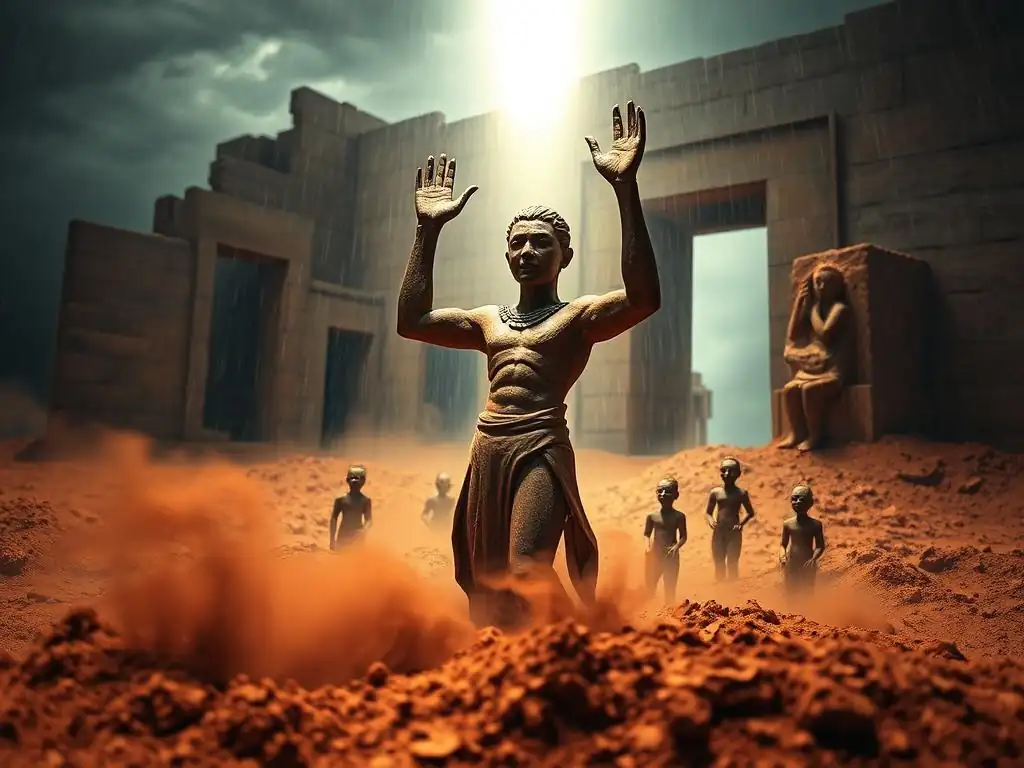
Welcome to ArchaeologyHub.org, your portal to unlocking the secrets of the past. Ever wondered what the subtle tilt of a head or the position of a hand can reveal about an ancient culture? Dive into our exploration of Nok terracotta figurine gestures posture and uncover the fascinating stories etched in clay by this enigmatic civilization. Prepare to decipher the silent language of the Nok and embark on a journey into the heart of Nigeria's rich archaeological heritage. What secrets will you uncover?
- Decoding the Gestures and Postures in Nok Terracotta Figurines: An Archaeological Analysis
- Introduction: Unveiling the Silent Language of Nok Terracottas
- The Archaeological Context of Nok Terracotta Figurines
- A Typology of Gestures in Nok Terracotta Sculpture
- Postural Variations and Social Hierarchy in Nok Art
- Comparative Analysis: Nok Gestures and Postures in Relation to Other African Art
- The Challenges of Interpreting Nok Terracotta Gestures
- Conclusion: The Enduring Legacy of Nok Gestures and Postures
-
Frequently Asked Questions
- What are Nok terracotta figurines, and where were they discovered?
- What materials were used to create Nok terracotta figurines?
- Why is the study of gestures and postures in Nok figurines important?
- How do archaeologists interpret the meaning behind specific gestures in Nok figurines?
- What challenges do archaeologists face when decoding the gestures and postures of Nok terracotta figurines?
- Final Reflection: Echoes of Expression in Ancient Clay
- Unearth Your Understanding: Dive Deeper into Nok's Silent Stories!
Decoding the Gestures and Postures in Nok Terracotta Figurines: An Archaeological Analysis
Introduction: Unveiling the Silent Language of Nok Terracottas
The Significance of Nok Culture and its Terracotta Art
The Nok culture, flourishing in central Nigeria from approximately 1500 BCE to 500 CE, represents one of the earliest known complex societies in West Africa and is renowned for its sophisticated terracotta sculptures. These remarkable artifacts, often depicting human and animal figures, are not merely artistic expressions but serve as invaluable archaeological windows into the beliefs, social structures, and technological advancements of an ancient civilization. Their discovery revolutionized understanding of early African art and iron technology, pushing back the timeline for complex societal development in the region by centuries.
The distinctive style of Nok terracottas, characterized by stylized features, elaborate coiffures, and a remarkable sense of monumentality, sets them apart in the archaeological record. Ranging in size from a few centimeters to nearly life-size, these sculptures provide rare insights into the physical appearance, adornments, and perhaps even the spiritual practices of the Nok people. Their widespread distribution across hundreds of kilometers suggests a culturally cohesive and influential society, making the interpretation of their artistic language a critical endeavor for understanding this foundational African civilization.
The Focus: Analyzing Gestures and Postures in Nok Figurines
While the aesthetic qualities of Nok terracottas are undeniable, their true archaeological significance often lies in the nuanced details of their depiction. Among the most compelling aspects for researchers is the analysis of the gestures and postures adopted by the figures. These non-verbal cues, though often subtle, are believed to convey profound meanings related to social status, ritualistic practices, emotional states, and perhaps even narrative elements within the Nok worldview.
This article delves into an archaeological analysis of the "Nok terracotta figurine gestures posture," aiming to decode the silent language embedded within these ancient masterpieces. By systematically examining recurring hand positions, head tilts, and body stances, we seek to uncover the potential symbolic interpretations that guided their creation. Understanding these gestural and postural variations is crucial for moving beyond mere aesthetic appreciation to a deeper comprehension of the cultural landscape and belief systems of the enigmatic Nok people.
The Archaeological Context of Nok Terracotta Figurines
Geographical Distribution of Nok Culture Sites in Nigeria
The Nok culture flourished primarily in the central part of Nigeria, with its core area centered around the Jos Plateau. Archaeological discoveries have revealed a significant geographical spread, extending over an estimated area of 78,000 square kilometers, encompassing regions such as Kaduna, Plateau, Taraba, and Nasarawa states. Key sites include Taruga, the first location where Nok terracottas were systematically excavated in 1943 by Bernard Fagg, as well as Jema'a, Katsina Ala, and Ungwar Kura, which have yielded numerous significant finds.
The widespread distribution of Nok cultural material, including not only terracotta fragments but also iron smelting furnaces and stone tools, indicates a sophisticated and expansive cultural sphere. This broad geographical reach suggests a well-organized society capable of extensive resource extraction, trade, and cultural dissemination across a considerable territory within ancient West Africa. The consistent stylistic elements observed in "Nok terracotta figurine gestures posture" across these diverse sites further underscore the cultural unity of this ancient civilization.
Dating and Chronology of Nok Terracotta Discoveries
The chronology of the Nok culture is primarily established through radiocarbon dating of charcoal samples found in association with the terracotta fragments and iron slag. Early dates from sites like Taruga and Samun Dukiya placed the culture's peak between approximately 500 BCE and 200 CE. However, more recent and precise dating techniques, particularly those applied to undisturbed contexts at sites like Ham, have pushed the origins of the Nok culture back significantly, suggesting its emergence as early as 1500 BCE and its decline around 500 CE.
This extended timeline, spanning roughly two millennia, positions the Nok culture as a remarkably long-lived and stable societal formation, predating many other known complex societies in sub-Saharan Africa. The consistent stylistic elements and shared "Nok terracotta figurine gestures posture" across this vast temporal span indicate a strong cultural continuity, even as the specific functions or meanings of the figures may have evolved over time. The precision of modern dating methods continues to refine our understanding of this ancient civilization's developmental trajectory.
While the precise function of Nok terracottas remains a subject of ongoing archaeological debate, prevailing theories suggest their use in funerary rites, ancestor veneration, and as markers of social status. Many fragments, including those depicting specific "Nok terracotta figurine gestures posture," have been found in alluvial deposits, making their original context challenging to ascertain. However, some excavations have yielded pieces in association with burial sites or habitation areas, providing crucial clues.
For instance, the discovery of terracotta fragments within what appear to be burial mounds or ritualistic deposits at sites like Taruga lends credence to the idea that these figures played a role in ceremonies related to death or ancestor worship. The monumental scale of some figures, combined with their elaborate adornments and distinct "Nok terracotta figurine gestures posture," further suggests that they may have represented important individuals—chiefs, elders, or revered ancestors—serving as visible symbols of power, prestige, or spiritual authority within the Nok society.
A Typology of Gestures in Nok Terracotta Sculpture
Hand Gestures: Symbolic Meanings and Interpretations
Clasped Hands: Supplication and Reverence
A recurring "Nok terracotta figurine gestures posture" involves figures with hands clasped together, often positioned near the chest or lap. This posture is widely interpreted by archaeologists as a gesture of supplication, reverence, or profound respect. In many cultures, both ancient and contemporary, clasped hands signify prayer, humility, or a formal acknowledgment of a superior entity, whether human or divine.
The meticulous detail often applied to the fingers and palms in these depictions suggests that this was not a casual pose but one imbued with significant cultural meaning. It might indicate a participant in a religious ceremony, an individual seeking favor, or a representation of an ancestor in a state of tranquil veneration. The consistency of this particular "Nok terracotta figurine gestures posture" across various finds reinforces its importance within the Nok cultural lexicon.
Raised Hands: Invocation and Divine Connection
Another significant "Nok terracotta figurine gestures posture" features figures with one or both hands raised, sometimes with open palms. This gesture is frequently interpreted as an act of invocation, signaling a connection to the divine or a plea to higher powers. Across diverse ancient civilizations, raised hands are often associated with prayer, blessings, or the channeling of spiritual energy.
The specific positioning of the arms and the orientation of the palms can vary, suggesting different nuances of meaning—perhaps an offering, a call for protection, or a declaration of spiritual authority. Such figures might represent shamans, priests, or individuals in the midst of a ritualistic trance, underscoring the deep spiritual dimension likely present in Nok society.
Hand-to-Face Gestures: Mourning and Contemplation
A particularly evocative "Nok terracotta figurine gestures posture" involves figures with a hand or fingers touching the chin, cheek, or mouth. This gesture carries strong connotations of introspection, contemplation, or even sorrow. In many human societies, touching the face can signify deep thought, concern, or a state of mourning.
These figures might depict individuals engaged in profound reflection, expressing grief, or embodying a state of wisdom and solemnity. The subtle variations in finger placement and facial expression accompanying this "Nok terracotta figurine gestures posture" suggest a range of emotional or cognitive states, providing a rare glimpse into the internal world that the Nok artists sought to convey.
Head and Neck Postures: Expressing Status and Emotion
Tilted Heads: Attention and Deference
Among the more subtle "Nok terracotta figurine gestures posture" elements is the slight tilting of the head. While sometimes a result of breakage or erosion, when consistently observed in well-preserved pieces, a tilted head can convey meanings of attention, listening, or deference. A figure with a head gently angled might be depicted as acknowledging another presence, showing respect to a superior, or simply being in a state of keen observation.
This nuanced posture can contribute significantly to the overall narrative or emotional tenor of the sculpture, suggesting a dynamic interaction even in static form. It speaks to the Nok artists' ability to imbue their creations with a sense of life and responsiveness, reflecting complex social interactions within their communities.
Elongated Necks: Beauty and Social Standing
A striking characteristic of many Nok terracottas is the representation of elongated necks, often adorned with beads or collars. While not strictly a gesture, this "Nok terracotta figurine gestures posture" is a deliberate artistic convention that likely carries profound cultural significance. In many African cultures, an elongated neck is associated with beauty, elegance, and high social standing, often achieved through ritualistic adornment or physical modification.
The emphasis on this feature suggests that it was a highly valued aesthetic or symbolic trait within Nok society, possibly indicating individuals of elevated status, spiritual leaders, or idealized representations of the human form. The deliberate exaggeration of the neck, sometimes appearing disproportionate to the head, underscores its importance as a visual marker of identity and prestige.
Leg and Body Postures: Conveying Movement and Stance
Seated Postures: Authority and Leadership
Many complete or reconstructable Nok terracotta figures are depicted in a seated posture, often on stools, low plinths, or directly on the ground. This "Nok terracotta figurine gestures posture" is widely interpreted as conveying authority, leadership, or wisdom. In many ancient and traditional African societies, sitting on a stool or throne is a prerogative of chiefs, elders, and those holding significant power or judicial roles.
These seated figures might represent ancestral leaders, community elders, or deities, embodying stability, judgment, and a commanding presence. The permanence and grounded nature of the seated pose reinforce the sense of established power and rootedness within the community.
Standing Postures: Vigilance and Readiness
While less common than seated figures due to the fragility of standing terracotta, some fragments and reconstructed pieces suggest figures depicted in a standing posture. This "Nok terracotta figurine gestures posture" can convey meanings of vigilance, readiness, or an active role. A standing figure might represent a guardian, a warrior, or an individual prepared for action or ceremony.
The upright stance, often with a subtle lean or dynamic tension, suggests a state of alertness and engagement. Such figures might have been placed in contexts requiring protection or active participation in rituals, contrasting with the more contemplative or authoritative nature of seated figures.
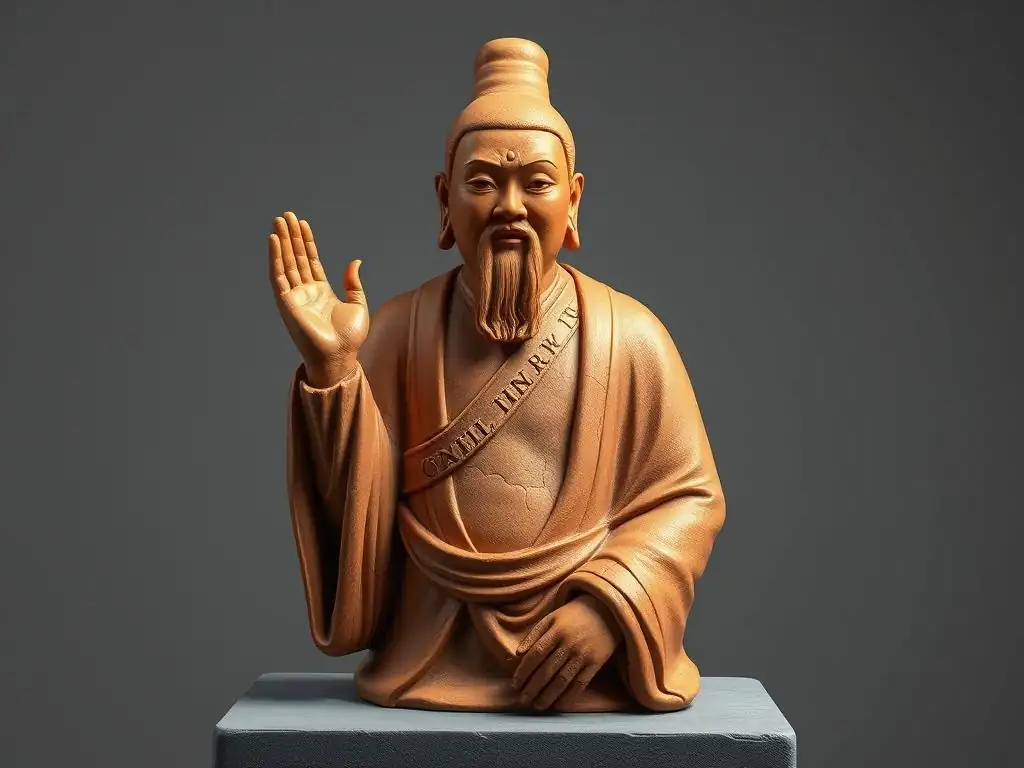
The intricate "Nok terracotta figurine gestures posture" elements are not merely artistic choices but likely served as crucial indicators of social status and hierarchy within Nok society. The combination of specific hand gestures, head positions, and body stances, often augmented by elaborate headdresses, jewelry, and detailed facial features, created a visual language understood by the Nok people. For instance, figures with overtly ceremonial headdresses combined with a seated posture and hands clasped in reverence might represent high-ranking spiritual leaders or revered ancestors, distinct from more simply adorned standing figures.
The deliberate portrayal of these specific postures, often requiring considerable artistic skill and effort, suggests that they were not accidental but encoded with meaning about an individual's role, power, or spiritual significance. The monumental scale of some figures, reaching up to 1.2 meters, further emphasizes the importance of the individual or entity they represented, with their "Nok terracotta figurine gestures posture" reinforcing their elevated position within the social structure.
The Representation of Gender and Age through Posture
While definitive gender identification in Nok terracottas can be challenging due to their stylized nature and frequent fragmentation, certain "Nok terracotta figurine gestures posture" elements, alongside other physical attributes, may have contributed to the representation of gender and age. For example, some figures exhibit delicate features and perhaps more contemplative poses that might suggest female subjects, while others with robust builds and more assertive stances could represent male figures.
Similarly, the depiction of age, though not always explicit, might be inferred through specific postural cues. Figures with a sagacious, seated posture and perhaps a hand-to-face gesture could signify elders or figures of wisdom, embodying the accumulated knowledge of a lifetime. The presence of smaller figures, sometimes with less defined "Nok terracotta figurine gestures posture," might represent children or younger individuals, reflecting their place within the social fabric.
Identifying Ritualistic Poses and Their Significance
Beyond conveying social status, many "Nok terracotta figurine gestures posture" appear to be deeply ritualistic, suggesting their use in ceremonies, spiritual practices, or as representations of deities and ancestral spirits. The recurring motifs of raised hands for invocation, clasped hands for supplication, and figures with elaborate adornments indicate a rich ceremonial life. These poses were likely not mere depictions of everyday life but frozen moments of sacred action.
Archaeologists hypothesize that these ritualistic poses were integral to the Nok people's religious beliefs, perhaps used in rites of passage, healing ceremonies, or offerings to the divine. The consistent depiction of these specific "Nok terracotta figurine gestures posture" across various sites and over centuries underscores their enduring significance in the Nok worldview and spiritual practices.
Comparative Analysis: Nok Gestures and Postures in Relation to Other African Art
Examining Parallels with Other West African Terracotta Traditions
The study of "Nok terracotta figurine gestures posture" naturally leads to a comparative analysis with other prominent West African terracotta traditions, such as those of Ife and Igbo-Ukwu, which emerged much later. While there are significant stylistic differences—Nok figures are typically more abstract and monumental compared to the naturalistic Ife heads—some thematic or functional parallels can be observed. For instance, the use of terracotta for important figures, whether ancestral or ritualistic, is a shared characteristic.
Specific gestures, such as hands clasped in reverence or figures seated in positions of authority, echo throughout West African art history, suggesting a continuity of certain symbolic meanings. While direct lineage or influence is difficult to prove given the chronological gap (Ife flourishing from c. 1100 CE, Igbo-Ukwu from c. 9th century CE), the shared emphasis on non-verbal communication through "Nok terracotta figurine gestures posture" and later traditions highlights a deep-rooted cultural importance of such expressions in the region.
Distinguishing Features of Nok Gestural Language
Despite potential parallels, the "Nok terracotta figurine gestures posture" possesses several distinguishing features that set it apart. One notable characteristic is the monumental scale combined with the dramatic, often exaggerated, stylization of facial features and body parts. This creates a powerful visual impact that is unique to Nok art. The prominent, often almond-shaped eyes and distinctive hairstyles are also hallmarks that differentiate Nok figures.
Furthermore, the specific repertoire of gestures, particularly the frequent hand-to-face motifs and the emphasis on elongated necks, appears to be more pronounced and consistent in Nok art than in subsequent traditions. The enigmatic nature of the Nok culture, with no surviving written records, also means that their gestural language remains more open to interpretation and less constrained by known historical narratives, making the "Nok terracotta figurine gestures posture" a fascinating subject of ongoing scholarly investigation.
The Challenges of Interpreting Nok Terracotta Gestures
Limited Contextual Information and Its Impact on Interpretation
One of the most significant challenges in interpreting "Nok terracotta figurine gestures posture" stems from the limited contextual information available for most finds. A large proportion of Nok terracottas have been recovered from alluvial tin mining deposits, where they have been displaced from their original archaeological contexts by erosion and human activity. This means that archaeologists often lack crucial data about where a figure was originally placed, what other artifacts it was associated with, or the specific environment in which it functioned.
Without clear contextual data—such as whether a figure was found in a burial, a domestic setting, a ritual shrine, or a public space—interpreting the precise meaning of its "Nok terracotta figurine gestures posture" becomes largely inferential. Researchers must rely on comparative studies with other cultures, general anthropological knowledge, and the internal consistency of the art itself, which can lead to multiple plausible interpretations rather than definitive conclusions.
Avoiding Modern Biases in Archaeological Analysis
Another critical challenge in interpreting "Nok terracotta figurine gestures posture" is the imperative to avoid imposing modern Western biases or interpretations onto ancient African art. It is crucial for archaeologists and art historians to recognize that gestures and postures carry culturally specific meanings, and what might signify one thing in a contemporary Western context could mean something entirely different, or nothing at all, in the Nok worldview. For example, a "Nok terracotta figurine gestures posture" that appears to us as a sign of sadness might have been a symbol of spiritual transcendence for the Nok people.
To mitigate this, researchers strive to adopt a culturally sensitive approach, drawing on the limited available archaeological evidence, comparative studies with other ancient African societies where more context is known, and a deep understanding of the inherent complexities of cross-cultural communication. This mindful approach helps ensure that interpretations of "Nok terracotta figurine gestures posture" are as archaeologically informed and culturally appropriate as possible.
Conclusion: The Enduring Legacy of Nok Gestures and Postures
Summarizing the Key Interpretations of Nok Figurine Gestures
The detailed analysis of "Nok terracotta figurine gestures posture" offers a profound window into the complex social, spiritual, and emotional landscape of this ancient West African civilization. From the reverent clasp of hands signifying supplication to the authoritative stance of seated figures, these non-verbal cues articulate a rich lexicon of meaning. We have seen how specific hand gestures, head tilts, and body postures likely communicated social status, expressed emotional states such as contemplation or mourning, and indicated participation in vital ritualistic practices.
While the absence of written records means that definitive interpretations remain elusive, the consistent recurrence of particular "Nok terracotta figurine gestures posture" across a vast geographical area and over centuries attests to their profound cultural significance. These artistic expressions are not mere decorations but critical archaeological data points, helping us piece together the beliefs and values of a society that flourished more than two millennia ago.
Future Research Directions: Unlocking Further Insights into Nok Culture Through Posture Analysis
The study of "Nok terracotta figurine gestures posture" is far from complete and offers fertile ground for future archaeological inquiry. Continued systematic excavations at Nok sites, particularly those yielding undisturbed contexts, are paramount. Such discoveries could provide definitive associations between specific figures, their contexts, and potentially their functions, thereby refining our interpretations of their gestures and postures.
Furthermore, advancements in analytical techniques, such as 3D scanning and digital reconstruction, could allow for more precise comparative studies of "Nok terracotta figurine gestures posture" variations, potentially revealing subtle patterns not evident through traditional methods. Interdisciplinary approaches, combining archaeological findings with linguistic studies (where possible, though challenging for Nok) and comparative ethnography from related cultural groups, could also yield fresh insights, continuing to unlock the silent yet eloquent language of the Nok terracottas.
Frequently Asked Questions
What are Nok terracotta figurines, and where were they discovered?
Nok terracotta figurines are sculptural artworks from the Nok culture of Nigeria. They were primarily discovered in the central Nigerian region, dating back to around 500 BCE to 200 CE.
What materials were used to create Nok terracotta figurines?
The figurines were crafted using locally sourced terracotta clay. The clay was then fired at relatively low temperatures, resulting in the characteristic reddish-brown color.
Why is the study of gestures and postures in Nok figurines important?
Analyzing gestures and postures helps us understand Nok cultural beliefs and social structures. These visual cues may represent status, roles, or ritualistic practices within their society.
How do archaeologists interpret the meaning behind specific gestures in Nok figurines?
Interpretations are often based on contextual clues, such as accompanying objects or facial expressions. Comparative analysis with other African art forms and ethnographic research also plays a role.
What challenges do archaeologists face when decoding the gestures and postures of Nok terracotta figurines?
The fragmentary nature of many figurines poses a significant challenge. Additionally, the lack of written records from the Nok culture makes definitive interpretations difficult.
Final Reflection: Echoes of Expression in Ancient Clay
The journey through the gestures and postures of Nok terracotta figurines reveals more than just artistic skill; it unveils a window into the beliefs, social structures, and daily lives of a civilization long past. Today, as we grapple with understanding diverse cultures and non-verbal communication, the lessons gleaned from these ancient artifacts resonate with renewed importance, reminding us of the enduring power of human expression across time and space.
This exploration has underscored how deeply ingrained non-verbal communication is within the human experience. The subtle tilt of a head, the placement of a hand – these details, meticulously rendered in clay millennia ago, speak volumes about the Nok people and their world. The body says what words cannot.
This quote, often attributed to Martha Graham, perfectly encapsulates the profound significance of gesture and posture, not only in dance but also in the silent narratives etched into these remarkable figurines.
As we close this exploration of Nok terracotta figurine gestures and posture, I invite you to consider the unspoken language that surrounds you every day. What stories are being told through the bodies of those you encounter? How can a deeper understanding of non-verbal cues enrich your own interactions and foster a more profound connection with the world around you? Let the echoes of expression from these ancient figures inspire you to listen more attentively, observe more keenly, and appreciate the silent symphony of human communication.
Unearth Your Understanding: Dive Deeper into Nok's Silent Stories!
Thank you for exploring the fascinating world of Nok terracotta figurines with us! We hope you've gained a richer appreciation for the silent stories these ancient artworks tell. Now, let's translate that knowledge into action.
Here's how you can further engage with the mysteries of Nok culture:
- Visit a museum with African art exhibits and try to identify gestures and postures you've learned about from this article.
- Share your newfound knowledge! Discuss the significance of Nok terracotta with friends or family and spark their curiosity.
- Explore online resources, like academic journals, to uncover fresh perspectives and challenge your own interpretations of the artwork.
What subtle gesture will you notice first in your next encounter with ancient art?