
Glassmaking and Faience: Technological Innovations in New Kingdom Decorative Arts

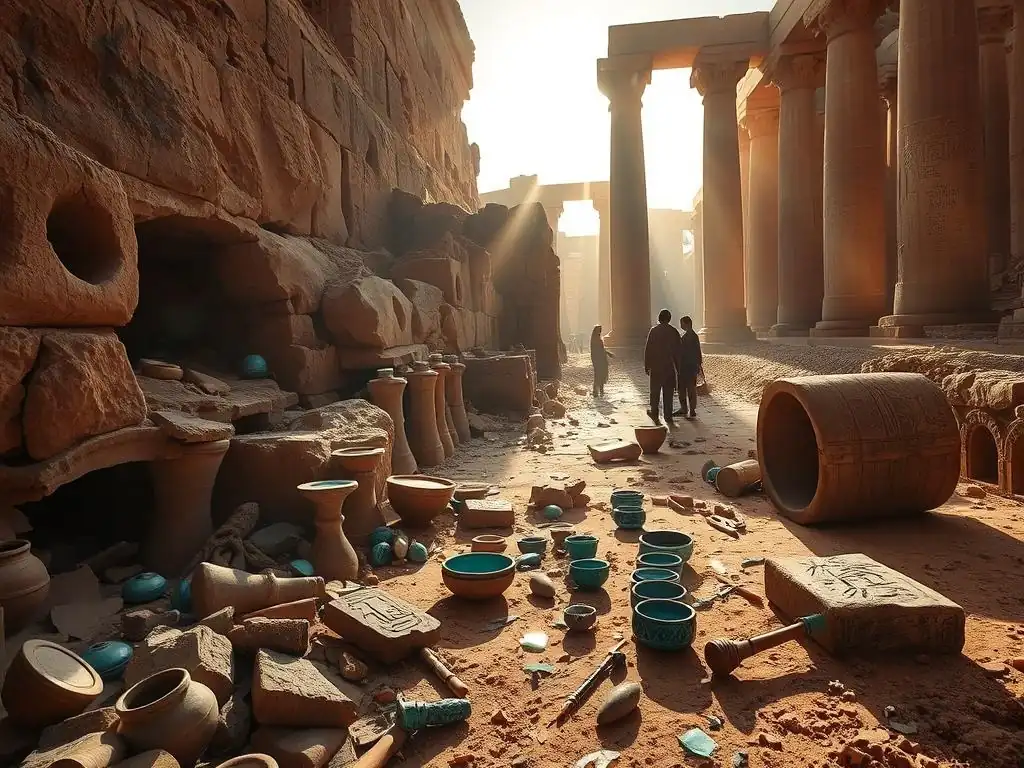
Welcome to ArchaeologyHub.org, your gateway to unlocking the secrets of the past. Ever wondered how ancient artisans achieved such vibrant colors and intricate designs? This article delves into the fascinating world of Ancient Egyptian faience production techniques, revealing the ingenious methods used to create these iconic artifacts. Prepare to be amazed as we uncover the technological innovations that shaped New Kingdom decorative arts and forever changed our understanding of ancient craftsmanship. Read on to discover the hidden science behind these stunning creations!
- Introduction: Decorative Arts in the New Kingdom Egypt
- The Rise of Glassmaking in New Kingdom Egypt (c. 1550-1070 BCE)
- Faience: A Beloved Material in Ancient Egyptian Decoration
- Technological Advancements Driving Decorative Art Innovation
- Glass and Faience Artifacts: Examples from New Kingdom Sites
- Comparing Glass and Faience: Material Properties and Applications
- The Legacy of New Kingdom Glassmaking and Faience
- Conclusion: The Enduring Appeal of New Kingdom Decorative Arts
-
Frequently Asked Questions
- How significant was faience in Ancient Egyptian decorative arts during the New Kingdom?
- What were the primary materials used in Ancient Egyptian faience production?
- What were the main production techniques used to create faience artifacts during the New Kingdom?
- How did Ancient Egyptian faience production contribute to our understanding of their technological capabilities?
- Where can I learn more about excavation sites relevant to faience production in Egypt?
- Final Reflection: The Enduring Spark of Innovation
- Unveil the Secrets: Craft Your Own Ancient Art Legacy!
Introduction: Decorative Arts in the New Kingdom Egypt
The Significance of Glass and Faience in Ancient Egypt
The New Kingdom period (c. 1550-1070 BCE) marked a zenith in ancient Egyptian decorative arts, with glass and faience emerging as revolutionary materials that transformed aesthetic expression. These sophisticated synthetic materials offered an unprecedented palette of vibrant colors and intricate designs, moving beyond the limitations of natural stones and metals. They were highly valued not only for their beauty but also for their perceived magical and divine properties, often imitating precious stones like lapis lazuli and turquoise, which held deep symbolic meaning related to creation, rebirth, and the heavens.
Glass and faience objects permeated various aspects of ancient Egyptian life, from opulent jewelry and cosmetic vessels used by the elite to protective amulets and funerary goods intended for the afterlife. Their widespread application underscores a profound mastery over complex chemical and thermal processes. The ability to create materials that shimmered with intense blues, greens, and yellows allowed artisans to infuse everyday items and sacred artifacts with a sense of divine radiance, reinforcing the strong connection between art, religion, and royal power.
ArchaeologyHub's Focus: New Kingdom Craftsmanship
ArchaeologyHub aims to delve into the remarkable technological advancements that underpinned the flourishing of glassmaking and faience production during Egypt's New Kingdom. This era, characterized by imperial expansion, unprecedented wealth, and extensive international trade, fostered an environment ripe for artistic and technical innovation. We will explore how Egyptian artisans, often working in state-sponsored workshops, perfected intricate processes to create objects of unparalleled beauty and durability.
Our focus will be on dissecting the specific techniques, raw materials, and the socio-economic context that made New Kingdom glass and faience distinct and profoundly influential. By examining the archaeological evidence from sites like Amarna, Malkata, and Deir el-Medina, we can reconstruct the ingenious methods employed by these ancient craftsmen. This detailed analysis reveals not just artistic prowess but also a sophisticated understanding of material science and engineering, solidifying the New Kingdom's legacy as a powerhouse of ancient craftsmanship.
The Rise of Glassmaking in New Kingdom Egypt (c. 1550-1070 BCE)
Early Glass Production: Origins and Influences
While isolated glass beads have been found in Egypt dating back to the Middle Kingdom, the true explosion of glass production occurred during the New Kingdom, particularly from the reign of Thutmose III onwards (c. 1479-1425 BCE). This surge in activity suggests a significant transfer or development of technology, with strong evidence pointing to influences from, or parallel developments in, the Mitanni kingdom in Mesopotamia. Early Egyptian glass often shares stylistic and technical similarities with Mesopotamian examples, indicating a shared pool of knowledge or direct technological exchange.
However, Egyptian artisans quickly adapted and refined these nascent techniques, rapidly elevating glassmaking to an art form uniquely integrated into their cultural aesthetic. By the mid-18th Dynasty, large-scale glass workshops were established, producing a diverse range of objects. The Egyptians did not merely imitate; they perfected the craft, developing distinct styles and an unparalleled mastery of color and form, making their glass products highly sought after across the ancient Near East.
Raw Materials for Ancient Egyptian Glass
The production of ancient Egyptian glass relied on a precise combination of readily available and carefully sourced raw materials. The primary component was silica, typically derived from quartz-rich desert sands, which served as the glass former. To lower the melting point of the silica and facilitate fusion, an alkali flux was essential, with natron (hydrated sodium carbonate) being the preferred choice, readily available from natural deposits in places like Wadi El Natrun. Lime (calcium oxide), often present as an impurity in the sand or added separately, acted as a stabilizer, preventing the glass from dissolving in water.
Beyond these fundamental ingredients, various metallic oxides were meticulously added to achieve the vibrant colors characteristic of New Kingdom glass. Copper compounds, often sourced from the Sinai Peninsula or Nubia, were used to create brilliant blues and greens. Cobalt, likely imported from distant sources such as the Dakhla Oasis or even further afield, yielded the highly prized deep, intense blues. Iron oxides could produce yellows and reds, while manganese created purples or served as a decolorizer. The precise control over these additions showcased an advanced understanding of material chemistry.
Glassmaking Techniques in the New Kingdom
The New Kingdom saw the widespread adoption and innovation of several key glassmaking techniques, each allowing for the creation of distinct types of objects and decorative effects. These methods were labor-intensive and required skilled artisans working with high temperatures, demonstrating the sophistication of Egyptian workshops.
Core-Forming: Creating Vessels and Small Objects
Core-forming was the predominant method for producing small, hollow glass vessels during the New Kingdom. The process began with the creation of a temporary core, typically a mixture of clay and organic material like dung, shaped to the desired internal form of the vessel. This core was then mounted on a metal rod. Molten glass, often in the form of threads drawn from a crucible, was carefully trailed around the rotating core, or the core itself might be dipped into a bath of softened glass.
Once the basic vessel shape was achieved, decorative threads of contrasting colored glass were applied to the still-pliable surface. These threads were then "marvered" – rolled and pressed into the surface using a flat stone or tool – to create intricate patterns such as zigzags, feather designs, or spirals. After cooling, the core material, being friable, could be scraped out, leaving a hollow glass vessel. Examples of core-formed vessels include small amphoriskoi, kohl tubes, and perfume bottles, often found in royal and elite tombs, such as those from Amarna and Tutankhamun's burial.
Casting and Molding: Mass Production Techniques
Casting and molding techniques were employed to create a wider range of glass objects, particularly those requiring more precise shapes or a higher volume of production. For simpler forms like bowls, plates, or discs, molten glass was poured or pressed into open molds, often made of clay or stone. This method allowed for the creation of standardized items and larger, more robust pieces than could be achieved through core-forming.
More complex objects, such as decorative inlays for furniture, jewelry components, or small statuettes, were produced using two-part molds. Glass was pressed into these molds, sometimes as a paste of crushed glass, and then fired. This technique was highly efficient for mass-producing items like scarabs, amulets, and components that would be assembled into composite objects. The ability to replicate intricate forms through molding facilitated the widespread use of glass in decorative arts and ensured consistency in design.
Mosaic Glass: Innovative Decorative Elements
Mosaic glass, also known as millefiori ("thousand flowers") glass, represented one of the most innovative and visually striking glassmaking techniques of the New Kingdom. This intricate method involved fusing together rods of different colored glass to create a composite cane with a predetermined pattern running through its length. The assembled cane was then heated and stretched, elongating the design while reducing its diameter.
Once cooled, the stretched cane was sliced into thin cross-sections, revealing the intricate pattern in each slice. These small mosaic elements, often depicting rosettes, geometric shapes, or even stylized figures, were then used as inlays. They were set into furniture, jewelry, or sarcophagi, providing a highly decorative and jewel-like effect. The precision and skill required to create such detailed patterns in glass highlight the pinnacle of New Kingdom glass artistry and technological mastery.
Faience: A Beloved Material in Ancient Egyptian Decoration
What is Faience? Definition and Composition
Faience, often referred to as "Egyptian faience" to distinguish it from later European tin-glazed pottery, is a non-clay, silica-based ceramic material that was profoundly significant in ancient Egyptian decorative arts. Unlike true pottery, which is made from clay, ancient Egyptian faience is primarily composed of powdered quartz or high-silica sand, mixed with a small amount of alkali (such as natron or plant ash) and a lime binder. This unique composition gives faience its characteristic granular, often slightly porous, core.
The defining feature of faience is its distinctive self-glazing property, which forms during the firing process. When heated, the alkali and other soluble salts within the faience body migrate to the surface, where they react with the silica to form a glossy, often vitrified, glaze. This creates a durable, colorful surface that could mimic precious stones like turquoise or lapis lazuli, making it a highly versatile and beloved material for a vast array of objects, from small beads to large architectural tiles.
Ancient Egyptian Faience Production Techniques: A Detailed Analysis
The creation of ancient Egyptian faience involved several ingenious methods, each designed to achieve specific aesthetic and functional outcomes. These ancient Egyptian faience production techniques demonstrate a sophisticated understanding of material science and thermal processes.
The Cementation Method: Self-Glazing Faience
The cementation method, also known as the "qadhefa" or "frit-glaze" method, was one of the earliest and most prevalent ancient Egyptian faience production techniques, particularly for mass-produced items. In this process, the pre-formed faience object, shaped from a mixture of powdered quartz, alkali, and a small amount of water, was placed into a firing container. This container was then filled with a powdery mixture containing quartz, alkali, and a copper-containing compound (such as malachite or azurite) for color.
During firing, as the temperature rose (typically between 800-1000°C), the alkali and soluble salts from the surrounding "cement" mixture, along with those within the faience body itself, migrated to the surface of the object. There, they reacted with the silica to form a thin, often somewhat uneven, but effective glaze. This method was particularly efficient for producing large quantities of small items like beads, amulets, and small figurines, as it allowed for multiple objects to be glazed simultaneously in a single firing.
Application Method: Applying Glaze to the Core
The application method, also known as the "slurry" or "pre-glazing" method, offered greater control over the thickness and uniformity of the faience glaze. In this technique, a pre-formed and often pre-fired faience core was coated with a liquid glaze slurry. This slurry was a mixture of finely ground quartz, alkali, lime, and colorants (typically copper compounds for blue or green), suspended in water. The object could be dipped into the slurry, painted, or poured over.
After the slurry dried, the object was fired. During this firing, the applied layer melted and fused to the faience core, creating a more robust and evenly distributed glaze compared to the cementation method. This technique was particularly favored for larger or more intricate objects such as shabti figures, bowls, and decorative tiles, where a consistent and high-quality finish was desired. It allowed for more detailed decoration and a broader range of forms, showcasing the versatility of ancient Egyptian faience production techniques.
Efflorescence Method: Controlling the Glaze Formation
The efflorescence method represents perhaps the most sophisticated of the ancient Egyptian faience production techniques, producing some of the finest quality faience. In this highly controlled process, the glazing salts – typically a mixture of alkali and copper compounds – were incorporated directly into the raw faience paste during its preparation. As the faience object was shaped and allowed to dry slowly, the soluble salts migrated to the surface due of the evaporation of water.
This migration formed a thin, crystalline layer of glazing material on the surface of the object. When the object was subsequently fired, this effloresced layer melted to form a uniform, vibrant, and often very stable glaze that was perfectly bonded to the underlying quartz body. This method required precise control over the composition of the paste, the drying conditions, and the firing temperature, but it yielded the most consistent and aesthetically pleasing results, characteristic of the high-quality faience found in royal and temple contexts during the New Kingdom.
The Color Palette of New Kingdom Faience: Symbolism and Pigments
The color palette of New Kingdom faience was dominated by shades of blue and green, which held profound symbolic significance in ancient Egyptian culture. The most iconic color was "Egyptian blue" (cuprorivaite), a synthetic pigment created from copper, silica, lime, and an alkali. This brilliant blue was associated with the Nile, fertility, the heavens, and the deities, often mimicking the revered natural stones lapis lazuli and turquoise. Various shades of blue and green were achieved by adjusting the amount of copper compound and the firing conditions.
While blue and green were prevalent, New Kingdom faience also incorporated other colors, albeit less frequently. Manganese was used to produce black or deep purple, often for details or inlays. Iron oxides could yield yellows or reds, though these were less common in faience than in other decorative media. White faience, achieved by omitting colorants or using tin oxide, also appeared. The deliberate choice and masterful application of these pigments were not merely aesthetic; they imbued faience objects with specific cultural and religious meanings, making them powerful tools for conveying symbolic messages.
Technological Advancements Driving Decorative Art Innovation
The Role of Furnaces and Kilns in Glass and Faience Production
The remarkable proliferation of glass and faience in the New Kingdom was intrinsically linked to significant advancements in pyrotechnology, particularly the design and control of furnaces and kilns. Both materials required sustained high temperatures for their manufacture: faience typically fired between 800-1000°C, while glass required even higher temperatures, often exceeding 1000°C, to melt silica. Archaeological excavations at sites like Amarna and Lisht have revealed sophisticated updraft kilns, often constructed with separate firing chambers and fuel chambers, allowing for better heat regulation and fuel efficiency.
These kilns were not merely simple ovens; they represented an advanced understanding of thermal dynamics. Artisans learned to control the internal atmosphere of the kiln—whether oxidizing (oxygen-rich) or reducing (oxygen-poor)—which was crucial for achieving specific colors and glazes. For instance, an oxidizing atmosphere was generally necessary for vibrant blue and green glazes from copper, while a reducing atmosphere could produce reds or blacks. The ability to maintain precise temperatures for extended periods was a critical technological leap that enabled the consistent production of high-quality glass and faience objects on an industrial scale.
Metallurgical Knowledge and its Impact on Glass Coloring
The flourishing of glass and faience production in the New Kingdom was deeply intertwined with the Egyptians' extensive knowledge of metallurgy. For centuries prior, Egyptian artisans had mastered the extraction and working of metals like copper, gold, and silver. This expertise provided a fundamental understanding of mineral ores, their properties, and how they reacted under heat. The same metallic oxides used as pigments in paints or as components in bronze alloys were intelligently applied as colorants in glass and faience.
For example, copper compounds, extensively mined in the Sinai Peninsula and Nubia for bronze production, were the primary source for the iconic blues and greens of both glass and faience. The introduction of cobalt for deep blue glass, possibly sourced from the Dakhla Oasis or through trade with the Near East, also speaks to a broad knowledge of mineral resources. The ability to purify these compounds and incorporate them precisely into glass and faience melts demonstrates a sophisticated understanding of chemical reactions and material science, bridging the gap between metallurgy and the nascent glass industries.
New Kingdom Trade Networks and the Availability of Raw Materials
The vast imperial reach and extensive trade networks of the New Kingdom were pivotal in ensuring a consistent supply of the diverse raw materials necessary for the burgeoning glass and faience industries. While silica sand and natron were domestically available, other crucial components, particularly the metallic oxides used for coloring, often required long-distance acquisition. Copper, essential for blues and greens, was sourced from rich mines in the Sinai and Nubia, regions directly controlled or influenced by Egypt.
More exotic colorants, such as cobalt for deep blues, might have been acquired through trade with regions as far as the Near East, or from specific rare deposits within Egypt's deserts. The New Kingdom's diplomatic relations and military campaigns facilitated the flow of these valuable commodities, along with other luxury goods. This extensive network not only ensured the availability of raw materials but also fostered the exchange of technical knowledge and finished products, further stimulating innovation and production scale in Egyptian workshops, which were often under royal patronage.
Glass and Faience Artifacts: Examples from New Kingdom Sites
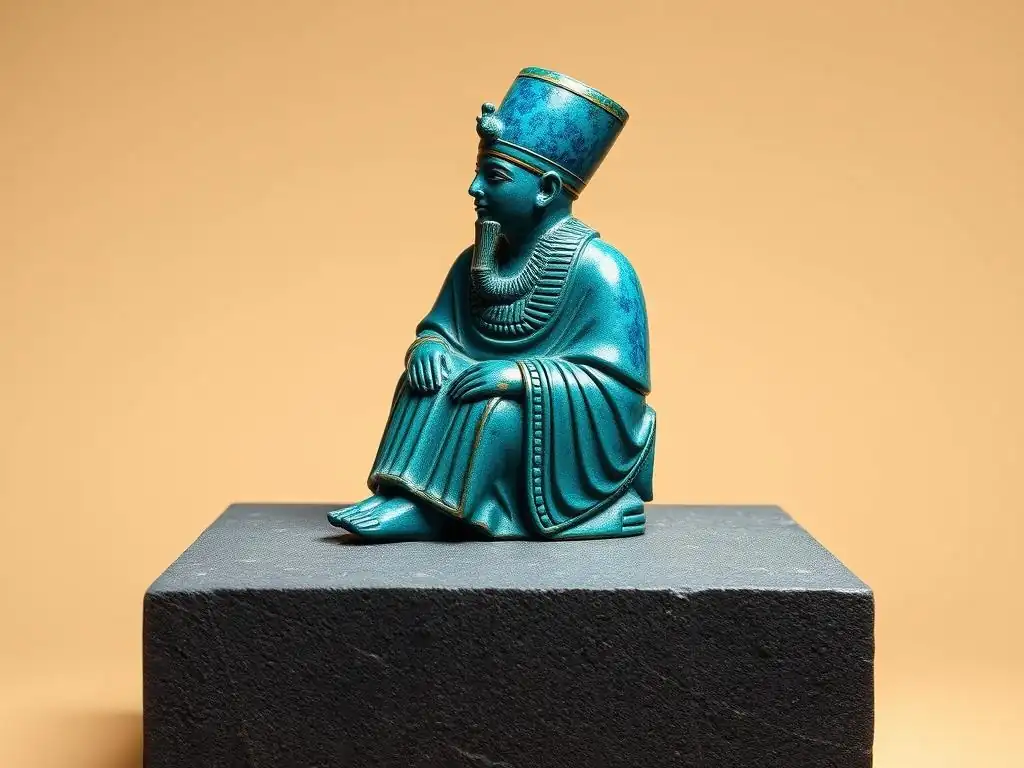
Glass Vessels from Tutankhamun's Tomb
The tomb of Tutankhamun (KV62) yielded an unparalleled collection of New Kingdom glass artifacts, showcasing the apex of Egyptian glassmaking. Among the thousands of objects, numerous exquisite glass vessels were discovered, including small amphoriskoi, cosmetic jars, and a unique lotus chalice. These pieces exemplify the mastery of core-forming techniques, often featuring intricate marvered patterns such as zigzags, feather motifs, and abstract swirls, rendered in vibrant colors like deep blue, turquoise, yellow, and opaque white.
Beyond their aesthetic appeal, these vessels highlight the luxury status of glass during this period. Many were likely used for precious oils, perfumes, or cosmetics, underscoring their functional role within the royal court. The meticulous craftsmanship, perfect symmetry, and vibrant palette of Tutankhamun's glass collection not only attest to the skill of the artisans but also reflect the immense wealth and artistic patronage characteristic of the late 18th Dynasty.
Faience Amulets and Beads: Religious and Protective Significance
Faience was extensively utilized for the production of amulets and beads, which held immense religious and protective significance for all strata of ancient Egyptian society. Thousands of faience amulets, depicting deities (e.g., Bes, Taweret), sacred animals (e.g., scarabs, crocodiles), or symbolic objects (e.g., Wedjat eyes, djed pillars), have been unearthed from tombs and settlement sites. These were believed to ward off evil, bring good fortune, or ensure safe passage into the afterlife.
Faience beads, often strung into elaborate necklaces, bracelets, and collars, were ubiquitous. Their production, often utilizing the efficient cementation method, allowed for vast quantities to be made, making them accessible to a broad population. The sheer volume and diversity of these faience items underscore the efficacy of ancient Egyptian faience production techniques for mass production and their pervasive role in daily life, religious rituals, and funerary practices throughout the New Kingdom.
Architectural Uses of Faience: Tiles and Inlays in Temples
Beyond small artifacts, faience found significant architectural applications in the New Kingdom, particularly in royal palaces and some temple structures. Large quantities of faience tiles were used to adorn walls and floors, providing a durable, hygienic, and visually stunning surface. Examples include the palace of Amenhotep III at Malkata and the city of Amarna, where faience tiles decorated royal apartments and shrines.
These tiles often featured intricate designs, including floral motifs (e.g., lotus and papyrus), animal friezes (e.g., fish, birds), and royal cartouches. They provided a vibrant, shimmering surface that mimicked more expensive materials like lapis lazuli or glazed bricks from Mesopotamia, reflecting the opulence and grandeur of royal residences and sacred spaces. The use of faience inlays for doors, furniture, and even monumental statuary further demonstrates its versatility and the Egyptians' innovative approach to decorative arts on a grand scale.
Comparing Glass and Faience: Material Properties and Applications
Durability and Preservation: Glass vs. Faience
Both ancient Egyptian glass and faience have proven remarkably durable over millennia, offering invaluable insights into ancient craftsmanship, though they possess distinct material properties influencing their preservation. Glass, being a vitrified material, is inherently non-porous and highly resistant to chemical degradation once formed. While brittle and prone to shattering, glass fragments often retain their original color and luster even after thousands of years in burial environments, provided they are not subjected to significant physical stress or specific corrosive soil conditions.
Faience, being a sintered quartz composite with a surface glaze, also exhibits considerable durability. Its quartz body is robust, and the vitrified glaze provides a protective, waterproof layer. However, the glaze can be susceptible to flaking or wear, especially if the bond between the glaze and the core is weak, or if exposed to abrasive forces. Despite this, the vast number of intact faience artifacts from the New Kingdom attests to the effectiveness of ancient Egyptian faience production techniques in creating a resilient material that has largely withstood the test of time.
In the early New Kingdom, glass was undoubtedly a luxury material, primarily accessible to the pharaoh and the elite. Its complex production process, requiring specialized knowledge, high-temperature kilns, and often imported raw materials, made it expensive. Glass vessels, jewelry, and inlays found in royal tombs and elite burials underscore its high-status association, signifying wealth, power, and refined taste. It was an exclusive commodity, reflecting the grandeur of the imperial age.
Faience, while also originating as a high-status material, gradually became more democratized, particularly for smaller items. The efficiency of ancient Egyptian faience production techniques, especially the cementation method for mass production, allowed for a broader dissemination of faience beads, amulets, and shabti figures. While exquisitely crafted faience objects for royalty remained exclusive, simpler faience items became accessible to a wider segment of the population, providing a more affordable alternative to precious stones and metals while still offering vibrant color and symbolic meaning.
Aesthetic Qualities: Color, Luster, and Decoration
Glass and faience, despite sharing some raw materials and colorants, offered distinct aesthetic qualities that influenced their application in New Kingdom decorative arts. Glass, when expertly crafted, presented a smooth, often translucent or opaque surface with a deep, almost liquid luster. Its ability to be drawn into fine threads allowed for intricate marvered patterns on vessels, creating a dynamic interplay of color and form. The depth of color in glass could be intensely saturated, mimicking the brilliance of polished gemstones.
Faience, by contrast, typically exhibited a distinctive slightly granular or matte texture beneath its vibrant glaze, though high-quality pieces could achieve a remarkably smooth, glossy finish. Its strength lay in its versatility for molding complex shapes and the brilliant, often opaque, surface glazes that mimicked the appearance of turquoise or lapis lazuli. The ancient Egyptian faience production techniques allowed for a wide range of surface decoration, from painted details on the glaze to intricate molded relief, creating a unique visual appeal that complemented the more fluid aesthetics of glass.
The Legacy of New Kingdom Glassmaking and Faience
Influence on Later Egyptian Dynasties
The technological innovations and artistic styles perfected in New Kingdom glassmaking and faience production cast a long shadow over subsequent Egyptian dynasties. While the political and economic landscape of Egypt shifted after the New Kingdom, the fundamental ancient Egyptian faience production techniques and glassmaking methods continued to be employed and refined. During the Third Intermediate Period and the Late Period, faience production remained robust, with distinctive styles emerging, though perhaps with less of the grand scale associated with the imperial era.
Glass production also persisted, albeit with varying degrees of output and innovation. Later periods saw a continuation of core-forming, but also new forms and decorative schemes. The foundational knowledge and established workshop traditions from the New Kingdom provided a durable framework for future generations of artisans. The enduring appeal of these materials and the mastery of their creation ensured that the legacy of New Kingdom craftsmanship continued to shape Egyptian decorative arts for centuries.
Connections to Other Ancient Cultures and Technological Exchange
The sophisticated glass and faience of the New Kingdom did not exist in isolation; they were part of a dynamic network of technological and artistic exchange across the ancient world. Egyptian glass and faience objects have been discovered in Mycenaean Greece, the Levant, and Mesopotamia, indicating active trade in finished luxury goods. Conversely, influences from the Near East are evident in early Egyptian glass, suggesting a two-way flow of ideas and techniques.
This technological exchange sometimes involved the movement of skilled artisans or the sharing of technical recipes. The widespread adoption of Egyptian blue, a pigment and material developed through ancient Egyptian faience production techniques, across the Mediterranean and Near East is a testament to Egypt's influence. The interconnections facilitated by New Kingdom trade and diplomacy created a shared material culture that transcended political boundaries, with Egyptian craftsmanship serving as a benchmark for quality and innovation.
Reconstructing Ancient Egyptian Craftsmanship
Modern archaeological and scientific research plays a crucial role in reconstructing the intricate processes of ancient Egyptian glass and faience production. Excavations of workshop sites, such as those at Amarna, offer invaluable insights through the discovery of kilns, crucibles, raw materials, unfinished pieces, and discarded fragments. These physical remains provide direct evidence of the manufacturing steps and the tools employed by ancient artisans.
Furthermore, experimental archaeology, where modern craftsmen attempt to recreate ancient objects using hypothesized techniques and materials, provides practical understanding of the challenges and solutions faced by the Egyptians. Scientific analysis, employing techniques like X-ray fluorescence (XRF) and scanning electron microscopy (SEM), allows researchers to determine the precise chemical composition of ancient glass and faience, revealing the specific raw materials used, firing temperatures, and the sophisticated ancient Egyptian faience production techniques and glassmaking processes employed thousands of years ago.
Conclusion: The Enduring Appeal of New Kingdom Decorative Arts
Frequently Asked Questions
How significant was faience in Ancient Egyptian decorative arts during the New Kingdom?
Faience was highly significant, serving as a major medium for decorative arts. It provided a more accessible alternative to precious stones and metals, allowing for widespread use in jewelry, amulets, and architectural elements.
What were the primary materials used in Ancient Egyptian faience production?
The main materials were quartz sand, alkali salts (natron), and a colorant, typically copper for blue and green hues. These were combined to form a paste that could be molded or shaped.
What were the main production techniques used to create faience artifacts during the New Kingdom?
The techniques included efflorescence, cementation, and application. Efflorescence involved self-glazing, cementation used a surrounding glaze powder, and application involved directly applying a glaze slurry.
How did Ancient Egyptian faience production contribute to our understanding of their technological capabilities?
Faience production demonstrates sophisticated understanding of chemical reactions and heat control. It reveals their ability to manipulate raw materials to create durable and aesthetically pleasing objects, showcasing their advanced craftsmanship.
Where can I learn more about excavation sites relevant to faience production in Egypt?
ArchaeologyHub.org offers detailed timelines and geographic region organization. You can find information on excavation sites, artifact profiles, and interpretive analyses of ancient civilizations.
Final Reflection: The Enduring Spark of Innovation
The journey through the ancient workshops of New Kingdom Egypt, exploring the intricate Ancient Egyptian faience production techniques, reveals more than just historical processes. It highlights the enduring human drive to innovate and create beauty from the earth. The ingenuity displayed in crafting glass and faience, materials that shimmered with otherworldly hues, resonates even today, reminding us of the power of human creativity to transcend limitations and leave a lasting legacy.
The impact of these ancient techniques extends far beyond the archaeological record. The vibrant colors and intricate designs of faience objects continue to inspire artists and designers, demonstrating the timeless appeal of beauty born from innovation. The pursuit of replicating and understanding these methods has not only deepened our appreciation for ancient craftsmanship but also spurred advancements in modern materials science. The past is never dead. It's not even past.
- William Faulkner. This quote encapsulates the enduring relevance of these ancient techniques, reminding us that the echoes of innovation reverberate through time, shaping our present and informing our future.
As we close this exploration of ancient Egyptian faience production techniques, let us carry forward the spirit of innovation that fueled these remarkable achievements. Consider how you can apply this same ingenuity and dedication to your own endeavors, transforming raw materials – whether physical or metaphorical – into something beautiful, meaningful, and enduring. Embrace the challenge, experiment with new approaches, and leave your own indelible mark on the world, inspired by the enduring spark of innovation that ignited the ancient world.
Unveil the Secrets: Craft Your Own Ancient Art Legacy!
Thank you for exploring the innovative artistry of New Kingdom glassmaking and faience. Now, it's time to transform this knowledge into action!
Here are some ways you can connect with ancient art:
- Experiment with a DIY faience project. Research readily available materials and try replicating a small ancient Egyptian bead or amulet.
- Delve deeper: Visit your local museum's Egyptian exhibit, focusing on glass and faience pieces. Share your favorite finding on social media using #ArchaeologyArt.
- Organize a virtual discussion with fellow archaeology enthusiasts to compare your experiences and insights on these remarkable technologies.
Ready to bring the brilliance of ancient Egyptian art into your life? What unique piece would you recreate if you had access to New Kingdom technology?