
Sogdian Mercenaries and Military Involvement in Central Asian and Chinese Conflicts

Welcome to ArchaeologyHub.org, your gateway to the past.
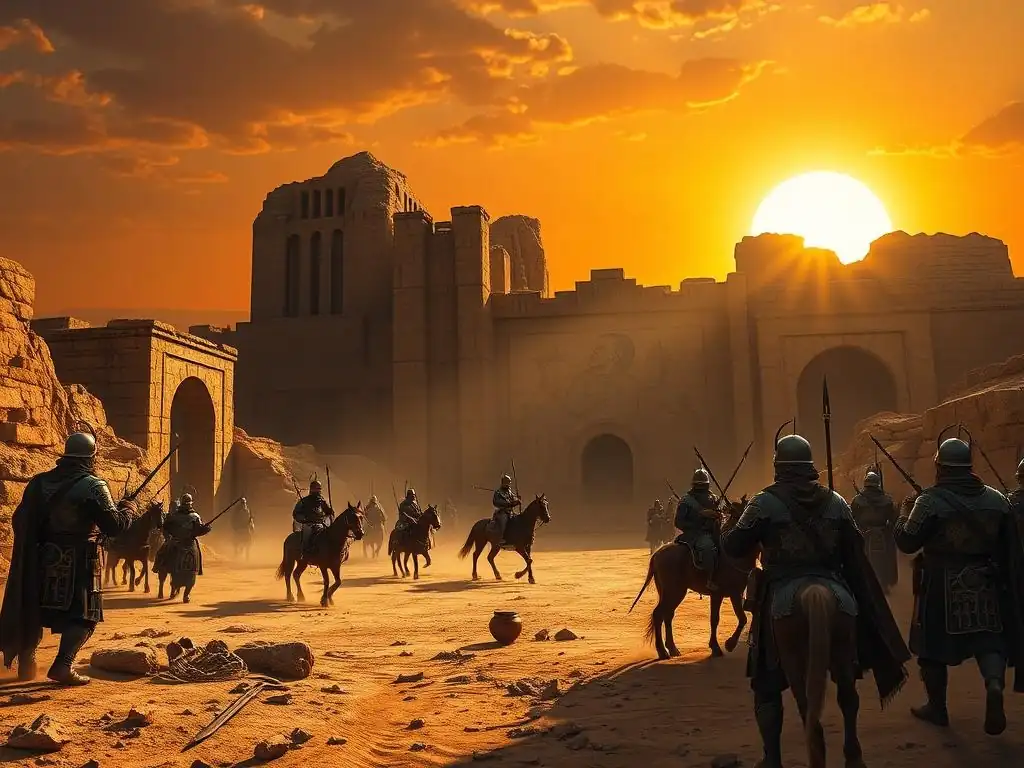
Delve into the intricate world of ancient civilizations where secrets lie buried beneath layers of time. Ever wondered about the role of skilled warriors in shaping history? This article explores the fascinating, often overlooked, impact of Sogdian mercenaries and their decisive military involvement in Central Asian conflicts. Uncover their strategies, influence, and the legacy they left behind. Intrigued? Keep reading to unlock the full story…
- Introduction: The Sogdians - Merchants and Warriors of the Silk Road
- The Rise of Sogdian Mercenaries in Central Asia
- Sogdian Military Involvement in Central Asian Conflicts
- Sogdian Military Service in China: A Lucrative Opportunity
- The Sogdian Influence on Chinese Military Practices
- The Decline of Sogdian Military Power
- Sogdian Mercenaries: A Reassessment of Their Role in Central Asian History
- Conclusion: Sogdian Mercenaries - A Vital Force in Ancient Warfare
-
Frequently Asked Questions
- How were Sogdian mercenaries primarily employed in Central Asian conflicts?
- What made Sogdian mercenaries attractive hires for various Central Asian rulers?
- Did Sogdian mercenaries only participate in Central Asian conflicts, or were they involved elsewhere?
- What is the historical evidence supporting the presence of Sogdian mercenaries?
- Were there any long-term consequences of Sogdian mercenary involvement on Central Asian society?
- Final Reflection: Echoes of Sogdian Resilience
- Unearth Your Inner Explorer: Journey Deeper into Sogdian History!
Introduction: The Sogdians - Merchants and Warriors of the Silk Road
Sogdiana: A Crossroads of Culture and Conflict in Central Asia
Sogdiana, nestled in the heart of Central Asia, specifically around the fertile Zeravshan and Kashka Darya river valleys (modern-day Uzbekistan and Tajikistan), served as a vital nexus for the ancient Silk Road. Its strategic geographical position meant it was a constant crossroads for goods, ideas, and, inevitably, armies.
Cities like Samarkand and Bukhara flourished as major trading hubs, connecting the Roman and Byzantine Empires in the West with the Tang Dynasty of China in the East, and India to the South. This pivotal location, while bringing immense wealth through trade, also exposed the Sogdian city-states to the frequent incursions and political machinations of surrounding empires and nomadic confederations, making them central to many Central Asian conflicts.
The diverse cultural tapestry of Sogdiana was woven from Persian, Indian, Chinese, and various nomadic steppe influences. This rich amalgamation, however, also meant that the region was a perennial battleground for regional hegemons. From the Hephthalites and the various Turkic Khaganates to the Sasanian Empire and later the expanding Tang Dynasty, each sought control over these lucrative trade arteries. This constant geopolitical volatility necessitated that the Sogdians, despite their primary identity as merchants, develop a robust military capacity, both for self-defense and for leveraging their strategic position.
The Dual Role of Sogdians: Trade and Military Service
For centuries, the Sogdians were renowned across Eurasia primarily as the preeminent merchants of the Silk Road. Their extensive trade networks, which stretched from the Black Sea to the Yellow River, saw them establish prosperous merchant colonies in distant lands, particularly within Tang China. They were masters of commerce, adept at navigating complex political landscapes to ensure the flow of luxury goods, textiles, and technologies, accumulating significant wealth and influence through their mercantile prowess.
However, beneath this veneer of commercial enterprise lay a formidable military tradition. The Sogdians were not merely passive facilitators of trade; they were also skilled warriors, often serving as highly sought-after mercenaries. This dual role was intrinsically linked: military service often secured trade routes, protected their merchant caravans, and provided a means to gain political leverage or defend their prosperous city-states from aggressive neighbors. Their involvement as Sogdian mercenaries in Central Asian conflicts became a recurring and significant feature of the region's history, demonstrating a pragmatic blend of economic and military strategy.
The Rise of Sogdian Mercenaries in Central Asia
Factors Contributing to the Demand for Sogdian Military Expertise
The political landscape of Central Asia during the early medieval period was characterized by constant flux and fragmentation, creating an enduring demand for professional military forces. From the 4th to the 8th centuries CE, the region witnessed the ebb and flow of numerous powers, including the shifting Turkic Khaganates, the remnants of the Hephthalite Empire, and the expanding influence of the Sasanian Persians and, later, the Tang Chinese.
This volatile environment meant that various rulers, often lacking large, standing armies of their own, sought reliable, disciplined soldiers to bolster their forces, fight their wars, and maintain control over their territories.
Sogdian city-states, being relatively wealthy due to their mercantile activities, could invest in superior training and equipment for their soldiers compared to many tribal levies. Their reputation for martial skill, combined with a pragmatic neutrality often driven by commercial interests, made them ideal candidates for mercenary service. They could be hired by various patrons without deep ideological commitment, allowing them to serve diverse allegiances. This adaptability and professionalism made Sogdian mercenaries indispensable in many Central Asian conflicts, filling a crucial void in the region's military landscape.
Sogdian Military Skills and Equipment: A Competitive Advantage
Sogdian military prowess was largely rooted in their mastery of mounted warfare, a skill honed by centuries of interaction with nomadic steppe peoples. Their cavalry, often equipped with the potent composite bow, was highly effective for rapid skirmishes, flanking maneuvers, and long-range engagements. They were known for their adaptability, incorporating military techniques from various cultures they encountered, seamlessly blending elements of Sasanian heavy cavalry tactics with the agility of Turkic mounted archers. This fusion created a versatile and formidable fighting force, giving them a distinct competitive advantage on the battlefields of Central Asia.
Their equipment reflected this strategic blend. Sogdian warriors likely utilized a combination of light and medium armor, including lamellar or scale armor for protection, providing mobility without sacrificing defense. Archaeological finds and mural depictions from sites like Panjikent suggest they wielded a variety of weapons, including long swords, lances, and daggers, alongside their ubiquitous bows. The quality of their weaponry, potentially sourced through their extensive trade networks, would have been superior, further enhancing their effectiveness and desirability as professional soldiers in various Sogdian mercenaries Central Asian conflicts.
Sogdian Mercenary Companies: Organization and Operations
Sogdian mercenary companies were typically well-organized, often structured around familial or clan units, which fostered strong internal loyalties and discipline. Unlike transient bands of warriors, these companies operated with a degree of professionalism, contracting their services to various rulers across Central Asia. Their reputation for fulfilling agreements and their self-sufficiency, including providing their own equipment and provisions, made them highly sought after by patrons ranging from local princes to powerful Khaganates.
Their operations were widespread and strategic. Sogdian mercenary units were deployed in various garrisons and frontier outposts, safeguarding trade routes, participating in sieges, and engaging in pitched battles. Payment for their services often came in the form of silver, precious goods, or grants of land and trading privileges, directly linking their military endeavors to their commercial interests. This operational model allowed Sogdian mercenaries to exert significant influence across Central Asian conflicts, acting as a crucial military asset for whomever could afford their services.
Sogdian Military Involvement in Central Asian Conflicts
Sogdian Participation in the Turkic Khaganate Conflicts
The rise of the First Turkic Khaganate in the mid-6th century CE fundamentally reshaped the political landscape of Central Asia, and Sogdian mercenaries played a pivotal role in these transformations. Sogdian merchants often served as crucial intermediaries and diplomats for the Turks, facilitating their economic and political expansion.
Their military units, in turn, provided indispensable support to the Turkic rulers, aiding them in consolidating power across vast territories, from the Altai Mountains to the Black Sea. For instance, Sogdian forces were likely involved in Turkic campaigns against the Hephthalites, contributing to the Turkic victory that secured control over the lucrative Silk Road segments in Transoxiana.
As the Khaganate later fractured into Eastern and Western branches, Sogdian mercenaries continued to be active participants in the internal power struggles and external conflicts that defined these entities. They fought alongside or against various Turkic factions, their allegiances often shifting based on pragmatic considerations of trade protection and political stability. Their disciplined units and superior cavalry tactics were invaluable assets in maintaining control over strategic cities and trade routes, making their contribution to the evolving dynamics of Sogdian mercenaries Central Asian conflicts undeniable.
Sogdian Alliances and Rivalries with the Hephtalites and Other Powers
Before the dominance of the Turkic Khaganates, the Hephthalites (often referred to as White Huns) were a major power in Central Asia, and Sogdian city-states had complex, often shifting relationships with them. While the Hephthalites at times exerted control over Sogdiana, Sogdian mercenaries were also known to have fought alongside or against them, depending on the immediate strategic interests of their city-states. Their primary objective was always the preservation of their commercial networks and urban centers, leading to flexible alliances.
Beyond the Hephthalites, Sogdians engaged with a multitude of local rulers and emerging powers across the region, including those in Tokharistan (modern Afghanistan) and along the fringes of the Sasanian Empire. Their military actions were rarely driven by territorial ambition but by the pragmatic need to secure trade routes, protect their merchant colonies, or defend their homelands from aggression. This meant that Sogdian mercenaries were often at the heart of Central Asian conflicts, adapting their alliances and rivalries to the ever-changing geopolitical currents of the region.
The Impact of Sogdian Mercenaries on Central Asian Warfare
The widespread deployment of Sogdian mercenaries had a transformative impact on the nature of warfare in Central Asia. Their presence introduced a higher degree of professionalism and discipline into armies that often relied on less organized tribal levies. Sogdian units, with their specialized training and superior equipment, raised the standard of military effectiveness, compelling other regional powers to adapt or face significant disadvantages. This professionalization contributed to more sophisticated tactical engagements and extended campaigns.
Furthermore, the strategic intervention of Sogdian mercenary forces in key battles or sieges frequently tipped the balance of power, directly influencing the rise and fall of various Central Asian polities. Their ability to provide a reliable and skilled fighting force, often at critical junctures, meant that their involvement could determine the outcome of conflicts and shape political boundaries. The legacy of Sogdian mercenaries in Central Asian conflicts is therefore not merely one of participation but of active influence on the region's military and political evolution.
Sogdian Military Service in China: A Lucrative Opportunity
The Tang Dynasty and the Recruitment of Sogdian Soldiers
The expansive Tang Dynasty (618–907 CE) in China, with its vast borders and ambitious military campaigns, harbored a constant need for effective frontier defense, particularly against the formidable Turkic and Tibetan threats to its north and west. Recognizing the martial prowess of various Central Asian peoples, including the Sogdians who were already well-established within China as merchants, the Tang administration actively sought to recruit foreign soldiers. These experienced warriors provided a crucial supplement to the native Chinese military, especially in the challenging terrains of the western regions.
Sogdians, residing in thriving merchant communities in major Tang cities like Chang'an and Luoyang, or along the Hexi Corridor, were readily available and eager to seize the lucrative opportunities offered by military service. They were highly prized for their exceptional cavalry skills, their familiarity with the languages and cultures of the western frontier, and their knowledge of the arid landscapes. Consequently, many Sogdians joined the Tang army, often serving in strategic border garrisons, most notably within the Anxi Protectorate (modern Xinjiang), where their expertise was invaluable in securing the Silk Road and defending Tang territories.
Sogdian Military Units within the Tang Army: Structure and Deployment
Within the Tang military structure, Sogdian soldiers were frequently organized into distinct units, often under the command of their own Sogdian officers, though ultimately integrated into the broader Tang command hierarchy. These units were strategically deployed to the most critical and challenging frontier regions, particularly in the northwest. Their expertise in mounted combat and their resilience in harsh environments made them ideal for operations along the vast borderlands, from the deserts of the Tarim Basin to the high mountains bordering Tibet.
While precise figures are difficult to ascertain, historical records suggest that Sogdian and other Central Asian soldiers formed a significant, albeit minority, component of the Tang frontier armies. It is estimated that by the mid-8th century, thousands, possibly tens of thousands, of foreign soldiers, including a substantial number of Sogdians, served in various Tang garrisons, particularly in the Anxi Protectorate and along the Hexi Corridor. Their presence was vital for maintaining Tang control over these distant territories and for projecting power into Central Asia, further intertwining Sogdian mercenaries with Central Asian conflicts.
Sogdian Generals and Commanders: An Chongzhang and Other Notable Figures in Chinese Military History
The Tang Dynasty's meritocratic military system allowed talented Sogdian individuals to rise through the ranks, demonstrating the trust and value placed in their military capabilities. Many Sogdian commanders achieved high positions within the Tang army, leading both Sogdian and ethnically Chinese troops, underscoring their significant contribution to Tang military success. Their rise to prominence highlights the cosmopolitan nature of the Tang court and its pragmatic approach to utilizing foreign talent.
One of the most notable figures, though sometimes overshadowed by his more infamous relative, was An Chongzhang. While An Lushan, the general who initiated the devastating An Lushan Rebellion, was of mixed Sogdian-Turkic heritage, other Sogdian generals remained loyal to the Tang. An Chongzhang, for instance, was a prominent Sogdian general who distinguished himself through loyal service to the Tang emperor, serving as a regional commander (jiedushi) in the northeast. His career exemplifies the significant contributions and high status that Sogdian military figures could achieve within Chinese military history, demonstrating that not all Sogdian influence was disruptive.
The Sogdian Influence on Chinese Military Practices

Sogdian Military Tactics and Strategies Adopted by the Chinese
The presence of Sogdian mercenary units within the Tang army undoubtedly facilitated a significant exchange of military knowledge. Sogdian cavalry tactics, particularly their proficiency with the composite bow from horseback, likely influenced Tang cavalry training and doctrine. Their experience in rapid skirmishing, hit-and-run tactics, and effective use of the vast steppe terrain was highly valuable. These methods provided the Tang with insights into effective mobile warfare, crucial for countering nomadic threats.
Furthermore, the Sogdians' extensive experience with long-distance trade across arid and challenging environments provided them with invaluable knowledge of logistics and supply lines. This practical understanding of how to sustain forces in difficult terrain, gleaned from their mercantile expeditions, could have been subtly integrated into Tang military planning, particularly for campaigns in the western regions. This cross-cultural tactical exchange enhanced the overall effectiveness of the Tang military.
Sogdian Weapons and Armor: Impact on Chinese Military Technology
While China possessed advanced metallurgical capabilities, the constant interaction with Sogdian and other Central Asian warriors likely led to mutual influences in weaponry and armor design. Sogdian access to diverse Central Asian and Sasanian weapon traditions might have introduced or reinforced certain features in Chinese military technology. For example, specific types of swords, daggers, or even improvements in bow construction could have been adopted or adapted by Chinese artisans based on Sogdian examples.
In terms of armor, the lamellar or scale armor commonly used by Sogdian and Central Asian cavalry, designed for both protection and mobility in mounted combat, might have influenced or complemented existing Chinese armor traditions. The practical effectiveness of such designs in the challenging frontier environments would have been evident to Tang military observers, leading to a natural exchange and refinement of protective gear. This cross-pollination enriched the military arsenals of both cultures.
The Cultural Exchange between Sogdian and Chinese Military Traditions
Beyond direct tactical and technological transfers, the integration of Sogdian soldiers into the Tang military fostered a broader cultural exchange between these distinct military traditions. Soldiers from different backgrounds serving alongside each other inevitably shared customs, martial arts techniques, and even linguistic elements. This daily interaction contributed to the cosmopolitan character of the Tang military, which embraced a diverse array of foreign elements.
This cultural exchange extended beyond the battlefield, influencing aspects of Tang society. The presence of foreign soldiers, including Sogdian mercenaries, contributed to the vibrant, multicultural atmosphere of Tang cities, where foreign fashion, music, and even martial arts demonstrations became popular. This integration showcased how the military interaction between Sogdians and Chinese was not merely about conflict but also about a deeper, multifaceted cultural synthesis that enriched both societies.
The Decline of Sogdian Military Power
Factors Contributing to the Decline of Sogdian Influence in Central Asia
The early 8th century marked a dramatic shift in the geopolitical landscape of Central Asia with the rapid expansion of the Arab Caliphate. The unified and religiously zealous Islamic armies posed an existential threat to the independent Sogdian city-states.
Through a series of fierce campaigns and sieges, such as the conquest of Samarkand and Bukhara by Qutayba ibn Muslim, the Arabs gradually dismantled Sogdian autonomy. By approximately 751 CE, following the Battle of Talas, Arab dominance was firmly established in Transoxiana, effectively ending the era of independent Sogdian power and their ability to operate as influential mercenary forces in Central Asian conflicts.
Furthermore, the profound political and economic shifts brought about by the Arab conquests severely diminished the wealth and political leverage that had previously funded Sogdian military endeavors. The redirection of trade routes, the imposition of new administrative structures, and the gradual Islamization of the region meant that the traditional sources of demand for Sogdian mercenary services dwindled. The economic foundation that supported their military capacity eroded, leading to a significant decline in their overall influence in Central Asia.
The An Lushan Rebellion and its Impact on Sogdian Military Service in China
The devastating An Lushan Rebellion, which erupted in 755 CE and plunged the Tang Dynasty into a brutal civil war for nearly a decade, had a catastrophic impact on Sogdian military service in China. Although An Lushan himself was of mixed Sogdian-Turkic heritage, his rebellion, which caused immense destruction and loss of life across the Tang Empire, led to a pervasive wave of anti-foreign sentiment. Sogdians, being prominent foreign residents and military figures, became particular targets of suspicion and persecution.
As the rebellion raged and the Tang Dynasty struggled to regain control, many Sogdian communities in China faced severe repercussions. Their wealth was often confiscated, their religious practices suppressed, and their military units were either disbanded or viewed with deep distrust. This period effectively brought an end to the era of large-scale Sogdian military service within the Tang army. The rebellion marked a profound turning point, drastically reducing the presence and influence of Sogdian mercenaries in China and profoundly impacting their role in the wider Central Asian conflicts.
The Legacy of Sogdian Mercenaries: A Lasting Impact on Central Asian and Chinese Military History
Despite their eventual decline as an independent military force, the legacy of Sogdian mercenaries persisted, leaving an indelible mark on the military history of both Central Asia and China. For centuries, they demonstrated the effectiveness and strategic value of professional, disciplined mercenary forces in shaping regional power dynamics. Their ability to adapt, their expertise in mounted warfare, and their pragmatic approach to alliances provided a model for military professionalism that influenced subsequent generations of warriors.
Their contributions to military technology and tactics, even if absorbed and re-attributed to other cultures over time, undoubtedly enriched the martial traditions of the regions they served. The composite bow, specific cavalry maneuvers, and insights into logistics across challenging terrain were elements that continued to evolve within both Central Asian and Chinese armies. Thus, the Sogdian mercenaries, though their independent power waned, left a lasting and significant impact on the military evolution of two vast and influential cultural spheres.
Sogdian Mercenaries: A Reassessment of Their Role in Central Asian History
Debunking Myths and Misconceptions about Sogdian Military Prowess
A common misconception about the Sogdians is that they were solely a merchant people, with their military involvement being a secondary or incidental aspect of their history. While trade was indeed paramount to their identity and prosperity, this view overlooks the fundamental reality of their existence in a volatile region.
Their military role was not merely about hiring muscle but was a deliberate, sophisticated strategy for survival, the protection of their vast trade networks, and the assertion of their independence in a constantly shifting geopolitical landscape. They were not just passive facilitators of trade but active participants in the power struggles, making their role as Sogdian mercenaries in Central Asian conflicts a crucial one.
Their military engagements were highly pragmatic and strategic, primarily aimed at safeguarding their commercial interests and the autonomy of their city-states, rather than pursuing vast territorial conquests. Their military prowess lay not in empire-building, but in their adaptability, their professionalism, and their ability to provide reliable, skilled forces that could tip the balance of power in specific engagements. They were shrewd military actors, leveraging their martial capabilities to secure their economic dominance.
Sogdian Mercenaries and the Transmission of Military Knowledge
Situated at the very heart of the Silk Road, the Sogdians served as crucial conduits for the transmission of not only goods and ideas but also military knowledge across Eurasia. Their constant interaction with diverse military cultures—from the heavy cavalry traditions of Persia to the agile mounted archers of the Turkic steppes and the organized infantry of China—allowed them to absorb, adapt, and disseminate a wide array of military techniques, weapon designs, and organizational structures. This cross-cultural military exchange was a significant, albeit often overlooked, aspect of their historical role.
For instance, their adoption of the composite bow from steppe peoples and their refined use of cavalry tactics likely influenced military practices far beyond their own borders. As they served different patrons, they carried these innovations with them, contributing to the broader evolution of warfare across the vast Eurasian landmass. Thus, Sogdian mercenaries in Central Asian conflicts were not merely fighters; they were vital agents in the flow and development of martial expertise.
The Archaeological Evidence of Sogdian Military Activities: Panjikent Murals and Other Finds
The archaeological record provides compelling visual evidence that corroborates textual accounts of Sogdian military activities. The remarkably preserved murals from Panjikent, an ancient Sogdian city in modern-day Tajikistan, offer vivid and detailed depictions of Sogdian warriors. These murals showcase their distinctive armor, weaponry, and battle formations, providing invaluable insights into their military appearance and tactics. Scenes depicting cavalry charges, skirmishes, and even sieges underscore the importance of military prowess in Sogdian society, challenging the sole perception of them as merchants.
Beyond murals, various archaeological finds from Sogdian sites and along the Silk Road garrisons further attest to their military presence. Discoveries of specific types of arrowheads, sword fragments, and armor components, consistent with Sogdian and Central Asian designs, provide tangible proof of their martial culture. These material remains, alongside textual evidence, solidify the understanding of their active and significant role as Sogdian mercenaries in Central Asian conflicts, confirming their dual identity as both traders and formidable warriors.
Conclusion: Sogdian Mercenaries - A Vital Force in Ancient Warfare
The Significance of Sogdian Military Involvement in Shaping Central Asian and Chinese History
The history of the Sogdians is inextricably linked to their dual role as both the preeminent merchants of the Silk Road and highly effective mercenary warriors. Their strategic positioning at the crossroads of Eurasia meant that their military involvement was not incidental but a crucial component of their survival and prosperity.
As professional soldiers, they were indispensable protectors of their vast trade networks and instrumental in the defense of their wealthy city-states. Their tactical expertise and disciplined units significantly influenced the military landscape of Central Asia for several centuries, acting as critical assets for various Turkic Khaganates, local rulers, and other powers engaged in Central Asian conflicts.
Furthermore, their extensive service within the Tang Dynasty in China highlights their profound, though often understated, impact on Chinese military history. Sogdian units provided vital frontier defense, and Sogdian commanders rose to high ranks, contributing significantly to Tang military might before the An Lushan Rebellion. Their strategic deployments and tactical knowledge played a crucial, albeit complex, role in the political and military evolution of both Central Asia and China, demonstrating that their military contributions were as significant as their commercial ones.
Despite significant advancements in Sogdian studies, much remains to be discovered and understood about their military history. The complexities of their shifting allegiances, the precise details of their tactical innovations, and the full extent of their cultural influence on the military traditions of the regions they traversed warrant continued academic scrutiny. Ongoing archaeological excavations across Central Asia and the re-interpretation of often fragmented historical texts in various languages—Sogdian, Chinese, Turkic, and Arabic—are crucial for unearthing new insights.
Future research will undoubtedly continue to illuminate the nuanced role of Sogdian mercenaries, moving beyond a simplistic merchant-warrior dichotomy to reveal the sophisticated interplay between their economic ambitions and their martial prowess. A deeper understanding of their military organization, equipment, and their specific contributions to the evolution of warfare will further solidify their place as a vital, active force in the ancient history of Central Asian conflicts and beyond.
Frequently Asked Questions
How were Sogdian mercenaries primarily employed in Central Asian conflicts?
Sogdian mercenaries were frequently hired for their military skills and expertise in trade routes, serving as soldiers and protectors for caravans and cities. Their involvement often stemmed from the region's tumultuous political landscape and demand for skilled fighters.
What made Sogdian mercenaries attractive hires for various Central Asian rulers?
Sogdians possessed specialized combat knowledge and a reputation for reliability and discipline. Their familiarity with the terrain and local languages made them valuable assets in navigating the complex political landscape.
Did Sogdian mercenaries only participate in Central Asian conflicts, or were they involved elsewhere?
While prevalent in Central Asia, Sogdians also served as mercenaries further east, notably in China. Their presence is documented in Chinese historical records, often as skilled soldiers within the Tang Dynasty's armies.
What is the historical evidence supporting the presence of Sogdian mercenaries?
Archaeological finds, such as Sogdian documents and artwork, depict military attire and scenes of combat. Furthermore, historical texts from various empires mention their recruitment and deployment in specific conflicts.
Were there any long-term consequences of Sogdian mercenary involvement on Central Asian society?
The extensive participation of Sogdians in military affairs contributed to the spread of Sogdian culture and language across Central Asia. It also fostered a warrior culture within Sogdian society, impacting their social and economic structures.
Final Reflection: Echoes of Sogdian Resilience
The intricate tapestry of Central Asian history, woven with threads of trade, cultural exchange, and relentless conflict, finds a compelling focal point in the story of the Sogdian mercenaries. Their impact on the military landscape of both Central Asia and China, as explored in this article, resonates even today in the complex geopolitical dynamics of the region. The Sogdians, far from being mere footnotes in history, were active agents shaping the destinies of empires, their martial prowess and strategic acumen leaving an indelible mark on the battlefields of their time.
The story of the Sogdian mercenaries is not just a tale of battles and conquests; it's a testament to adaptability, resilience, and the enduring human spirit in the face of adversity. Their willingness to venture far from their homeland, to serve in foreign armies, speaks volumes about their resourcefulness and the economic pressures that drove them. It also highlights the interconnectedness of the ancient world, where cultural exchange and military innovation often went hand in hand. History never really says goodbye. History says, 'See you later.'
- Eduardo Galeano. This quote encapsulates the enduring legacy of the Sogdians, whose influence, though often overlooked, continues to inform our understanding of Central Asian history.
As we reflect on the Sogdian mercenaries and their involvement in Central Asian conflicts, let us consider the lessons they offer us today. Their story reminds us that even seemingly small groups can wield significant influence on the course of history. Let us strive to understand the complexities of the past, to appreciate the contributions of those who came before us, and to use that knowledge to build a more peaceful and prosperous future. Consider how you can apply the lessons of adaptability and resilience, embodied by the Sogdians, to navigate the challenges and opportunities in your own life.
Unearth Your Inner Explorer: Journey Deeper into Sogdian History!
Thank you for delving into the fascinating world of Sogdian mercenaries and their pivotal role in shaping the conflicts of Central Asia and China. We hope you've gained a new appreciation for their historical impact. Now, let's take that knowledge a step further!
- Dive into Primary Sources: Seek out translations of Sogdian letters or texts to uncover firsthand accounts of their mercenary life.
- Explore related archaeological findings and share your insights with fellow history enthusiasts.
- Consider contributing to ArchaeologyHub.org with your own analysis or research on this captivating topic.
What specific Sogdian military tactic do you find most intriguing, and why?