
The Sogdian Language: Its IndoIranian Roots, Script, Grammar, and Historical Significance


Welcome to ArchaeologyHub.org, your digital gateway to the past. Ever wondered how languages can unlock the secrets of lost civilizations? Dive into our exploration of the Sogdian language history origins, a fascinating journey into the heart of ancient Central Asia. Discover the Indo-Iranian roots, the evolution of its unique script, and the vital role it played in shaping history. Intrigued? Let's uncover the story together...
- Introduction to the Sogdian Language and its Historical Origins
- Sogdian Language: Tracing its Indo-Iranian Linguistic Ancestry
- The Development of the Sogdian Script: A Window into Sogdian Culture
- A Deep Dive into Sogdian Grammar: Structure and Unique Features
- The Historical Significance of the Sogdian Language in Central Asia
- Sogdian Language History Origins and the Spread of Buddhism
- The Decline of the Sogdian Language and its Legacy
- Sogdian Art, Religion & Diaspora: Contextualizing the Language
- Conclusion: Understanding the Rich History Embedded in the Sogdian Language
-
Frequently Asked Questions
- What are the Indo-Iranian roots of the Sogdian language?
- Where did the Sogdian language originate and where was it primarily spoken?
- What type of writing system was used to record the Sogdian language?
- What was the role of the Sogdian language in the Silk Road trade?
- What is the historical significance of the Sogdian language to our understanding of ancient civilizations?
- Final Reflection: Echoes of Sogdiana's Voice
- Unlock the Secrets of Sogdian!
Introduction to the Sogdian Language and its Historical Origins
The Significance of Sogdian in Understanding Central Asian History
The Sogdian language stands as a pivotal linguistic and historical artifact, offering unparalleled insights into the vibrant cultural tapestry of Central Asia during the first millennium CE. As the primary language of the ancient Sogdians, a people renowned for their extensive trade networks along the Silk Road, Sogdian served as a crucial bridge for the exchange of goods, ideas, and religions across vast geographical distances, from the Byzantine Empire to Tang China. Its study is indispensable for understanding the intricate socio-economic and religious dynamics of a period often sparsely documented by other sources.
Understanding the Sogdian language history origins allows scholars to reconstruct not only the linguistic evolution of an important Eastern Iranian tongue but also the complex interactions between diverse civilizations. The discovery and decipherment of Sogdian texts have illuminated aspects of pre-Islamic Central Asian history that were previously obscure, revealing the sophisticated nature of Sogdian society, their mercantile prowess, and their remarkable religious tolerance, accommodating Buddhism, Manichaeism, and Nestorian Christianity simultaneously.
Sogdian Language: Tracing its Indo-Iranian Linguistic Ancestry
Sogdian's Place within the Eastern Iranian Language Branch
The Sogdian language belongs to the Eastern Iranian branch of the Indo-Iranian language family, a vast linguistic group that also includes languages like Persian, Kurdish, and Pashto. Within the Iranian branch, Eastern Iranian languages are distinguished from their Western counterparts (such as Old Persian, Middle Persian, and New Persian) by specific phonological and morphological features that reflect their distinct historical development. Sogdian stands alongside other significant Eastern Iranian languages of antiquity, including Khotanese Saka, Bactrian, and Chorasmian, all of which flourished in various parts of Central Asia.
This classification is crucial for tracing the Sogdian language history origins, as it indicates a shared ancestry with other tongues spoken across the vast steppe and oasis regions. While all Iranian languages ultimately derive from Proto-Iranian, Sogdian diverged early enough to retain unique characteristics, yet late enough to share many commonalities with its Eastern Iranian cousins. Its position within this branch highlights its importance for comparative linguistics, helping to map the migrations and interactions of ancient Iranian-speaking peoples.
Evidence of Sogdian's Indo-Iranian roots is abundant in its lexicon and grammatical structure. Numerous cognates, words with a common etymological origin, can be identified between Sogdian and other Iranian languages, both ancient and modern. For instance, the Sogdian word for "man," δymn, shows clear parallels with Old Persian martiya and Avestan marəta, illustrating a shared Indo-Iranian heritage. Similarly, the term for "king," xšēδ, is related to Old Persian xšāyaθiya and Avestan xšaēta, demonstrating a common linguistic lineage.
Beyond vocabulary, Sogdian shares significant grammatical features with other Indo-Iranian languages, particularly in its morphology. It retained a relatively complex case system for nouns, distinguishing nominative, accusative, genitive, and dative cases, albeit often with syncretism. This contrasts with the simplification seen in later Western Iranian languages like New Persian, which largely lost case endings. The presence of specific verbal conjugations and derivational suffixes also points to a deep, shared linguistic substrate, further solidifying our understanding of Sogdian language history origins within the broader Indo-Iranian family.
The Development of the Sogdian Script: A Window into Sogdian Culture
Origins of the Sogdian Alphabet: From Aramaic to Sogdian
The Sogdian script, a cornerstone for understanding the written Sogdian language history origins, developed from the Imperial Aramaic script, which served as the administrative lingua franca of the Achaemenid Persian Empire (circa 550-330 BCE). As the Achaemenid Empire expanded into Central Asia, its official script was adopted by local administrations, including that of Sogdiana. Over centuries, this Aramaic abjad, primarily representing consonants, was adapted by Sogdian scribes to better suit the phonology of their language.
This adaptation involved the innovative use of certain Aramaic letters as mater lectionis (mothers of reading), functioning as rudimentary vowel indicators, though often unetymologically. For example, the Aramaic letter aleph might represent various vowel sounds in Sogdian depending on context. This gradual evolution from a purely consonantal system to a semi-alphabetic one reflects the ingenuity of Sogdian scribes in transcribing a language with a richer vowel system than Aramaic, making the Sogdian script a fascinating example of linguistic adaptation.
Evolution and Variations in Sogdian Script Throughout History
The Sogdian script did not remain static but evolved into several distinct forms, reflecting different periods, purposes, and regional variations. The three primary forms identified by scholars are the Formal or Sūtra Script, the Cursive Script, and the Manichaean Script. The Formal Script, often found in religious texts, is characterized by its clear, distinct letter forms, reminiscent of its Aramaic origins, and was used from the 4th to the 9th centuries CE.
The Cursive Script, also known as the "Uyghur script" due to its later adoption and modification by the Old Uyghurs, became prevalent in administrative documents, letters, and other everyday writings. It features highly connected letters and a more flowing appearance, indicative of faster writing. The Manichaean Script, distinct from the other two, was a square, blocky script used exclusively by Manichaeans for their religious texts. These variations underscore the diverse applications of the Sogdian language and its written forms, offering a rich corpus for studying the Sogdian language history origins in its various cultural contexts.
Examples of Sogdian Inscriptions and Manuscripts: The Ancient Letters, the Buddhist Sutras, and the Manichaean Texts
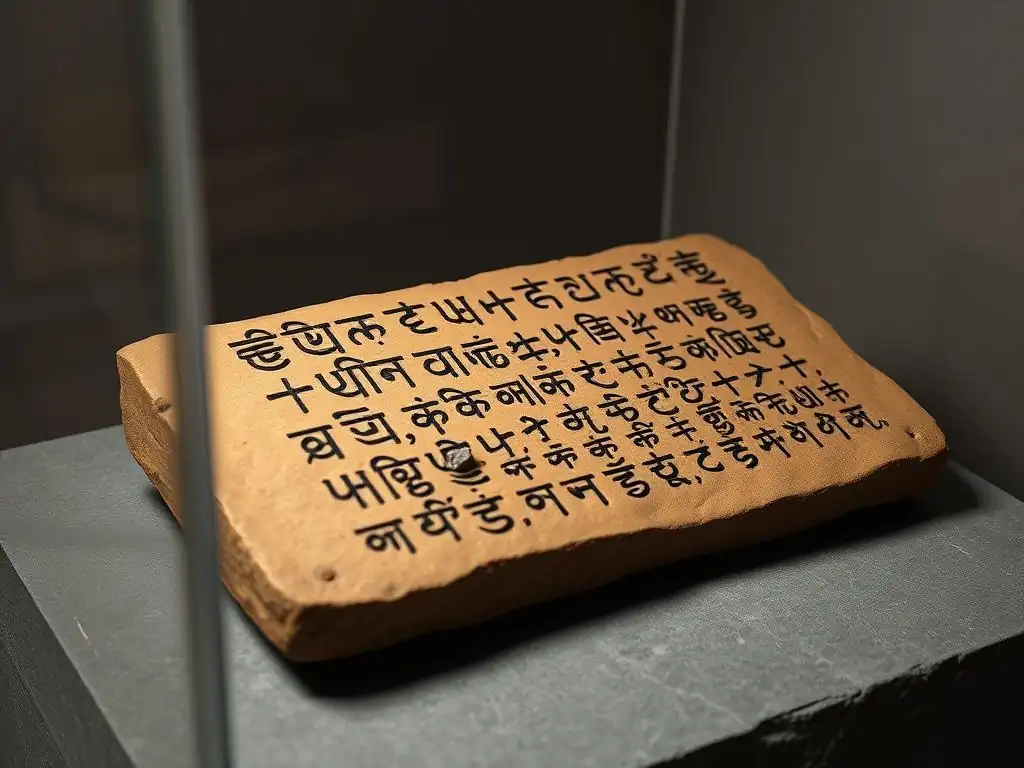
The wealth of Sogdian texts discovered across Central Asia provides invaluable primary sources for historical and linguistic research. Among the earliest and most significant are the "Ancient Letters," a collection of five complete and several fragmentary letters discovered in a ruined watchtower west of Dunhuang, China, dating to the early 4th century CE. These letters, written by Sogdian merchants and their families, offer a rare glimpse into their trading activities, personal lives, and the broader economic conditions along the Silk Road, detailing routes, goods, and market conditions.
Buddhist Sutras constitute the largest corpus of Sogdian texts, primarily found in the cave temples of Dunhuang and the ruins of Turfan. These are often translations from Sanskrit or Chinese Buddhist canons, providing crucial evidence for the transmission of Buddhism across Central Asia and into China. For example, numerous Sogdian fragments of the Diamond Sutra and the Lotus Sutra have been identified, showcasing the Sogdians' deep engagement with Buddhist thought.
Finally, the Manichaean texts, largely discovered in Turfan, represent a significant portion of the Sogdian literary output. These beautifully illuminated manuscripts, often written in the distinctive Manichaean script, contain hymns, prayers, and doctrinal treatises, offering unparalleled insights into the Manichaean religion and its spread in the region.
A Deep Dive into Sogdian Grammar: Structure and Unique Features
Phonology of the Sogdian Language: Sounds and Pronunciation
The phonology of the Sogdian language, while challenging to reconstruct precisely from a dead language, exhibits characteristics typical of Eastern Iranian languages, yet with its own distinct features. Scholars have inferred its sound system primarily from internal textual evidence, comparative linguistics with related languages, and later loanwords into Chinese and Old Uyghur. Sogdian possessed a rich array of consonants, including a significant number of fricatives and affricates, some of which underwent shifts from earlier Iranian sounds. For instance, Proto-Iranian θ (as in English "thin") often became t or δ (as in English "this") in Sogdian.
Vowel reconstruction is more complex due to the semi-alphabetic nature of the script, but evidence suggests a system with both short and long vowels, and possibly diphthongs. The presence of specific sound changes, such as the frequent loss of unstressed final vowels, contributed to the distinctive phonetic profile of Sogdian. Understanding these phonetic shifts is crucial for tracing the Sogdian language history origins and its divergence from other Iranian branches.
Morphology and Syntax: Analyzing Sogdian Word Formation and Sentence Structure
Sogdian morphology is characterized by a relatively well-preserved system of nominal and verbal inflections compared to later Iranian languages. Nouns typically distinguished between singular and plural forms, and notably, retained a system of grammatical cases, though simplified from Proto-Iranian. While the full Proto-Iranian eight-case system was reduced, Sogdian nouns often marked nominative (for subjects), accusative (for direct objects), genitive (for possession), and dative (for indirect objects) through various endings or postpositions.
Verbal morphology in Sogdian was also complex, featuring distinct forms for various tenses (present, past) and moods (indicative, subjunctive, imperative). The typical word order in Sogdian sentences was Subject-Object-Verb (SOV), a common feature among Indo-European languages, including many other Iranian tongues. However, as with many ancient languages, there was a degree of flexibility in word order, particularly for emphasis or stylistic reasons. The study of these morphological and syntactical features is vital for comprehending the internal structure and historical development of the Sogdian language history origins.
Key Grammatical Features Distinguishing Sogdian from Other Iranian Languages
Sogdian possessed several grammatical features that set it apart from other Iranian languages, especially its Western Iranian counterparts. One notable distinction was its more conservative retention of certain case distinctions in nouns, a feature largely lost in Middle and New Persian. While not as complex as Old Iranian, this partial preservation provided Sogdian with a more inflected nominal system. For example, the use of distinct endings for the genitive case was more consistent than in Pahlavi or early New Persian.
Another distinguishing feature was the specific development of its verbal system, including unique auxiliary verbs and constructions for expressing aspect and modality. While sharing a common Iranian grammatical blueprint, Sogdian evolved its own idiosyncratic patterns in verbal derivation and conjugation. These unique grammatical traits not only highlight the distinct path of Sogdian language history origins but also offer valuable data for comparative linguistic studies within the broader Indo-Iranian family.
The Historical Significance of the Sogdian Language in Central Asia
Sogdiana: The Geographical Context of the Sogdian Language
Sogdiana, the historical homeland of the Sogdian people and language, was a fertile region situated in what is now modern-day Uzbekistan and Tajikistan, centered around the prosperous oasis cities of Samarkand and Bukhara. This geographical location was strategically vital, positioned at the heart of the Silk Road, connecting the great empires of the East (China) and the West (Persia, Byzantium). The rivers Zeravshan and Kashkadarya provided essential irrigation for agriculture, supporting a dense population and flourishing urban centers.
The prosperity and strategic location of Sogdiana were fundamental to the Sogdian language history origins and its subsequent spread. The region served as a vibrant economic hub, attracting traders and travelers from across Eurasia. This constant influx and outflow of people facilitated the diffusion of the Sogdian language far beyond its geographical boundaries, transforming it into a crucial medium for international commerce and cultural exchange throughout the first millennium CE.
Sogdian as a Lingua Franca Along the Silk Road
For several centuries, roughly from the 4th to the 9th CE, Sogdian emerged as the primary lingua franca of the Silk Road. Its widespread adoption was not due to political dominance but rather to the unparalleled mercantile skills and extensive trading networks of the Sogdian people. Sogdian merchants established colonies and trading posts along the major arteries of the Silk Road, from the Caspian Sea to the inner reaches of China, carrying not only goods like silk, spices, and precious metals but also their language.
Evidence of Sogdian as a commercial and diplomatic language is found in documents from diverse locations, including letters discovered in the Dunhuang region of China and inscriptions in Mongolia. This extensive use meant that anyone engaged in long-distance trade or diplomacy in Central Asia and beyond would likely encounter or need to learn some Sogdian. The language's role as a facilitating medium profoundly shaped the cultural and economic interactions of the era, making its Sogdian language history origins inseparable from the narrative of the Silk Road.
Sogdian Trade and Cultural Exchange: Sogdian Colonies and Trading Networks
The Sogdian trading networks were remarkable in their scope and organization. Sogdian merchants established permanent colonies and diaspora communities in key trading centers, such as Dunhuang and Chang'an (the Tang Dynasty capital) in China, as well as various points across the Eurasian steppe. These communities were not merely temporary encampments but often thriving settlements with their own temples, administrative structures, and distinct cultural practices, all conducted in Sogdian.
These trading networks were conduits for a profound cultural exchange. Sogdians were instrumental in the transmission of various religions, including Buddhism, Manichaeism, and Nestorian Christianity, along the Silk Road. They also introduced new technologies, artistic motifs, and agricultural products (like grapevines) to distant lands. The extensive documentation of their trade, often in the Sogdian language, provides invaluable data for understanding the economic history of Eurasia and the complex interplay between trade, language, and cultural diffusion that defines the Sogdian language history origins.
Sogdian Language History Origins and the Spread of Buddhism
Sogdian Translations of Buddhist Texts: A Vital Source for Understanding Early Buddhism
The Sogdian language played an exceptionally vital role in the transmission of Buddhism across Central Asia and into East Asia. Many Buddhist texts, originally composed in Sanskrit or Prakrit, were first translated into Sogdian before being further translated into Chinese. This makes the Sogdian corpus of Buddhist literature an indispensable resource for understanding the early stages of Buddhist doctrine and narrative transmission. Hundreds of Sogdian Buddhist manuscript fragments, primarily discovered in the caves of Dunhuang and the ruins of Turfan, represent a significant portion of surviving Sogdian literature.
These translations often reflect the linguistic and cultural adaptations of Buddhist concepts as they moved westward from India. Scholars study these texts to trace the evolution of Buddhist terminology and ideas, noting how Sogdian scribes and translators rendered complex Sanskrit philosophical concepts into their own language. The existence of these extensive translations fundamentally shapes our understanding of the Sogdian language history origins as a key vehicle for religious dissemination.
The Role of Sogdian Merchants in Disseminating Buddhist Ideas
Sogdian merchants were not merely traders of goods; they were also active agents in the spread of religious ideas, particularly Buddhism. Their extensive trading routes along the Silk Road served as conduits for the movement of Buddhist monks, scriptures, and artistic motifs. As they established trading colonies and communities far from their homeland, these Sogdian enclaves often became centers for Buddhist worship and learning. Merchants, traveling for months or even years, would carry Buddhist amulets, images, and texts, introducing them to new populations.
The prosperity generated by Sogdian trade also provided the economic foundation for the construction of Buddhist monasteries and the patronage of Buddhist art in various Central Asian oases. This symbiotic relationship between commerce and religion meant that the pathways of trade became the pathways for the dissemination of Buddhist thought, making the Sogdian language history origins inextricably linked to the religious landscape of ancient Asia.
Examples of Buddhist Terminology Adopted in Sogdian: δharma (δrm) and saṃgha (sγnγ)
The deep engagement of Sogdians with Buddhism is clearly reflected in the linguistic adaptations found in their translated texts. Many core Buddhist concepts were either directly transliterated from Sanskrit or adapted into Sogdian phonology, demonstrating the direct influence of Indian Buddhist traditions. For example, the Sanskrit term for "doctrine" or "cosmic law," dharma, was adopted into Sogdian as δrm (pronounced something like "dharm"). This direct borrowing indicates the desire to maintain the precise religious meaning of the original term.
Similarly, the Sanskrit word for the monastic community, saṃgha, found its way into Sogdian as sγnγ (pronounced roughly "sangh"). Other examples include terms like buddha as βwty and nirvana as nyrwʾn. These linguistic adoptions are not merely phonetic curiosities; they are concrete evidence of the intellectual and spiritual assimilation of Buddhist ideas by Sogdian speakers. They provide invaluable insights into the process of religious translation and the shaping of the Sogdian language history origins by foreign religious influences.
The Decline of the Sogdian Language and its Legacy
Factors Contributing to the Decline of Sogdian: The Islamic Conquest and the Rise of Persian
The decline of the Sogdian language was a gradual process, primarily influenced by two major historical developments: the Arab Islamic conquest of Transoxiana (Sogdiana) starting in the early 8th century CE and the subsequent rise of New Persian as the dominant lingua franca in the region. The Arab conquest brought with it the Arabic language, which became the language of administration, law, and religious scholarship. While Sogdian persisted for some time, particularly in rural areas and among isolated communities, its official status and widespread use began to wane.
Concurrently, the emergence of New Persian (also known as Dari Persian), which developed from Middle Persian dialects, gained prominence as a literary and administrative language across the broader Iranian world. Its simpler grammar and broader cultural appeal gradually supplanted Sogdian as the language of commerce and culture in Central Asia. By the 10th century CE, Sogdian was largely confined to remote pockets, eventually fading into extinction, though its legacy would live on in other languages. This shift marks a significant turning point in the Sogdian language history origins.
The Influence of Sogdian on Other Languages: Persian, Uyghur, and Chinese
Despite its eventual decline, Sogdian left a lasting linguistic legacy on several languages of Central and East Asia. In early New Persian, particularly in regions bordering former Sogdiana, some lexical borrowings from Sogdian can be identified, often related to trade or specific cultural items. However, its most profound influence was arguably on Old Uyghur. The Old Uyghur script, for instance, is a direct descendant of the Sogdian Cursive Script, adapted to write the Turkic language. Furthermore, numerous Sogdian loanwords, particularly those related to Buddhism, Manichaeism, and administration, entered the Old Uyghur lexicon.
Sogdian also had a measurable impact on Chinese, especially during the Tang Dynasty when interactions along the Silk Road were at their peak. Chinese adopted a number of Sogdian loanwords, often related to exotic goods, foreign concepts, or specific cultural practices introduced by Sogdian merchants. Examples include terms for certain fruits, musical instruments, or even some Buddhist terminology that passed through Sogdian before entering Chinese. These influences underscore the historical importance and broad reach of the Sogdian language history origins.
Modern Scholarship and the Study of the Sogdian Language
Modern scholarship has been instrumental in resurrecting the Sogdian language from obscurity. The major discoveries of Sogdian manuscripts in the late 19th and early 20th centuries, particularly from Dunhuang and Turfan, provided the raw material for decipherment and study. Pioneering linguists and philologists meticulously worked to reconstruct its grammar, vocabulary, and phonetic system, relying on comparative linguistics and the context of the texts themselves.
Today, the study of Sogdian remains an active and vital field within Iranian studies and Central Asian history. Scholars continue to analyze newly discovered fragments, refine grammatical reconstructions, and interpret the vast corpus of religious and secular texts. Digital humanities projects are also playing a crucial role in making these fragmented texts accessible and searchable for a global community of researchers. This ongoing dedication ensures that the rich Sogdian language history origins continues to yield new insights into ancient Eurasia.
Sogdian Art, Religion & Diaspora: Contextualizing the Language
The Interplay Between Sogdian Language and Art
The artistic expressions of the Sogdians are profoundly intertwined with their language, providing a multi-layered understanding of their culture. Murals and frescoes from sites like Panjikent and Afrasiab (ancient Samarkand) often depict scenes from Sogdian life, myths, and religious narratives. Crucially, many of these artworks contain Sogdian inscriptions, which serve as invaluable linguistic data. These inscriptions can identify figures, provide dialogue, narrate events, or even contain dedications, offering direct linguistic context to the visual storytelling.
For instance, a fresco depicting the "Weeping Buddha" from Panjikent might have a Sogdian caption that identifies the characters or explains the scene, linking the visual narrative directly to the Sogdian language history origins of its cultural expression. This interplay allows scholars to cross-reference linguistic evidence with archaeological and art historical findings, leading to a more holistic reconstruction of Sogdian society, religious beliefs, and artistic conventions.
Sogdian Religious Practices Reflected in Linguistic Remains
The surviving Sogdian linguistic corpus offers an unparalleled window into the diverse religious practices of the Sogdian people. Unlike many contemporary cultures that adhered to a single dominant faith, Sogdiana was a melting pot of religions, including Buddhism, Manichaeism, and Nestorian Christianity, alongside indigenous Zoroastrian elements. The extensive Sogdian translations of Buddhist sutras, Manichaean hymns, and Christian biblical fragments reveal the specific theological concepts and liturgical practices of each faith as understood and articulated by Sogdians.
The specialized vocabulary developed within Sogdian for each religion is particularly telling. For example, distinct terms for monastic life, deities, or ritual practices emerge within the Buddhist texts, differing from those found in Manichaean or Christian Sogdian writings. This linguistic differentiation highlights the active intellectual engagement of Sogdians with these faiths and provides concrete evidence of their religious pluralism, further enriching our understanding of the Sogdian language history origins within a dynamic religious landscape.
The Sogdian Diaspora and the Spread of the Language Beyond Sogdiana
The Sogdian diaspora, driven by their unparalleled mercantile endeavors, was instrumental in spreading the Sogdian language far beyond its Central Asian homeland. Sogdian trading communities and colonies were established in various key locations along the Silk Road, from the oasis cities of the Tarim Basin (like Dunhuang and Turfan) to the imperial capital of Chang'an in China, and even as far as Mongolia, where Sogdian inscriptions have been found on monuments like the Karabalgasun stele.
These diasporic communities maintained their linguistic identity for centuries, using Sogdian for personal correspondence, trade documents, religious texts, and even tomb epitaphs. Their presence ensured that the Sogdian language was not merely spoken in Sogdiana but became a vibrant, living tongue across a vast geographical expanse, facilitating inter-ethnic communication and cultural exchange. The study of these dispersed linguistic remnants provides crucial evidence for the reach and longevity of the Sogdian language history origins as a global language of its time.
Conclusion: Understanding the Rich History Embedded in the Sogdian Language
The Importance of Sogdian for Archaeological and Historical Research
The Sogdian language is of paramount importance for archaeological and historical research, serving as a primary key to unlocking the complex history of Central Asia and the Silk Road. The discovery of Sogdian texts, often alongside archaeological artifacts, provides direct, firsthand accounts of daily life, trade, religious beliefs, and political events that are often unavailable from other sources. These texts fill critical gaps in our understanding of the period, offering details on everything from specific trade routes and commodities to the nuances of religious doctrine and the interactions between diverse ethnic groups.
Without the decipherment and study of Sogdian, our knowledge of the cultural and economic exchanges that shaped Eurasia for centuries would be significantly diminished. The language acts as a direct voice from the past, allowing historians and archaeologists to reconstruct the intricate social structures, economic systems, and belief systems of a pivotal region and era. It truly represents the rich Sogdian language history origins as a testament to a vibrant ancient civilization.
The field of Sogdian studies remains dynamic, with ongoing research and new discoveries continually expanding our knowledge. While major manuscript finds from Dunhuang and Turfan occurred over a century ago, new fragments occasionally emerge from private collections or through further archaeological expeditions in Central Asia. Scholars are also employing advanced digital methodologies, such as multispectral imaging and computational linguistics, to re-examine existing texts and extract new information, including previously illegible passages.
International collaborations between linguists, historians, and archaeologists ensure that the fragmented puzzle of Sogdian language and culture is slowly but surely pieced together. These continuing efforts are vital for refining our understanding of Sogdian grammar, expanding its known vocabulary, and shedding further light on the historical contexts in which the language flourished. This sustained academic inquiry ensures that the Sogdian language history origins remains a living subject of study.
Preserving the Legacy of the Sogdian Language for Future Generations
Preserving the legacy of the Sogdian language is a critical endeavor for safeguarding a vital part of global cultural heritage. As a language that once bridged vast civilizations and facilitated unparalleled cultural exchange, Sogdian offers unique insights into the interconnectedness of the ancient world. Efforts to preserve this legacy include the meticulous conservation of original manuscripts, many of which are fragile and susceptible to decay.
Furthermore, the creation of comprehensive digital archives, online dictionaries, and scholarly editions ensures that these precious texts are accessible to researchers and the public worldwide. By promoting continued academic study and encouraging new generations of scholars to engage with Sogdian, we ensure that the rich Sogdian language history origins and its profound contributions to the history of Central Asia and beyond are not forgotten, but rather continue to inform and inspire future generations.
Frequently Asked Questions
What are the Indo-Iranian roots of the Sogdian language?
The Sogdian language belongs to the Iranian branch of the Indo-Iranian language family. This means it shares a common ancestor with languages like Persian and Sanskrit, reflecting a shared historical linguistic heritage.
Where did the Sogdian language originate and where was it primarily spoken?
Sogdian originated in Sogdiana, a historical region in Central Asia. This area encompasses parts of modern-day Uzbekistan and Tajikistan, serving as the core region for its linguistic development and usage.
What type of writing system was used to record the Sogdian language?
Sogdian was written using a script derived from the Syriac alphabet. This script evolved over time, leading to several variations, each adapting the Syriac base to better suit the phonetic needs of the Sogdian language.
What was the role of the Sogdian language in the Silk Road trade?
Sogdian served as a lingua franca along the Silk Road, facilitating communication and trade between different cultures. Sogdian merchants played a crucial role, spreading their language and culture along these trade routes.
What is the historical significance of the Sogdian language to our understanding of ancient civilizations?
The Sogdian language provides invaluable insights into the history, culture, and religion of Central Asian societies. Texts written in Sogdian reveal details about their trade networks, religious beliefs, and interaction with other civilizations.
Final Reflection: Echoes of Sogdiana's Voice
The journey through the Sogdian language, as we've explored its Indo-Iranian roots, unique script, intricate grammar, and profound historical significance, isn't merely an academic exercise. It's a vital connection to a vibrant past, a past whose echoes still resonate in the linguistic and cultural tapestry of Central Asia and beyond. Understanding Sogdian allows us to hear the voices of merchants, diplomats, and religious figures who shaped the Silk Road, reminding us of the interconnectedness of civilizations and the enduring power of language to transmit knowledge and culture across vast distances.
The study of Sogdian has profoundly influenced my understanding of linguistic evolution and the intricate dance between language, trade, and cultural exchange. It underscores the importance of preserving and studying lesser-known languages, as they often hold keys to unlocking broader historical narratives and challenging conventional understandings of the past. Language is the road map of a culture. It tells you where its people come from and where they are going.
- Rita Mae Brown. This quote perfectly encapsulates the value of Sogdian; it's not just a language, but a roadmap to understanding a crucial chapter in human history.
As we conclude this exploration of the Sogdian language, I invite you to consider its legacy. How can we, in our own lives, contribute to the preservation and appreciation of linguistic diversity? How can we learn from the Sogdians' example of cultural exchange and embrace the richness that comes from understanding different perspectives? Let us strive to be mindful custodians of our shared linguistic heritage, ensuring that the voices of the past continue to inspire and inform the future.
Unlock the Secrets of Sogdian!
Thank you for delving into the fascinating world of the Sogdian language! We hope you've gained a deeper appreciation for its rich history and Indo-Iranian roots. Now, let's bring this knowledge to life.
Here's how you can continue your Sogdian adventure:
- Decipher a Sogdian inscription: Find a digitized image of a Sogdian inscription online and try to identify at least three characters. Challenge yourself!
- Explore related languages: Research modern languages that share Indo-Iranian roots with Sogdian and uncover potential linguistic connections.
- Share your newfound knowledge: Create a short social media post highlighting the historical significance of Sogdian and tag ArchaeologyHub.org.
What other ancient language sparks your curiosity and why?