
Interpreting the Material Culture of Norte Chico: Beyond Monumental Architecture

Welcome to ArchaeologyHub.org, your portal to unraveling the mysteries of the past. Ever wondered what everyday life was like for the people who built monumental structures? Dive into our detailed exploration of Norte Chico material culture and discover the fascinating stories hidden within their artifacts. Prepare to journey beyond the impressive architecture and uncover a richer understanding of this ancient civilization – the adventure begins now!
- Introduction to Norte Chico Material Culture: A Broader Perspective
- Domestic Life and Everyday Objects in Norte Chico
- Textile Production and its Social Significance in the Caral Civilization
- Agricultural Practices and Foodways Reflected in Material Remains
- Religious and Ritual Practices: Interpreting Norte Chico Offerings and Iconography
- Trade and Exchange Networks: Tracing the Movement of Norte Chico Goods
- The Decline of Norte Chico and Shifts in Material Culture
- Conclusion: A Comprehensive Understanding of Norte Chico Material Culture
-
Frequently Asked Questions
- How does ArchaeologyHub.org define Norte Chico material culture?
- What types of artifacts are considered significant in understanding Norte Chico material culture besides large structures?
- Why is understanding the Norte Chico material culture important for archaeologists?
- How does Norte Chico material culture compare to that of other contemporary civilizations?
- Where can I find more detailed information on specific aspects of Norte Chico material culture on ArchaeologyHub.org?
- Final Reflection: Unearthing the Voices of Norte Chico
- Unearth Your Own Archaeological Insights!
Introduction to Norte Chico Material Culture: A Broader Perspective
The Significance of Material Culture in Understanding Norte Chico Society
The study of Norte Chico material culture provides an indispensable window into one of the earliest complex societies in the Americas, flourishing along the central coast of Peru between approximately 3000 and 1800 BCE. While monumental architecture, such as the impressive pyramids and plazas at Caral, often captures initial attention, it is the broader spectrum of material remains that truly illuminates the daily lives, social structures, economic practices, and belief systems of this ancient civilization.
From finely woven textiles to simple domestic tools, each artifact contributes to a more nuanced understanding of how Norte Chico inhabitants interacted with their environment and each other. These smaller, often overlooked, items collectively form a rich tapestry of evidence, revealing the intricate details of a society that laid foundational elements for subsequent Andean cultures.
Understanding Norte Chico material culture is crucial because it moves beyond the grandeur of public works to explore the practicalities and subtleties of human existence. The sheer volume and diversity of artifacts recovered from sites like Caral, Aspero, and El Paraíso offer insights into resource management, technological innovation, and the organization of labor.
For instance, the prevalence of cotton textile fragments and associated tools speaks volumes about an economy centered on this crop, while the types of food remains found in middens provide direct evidence of their diet and agricultural sophistication. By meticulously analyzing these material traces, archaeologists can reconstruct the lifeways of the Norte Chico people, painting a comprehensive picture that goes far beyond what monumental structures alone can convey.
Moving Beyond Monumental Architecture: A Holistic View of Norte Chico
While the six large pyramidal structures at Caral, some reaching heights of up to 28 meters, are undeniably impressive feats of engineering, focusing solely on them risks creating an incomplete narrative of Norte Chico society. A holistic view of Norte Chico material culture necessitates a deep dive into the less conspicuous, yet equally informative, archaeological finds.
This includes examining the layout of residential areas, the contents of refuse piles, and the intricate details of personal adornments or ritual objects. These elements provide critical data on population density, sanitation practices, dietary habits, and the daily rhythms of life within these early urban centers.
By broadening our scope, we recognize that the Norte Chico civilization was not solely defined by its grand ceremonial centers but by the complex interplay of various material expressions. For example, the discovery of a large number of bone flutes at Caral suggests a significant role for music in their cultural practices, an aspect not immediately evident from architecture alone.
Similarly, the widespread distribution of specific types of domestic pottery, even if simple in form, points to shared culinary traditions and potentially interconnected communities. This comprehensive approach to Norte Chico material culture allows archaeologists to piece together a richer, more human-centric understanding of this formative period in Andean prehistory, highlighting the ingenuity and adaptability of its inhabitants in all facets of their existence.
Domestic Life and Everyday Objects in Norte Chico
Unveiling Daily Life Through Norte Chico Artifacts
The myriad of artifacts recovered from domestic contexts within Norte Chico sites offers unparalleled insights into the daily routines and practicalities of its inhabitants. Excavations at sites like Caral and Aspero have yielded a wealth of everyday objects, including grinding stones (manos and metates), bone tools (such as awls and needles), and a variety of stone implements.
These items reveal a society engaged in basic subsistence activities, processing plant foods, and crafting necessary items for survival and comfort. For instance, the presence of numerous grinding stones indicates a diet heavily reliant on plant-based foods, likely including gourds, beans, and chili peppers, which were cultivated in the fertile river valleys.
Beyond mere subsistence, these artifacts also hint at the organization of labor and the development of specialized skills. The consistent forms of certain tool types across different residential areas suggest standardized production methods, even if not mass production in a modern sense.
Small clay figurines, often found in domestic settings, may have served personal or household ritual purposes, providing a glimpse into the private spiritual lives of individuals. The careful analysis of wear patterns on tools, combined with their spatial distribution within residential structures, allows archaeologists to reconstruct specific activities that took place within homes, such as food preparation, textile spinning, or tool repair, thereby bringing the ancient Norte Chico household to life.
Analysis of Domestic Structures and Their Implications
The residential architecture of Norte Chico sites provides crucial information about social organization and population density. While much attention is paid to the monumental pyramids, the associated residential sectors, such as those extensively excavated at Caral, reveal distinct patterns. These areas typically consist of modest, single-room dwellings constructed from stone and adobe, often grouped around smaller courtyards or plazas. The relatively uniform size and construction style of these houses suggest a degree of social egalitarianism among the common populace, although variations in the quality of construction or proximity to ceremonial centers might indicate subtle social distinctions or occupational specializations.
The layout of these domestic structures, often arranged in clusters, implies a communal living arrangement or extended family units. The presence of shared refuse pits or communal cooking areas in some sectors further supports this notion of close-knit communities.
For example, at Caral, residential areas were found to be organized in distinct zones, suggesting planned urban development rather than haphazard growth. The analysis of these domestic spaces, including the distribution of hearths and storage areas, helps archaeologists understand not only how people lived but also how their society was structured, how resources were shared, and how the daily rhythm of family life unfolded within the shadow of the great pyramids.
Pottery and Ceramic Analysis: Insights into Norte Chico Cooking and Storage Practices
Interestingly, true fired pottery is notably absent from the early phases of Norte Chico material culture, a distinguishing feature compared to many other coeval complex societies. Instead, Norte Chico communities primarily utilized gourds and stone vessels for cooking, storage, and food preparation. Large, carefully carved stone bowls and mortars, often found in domestic contexts, served as primary containers for processing and serving food.
Gourds, which are naturally durable and lightweight, were extensively used, as evidenced by numerous fragments and impressions found at sites like Caral and Aspero. These organic containers, while less enduring in the archaeological record, played a vital role in their daily culinary practices.
However, towards the later phases of the Norte Chico period, roughly after 2000 BCE, rudimentary, unfired clay vessels begin to appear, often in limited quantities. These early ceramic forms are typically simple, utilitarian, and made from local clays, suggesting a gradual experimentation with clay technology rather than a sudden adoption of sophisticated pottery traditions.
The scarcity and basic nature of these early ceramic pieces highlight a unique trajectory for Norte Chico material culture, where the development of complex social and political structures occurred without the widespread use of fired pottery, which is often considered a hallmark of settled agricultural societies. This absence or delayed adoption of fired ceramics forces researchers to rely more heavily on other forms of material culture to reconstruct their foodways and storage techniques.
Cotton Cultivation and Textile Manufacturing in the Norte Chico Region
Cotton cultivation was a cornerstone of the Norte Chico economy, distinguishing it significantly from later Andean civilizations that heavily relied on camelid fibers like alpaca and llama wool. Archaeological evidence from sites such as Caral, Aspero, and Bandurria unequivocally demonstrates the extensive cultivation of Gossypium barbadense, a species of cotton native to the Americas.
Large quantities of cotton seeds, fibers, and processing tools like spindle whorls and loom weights have been recovered from both domestic and ceremonial contexts, indicating a widespread and organized industry. The very presence of numerous spindle whorls, sometimes numbering in the hundreds at a single site, suggests that textile production was a significant daily activity for many individuals.
The manufacturing process involved spinning raw cotton into threads using simple hand spindles, followed by weaving on backstrap looms or similar horizontal setups. While direct evidence of looms is rare due due to organic decay, the presence of loom weights and the characteristic twining techniques seen in recovered fragments strongly imply their use.
The mastery of cotton cultivation and textile production was not merely for clothing; cotton was also crucial for crafting fishing nets, bags, and other utilitarian items essential for their subsistence, particularly for the coastal populations who relied heavily on marine resources. This extensive textile industry underscores a sophisticated understanding of agricultural cycles and a well-organized labor force, indicating that cotton was not just a crop but a fundamental component of the Norte Chico economic and social fabric.
Beyond their utilitarian functions, textiles held profound social and ritual significance within Norte Chico society, serving as powerful indicators of social status, identity, and ritual participation. While elaborate, polychrome textiles characteristic of later Andean cultures are not found, the quality of spinning and the complexity of twining techniques in Norte Chico material culture suggest varying levels of skill and perhaps access to finer cotton.
For instance, some textile fragments recovered from elite burials or ceremonial contexts exhibit finer weaves or more intricate patterns than those found in general refuse, hinting at their use as status symbols or specialized ritual garments.
Textiles also played a critical role in ritual offerings and burials. Bundles of cotton cloth, sometimes containing small figurines or other precious items, have been discovered in ceremonial pits and as grave goods. These offerings suggest that textiles were considered valuable commodities, capable of conveying respect, devotion, or wealth in a ritual setting.
The act of creating textiles, from cultivating the cotton to spinning and weaving, may itself have been imbued with ritual meaning. Moreover, the colors of the cotton, which range from natural creams and browns to possibly dyed hues (though direct evidence for dyeing is scarce), could have conveyed specific meanings or affiliations within the community, further solidifying the role of textiles as a central element of Norte Chico material culture and a key medium for expressing social and spiritual values.
Examining Textile Patterns and Techniques: Clues to Norte Chico Beliefs
The study of textile patterns and manufacturing techniques provides unique insights into the aesthetic preferences and potentially the symbolic world of the Norte Chico people. The dominant technique found in Norte Chico material culture is a form of twining, rather than true weaving with warp and weft, which is common in later Andean textiles.
This twining technique, where two weft elements are twisted around vertical warps, allowed for the creation of durable fabrics, particularly effective for nets and bags. While many fragments appear plain, some exhibit simple geometric patterns, often created by varying the color of the cotton or by altering the twining direction.
These subtle patterns, though less elaborate than those found in later Nazca or Moche textiles, might have conveyed information or held symbolic meaning. For example, repetitive patterns could represent natural phenomena, ancestral figures, or cosmological concepts relevant to Norte Chico beliefs. The consistency of certain twining methods across different sites also suggests a shared technological tradition and possibly a common cultural identity.
Detailed analysis of the fiber types, the tightness of the spin, and the specific twining variations can reveal regional differences or the evolution of textile technology over time. Thus, even without complex iconography, the very structure and subtle decoration of Norte Chico textiles offer valuable, albeit indirect, clues into the artistic expression and underlying belief systems of this ancient civilization.
Agricultural Practices and Foodways Reflected in Material Remains
Irrigation Systems and Agricultural Tools: Evidence of Norte Chico Farming Techniques
The Norte Chico civilization's ability to sustain large populations in arid coastal valleys was fundamentally reliant on sophisticated agricultural practices, prominently featuring extensive irrigation systems. Archaeological investigations have revealed evidence of intricate canal networks, such as those identified in the Supe Valley, diverting water from rivers to cultivate fertile terraces. While not as massive as later Inca systems, these early canals demonstrate a remarkable understanding of hydraulics and collective labor organization. Their presence is a definitive part of Norte Chico material culture, indicating a highly organized approach to resource management necessary for supporting urban centers like Caral.
Accompanying these irrigation systems are the material remains of agricultural tools. While preservation of wooden tools is poor, stone hoes, digging sticks (identified by wear patterns on associated stone components), and grinding implements are frequently found. These tools, though simple, were effective for preparing soil, planting, and harvesting the primary crops.
The sheer scale of agricultural production implied by the population size and the extent of the irrigation systems suggests that these tools, along with the knowledge of their use, were widely distributed and fundamental to the Norte Chico economy. The investment in these large-scale water management projects reflects a long-term commitment to sedentary farming and a communal effort in food production that underpinned their societal complexity.
Analysis of Plant Remains: Diet and Agricultural Innovation
The direct evidence of Norte Chico foodways comes from the analysis of plant remains, primarily macroscopic botanical finds such as seeds, fibers, and desiccated plant parts recovered from middens and archaeological contexts. This analysis reveals a diverse diet based largely on cultivated crops, including gourds ( Lagenaria siceraria), various types of beans ( Phaseolus vulgaris, P. lunatus), chili peppers ( Capsicum annuum), and sweet potatoes ( Ipomoea batatas).
Notably absent from the early phases of Norte Chico material culture, and indeed from their primary diet, is maize, which became a staple for later Andean civilizations. This reliance on a different crop suite highlights a distinct agricultural trajectory for Norte Chico.
Beyond cultivated plants, coastal Norte Chico sites like Aspero and Bandurria show a significant reliance on marine resources. Vast quantities of fish bones, particularly anchovies and sardines, as well as shellfish and sea lion remains, indicate that protein was largely sourced from the Pacific Ocean.
This "maritime foundation" theory suggests a complementary relationship between inland agricultural communities and coastal fishing settlements, with cotton being a crucial trade commodity. The evidence from plant and faunal remains collectively paints a picture of an innovative and adaptable agricultural system, capable of exploiting both terrestrial and marine environments to sustain a large and growing population, making their foodways a critical aspect of Norte Chico material culture.
The Importance of Quipu and Other Recording Devices in Managing Resources
Among the most enigmatic and significant components of Norte Chico material culture are the quipu, complex knotted string devices. While extensively known from the Inca Empire, the discovery of a quipu at Caral, dating to approximately 2200 BCE, pushes back the known origins of this sophisticated recording system by over a millennium. This early quipu, consisting of cotton strings with various knots, suggests that the Norte Chico people possessed a method for recording numerical data, potentially related to administrative tasks, census information, or resource management, such as agricultural yields or labor quotas.
Although the precise decipherment of Norte Chico quipu remains elusive, their presence implies a need for complex data management in a society without a formal writing system. This recording capability would have been essential for organizing the large-scale labor required for monumental construction, managing extensive irrigation networks, and coordinating the distribution of agricultural and marine products across different settlements.
The quipu, as a key element of Norte Chico material culture, points to a level of administrative sophistication that facilitated the coordination of a complex economy and a hierarchical society, enabling the efficient management of their vital resources and demonstrating a remarkable intellectual achievement for their time.
Religious and Ritual Practices: Interpreting Norte Chico Offerings and Iconography
Examining Religious Centers and Ceremonial Sites Beyond the Pyramids
While the monumental pyramids at sites like Caral are clear indicators of organized religious and ceremonial life, a comprehensive understanding of Norte Chico ritual practices requires examining other, often smaller, ceremonial spaces and associated material culture. Beyond the main pyramids, archaeologists have identified smaller circular plazas, sunken courts, and specialized structures that likely served as venues for more intimate or localized rituals. These spaces, found at various Norte Chico sites, often contain evidence of offerings, hearths for burning ritualistic materials, and specific architectural features that delineate their sacred purpose.
For instance, the presence of smaller, often circular, platforms or altars within residential compounds or smaller settlements suggests that ritual activities were not confined solely to the grand ceremonial centers but integrated into daily life at different scales. The discovery of specific types of artifacts, such as small clay figurines, bone flutes, or carefully arranged stone offerings within these secondary ritual spaces, provides direct evidence of the types of ceremonies performed.
These findings demonstrate a widespread and decentralized religious system, where participation in ritual was likely a common aspect of life, extending beyond the elite-controlled monumental complexes and permeating various layers of Norte Chico society through diverse forms of Norte Chico material culture.
Analysis of Ritual Offerings and Burials: Understanding Norte Chico Beliefs
The study of ritual offerings and burial practices provides profound insights into the spiritual beliefs and cosmological views of the Norte Chico people. Archaeological excavations have uncovered numerous caches of offerings, often placed within ceremonial platforms, plazas, or even beneath domestic structures.
These offerings typically consist of carefully arranged bundles of cotton textiles, small figurines made of unfired clay or bone, Spondylus shells (imported from warmer waters to the north), and sometimes animal remains, particularly guinea pigs. The deliberate placement and composition of these offerings suggest a purposeful interaction with the spiritual realm, perhaps as acts of reciprocity with deities or ancestors, or to consecrate new constructions.
Burial practices also reveal important aspects of Norte Chico beliefs concerning death and the afterlife. While formal cemeteries are rare, individual burials have been found within or near residential areas, and occasionally within ceremonial contexts. Grave goods, though generally modest, sometimes include personal ornaments, tools, or small ceramic vessels, indicating a belief in the continuation of some form of existence beyond death.
The skeletal remains themselves, when preserved, can offer clues about health, diet, and even social status. The consistent inclusion of certain items in offerings and burials across different sites points to shared religious tenets and a widespread symbolic language embedded within Norte Chico material culture, reflecting a coherent belief system that guided their interactions with the sacred.
Iconography and Symbolism Found on Norte Chico Artifacts: Deciphering Meaning
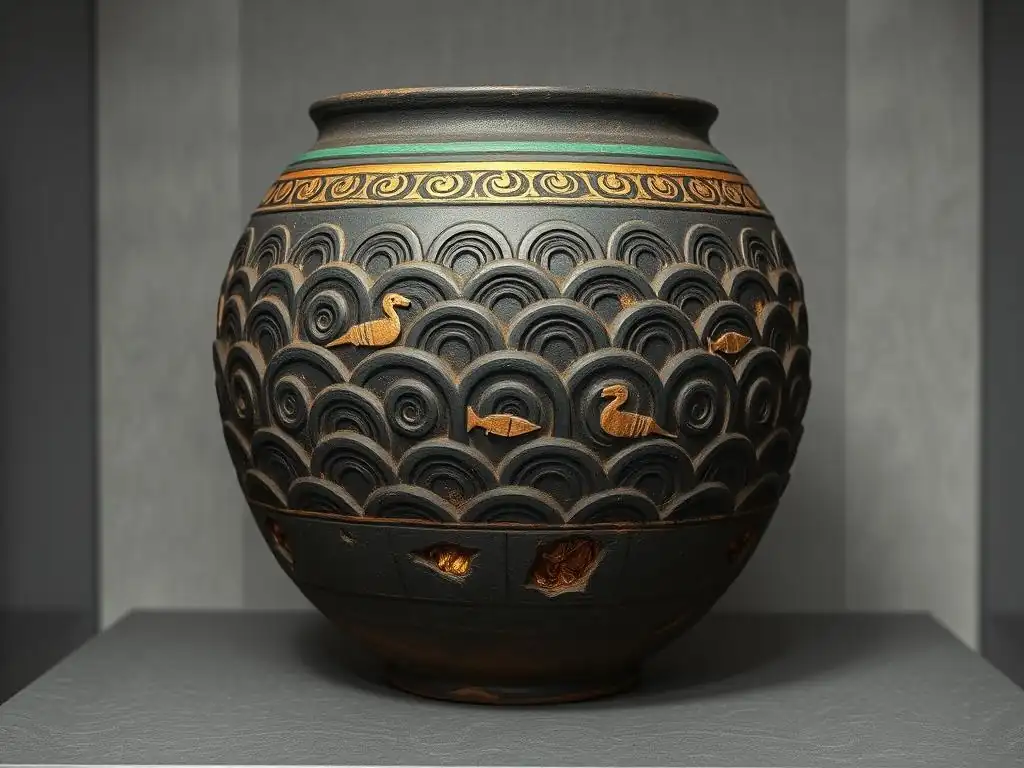
While Norte Chico material culture is not characterized by the elaborate, narrative iconography seen in later Andean civilizations, subtle symbolic representations are present on various artifacts, offering glimpses into their worldview. The most common forms of iconography appear on small figurines, bone objects, and occasionally on textiles or gourds. These representations are often abstract or zoomorphic, featuring simplified depictions of animals or anthropomorphic figures. For example, some bone spatulas or implements have carved designs that might represent birds, fish, or other creatures significant to their environment and cosmology.
The interpretation of this early iconography is challenging due to its simplicity and the lack of comparative texts. However, recurring motifs, even if abstract, suggest shared symbolic meanings within the Norte Chico belief system. The presence of specific animals, for instance, might point to their totemic significance or association with particular deities or natural forces.
Furthermore, the deliberate placement of certain decorated artifacts in ritual contexts indicates their symbolic potency. Deciphering these subtle iconographic elements is a critical, ongoing task for archaeologists, as they represent a direct visual language used by the Norte Chico people to express their deepest beliefs and connect with their spiritual world, making them an invaluable part of Norte Chico material culture.
Trade and Exchange Networks: Tracing the Movement of Norte Chico Goods
Evidence of Trade Routes and Interregional Connections
The Norte Chico civilization, despite its early emergence, was not an isolated entity but engaged in extensive trade and exchange networks that connected it to various regions of ancient Peru. The most compelling evidence for these interregional connections comes from the presence of exotic materials at Norte Chico sites that are not native to the Supe Valley or the immediate coastal region.
These materials indicate well-established trade routes, suggesting regular interaction and exchange of goods with communities located in the highlands, the Amazon basin, and along other parts of the Peruvian coast. The scale of these exchanges implies a degree of organization and specialized knowledge of routes and resources.
One of the most significant indicators of these trade networks is the consistent presence of Spondylus shell fragments, particularly Spondylus princeps and Spondylus calcifer. These marine bivalves are native to the warm waters off the coast of Ecuador and northern Peru, far from the central Norte Chico region.
Their consistent appearance in ritual offerings and as personal adornments at sites like Caral and Aspero strongly suggests long-distance maritime or overland trade routes that facilitated the movement of these highly prized ceremonial items. This widespread distribution of exotic materials within Norte Chico material culture underscores a dynamic network of interaction that was crucial for the flow of goods, ideas, and possibly even people across vast geographical distances.
Identifying Imported Materials and Their Origins
Beyond Spondylus shells, other imported materials found in Norte Chico material culture include obsidian, a volcanic glass used for sharp tools, and various types of semi-precious stones. Obsidian, for example, is not found naturally in the central Peruvian coast; its presence points to origins in specific volcanic zones in the Peruvian highlands, such as those in the Ayacucho or Puno regions.
Detailed geochemical analysis of obsidian artifacts can pinpoint their precise geological source, thereby mapping specific trade routes and the extent of Norte Chico's economic reach into the Andean interior. The quantity of obsidian found, while not as abundant as in some later cultures, indicates a consistent demand for this durable material.
Other exotic materials, though less frequently encountered, include small quantities of colorful feathers, possibly from Amazonian birds, and certain types of exotic woods or pigments. These rare finds, often associated with elite contexts or ritual offerings, suggest a desire for prestige goods that could only be acquired through long-distance exchange.
The identification of these imported materials and the determination of their geographical origins are critical for understanding the economic complexity of Norte Chico. They demonstrate that the civilization had established sophisticated systems for acquiring non-local resources, integrating them into their daily lives and ceremonial practices, and thereby enriching the overall Norte Chico material culture.
The Role of Norte Chico in the Broader Andean Trade System
The evidence of extensive trade networks places Norte Chico not as an isolated early civilization, but as an active participant and potentially a foundational node in the nascent broader Andean trade system. While the exact mechanics of these exchanges (whether direct trade, down-the-line exchange, or tribute) are still debated, the consistent flow of goods like Spondylus from the north and obsidian from the highlands indicates a well-developed interregional economy.
Norte Chico's primary export would have been its highly valued cotton, which was essential for fishing nets on the coast and potentially for textiles in other regions, thus providing a crucial commodity for reciprocal exchange.
This early participation in a wide-ranging trade system highlights Norte Chico's economic ingenuity and its role in shaping early Andean interactions. The demand for exotic materials, particularly those with ritual significance like Spondylus, likely stimulated the development and maintenance of long-distance exchange relationships.
The experience gained in organizing these trade networks, managing resources, and establishing diplomatic or economic ties with diverse communities would have provided a blueprint for the more extensive and centralized trade systems that characterized later Andean civilizations. Thus, the study of Norte Chico material culture related to trade offers a vital perspective on the origins and evolution of economic interdependence across the ancient Andean landscape.
The Decline of Norte Chico and Shifts in Material Culture
Changes in Settlement Patterns and Material Remains Over Time
The decline of the Norte Chico civilization, roughly beginning around 1800 BCE, is reflected in observable shifts in its material culture and settlement patterns. Archaeological evidence indicates a gradual abandonment of the large, inland ceremonial centers like Caral, with populations either dispersing or moving towards more dispersed, smaller settlements, often closer to the coast or in different river valleys.
This transition is marked by a decrease in the construction of monumental architecture and a change in the types and quantities of artifacts found at former major sites. The once vibrant public spaces show reduced activity, and evidence of maintenance dwindles.
The material remains from this transitional period often show a simplification of artifact types or a reduction in the scale of production. While cotton cultivation likely continued, the organized, large-scale textile industry that characterized the peak of Norte Chico seems to diminish in its former centers.
The distinctive Norte Chico material culture, with its specific forms of stone tools, twined textiles, and gourd vessels, gradually gives way to new regional styles and technologies as populations reorganize. This shift in material culture is not necessarily a sign of collapse but rather a reorganization of society, reflecting changing priorities, environmental pressures, or evolving socio-political structures that led to the eventual dissolution of the centralized Norte Chico system.
Environmental Factors and Their Impact on Norte Chico Society
Environmental factors are widely considered to have played a significant role in the decline of Norte Chico, directly impacting their material culture and subsistence strategies. A major hypothesis points to prolonged periods of drought and increased seismic activity, which could have severely impacted the delicate balance of their agricultural system.
Extended droughts would have reduced the water flow in rivers, making their extensive irrigation networks less effective and leading to decreased agricultural yields. This environmental stress would have directly affected food security, leading to population dispersal and a decline in the resources available for maintaining large urban centers and their monumental architecture.
Evidence for environmental shifts includes changes in riverine sedimentation patterns and paleoclimatic data. For instance, increased frequency of El Niño events, which bring torrential rains to some areas but drought to others, could have caused devastating floods or prolonged dry spells, disrupting coastal fishing and inland agriculture alike.
Such environmental pressures would have forced communities to adapt, potentially by moving to more resilient locations, diversifying their subsistence base, or adopting different social organizations. The material culture from this period would reflect these adaptations: perhaps a greater emphasis on mobile tools, smaller-scale domestic production, and a shift away from the large-scale public works that defined the earlier Norte Chico period, indicating how deeply environmental changes impacted their way of life.
The Legacy of Norte Chico Material Culture: Influences on Later Andean Civilizations
Despite its eventual decline, the Norte Chico civilization left an indelible legacy that profoundly influenced later Andean civilizations, particularly evident in their material culture. Many of the fundamental innovations pioneered by Norte Chico, such as large-scale irrigation, monumental architecture (albeit in different forms), and complex social organization, provided a blueprint for subsequent cultural developments in the region. The very concept of organized urban centers with ceremonial precincts, as seen at Caral, laid the groundwork for future urbanism in the Andes.
Specific elements of Norte Chico material culture can be seen as precursors to later traditions. The use of cotton as a primary fiber, while later supplemented by camelid wool, remained crucial throughout Andean prehistory. The early quipu found at Caral demonstrates the ancient roots of this unique Andean recording technology, which reached its zenith with the Inca.
Furthermore, the emphasis on maritime resources and their integration with agricultural economies, as practiced by Norte Chico, continued to be a defining feature of many coastal Andean societies. Thus, by meticulously studying the Norte Chico material culture, archaeologists can trace the deep historical roots of many enduring Andean traditions, recognizing Norte Chico not as a dead end, but as a crucial foundational chapter in the long and rich history of Andean civilization.
Conclusion: A Comprehensive Understanding of Norte Chico Material Culture
The Ongoing Importance of Archaeological Research in Norte Chico
The study of Norte Chico material culture remains a dynamic and critically important field within archaeology. Ongoing excavations and analyses continue to reveal new insights into this foundational civilization, challenging previous assumptions and refining our understanding of early complex societies in the Americas. Each new discovery, whether a previously unknown settlement, a unique artifact, or a new piece of environmental data, contributes to a more complete picture of their daily lives, technological capabilities, social structures, and spiritual beliefs. The vastness of the Norte Chico region, with its numerous sites, ensures that there is still much to uncover and interpret.
The interdisciplinary nature of current archaeological research in Norte Chico is also vital. By integrating data from archaeobotany, zooarchaeology, paleoclimatology, and material science, researchers can create a holistic interpretation of the material culture, understanding not just what objects were used, but how they were produced, where they came from, and what they tell us about the environment and economy. This continued dedication to systematic excavation and sophisticated analysis is essential for building an increasingly accurate and nuanced narrative of Norte Chico, ensuring that its significant contributions to human history are fully recognized and understood.
Future Directions for the Study of Norte Chico Material Culture
Future research directions in the study of Norte Chico material culture hold immense promise for deepening our knowledge. One key area involves more extensive comparative studies across the various Norte Chico sites, not just focusing on Caral, to identify regional variations and commonalities in artifact assemblages, architectural styles, and subsistence strategies.
This comparative approach can illuminate the nature of socio-political organization across the Supe Valley and beyond, revealing the extent of integration or autonomy between different settlements. Furthermore, advanced analytical techniques, such as residue analysis on ancient vessels and tools, could provide direct evidence of food preparation, craft specialization, and even early medicinal practices.
Another promising avenue lies in the application of non-invasive archaeological methods, like remote sensing and geophysical surveys, to identify and map new sites or hidden features within known sites. This can help in understanding the full spatial extent of the Norte Chico civilization and the distribution of its material culture without destructive excavation.
Further investigation into the early quipu discovered at Caral, potentially through comparative analysis with later Inca quipu and ongoing linguistic research, could also unlock unprecedented insights into their administrative and intellectual achievements. These future directions promise to continue transforming our understanding of Norte Chico material culture, providing a richer tapestry of this remarkable ancient society.
Preserving and Protecting the Archaeological Heritage of the Caral-Supe Civilization
The preservation and protection of the archaeological heritage of the Caral-Supe civilization are paramount. As one of the earliest urban centers in the Americas and a UNESCO World Heritage site, Caral-Supe represents an irreplaceable global treasure. The fragile nature of many of the Norte Chico material culture elements, particularly organic remains like textiles and gourds, necessitates careful conservation efforts to prevent deterioration from environmental factors, looting, and uncontrolled development. Educational initiatives aimed at local communities and the broader public are also crucial to foster a sense of stewardship and appreciation for these ancient sites.
Effective heritage management strategies, including site monitoring, controlled access, and sustainable tourism practices, are essential to ensure that future generations can continue to learn from the rich material culture of Norte Chico. International collaboration and funding are also vital for supporting ongoing research, conservation projects, and the training of local archaeologists and conservators. By prioritizing the preservation of Norte Chico material culture and its associated archaeological contexts, we ensure that the invaluable lessons learned from this ancient civilization—about human ingenuity, adaptability, and the origins of complex societies—remain accessible and continue to inform our understanding of the human past.
Frequently Asked Questions
How does ArchaeologyHub.org define Norte Chico material culture?
We define it as the physical remains and artifacts produced by the Norte Chico civilization (also known as the Caral civilization), going beyond just their monumental architecture. It includes textiles, tools, pottery, and other objects.
What types of artifacts are considered significant in understanding Norte Chico material culture besides large structures?
Significant artifacts include textiles, particularly knotted textiles (quipu), as well as musical instruments like flutes and cornets, and evidence of agricultural practices.
Why is understanding the Norte Chico material culture important for archaeologists?
It provides a more comprehensive understanding of their daily life, social organization, and cultural practices. Focusing solely on monumental architecture gives an incomplete picture of their society.
How does Norte Chico material culture compare to that of other contemporary civilizations?
The Norte Chico lacks the extensive pottery found in other contemporary civilizations. Their reliance on textiles and quipu for record-keeping is also a unique feature.
Where can I find more detailed information on specific aspects of Norte Chico material culture on ArchaeologyHub.org?
You can explore our sections organized by geographic regions within the Norte Chico area, or search using keywords related to specific artifact types. Our detailed timelines will also help you contextualize the artifacts.
Okay, I understand. Here's a final reflection designed to resonate with readers after exploring the material culture of Norte Chico, optimized for the keyword "Norte Chico material culture" and following the requested structure:
Final Reflection: Unearthing the Voices of Norte Chico
The exploration of Norte Chico material culture reveals a society far more nuanced than its monumental architecture alone suggests. By shifting our focus from the grand pyramids to the everyday objects – the textiles, the tools, the pottery shards – we gain a richer, more human understanding of this ancient civilization and its enduring legacy, reminding us that true understanding lies in the details.
This journey into the past underscores how material culture serves as a powerful, often overlooked, window into the lives and beliefs of those who came before us. It challenges us to move beyond simplistic narratives and embrace the complexity inherent in human history. The past is never dead. It's not even past.
- William Faulkner. This quote resonates deeply when considering Norte Chico; their story, etched in clay and woven into fabric, continues to speak to us today.
As we conclude this exploration of Norte Chico material culture, I invite you to consider the objects that surround you. What stories do they tell about your own life, your own society? By engaging with the material world around us, both ancient and modern, we can gain a deeper appreciation for the human experience and our shared connection to the past. Let us strive to see beyond the surface and listen to the silent voices of those who shaped the world we inhabit today.
Unearth Your Own Archaeological Insights!
Thank you for delving into the fascinating world of Norte Chico with us. We hope this exploration has broadened your understanding of its rich material culture beyond just its impressive architecture. Now, it's time to put that knowledge into action.
Here are some ways you can continue your journey:
- Identify and document everyday objects in your surroundings, considering what they reveal about your own society's values and practices. This will hone your skills in archaeological interpretation.
- Share this article with a friend or colleague and discuss the challenges of interpreting ancient cultures based solely on material remains.
- Explore online databases of archaeological finds and try to interpret the stories they tell about past civilizations.
What unexpected object in your home tells a unique story about your family's history and values?