
Archaeological Investigations at the Thermopylae Battlefield: Locating the Phokian Wall

Welcome to ArchaeologyHub.org, your digital gateway to the past!
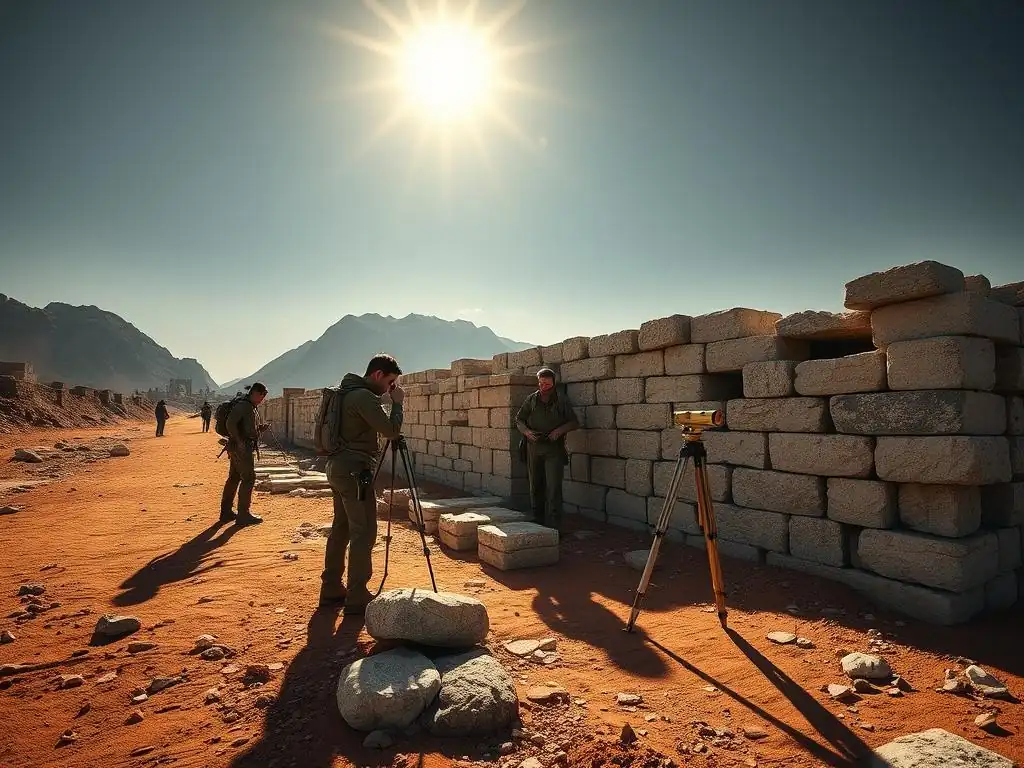
Unearth the secrets of lost worlds as we delve into the fascinating realm of archaeological discovery. This month, we journey to the heart of ancient Greece to examine the Archaeological Investigations at the Thermopylae Battlefield, focusing on the critical role of the Phokian wall excavation techniques used to unlock the battlefield's hidden stories. What insights have these techniques revealed about the legendary battle and the lives of those who fought there? Join us as we explore the methods and mysteries uncovered, and prepare to be captivated by the echoes of history.
- Introduction: Unveiling the Secrets of Thermopylae and the Phokian Wall
- Historical Context: The Battle of Thermopylae and the Phokian Defense
- Locating the Phokian Wall: Challenges and Methodologies in Archaeological Research
- Phokian Wall Excavation Techniques: A Detailed Examination
- Analysis of Discovered Remains: Interpreting the Archaeological Evidence
- Artifacts and Finds Associated with the Phokian Wall
- The Phokian Wall's Impact on the Battle of Thermopylae: Reassessing the Narrative
- Comparative Analysis: Other Ancient Greek Fortifications
- The Future of Archaeological Research at Thermopylae
-
Frequently Asked Questions
- What is the significance of the Phokian Wall in the context of the Battle of Thermopylae?
- What excavation techniques are particularly relevant to uncovering the Phokian Wall?
- How can ArchaeologyHub.org assist researchers interested in the Phokian Wall excavation?
- What challenges do archaeologists face when excavating a site like the Phokian Wall?
- What other historical sites are related to the Phokian Wall's history and location?
- Final Reflection: Echoes of Valor, Lessons in Preservation
- Unearth Your Inner Historian: Take Action Now!
Introduction: Unveiling the Secrets of Thermopylae and the Phokian Wall
The Strategic Importance of Thermopylae in Ancient Greece
Thermopylae, meaning "Hot Gates" due to its thermal springs, holds an unparalleled strategic position in ancient Greek history. This narrow coastal pass, flanked by steep mountains on one side and the Malian Gulf on the other, served as a crucial bottleneck controlling access between northern and central Greece.
Its geographical configuration naturally lent itself to defense, making it an ideal location for a numerically inferior force to hold off a larger invading army. The pass, historically only about 15-20 meters wide at its narrowest point, became the stage for one of history's most iconic battles, shaping the narrative of Greek resistance against foreign subjugation.
Beyond the famous stand of 480 BC, Thermopylae's strategic value was recognized throughout antiquity and even into modern times, with subsequent battles fought in the same location. The very landscape dictated military strategy, forcing invaders to navigate a constricted path where their numerical superiority could be diminished. This inherent defensive advantage explains why the site consistently appears in military annals, underscoring its enduring significance as a prime example of terrain influencing the outcome of conflict.
The Role of the Phokian Wall in the Defense of Thermopylae
Central to the Greek defensive strategy at Thermopylae was the Phokian Wall, an ancient fortification constructed by the Phokians, inhabitants of the region, long before the Persian Wars. This wall was strategically positioned at the narrowest point of the pass, serving as a primary line of defense. Its purpose was to block the coastal road, forcing any invading force into a direct confrontation within the confined space, thereby negating the advantages of their vast numbers and cavalry.
While the wall's original construction predated the Persian invasion, it was quickly reinforced and integrated into the Greek battle plan under King Leonidas. The Phokian contingent, numbering approximately 1,000 men, were specifically tasked with guarding the Anopaea path, a goat track over the mountains that bypassed the main pass and the wall. This dual defensive setup – the wall holding the main road and the Phokians protecting the flank – illustrates a sophisticated understanding of the terrain and an attempt to secure all possible avenues of attack against the Greek forces.
Overview of ArchaeologicalHub.org's Coverage of Ancient Greece
ArchaeologyHub.org stands as a comprehensive digital encyclopedia dedicated to the detailed study of ancient civilizations, their discoveries, and the methodologies employed in their unearthing. Our extensive coverage of Ancient Greece within the "Civilizations & Cultures (Detailed Studies)" category provides in-depth analyses of pivotal historical periods, including the Classical Period, with a particular focus on Athens, Sparta, and the Persian Wars. We strive to present meticulously researched information, drawing from current archaeological findings and scholarly interpretations.
Our platform offers detailed timelines, profiles of significant artifacts, and interpretive analyses of various ancient Greek sites, ensuring that users gain a holistic understanding of this foundational civilization. From the architectural marvels of the Acropolis to the battlefields that shaped Western history, ArchaeologyHub.org is committed to exploring the rich tapestry of ancient Hellenic life and conflict through the lens of modern archaeological science. This article on the Phokian Wall at Thermopylae exemplifies our commitment to unraveling the secrets of the past through rigorous archaeological investigation.
Historical Context: The Battle of Thermopylae and the Phokian Defense
The Persian Invasion of 480 BC: A Turning Point in Ancient History
The Persian invasion of 480 BC, led by King Xerxes I, represented an existential threat to the independent Greek city-states and is widely considered a pivotal moment in ancient history. Following the defeat at Marathon in 490 BC, Xerxes amassed an unprecedented force, estimated by ancient sources to be in the hundreds of thousands, potentially ranging from 150,000 to 250,000 combatants, supported by an equally massive fleet. His objective was nothing less than the complete subjugation of Greece, avenging his father Darius's defeat and extending the Achaemenid Empire's dominion westward.
The Greek response, though initially fragmented, coalesced into a unified defense under the Hellenic League. The decision to confront the Persians at Thermopylae was a strategic masterstroke, aiming to exploit the narrow terrain to neutralize the Persian numerical advantage. This battle, alongside the naval engagement at Artemision, served as a critical delaying action, allowing the southern Greek states to prepare their defenses and ultimately contributing to the eventual Greek victories at Salamis and Plataea, thereby safeguarding Greek independence and the nascent democratic ideals that would shape Western civilization.
The Phokian Contingent and their Defensive Strategy
The Phokians, inhabitants of the region through which the Persian army would pass, played a distinct and crucial role in the Greek defense at Thermopylae. While the Spartan contingent under King Leonidas held the main pass at the Phokian Wall, the Phokian contingent, numbering approximately 1,000 men, was strategically positioned to guard the Anopaea path. This narrow, winding mountain trail was a critical vulnerability, as it offered a potential bypass around the main Greek lines and the Phokian Wall itself.
Their defensive strategy was based on leveraging their intimate knowledge of the local terrain. The Phokians had constructed the wall as a defense against Thessalian raids long before the Persian invasion, demonstrating their foresight in regional security. During the battle, their primary responsibility shifted to preventing a flanking maneuver that would encircle the main Greek force. Despite being ultimately outmaneuvered by the Persian Immortals guided by Ephialtes, their initial deployment highlights a sophisticated understanding of the battlefield's complexities and a commitment to protecting the Greek rear.
Literary Sources on the Phokian Wall: Accounts from Herodotus and other Historians
The primary historical account of the Phokian Wall and the Battle of Thermopylae comes from Herodotus's Histories, specifically Book VII. Herodotus, writing in the mid-5th century BC, provides the most detailed description of the wall's location, purpose, and the Phokian involvement. He recounts that the wall was "at the narrowest point of the pass" and had been "built long ago by the Phokians as a defense against the Thessalians." He also notes that the Greeks, upon arriving, "repaired and strengthened" it, indicating its reuse and reinforcement for the impending Persian onslaught.
While Herodotus remains the cornerstone, other later historians and geographers, such as Diodorus Siculus and Pausanias, also mention the Thermopylae pass and its defensive features, often drawing upon earlier sources or local traditions. Though their accounts may lack the immediacy and detail of Herodotus, they generally corroborate the existence and strategic importance of the Phokian Wall. These literary sources provide invaluable context for archaeological investigations, guiding researchers to potential locations and helping to interpret discovered remains within the historical narrative.
Locating the Phokian Wall: Challenges and Methodologies in Archaeological Research
Obstacles in Identifying the Exact Location of the Phokian Wall
Identifying the exact location of the Phokian Wall presents significant archaeological challenges, primarily due to the dramatic geological changes that have occurred at Thermopylae over millennia. Since 480 BC, the shoreline of the Malian Gulf has receded considerably due to alluvial deposition from the Spercheios River, extending the coastal plain by several kilometers. This means the narrow pass described by Herodotus is now much wider, and the original coastline, where the wall would have met the sea, is buried under meters of sediment.
Furthermore, modern infrastructure, including the construction of a national highway and agricultural development, has significantly altered the landscape, potentially obscuring or destroying ancient features. Pinpointing a structure built over 2,400 years ago under such altered conditions requires sophisticated methods. Archaeologists must contend with the fact that the original terrain has been buried, eroded, or built over, making direct visual identification impossible and necessitating the use of advanced subsurface detection techniques.
Remote Sensing Techniques for Identifying Subsurface Structures at Thermopylae
To overcome the challenges of a buried and altered landscape, archaeologists at Thermopylae have increasingly relied on advanced remote sensing techniques for identifying subsurface structures, including the elusive Phokian Wall. Techniques such as aerial photography, satellite imagery, and particularly LiDAR (Light Detection and Ranging) have proven invaluable. LiDAR, for instance, can penetrate dense vegetation and even some modern surface layers to create detailed topographic maps of the underlying terrain.
These methods can reveal subtle anomalies in the landscape that might indicate buried archaeological features. For example, faint linear patterns, changes in soil moisture, or even variations in vegetation growth can point to the presence of buried walls or ditches. While remote sensing doesn't directly identify the Phokian Wall, it helps to narrow down potential areas for further investigation, guiding subsequent ground-based surveys and more intrusive Phokian wall excavation techniques to promising locations, thereby optimizing research efforts and resources.
Geographic Information Systems (GIS) and Mapping the Battlefield
Geographic Information Systems (GIS) have become an indispensable tool in the archaeological research at Thermopylae, particularly in mapping the battlefield and aiding in the search for the Phokian Wall. GIS allows archaeologists to integrate and analyze multiple layers of spatial data, including historical maps, modern topographic surveys, remote sensing imagery (LiDAR, satellite photos), and data from geophysical surveys. This comprehensive approach helps to reconstruct the ancient landscape and overlay historical accounts onto the modern topography.
By using GIS, researchers can model the probable ancient coastline, trace the historical course of the Spercheios River, and predict the most likely locations for key features like the Phokian Wall based on Herodotus's descriptions and the reconstructed ancient topography. For instance, GIS analyses have helped delineate areas where the original "narrow pass" would have existed, guiding targeted investigations. This powerful mapping capability allows for more informed decision-making regarding where to deploy specific Phokian wall excavation techniques, significantly enhancing the precision and efficiency of fieldwork.
Phokian Wall Excavation Techniques: A Detailed Examination
Stratigraphic Excavation Methods Employed at Thermopylae
The primary Phokian wall excavation techniques employed at Thermopylae to locate and understand the Phokian Wall involve meticulous stratigraphic excavation. This method entails the systematic removal of archaeological deposits in discrete layers, or strata, to understand the chronological sequence of human activity and natural deposition. For instance, in areas where geophysical surveys indicated anomalies consistent with a buried structure, archaeologists would carefully open trenches, removing modern topsoil and subsequent alluvial layers to reach ancient ground levels.
Each layer is meticulously documented before removal, ensuring that the relationships between artifacts, features (like wall foundations), and soil types are preserved and understood. This allows archaeologists to differentiate between the original construction phase of the Phokian Wall, any subsequent repairs or modifications, and later natural sediment accumulation or human activity. By carefully recording the context of every stone and artifact, researchers can reconstruct the wall's history, its construction methods, and its relationship to the surrounding ancient landscape.
Documentation and Recording of Archaeological Finds
Meticulous documentation and recording are paramount during Phokian wall excavation techniques at Thermopylae. Every archaeological find, whether a stone from the wall's foundation, a pottery sherd, or a military artifact, is precisely recorded in three dimensions (x, y, z coordinates) before removal. This is achieved through a combination of traditional methods like detailed field notes, scaled drawings, and photographic records, often supplemented by advanced digital techniques.
Modern documentation often includes photogrammetry, where hundreds of overlapping photographs are used to create highly accurate 3D models of excavation units and features. Total stations and GPS devices provide precise spatial data for all finds and features. This rigorous approach ensures that the context of each discovery is preserved, allowing for comprehensive post-excavation analysis. For example, understanding that a certain type of arrowhead was found directly adjacent to a specific section of the wall provides crucial insights into the combat that occurred there.
The Use of Ground Penetrating Radar (GPR) in Wall Detection
Ground Penetrating Radar (GPR) has emerged as one of the most effective non-invasive Phokian wall excavation techniques for identifying buried structures like the Phokian Wall. GPR operates by transmitting high-frequency radio waves into the ground and measuring the time it takes for these waves to reflect back from subsurface interfaces, such as the boundary between soil and stone. Different materials and soil conditions produce distinct radar reflections, creating a subsurface image.
At Thermopylae, GPR surveys have been conducted across suspected areas, particularly where historical accounts or geological studies suggest the ancient pass would have been. The resulting GPR profiles often reveal linear anomalies consistent with buried stone structures or compacted earth foundations, which stand out against the surrounding natural sediments. For instance, surveys conducted in the early 2000s helped to identify several linear features at depths of 1-3 meters, providing strong indications of buried wall remains and guiding the placement of subsequent test trenches, significantly reducing the need for extensive, destructive digging.
Analysis of Discovered Remains: Interpreting the Archaeological Evidence
Examination of Wall Construction Techniques and Materials
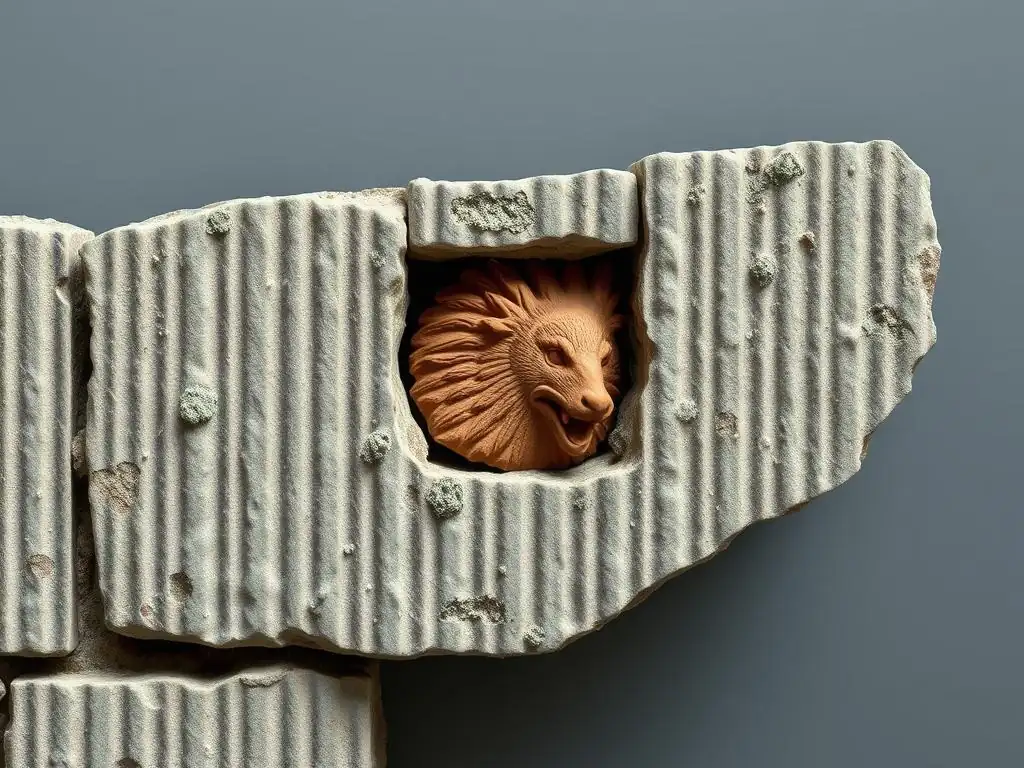
Archaeological examination of the discovered remains of the Phokian Wall reveals insights into the ancient construction techniques and materials utilized. The wall appears to have been primarily constructed using dry-stone masonry, a common method in ancient Greece, where stones are carefully fitted together without the use of mortar. The materials are predominantly local limestone and schist, readily available from the surrounding mountainsides, indicating a pragmatic approach to construction given the urgent circumstances.
Sections identified through Phokian wall excavation techniques show evidence of a relatively simple, yet robust, construction. The wall likely consisted of two faces of larger, roughly dressed stones with a rubble fill in between, creating a substantial barrier. The width of the wall, where identifiable, suggests a formidable structure, possibly several meters thick at its base. Such construction speaks to a rapid but effective defensive effort, prioritizing functionality over elaborate architectural design, befitting a temporary battlefield fortification.
Dating the Phokian Wall: Chronological Analysis and Context
Dating the Phokian Wall relies on a combination of relative and absolute chronological analysis, placing it firmly within the context of the Persian Wars. Stratigraphic analysis is key, as the wall's foundation layers are situated beneath later alluvial deposits but above earlier, undisturbed natural ground. Associated archaeological finds, particularly pottery sherds, provide crucial relative dating evidence. Fragments of Attic black-figure or early red-figure pottery, stylistically datable to the late 6th to early 5th century BC, found within the wall's construction fill or directly associated occupational layers, strongly support its construction prior to or around 480 BC.
While direct absolute dating of stone is challenging, organic materials like charcoal, if discovered within closely associated contexts (e.g., from a construction camp or battle-related fires), can be radiocarbon dated (C14). Such findings, though rare for the wall itself, would provide precise chronological markers. The convergence of historical accounts, stratigraphic positioning, and diagnostic artifact dates provides compelling evidence that the unearthed wall sections correspond to the Phokian Wall mentioned by Herodotus, solidifying its place in the history of the Battle of Thermopylae.
Identifying Potential Weak Points and Modifications to the Wall
Archaeological analysis of the Phokian Wall also involves identifying potential weak points or evidence of modifications made during or after its initial construction. While the wall was designed as a formidable barrier, its hasty construction and the intense pressure of the battle may have led to structural vulnerabilities. Researchers look for sections where the stone fitting is less secure, where there might have been a breach, or where repairs were hastily carried out.
Evidence of such modifications could include areas with different types of stone or less refined masonry, suggesting later additions or repairs. For example, if a section of the wall was partially destroyed by Persian siegecraft or repeated assaults, the subsequent repairs might appear archaeologically distinct. Identifying these features through precise Phokian wall excavation techniques helps to reconstruct the tactical flow of the battle, potentially revealing where the most intense fighting occurred or where the Persians attempted to concentrate their efforts against the main Greek line.
Artifacts and Finds Associated with the Phokian Wall
Weaponry and Military Equipment Recovered Near the Wall
Excavations near the presumed course of the Phokian Wall have yielded a significant number of artifacts, particularly weaponry and military equipment, offering tangible evidence of the fierce combat that transpired. Among the most common finds are hundreds of bronze and iron arrowheads, consistent with both Greek and Persian types. These include distinct Persian trilobate arrowheads, easily identifiable by their three-bladed design, and various Greek types, providing direct evidence of the opposing forces' presence and engagement.
Beyond arrowheads, fragments of spearheads, javelin tips, and even small pieces of bronze armor (e.g., scale armor fragments) have been recovered. While specific numbers vary by excavation season and area, it's not uncommon for archaeologists to find dozens to hundreds of such objects within a small trench, especially in areas believed to be points of intense engagement. These finds not only confirm the historical accounts of the battle but also provide insights into the specific types of armaments used by the combatants at Thermopylae.
Pottery and Other Diagnostic Artifacts as Indicators of Occupation
Pottery fragments are invaluable diagnostic artifacts found in association with the Phokian Wall, serving as crucial indicators of occupation and chronological markers. Sherds of Attic black-figure and early red-figure pottery, which were widely traded and stylistically datable to the early 5th century BC, have been unearthed in layers directly related to the wall's use. These fragments, often from drinking cups (kylikes) or everyday vessels, confirm the presence of Greek forces at the site during the period of the Persian Wars.
Beyond fine wares, fragments of coarseware pottery, such as cooking pots (chytrai) and storage jars (amphorae), provide evidence of daily life and logistical support for the Greek contingent. The presence of such utilitarian items, even in fragmented form, indicates a sustained presence of troops at the wall, rather than just transient passage. The analysis of these ceramic assemblages, in conjunction with targeted Phokian wall excavation techniques, helps to build a more complete picture of the activity around the fortification.
Analysis of Human Remains: Insights into Combat and Casualties
While direct human remains specifically on the Phokian Wall might be rare, broader archaeological investigations at the Thermopylae battlefield have yielded human remains that provide grim insights into the combat and casualties of the 480 BC battle. Although large mass graves directly associated with the wall haven't been widely publicized, sporadic finds of isolated human bones or small clusters have occurred across the wider battle zone over decades of research. These discoveries, often fragmentary, can still yield valuable forensic information.
Analysis of these remains, when possible, can reveal details such as age at death, general health, and, critically, evidence of trauma consistent with ancient warfare (e.g., cut marks from swords, blunt force trauma, or embedded projectile points). While attributing specific remains solely to the Phokian contingent or other Greek defenders can be challenging without direct contextual evidence, their presence underscores the ferocity of the fighting at Thermopylae. These insights complement the historical narrative, giving a human dimension to the archaeological findings.
The Phokian Wall's Impact on the Battle of Thermopylae: Reassessing the Narrative
The Phokian Wall as a Defensive Bottleneck
The Phokian Wall served as the ultimate defensive bottleneck at Thermopylae, critically influencing the tactical dynamics of the battle. Positioned at the narrowest point of the pass, it effectively reduced the already constricted coastal road to an even more formidable choke point. This forced the immense Persian army, which relied on its numerical superiority and cavalry, into a direct frontal assault against a concentrated Greek line. The wall's presence meant that only a fraction of the Persian forces could engage at any given time, negating their overwhelming numbers.
Archaeological evidence, particularly the identification of the wall's likely course through Phokian wall excavation techniques, reinforces the historical accounts of its strategic importance. It channeled the Persian advance, creating a killing ground where the heavily armed Greek hoplites could effectively hold their ground against wave after wave of attackers. This physical barrier was instrumental in allowing the Greeks to maintain their defensive formation for two full days against a vastly superior force.
How the Phokian Wall Influenced the Persian Advance
The Phokian Wall profoundly influenced the Persian advance by creating an insurmountable obstacle that could not be easily bypassed or overwhelmed. Its solid construction, even if rudimentary, demanded a direct and costly engagement. The Persians were forced to commit significant resources and manpower to repeated assaults on the main Greek line stationed at the wall, suffering heavy casualties in the process. This sustained resistance at the wall bought crucial time for the rest of Greece to mobilize and prepare.
Furthermore, the very existence of the wall and the resolute Greek defense there compelled the Persians to seek an alternative route. It was the perceived impossibility of breaking through the main pass that led Xerxes to dispatch his elite Immortals along the Anopaea path, guided by Ephialtes. Thus, the Phokian Wall indirectly precipitated the flanking maneuver that ultimately led to the Greek defeat, demonstrating its profound tactical influence on the battle's progression and outcome.
Reconstructing the Tactical Landscape of the Battle
Archaeological findings, particularly those related to the Phokian Wall, are crucial for reconstructing the tactical landscape of the Battle of Thermopylae and refining our understanding of troop movements and engagements. By combining the precise location of the wall, determined through Phokian wall excavation techniques and GPR surveys, with the distribution of artifacts like arrowheads and spear points, archaeologists can map out areas of intense fighting. For example, a higher concentration of Persian arrowheads directly in front of the wall suggests a focused assault on that section.
This interdisciplinary approach allows historians and archaeologists to move beyond textual descriptions and visualize the battle with greater accuracy. The physical presence of the wall helps to explain why the Greek forces could hold their ground for so long, and how the terrain itself became a weapon. Reconstructing the tactical landscape provides a more nuanced understanding of the strategies employed by both sides, illustrating the ingenuity of the Greek defense and the challenges faced by the Persian invaders.
Comparative Analysis: Other Ancient Greek Fortifications
Comparing the Phokian Wall to other Defensive Structures in Greece
The Phokian Wall, while strategically vital, differs significantly from many other prominent defensive structures in ancient Greece. Unlike the monumental city walls of Athens (e.g., Themistoclean Wall, Long Walls) or Corinth's Isthmian Wall, which were permanent, highly engineered fortifications designed for long-term urban defense, the Phokian Wall was a hastily constructed field fortification. Its primary purpose was to block a pass for a specific, immediate military threat, rather than to protect a settled population or a permanent strategic point.
For instance, the walls of Athens, built with ashlar masonry and featuring towers and gates, represented centuries of accumulated engineering knowledge and massive civic investment. In contrast, the Phokian Wall appears to have been a simpler dry-stone construction, leveraging readily available local materials and minimal sophisticated architectural elements. This comparison highlights the functional distinction between permanent urban or regional defenses and temporary battlefield barriers.
Examining Similarities and Differences in Construction and Design
Despite its less elaborate nature, the Phokian Wall shares some fundamental similarities in construction with other ancient Greek fortifications. The use of local stone and dry-stone masonry techniques was common across various periods and regions, reflecting readily available resources and established building practices. Many smaller fortresses and rural strongholds across Greece also employed similar basic stone-laying methods.
However, the differences in design are more pronounced. Unlike the complex, multi-layered defenses of major cities, the Phokian Wall lacked intricate gate systems, bastions, or the sheer thickness and height of a permanent city wall. Its design was driven by expediency and immediate tactical necessity: to create a physical barrier across a narrow pass. While archaeological investigations using Phokian wall excavation techniques have revealed its robust nature for its purpose, it lacked the architectural refinements and scale of monumental defensive works, reflecting its specific role as a temporary battle line.
Understanding the Evolution of Fortification Technology in Ancient Greece
The Phokian Wall offers a unique snapshot into the evolution of fortification technology in ancient Greece, showcasing a specific type of battlefield engineering. While Mycenaean citadels of the Late Bronze Age featured massive cyclopean walls, and the Classical period saw the rise of sophisticated city walls with advanced towers and gatehouses, the Phokian Wall represents a simpler, yet effective, form of defensive construction adapted for an immediate military crisis. It stands apart from the long-term, permanent structures and provides insight into ad-hoc military engineering.
This wall illustrates how ancient Greeks could rapidly construct effective barriers using available resources and basic techniques to achieve a tactical advantage. Such temporary fortifications, while less archaeologically prominent than their monumental counterparts, were crucial in specific military campaigns. Studying the Phokian Wall, through Phokian wall excavation techniques and comparative analysis, helps to understand the full spectrum of Greek defensive strategies, from massive urban defenses to functional battlefield barriers, demonstrating an adaptive and pragmatic approach to military architecture over time.
The Future of Archaeological Research at Thermopylae
Ongoing Excavation Projects and Future Research Directions
Archaeological research at Thermopylae remains an active and evolving field, with ongoing excavation projects and promising future research directions. The Greek Ephorate of Antiquities continues to oversee investigations, often in collaboration with international teams, to further delineate the ancient battlefield and its key features. Future research aims to more precisely map the extent of the battle, locate additional camps or smaller defensive positions, and potentially trace more definitively the full course of the Anopaea path.
Advanced geophysical surveys, utilizing improved GPR and magnetometry techniques, are likely to play an even greater role in identifying subtle subsurface anomalies before any digging commences. There's also a growing interest in environmental archaeology, studying ancient flora and fauna to better understand the landscape and resources available to the combatants. Continued application of precise Phokian wall excavation techniques will be essential for validating these geophysical findings and unearthing further tangible evidence of this historic confrontation.
Preserving and Protecting the Thermopylae Battlefield
Preserving and protecting the Thermopylae battlefield is a critical ongoing challenge, given its immense historical significance and the pressures of modern development. The construction of the national highway, agricultural expansion, and general human activity pose constant threats to the integrity of the archaeological remains. Efforts by the Greek authorities and international heritage organizations focus on implementing protective measures, such as designating protected zones and monitoring development.
Public education and responsible tourism are also vital components of preservation. Encouraging visitors to respect the site and understand its fragility helps to minimize unintended damage. The long-term goal is to balance the need for continued archaeological research with the imperative to safeguard this irreplaceable historical landscape for future generations, ensuring that the physical evidence of Thermopylae and the Phokian Wall remains accessible for study and remembrance.
The Significance of the Phokian Wall for Understanding Ancient Warfare
The Phokian Wall, through the lens of archaeological investigation, holds profound significance for understanding ancient warfare. It is a tangible testament to the ingenuity and strategic thinking of Greek defenders facing overwhelming odds. Its study, informed by meticulous Phokian wall excavation techniques and analysis, moves beyond literary accounts to provide physical evidence of battlefield tactics, military engineering, and the realities of combat in the 5th century BC.
The wall demonstrates the critical role of terrain in ancient military strategy and how even relatively simple fortifications could be leveraged to gain a decisive advantage. Its enduring presence, despite millennia of geological change and human activity, serves as a powerful symbol of resistance and a crucial piece of the puzzle in reconstructing one of history's most iconic battles. Understanding the Phokian Wall deepens our appreciation for the strategic brilliance and resilience displayed at Thermopylae, offering invaluable insights into the art of war in the ancient world.
Frequently Asked Questions
What is the significance of the Phokian Wall in the context of the Battle of Thermopylae?
The Phokian Wall was a crucial defensive structure built to block a secondary pass, ensuring the Persian army could not easily flank the main Greek force. Its defense was key to the initial phase of the battle. Its eventual failure led to the Greek defeat.
What excavation techniques are particularly relevant to uncovering the Phokian Wall?
Archaeologists employ techniques like systematic grid excavation and stratigraphic analysis to carefully document the layers of soil and debris. These methods help reveal the wall's original structure and construction dating back to ancient Phokis.
How can ArchaeologyHub.org assist researchers interested in the Phokian Wall excavation?
ArchaeologyHub.org provides detailed timelines of the battle and related archaeological discoveries. Our site also offers artifact profiles and interpretive analyses of the region.
What challenges do archaeologists face when excavating a site like the Phokian Wall?
Challenges include soil erosion, looting, and environmental factors that can damage or obscure the remains. Precise documentation and careful excavation are absolutely essential.
Sites related to the Phokian Wall include the main pass at Thermopylae, the settlements of ancient Phokis, and other defensive structures in the region. These sites offer valuable context for understanding the broader historical landscape.
Final Reflection: Echoes of Valor, Lessons in Preservation
The meticulous application of Phokian wall excavation techniques at Thermopylae isn't merely an academic exercise; it's a vital connection to a pivotal moment in history, resonating deeply with contemporary discussions about courage, sacrifice, and the defense of freedom. By meticulously uncovering the remains of this ancient fortification, we are not just unearthing stones, but also the stories and strategies of those who stood against overwhelming odds, offering invaluable insights into ancient warfare and engineering.
The ongoing influence of archaeological discoveries like this extends far beyond the academic realm. It reminds us that history is not a static narrative, but a dynamic and evolving understanding shaped by careful investigation and interpretation. The Phokian Wall, once a symbol of resistance, now serves as a powerful reminder of the enduring human spirit. History is a relentless master. It has no present, only the past rushing into the future. To try to hold fast is to be swept aside.
- John F. Kennedy. This quote underscores the importance of understanding our past to navigate the future, a task greatly aided by archaeological endeavors.
Let us, therefore, carry forward the lessons learned from the Phokian Wall excavation. Consider how the principles of careful observation, meticulous documentation, and collaborative effort, so crucial to archaeological success, can be applied to our own lives. Reflect on the courage and resilience of those who defended Thermopylae, and let their example inspire you to face your own challenges with unwavering determination and a commitment to preserving the values you hold dear.
Unearth Your Inner Historian: Take Action Now!
Thanks for diving deep into the mysteries of Thermopylae with us! We hope you've enjoyed this exploration of the archaeological efforts to locate the Phokian Wall. Now, it's your turn to get involved and connect with the past.
Here are some ways you can continue the adventure:
- Become a citizen archaeologist and research how you can participate in a local archaeological dig in your region. Even if it's not Thermopylae, every dig helps uncover our shared human story.
- Delve deeper! Explore online resources and academic papers related to the Battle of Thermopylae and ancient warfare tactics. Share any insightful findings or theories with your friends and online communities.
- Discuss with us: visit the contact us page to reach our team, or share your own knowledge about ancient fortifications!
What’s one thing you learned about the Phokian Wall that surprised you, and how does it change your perception of the Battle of Thermopylae?